

P0513 on 2005-2009 Land Rover LR3: Incorrect Immobilizer Key Causes and Fixes
This code means your LR3's anti-theft system doesn't recognize your key. The most common fix is trying a spare key or having all keys reprogrammed by a specialist. A faulty key, a weak vehicle battery, or a failed key programming attempt are also frequent culprits.
- P0513 means your LR3 won't start because it doesn't recognize the key.
- Before panicking, try your spare key. If it works, your primary key is bad.
- Do not attempt to replace modules like the CJB or instrument cluster yourself; they require professional programming.
- Check for damp carpets in the passenger footwell, as this is a major red flag for deeper electronic problems on an LR3.
- This is not a DIY-friendly repair. You will likely need a specialist with Land Rover-specific tools to diagnose and fix the issue correctly.
What's Unique About the 2005-2009 Land Rover LR3
On the Land Rover LR3, the immobilizer system is integrated with multiple electronic modules, including the Central Junction Box (CJB) and the instrument cluster, via a CAN bus network. This design means that seemingly unrelated issues, like water leaks in the cabin damaging the CJB or even a fault in the instrument cluster, can potentially trigger immobilizer problems. Some owners have also reported P0513 as an intermittent 'ghost code' that sets without causing any immediate starting problems, creating uncertainty and concern about future reliability, especially after programming a new key with a tool like the GAP IID.
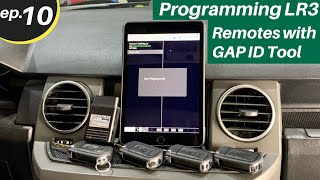
🎬 See how to program remotes with the GAP IID toolSymptoms You May Notice
- Engine cranks but will not start.
- Engine starts for a moment and then immediately shuts off.
- Flashing red security LED light on the dashboard.
- Check Engine Light is on.
- Message on the instrument cluster such as 'Key not detected' or a flashing key symbol.
- No crank, no start, just a relay click when turning the key.
- Replacing the starter motor when the engine cranks but doesn't start, or when there is a no-crank condition caused by the immobilizer.
- Replacing the fuel pump without verifying that the immobilizer system is what's disabling it.
Most Likely Causes
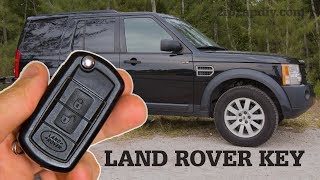
- Damaged or Faulty Key Fob 🔴 High Probability → Shop Keyless Entry Transmitter The key contains a rechargeable battery (Panasonic VL2330) that can fail 🎬 Watch: How to replace the battery and key shell over time, and the internal transponder chip can be damaged if the key is dropped or exposed to water.
How to confirm: Try starting the vehicle with a known-good spare key. If the spare key works, the primary key is faulty.
Typical fix: Replace the faulty key. A new key must be purchased (OEM part # LR078933 or similar) and programmed to the vehicle by a dealer or a qualified independent shop with the correct equipment.
Est. part cost: $150-$400 - Key Programming Error 🟡 Medium Probability This often occurs after programming a new or aftermarket key, especially if the procedure wasn't followed correctly or if an incompatible tool was used. Some scanners can successfully add a key but fail to sync it properly, leading to a P0513 code and immobilizing the vehicle.
How to confirm: Use a Land Rover-specific scan tool (like a GAP IID) to check the status of all programmed keys. The issue often appears immediately after a key programming attempt.
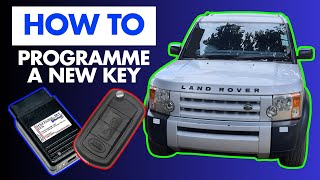
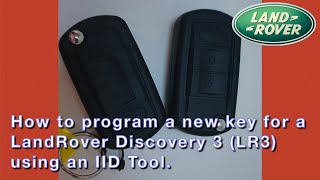
Typical fix: Clear all keys from the vehicle's memory and reprogram all keys (including existing ones) using a reliable diagnostic tool (GAP IID, Nanocom, Autologic) and the correct procedure.
Est. part cost: $0 (if reprogramming existing keys) - Weak Main Vehicle Battery 🟡 Medium Probability → Shop Vehicle Battery The LR3 is notoriously sensitive to low voltage, which can cause a wide range of seemingly unrelated electronic faults, including communication errors within the immobilizer system that trigger P0513.
How to confirm: Test the vehicle's main battery with a multimeter or a battery tester. A resting voltage below 12.4V is a sign of a weak battery. The code may appear after the vehicle has been parked for an extended period.
Typical fix: Replace the main vehicle battery and ensure the charging system is functioning correctly. Clear any stored fault codes after replacement.
Est. part cost: $150-$300 - Faulty Immobilizer Antenna Ring ⚪ Low Probability → Shop Antenna The antenna ring (exciter coil) is located around the ignition lock cylinder and can fail electronically or develop a poor connection over time, preventing it from reading the key's transponder chip.
How to confirm: A specialist scan tool can be used to test the antenna's signal. A visual inspection of the wiring and connector for damage or corrosion is also necessary. The part number is typically YWD000010.
Typical fix: Replace the antenna ring. This part is located behind the steering column covers and is a relatively straightforward replacement, though codes will need to be cleared afterward.
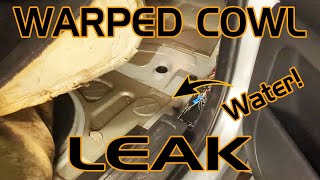
Est. part cost: $50-$100 - Water Damage to Central Junction Box (CJB) ⚪ Low Probability Leaking sunroof drains or windshield cowls can allow water to enter the passenger-side footwell, where the CJB (which contains immobilizer functions) is located, causing corrosion and failure. This is a well-documented LR3 issue.
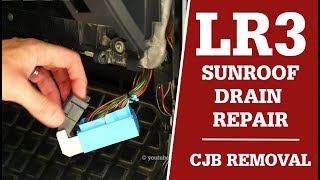
How to confirm: Check for dampness or water stains in the front passenger footwell carpet. Inspect the CJB and its connectors for any signs of green or white corrosion. Refer to TSB LTB00048 for water 🎬 Watch: How to repair sunroof drains and remove the CJB ingress issues.
Typical fix: The CJB must be removed, dried, and cleaned. If corrosion is severe, the unit will need to be replaced and programmed to the vehicle.
Est. part cost: $500-$1200
Rare But Worth Checking
- Faulty Instrument Cluster: → Shop Instrument Cluster In rare cases, an internal failure of the instrument cluster can disrupt CAN bus communication with the immobilizer system, preventing the vehicle from starting. This is difficult to diagnose and usually identified after all other causes are eliminated.
Diagnosis Steps
- Scan the vehicle with a Land Rover-compatible diagnostic tool to confirm P0513 is the primary code. Check for related codes like U0426.
- Try to start the vehicle with all available keys. If one key works, the other key is the problem.
- Check the voltage of the main vehicle battery. It should be above 12.4V at rest. Charge or replace if necessary. Low voltage is a common cause of random electronic faults on the LR3.
- If new keys were recently added, attempt to reprogram all keys to the vehicle using a reliable tool like a GAP IID or Nanocom.
- Inspect the front passenger footwell for any signs of water ingress. If wet, remove the sill plate and inspect the Central Junction Box (CJB) and its wiring for corrosion.
- Inspect the wiring and connector for the immobilizer antenna ring (Part #YWD000010) around the ignition switch.
- If the problem persists, professional diagnosis is required to test the immobilizer module, instrument cluster, and CAN bus network integrity.
Parts You'll Likely Need
- Transponder Key Fob
(OEM #LR078933 (Supersedes previous numbers))— This is the most common failure point, either due to internal damage, a dead rechargeable battery, or being an improperly programmed aftermarket unit.
Trusted brands: Land Rover (OEM)
OEM price range: $250-$400
Aftermarket price range: $50-$150 - Immobilizer Antenna Ring
(OEM #YWD000010)— This ring around the ignition cylinder reads the key's transponder. A failure in the coil or its wiring will prevent the key from being recognized.
Trusted brands: Land Rover (OEM)
OEM price range: $50-$100
Aftermarket price range: $30-$60 - Central Junction Box (CJB) — On the LR3, this unit is susceptible to water damage from clogged sunroof drains and contains critical immobilizer circuitry. Replacement is necessary if it's corroded.
Trusted brands: Land Rover (OEM)
OEM price range: $500-$900
Related Codes That Often Appear With This One
- U0426 - Invalid Data Received From Vehicle Immobilizer Control Module
- B10A2 - Crash Input
- B1B02 - Low Frequency Coil
Technical Service Bulletins (TSBs) & Recalls
- LTB00048: Addresses water ingress into the passenger compartment, which is a known cause of damage to the Central Junction Box (CJB) and can lead to various electrical faults, including P0513.
Platform-Specific Known Issues
- Water leaks from clogged sunroof drains are a well-documented issue that can lead to failure of the Central Junction Box, causing this code. TSB LTB00048 addresses water ingress.
- The vehicle's electrical system is highly sensitive to low battery voltage, which can cause the P0513 code to be set erroneously.
Mechanic-Grade Diagnostic Values
- Instrument Cluster Connector Power/Ground — expected: 12V+ at Pin 15, Ground continuity at Pin 31.. Failure: Lack of voltage or a high-resistance ground can indicate a wiring issue or internal cluster fault.
- Immobilizer Antenna Ring Coil — expected: Continuity between the coil's two terminals.. Failure: An open circuit (no continuity) indicates a broken coil that needs replacement.
Hidden / Shadow Codes Worth Checking
- B10A2 - Crash Input: This code indicates the vehicle believes it has been in an accident, which can disable starting. It can be falsely triggered by a dead battery or a failed jump-start attempt. (see via A Land Rover-specific scan tool like GAP IID or Autologic is required. It is often stored in the Body Control Module (BCM).)
- B1B02 - Low Frequency Coil: This code points directly to a fault with the immobilizer antenna ring around the ignition switch. (see via A Land Rover-specific scan tool. This code is more specific than the generic P0513.)
Scan Tool Commands That Help
- GAP IID Tool / Nanocom: Service Test -> Body Control (BCM) -> Program Keys — This function is used to add new keys or to reprogram all existing keys if a synchronization issue is suspected. It is critical to follow the on-screen instructions precisely to avoid disabling all keys.
- Advanced Scan Tool (e.g., Autel, Snap-on, GAP IID): BCM -> Special Functions -> Crash Status Reset — This is required if a B10A2 'Crash Input' code is present and preventing the vehicle from starting. Simply clearing codes will not remove a latched crash status; this specific reset command must be executed.
Wiring & Ground Locations
- Passenger Footwell Ground Stud — Behind the passenger side kick panel, near the Central Junction Box (CJB). Multiple black wires terminate on a stud welded to the body.. This is the primary ground location for the CJB, which houses immobilizer functions. Water ingress from sunroof drains frequently corrodes this ground point, causing a host of electrical issues including P0513.
- Driver Footwell Ground Stud — Behind the driver's side kick panel, near the A-pillar. Similar in appearance to the passenger side ground point.. Provides ground for various dash components, including the instrument cluster on some circuits. A poor connection here can contribute to CAN bus communication errors.
- Instrument Cluster Connector (C2028) — The main 32-pin connector on the rear of the instrument cluster.. Pin 31 is a primary ground, and Pin 15 is a permanent 12V battery feed. Testing these points can quickly determine if the cluster is receiving proper power. Cracked solder joints on this connector are a known failure point.
Real Owner Repair Stories
- landroverforums.com user 'DakotaTravler' (2005 Land Rover LR3) — Vehicle was completely immobilized (no crank, no start) with P0513 and U0426 codes present.
❌ Tried (didn't work) Attempting to program two new keys using a Foxwell NT510 scanner., Reprogramming all keys (original and new) multiple times with the Foxwell tool.
✅ What actually fixed it The user was eventually able to get ONE of the new keys to work by using the Foxwell scanner to specifically clear the P0513 and U0426 codes from the PCM *after* the failed programming attempts. This allowed the car to be mobilized with that one key, but the other keys remained non-functional. The story highlights the danger of using non-specialist tools, which can fail the programming handshake and lock out all keys. - landroverforums.com user 'DakotaTravler' (different thread) (Land Rover LR3 (year not specified)) — P0513 code appears intermittently as a 'ghost code' without causing any no-start symptoms. The code would return even after being cleared.
❌ Tried (didn't work) Replacing the main vehicle battery., Clearing the codes.
✅ What actually fixed it The user performed a full reprogramming of all keys using a GAP IID tool. However, even after the successful reprogramming, the P0513 code would still occasionally appear without a noticeable starting problem. The final resolution was to accept it as an intermittent 'nuisance' fault, highlighting that on the LR3, this code can sometimes be set without a hard failure being present.
When the Usual Fixes Don't Work
- In one documented case, an owner successfully programmed a used key fob (previously programmed to another vehicle) to their LR3 using a GAP IID tool. This contradicts the common wisdom that only new/virgin keys can be programmed and suggests that Land Rover's system may be more flexible than a dealer would admit, provided the correct high-end diagnostic tool is used.
OEM Part Supersession History
Various older key fob part numbers→LR078933— Consolidation of part numbers and potential minor updates to internal electronics.
Heads up: While aftermarket keys are available, their transponder chips can be of lower quality and may fail during programming or lose sync over time. Using an OEM or a high-quality aftermarket key specified for the 315 MHz frequency (for US models) is critical.
Diagnostic Flowchart
Other Known Issues on This Vehicle
Issues unrelated to this code that are worth knowing about as an owner of this generation:
- Air Suspension Failure 🔴 High — Very common. Compressor failure often occurs around 70,000-100,000 miles. Height sensors and air springs (struts) are also frequent failure points.
- Front Lower Control Arm Bushing Wear 🔴 High — Extremely common, often requiring replacement every 60,000-80,000 miles. Symptoms include clunking noises during braking/acceleration and uneven tire wear.
- Electronic Parking Brake (EPB) Failure 🟠 Medium — Common issue involving screeching noises, failure to engage/disengage, and dashboard warnings. Often caused by seized brake shoes or a faulty actuator module.
- Sunroof Drain Leaks Causing Water Ingress 🔴 High — A well-documented design flaw where clogged or detached sunroof drain tubes leak water into the A-pillars and footwells, damaging sensitive electronics like the CJB. (Ref: LTB00048)
- Instrument Cluster Malfunctions 🟠 Medium → Shop Instrument Cluster — Notorious for causing a cascade of electrical gremlins, including false warning lights, and failure of gauges and other vehicle functions. Can occur at relatively low mileage.
- Differential Failure 🟠 Medium — Both front and rear differentials can fail, particularly the locking mechanism on HSE models. Often presents as a groaning or grinding noise when turning.
Used vs. New Parts: Buying Guide for This Vehicle
When a used part is the smart pick: A used OEM key fob *may* be a viable option if you have a powerful diagnostic tool like the GAP IID, as some users have successfully reprogrammed them. A used immobilizer antenna ring is a safe bet as it is not a programmed component. A used instrument cluster can be considered if you plan to have it professionally repaired (for issues like cracked solder joints) rather than trying to program it to your vehicle.
Donor-vehicle mileage cap: roughly under 150000 miles for the part to have meaningful remaining life.
What to inspect on the donor part:
- For a CJB: Ask for photos of the connectors to check for any hint of white or green corrosion. Avoid any unit from a vehicle with known water ingress.
- For an Instrument Cluster: Check for any signs of moisture or fogging behind the lens. Ensure the donor vehicle had a clean title and no flood damage.
- For a Key Fob: Visually inspect the case for cracks or excessive wear, which might indicate internal damage from being dropped.
OEM-only on this vehicle (don't cheap out):
- Central Junction Box (CJB): A used CJB cannot be reprogrammed to a different vehicle's VIN. A brand new unit must be purchased from Land Rover and programmed.
Aftermarket brands forum-validated for this vehicle:
- GAP IID Tool (for diagnostics and programming)
- Nanocom Evolution (for diagnostics and programming)
Brands owners have reported issues with on this vehicle:
- Inexpensive, generic scan tools (e.g., some Foxwell models) for key programming. While they may claim to support the function, they have been documented to fail and immobilize the vehicle.
- Cheap, unbranded aftermarket keys from sites like eBay or Amazon can be a gamble; their transponder chips may not be compatible or may fail prematurely.
Real Owner Stories
Aggregated from forums and TSBs cited above. Mileages and costs reflect what owners reported in those sources.
2005 Land Rover LR3
Symptoms: After attempting to program two new keys with a Foxwell NT510 scanner, all three keys (new and original) were locked out, the vehicle was immobilized, and it set codes P0513 and U0426.
What fixed it: The recommended procedure is to clear all keys from the vehicle's memory and reprogram all keys using a reliable diagnostic tool like a GAP IID, Nanocom, or Autologic.
Source hint: landroverforums.com: A user details a frustrating experience where attempting to program two new keys with a Foxwell NT510 scanner resulted in all three keys (new and original) being locked out, triggering P0513 and U0426. This highlights the risk of using non-specialist tools. URL: https://landroverforums.com/forum/lr3-28/2005-lr3-key-programming-failure-now-immobilized-112108/
Land Rover LR3
Symptoms: The P0513 code appeared intermittently as a 'ghost code' without any starting issues after a second key was programmed using a GAP tool. The code would occasionally return even after reprogramming.
What fixed it: Reprogramming the keys was attempted, but the code continued to return intermittently, suggesting it can sometimes be a persistent nuisance fault rather than indicating a hard failure.
Source hint: landroverforums.com: An owner reports P0513 appearing intermittently as a 'ghost code' without any starting issues after programming a second key with a GAP tool. Despite reprogramming, the code occasionally returns, illustrating the code's potential to be a nuisance fault. URL: https://landroverforums.com/forum/lr3-28/lr3-incorrect-immobilizer-key-code-111796/
Related OBD-II Codes
Frequently Asked Questions
My LR3's passenger footwell is damp. Could this be related to my P0513 code and no-start issue?
I tried to program a new key for my 2005 LR3 and now it won't start and shows P0513. What went wrong?
My LR3 key fob seems dead and the car won't start. Can I just replace the battery?
My LR3 sometimes throws a P0513 code but starts fine after a jump. Is the immobilizer failing?
I suspect the immobilizer antenna ring is bad on my LR3. What part number should I look for?
I have a 2006 Range Rover Sport with a P0513 code. Is this LR3 article relevant to my vehicle?
Helpful Videos
We Have This Part in Stock

The information in this article is provided for general reference and educational purposes only. Vehicle specifications, procedures, and part compatibility can vary by production date, trim level, and region. Always consult your vehicle's factory service manual and verify part numbers before purchasing or performing repairs. Safety-critical components such as airbags, seat belts, and braking systems should be installed by a qualified professional.
- Land Rover LR3:
- 🧭 Diagnostic Flowchart
- 🎬 Helpful Videos
- 🛍️ Shop This Part
- What's Unique About the 2005-2009 Land Rover LR3
- Symptoms You May Notice
- Most Likely Causes
- Rare But Worth Checking
- Diagnosis Steps
- Parts You'll Likely Need
- Related Codes That Often Appear With This One
- Technical Service Bulletins (TSBs) & Recalls
- Platform-Specific Known Issues
- Mechanic-Grade Diagnostic Values
- Hidden / Shadow Codes Worth Checking
- Scan Tool Commands That Help
- Wiring & Ground Locations
- Real Owner Repair Stories
- When the Usual Fixes Don't Work
- OEM Part Supersession History
- Other Known Issues on This Vehicle
- Used vs. New Parts: Buying Guide for This Vehicle
- Real Owner Stories
- 2005 Land Rover LR3
- Land Rover LR3
- Related OBD-II Codes
- Frequently Asked Questions
- 🎟️ Get 5% Off