

P0514 on 1999-2004 Jeep Grand Cherokee 2.7L CRD: Battery Temp Sensor Causes and Fixes
On a Jeep Grand Cherokee WJ with the 2.7L CRD engine, code P0514 is almost always caused by broken wires for the battery temperature sensor located under the battery tray, or a failed sensor itself. The sensor's location makes it highly vulnerable to corrosion and vibration. The most common fix is repairing the wiring or replacing the small, inexpensive sensor, which is crucial for proper battery charging.
- The P0514 code on your Grand Cherokee points to a problem with the battery temperature sensor circuit, not usually the battery or alternator itself.
- Before buying any parts, remove the battery and inspect the sensor's wiring underneath the battery tray; broken wires are the most common cause.
- The sensor itself is a likely culprit if the wiring is intact. It can be tested with a multimeter and should read about 10k ohms at room temperature.
- This is a straightforward DIY repair for most home mechanics, requiring basic hand tools and potentially a multimeter.
What's Unique About the 1999-2004 Jeep Grand Cherokee
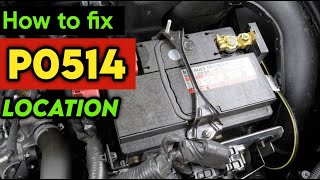
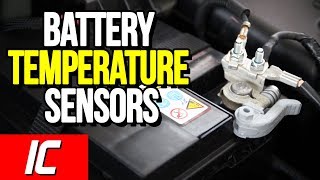
For the Grand Cherokee WJ, especially the 2.7L CRD model, the battery temperature sensor and its wiring are positioned in a vulnerable spot. The sensor is a small, disc-like component that sits directly in a recess in the battery tray, underneath the battery itself. Over time, constant vibrations from the heavy diesel engine, leaking battery acid, and exposure to road salt and moisture lead to a very high rate of failure for the sensor's wiring harness. The wires can become brittle, corroded, or break entirely, often right at the connector. Many owners discover the connector has simply fallen apart or the wires have snapped when they remove the battery to investigate charging issues or a dead battery.
Symptoms You May Notice
- Check Engine Light is on
- Battery/Charging system warning light may be illuminated
- Battery seems to drain over 2-3 days, especially with short trips
- Difficulty starting the engine, particularly in extreme temperatures
- Noticeable decrease in battery performance or lifespan due to improper charging
- Fluctuating voltage readings on the dashboard gauge
- Replacing the battery. While a failing battery can cause many issues, it will not directly cause a P0514 code. This code is specific to the sensor circuit, not the battery's ability to hold a charge.
- Replacing the alternator. A faulty alternator will cause charging problems, but the P0514 code points specifically to the temperature sensing circuit, which is an input to the charging system, not the output. The PCM uses the sensor's data to *control* the alternator.
Most Likely Causes
- Damaged or Broken Sensor Wiring/Connector 🔴 High Probability The wiring harness for the sensor is located directly under the battery, where it is exposed to potential battery acid leaks, moisture, and constant vibration, causing it to become brittle and break over time. This is the most common failure point for this code.
How to confirm: Remove the battery and visually inspect the small sensor in the battery tray and its two-wire connector. Check for frayed wires, green/white corrosion, or a complete break at the connector. Often, the sensor itself is fine, but the connector is dangling or the wires have disintegrated.
Typical fix: Repair the broken wires using solder and heat shrink tubing, or replace the connector pigtail if it is too damaged. Ensure the repaired section is protected from moisture.
Est. part cost: $5-$20 for a new pigtail connector. - Faulty Battery Temperature Sensor 🟡 Medium Probability → Shop Vehicle Battery The sensor is a simple thermistor that can fail from age, heat cycles, and exposure to the elements under the hood. It's a relatively cheap plastic part in a harsh environment.
How to confirm: After confirming the wiring is good, test the sensor with a multimeter set to resistance (ohms). At room temperature (~77°F/25°C), the sensor should read approximately 10,000 ohms (10 kΩ). If it reads as an open circuit (infinite resistance) or a short (zero resistance), it is faulty. The resistance should decrease as the sensor is warmed (e.g., with a hairdryer) and increase as it cools. 🎬 Watch: How to test a battery temperature sensor.
Typical fix: Replace the battery temperature sensor. It typically unclips from underneath the battery tray by squeezing two tabs.
Est. part cost: $25-$60 - Corroded or Loose Battery Terminals ⚪ Low Probability → Shop Vehicle Battery Standard issue on any vehicle; corrosion builds up over time, creating resistance and electrical problems that can affect sensor readings.
How to confirm: Visually inspect the battery posts and terminals for white, blue, or green crusty buildup. Check if the terminal clamps are tight and cannot be moved by hand.
Typical fix: Disconnect the battery terminals (negative first) and clean them thoroughly with a wire brush and a baking soda/water solution. Reconnect securely (positive first).
Est. part cost: $0-$10 for cleaning supplies.
Rare But Worth Checking
- Faulty Powertrain Control Module (PCM): → Shop Engine Control Module (ECM) This is extremely rare. The PCM is the vehicle's main computer. Before condemning the PCM, every other possibility, especially the wiring and the sensor itself, must be exhaustively ruled out. A faulty PCM is unlikely to cause only this single code.
Diagnosis Steps
- Scan for codes to confirm P0514 is present. Note any other codes, especially P0702.
- Inspect the battery terminals. Ensure they are clean, free of corrosion, and tightly secured.
- Disconnect the negative battery terminal, followed by the positive.
- Remove the battery hold-down and lift the battery out of the vehicle to gain access to the battery tray.
- Locate the battery temperature sensor—a small, black, button-like component sitting in a cutout in the tray.
- Closely inspect the sensor's wiring and two-pin connector. This is the most likely point of failure. Look for obvious breaks, corrosion, or frayed insulation. Wiggle the wires gently to see if they are broken inside the insulation near the connector.
- If wiring is damaged, repair it with solder and heat-shrink tubing or replace the pigtail. If it looks good, disconnect the sensor.
- Using a multimeter set to Ohms (Ω), measure the resistance across the two pins on the sensor itself. It should be around 10kΩ at room temperature (~70F/21C). If it reads open (OL) or shorted (0 Ω), the sensor is bad.
- If the sensor tests good, check the vehicle-side connector. With the key on, engine off, you should have a 5V reference on one pin and a good ground on the other. A wiring diagram is helpful here.
- After repairing/replacing any faulty components, reinstall the battery, clear the codes, and start the vehicle. A short test drive should confirm if the code returns.
Parts You'll Likely Need
- Battery Temperature Sensor
(OEM #56027332AC)— This sensor is the core component of the circuit and is a common failure point due to its location and function.
Trusted brands: Mopar, NTK, Dorman, Standard Motor Products
OEM price range: $40-$70
Aftermarket price range: $25-$50 - Battery Temperature Sensor Connector Pigtail
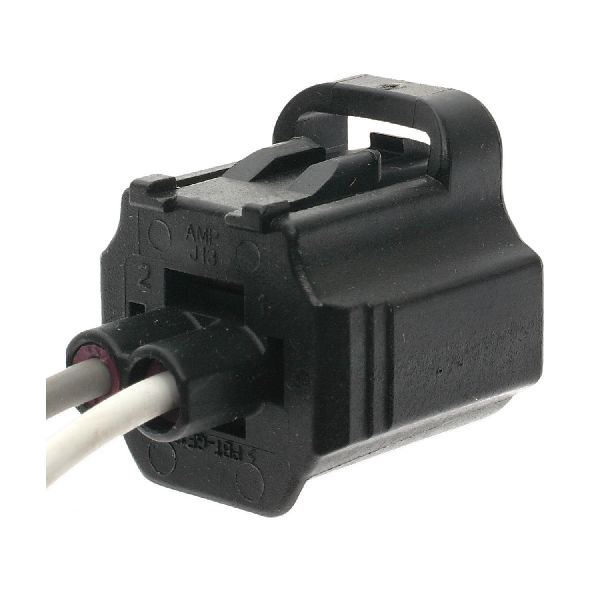
(OEM #Dorman 645-502 (Connector Only))— The wiring is more likely to fail than the sensor itself. The connector often breaks or the wires snap right at the back of it, requiring a new pigtail to be spliced in.
Trusted brands: Mopar, Dorman
OEM price range: $20-$30
Aftermarket price range: $10-$20
Related Codes That Often Appear With This One
- P0702 — On the 2.7L CRD model, electrical issues are notoriously linked to transmission problems. A weak battery or poor voltage regulation resulting from a P0514 fault can starve the Transmission Control Module (TCM) of stable power, sometimes triggering the generic P0702 'Transmission Control System Electrical' code and putting the vehicle in limp mode. This is a very common pairing of faults on this specific vehicle.
Platform-Specific Known Issues
- A user on JEEP4X4CLUB.ru with a 2.7 CRD reported that for code P0514, the sensor was completely missing and the connector was just dangling in the engine bay, a common discovery.
- On the Turbo Diesel Register forum, a user noted that strong crosswinds could sometimes cool the sensor enough to trigger an erroneous P0514 code, though this is less common than a hard fault.
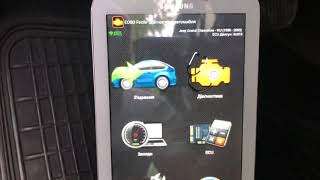
- A YouTube video from 'Did Sasha UA and Jeep Grand Cherokee WJ 2,7 CRD' clearly shows the process of discovering the broken wires under the battery tray and repairing them to resolve a P0514 error. 🎬 Watch: See this 2.7 CRD wiring repair walkthrough.
Mechanic-Grade Diagnostic Values
- Battery Temperature Sensor Resistance — expected: 11.4kΩ to 13.6kΩ at 68°F (20°C). Failure: A reading of infinity (Open Loop) or near-zero ohms indicates a failed sensor.
- Battery Temperature Sensor Signal Wire Voltage (at PCM) — expected: Approx. 2.5V at room temperature, varying with battery temp. Should be 5V with sensor disconnected, and 0V when signal wire is jumpered to ground.. Failure: Voltage that is stuck high (5V), stuck low (0V), or does not change with temperature indicates a circuit or sensor fault.
- Charging System Voltage — expected: Between 13.5 and 14.5 volts.. Failure: Voltage that is consistently too high or too low can indicate the system is in a default charging mode due to the P0514 fault.
Scan Tool Commands That Help
- DRB III: Read DTCs (from Engine and Transmission modules) — The DRB III is the dealer-level tool for this vehicle. It is essential for accurately reading transmission codes that accompany P0514, such as P0702, which a generic OBD-II scanner might not display correctly or at all.
- DRB III: Sensor Display — Allows the technician to view live data from various sensors, including battery voltage and potentially the battery temperature reading, to see if it is rational compared to ambient and intake air temperatures.
Wiring & Ground Locations
- Battery Temperature Sensor Signal — The sensor signal wire runs from the sensor under the battery tray to the Powertrain Control Module (PCM). On some WJ models, this signal is on Pin 15 of the C2 (Black/Orange) PCM connector.. This is the specific wire that carries the temperature information to the PCM. A break, short-to-ground, or short-to-voltage anywhere along this wire will cause code P0514. Knowing the pin number allows for continuity and voltage testing directly at the PCM, bypassing the rest of the vehicle's wiring to isolate the fault.
- G102 / G103 — Located on the engine block, often near the thermostat housing on the passenger side.. These are critical grounds for the Powertrain Control Module (PCM). A poor or corroded ground at this location can cause a host of bizarre electrical issues and incorrect sensor readings, including those from the battery temperature sensor circuit.
- G101 — The main battery ground, located on the passenger side fender at the front of the engine bay.. While a less direct cause, a faulty main battery ground can create voltage potential differences across the electrical system, leading to unreliable sensor readings and charging system problems. It should always be clean and tight as a foundational step.
Real Owner Repair Stories
- Jeep Club UK Forum (2004 Jeep Grand Cherokee 2.7 CRD) — Check engine light with code P0702, transmission in limp mode (stuck in 2nd gear).
❌ Tried (didn't work) Considering expensive replacement of the transmission selector module or PCB based on forum horror stories.
✅ What actually fixed it The owner cleaned the magnetic sliders on the selector shafts and the corresponding pads on the PCB. They then sprayed contact cleaner on all plug connectors for the selector module and the two Transmission ECU connectors, cycling them several times to remove tarnish. This resolved the limp mode issue, highlighting how poor connections can cause the P0702 code often seen with P0514.
OEM Part Supersession History
56027332AB→56027332AC— Standard part revision, likely for improved durability or material changes.
Diagnostic Flowchart
Other Known Issues on This Vehicle
Issues unrelated to this code that are worth knowing about as an owner of this generation:
- Injector Seal Failure ('Black Death') 🔴 High — Common at higher mileage (over 100,000 miles). Caused by failure of the copper washer seal at the base of the injector.
- Transmission Shifter PCB Failure (P0702) 🔴 High — Very common failure. The circuit board under the gear shifter develops cold solder joints or component failure, often due to heat and vibration.
- Broken HVAC Blend Doors 🟠 Medium — Common across all WJ Grand Cherokees, regardless of engine. The plastic doors or their actuator shafts inside the dashboard HVAC unit break.
- Injector 'Hold Down' Bolt Failure 🔴 High — Can occur when replacing injectors, especially if the 'Black Death' is present. The threads in the aluminum cylinder head for the injector hold-down bolt can strip or the bolt can snap.
Used vs. New Parts: Buying Guide for This Vehicle
When a used part is the smart pick: A used part is a very smart choice for the sensor's two-wire connector pigtail. If your wiring is broken right at the connector, sourcing a used pigtail from a junkyard vehicle is often cheaper and faster than finding a new one. The sensor itself is inexpensive new, so buying a used sensor is not recommended.
Donor-vehicle mileage cap: roughly under 150000 miles for the part to have meaningful remaining life.
What to inspect on the donor part:
- For a pigtail, inspect the wiring closely. It should be flexible, not brittle or cracked.
- Check the connector for any signs of green or white corrosion inside the pin sockets.
- Ensure the plastic locking tabs on the connector are intact and not broken.
- Try to get at least 6-8 inches of wire attached to the pigtail to make splicing it into your vehicle's harness easier.
Aftermarket brands forum-validated for this vehicle:
- NTK
- Standard Motor Products (SMP)
- Dorman
Brands owners have reported issues with on this vehicle:
- No-name, unbranded sensors from online marketplaces often have high failure rates and may not be calibrated correctly.
Real Owner Stories
Aggregated from forums and TSBs cited above. Mileages and costs reflect what owners reported in those sources.
Jeep Grand Cherokee 2.7L CRD
Symptoms: Owner found a P0514 code and discovered the sensor was completely missing and the connector was just dangling in the engine bay.
What fixed it: The cause of the code was a missing sensor and disconnected wiring.
Source hint: JEEP4X4CLUB: A Russian-language forum thread shows a user with a 2.7 CRD discovering his P0514 code was caused by a completely missing sensor and a dangling connector.
Jeep Grand Cherokee WJ 2.7L CRD
Symptoms: Vehicle had a P0514 error.
What fixed it: The issue was resolved by repairing broken wires for the battery temperature sensor located under the battery tray.
Source hint: YouTube video from 'Did Sasha UA and Jeep Grand Cherokee WJ 2,7 CRD'
1999-2004 Grand Cherokee WJ
Symptoms: The battery seems to drain over a few days, which was caused by the system undercharging it.
What fixed it: The problem was related to the battery temperature sensor or its wiring, which was confirmed by checking the sensor's resistance (should be 10k ohms).
Source hint: Reddit (r/GrandCherokee): A thread titled 'PSA: If the battery in your 99-04 WJ...seems to drain...check this sensor'
Jeep Grand Cherokee 2.7L CRD
Symptoms: An erroneous P0514 code would appear intermittently, sometimes triggered by strong crosswinds.
What fixed it: This was not a hard fault; the code was triggered by the sensor being rapidly cooled by wind, causing a temporary out-of-range reading.
Source hint: Turbo Diesel Register forum
Related OBD-II Codes
Frequently Asked Questions
Where is the battery temperature sensor located on my 2.7L CRD Grand Cherokee?
My Jeep's battery keeps dying over a couple of days. Could the P0514 code be the cause?
What is the correct resistance for the battery temperature sensor when I test it?
I tested the sensor and it seems fine. What's the most common cause for P0514 on this vehicle?
I have a P0702 code along with P0514. Are these two problems related?
Is this P0514 issue also found on the Mercedes ML270 that shares this engine?
Helpful Videos
We Have This Part in Stock


The information in this article is provided for general reference and educational purposes only. Vehicle specifications, procedures, and part compatibility can vary by production date, trim level, and region. Always consult your vehicle's factory service manual and verify part numbers before purchasing or performing repairs. Safety-critical components such as airbags, seat belts, and braking systems should be installed by a qualified professional.
- Jeep Grand Cherokee:
- 🧭 Diagnostic Flowchart
- 🎬 Helpful Videos
- 🛍️ Shop This Part
- What's Unique About the 1999-2004 Jeep Grand Cherokee
- Symptoms You May Notice
- Most Likely Causes
- Rare But Worth Checking
- Diagnosis Steps
- Parts You'll Likely Need
- Related Codes That Often Appear With This One
- Platform-Specific Known Issues
- Mechanic-Grade Diagnostic Values
- Scan Tool Commands That Help
- Wiring & Ground Locations
- Real Owner Repair Stories
- OEM Part Supersession History
- Other Known Issues on This Vehicle
- Used vs. New Parts: Buying Guide for This Vehicle
- Real Owner Stories
- Jeep Grand Cherokee 2.7L CRD
- Jeep Grand Cherokee WJ 2.7L CRD
- 1999-2004 Grand Cherokee WJ
- Jeep Grand Cherokee 2.7L CRD
- Related OBD-II Codes
- Frequently Asked Questions
- 🎟️ Get 5% Off