

P0521 on 2007-2018 Freightliner Sprinter 3.0L Diesel: Oil Pressure Sensor Causes and Fixes
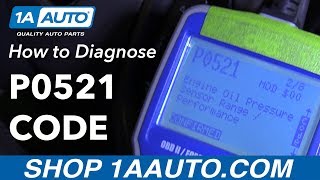
On a 2007-2018 Sprinter with the OM642 diesel, P0521 most often means the engine oil pressure sensor has failed or its wiring is compromised. However, because it can also signal critical low oil pressure, you must stop driving and verify the actual pressure with a mechanical gauge before replacing parts. The sensor itself is a common failure point but is notoriously difficult to access at the rear of the engine, under the turbocharger assembly. Oil leaks from the oil cooler seals in the engine '
- P0521 is a critical code on a Sprinter. Stop driving immediately to prevent catastrophic engine damage.
- The most important first step is to verify the engine's actual oil pressure with a mechanical gauge before replacing any parts.
- If oil pressure is confirmed to be good, the most likely cause is a failed oil pressure sensor, followed by a wiring issue.
- Always use the correct Mercedes-Benz specification oil (e.g., MB 229.52) and a high-quality fleece oil filter to protect the lubrication system.
- The sensor replacement is a difficult DIY job due to its location at the rear of the engine.
What's Unique About the 2007-2018 Freightliner Sprinter
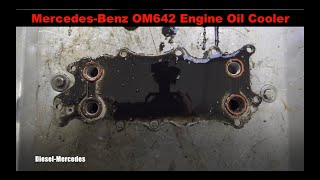
On the OM642 engine, this code requires immediate attention. While the sensor is a frequent failure point, this engine is also infamous for oil cooler seal leaks, which can cause a gradual loss of oil and lead to genuinely low pressure. The oil pressure sensor is notoriously difficult to access, located at the top rear of the engine valley, underneath the turbocharger and its intake piping. This makes diagnosis and replacement more labor-intensive than on many other vehicles. Furthermore, oil leaking from the cooler seals or the turbo inlet pipe often pools in the engine valley, soaking the oil pressure sensor's connector and wiring harness, which can directly cause the P0521 code.
Symptoms You May Notice
- Check Engine Light is on
- Red oil pressure warning light is on or flashing
- Engine running rough or making unusual ticking, clattering, or knocking noises
- Vehicle may enter limp mode, limiting engine power and RPM
- Engine stalling
- Oil pressure gauge on the dashboard (if equipped) showing erratic or zero readings
- Replacing the oil pressure sensor without first verifying the actual oil pressure with a mechanical gauge. The sensor might be correctly reporting a real and dangerous pressure problem.
- Assuming the new sensor is good. Cheap aftermarket sensors can be faulty out of the box, leading to repeated P0521 codes. Using an OEM or reputable brand like Bosch or Hella is recommended.
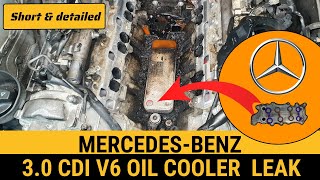
- Mistaking an oil cooler leak for a rear main seal leak. Oil from the cooler runs down a drain channel at the back of the engine and drips from the bellhousing, mimicking a rear main seal failure. 🎬 See the fast way to replace OM642 oil cooler seals
Most Likely Causes
- Faulty Engine Oil Pressure Sensor 🔴 High Probability The sensor operates in a high-heat area at the back of the engine and is a common failure item. Oil leaks from the oil cooler or turbo inlet pipe frequently contaminate its connector, leading to failure.
How to confirm: After confirming with a mechanical gauge that oil pressure is actually good, test the sensor's signal wire. If the signal is erratic, stuck high, or stuck low when compared to the known good pressure, the sensor is bad. A common failure mode is an internal short, causing a constant high reading.
Typical fix: Replace the oil pressure sensor. Due to its difficult location under the turbo, this is a labor-intensive job often requiring removal of the turbo intake pipe and other components.
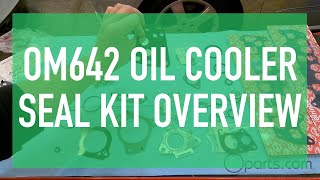
Est. part cost: $40-$100 - Low or Incorrect Engine Oil 🟡 Medium Probability The OM642 engine is known for developing oil leaks, particularly from the oil cooler seals located in the engine valley, which can lead to a low oil level. Using oil that does not meet the specific Mercedes-Benz low-SAPS specification (MB 229.51 or the superseding 229.52) 🎬 Watch: Overview of the oil cooler seal replacement kit can cause lubrication and DPF issues.
How to confirm: Physically check the engine oil level on the dipstick and inspect the oil's condition. Ensure the correct specification of oil is being used by checking service records or the oil bottle.
Typical fix: Top up the oil to the correct level or perform a full oil and filter change using OEM-spec oil (MB 229.52) and a quality fleece filter (e.g., Mann).
Est. part cost: $100-$180 for a full oil service - Wiring or Connector Issue 🟡 Medium Probability The engine harness runs through a hot, tight engine bay. Wires can become brittle and break. More commonly, the connector to the sensor becomes contaminated with engine oil from the prevalent oil cooler and turbo inlet leaks, causing a poor connection. Some owners report this as the true cause even after replacing the sensor.
How to confirm: Visually inspect the wiring harness leading to the oil pressure sensor for any signs of damage, chafing, or oil saturation. Check for a solid connection at the sensor. Test for 5V reference, ground, and signal continuity back to the ECM.
Typical fix: Clean the oil from the connector with electrical contact cleaner. If the connector or wiring is damaged, repair the damaged section or replace the connector pigtail.
Est. part cost: $20-$50 for a pigtail, plus labor
Rare But Worth Checking
- Incorrect or Clogged Oil Filter: → Shop Engine Oil Filter Adapter Using a cheap, paper-element oil filter instead of the specified fleece (non-woven) filter can cause it to collapse or clog, restricting oil flow and affecting pressure readings. Always use a high-quality fleece filter from brands like Mann, Mahle, or Genuine Mercedes-Benz.
- Failing Oil Pump or Internal Engine Wear: → Shop Engine Oil Pump This is the worst-case scenario. If a mechanical gauge confirms that oil pressure is genuinely low (below 0.3 bar at hot idle, or not reaching at least 3.0 bar at 3000 RPM), it points to a serious mechanical problem like a worn oil pump, a sticking pressure relief valve, or excessive bearing clearances.
- Faulty Powertrain Control Module (PCM): → Shop Engine Control Module (ECM) While extremely rare, the PCM itself can fail and misinterpret the sensor's signal. This should only be considered after all other possibilities, including wiring and multiple sensors, have been exhaustively ruled out.
Diagnosis Steps
- IMMEDIATELY check the engine oil level and condition. If the level is low, top it off. If the engine is making noise, do not run it further.
- Scan the ECM for any other stored trouble codes. Note them for context.
- CRITICAL STEP: Connect a mechanical oil pressure gauge to the engine to verify the actual oil pressure. This requires a special test cap for the OM642 (MB Tool # 642 589 00 91 00) that replaces the oil filter housing lid.
- Compare the mechanical gauge reading to the manufacturer's specifications. At operating temperature, pressure should be above 0.3 bar at idle and at least 3.0 bar at 3000 RPM. If pressure is low, the problem is mechanical (oil pump, internal wear, clogged pickup). Do not proceed.
- If mechanical pressure is good, the fault is electrical. Proceed with inspecting the oil pressure sensor's wiring and connector at the rear of the engine. Look for oil contamination, corrosion, or damaged wires. This area is often soaked in oil from cooler seal leaks.
- With the ignition on and engine off, test the sensor's circuit: check for a 5-volt reference, a good ground, and a clear signal wire back to the ECM.
- If the wiring and connector are confirmed to be good, the oil pressure sensor itself is the most likely culprit.
- Replace the oil pressure sensor with a high-quality OEM or equivalent part. After replacement, clear the codes and perform a drive cycle to ensure the fault does not return.
Parts You'll Likely Need
- Engine Oil Pressure Sensor
(OEM #A0091535028)— This sensor is the most common part to fail, causing the P0521 code when actual oil pressure is confirmed to be good.
Trusted brands: Bosch, Hella, Genuine Mercedes-Benz
OEM price range: $70-$120
Aftermarket price range: $40-$80 - Engine Oil (MB 229.52 Spec) — Required if the cause is low oil level or incorrect oil type. This low-SAPS oil is critical for protecting the Diesel Particulate Filter (DPF).
Trusted brands: Mobil 1 ESP, Liqui Moly Top Tec 4600, Fuchs Titan GT1
OEM price range: $12-$18 per liter
Aftermarket price range: $10-$15 per liter
Related Codes That Often Appear With This One
- P0520 — This code is for a general fault in the 'Engine Oil Pressure Sensor/Switch Circuit'. It often appears with P0521 as they point to the same system.
- P0522 — This code indicates the 'Engine Oil Pressure Sensor Circuit is reading consistently low'. It can be triggered by the same faults as P0521, such as a short to ground or a failed sensor.
- P0524 — This code for 'Engine Oil Pressure Too Low' is more severe. If the root cause of P0521 is a failing oil pump or major leak, you may also see P0524, indicating a confirmed dangerous pressure level.
Technical Service Bulletins (TSBs) & Recalls
- While no specific TSB for P0521 on the Sprinter was found, TSBs for other vehicles with this code, like 20-NA-161 and 21-NA-088, often point to a sticking oil pressure relief valve inside the oil pump as a potential mechanical cause.
Platform-Specific Known Issues
- The oil pressure sensor is located in a very difficult-to-reach position at the top rear of the engine, under the intake and turbocharger components, making replacement a labor-intensive job.
- The OM642 engine is widely known for oil cooler seal leaks. A leaking seal causes oil to pool in the engine valley and can lead to a low oil level, which is a potential cause for this code. The leaking oil also frequently contaminates the sensor and its wiring.
Mechanic-Grade Diagnostic Values
- Mechanical Oil Pressure at Hot Idle (approx. 90°C) — expected: Must not drop below 0.3 bar (approx. 4.4 PSI). Failure: A reading below 0.3 bar indicates a serious mechanical issue (worn pump, bearings, etc.)
- Mechanical Oil Pressure at 3000 RPM (Hot) — expected: Must be at least 3.0 bar (approx. 43.5 PSI). Failure: Failure to reach this pressure under load points to a failing oil pump or significant internal engine wear.
- Oil Pressure Sensor Connector - Reference Voltage — expected: Approximately 5.0V DC (Key On, Engine Off). Failure: No voltage or significantly lower voltage indicates a problem with the ECM or the wiring harness between the ECM and the sensor.
- Oil Pressure Sensor Connector - Ground — expected: Near 0 Ohms resistance to a known good chassis ground.. Failure: High resistance (more than 1-2 ohms) indicates a poor ground connection, which can cause erratic sensor readings.
Scan Tool Commands That Help
- Mercedes-Benz Xentry/DAS: Live Data Monitoring for Oil Pressure — After confirming mechanical pressure is good, use this to watch the sensor's reported value in real-time. A reading that is stuck, erratic, or doesn't correlate with engine RPM points to a faulty sensor or wiring. This is a primary step before physically accessing the sensor.
Wiring & Ground Locations
- Main Engine Ground Points — On the W906 Sprinter, there are primary ground points under the driver's seat pedestal and on the frame rail. A key engine-to-chassis ground strap should also be inspected for corrosion or looseness.. A poor engine ground can cause voltage drops and floating ground references for all engine sensors, including the oil pressure sensor, leading to incorrect readings and fault codes.
- Oil Pressure Sensor Connector — At the top rear of the engine, under the turbocharger intake pipe. It is a 3-pin connector.. This connector is the direct interface to the sensor. It is frequently contaminated by oil from oil cooler leaks, which degrades the connection and causes the P0521 code. The pins are for 5V reference, signal, and ground.
Real Owner Repair Stories
- YouTube Diagnostic Video (Vehicle with symptoms consistent with P0521 (gauge stuck high)) — Oil pressure gauge was pegged at the maximum reading (e.g., 80 PSI) even with the key on and the engine off.
✅ What actually fixed it The technician disconnected the oil pressure sensor's electrical connector. With the sensor unplugged, the gauge dropped to zero. This confirmed the sensor itself was internally shorted and sending a constant, invalid 'high' signal. Replacing the sensor resolved the issue.
OEM Part Supersession History
A0041531428, A0061536028, A0071534328→A0091535028— Standard part evolution for improved reliability or manufacturing changes.
Heads up: The listed part numbers are generally interchangeable for the OM642 engine, but it is always best to verify with the vehicle's VIN. The part is often sold as an 'Exhaust Back Pressure Sensor' but serves as the oil pressure sensor in this application.
Model Year Variations Within This Range
- 2010+: Starting around 2010, the OM642 engine was updated with BlueTEC (SCR/AdBlue) systems. While this didn't directly change the oil pressure sensor, later engines (2012+) had higher output and potentially different internal stresses. Some technicians note that timing chain durability may differ between pre and post-2010 engines, which could indirectly relate to long-term lubrication system health.
Diagnostic Flowchart
Other Known Issues on This Vehicle
Issues unrelated to this code that are worth knowing about as an owner of this generation:
- Oil Cooler Seal Leaks 🔴 High → Shop Engine Oil Cooler — Extremely common, especially on pre-2010 models with original orange seals. Often occurs after 80,000-120,000 miles. A major, labor-intensive repair (8-10+ hours).
- Swirl Flap Motor / Linkage Failure 🔴 High — Very common. The plastic linkage rods become brittle and break, or the motor fails due to oil contamination from leaks above it. Causes limp mode and codes like P2015.
- Turbo Resonator Failure 🟠 Medium — The plastic turbo resonator is prone to cracking at the seams, causing a boost leak, oil spray in the engine bay, and potential limp mode.
- "Black Death" - Leaking Injector Seals 🔴 High — Common issue where the copper injector seal fails, allowing combustion gas to leak and form a hard, tar-like deposit around the injector. If not addressed, it can make injector removal extremely difficult and costly.
- DPF and EGR System Clogging 🟠 Medium — Common on vans used for short trips or with extended idle times, which prevents the DPF from regenerating properly. Can lead to limp mode and expensive component replacement.
- DEF System Failures (AdBlue Countdown) 🔴 High — On 2010+ models, failures of DEF heaters, NOx sensors, or level sensors can trigger a "starts remaining" countdown, which will prevent the engine from starting when it reaches zero.
Used vs. New Parts: Buying Guide for This Vehicle
When a used part is the smart pick: For this repair, using a used part is almost never a smart choice. The primary failure component, the oil pressure sensor, is an inexpensive electronic part that degrades with heat and time. A used sensor carries a high risk of premature failure. Used wiring pigtails are acceptable if the connector is in excellent condition with no broken clips or oil contamination.
Donor-vehicle mileage cap: roughly under 50000 miles for the part to have meaningful remaining life.
What to inspect on the donor part:
- For a wiring pigtail: check for flexible, uncracked insulation.
- Ensure the connector's locking tab is intact and clicks securely.
- Inspect for any signs of oil saturation inside the connector body.
OEM-only on this vehicle (don't cheap out):
- Engine Oil Pressure Sensor
Aftermarket brands forum-validated for this vehicle:
- Bosch
- Hella
Brands owners have reported issues with on this vehicle:
- No-name, unbranded sensors from online marketplaces are frequently reported as being dead-on-arrival or failing within a short period.
Real Owner Stories
Aggregated from forums and TSBs cited above. Mileages and costs reflect what owners reported in those sources.
2007-2018 Sprinter OM642 3.0L V6
Symptoms: P0521 code triggered; owner noted the sensor and wiring harness were saturated with oil.
What fixed it: Cleaning oil from the connector with electrical contact cleaner and addressing engine valley leaks.
Source hint: benzworld.org discussions regarding P0521 and oil leaks in the engine valley
2007-2010 Sprinter OM642 3.0L V6 — ~100000 miles
Symptoms: Low oil level and P0521 code; oil found pooling in the engine valley.
What fixed it: Replacing the oil cooler seals (original orange seals) which was a labor-intensive 8-10+ hour repair.
Source hint: known_issues: Oil Cooler Seal Leaks
Related OBD-II Codes
Frequently Asked Questions
What are the specific oil pressure requirements for the OM642 engine at operating temperature?
Can I use any synthetic oil in my 2007-2018 Sprinter to clear the P0521 code?
Is there a special tool required to test the actual oil pressure on this Freightliner Sprinter?
Why is the oil pressure sensor replacement so expensive on the OM642 V6?
Could an oil leak from another part of the engine cause my P0521 code?
Are there any TSBs regarding mechanical causes for P0521 on this platform?
Helpful Videos

The information in this article is provided for general reference and educational purposes only. Vehicle specifications, procedures, and part compatibility can vary by production date, trim level, and region. Always consult your vehicle's factory service manual and verify part numbers before purchasing or performing repairs. Safety-critical components such as airbags, seat belts, and braking systems should be installed by a qualified professional.
- Freightliner Sprinter:
- 🧭 Diagnostic Flowchart
- 🎬 Helpful Videos
- What's Unique About the 2007-2018 Freightliner Sprinter
- Symptoms You May Notice
- Most Likely Causes
- Rare But Worth Checking
- Diagnosis Steps
- Parts You'll Likely Need
- Related Codes That Often Appear With This One
- Technical Service Bulletins (TSBs) & Recalls
- Platform-Specific Known Issues
- Mechanic-Grade Diagnostic Values
- Scan Tool Commands That Help
- Wiring & Ground Locations
- Real Owner Repair Stories
- OEM Part Supersession History
- Model Year Variations Within This Range
- Other Known Issues on This Vehicle
- Used vs. New Parts: Buying Guide for This Vehicle
- Real Owner Stories
- 2007-2018 Sprinter OM642 3.0L V6
- 2007-2010 Sprinter OM642 3.0L V6 — ~100000 miles
- Related OBD-II Codes
- Frequently Asked Questions
- 🎟️ Get 5% Off