

P0562 on 2009-2017 Audi Q5: System Voltage Low Causes and Fixes
On a 2009-2017 Audi Q5, code P0562 is most often caused by a failing alternator or an old battery. A failing alternator is a common problem; expect a shop replacement to cost $800-$1500, especially for the water-cooled units on some 3.0T engines. Always test both components before replacing parts and ensure any new battery is coded to the vehicle.
- P0562 on an Audi Q5 is a serious code indicating low system voltage that makes the vehicle unsafe to drive.
- The most likely cause is a failing alternator or an old battery. Both must be tested before replacing parts.
- On 3.0T models, be aware that the alternator may be a more expensive water-cooled unit.
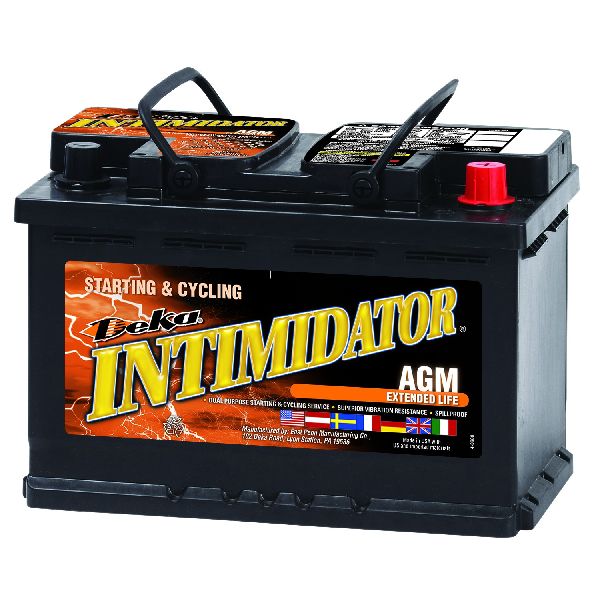
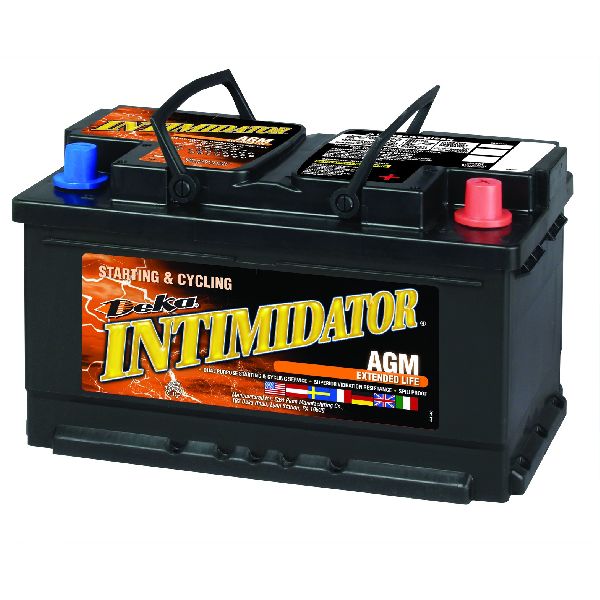
- Any replacement battery MUST be an AGM type and MUST be coded to the vehicle's computer to ensure proper charging and prevent a recurrence of the code.
What's Unique About the 2009-2017 Audi Q5
For the Audi Q5, particularly models with the 3.0T engine, the alternator can be a water-cooled unit. These are more complex and significantly more expensive to replace than traditional air-cooled alternators. Furthermore, this generation of Audi Q5 uses a sophisticated Battery Energy Management (BEM) system. This means that when you replace the battery, it MUST be 'coded' or registered to the vehicle's computer using a diagnostic tool like VCDS (VAG-COM). Failing to do so can lead to improper charging strategies, premature battery failure, and a quick return of the P0562 code.
Symptoms You May Notice
- Battery warning light on the dashboard, sometimes with a message like "Alternator Fault: Battery is not being charged".
- Check Engine Light is on.
- Dimming or flickering headlights and interior lights.
- Difficulty starting the engine, or a no-start condition.
- Engine stalling, especially at idle or under load, or when electrical accessories are turned on.
- Erratic behavior from electrical components like the radio, power windows, or MMI system.
- Transmission may shift poorly or enter 'limp mode'.
- Multiple other fault codes stored across various control modules, often related to low voltage or communication errors.
- Replacing the battery without testing the alternator. If the alternator is bad, it will quickly drain the new battery and the problem will persist.
- Replacing the alternator when the battery is simply old and can no longer hold a sufficient charge.
- Replacing the battery but failing to code the new battery to the vehicle. This will cause the Battery Energy Management system to use incorrect charging parameters, which can shorten the life of the new battery and cause persistent electrical issues.
Most Likely Causes
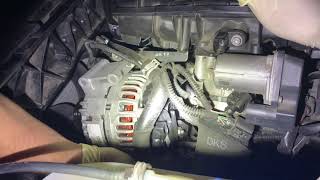
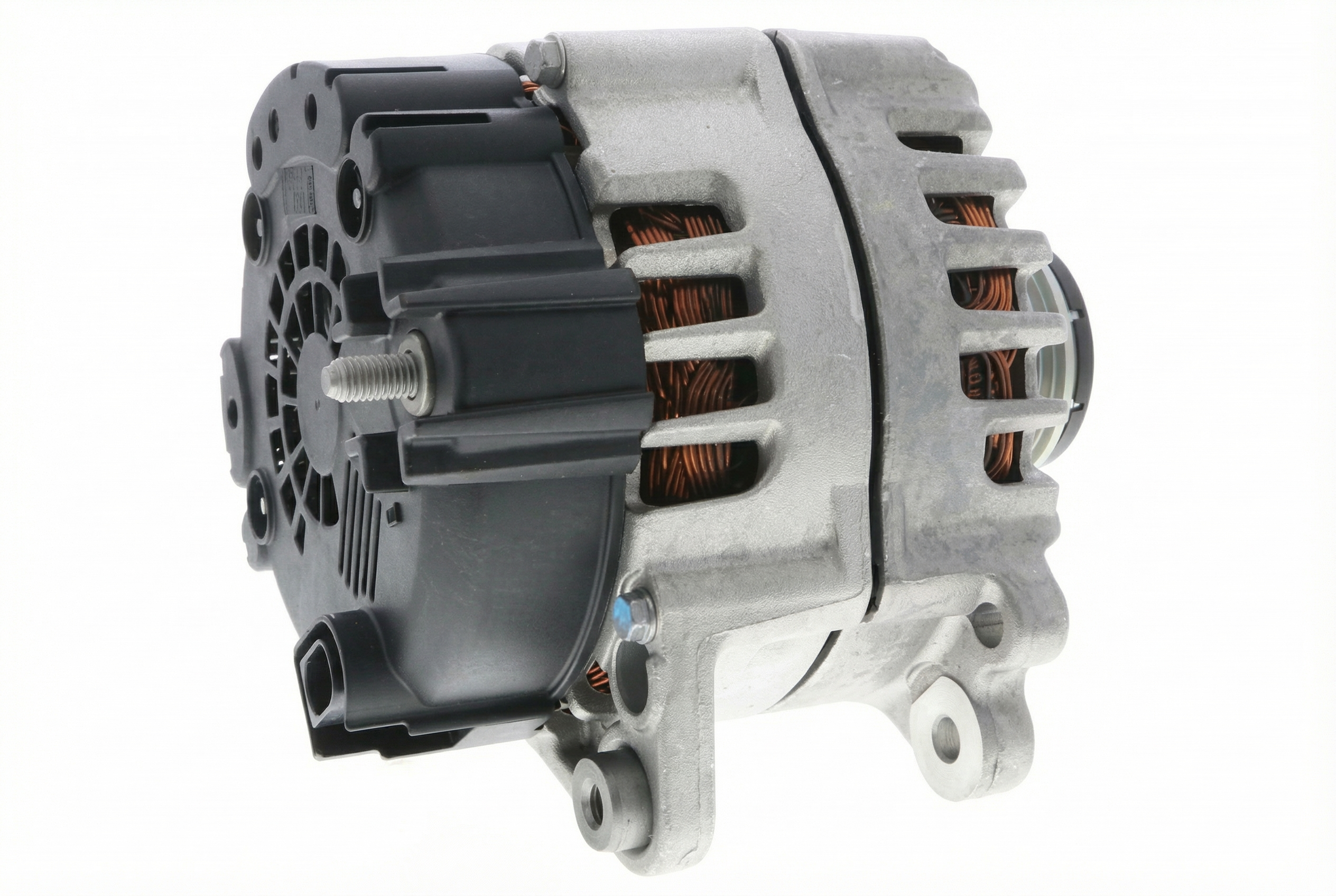
- Failing Alternator 🔴 High Probability → Shop Alternator Alternators are a common wear item, and a primary cause for P0562. On 3.0T models, the water-cooled alternator is a known failure point that can also leak coolant. On all models, worn internal components like the voltage regulator or brushes can cause failure.
How to confirm: With the engine running, use a multimeter to measure the voltage across the battery terminals. A reading below 13.5 volts indicates the alternator is not charging correctly. Perform a load test by turning on headlights, A/C, and the rear defroster; the voltage should not drop significantly below 13.2V. A VCDS scan may show a specific generator fault in the CAN Gateway measuring blocks or a LIN bus communication error.
Typical fix: Replace the alternator. On 3.0T models, this may be a water-cooled unit. On some models, just replacing the voltage regulator on the back of the alternator is possible, but access is very tight and may not solve issues with worn slip rings.
Est. part cost: $300-$900 - Weak or Old Battery 🔴 High Probability → Shop Vehicle Battery Vehicle batteries typically have a lifespan of 3-5 years. The Q5's complex electronics place a high demand on the battery, and an old battery may not be able to supply sufficient voltage, especially in cold weather or during startup.
How to confirm: With the engine off, measure the battery voltage with a multimeter. A healthy battery should read approximately 12.6 volts. A reading below 12.2V indicates a discharged or failing battery. Have the battery professionally load tested at an auto parts store, as a battery can show good voltage but fail under load.
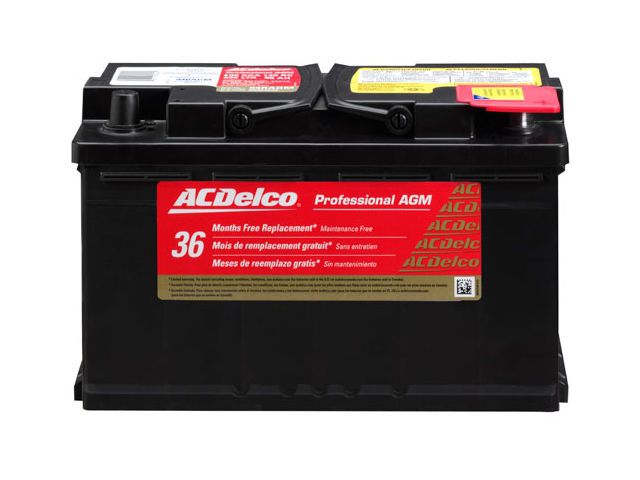
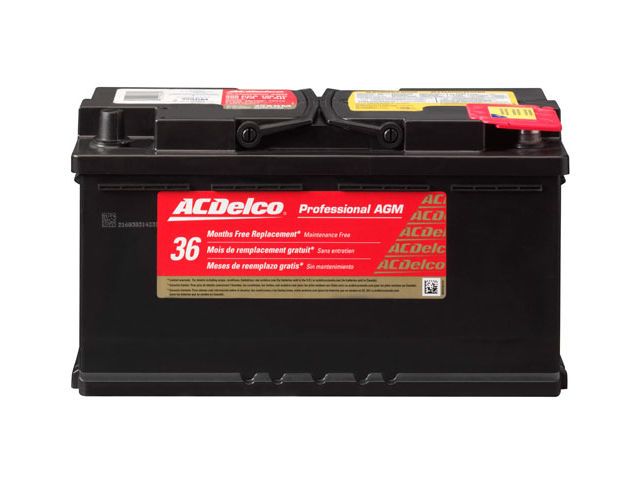
Typical fix: Replace the battery with a new AGM (Absorbent Glass Mat) type battery of the correct specification. The new battery must be coded to the vehicle's energy management system using a compatible scan tool like VCDS by entering the new battery's part number, serial number, and vendor code into the appropriate module (often Address 61 or 19).
Est. part cost: $200-$400 - Loose or Corroded Battery Terminals/Cables 🟡 Medium Probability → Shop Vehicle Battery The battery is located in the trunk under the spare tire 🎬 Watch: Step-by-step guide to removing the main battery, but there are also main power and ground posts in the engine bay. Corrosion or looseness at any of these points can cause voltage drops.
How to confirm: Visually inspect the battery terminals in the trunk for corrosion. Check that the cable clamps are tight. Also inspect the main ground cable from the battery to the chassis. In the engine bay, check the main engine-to-chassis ground strap, often located near a motor mount.
Typical fix: Disconnect the battery (negative terminal first). Clean the terminals, posts, and ground strap connection points with a wire brush and a solution of baking soda and water. Reconnect and tighten securely.
Est. part cost: $0-$20
Rare But Worth Checking
- Slipping or Broken Serpentine Belt: → Shop Serpentine Belt The serpentine belt drives the alternator. If it's loose, worn, glazed, or broken, it cannot spin the alternator pulley effectively, leading to a lack of charging. Listen for squealing noises on cold starts or when under electrical load.
- Parasitic Battery Drain: → Shop Vehicle Battery An electrical component may not be shutting off correctly when the car is parked, slowly draining the battery overnight. This can lead to a P0562 code upon startup. Diagnosis requires a multimeter set to measure amperage in series with the negative battery cable.
- Faulty Ground Strap: → Shop Engine Ground Strap A corroded or broken engine-to-chassis ground strap can create high resistance in the charging circuit, mimicking the symptoms of a bad alternator. On the Q5, a key ground strap is located on the motor mount. There are multiple other grounding points throughout the vehicle that can cause issues if corroded, such as G639 on the left A-pillar or G687 under the center console.
- Faulty Battery Energy Module (BEM/J644): → Shop Vehicle Battery The BEM module itself (also known as J644 or J367), located on the negative battery post, can fail and cause charging issues even with a good battery and alternator. It may misinterpret the battery's state and fail to command the alternator correctly.
Diagnosis Steps
- Read all fault codes from all vehicle modules using an Audi-compatible scanner (like VCDS). Note if P0562 is present in multiple modules, which points to a systemic issue.
- With the engine off, measure the battery's static voltage using a multimeter. It should be ~12.6V. If it's below 12.2V, charge the battery and have it load tested. If it won't hold a charge, it needs replacement.
- Start the engine. Measure the voltage at the battery terminals again. It should be between 13.5V and 14.7V. If it's low (e.g., 11.2V), the alternator is very likely the culprit.
- Perform a charging system load test. With the engine running, turn on the headlights, A/C, and rear defroster. The voltage should remain stable and above 13.2V. If it drops significantly, the alternator is failing under load.
- Visually inspect the battery terminals (in trunk) and main power/ground cables/posts (in engine bay) for corrosion or looseness. Clean and tighten as needed.
- Inspect the main engine-to-chassis ground strap for corrosion or damage. This is a common hidden cause of charging problems.
- Inspect the serpentine belt for proper tension, cracks, or glazing. A slipping belt can't turn the alternator effectively.
- If a new battery is installed, ensure it is coded to the vehicle's Battery Energy Management (BEM) system in the CAN Gateway (Address 19) or Battery Regulation module (Address 61) using VCDS or a similar tool.
Parts You'll Likely Need
- Alternator
(OEM #06E903018L (Example for 3.0T, verify by VIN))— This is the most common cause of a persistent P0562 code when the battery is known to be good. The alternator is responsible for charging the battery and powering the vehicle's electronics while running.
Trusted brands: Bosch, Valeo
OEM price range: $700-$1100
Aftermarket price range: $300-$600 - AGM Battery
(OEM #000915105AH (Example for 95Ah, verify by application))— The second most common cause. An old battery that can no longer hold a proper charge will trigger this code, especially on startup.
Trusted brands: Varta, Bosch, Interstate, Duralast
OEM price range: $300-$450
Aftermarket price range: $200-$350
Related Codes That Often Appear With This One
- Multiple codes in various modules — When system voltage is low, many of the vehicle's control modules may not have enough power to operate correctly, causing them to store fault codes or behave erratically. It's common to see a cascade of low-voltage and communication faults (U-codes) alongside P0562.
- P0016 — On 2.0T engines, a P0562 code has been seen alongside a P0016 (Crank/Cam Correlation) code in cases of timing chain failure. The low voltage is a symptom of the engine stalling or running very poorly due to the mechanical timing issue.
- P1602 — This code for "Power Supply Terminal 30: Voltage too Low" is often seen logged in the engine control module alongside P0562, reinforcing the diagnosis of a systemic low voltage condition.
Platform-Specific Known Issues
- Some 3.0T engines are equipped with a water-cooled alternator which is more prone to failure and more expensive to replace than a standard alternator.
- Failure to code a new battery to the vehicle's Battery Energy Management system will result in incorrect charging and premature failure of the new battery. This requires a tool like VCDS.
- The main engine ground strap can corrode, leading to charging system issues that mimic a failed alternator. It is located on the motor mount and should be inspected.
Mechanic-Grade Diagnostic Values
- Alternator LIN Bus Signal — expected: A pulsing digital signal when viewed on an oscilloscope. A multimeter may show fluctuating low voltage.. Failure: No signal, a flat line, or a constant voltage indicates a broken wire or a fault in the Battery Management System or alternator voltage regulator.
- VCDS Measuring Blocks for Battery/Alternator — expected: In Module 19 (CAN Gateway) or 61 (Battery Regulation), live data should show alternator load (%), battery state of charge (%), and system voltage (V). Expected voltage should be 13.5V-14.7V while running.. Failure: Alternator load at 0% while the engine is running, or system voltage matching battery static voltage (e.g., <12.6V) indicates a charging failure.
Hidden / Shadow Codes Worth Checking
- 02072: Energy Management Control Module (J644) Fault. This is not a standard P-code but can be found in a VCDS scan of the battery regulation module. (see via Requires an Audi-specific scan tool like VCDS or ODIS to scan module 61 (Battery Regulation). It often appears alongside a cascade of other low-voltage faults in other modules.)
Scan Tool Commands That Help
- VCDS (VAG-COM): Battery Coding Assistant — This is mandatory after replacing the vehicle's battery. Access module [61 - Battery Regulation] (or sometimes [19 - CAN Gateway] or [09 - Cent. Elect.]), select [Coding - 07], and use the assistant to enter the new battery's 11-digit part number, 10-digit serial number, and 3-character vendor code. Failure to do this results in incorrect charging and premature battery failure.
- VCDS (VAG-COM): View Measuring Blocks — Used to monitor the charging system in real-time. In module [19 - CAN Gateway] or [61 - Battery Regulation], you can view values for battery voltage, current, state of charge, and alternator load percentage to see if the system is commanding the alternator to charge and if it is responding.
Wiring & Ground Locations
- Engine Ground Strap — Typically connects the engine block to the chassis frame rail, often near one of the motor mounts.. A corroded or loose engine ground provides a poor return path for the charging system, causing high resistance and symptoms identical to a failed alternator.
- J367 / J644 - Battery Monitor/Energy Management Module — The J367 is the small module directly on the negative battery terminal in the trunk. The J644 is sometimes referenced as the same system, located in the rear right of the trunk area.. This module monitors the battery and controls the alternator via the LIN bus. Its failure can stop the alternator from charging.
- Alternator LIN Bus Wire — A single wire running from the alternator's voltage regulator to the Battery Management System (J367/J644) and CAN Gateway (J533). It is Pin 8 on the J644 connector.. This is the 'smart' charging signal wire. If it breaks or corrodes, the alternator will not receive the command to charge, even if the alternator itself is perfectly functional.
- G687 — Ground point located under the left front of the center console.. A poor ground at this location can affect various interior electronic modules, potentially causing parasitic drains or communication errors that accompany a P0562.
- G639 — Ground connection point on the left A-pillar.. Serves as a ground for various dashboard and central electronic components. Corrosion here can lead to erratic electrical behavior.
Real Owner Repair Stories
- Audi Owners Club UK forum user 'Romanrob' (Audi Q5 (8R Chassis), CAHA engine code) — Alternator warning light 'alternator not charging', energy management system shutting down accessories like A/C.
❌ Tried (didn't work) Initially replacing just the voltage regulator on the alternator.
✅ What actually fixed it Replacing the entire alternator. Upon inspection of the old unit, the brushes and slip rings were found to be severely worn. A new battery was also installed and coded with VCDS. - YouTube channel 'Alpha Autos' (2010 Audi Q5 2.0 TDI) — Alternator stopped charging, battery voltage low (11.18V while running).
❌ Tried (didn't work) Swapping in a known-good alternator did not solve the problem; it still would not produce a charge.
✅ What actually fixed it The diagnosis pointed to a faulty (corroded or broken) heavy-gauge wire that runs from the alternator to the starter motor. The mechanic's next step was to run a temporary bypass wire from the alternator's positive post directly to the battery jump post to confirm the fault in the original cable.
"I Checked Everything" — The Actual Cause
- While not a smoke test issue, a common parallel is when the alternator and battery both test 'good' individually, but the P0562 code persists. The hidden cause is often a break or corrosion in the single LIN bus communication wire between the Battery Management System and the alternator. The alternator is capable of charging but is never receiving the command to do so. Another cause can be high resistance in the main power cable from the alternator to the starter/battery, preventing full current flow.
When the Usual Fixes Don't Work
- In one documented case, replacing a known-bad alternator with a new one did not fix the no-charge condition. The issue was not the alternator itself, but a fault in the wiring between the alternator and the starter motor, which prevented the charge from reaching the rest of the vehicle. This highlights that even with a classic symptom pointing to a bad alternator, the root cause can be in the vehicle's wiring harness.
Model Year Variations Within This Range
- 2009-2012 (Pre-Facelift): These models often used a 150 Amp Valeo alternator (e.g., PN 06E-903-016-S) for the 3.2L V6 engine.
- 2013-2017 (Post-Facelift): The facelift introduced revised engines and electrical systems, including electromechanical power steering. The 3.0T V6 engine often uses a 180 Amp alternator, which can be a water-cooled unit. The 2.0T engine in this range may use a different alternator (e.g., PN 06H903017K).
- All (2009-2017): The specific control module for battery coding can vary. While often found in [61 - Battery Regulation], some vehicle configurations place this function within [09 - Cent. Elect.] or [19 - CAN Gateway].
Diagnostic Flowchart
Other Known Issues on This Vehicle
Issues unrelated to this code that are worth knowing about as an owner of this generation:
- Excessive Oil Consumption (2.0T TFSI) 🔴 High — Very common on early EA888 Gen 2 engines (approx. 2009-2014). Caused by faulty piston ring design. Can require a quart of oil every 1,000 miles or less. (Ref: Subject of a class-action lawsuit and multiple TSBs (e.g., TSB 2027731/5) for diagnosis and repair, which involves new pistons and rings.)
- Timing Chain Tensioner Failure (2.0T TFSI) 🔴 High — Common on earlier EA888 engines (approx. 2009-2013). The original tensioner can fail without warning, allowing the chain to jump time, causing catastrophic engine damage. (Ref: Subject of a class-action lawsuit. An updated tensioner (p/n 06K109467K) resolves the issue.)
- Water Pump & Thermostat Failure (All Engines) 🟠 Medium — Common across all engine variants, particularly the 2.0T and 3.0T. Plastic housings can crack and leak over time. Failure often occurs between 60k-100k miles. (Ref: Class-action lawsuits have addressed premature water pump failures on both 2.0T and 3.0T engines, leading to some warranty extensions.)
- Intake Valve Carbon Buildup (All FSI/TFSI Engines) 🟠 Medium — An inherent issue with direct-injection engines. Affects 3.2L FSI, 2.0T, and 3.0T. Buildup becomes significant enough to cause misfires, rough idle, and power loss every 60k-80k miles.
- PCV Valve Failure (All Engines) 🟠 Medium — The PCV (oil separator) diaphragm is prone to tearing, causing a loud whistling noise, high oil consumption, and rough idle. More complex to replace on the 3.0T as the supercharger must be removed.
- Leaking Panoramic Sunroof Drains 🟠 Medium — Common on 2011-2017 models. The sunroof drain tubes can clog or become disconnected, causing water to leak into the cabin, potentially damaging sensitive electronics in the dashboard or rear cargo area.
Used vs. New Parts: Buying Guide for This Vehicle
When a used part is the smart pick: A used alternator from a reputable salvage yard can be a cost-effective option, especially if the vehicle is older and you are trying to minimize repair costs. It is a moderately complex job, so the labor cost may justify the reliability of a new part for some owners.
Donor-vehicle mileage cap: roughly under 80000 miles for the part to have meaningful remaining life.
What to inspect on the donor part:
- Verify the part number matches your original unit, as amperage and mounting can vary.
- Spin the pulley by hand; it should be smooth with no grinding or roughness, which would indicate bad bearings.
- Inspect the electrical connector and B+ terminal for any signs of melting, corrosion, or damage.
- Ask if the part has been tested or if it comes from a vehicle that was known to be running without electrical issues.
OEM-only on this vehicle (don't cheap out):
- Battery Energy Management (BEM) Module (J367/J644) - Due to its deep integration with the vehicle's software and CAN bus system, using a used or non-OEM part can cause unpredictable issues.
Aftermarket brands forum-validated for this vehicle:
- Alternator: Bosch, Valeo (often the Original Equipment Manufacturer), Denso.
- Battery: Varta (OEM supplier), Bosch, Interstate.
Brands owners have reported issues with on this vehicle:
- Unbranded, 'white-box' alternators from generic online sellers. While cheap, forum discussions frequently mention higher failure rates compared to reputable remanufactured or new units from known brands.
Real Owner Stories
Aggregated from forums and TSBs cited above. Mileages and costs reflect what owners reported in those sources.
2015 Audi Q5
Symptoms: The owner needed to register a new non-OEM battery that had a different Amp-hour (Ah) rating than the factory unit.
What fixed it: Used VCDS to perform the battery registration process, specifically navigating the challenges of entering new data into the CAN Gateway (Address 19) to ensure the Battery Energy Management system recognized the new specs.
Source hint: Ross-Tech Forums - New battery registration process in VCDS for 2015 Audi Q5
Audi Q5 (MKI 8R)
Symptoms: A VCDS scan showed P0562 along with a 'cascade' of other low-voltage faults across almost all vehicle modules.
What fixed it: Diagnosis of a systemic voltage issue, typical of a failing alternator or battery that triggers multiple communication and low-voltage errors.
Source hint: AudiWorld Forums - FAULT CODES/ almost all related to voltage issue.... any ideas please
Audi Q5
Symptoms: The car would nearly stall whenever any electrical component (like lights or MMI) was used, even after a new alternator was installed. Battery showed 12.5V off and 13.7V when on.
What fixed it: Investigation into a high-resistance connection, specifically pointing toward a bad ground strap as the likely culprit for the voltage drop under load.
Source hint: Reddit r/mechanicadvice - P0562 System voltage low? (New Alternator, battery at 12.5 volts with car off, 13.7~ with car on)
Audi Q5
Symptoms: Owner experienced a charging fault and investigated the system, checking the BEM module on the negative terminal and the voltage regulator brushes.
What fixed it: After checking the battery and coding it with VCDS, the alternator was ultimately replaced to resolve the charging failure.
Source hint: Audi Owners Club (UK) - Alternators - Q5 Club
Audi Q5
Symptoms: An owner reported that their vehicle was towed to a specialist who pulled a P0562 low voltage code alongside a P001600 (Crank/Cam Correlation) code.
What fixed it: The presence of both codes led the owner to contact the manufacturer regarding timing issues, as documented in NHTSA ODI #11171521.
Source hint: NHTSA ODI #11171521
Related OBD-II Codes
Frequently Asked Questions
Why do I need to 'code' a new battery on my Audi Q5, and what happens if I don't?
My 3.0T Q5 has a charging fault; is the alternator different on this engine?
Can a bad ground strap cause P0562 even if my alternator and battery test fine?
Where are the battery terminals located for jump-starting or testing on the Q5?
What type of replacement battery does my 2009-2017 Audi Q5 require?
Helpful Videos


Used OEM Parts in Stock
New Aftermarket Parts Available



The information in this article is provided for general reference and educational purposes only. Vehicle specifications, procedures, and part compatibility can vary by production date, trim level, and region. Always consult your vehicle's factory service manual and verify part numbers before purchasing or performing repairs. Safety-critical components such as airbags, seat belts, and braking systems should be installed by a qualified professional.
- Audi Q5:
- 🧭 Diagnostic Flowchart
- 🎬 Helpful Videos
- 🛍️ Shop This Part
- What's Unique About the 2009-2017 Audi Q5
- Symptoms You May Notice
- Most Likely Causes
- Rare But Worth Checking
- Diagnosis Steps
- Parts You'll Likely Need
- Related Codes That Often Appear With This One
- Platform-Specific Known Issues
- Mechanic-Grade Diagnostic Values
- Hidden / Shadow Codes Worth Checking
- Scan Tool Commands That Help
- Wiring & Ground Locations
- Real Owner Repair Stories
- "I Checked Everything" — The Actual Cause
- When the Usual Fixes Don't Work
- Model Year Variations Within This Range
- Other Known Issues on This Vehicle
- Used vs. New Parts: Buying Guide for This Vehicle
- Real Owner Stories
- 2015 Audi Q5
- Audi Q5 (MKI 8R)
- Audi Q5
- Audi Q5
- Audi Q5
- Related OBD-II Codes
- Frequently Asked Questions
- 🎟️ Get 5% Off