

P0562 on 2012-2019 BMW 3 Series: System Voltage Low Causes and Fixes
On a 2012-2019 BMW 3 Series (F30), code P0562 is most often caused by a failing AGM battery, a faulty alternator, or a corroded engine-to-chassis ground strap. Crucially, if the battery was recently replaced without being 'registered' to the car's computer, this can also trigger the code. Expect to pay $200-$400 for a new battery and professional registration.
- P0562 on a BMW F30 is a serious code that should be addressed immediately to avoid stalling or being stranded.
- Always check the battery's age and the alternator's output first. These are the most common hardware failures.
- If you replace the battery, you MUST register it with the car's computer using a proper scan tool. Skipping this step will lead to more problems.
- Before replacing an expensive starter or alternator, inspect the inexpensive engine-to-chassis ground strap for corrosion or damage, as it's a known weak point.
What's Unique About the 2012-2019 BMW 3 Series
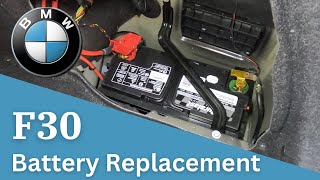
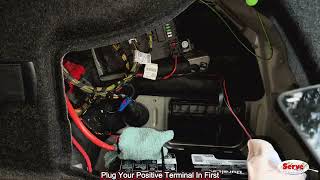
Unlike many vehicles, the 2012-2019 (F30 generation) BMW 3 Series uses a sophisticated Intelligent Battery Sensor (IBS) and a complex power management system. The IBS, attached to the negative battery terminal, monitors voltage, current, and temperature, communicating this to the DME. Because of this, simply swapping a dead battery is not enough. The new battery must be 'registered' with the vehicle's computer, telling it the new battery's capacity and type (usually AGM). If this step is skipped, 🎬 Watch this step-by-step battery replacement and registration guide. the system may continue to use the charging profile for an old, degraded battery, which can overcharge and quickly ruin the new one, leading to a P0562 code and other electrical faults.
Symptoms You May Notice
- Check Engine Light is on
- Battery or Charging System warning light on the dashboard
- iDrive screen displaying 'Charging malfunction' or 'Battery low' messages
- Dimming or flickering headlights and interior lights
- Slow or difficult engine starting
- Multiple, seemingly unrelated warning lights, such as 'Drivetrain Malfunction' or 'Transmission Malfunction'
- Erratic behavior from electrical accessories like the radio or windows
- Engine stalling, especially at idle
- Loud cooling fan operation, as the car tries to protect itself from potential overheating if the electric water pump communication is affected
- Replacing the battery but failing to register it, then blaming the new battery or the alternator when problems persist.
- Replacing the starter motor due to a slow-crank condition when the root cause is a high-resistance ground strap.
- Replacing the alternator when the actual problem is a corroded ground strap or a battery that can no longer hold a charge.
Most Likely Causes
- Failing or Weak Battery 🔴 High Probability → Shop Vehicle Battery Batteries are a wearable item with a typical lifespan of 3-5 years. The F30's complex electronics place a high demand on the battery, and the required AGM (Absorbent Glass Mat) batteries can be sensitive to deep discharging.
How to confirm: With the engine off, use a multimeter to test the voltage directly at the battery terminals. A healthy, fully charged AGM battery should read approximately 12.6-12.8 volts. A reading below 12.4V suggests a weak or discharged battery. A professional load test is the most definitive way to confirm a bad battery.
Typical fix: Replace the battery with a new one of the correct type (AGM) and capacity (Ah), and crucially, register the new battery with the vehicle's computer using a compatible scan tool.
Est. part cost: $200-$400 - New Battery Not Registered 🔴 High Probability → Shop Vehicle Battery This is a required procedure for all modern BMWs. Many DIYers or general repair shops are unaware of this step, leading to premature failure of the new battery and persistent charging warnings.
How to confirm: Use a BMW-specific scan tool (like ISTA, BimmerLink, or Carly) to check the battery registration history. It will show the mileage at which the last battery replacement was recorded. If a non-OEM battery is installed and the registration history is empty or shows very high mileage, it was likely never registered.
Typical fix: Register the currently installed battery using a diagnostic tool. If the battery has been in service for a long time without registration, it may already be damaged and require replacement.
Est. part cost: $0 if you have the tool, or $50-$150 for a shop to perform the service. - Failing Alternator 🟡 Medium Probability → Shop Alternator The alternator is responsible for generating all electrical power when the engine is running. The internal voltage regulator is a common failure point, leading to undercharging or no charging at all.
How to confirm: Start the engine and measure the voltage at the battery terminals. A healthy alternator should produce between 13.5 and 14.8 volts. If the voltage is below this range (e.g., in the 12s) or doesn't increase when the engine is running, the alternator is likely faulty.
Typical fix: Replace the alternator. It is often recommended to replace the serpentine belt 🎬 See how to diagnose and replace a failing alternator. at the same time.
Est. part cost: $400-$800 - Corroded or Broken Engine Ground Strap 🟡 Medium Probability → Shop Engine Wiring Harness The main engine-to-chassis ground strap is located underneath the car and is exposed to road salt and moisture, causing it to corrode, fray, and eventually break. This creates high resistance in the electrical circuit, fooling the DME into thinking system voltage is low.
How to confirm: Visually inspect the braided ground strap that connects the engine block to the vehicle's chassis. On many F30s, it's on the driver's side, low on the engine. Look for green corrosion, fraying, or a complete break. You can also perform a voltage drop test between the engine block and the negative battery terminal while cranking; a reading above 0.5 volts indicates a bad ground.
Typical fix: Replace the engine ground strap. This is a relatively inexpensive part but can be difficult 🎬 Watch how to replace a corroded engine ground strap. to access without lifting the vehicle.
Est. part cost: $25-$50
Rare But Worth Checking
- Faulty Intelligent Battery Sensor (IBS): → Shop Vehicle Battery The IBS is the small electronic module attached to the negative battery terminal. It can fail and send incorrect voltage or state-of-charge data to the DME. A failure here can also disrupt communication with other modules on the BSD line, like the water pump and alternator, causing a variety of symptoms.
- Parasitic Electrical Drain: A faulty module or accessory that doesn't 'sleep' properly can drain the battery overnight. This would typically be accompanied by a dead battery after the car sits for a period. Common culprits can be aftermarket accessories or a failing factory module. A BMW Service Bulletin noted that on some 2015+ models, the main Controller can delay the vehicle's sleep mode, causing a 'Increased battery drain' message (CCM 415).
- Loose or Corroded Battery Terminals: → Shop Vehicle Battery Always a good first check. A simple loose connection at the battery in the trunk or at the jump-start posts in the engine bay can cause a voltage drop.
Diagnosis Steps
- Read all fault codes from all modules using a BMW-compatible scanner. Note any other codes that may be present, especially communication or water pump codes.
- With the engine off, use a multimeter to measure the battery's static voltage at the terminals in the trunk. A reading should be above 12.4V. If it's lower, the battery is discharged or faulty.
- Start the engine. Measure the voltage at the battery terminals again. The reading should rise to between 13.5V and 14.8V. If it stays in the 12V range or lower, the alternator is not charging.
- If voltage tests are inconclusive, perform a professional battery load test to confirm its health.
- Inspect the battery terminals for tightness and corrosion. Also check the positive and negative jump-start posts in the engine bay.
- Visually inspect the main engine-to-chassis ground strap for corrosion or damage. This is a common failure point on BMWs and a known cause for this code.
- Use a scan tool to check the battery registration history. If the battery was recently replaced but not registered, perform the registration procedure.
- If all of the above check out, consider testing for a parasitic draw that could be draining the battery when the car is off. This involves using an ammeter to measure current draw after the vehicle has entered sleep mode (which can take up to 30-60 minutes).
Parts You'll Likely Need
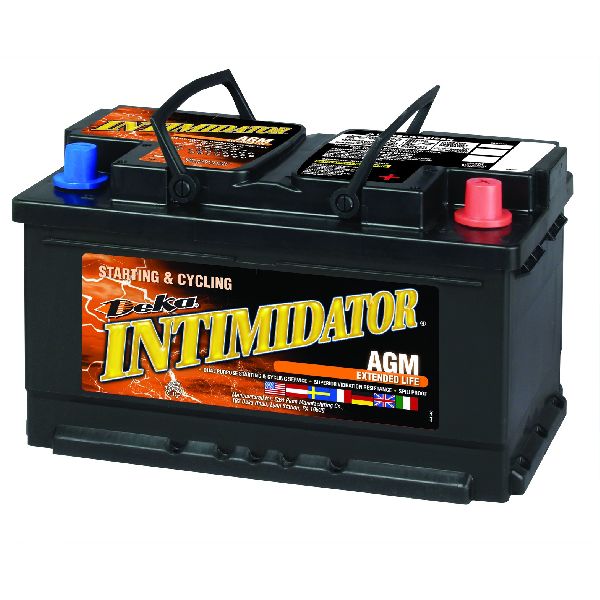
- AGM Battery
(OEM #Varies by capacity (e.g., 90Ah, 105Ah))— The battery is a consumable item and the most frequent cause of low voltage issues. F30s require a specific AGM type battery.
Related Codes That Often Appear With This One
- 2E81 (Coolant pump, speed deviation)
- 2E82 (Electric coolant pump, shutdown)
- Various communication faults if the IBS or a ground issue is affecting the BSD bus.
Platform-Specific Known Issues
- Failure to register a new battery is a primary cause of recurring P0562 codes and premature battery death on this platform.
- Corrosion of the main engine-to-chassis ground strap is a well-documented issue that can mimic the symptoms of a bad battery or starter.
Mechanic-Grade Diagnostic Values
- Voltage Drop Test: Engine to Chassis Ground — expected: Below 0.5 Volts. Failure: A reading above 0.5 Volts while cranking the engine indicates high resistance in the ground strap or its connections.
- Alternator Output Voltage (Engine Running, Loaded) — expected: 13.2V - 14.7V. Failure: Voltage dropping below 12V with accessories on (headlights, blower fan) points to a failing alternator.
- Static Battery Voltage (Engine Off) — expected: ~12.6V. Failure: A reading below 12.4V indicates a discharged or weak battery. If voltage drops below 9V during a load test, the battery is bad.
Hidden / Shadow Codes Worth Checking
- CC-ID 415: Check Control Message for 'Increased Battery Discharge'. This message often appears on the iDrive screen when a parasitic drain is present or the battery is failing. A Technical Service Bulletin (B61 05 20) links this message on F30s to a Controller module that delays the vehicle's sleep mode. (see via iDrive display, or read from Check Control Memory with a BMW-specific scan tool.)
Scan Tool Commands That Help
- ISTA: Energy Diagnosis Test Plan — This is the primary diagnostic procedure for any discharged battery complaint on a modern BMW. It analyzes data from various control units to identify sleep inhibitors, parasitic draws, and charging system faults, listing the most likely causes.
- ISTA/BimmerLink/Carly: Register Battery Replacement — This function is mandatory after installing a new battery. It resets the vehicle's charging strategy to match the new battery's capacity and type, preventing premature failure. The path in ISTA is 'Vehicle management > Service functions > Body > Voltage supply > Battery > Register battery change'.
Wiring & Ground Locations
- Engine Ground Strap (N55) — Bolts to the rear of the cylinder head on the driver's side, connecting to the chassis. It is often described as the only ground for the engine and transmission.. This is the primary ground path for the entire engine electrical system, including the alternator and starter. Corrosion or breakage here creates high resistance, causing slow cranking, no-start conditions, and low voltage codes like P0562.
- Engine Ground Strap (N20/N26) — Underneath the car, connecting the driver's side engine mount bracket to the body/frame rail. It is a braided strap secured by 13mm bolts.. Like the N55, this is the main ground connection. Its location under the car makes it highly susceptible to corrosion from road salt and moisture, which is a very common cause of failure leading to P0562.
- Positive Cable Junction Post — In the engine bay, where the positive cable from the alternator connects to the starter and then to a distribution post before heading to the battery.. A loose connection at this positive junction nut can prevent the alternator from charging the battery and can also cause intermittent starting issues, mimicking a bad alternator or ground strap.
Real Owner Repair Stories
- F30POST user @exE36M3 (BMW F30 (engine not specified)) — Slow engine starts, followed by intermittent 'Charging Malfunction' and 'Low Battery' iDrive messages, eventually leading to a no-crank/no-start condition even with a jumper pack.
❌ Tried (didn't work) Replacing the battery and registering it.
✅ What actually fixed it The user found and tightened a loose hex nut on the positive cable junction point where the alternator cable meets the starter cable. This restored the charging circuit and resolved all symptoms. - Reddit user on r/F30 (2016 320i xDrive with 120,xxx miles) — Recurring 'Charging Malfunction' message. Car could be driven for ~40 minutes before issues arose.
❌ Tried (didn't work) Having the starting/charging system checked at AutoZone (it tested 'good')., Replacing the serpentine belt, assuming it was slipping.
✅ What actually fixed it The car eventually died on the side of the road. Replacing the alternator completely fixed the problem and cleared the warnings. - XBimmers user on Bimmerpost (BMW X1 (shares F30 architecture)) — Auto start/stop failure, transmission errors, and finally a no-crank, no-start condition with multiple error lights. The starter just clicked.
❌ Tried (didn't work) Charging the battery., Swapping in a known-good battery., Attempting to jump-start the vehicle.
✅ What actually fixed it The engine-to-chassis ground strap had corroded and disintegrated upon being touched. Replacing the strap with a $10 aftermarket part immediately solved the no-start condition and all associated electrical errors.
OEM Part Supersession History
12317605478→12317605061, 12315A5BB80— Standard part evolution and supplier changes for the 210 Amp alternator used on N20/N26 engines.
Heads up: While Bosch and Valeo units are often physically interchangeable, their internal components like voltage regulators are not. Always use the pulley that comes with the new alternator, as they are not interchangeable between brands.N/A→12427614083— This is a common part number for the engine ground strap on various F30 models.
Model Year Variations Within This Range
- 2016+: For the 2016 LCI (Life Cycle Impulse) refresh, the N-series engines (N20, N55) were replaced by the new B-series engines (B48, B58). While the charging system architecture is fundamentally similar, specific part numbers for alternators and their mounting will differ. For example, a B58 engine uses alternator P/N 12318614276.
Diagnostic Flowchart
Other Known Issues on This Vehicle
Issues unrelated to this code that are worth knowing about as an owner of this generation:
- N20/N26 Timing Chain Guide Failure 🔴 High — Common on pre-2015 models, typically manifests between 60,000-100,000 miles. Listen for a distinct whining sound from the front of the engine. (Ref: BMW issued a limited warranty extension (SIB 11 03 17) for 7 years/70,000 miles, but many failures occur after this period.)
- N55 Oil Filter Housing Gasket (OFHG) Leak 🟠 Medium — Very common failure, often occurring between 50,000-80,000 miles. The gasket hardens and leaks oil onto the serpentine belt, which can cause the belt to slip off and be ingested by the main crank seal, leading to catastrophic engine failure.
- N55/N20 Electric Water Pump Failure 🔴 High — The electric water pump can fail without warning, typically between 60,000-100,000 miles, causing rapid overheating. Symptoms include loud fan noise and iDrive temperature warnings. (Ref: Fault codes 2E81 and 2E82 are common indicators.)
- N55/N20 Valve Cover & Gasket Leak 🟠 Medium — The plastic valve cover can warp and the gasket can harden, causing oil leaks, often noticeable by a burning oil smell. This is common after 60,000 miles.
- N20/N26/N55 Oil Leaks from Oil Pan Gasket 🟡 Low — Less frequent than OFHG or valve cover leaks, but still a common source of oil drips as the vehicle ages, typically over 80,000 miles. Repair is labor-intensive as the subframe must be dropped.
Used vs. New Parts: Buying Guide for This Vehicle
When a used part is the smart pick: A used OEM alternator from a low-mileage, non-accident donor vehicle can be a cost-effective option. Given the high cost of new OEM units, a tested used part from a reputable salvage yard is a reasonable choice, especially if the failure on the original car was due to high mileage wear-out.
Donor-vehicle mileage cap: roughly under 70000 miles for the part to have meaningful remaining life.
What to inspect on the donor part:
- Check for a clean, corrosion-free housing.
- Spin the pulley by hand; it should be smooth with no grinding or roughness, which would indicate bad bearings.
- Ensure the electrical connector pins are straight and clean.
- Ask the seller if the part has been tested for voltage output.
OEM-only on this vehicle (don't cheap out):
- Intelligent Battery Sensor (IBS) - Aftermarket versions have a high failure rate and can cause communication issues on the BSD line.
Aftermarket brands forum-validated for this vehicle:
- Bosch (new or remanufactured)
- Valeo (new)
- Denso (new)
Brands owners have reported issues with on this vehicle:
- Unbranded, 'white-box' alternators from online marketplaces. Forum discussions frequently mention premature failures with no-name remanufactured units. While a Duralast from a parts store may work, OEM suppliers like Bosch or Valeo are considered a safer bet.
Real Owner Stories
Aggregated from forums and TSBs cited above. Mileages and costs reflect what owners reported in those sources.
2013 BMW 335i N55
Symptoms: P0562 code along with a 'Charging Malfunction' message. Voltage tests showed the system was only putting out 12.1V while the engine was running.
What fixed it: Replacing the alternator with a Valeo unit resolved the issue.
Source hint: F30.Bimmerpost.com thread titled 'Charging Malfunction' (https://f30.bimmerpost.com/forums/showthread.php?t=1324033)
2012-2019 BMW 3 Series (F30)
Symptoms: Persistent 'Increased Battery Discharge' warnings. The battery was only a year old but could no longer hold a sufficient charge.
What fixed it: Replacing the battery with a new AGM unit and correctly registering it with the vehicle's computer.
Source hint: Common cause 'Failing or Weak Battery' real-world story
2012-2019 BMW 3 Series (F30)
Symptoms: P0562 code and 'low battery' warnings appeared within weeks of installing a new battery DIY.
What fixed it: A shop performed the battery registration service using a diagnostic tool, which cleared the codes and returned the charging system to normal.
Source hint: Common cause 'New Battery Not Registered' real-world story
2012-2019 BMW 3 Series (F30)
Symptoms: Chasing electrical gremlins and a P0562 code for months. The owner had already replaced the battery but the issues persisted.
What fixed it: Discovered the engine-to-chassis ground strap had corroded and snapped; replacing the strap resolved all electrical issues.
Source hint: Bimmerfest.com discussion on engine ground strap failure
Related OBD-II Codes
Frequently Asked Questions
Why does my BMW 3 Series show a 'Drivetrain Malfunction' along with the P0562 code?
I just replaced the battery in my 2014 328i; why am I still getting 'Battery low' messages and a P0562 code?
Can a bad ground strap cause a P0562 code on my N20/N55 engine?
What should the voltage reading be for a healthy AGM battery in my 3 Series?
How do I know if my alternator is the cause of the P0562 code?
Why is my cooling fan running at high speed when I have a P0562 code?
Helpful Videos



We Have This Part in Stock



The information in this article is provided for general reference and educational purposes only. Vehicle specifications, procedures, and part compatibility can vary by production date, trim level, and region. Always consult your vehicle's factory service manual and verify part numbers before purchasing or performing repairs. Safety-critical components such as airbags, seat belts, and braking systems should be installed by a qualified professional.
- BMW 3 Series:
- 🧭 Diagnostic Flowchart
- 🎬 Helpful Videos
- 🛍️ Shop This Part
- What's Unique About the 2012-2019 BMW 3 Series
- Symptoms You May Notice
- Most Likely Causes
- Rare But Worth Checking
- Diagnosis Steps
- Parts You'll Likely Need
- Related Codes That Often Appear With This One
- Platform-Specific Known Issues
- Mechanic-Grade Diagnostic Values
- Hidden / Shadow Codes Worth Checking
- Scan Tool Commands That Help
- Wiring & Ground Locations
- Real Owner Repair Stories
- OEM Part Supersession History
- Model Year Variations Within This Range
- Other Known Issues on This Vehicle
- Used vs. New Parts: Buying Guide for This Vehicle
- Real Owner Stories
- 2013 BMW 335i N55
- 2012-2019 BMW 3 Series (F30)
- 2012-2019 BMW 3 Series (F30)
- 2012-2019 BMW 3 Series (F30)
- Related OBD-II Codes
- Frequently Asked Questions
- 🎟️ Get 5% Off