

P0563 on 2015-2026 Ford Transit: System High Voltage Causes and Fixes
P0563 on a Ford Transit indicates the charging system voltage is too high, almost always due to a failing alternator with a bad internal voltage regulator. Expect to pay $300-$600 for a quality replacement alternator, with DIY difficulty rated at 3/5.
- P0563 means the charging system voltage is dangerously high, and you should stop driving immediately to prevent damage to expensive electronics.
- The most common cause by far is a failed internal voltage regulator, which requires replacing the entire alternator.
- Before replacing the alternator, always perform a key diagnostic test: unplug the alternator's 3-wire connector. If the voltage drops to a normal default level (~13.5V), the problem is in the control wiring, not the alternator itself.
- Check for a specific known issue: an open in the alternator sense wire circuit between the battery fuse box and connector C139 near the driver's side strut tower.
What's Unique About the 2015-2026 Ford Transit
The Ford Transit uses a 'smart charging' system where the PCM actively controls the alternator's output based on battery condition, temperature, and electrical load. This makes proper diagnosis of the control wiring crucial. A simple wiring fault, such as an open in the sense circuit, can trick the alternator into defaulting to maximum output, causing an overcharge condition even if the alternator itself is mechanically sound. Therefore, while the alternator is the most common failed part, assuming it's bad without testing the control circuit can lead to a misdiagnosis. Some owners who install large auxiliary battery systems for camper conversions intentionally disable the smart charging via the C33-E connector under the driver's seat to achieve a more consistent, higher voltage output.
Symptoms You May Notice
- Check Engine Light illuminated
- Red battery warning light on the dashboard
- Warning message in the instrument cluster like 'Electrical System Overvoltage'
- Gauges on the instrument cluster behaving erratically or dropping to zero
- Headlights appearing unusually bright
- Engine stalling or having difficulty starting
- Harsh or improper automatic transmission shifting
- Intermittent operation of electrical accessories (radio, windows)
- Replacing the battery. While a faulty battery can cause many electrical issues, it is not a common cause of a high voltage condition. The primary cause is almost always the component that *creates* the voltage: the alternator. However, a battery with high internal resistance can contribute to higher charging voltages.
Most Likely Causes
- Failing Alternator / Internal Voltage Regulator 🔴 High Probability → Shop Voltage Regulator The voltage regulator is internal to the alternator and is the most common failure point leading to an overcharge condition. It's a non-serviceable part, requiring replacement of the entire alternator assembly. 🎬 See this step-by-step alternator replacement walkthrough
How to confirm: With the engine running, use a multimeter to measure the voltage across the battery terminals. A reading consistently above 15.0V confirms an overcharging condition. You can also disconnect the 3-wire control connector from the alternator; it should default to a charge of around 13.5V. If it still charges high (e.g., 18V), the alternator is faulty.
Typical fix: Replace the alternator.
Est. part cost: $250-$600 - Damaged Alternator Control Wiring or Connectors 🟡 Medium Probability → Shop Alternator The wiring harness to the alternator can be susceptible to heat, vibration, and corrosion, leading to an open or shorted circuit in the voltage sense wire. This causes the PCM to lose control of the alternator, which then defaults to maximum output.
How to confirm: Visually inspect the 3-wire connector and harness at the alternator for damage. Check for power at the appropriate pin on the connector (e.g., the red wire on pin 3). An ALLDATA tech tip specifically noted an open circuit between the fuse box and connector C139 as a confirmed cause on a 2016 Transit. The C139 connector is located near the left strut tower.
Typical fix: Repair the damaged section of the wiring harness or replace the connector pigtail. In the confirmed case study, a wire overlay was run between the fuse and connector C139 to fix the open circuit.
Est. part cost: $20-$100 - Poor Battery or Ground Connections ⚪ Low Probability → Shop Vehicle Battery Corrosion on battery terminals or a loose/corroded main ground strap can create high resistance, confusing the charging system's voltage sense and potentially leading to an overcharge.
How to confirm: Visually inspect the battery terminals, posts, and the main chassis ground connections for corrosion or looseness. Perform a voltage drop test on the ground side to check for high resistance.
Typical fix: Clean the battery terminals and posts thoroughly. Clean or replace corroded ground straps.
Est. part cost: $5-$50
Rare But Worth Checking
- Faulty Powertrain Control Module (PCM): → Shop Engine Control Module (ECM) This is very rare. Before condemning the PCM, all other possibilities, including the alternator, wiring, and connections, must be exhaustively ruled out. A faulty PCM voltage-monitoring circuit can misread a normal voltage as high.
Diagnosis Steps
- Verify the code with an OBD-II scanner.
- With the engine off, use a multimeter to check the battery's state of charge. A healthy battery should read around 12.4-12.6 volts.
- Start the engine and measure the voltage at the battery terminals. If the voltage is above 15.0V (some sources say 15.5V), the system is overcharging.
- Visually inspect the battery terminals, cables, and main ground connections for any signs of corrosion or damage.
- Disconnect the 3-wire electrical connector at the back of the alternator. Start the engine and briefly rev it a few times. The alternator should default to a safe charging voltage of approximately 13.5V-13.7V.
- If the voltage still reads high (e.g., 16V+) with the connector unplugged, the alternator's internal voltage regulator has failed and the alternator must be replaced.
- If the voltage drops to the default ~13.5V with the connector unplugged, the alternator is likely good, and the problem is in the control circuit. Check for power on the sense wire (often red, pin 3) in the connector. If there is no power, trace the circuit back, checking fuses (like inline fuse #1 at the battery fuse box) and connectors (like C139 near the left strut tower) for opens or corrosion.
- If wiring and connections are good, but the code persists, the issue could be a rare PCM fault.
Parts You'll Likely Need
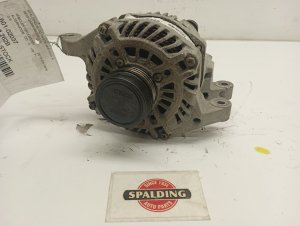
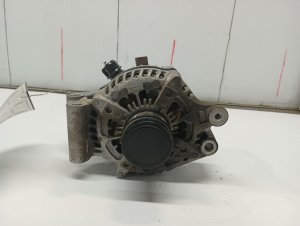
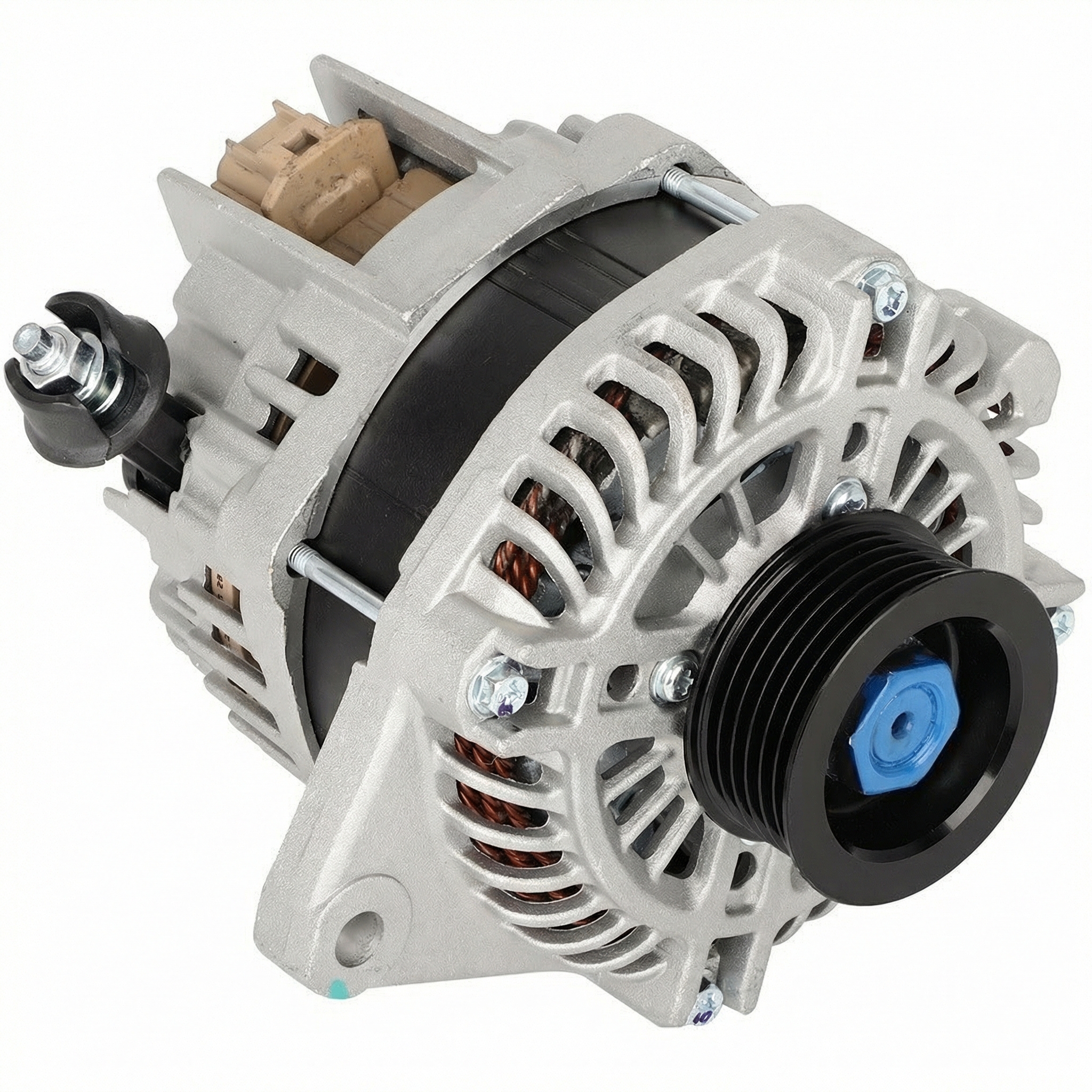
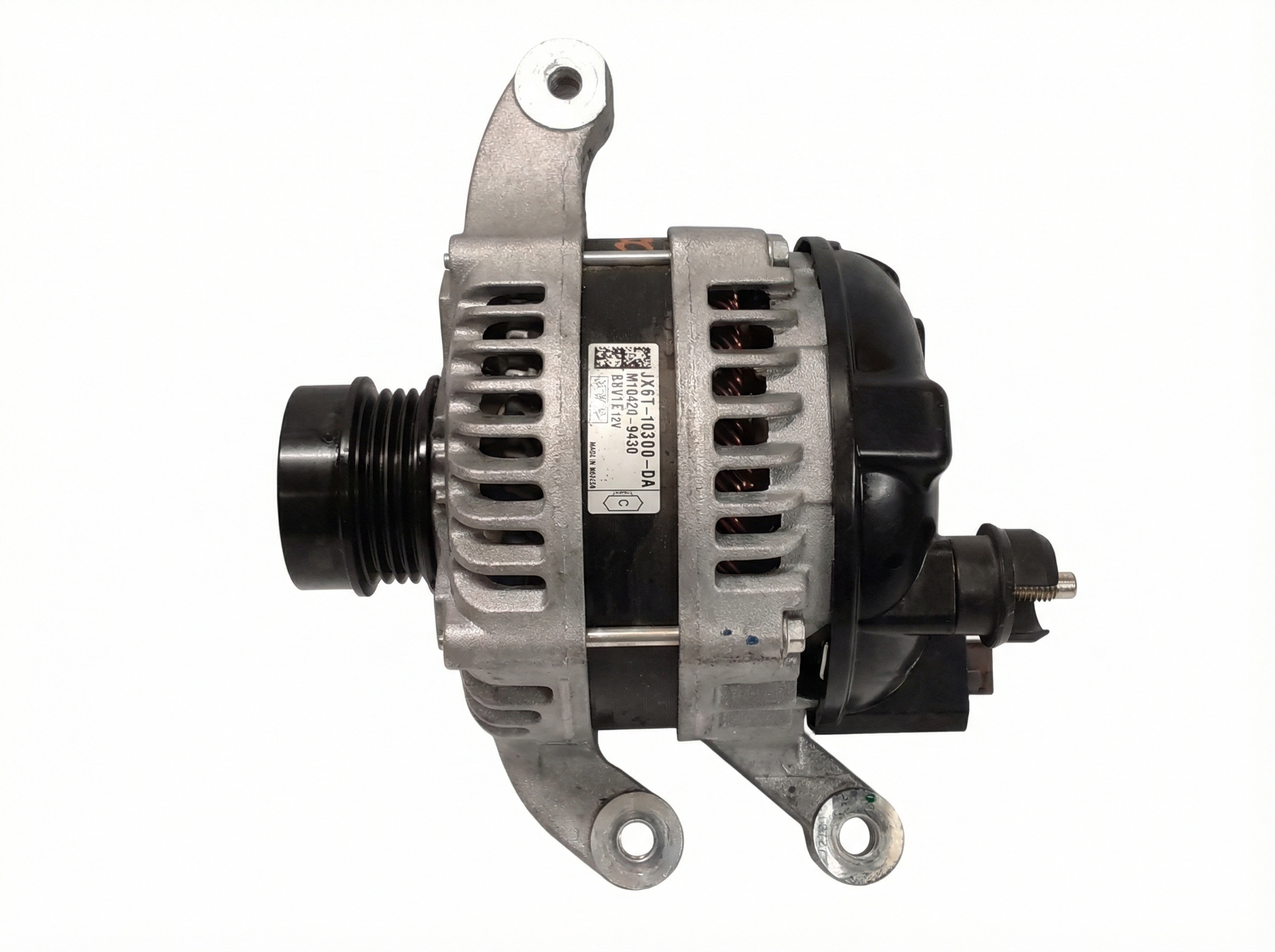
- Alternator
(OEM #CK4Z-10346-A (150 Amp), GL-8699 (Motorcraft 150 Amp), CK4Z-10346-E (230 Amp), GL-9892 (Motorcraft 230 Amp))— The internal voltage regulator is the most common failure point, and it is serviced as part of the complete alternator assembly.
Trusted brands: Motorcraft, Bosch, Denso
OEM price range: $400-$700
Aftermarket price range: $250-$450
Related Codes That Often Appear With This One
- P0620 — Stands for 'Generator Control Circuit Malfunction' and indicates a general fault in the communication between the PCM and the alternator, often appearing with P0563.
- P0625 — Stands for 'Generator Field 'F' Terminal Circuit Low', pointing directly to a problem in the alternator's control circuit.
- P065B — Stands for 'Generator Control Circuit Range/Performance', also indicating the PCM is detecting an issue with its ability to control the alternator's output.
Technical Service Bulletins (TSBs) & Recalls
- While no TSB is directly for P0563, TSB 22-2271 addresses a driveline boom/hum noise at highway speeds, a common issue for this platform.
Platform-Specific Known Issues
- A known issue on some Ford Transits involves an open circuit in the alternator sense wire between the battery fuse box and a connector known as C139, located near the driver's side strut tower. This specific wiring fault will cause the alternator to default to maximum output, creating an 18V+ overcharge condition and triggering code P0563.
Mechanic-Grade Diagnostic Values
- Alternator 3-wire connector Pin 3 (Sense Circuit, often Red wire) voltage with connector unplugged, Key On Engine Off — expected: Should match battery voltage (approx. 12.6V). Failure: Zero volts indicates an open circuit between the battery fuse box and the alternator connector.
- Alternator output voltage with 3-wire connector unplugged, engine running — expected: System should default to approximately 13.5V - 13.7V.. Failure: Voltage remaining high (16V+) indicates a failed internal voltage regulator.
- GEN-COM (Generator Command) signal at alternator connector — expected: A 128 Hz variable duty cycle square wave signal from the PCM. Higher duty cycle commands a higher voltage set point.. Failure: No change in the square wave pattern when electrical loads are applied may indicate a PCM fault.
- GEN-MON (Generator Monitor) signal at alternator connector — expected: A constant square wave pattern from the alternator to the PCM indicating load.. Failure: If this pattern mirrors the GEN-COM signal, the smart charge portion of the alternator is faulty.
- P0563 trigger threshold — expected: Normal charging is 13.2V - 14.8V.. Failure: Code is typically set when system voltage exceeds 15.5V or 16.0V.
Scan Tool Commands That Help
- Ford IDS / High-End Scan Tool: Live Data Monitoring of Generator PIDs — Use to monitor the PCM's commanded duty cycle to the alternator (GEN-COM) and the alternator's feedback (GEN-MON or F terminal duty cycle). This helps determine if the PCM is trying to control the alternator and if the alternator is responding as expected. The F terminal duty cycle should be between 5-95% depending on load.
Wiring & Ground Locations
- C139 — In the engine compartment, near the driver's side (left) strut tower.. This connector is a known point of failure for the alternator sense wire. An open circuit between the battery fuse box and C139 will cause a no-power condition on pin 3 of the alternator connector, leading to a default high-charge state (18V+).
- Inline Fuse #1 — At the battery-positive terminal fuse box (Battery Junction Box).. This fuse protects the alternator sense circuit. Although the fuse itself may be good, the wire from this fuse to connector C139 can develop an open.
- G103 — Located at the left rear of the engine compartment on the cowl, above the brake booster.. This is a critical ground for the Body Control Module (BCM) and Instrument Panel Cluster (IPC). A poor connection here can cause erratic gauge behavior and other electrical symptoms associated with P0563.
- G104, G105, G106 — Main engine and chassis grounds, often located on the frame rail near the front of the engine.. These are the primary ground points for the engine and charging system. High resistance at these points can confuse the charging system and contribute to voltage regulation problems.
Real Owner Repair Stories
- ALLDATA Tech Tips (2016 Ford Transit 150 V6-3.7L with 159,637 miles) — Multiple warning lights on, all gauge needles dropped to zero upon engine start, charging system at 18 volts.
❌ Tried (didn't work) Initial assumption was a faulty alternator.
✅ What actually fixed it The technician disconnected the alternator's 3-wire connector and the voltage defaulted to a normal 13.7V, proving the alternator was good. A check found zero volts at the red sense wire (pin 3). The fault was an open circuit in the wire between inline fuse #1 (at the battery fuse box) and connector C139. A wire overlay was run between the fuse and C139 to bypass the open, which restored normal charging and fixed the issue.
OEM Part Supersession History
CK4Z-10346-A→Current— This is a common OEM part number for the 150 Amp alternator used from 2015-2019.
Heads up: Also known by Motorcraft part number GL-8699. Always verify the required amperage (150A, 230A, etc.) for the specific vehicle configuration.
Diagnostic Flowchart
Other Known Issues on This Vehicle
Issues unrelated to this code that are worth knowing about as an owner of this generation:
- Driveshaft Flexible Coupling (Guibo) Failure 🔴 High — Very common on 2015-2017 models, leading to a major recall. Failure can cause loss of power and damage to surrounding components. (Ref: Recall 17S15, superseded by 19S38)
- Sliding Door Misalignment and Latch Problems 🟠 Medium — Common across all model years due to heavy use. Doors can become difficult to open or close, often requiring adjustment of the strikers and rollers.
- Transmission Problems (Early Models) 🔴 High — 2015-2017 models are noted to have more frequent issues with erratic shifting and premature transmission failure.
- Brake Vacuum Pump Failure 🔴 High — Some models, particularly those with EcoBoost engines, can experience failure of the vacuum pump, leading to a loss of power brake assist. (Ref: Recall for some models to replace oil pump drive belt and tensioner, which can affect vacuum pump operation.)
- Driveline Boom/Hum Noise at Highway Speeds 🟡 Low — Affects 2015-2022 RWD models, causing a resonant noise at specific highway speeds. (Ref: TSB 22-2271)
Used vs. New Parts: Buying Guide for This Vehicle
When a used part is the smart pick: A used OEM (Motorcraft) alternator from a low-mileage, newer model year donor vehicle can be a cost-effective option, as the failure mode is typically the internal electronics, not mechanical wear. It is generally a better choice than a new, cheap, no-name aftermarket part.
Donor-vehicle mileage cap: roughly under 70000 miles for the part to have meaningful remaining life.
What to inspect on the donor part:
- Check for a clean, corrosion-free housing and pulley.
- Ensure the 3-pin electrical connector is not damaged or cracked.
- Spin the pulley by hand; it should be smooth with no grinding or excessive noise.
- Ask the salvage yard if they have tested the unit or offer a short warranty.
OEM-only on this vehicle (don't cheap out):
- While not strictly OEM-only, using a Motorcraft (OEM) or a reputable remanufacturer (Bosch, Denso) is highly recommended. The PCM's smart-charging system is sensitive and may not communicate properly with low-quality aftermarket voltage regulators.
Aftermarket brands forum-validated for this vehicle:
- Motorcraft (OEM)
- Bosch (Remanufactured)
- Denso (Remanufactured)
- Duralast Gold (from AutoZone, often a remanufactured OEM unit)
Brands owners have reported issues with on this vehicle:
- Unbranded, 'white-box' alternators from online marketplaces should be avoided due to a high likelihood of premature failure or incompatibility with the Ford smart charge system.
Real Owner Stories
Aggregated from forums and TSBs cited above. Mileages and costs reflect what owners reported in those sources.
2016 Ford Transit
Symptoms: The vehicle experienced an 18V overcharge condition, triggering a high voltage code.
What fixed it: Technicians found an open circuit between the fuse box and connector C139 near the left strut tower; they performed a wire overlay between the fuse and the connector to restore the circuit.
Source hint: ALLDATA Tech Tips case study
2015-2026 Ford Transit (Camper Conversion)
Symptoms: Owner needed a stable voltage output for charging auxiliary batteries rather than the fluctuating voltages of the smart charging system.
What fixed it: Enabled 'Third Party High Power Mode' (TPHPM) by grounding a specific pin on the C33-E connector located under the driver's seat.
Source hint: FordTransitUSAForum.com threads on smart charging system complexities
Related OBD-II Codes
Frequently Asked Questions
My 2016 Ford Transit is charging at 18V and throwing P0563. Is there a specific wiring spot I should check?
I'm converting my Transit into a camper; why does the forum suggest grounding a pin under the seat?
My battery voltage is reading 14.9V on my 2015 Transit. Is this too high?
Can I just replace the voltage regulator on my Transit's alternator to fix P0563?
Does TSB 22-2271 explain why my gauges are dropping to zero and triggering P0563?
Is there a specific fuse I should check for the alternator sense circuit?
Helpful Videos
We Have This Part in Stock

The information in this article is provided for general reference and educational purposes only. Vehicle specifications, procedures, and part compatibility can vary by production date, trim level, and region. Always consult your vehicle's factory service manual and verify part numbers before purchasing or performing repairs. Safety-critical components such as airbags, seat belts, and braking systems should be installed by a qualified professional.
- Ford Transit:
- 🧭 Diagnostic Flowchart
- 🎬 Helpful Videos
- 🛍️ Shop This Part
- What's Unique About the 2015-2026 Ford Transit
- Symptoms You May Notice
- Most Likely Causes
- Rare But Worth Checking
- Diagnosis Steps
- Parts You'll Likely Need
- Related Codes That Often Appear With This One
- Technical Service Bulletins (TSBs) & Recalls
- Platform-Specific Known Issues
- Mechanic-Grade Diagnostic Values
- Scan Tool Commands That Help
- Wiring & Ground Locations
- Real Owner Repair Stories
- OEM Part Supersession History
- Other Known Issues on This Vehicle
- Used vs. New Parts: Buying Guide for This Vehicle
- Real Owner Stories
- 2016 Ford Transit
- 2015-2026 Ford Transit (Camper Conversion)
- Related OBD-II Codes
- Frequently Asked Questions
- 🎟️ Get 5% Off