

P0603 on 2003-2011 Saab 9-3: Keep Alive Memory (KAM) Error Causes and Fixes
On a 2003-2011 Saab 9-3, code P0603 is most often caused by a weak or failing battery. These cars are known for sensitive electronics that react poorly to low voltage. Before replacing any other parts, fully charge and load-test your battery and clean all battery terminals and main ground connections. This simple step resolves the issue in the vast majority of cases.
- P0603 on a Saab 9-3 is almost always a power supply problem, not a computer problem.
- Start your diagnosis by load-testing the battery. A simple voltage check may not be enough.
- Thoroughly clean and tighten your battery terminals and main chassis/engine ground straps (G2 and G25).
- If the battery and grounds are perfect, investigate potential parasitic draw from common culprits like the audio amplifier or old OnStar module before suspecting the ECU.
What's Unique About the 2003-2011 Saab 9-3
The second-generation Saab 9-3 (chassis 9440) is known for having a particularly 'finicky' or sensitive electrical system. Owners and mechanics report that these cars react strongly to even minor drops in battery voltage, sometimes refusing to start even with a booster pack connected to a weak battery. This sensitivity means that a P0603 code is very frequently the first sign of a failing battery or a poor ground connection, more so than on many other vehicles. The issue is almost always related to the power supply to the ECU, rather than the ECU itself. Additionally, the Trionic 8 (T8) ECU used in many petrol models is mounted directly on the engine, exposing it to significant heat and vibration, which can exacerbate any underlying electrical weakness and contribute to eventual ECU failure, though this is less common than a simple battery issue.
Generation note: This guide covers the entire second generation of the Saab 9-3 (chassis code 9440). While there was a significant facelift in 2008 with updated electronics, the fundamental causes for P0603 (battery, grounds, charging system) remain the same across all 2003-2011 model years. The location of the ECU and grounding points are consistent. A key difference is the pre-facelift models use a Combustion Detection Module (CDM) with an analog output, while later models use a digital output CDM, but this does not affect the P0603 diagnosis.
Symptoms You May Notice
- Check Engine Light is on
- Rough or unstable idle, sometimes 'hunting' between RPMs
- Engine hesitates or stumbles during acceleration
- Reduced fuel economy
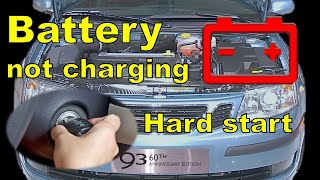
- Hard starting, intermittent no-start, or intermittent stalling 🎬 Watch: See how a struggling start looks on a Saab 9-3.
- Harsh or erratic transmission shifting
- Other warning lights (like ABS or Traction Control) may appear intermittently
- Clock and trip meter resetting after the car is turned off
- Replacing the ECU when the actual problem is a weak battery or a bad ground connection.
- Replacing the alternator when the battery is the actual point of failure (and vice-versa).
Most Likely Causes
- Weak or Failing Battery 🔴 High Probability → Shop Vehicle Battery The Saab 9-3's electrical system is highly sensitive to voltage drops. A battery that can no longer hold a stable charge is the most common trigger for this code. Even a battery strong enough to start the car may not provide stable enough voltage for the ECU's KAM.
How to confirm: Use a multimeter to check the battery voltage. A healthy battery should read about 12.6 volts with the engine off and 13.5-14.5 volts when running. For a definitive test, take the battery to an auto parts store for a load test, which is the only way to be certain of its health.
Typical fix: Replace the battery. Ensure the new battery meets or exceeds OEM specifications for Cold Cranking Amps (CCA) and capacity.
Est. part cost: $150-$300 - Corroded or Loose Battery Terminals / Ground Straps 🟡 Medium Probability → Shop Engine Ground Strap Corrosion is a common issue on any vehicle, and it can interrupt the stable voltage required by the 9-3's ECU. Key ground points can also corrode or loosen over time, causing intermittent power loss.
How to confirm: Visually inspect the battery terminals for white or greenish corrosion. Follow the negative battery cable to its main grounding points on the chassis and engine block. Check for tightness and corrosion. Key locations on the 9-3 (9440 chassis) are grounding point G2 (on the side of the left-hand structure strut by the connector bracket) and G25 (from the battery to the left-hand engine mounting/gearbox).
Typical fix: Disconnect the battery. Clean the terminals, cable ends, and chassis/engine ground points with a wire brush and a baking soda/water solution. Securely tighten all connections. Apply a dielectric grease or terminal protector spray.
Est. part cost: $5-$20 - Failing Alternator ⚪ Low Probability → Shop Alternator An alternator providing inconsistent or low voltage can fail to properly charge the battery, leading to the voltage drops that trigger P0603. Worn brushes or a failing internal voltage regulator are common failure points.
How to confirm: With the engine running, check the battery voltage. If it's below 13.5 volts, fluctuates wildly, or is excessively high (over 15V), the alternator or its voltage regulator is likely failing. An advanced check is an AC ripple test with a multimeter; excessive AC voltage indicates failing alternator diodes.
Typical fix: Replace the alternator or, if applicable, the voltage regulator/brush assembly.
Est. part cost: $200-$500 - Benign Reset ⚪ Low Probability Any event that disconnects power to the ECU will cause this code to set, as the memory is intentionally cleared. This includes aftermarket tuning flashes which can sometimes trigger the code upon first write.
How to confirm: The code appears immediately after the battery was disconnected, the car was jump-started, the ECU was reprogrammed (tuned), or fuses were pulled.
Typical fix: Clear the code with an OBD-II scanner. If there are no underlying issues, the code should not return. The car will relearn its adaptive settings over the next 50-100 miles of driving.
Est. part cost: $0 - Parasitic Battery Drain ⚪ Low Probability → Shop Vehicle Battery Various modules on the 9-3 are known to sometimes fail to 'go to sleep', causing a slow drain on the battery overnight. This leads to a low voltage state that triggers P0603 on startup. Common culprits include the OnStar module (especially on early models where the service is defunct), audio amplifier (AMP1 under the driver's seat), and the ignition switch module (ISM).
How to confirm: Perform a parasitic draw test using a multimeter set to amps, connected in series with the negative battery cable. After waiting at least 25-30 minutes for all modules to enter sleep mode, the draw should be under 40-50 milliamps (0.04A-0.05A). If the draw is higher, pull fuses one by one from the interior and engine bay fuse boxes until the draw drops, identifying the problematic circuit. 🎬 Watch: A mechanic demonstrates a parasitic current draw test. Fuse 2 (dashboard) for the ISM/CIM and the audio system fuses are common starting points.
Typical fix: Once the faulty component is identified, it needs to be repaired or replaced. For a defunct OnStar module, a fiber optic loopback connector can be installed to bypass it. A faulty ISM may require replacement.
Est. part cost: $20-$300
Rare But Worth Checking
- Faulty Engine Control Unit (Trionic ECU): This is the least likely cause. The Saab WIS documentation lists 'Change the control module' as the final step after all other possibilities (power, grounds) have been exhausted. The T8 ECU's location on the engine makes it prone to heat/vibration failure, but this usually presents with more specific codes like P0201-P0204 (injector faults) or P0601 (internal checksum error), not just P0603. Only consider this after ruling out all power supply issues.
- Faulty Main Relay: The main relay (labeled 229 in WIS) supplies switched power to the ECU and other critical engine components. If its contacts are worn, it can cause intermittent power loss to the ECU, triggering P0603. It is located in the main fuse box in front of the battery. A failing relay could also cause a no-start condition.
Technical Service Bulletins (TSBs) & Recalls
- TSB Bulletin #05-06-04-060A: This manufacturer service bulletin notes that control module Diagnostic Trouble Codes (DTCs) including P0603 can be shared across multiple modules within the electrical system. While originally issued for the 9-7X, it provides critical insight into how these memory-related codes can propagate through the vehicle's network.
Diagnosis Steps
- Ask yourself: Was the battery recently disconnected or jump-started? If so, clear the code and drive the vehicle to see if it returns. This is a normal occurrence.
- If the code returns, start with the battery. Use a multimeter to check the voltage with the engine off (should be ~12.6V) and running (should be ~13.5-14.5V).
- Perform a load test on the battery. This is the most reliable way to identify a weak battery and can be done for free at most auto parts stores. 🎬 Watch: This walkthrough covers battery replacement and alternator testing. This is a critical step.
- Thoroughly inspect and clean the battery terminals, posts, and cable ends, even if they look clean. Ensure the terminal clamps are tight and cannot be moved by hand.
- Inspect the main ground connections. On the 9-3, check the main battery-to-chassis ground (G2, on the left strut tower) and the battery-to-engine/transmission ground (G25, on the left engine mount). Ensure they are clean, free of corrosion, and tight. Consider removing, cleaning, and re-securing them.
- If the battery and grounds are good, test the alternator's output to ensure it's providing a stable charge.
- If the battery is draining overnight, perform a parasitic draw test to find the source of the drain. Wait at least 30 minutes for modules to sleep. Common culprits are the radio amplifier, OnStar, and ignition switch module (ISM).
- Check the main ECU relay (in the fuse box in front of the battery) for proper function.
- If all power and ground sources are confirmed to be good and the code persists, the Trionic ECU may be at fault, but this is extremely rare for an isolated P0603 code.
Parts You'll Likely Need
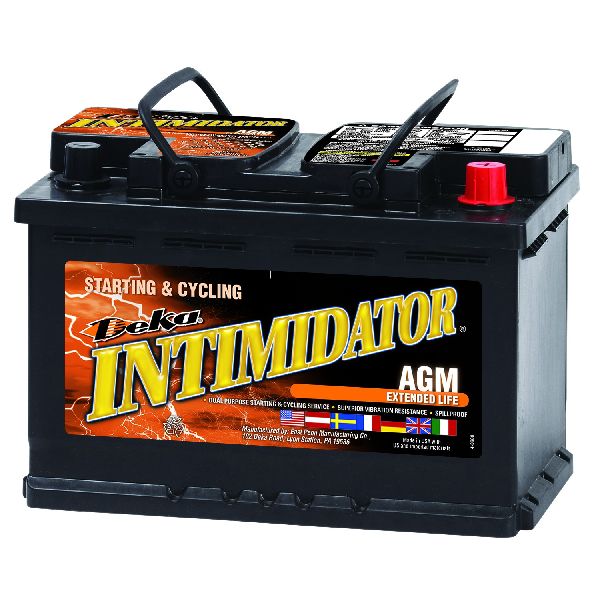
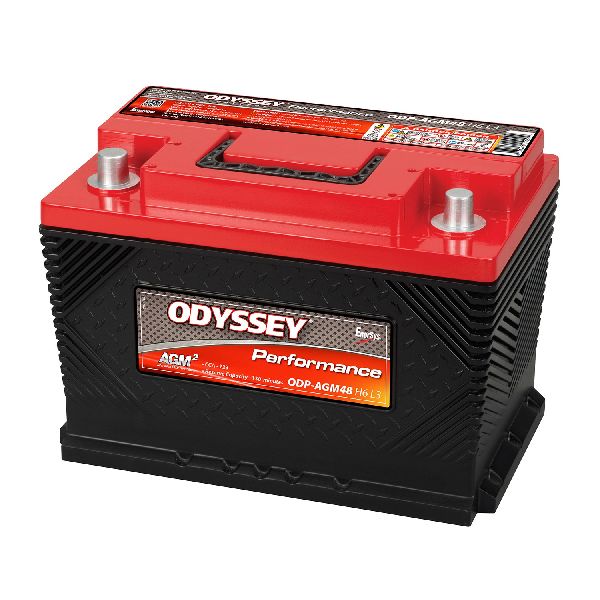
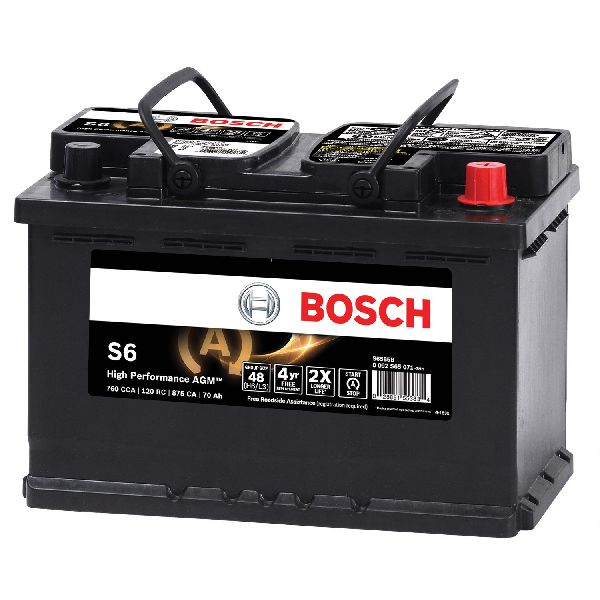
- Car Battery
(OEM #22704633)— This is the most common cause of P0603 on the electrically sensitive Saab 9-3. A new, fully charged battery of the correct size (Group H5/L2 or H6/L3) is the most frequent fix.
Trusted brands: Bosch, Interstate, ACDelco, DieHard
OEM price range: $250-$350
Aftermarket price range: $150-$300 - Battery Terminal Cleaner / Protector Kit — Ensures a clean, solid connection at the battery, which is critical for preventing voltage drops that cause P0603.
Trusted brands: CRC, NOCO
Aftermarket price range: $5-$20
Related Codes That Often Appear With This One
- P0601 - Internal Control Module Memory Check Sum Error (If this code is present with P0603, ECU failure is more likely)
- Various communication (U-codes) if the voltage drop is significant enough to affect multiple modules.
Platform-Specific Known Issues
- The 2003-2011 Saab 9-3 is noted for being highly sensitive to battery voltage, making it prone to throwing electrical codes like P0603 when the battery is even slightly weak.
- A weak battery may prevent the car from starting even with a jump-starter pack attached; the system requires a stable base voltage from the main battery to function correctly.
- The Trionic 8 ECU in petrol models is mounted directly on the hot, vibrating engine, which can lead to eventual failure, though this typically presents with codes other than just P0603.
- Parasitic battery drain from modules like the factory amplifier (AMP1), defunct OnStar unit, or Ignition Switch Module (ISM) is a known issue that can indirectly cause P0603 by draining the battery.
Mechanic-Grade Diagnostic Values
- Parasitic Current Draw — expected: < 40-50 mA (0.04-0.05 A). Failure: A sustained reading above 50 mA after the vehicle's modules have had at least 25-30 minutes to go to sleep. Readings of 150mA or higher strongly indicate a module is not sleeping.
- Trionic 8 ECU Constant Power Supply — expected: 12V+ (Battery Voltage). Failure: Voltage significantly below battery voltage or absent.
- Trionic 8 ECU Switched Power Supply — expected: 12V+ (Battery Voltage). Failure: Voltage is absent when the ignition is ON.
Scan Tool Commands That Help
- Saab Tech 2: Add/Remove (Marry/Divorce) Component — This function is mandatory when replacing security-linked modules like the ECU (Trionic), CIM (Column Integrated Module), or ISM (Ignition Switch Module). A used ECU must be 'divorced' from the donor car before it can be 'married' to the recipient car. Failure to do this will result in a no-start condition as the immobilizer will not recognize the new part.
- TrionicCanFlasher (DIY Software): Read/Flash ECU (Cloning) — For advanced DIY users, this software (used with an OBDLink SX/EX or similar interface) can read the full contents (including security data) from the original ECU and write it to a replacement unit. This creates a 'clone' that is plug-and-play and does not require a Tech 2 for marrying, bypassing the dealer/specialist requirement.
Wiring & Ground Locations
- G2 — On the side of the left-hand structure strut (shock tower) by the connector bracket in the engine bay.. This is one of the two primary grounding points for the car's battery and the main chassis ground. Corrosion or looseness here can cause widespread electrical issues, including P0603.
- G25 — On the left-hand engine mounting bracket, connecting the battery negative cable to the engine/gearbox assembly.. This is the main ground connection for the engine and its components, including the alternator and the ECU casing. A poor connection here can cause unstable voltage and charging problems.
- G7 — On the Trionic 8 ECU's top right attachment lug, grounding the ECU case directly to the engine.. This is the specific ground for the Engine Control Module itself. While less common to fail than G2/G25, ensuring it's clean and tight is a critical step if power supply issues are suspected.
- Main Relay (229) — Located in the main fuse box in front of the battery in the engine bay.. This relay provides switched power to the ECU. A faulty relay can cut power intermittently, causing a KAM error without a constant battery or ground fault.
- Trionic 8 ECU Connector A — The larger of the two main connectors on the ECU, mounted to the front of the engine.. Specific pins must be tested for power. Pins A3 and A20 are constant +12V for KAM. Pins A48 and A64 are switched +12V from the main relay. Pins A47, A57, A60, and A63 are power grounds.
Real Owner Repair Stories
- Saabnet.com user 'Ed W' (2009 Saab 9-3 V6 Aero AWD (93k miles)) — Battery draining, key getting stuck in ignition.
❌ Tried (didn't work) The owner identified a 170mA parasitic draw from fuse #2 (dashboard), which is for the Steering Column Unit and Ignition Switch. An independent mechanic rebuilt the Ignition Switch Module (ISM), but the battery drain problem persisted.
✅ What actually fixed it The owner discovered the parasitic draw only occurred when the car was left unlocked (150mA). When locked, the draw dropped to a normal 6mA. The root cause was a faulty Ignition Switch Module (ISM) that was not allowing all modules to go to sleep properly unless the car was locked, eventually leading to the battery drain and P0603. Replacing the ISM resolved the issue. - YouTube user 'Saab 93 Aero Wagon' (2006 Saab 9-3 2.8L V6 Aero SportCombi) — Battery would be dead if the car sat for more than a day or two. P0603 was present.
❌ Tried (didn't work) The owner identified a parasitic draw of nearly 500mA (0.5A), well above the 40mA spec. They began pulling fuses to isolate the circuit.
✅ What actually fixed it The draw was traced to the fuse for the stereo amplifier (AMP1). Unplugging the amplifier under the driver's seat caused the draw to drop to a normal 20mA, confirming it as the faulty component. Replacing or bypassing the amplifier permanently fixed the battery drain and the resulting P0603 code.
When the Usual Fixes Don't Work
- While the vast majority of P0603 codes on the Saab 9-3 are due to a failing battery or bad grounds, there are documented cases where the fix was more complex. In several instances, owners performed a parasitic draw test that led them to a faulty module that was failing to enter its low-power sleep state. The most common culprits found after extensive diagnosis were the audio amplifier (AMP1) located under the driver's seat, and the Ignition Switch Module (ISM). In these cases, replacing the battery only provided a temporary fix, as the underlying current drain would deplete the new battery and cause the P0603 code to return.
OEM Part Supersession History
55353231→32020033 (Remanufactured PN)— Standard part revision and availability of remanufactured units.
Heads up: For 4-cylinder petrol engines with Trionic 8, most ECU hardware is physically interchangeable, but they must be programmed for the specific car. A used ECU must be 'divorced' from the donor car with a Tech 2 or cloned using special software. A known issue with some replacement ECUs on All-Wheel Drive (XWD) models is the fuel gauge reading incorrectly when the tank is more than half full.
Model Year Variations Within This Range
- 2003-2006: Early Trionic 8 systems used a Combustion Detection Module (CDM) with an analogue output signal (PN 12787708).
- 2007-2011: Later Trionic 8 systems switched to a CDM with a digital output signal (PN 55352173). While the function is the same (using spark plug ionization for knock detection), the modules themselves are not interchangeable. This does not directly affect P0603 diagnosis but is a key electrical difference.
Diagnostic Flowchart
Used vs. New Parts: Buying Guide for This Vehicle
When a used part is the smart pick: A used Engine Control Unit (ECU) is a very common and sensible repair for this vehicle, as new units are rare and expensive. Other electronic modules like the Ignition Switch Module (ISM), Column Integrated Module (CIM), or audio amplifier are also good candidates for used purchase from a reputable salvage yard.
Donor-vehicle mileage cap: roughly under 80000 miles for the part to have meaningful remaining life.
What to inspect on the donor part:
- For an ECU, verify it is a 'divorced' unit. An ECU that has not been unpaired from its donor car with a Tech 2 is unusable.
- Check for any signs of water damage or corrosion on the connectors of any electronic module.
- Ensure the part number on the used module is an exact match or a known compatible replacement for your original part.
- Buy from a seller who offers a warranty or return policy in case the electronic part is also faulty.
OEM-only on this vehicle (don't cheap out):
- There are few 'OEM-only' mandatory parts for this repair, but using a high-quality battery that meets or exceeds original specifications is critical.
Aftermarket brands forum-validated for this vehicle:
- For ECU replacement via cloning, OBDLink SX or EX interfaces are widely used with TrionicCanFlasher software.
Brands owners have reported issues with on this vehicle:
- Be cautious with unbranded, extremely cheap electronic modules from online marketplaces, as their quality and compatibility can be questionable.
Real Owner Stories
Aggregated from forums and TSBs cited above. Mileages and costs reflect what owners reported in those sources.
2003-2011 Saab 9-3
Symptoms: The P0603 Check Engine Light appeared immediately after the battery was replaced or the car was jump-started.
What fixed it: The code was cleared with an OBD-II scanner and did not return, confirming it was a benign reset event.
Source hint: saabcentral.com: Numerous threads discuss P0603 appearing after battery replacement or jump-starting, confirming it's often a benign reset.
Saab 9-3SS
Symptoms: A persistent parasitic battery drain was causing the battery to die, which would trigger the P0603 code upon startup.
What fixed it: The owner traced the electrical draw to fuse #2, which powers the steering column unit and ignition switch. Replacing the faulty Ignition Switch Module (ISM) resolved the drain.
Source hint: saabnet.com: A user in the 9-3SS Bulletin Board tracked a parasitic draw causing battery drain to fuse #2 (Steering column unit; ignition switch), pointing to a faulty ISM.
2003-2011 Saab 9-3
Symptoms: The battery was constantly being drained overnight, leading to a low voltage state and a P0603 code.
What fixed it: A parasitic draw test identified the factory audio amplifier (AMP1) or the defunct OnStar module as the source of the drain. Bypassing or replacing the faulty module fixed the issue.
Source hint: saabcentral.com: Other threads detail parasitic draw hunts pointing to the audio amplifier or OnStar module.
'05 9-3
Symptoms: The owner was experiencing a battery drain issue.
What fixed it: Other owners suggested investigating the trunk wiring harness and the body control module as potential, less common sources for the parasitic draw.
Source hint: reddit.com/r/saab: A thread titled 'Battery Drain in my '05 9-3' discusses common parasitic draw sources, with users suggesting the trunk wiring harness and body control module as potential culprits.
Related OBD-II Codes
Frequently Asked Questions
I just disconnected or replaced the battery in my Saab 9-3 and now I have a P0603 code. Is something broken?
Where are the most important ground points to check for a P0603 on my 2003-2011 9-3?
My clock and trip meter keep resetting every time I turn the car off. Is this related to P0603?
My battery seems to be draining overnight and I'm getting a P0603 code. What are the common culprits on this Saab?
Is it likely my Trionic 8 ECU has failed if I only have a P0603 code?
I had my ECU tuned and the P0603 code appeared right after. Should I be concerned?
Helpful Videos
We Have This Part in Stock



The information in this article is provided for general reference and educational purposes only. Vehicle specifications, procedures, and part compatibility can vary by production date, trim level, and region. Always consult your vehicle's factory service manual and verify part numbers before purchasing or performing repairs. Safety-critical components such as airbags, seat belts, and braking systems should be installed by a qualified professional.
- Saab 9-3:
- 🧭 Diagnostic Flowchart
- 🎬 Helpful Videos
- 🛍️ Shop This Part
- What's Unique About the 2003-2011 Saab 9-3
- Symptoms You May Notice
- Most Likely Causes
- Rare But Worth Checking
- Technical Service Bulletins (TSBs) & Recalls
- Diagnosis Steps
- Parts You'll Likely Need
- Related Codes That Often Appear With This One
- Platform-Specific Known Issues
- Mechanic-Grade Diagnostic Values
- Scan Tool Commands That Help
- Wiring & Ground Locations
- Real Owner Repair Stories
- When the Usual Fixes Don't Work
- OEM Part Supersession History
- Model Year Variations Within This Range
- Used vs. New Parts: Buying Guide for This Vehicle
- Real Owner Stories
- 2003-2011 Saab 9-3
- Saab 9-3SS
- 2003-2011 Saab 9-3
- '05 9-3
- Related OBD-II Codes
- Frequently Asked Questions
- 🎟️ Get 5% Off