

P0603 on 2014-2018 Subaru Forester: Keep Alive Memory (KAM) Error Causes and Fixes
On a 2014-2018 Forester, P0603 almost always means there was an interruption in power to the engine computer. This is most often caused by a weak battery, a recent battery replacement, or a jump-start. Before replacing any parts, check that your battery is healthy and the terminals are clean and tight. In most cases, this code is temporary and resolves on its own or by clearing it with a scanner.
- P0603 on a Forester is most likely not a serious problem.
- If you recently disconnected or replaced the battery, the code is normal and should go away on its own or can be cleared.
- The first and most important diagnostic step is to test the health of your 12V battery and clean the terminals.
- This generation of Forester has known battery drain issues, making a weak battery the prime suspect if the code appears unexpectedly.
- Do not replace the expensive ECM unless all other power-related possibilities have been exhausted.
What's Unique About the 2014-2018 Subaru Forester
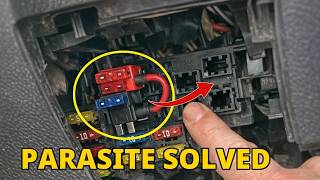
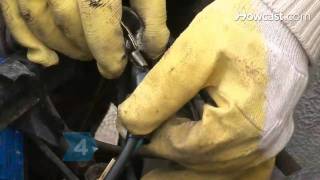
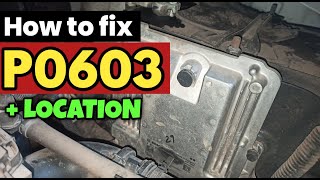
Subarus, including the 2014-2018 Forester, are known to be particularly sensitive to power interruptions. It is very common and considered normal for a P0603 code 🎬 Watch: Understanding the P0603 code and common fixes to appear immediately after disconnecting the battery for service or replacement. In these cases, it's often a temporary "ghost code" that will clear on its own after a few driving cycles. Furthermore, these models were subject to a warranty extension related to battery drain issues as part of a class-action lawsuit settlement, indicating a higher-than-average likelihood that a weak or failing battery is the root cause. A significant number of these vehicles also have a Data Communications Module (DCM) 🎬 See how to assess a faulty DCM for parasitic draw for the Starlink system that can fail to enter sleep mode after the 3G network shutdown, causing a persistent parasitic draw of 120-140mA that drains the battery over time.
Symptoms You May Notice
- Check Engine Light is on
- Rough or unstable idle immediately after startup
- Hesitation during acceleration
- Slight decrease in fuel economy
- Erratic or harsh automatic transmission shifting
- Difficulty starting or a no-start condition (if the battery is the cause)
- ABS or Traction Control light may also illuminate in some cases
- Replacing the ECM when the actual problem is a weak battery or poor connection.
- Performing an expensive diagnostic procedure when the code was simply caused by a recent battery change.
Most Likely Causes
- Battery Recently Disconnected or Jump-Started 🔴 High Probability → Shop Vehicle Battery Subaru ECMs are sensitive and will reliably log this code upon power restoration. This is often not a sign of a fault.
How to confirm: Ask yourself if the battery has been disconnected, replaced, or jump-started in the last few days. If so, this is the almost certain cause.
Typical fix: Clear the code with a scanner. If it does not return after several drive cycles (typically 3-5), no further action is needed.
Est. part cost: $0 - Weak or Failing Battery 🔴 High Probability → Shop Vehicle Battery These models have a known history of battery drain issues, as documented in Subaru TSB 07-207-22R. An old battery may not maintain sufficient voltage (typically dropping below 10 volts) to power the KAM when the engine is off.
How to confirm: Test the battery with a multimeter. A healthy battery should read above 12.4 volts with the engine off. Perform a load test to check its true health; most auto parts stores do this for free.
Typical fix: Replace the vehicle's 12V battery. Subaru has issued subsequent TSBs (e.g., 07-213-22R, 07-223-23R) recommending upgrading to a higher-capacity Enhanced Flooded Battery (EFB) to better cope with the vehicle's power demands.
Est. part cost: $150-$300 - Loose or Corroded Battery Terminals 🟡 Medium Probability → Shop Vehicle Battery
How to confirm: Visually inspect the battery posts and cable clamps for white or greenish corrosion. Wiggle the terminals to ensure they are tight and cannot be moved by hand. A loose connection can cause a momentary power loss sufficient to trigger the code.
Typical fix: Disconnect the terminals (negative first), clean them and the battery posts with a wire brush and a baking soda/water solution, then reconnect securely (positive first). Apply dielectric grease to prevent future corrosion.
Est. part cost: $1-$5 for a terminal brush - Failing Alternator ⚪ Low Probability → Shop Alternator
How to confirm: With the engine running, test the voltage at the battery terminals. It should be between 13.5 and 14.5 volts. If it's too low, the battery isn't being charged properly. If it's too high, it can damage the battery and other electronics.
Typical fix: Replace the alternator.
Est. part cost: $250-$500
Rare But Worth Checking
- Blown Fuse: A fuse in the ECM's power supply circuit could be blown, causing a loss of keep-alive power. Check the fuse box diagrams for fuses labeled 'ECM,' 'PCM,' or 'Back-up.' Also check the main fusible link on the positive battery terminal.
- Parasitic Electrical Draw: A component on the vehicle may not be shutting down correctly, slowly draining the battery overnight. This can cause the battery voltage to drop low enough to trigger P0603 without being completely dead. A parasitic draw test is needed to isolate the faulty circuit. A common culprit on these models is the Data Communications Module (DCM).
- Faulty ECM: This is the least likely cause. Before condemning the ECM, all power and ground sources must be thoroughly tested and confirmed to be good. An ECM failure is a last resort diagnosis.
Diagnosis Steps
- Determine if the battery was recently disconnected or jump-started. If yes, clear the code and drive the vehicle. If the code does not return after several complete drive cycles, the issue is resolved.
- If the code returns or the battery wasn't disconnected, visually inspect the battery terminals for corrosion and tightness. Clean and tighten as needed.
- Test the battery's state of charge and health. Use a multimeter to check for at least 12.4V with the engine off. A professional load test is highly recommended to confirm the battery's ability to hold a charge under load.
- Test the charging system. With the engine running, check for a voltage of approximately 13.5-14.5V at the battery terminals.
- If the battery is draining over time, perform a parasitic draw test. With the vehicle off for at least 30 minutes, a normal draw should be below 70 milliamps (mA). A higher reading indicates a component is not shutting off properly. If the draw is 120-140mA, suspect the Data Communications Module (DCM).
- Inspect fuses related to the ECM/PCM power supply in both the interior and under-hood fuse boxes, including the main fusible link attached to the positive battery terminal.
- If all power and ground sources are confirmed good and the code persists, the ECM may be faulty, but this is extremely rare and should be the final step.
Parts You'll Likely Need
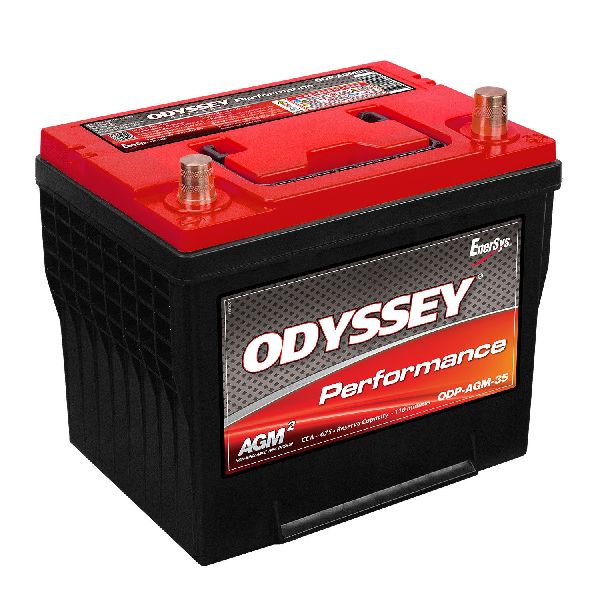
- 12V Battery
(OEM #SOA821B900)— A weak or failing battery is the most common fault that causes a P0603 code on this vehicle, which has a known history of battery drain issues. Subaru has also issued TSBs recommending an upgrade to this higher-capacity EFB battery.
Trusted brands: Subaru (OEM), DieHard, Duralast, Optima, Super Start
OEM price range: $250-$350
Aftermarket price range: $150-$300
Related Codes That Often Appear With This One
- P0606 (ECM/PCM Processor Fault): On some Subarus, particularly turbo models, a P0606 can also be triggered by a software glitch after power loss, similar to P0603.
Technical Service Bulletins (TSBs) & Recalls
- 07-207-22R: Subaru Battery Drain Product Liability Litigation - This TSB details the warranty extension for the 12V battery on 2015-2020 Foresters (and other models) resulting from a class-action settlement. It acknowledges the battery drain issue that is a primary cause of P0603.
- 07-213-22R / 07-223-23R: Genuine Battery Replacement - These TSBs provide instructions for replacing the original battery with a larger, higher-capacity Enhanced Flooded Battery (EFB), part number SOA821B900 or SOA821B950, to better handle the vehicle's electrical load. This often requires replacing the battery tray and hold-down components as well.
- 15-308-23R: Diagnostic Information - Testing Telematics Systems for Dark/Standby Current - This TSB details how to diagnose parasitic draw caused by the Data Communication Module (DCM), a known issue on these vehicles. It specifies the acceptable draw limit (under 70mA) and the signature draw of a faulty DCM (120-140mA).
Platform-Specific Known Issues
- Subaru issued TSB 07-207-22R, which extends the warranty on the 12V battery for 2015-2020 Foresters due to a class-action settlement over battery drain issues. This makes a failing battery a highly probable cause for this code.
- A known source of parasitic draw on some models is the approach light in the side mirrors, which may stay on if a tailgate or door is left ajar, draining the battery.
Mechanic-Grade Diagnostic Values
- Parasitic Draw (Sleep Mode) — expected: < 70 mA. Failure: A steady reading > 70 mA indicates a parasitic draw. A reading of 120-140 mA specifically points to a faulty Data Communications Module (DCM).
- Alternator AC Ripple Voltage — expected: < 0.5V AC (500mV AC). Failure: A reading above 0.5V AC suggests failing alternator diodes are introducing electrical 'noise' that can disrupt the ECM's memory.
- ECM Ground Circuit Resistance — expected: < 0.1 Ω. Failure: High resistance between the ECM ground pin and the chassis indicates a poor ground connection, which can cause memory errors.
- ECM Keep Alive Power Supply — expected: Should match battery voltage (approx. 12.6V with Key On, Engine Off). Failure: A significant voltage drop between the battery positive terminal and the ECM's KAM power supply pin indicates a wiring, fuse, or main relay issue.
Scan Tool Commands That Help
- Subaru Select Monitor (SSM): Clear Memory — Use this function after a battery replacement or jump-start to clear the P0603 code and reset all adaptive learning values (KAM). After clearing, the ignition should be turned to ON for at least 10 seconds before starting the engine to allow the electronic throttle control to re-initialize.
Wiring & Ground Locations
- Main Engine Ground Points — On the FB25B, key grounding points are located on the intake manifold, often secured by 12mm bolts. There are also grounds from the engine block to the chassis, typically below the battery tray area.. A corroded or loose engine ground can cause unstable voltage and intermittent power loss to the ECM, triggering a P0603 code even if the battery and alternator are healthy.
- Main Fusible Link — Located directly on the positive battery terminal clamp assembly. It's a multi-fuse block that often includes a 120A main fuse.. If this main fuse is blown, particularly the circuit that provides constant power to the ECM, it will cause a P0603. This can happen if there's an accidental short circuit during battery or alternator service.
- ECM Location — Inside the passenger cabin, typically behind the glove box or in the passenger footwell area.. Knowing the ECM location is necessary for advanced diagnostics, such as checking for power and ground directly at the module's connectors (e.g., B134, B135, B136).
Real Owner Repair Stories
- Reddit user in /r/AskMechanics (2015 Infiniti Q50 (similar principle)) — P0603 code appeared. CEL went away after restart but code remained as 'pending'.
❌ Tried (didn't work) Initially just tightening the terminals by hand.
✅ What actually fixed it The negative battery terminal was loose and could not be fully tightened. The final recommendation was to replace the terminal clamp to ensure a solid, permanent connection, which is the textbook cause for intermittent power loss to the KAM. - Reddit user in /r/WRX (Subaru WRX) — Car would crank but not start, smelling fuel. P0603 code present.
❌ Tried (didn't work) Jumping the main 120A fuse with a wire (which then melted).
✅ What actually fixed it The root cause was a blown 120A main battery fuse (fusible link) that occurred after the positive starter cable accidentally shorted during an alternator replacement. The final fix required replacing the main 120A fuse block on the positive terminal to restore proper power to all systems, including the ECM's keep-alive memory.
OEM Part Supersession History
SOA821B200 or SOA821B600 (Standard Flooded Battery)→SOA821B900 or SOA821B950 (Enhanced Flooded Battery - EFB)— The original batteries were found to be insufficient for the vehicle's electrical demands, leading to premature failure and the issues covered by the battery drain class-action lawsuit. The EFB battery offers higher capacity (750 CCA) and is more resilient to deep-cycling.
Heads up: The upgraded EFB batteries are physically larger than the originals. Installation requires replacing the battery tray (p/n 82190AN000), battery cover (p/n 82123AN000), and potentially a battery hold-down rod (p/n 82161SJ000) to ensure a secure fit.
Model Year Variations Within This Range
- 2015-2019 (and others with 3G Starlink): Models equipped with the Gen1 Data Communications Module (DCM) for Starlink are susceptible to a parasitic battery drain after the 3G cellular network was shut down in 2022. This is a primary hidden cause of a weak battery that leads to P0603. Subaru has issued warranty extensions and TSBs (15-308-23R, 15-318-24R) regarding this issue.
Diagnostic Flowchart
Other Known Issues on This Vehicle
Issues unrelated to this code that are worth knowing about as an owner of this generation:
- Excessive Oil Consumption 🔴 High — Most common on 2011-2015 models with the FB25B engine. Caused by defective piston rings. (Ref: Subject of a major class-action lawsuit which resulted in an extended powertrain warranty (8 years/100,000 miles) for affected vehicles to cover repairs.)
- Lineartronic CVT Problems 🟠 Medium — Common across the generation (2014-2018), symptoms include shuddering, jerking, hesitation, and in some cases, outright failure. (Ref: Subaru extended the CVT warranty to 10 years/100,000 miles for many affected vehicles due to widespread issues. The TR580 CVT used in these models is known for valve body solenoid failures.)
- A/C Condenser Failure 🟠 Medium — Prone to failure from corrosion or debris impact, particularly on 2017-2018 models. (Ref: Subaru issued a warranty extension for the A/C condenser on 2017 and some 2018 models to 5 years/unlimited mileage (TSB WRH-20, Part No. 73210SG011).)
- Rear Coil Spring Failure 🟡 Low — Rear coil springs can fracture or collapse, particularly on the 2014 model year. (Ref: A recall was issued for faulty rear suspension springs on some models.)
- CAN System Parasitic Battery Drain 🟠 Medium → Shop Vehicle Battery — A well-documented issue where the vehicle's communication network fails to go to sleep, causing a persistent drain that kills the battery. This is a direct contributor to the P0603 code appearing. (Ref: TSB 07-207-22R (and related TSBs) address the symptom (dead battery) via warranty extensions and battery upgrades, stemming from a class-action lawsuit.)
Used vs. New Parts: Buying Guide for This Vehicle
When a used part is the smart pick: For this code, a used ECM from a junkyard is a reasonable choice IF, and only if, all other power and ground issues have been definitively ruled out. The ECM is rarely the point of failure, so an expensive new unit is often unnecessary.
Donor-vehicle mileage cap: roughly under 150000 miles for the part to have meaningful remaining life.
What to inspect on the donor part:
- Ensure the donor vehicle is the exact same model year, engine, and transmission type.
- Inspect the ECM's connectors for any signs of corrosion, bent pins, or water intrusion.
- Check the donor vehicle's history if possible to ensure it wasn't involved in a flood or major electrical fire.
OEM-only on this vehicle (don't cheap out):
- Main Fusible Link: While aftermarket versions exist, the complex, multi-fuse design that sits on the battery terminal is best replaced with an OEM part to ensure correct fit and amperage ratings.
Aftermarket brands forum-validated for this vehicle:
- Batteries: DieHard (EFB models), Optima (AGM models), Duralast Gold/Platinum are frequently cited by owners as reliable upgrades over the original stock battery.
Brands owners have reported issues with on this vehicle:
- Avoid purchasing a used 12V battery. The savings are minimal compared to the risk of inheriting someone else's problem.
- Be cautious with no-name, budget alternators, as poor voltage regulation can cause more electrical issues than it solves.
Real Owner Stories
Aggregated from forums and TSBs cited above. Mileages and costs reflect what owners reported in those sources.
2015 Subaru Forester 2.5L
Symptoms: The owner experienced battery drain issues leading to the P0603 code, which was part of a larger pattern of electrical reliability concerns for this model year.
What fixed it: Replacement of the original battery with a larger, higher-capacity Enhanced Flooded Battery (EFB) and associated hardware (battery tray and hold-down) as per TSB 07-213-22R.
Source hint: TSB 07-207-22R and TSB 07-213-22R regarding Battery Drain Product Liability Litigation
2014-2018 Subaru Forester 2.5L
Symptoms: A parasitic draw was measured between 120-140mA while the vehicle was off, causing the battery to weaken and trigger P0603.
What fixed it: Diagnosis and testing of the Telematics System/Data Communication Module (DCM) for dark/standby current.
Source hint: TSB 15-308-23R: Diagnostic Information - Testing Telematics Systems for Dark/Standby Current
2015 Subaru Forester 2.5L
Symptoms: Check Engine Light with code P0603 appeared immediately after the battery was changed or the vehicle was jump-started.
What fixed it: Clearing the code with a scanner and performing several drive cycles (3-5) to confirm the code did not return.
Source hint: subaruforester.org forum threads regarding P0603 after battery replacement
Related OBD-II Codes
Frequently Asked Questions
Does TSB 07-207-22R apply to my 2015 Subaru Forester regarding the P0603 code?
What specific battery should I use to replace the original one in my Forester to prevent this code from returning?
I just jump-started my 2014 Forester and now P0603 is showing. Do I need a new ECM?
My Forester has a parasitic draw of 130mA. Is this causing my P0603 code?
Can a loose battery terminal really cause the Check Engine Light and P0603 on this vehicle?
Is there a known issue with the side mirrors causing battery drain on the 2014-2018 Forester?
Helpful Videos


We Have This Part in Stock


The information in this article is provided for general reference and educational purposes only. Vehicle specifications, procedures, and part compatibility can vary by production date, trim level, and region. Always consult your vehicle's factory service manual and verify part numbers before purchasing or performing repairs. Safety-critical components such as airbags, seat belts, and braking systems should be installed by a qualified professional.
- Subaru Forester:
- 🧭 Diagnostic Flowchart
- 🎬 Helpful Videos
- 🛍️ Shop This Part
- What's Unique About the 2014-2018 Subaru Forester
- Symptoms You May Notice
- Most Likely Causes
- Rare But Worth Checking
- Diagnosis Steps
- Parts You'll Likely Need
- Related Codes That Often Appear With This One
- Technical Service Bulletins (TSBs) & Recalls
- Platform-Specific Known Issues
- Mechanic-Grade Diagnostic Values
- Scan Tool Commands That Help
- Wiring & Ground Locations
- Real Owner Repair Stories
- OEM Part Supersession History
- Model Year Variations Within This Range
- Other Known Issues on This Vehicle
- Used vs. New Parts: Buying Guide for This Vehicle
- Real Owner Stories
- 2015 Subaru Forester 2.5L
- 2014-2018 Subaru Forester 2.5L
- 2015 Subaru Forester 2.5L
- Related OBD-II Codes
- Frequently Asked Questions
- 🎟️ Get 5% Off