

P0604 on 2010-2015 Chevrolet Camaro: Internal Memory Error Causes and Fixes
P0604 on a 5th Gen Camaro indicates an internal memory error, most often in the Transmission Control Module (TCM) or Engine Control Module (ECM). Before replacing a module, always test the battery and check all power/ground connections, as low voltage is a very common trigger. If the battery is good, the TCM is the next likely culprit, especially if you have shifting problems.
- P0604 on a 2010-2015 Camaro is a serious memory error code, most often pointing to a problem with the Transmission Control Module (TCM) or a power supply issue.
- ALWAYS test the battery, alternator, and check ground connections before assuming a control module is bad. Low voltage is a common and much cheaper fix.
- If you have transmission shifting problems along with the Check Engine Light, the TCM is the primary suspect.
- If the vehicle has an aftermarket tune, the tune itself could be the problem. Try flashing back to the stock file.
- Replacing either the TCM or ECM is not a simple DIY job; the new module must be professionally programmed to your car's VIN.
What's Unique About the 2010-2015 Chevrolet Camaro
On the 5th generation Camaro with the 6L80 automatic transmission, a P0604 code has a notable and well-documented association with the Transmission Control Module (TCM), not just the main engine computer. GM issued a Technical Service Bulletin (PIP4653E) specifically mentioning that P0604 (along with P0601, P0603, etc.) could be stored in the TCM, leading to transmission-related symptoms like harsh shifting or getting stuck in gear. This is a critical distinction, as mechanics might otherwise focus solely on the Engine Control Module (ECM). Forum discussions on Camaro5.com confirm that owners frequently resolve this code by addressing the TCM after experiencing transmission limp mode.
Symptoms You May Notice
- Check Engine Light is on
- Transmission shifts harshly, erratically, or gets stuck in one gear (limp mode)
- Vehicle may not start or may be hard to start
- Intermittent stalling while driving or after starting
- Reduced engine power or 'limp mode'
- ABS or Traction Control lights may illuminate
- Loss of communication with the TCM, preventing diagnostic tools from reading transmission data
- Immediately replacing the Engine Control Module (ECM) without checking for transmission-specific codes or testing the battery and charging system. On this car, the TCM is a more frequent cause of P0604.
Most Likely Causes
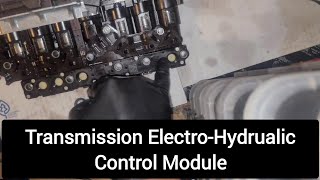
- Failing Transmission Control Module (TCM/TEHCM) 🔴 High Probability → Shop Transmission Assembly GM TSB #PIP4653E specifically identifies the TCM as a potential source for P0604 on this platform. The TCM in the 6L80 automatic transmission is a Transmission Electro-Hydraulic Control Module (TEHCM) located inside the oil pan, where it is subjected to constant heat cycles and vibration that can lead to internal hardware failure. 🎬 Watch: How to test and rebuild the 6L80 TEHCM circuits.
How to confirm: If P0604 is accompanied by transmission-specific codes (like P0700) or communication codes (U0101), the TCM is the prime suspect. A professional scan tool can attempt to communicate directly with the TCM. If communication fails or a re-flash with the latest GM software is unsuccessful, the TEHCM is condemned.
Typical fix: Replace the faulty Transmission Control Module (TEHCM) and have it programmed to the vehicle by a dealer or qualified shop with access to GM's Service Programming System (SPS).
Est. part cost: $300-$800 - Low or Unstable Battery Voltage 🟡 Medium Probability → Shop Vehicle Battery All modern control modules require stable voltage to maintain their Keep Alive Memory (KAM). A weak battery, failing alternator, or poor connections can cause momentary voltage drops during startup, corrupting the module's RAM self-check and triggering a P0604 code. A Camaro5 forum member noted their P0604 appeared after starting the car in extreme cold, a condition that heavily stresses the battery; another user resolved the code by fully charging a disconnected battery.
How to confirm: Test the battery with a digital multimeter or electronic battery tester. A healthy, fully charged battery should read approximately 12.6 volts with the engine off and 13.5-14.5 volts with the engine running. Check for sulfation on older batteries, which reduces cranking power.
Typical fix: Replace the vehicle's battery if it fails a load test. Clean all battery terminals and main ground connections, including the main chassis ground in the trunk.
Est. part cost: $150-$300 - Aftermarket Engine/Transmission Tune 🟡 Medium Probability → Shop Transmission Assembly The Camaro SS is a popular vehicle for performance tuning. A poorly written, incomplete, or improperly flashed aftermarket tune can corrupt a module's software or RAM, leading to this code. This issue has been documented by owners on CorvetteForum after loading an email tune, where the only fix was to revert to stock and get a revised file from the tuner.
How to confirm: If the code appeared immediately after a tune was loaded, this is the likely cause. The first diagnostic step is to flash the vehicle back to its original factory tune file.
Typical fix: Revert to the stock OEM tune file. If the code disappears, contact the tuning company for a revised, non-corrupted file.
Est. part cost: $0 (if you have the stock file and flashing tool) - Failing Engine Control Module (ECM) ⚪ Low Probability → Shop Engine Control Module (ECM) While less common than TCM failure on this platform for this specific code, the ECM can still fail its own internal RAM check. This is often a diagnosis of exclusion.
How to confirm: This is typically a diagnosis of exclusion. If the battery, grounds, wiring, and TCM have all been ruled out, and the code persists after a stock re-flash, the ECM itself is the likely failure point.
Typical fix: Replace the ECM and have it professionally programmed to the vehicle's VIN.
Est. part cost: $300-$700
Rare But Worth Checking
- Poor Electrical Grounds or Connections: Corrosion on the main power or ground connections to the ECM/TCM can create high resistance, mimicking low voltage and causing memory errors. Always check the main engine and chassis ground straps to ensure they are clean and tight before replacing expensive modules.
Diagnosis Steps
- Scan for all DTCs. If P0700 or U0101 are present with P0604, the problem is almost certainly in the transmission control system.
- Perform a complete battery and charging system test. Ensure voltage is stable and within specification (approx. 12.6V engine off, 13.5-14.5V engine on).
- Inspect all power and ground connections to the battery, engine block, and chassis. Clean any corrosion and ensure all connections are tight. A poor ground in the trunk near the battery is a known issue.
- If the vehicle has an aftermarket tune, flash the ECM and TCM back to the stock factory files. Clear codes and see if P0604 returns.
- Visually inspect the wiring harnesses and connectors for the ECM and the main transmission connector. Look for any signs of damage, moisture, or corrosion.
- If all external factors are ruled out, the fault is internal to a module. Based on symptoms (e.g., shifting issues), suspect the TCM first.
- As a professional step, attempt to reprogram the suspect module (TCM) with the latest GM software before ordering a replacement, as advised by TSB PIP4653E. If the re-flash fails, the module is faulty.
- If reprogramming fails, replace the faulty module (TCM/TEHCM or ECM). This step requires professional programming to sync the new module to the car's VIN and security system.
Parts You'll Likely Need
- Transmission Control Module (TEHCM)
(OEM #24256861 (Commonly cited, but has been superseded by other numbers like 24275865. Always verify with VIN).)— This is the most common point of failure for a P0604 code on this platform, especially when accompanied by shifting problems, as documented by GM TSBs and owner forums.
Trusted brands: ACDelco (OEM)
OEM price range: $400-$800
Aftermarket price range: $300-$600 - Vehicle Battery — Low or unstable voltage from a weak battery is a frequent trigger for this memory code. The battery is located in the trunk and its condition is critical for module stability.
Trusted brands: ACDelco, DieHard, Interstate
OEM price range: $200-$350
Aftermarket price range: $150-$300
Related Codes That Often Appear With This One
- P0700 — This code means 'Transmission Control System Malfunction'. It is a general code requested by the TCM to turn on the check engine light. Its presence strongly suggests the P0604 fault originated in the TCM. 🎬 Watch: Understanding the P0700 code and what your scanner misses.
- U0101 — This code means 'Lost Communication With TCM'. It often appears alongside P0604 because the internal failure can cause the TCM to stop communicating on the vehicle's data network entirely.
- P0601 — This code is for an 'Internal Control Module Memory Check Sum Error'. It's another type of internal module failure. GM TSB #PIP4653E groups P0601 and P0604 together as having a similar diagnostic path, often pointing to the TCM.
Technical Service Bulletins (TSBs) & Recalls
- PIP4653E: Mentions that codes P0601, P0603, P0604, P062F or P1621 stored in the TCM may be resolved by reprogramming the module. This confirms the TCM as a primary location for this fault.
Platform-Specific Known Issues
- Real-World Example: Cold Start Trigger: A user on Camaro5.com reported that the P0604 code first appeared after starting their 2010 SS LS3 in extreme cold weather. The car ran, then shut off and wouldn't restart until the next day, at which point the code was permanently set. This strongly points to a low voltage condition from the battery stressing the ECM/TCM's RAM during the startup self-test.
Mechanic-Grade Diagnostic Values
- 6L80 TEHCM Shift Solenoid (On/Off) Resistance — expected: 20-40 Ohms. Failure: A reading outside this range indicates a failed solenoid, requiring TEHCM replacement.
- 6L80 TEHCM Pressure Control Solenoid (PWM) Resistance — expected: 3-8 Ohms. Failure: A reading outside this range indicates a failed solenoid, requiring TEHCM replacement.
- ECM/TCM Supply Voltage (Key On, Engine Off) — expected: ~12.6 Volts. Failure: Voltage below 12.4V suggests a weak battery that can trigger ghost P0604 codes.
- Charging System Voltage (Engine Running) — expected: 13.5 - 14.5 Volts. Failure: Voltage outside this range indicates a faulty alternator or regulator, which can cause voltage spikes/dips that corrupt module memory.
- Ground Resistance — expected: < 0.1 Ω. Failure: Resistance higher than 0.1 Ω between the battery negative post and the chassis or engine block indicates a poor ground, a common cause of module communication issues.
Scan Tool Commands That Help
- GM GDS2 / Tech2: SPS (Service Programming System) — This is used to re-flash a module with the latest software, which TSB PIP4653E recommends as a first step before replacing a TCM for a P0604 code. It is also required to program a new ECM or TCM to the vehicle's VIN.
- GM GDS2 / Tech2: Idle Learn Reset — After replacing and programming a new ECM, the idle learn procedure must be performed to allow the new module to learn the throttle body's baseline position.
- GM GDS2 / Tech2: Crankshaft Position Variation Learn — This is a mandatory procedure after ECM replacement. Failure to perform the relearn will often result in a Check Engine Light and other drivability issues, even if the P0604 is resolved.
- GM GDS2 / Tech2: Solenoid Cleaning Procedure — For transmission-related issues, a scan tool can command the TEHCM to cycle all solenoids, which can sometimes flush out debris causing intermittent faults. If the P0604 code is accompanied by shifting issues, this can be a useful diagnostic step before condemning the TEHCM.
Wiring & Ground Locations
- Main Battery Ground — In the trunk, the main negative battery cable bolts directly to the chassis near the battery.. This is the primary ground for the entire vehicle's electrical system. Corrosion or looseness here can cause widespread low voltage issues, a primary trigger for P0604.
- Engine Block Grounds — There are multiple grounds on the engine block. One key location is on the driver's side, on the block behind the last coil pack. Another large ground strap is located underneath the passenger side on the frame.. The ECM and its sensors rely on a solid engine ground reference. A poor connection here can cause erratic data and internal faults.
- ECM Connector X1 (Black) — The ECM is on the passenger side of the engine bay. X1 is the 73-pin black connector, closer to the front of the vehicle.. Pin 20 (RD/WH wire) is the main Battery Positive Voltage feed, and Pin 19 (PK wire) is the Ignition Voltage feed. These pins must have clean, stable voltage to prevent memory errors.
- ECM Connector X2 (Gray) — The ECM is on the passenger side of the engine bay. X2 is the 80-pin gray connector, closer to the rear of the vehicle.. This connector carries signals for many critical engine functions. A loose connection or corroded pins can cause a variety of faults, including internal processing errors.
Real Owner Repair Stories
- Camaro5.com user 'calinkaos' (2010 2SS/RS Camaro) — Battery died, service stabilitrak error, battery charging system service error, doors locking and unlocking randomly.
❌ Tried (didn't work) Checking battery, Checking alternator, Checking known ground wires
✅ What actually fixed it A loose positive battery cable was found to be grounding out on the driver's side. Tightening this connection resolved all electrical issues. - Camaro5.com user 'Aziz2233' (2010 SS LS3 Camaro) — Car started in extreme cold, then shut off and would not restart. The next day it ran, but had a persistent P0604 code that would not clear.
❌ Tried (didn't work) Clearing the code with a scanner, Checking the ECM ground
✅ What actually fixed it The user was advised by another member that low voltage from the cold start likely set the hard fault. The recommended fix was to disconnect the battery for an hour to let all modules fully power down, fully charge the battery, and then reconnect. If the code remained, the ECM was likely faulty. The thread implies this is the correct path, focusing on the low-voltage event as the root cause.
OEM Part Supersession History
24256861→19435614— Standard part lifecycle update by GM, likely for minor hardware revisions or to consolidate part numbers.
Heads up: The new part number is the direct replacement. However, multiple other part numbers (e.g., 24252363, 24256670, 24261308) are also cited as compatible for the 6L80 TEHCM, indicating a complex part history. Always verify the correct, latest part number with a dealer using the vehicle's VIN before ordering.
Diagnostic Flowchart
Other Known Issues on This Vehicle
Issues unrelated to this code that are worth knowing about as an owner of this generation:
- AFM/DOD Lifter Failure (L99 Engine) 🔴 High — Common on the L99 V8 (automatic transmission models). Can occur at various mileages, often leading to misfires, ticking noises, and potential camshaft damage. (Ref: A TSB was issued for this problem, leading to the use of an improved lifter design in later repairs.)
- Premature Timing Chain Wear (V6 Models) 🔴 High — More prevalent on the 3.6L V6 engine, but poor oil maintenance can affect any engine. Stretched chains can cause P0008/P0017 codes and rough running.
- Air Conditioning System Failure 🟠 Medium — Common complaints include the A/C blowing warm air or failing intermittently. Causes range from failed compressors to faulty blend door actuators or control module software issues. (Ref: TSB #PIC5294C and Customer Satisfaction Program #11160 address repeat compressor failure and BCM software updates for the A/C system.)
- Ignition Key Gets Stuck 🟡 Low — A well-documented issue where the key cannot be removed from the ignition, often due to a faulty shifter interlock on automatic models. (Ref: Recalls were issued to address related ignition switch problems.)
- Convertible Soft Top Wear 🟠 Medium — The fabric tops on convertible models can wear prematurely, especially at the header and side areas. (Ref: Support Bulletin #12052 was released to address some of these issues with modified brackets and insulation.)
Used vs. New Parts: Buying Guide for This Vehicle
When a used part is the smart pick: For this specific repair (P0604), buying a used ECM or TCM is NOT recommended for a DIY or standard repair. These modules are tied to the original vehicle's VIN and anti-theft system. They cannot be simply swapped.
OEM-only on this vehicle (don't cheap out):
- Engine Control Module (ECM)
- Transmission Control Module (TCM/TEHCM)
Aftermarket brands forum-validated for this vehicle:
- ACDelco (OEM)
Brands owners have reported issues with on this vehicle:
- Unknown/unbranded online retailers promising 'plug and play' modules. Several companies offer reprogramming services where you send them your old module to be cloned or a used one to be 'virginized' and programmed to your VIN, but this is a specialist service and not equivalent to buying a standard used part.
Real Owner Stories
Aggregated from forums and TSBs cited above. Mileages and costs reflect what owners reported in those sources.
2010 Chevrolet Camaro SS LS3
Symptoms: The code appeared after a cold start in extreme weather. The car ran briefly, shut off, and would not restart until the following day, at which point the P0604 code was permanent.
What fixed it: The issue was attributed to low voltage stressing the module during startup; troubleshooting typically involves ensuring a fully charged battery or addressing the module corruption.
Source hint: Camaro5.com thread titled 'Engine light p0604!!!'
2010-2015 Chevrolet Camaro (Automatic)
Symptoms: Vehicle experienced U0101 (loss of communication) and entered limp mode after a tuning attempt.
What fixed it: Discussion points to either a TCM reflash or replacement of the TEHCM if the reflash fails.
Source hint: Camaro5.com thread titled 'TCM failure ?'
2009-2013 Chevrolet Corvette (6L80 Transmission)
Symptoms: Check engine light P0604 appeared immediately after loading an aftermarket email tune.
What fixed it: Flashing the vehicle back to the stock OEM tune file.
Source hint: CorvetteForum.com thread titled 'Check engine light P0604, can I drive with this code?'
Related OBD-II Codes
Frequently Asked Questions
Does GM TSB #PIP4653E apply to my 2010-2015 Camaro with the 6L80 transmission?
Can a cold morning in my 2010 SS LS3 actually trigger a P0604 code?
I just loaded an email tune on my Camaro and now have a P0604; what should I do?
Where is the TCM located on the 2010-2015 Camaro automatic, and why does it fail?
My Camaro has a P0604 and won't communicate with my scan tool; is the module dead?
Could a bad ground in the trunk cause a P0604 on my Camaro?
Helpful Videos
We Have This Part in Stock



The information in this article is provided for general reference and educational purposes only. Vehicle specifications, procedures, and part compatibility can vary by production date, trim level, and region. Always consult your vehicle's factory service manual and verify part numbers before purchasing or performing repairs. Safety-critical components such as airbags, seat belts, and braking systems should be installed by a qualified professional.
- Chevrolet Camaro:
- 🧭 Diagnostic Flowchart
- 🎬 Helpful Videos
- 🛍️ Shop This Part
- What's Unique About the 2010-2015 Chevrolet Camaro
- Symptoms You May Notice
- Most Likely Causes
- Rare But Worth Checking
- Diagnosis Steps
- Parts You'll Likely Need
- Related Codes That Often Appear With This One
- Technical Service Bulletins (TSBs) & Recalls
- Platform-Specific Known Issues
- Mechanic-Grade Diagnostic Values
- Scan Tool Commands That Help
- Wiring & Ground Locations
- Real Owner Repair Stories
- OEM Part Supersession History
- Other Known Issues on This Vehicle
- Used vs. New Parts: Buying Guide for This Vehicle
- Real Owner Stories
- 2010 Chevrolet Camaro SS LS3
- 2010-2015 Chevrolet Camaro (Automatic)
- 2009-2013 Chevrolet Corvette (6L80 Transmission)
- Related OBD-II Codes
- Frequently Asked Questions
- 🎟️ Get 5% Off