

P0606 on 2007-2012 Hyundai Santa Fe: Causes and Fixes for an ECM/PCM Processor Fault
The P0606 code on a 2007-2012 Hyundai Santa Fe almost always indicates a fatal internal error in the Powertrain Control Module (PCM). Before replacing the PCM, which requires professional programming, all power and ground connections to it must be thoroughly checked. Expect a high repair cost, primarily for the new module and labor.
- P0606 is a critical code indicating the engine computer has failed its own internal self-test.
- Do not drive the vehicle, as the engine could shut off at any moment, posing a serious safety hazard.
- Before replacing the expensive PCM, you or your mechanic MUST verify that the battery, charging system, and all PCM power and ground wires are in perfect condition.
- PCM replacement is not a DIY job; it requires professional programming to match the new unit to your car's VIN and security system.
- Check if your vehicle is still covered under the Federal Emissions Warranty (8 years/80,000 miles), as this could cover the cost of the PCM replacement at a dealership.
What's Unique About the 2007-2012 Hyundai Santa Fe
The 2007-2012 Hyundai Santa Fe (generation 'CM') treats the P0606 code as a definitive PCM self-test failure. While external issues like bad wiring can cause it, service documentation for this model points directly to an internal PCM error as the primary trigger. Unlike some platforms with known software glitches that can be fixed with an update, P0606 on this Santa Fe generation typically points to a hardware failure requiring module replacement. Some forum users have reported the code appearing after a dealer reflash, suggesting a software update could potentially cause an issue, but this is less common than outright hardware failure. The 2010 model year refresh introduced new engines (2.4L I4 and 3.5L V6) and six-speed transmissions, which use different PCMs than the 2007-2009 models (2.7L V6 and 3.3L V6), but the diagnostic approach for P0606 remains consistent.
Symptoms You May Notice
- Check Engine Light is on
- Engine may not start or cranks but won't start
- Engine may stall while driving or at idle
- Sudden loss of power or entering 'limp mode'
- Erratic automatic transmission shifting
- Reduced engine performance and fuel economy
- Other warning lights (like ABS or TCS) may illuminate simultaneously
- Erratic cooling fan operation
- Replacing fuel system components (like the fuel pump or injectors) due to stalling or no-start symptoms without first addressing the P0606 code.
- Replacing ignition system components (like spark plugs or ignition coils) in response to misfire-like symptoms caused by the erratic PCM.
- Immediately replacing the PCM without first performing a thorough voltage drop test on all power and ground circuits.
Most Likely Causes
- Internal Powertrain Control Module (PCM) Failure 🔴 High Probability → Shop Engine Control Module (ECM) This is the default diagnosis for this code on Hyundai when all external factors are ruled out. The PCM's self-diagnostic has identified a non-recoverable internal processing error 🎬 Watch: A detailed guide on diagnosing PCM processor errors, such as a checksum or A/D converter fault.
How to confirm: After confirming all power and ground circuits to the PCM are stable and free of corrosion or damage, the module itself is condemned. This is a process-of-elimination diagnosis.
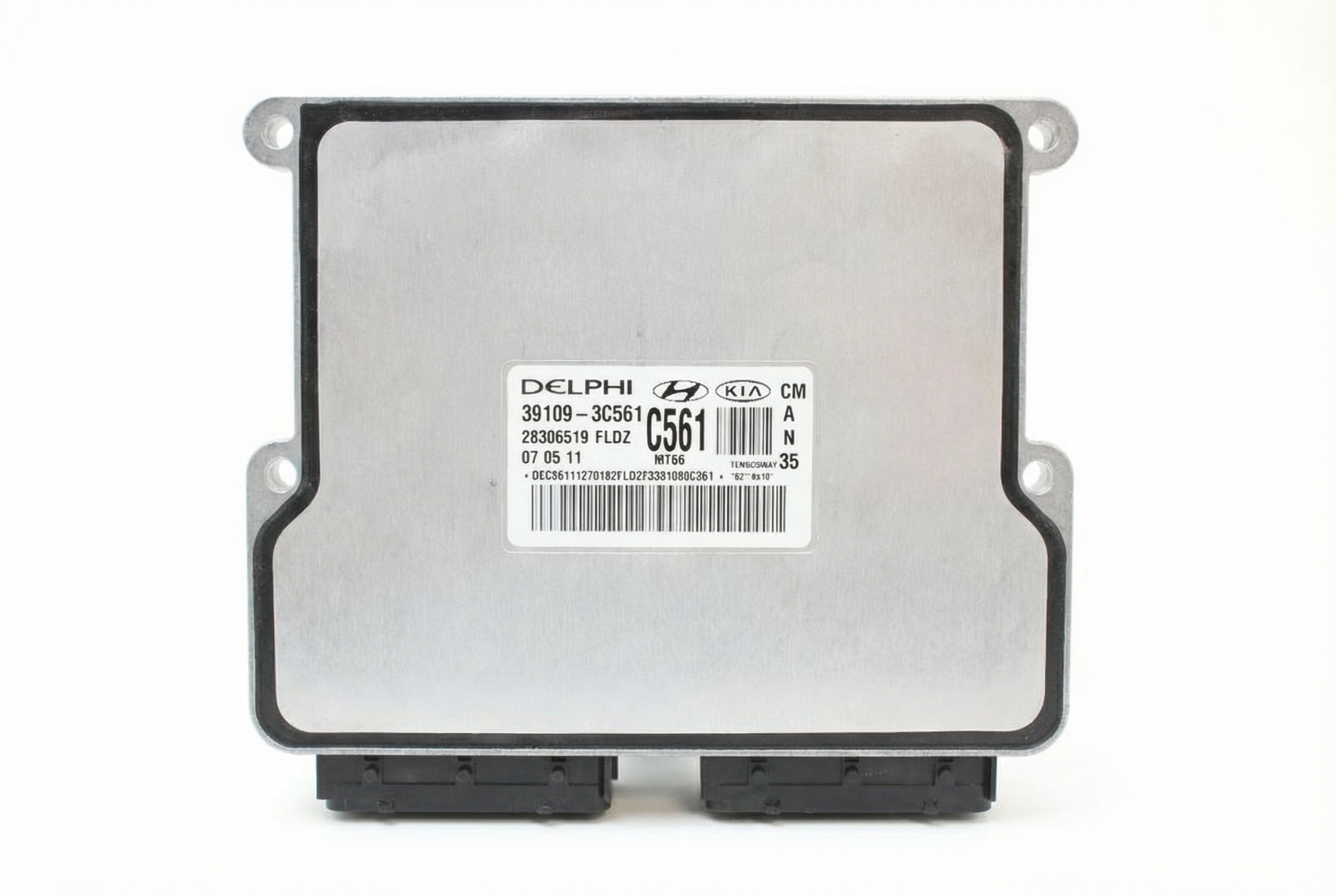
Typical fix: Replace the Powertrain Control Module (PCM) and have it programmed by a dealer or qualified shop.
Est. part cost: $500-$1200 - Poor PCM Power or Ground Connection 🟡 Medium Probability Like any vehicle, main engine and chassis grounds can corrode over time. A high-resistance connection can cause voltage drops under load, confusing the PCM and triggering a false P0606 code.
How to confirm: Use a multimeter to perform a voltage drop test on the PCM's main power and ground wires. Inspect the PCM connectors and main chassis grounds for any signs of corrosion, looseness, or physical damage. The main engine ground is typically a thick wire from the engine block to the chassis.
Typical fix: Clean or repair the corroded ground points. Repair or replace the damaged section of the wiring harness. Ensure all connectors are clean and securely fastened.
Est. part cost: $0-$100 - Low Battery Voltage or Failing Charging System ⚪ Low Probability → Shop Vehicle Battery A weak or failing battery, especially during cold weather, can provide insufficient voltage during cranking, which can put a strain on the alternator and cause voltage fluctuations that may erroneously trigger a P0606 code.
How to confirm: Test the battery with the engine off; it should read approximately 12.6 volts. Start the engine and test the alternator output; it should be between 13.5 and 14.5 volts. A transient P0606 code that appears after jump-starting or replacing a dead battery and then goes away may point to this as the cause.
Typical fix: Recharge or replace the battery. Replace the failing alternator.
Est. part cost: $150-$600
Rare But Worth Checking
- A damaged fuse for the ECU, which may appear fine visually but have high resistance under load.
- A shorted sensor or actuator on the 5V reference circuit. While less common, a shorted component can sometimes disrupt the PCM's internal operations and trigger a P0606 code.
Diagnosis Steps
- Scan the vehicle for any other diagnostic trouble codes. Address those first if they relate to sensor inputs or communication errors. A shorted sensor can sometimes trigger a P0606.
- Check and record freeze frame data to understand the conditions when the code was set.
- Perform a complete battery and charging system test. Ensure battery voltage is stable and within specification (12.6V+ engine off, 13.5-14.5V engine on). A weak battery is a known cause of transient P0606 codes.
- Visually inspect the PCM connectors for bent pins, corrosion, or damage. Ensure they are seated securely. Check for any signs of water intrusion.
- Inspect all main engine and chassis ground connections. Look for looseness, corrosion, or frayed wires. The main engine-to-chassis ground is critical. 🎬 See how a bad ground causes no-start issues on Santa Fes Clean and tighten as necessary.
- Using a wiring diagram for the specific vehicle, verify that the PCM is receiving proper voltage and has a solid ground on all required pins using a voltage drop test.
- Consider a hard reset by disconnecting the battery for 15-30 minutes to clear any potential software glitches, then see if the code returns.
- If all wiring, power, and grounds are confirmed to be good, the PCM is faulty and needs to be replaced.
Parts You'll Likely Need
- Powertrain Control Module (PCM)
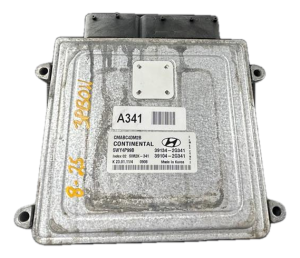
(OEM #39110-3C565 (for 2008-2009 3.3L), 39110-3C560 (for 2007-2009 3.3L), 39110-3C513 (for 2008 3.3L), 39109-3C510 (for 2010-2012). Note: Part numbers are year and engine specific, always verify with VIN.)— This code indicates an internal, unrecoverable processor fault within the PCM itself. After ruling out external electrical issues, replacement is the only solution.
Trusted brands: Hyundai (OEM)
OEM price range: $800-$1200
Aftermarket price range: $500-$800 (Remanufactured)
Platform-Specific Known Issues
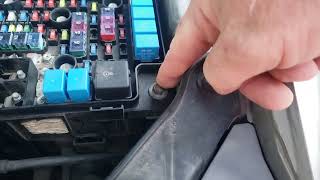
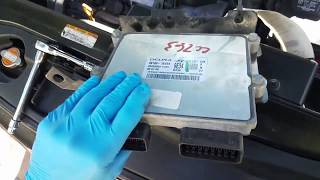
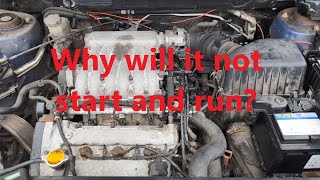
- Location of PCM: On the 2007-2012 Santa Fe, the PCM is typically located in the engine bay, on the driver's side, near the firewall or battery. 🎬 Watch: How to locate and access the ECU in your engine bay
- False Positives from Voltage Issues: Owners have reported the P0606 code appearing temporarily after a battery failure or jump-start. In these cases, after replacing the battery and clearing the code, it did not return, indicating the cause was unstable voltage rather than a failed PCM.
Mechanic-Grade Diagnostic Values
- PCM Power Supply (Main Relay) — expected: 11-14 V with ignition ON.. Failure: Voltage below 11V or no voltage indicates a problem with the main relay or its circuit.
- PCM Ground Circuit — expected: 0V (continuity to chassis ground).. Failure: Any significant voltage reading or high resistance (Ohms) to a known good ground indicates a faulty ground connection.
- Alternator Charging Voltage at Battery — expected: 13.5V to 14.5V with engine running.. Failure: Voltage below 13.5V (undercharging) or above 14.5V (overcharging) can cause electrical issues that may trigger a P0606.
- PCM Sensor Power Supply (Monitored Internally) — expected: Between 4.7V and 5.1V.. Failure: If the PCM detects voltage outside this range, it can set a P0606. This is an internal check and not directly measurable without advanced tools.
Scan Tool Commands That Help
- Hyundai GDS (Global Diagnostic System): ECU Reprogramming / Software Update — Used after installing a new PCM to program the VIN and security information. Also used to apply any available software updates that may address control logic issues, though this is a rare fix for a hardware-related code like P0606.
- Hyundai GDS (Global Diagnostic System): Service Data > APS 2 Signal — To monitor the Accelerator Pedal Sensor ground checking signal. If the data does not periodically vary between ~350mV and 0mV, it can indicate an internal ECM fault that sets P0606.
Wiring & Ground Locations
- PCM Main Power Pins — On the 2008 2.7L, pins C30-A 38, 39, and 40 are battery voltage supply after the main relay.. A loss of stable power on these specific pins due to a faulty relay or wiring can cause the PCM to fail its self-test and set a P0606.
- PCM Ground Pins — On the 2008 2.7L, pins C30-B 51, 52, 76, and 77 are sensor grounds. A main PCM ground is located at pin B36.. A high-resistance ground on any of these pins can cause voltage potential differences within the PCM, leading to processor errors and a P0606 code.
- GM04 Ground — Located on the left side of the dash.. This is a shared ground point for several components. While not a direct engine ground, corrosion or looseness here can introduce electrical noise that may affect module performance.
- Main Engine-to-Chassis Ground — Typically a thick, braided strap or cable running from the engine block or cylinder head to the vehicle's firewall or frame rail.. This is the most critical ground for the entire powertrain electrical system. Corrosion or looseness here is a primary cause of intermittent and difficult-to-diagnose electrical problems, including a false P0606.
Real Owner Repair Stories
- YouTube user comment on 'hyundai santa fe crank no start ( diag / fix )' (Hyundai Santa Fe (year/engine not specified, but symptoms align)) — Crank no start, intermittent no start.
❌ Tried (didn't work) Owner had been cranking excessively, weakening the battery., Hitting the fuel tank to try and engage the pump did not work.
✅ What actually fixed it The vehicle had a crank-no-start condition that was ultimately traced to a failed fuel pump. While not a P0606 code, the symptoms (crank no start) are identical to a potential P0606 outcome. The owner opted for a very cheap aftermarket fuel pump assembly against the mechanic's advice, which resolved the immediate no-start condition.
OEM Part Supersession History
39109-3E330→Unknown, but this is a known part number for the Santa Fe ECM.— Part revisions for reliability or component changes.
Heads up: PCMs are specific to engine, transmission, and model year. A PCM for a 2009 3.3L will not work in a 2010 3.5L due to different engine architecture and transmission controls.39109-3c510→N/A— Part for the 2010-2012 model year refresh.
Heads up: This part is specifically for the 2010-2012 models and is not backward compatible with 2007-2009 vehicles.
Model Year Variations Within This Range
- 2007-2009: These models were equipped with the 2.7L Mu V6 or 3.3L Lambda V6 engines. The PCM, wiring, and associated part numbers are specific to these powertrains.
- 2010-2012: A mid-cycle refresh introduced the 2.4L Theta II I4 and 3.5L Lambda II V6 engines, paired with new six-speed transmissions. These models use different PCMs (e.g., part number 39109-3c510) and have different wiring harnesses compared to the earlier models.
Diagnostic Flowchart
Real Owner Stories
Aggregated from forums and TSBs cited above. Mileages and costs reflect what owners reported in those sources.
Hyundai Santa Fe 2.2
Symptoms: The car starts and then stalls immediately, will not idle. Check engine light with codes P0606 and P062D appeared after a previous repair attempt on an injector.
What fixed it: The problem originated with a faulty injector (code P0262), and the P0606 appeared after the initial repair attempt. The owner implies the final fix was related to correcting the injector issue.
Source hint: Auto-bk.ru forum
Toyota Camry
Symptoms: A P0606 code appeared briefly after replacing a dead battery.
What fixed it: Installing the new battery and clearing the code. The community consensus was that low voltage from the failing battery caused a temporary glitch, and the PCM was fine once stable voltage was restored.
Source hint: CarKiller Community: Check engine/code P0606 after battery replacement
Dodge truck
Symptoms: Experienced a P0606 code immediately after a dealer re-flashed the computer.
What fixed it: The thread suggests that a software update itself triggered the code or failed during the process, confirming the definition of an internal processor error.
Source hint: Turbo Diesel Register: P0606, keeps coming up...
Related OBD-II Codes
Frequently Asked Questions
Where is the PCM located on my 2007-2012 Hyundai Santa Fe?
I just jump-started my Santa Fe and the check engine light came on with code P0606. Is my computer fried?
What should the battery voltage be to rule out a false P0606 code on my Santa Fe?
How much does it cost to fix a P0606 code on this vehicle?
Are other Hyundai or Kia models prone to this exact same P0606 issue?
Can a bad sensor trigger a P0606 code on my Santa Fe?
Helpful Videos
We Have This Part in Stock

The information in this article is provided for general reference and educational purposes only. Vehicle specifications, procedures, and part compatibility can vary by production date, trim level, and region. Always consult your vehicle's factory service manual and verify part numbers before purchasing or performing repairs. Safety-critical components such as airbags, seat belts, and braking systems should be installed by a qualified professional.
- Hyundai Santa Fe:
- 🧭 Diagnostic Flowchart
- 🎬 Helpful Videos
- 🛍️ Shop This Part
- What's Unique About the 2007-2012 Hyundai Santa Fe
- Symptoms You May Notice
- Most Likely Causes
- Rare But Worth Checking
- Diagnosis Steps
- Parts You'll Likely Need
- Platform-Specific Known Issues
- Mechanic-Grade Diagnostic Values
- Scan Tool Commands That Help
- Wiring & Ground Locations
- Real Owner Repair Stories
- OEM Part Supersession History
- Model Year Variations Within This Range
- Real Owner Stories
- Hyundai Santa Fe 2.2
- Toyota Camry
- Dodge truck
- Related OBD-II Codes
- Frequently Asked Questions
- 🎟️ Get 5% Off