

P0606 on 2008-2011 Subaru Impreza: ECM Processor Fault Causes and Fixes
On a 2008-2011 Subaru Impreza, P0606 is most often a temporary glitch after a battery disconnect or jump-start, not a failed computer. The first and most likely fix is to clear the code, turn the ignition off, wait a full minute, and restart. This costs nothing and usually resolves the issue.
- Do NOT immediately replace the ECM. P0606 on a Subaru is most often a temporary glitch.
- If the code appeared after a battery issue, perform the reset procedure first: clear codes, ignition off, wait 1 minute, then restart.
- Thoroughly test the battery and charging system before considering more complex repairs. Low or unstable voltage is a known trigger.
- Only consider ECM replacement as the absolute last step after all other possibilities have been professionally ruled out.
What's Unique About the 2008-2011 Subaru Impreza
Subaru ECMs from this era are notoriously sensitive to power interruptions. A dead battery, jump-start, or even just disconnecting the battery for maintenance can trigger a P0606 code if the ignition is turned back on too quickly. A specific Technical Service Bulletin (TSB 07-75-13R) details this exact behavior, explaining that if the ignition is turned 'ON' within one minute of being turned 'OFF' after a power loss event, a false P0606 can be stored. Owners often panic and assume they need a new, expensive ECM, when in reality, a simple, free reset procedure usually solves the problem.
Generation note: The 2008-2011 Subaru Impreza is the third generation (often abbreviated as GE, GH, GR, GV). The issue described is common across many Subaru platforms of this vintage, including Forester and WRX models that share similar ECM logic and are explicitly mentioned in related TSBs.
Symptoms You May Notice
- Check Engine Light is on
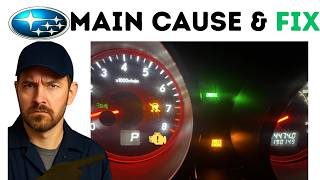
- Flashing 'Cruise Control' light on the dashboard
- Vehicle enters 'limp mode' with significantly reduced engine power
- Engine may stall, run rough, or fail to start
- Potential for erratic automatic transmission shifting
- Vehicle Dynamics Control (VDC) or Traction Control light may illuminate
- Immediately replacing the Engine Control Module (ECM) without first performing the simple TSB-prescribed reset procedure and thoroughly testing the battery and charging system. This is an expensive and often unnecessary repair for this specific code on a Subaru.
Most Likely Causes
- Improper Ignition Cycle After Power Loss 🔴 High Probability A known Subaru software issue, detailed in TSB 07-75-13R, where the ECM logs a fault if not allowed to fully shut down before power is restored or the ignition is cycled. This happens because the self-shutoff relay procedure is interrupted.
How to confirm: The code appeared immediately after the vehicle's battery died, was replaced, or was jump-started. The vehicle may run perfectly fine otherwise.
Typical fix: Perform the 'ECM Reset Procedure': Use a scan tool to clear the code. Turn the ignition OFF and remove the key. Wait for at least one full minute (use a timer). Turn the ignition ON and start the vehicle. The code should not return.
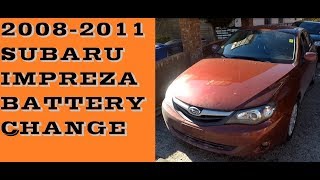
Est. part cost: $0 - Weak or Failing Battery 🟡 Medium Probability → Shop Vehicle Battery The ECM is highly sensitive to voltage. Low voltage during engine cranking can cause the ECM's internal self-check to fail, triggering a P0606. Forum users frequently report that the OEM Panasonic batteries have a short life (2-3 years) and low CCA, making them a common culprit.
How to confirm: Test the battery with a multimeter or electronic battery tester. A healthy, resting battery should be at ~12.6 volts. During cranking, voltage should not drop below ~9.6 volts. Many auto parts stores will test this for free.
Typical fix: Replace the vehicle battery.
Est. part cost: $150-$250 - Failing Alternator / Charging System Issue 🟡 Medium Probability
How to confirm: With the engine running, test the voltage at the battery terminals. A healthy alternator should produce a stable voltage between 13.5 and 14.5 volts. Unstable, low, or excessively high voltage can trigger the code.
Typical fix: Replace the alternator.
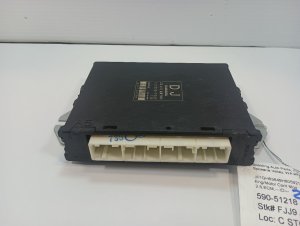
Est. part cost: $200-$400 - Engine Control Module (ECM) Failure ⚪ Low Probability → Shop Engine Control Module (ECM) While this is the textbook definition of the code, it is the least common cause on these vehicles. It should only be considered after all other possibilities are exhausted.
How to confirm: The code returns immediately even after the TSB reset procedure, and the battery/charging system are confirmed to be in perfect working order. Professional diagnosis is recommended to rule out wiring issues first. 🎬 Watch: How to diagnose a P0606 processor code
Typical fix: Replace the ECM. The new module will require programming by a dealer or a specialized shop to match the vehicle's VIN and immobilizer.
Est. part cost: $800-$1500
Rare But Worth Checking
- Poor ECM Power or Ground Connections: Corroded or loose battery terminals, main engine-to-chassis grounds, or the ECM's own ground strap can cause intermittent voltage drops that mimic other failures. A Reddit user reported a P0606 caused by an aftermarket exhaust vibrating against the chassis, interfering with the ground path. It's always worth inspecting and cleaning these connections.
- Outdated ECM Software: In some cases, Subaru has released software updates to make the ECM less sensitive to these power-related glitches. While TSB 07-75-13R addresses the procedure, other TSBs for similar models (like 11-15-14 for the Forester) involved a permanent reflash. Inquiring with a dealer about a potential reflash is a valid next step before replacing the unit. Manufacturer TSB Bulletin #09-135-25 also announces the availability of new reprogramming files developed to address cases of DTC P0606 detected by the ECM on other Subaru models.
- Short in a Sensor or Actuator: A short-circuit in an unrelated engine sensor can sometimes feed back into the ECM and cause it to report an internal processor fault. If other trouble codes are present alongside P0606, they should be diagnosed first. Unplugging the suspect sensor and seeing if the P0606 code can then be cleared is a valid diagnostic step.
Diagnosis Steps
- Confirm if the battery was recently dead, disconnected, or jump-started. If yes, proceed to step 2.
- Using an OBD-II scanner, clear the P0606 trouble code from the ECM memory.
- Turn the ignition key to the OFF position and remove the key.
- Wait for at least 60 seconds. This is the critical step outlined in TSB 07-75-13R to allow the self-shutoff relay to cycle.
- Turn the ignition key ON and start the engine. Drive the vehicle to see if the code returns.
- If the code does not return, the issue was a temporary glitch. No further action is needed.
- If the code returns, perform a comprehensive test of the battery and charging system. The battery should be above 12.4V at rest and the alternator should supply a stable 13.5-14.5V when running. Replace if either fails.
- If the power system is good, inspect all main power and ground connections. Check the battery terminals, the main engine-to-chassis ground strap, and the ECM's own connections for corrosion or looseness.
- If all of the above check out and the code persists, consult a dealership or professional technician about a possible ECM software update (reflash). Reference TSBs like 07-75-13R and ask if any logic updates apply to your VIN.
- As a final resort, if all other steps fail and a professional has ruled out wiring faults, the ECM itself may have failed and require replacement and programming.
Parts You'll Likely Need
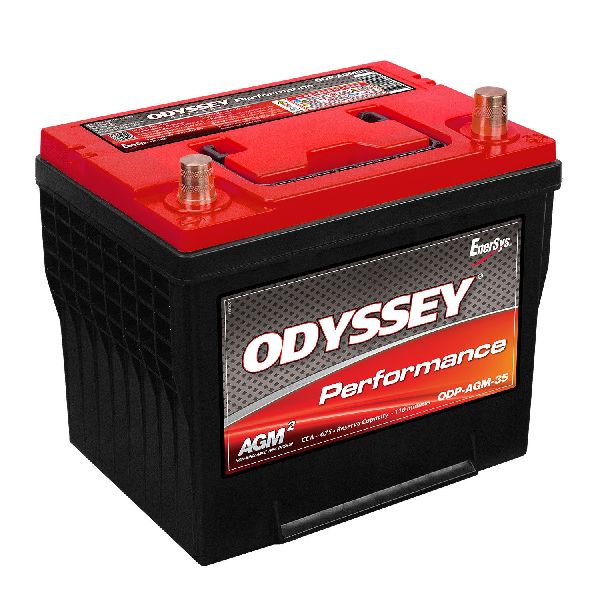
- Vehicle Battery — A weak or failing battery is a common trigger for a P0606 code on Subarus due to the ECM's sensitivity to low voltage during startup.
Trusted brands: Interstate, DieHard, Duralast, Subaru OE
OEM price range: $200-$300
Aftermarket price range: $150-$250 - Engine Control Module (ECM)
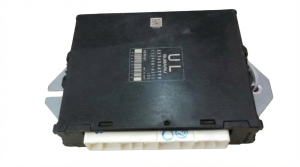
(OEM #22765AA790, 22765AA792 (for 2010 AT models, always verify by VIN))— This is the last resort. It is only needed if the unit has a confirmed internal failure after all other, more common causes have been ruled out. Must be programmed to the vehicle.
Trusted brands: Subaru OE (Remanufactured or New)
OEM price range: $900-$1500
Aftermarket price range: $400-$800 (Remanufactured)
Technical Service Bulletins (TSBs) & Recalls
- 07-75-13R - 'DTC P0606 after Vehicle Battery Is Reconnected'. While the applicability is listed for 'All Models with DIT (Turbo) Engines', the principle and procedure are widely and successfully applied to non-turbo models of the same era experiencing the same symptom. It details the cause (interrupted self-shutoff procedure) and the fix (clear code, ignition off, wait 1+ minute).
- Bulletin #09-135-25 - This bulletin announces availability of new reprogramming files developed to address cases of DTC P0606 (Control Module Processor) detected by the Engine Control Module (ECM).
Platform-Specific Known Issues
- Subaru TSB 07-75-13R describes a similar issue on Forester and WRX models, where P0606 can be set by cycling the ignition too quickly after a battery disconnect. This procedure is widely considered applicable to other Subarus of the same era, including the non-turbo Impreza.
- Some owners on forums have reported that even after clearing the code, it may appear as a 'permanent' DTC that can only be cleared by the ECU itself after a successful drive cycle post-reset procedure.
Mechanic-Grade Diagnostic Values
- ECM Power Supply Pin Voltage (e.g., Pin B135-1 on 2010 Impreza) — expected: 10 - 13 V (Ignition SW ON). Failure: Voltage significantly lower than battery voltage points to a wiring issue, fuse, or main relay problem.
- ECM Ground Pin Resistance (e.g., Pin B136-1 on 2010 Impreza) — expected: Continuity present (Near 0 Ohms to chassis ground). Failure: High resistance or an open circuit indicates a compromised ground connection, which is a major cause of electrical issues.
- Back-up Power Supply (e.g., Pin B137-7 on 2010 Impreza) — expected: 10 - 13 V (Always). Failure: Loss of voltage on this pin indicates a blown fuse or wiring issue for the ECM's keep-alive memory, which can trigger faults after a power cycle.
Hidden / Shadow Codes Worth Checking
- Permanent DTC (PDTC): The P0606 code can be stored as a Permanent DTC. Unlike normal DTCs, these cannot be cleared with a standard 'Clear Codes' command from a scan tool. They are only cleared by the ECU itself after a specific number of successful drive cycles are completed without the fault reoccurring. (see via Visible on most modern OBD-II scan tools, but will show as 'permanent' and will not erase on command until the underlying issue is fixed and a drive cycle is completed.)
Scan Tool Commands That Help
- Subaru Select Monitor (SSM) / AVDI / Advanced Aftermarket Scanners: Immobilizer Reset / Immobilizer Registration — This is mandatory when replacing the ECM with a new or used unit. The replacement ECM must be registered to the vehicle's immobilizer system and keys, otherwise the engine will not start.
- Specialized ECU Programming Tools (e.g., HexProg, PCMflash): IMMO OFF / Immobilizer Delete — This is a professional recovery procedure used when the original ECM is completely dead or unreadable, making it impossible to clone key data. This function disables the immobilizer check within the replacement ECU's software, allowing the engine to start. The VIN must still be programmed separately.
Wiring & Ground Locations
- ECU Main Ground Path — The primary ground reference for the ECU is provided through bolts on the top of the intake manifold.. This is the most critical ground for stable ECU operation. If this path is compromised (e.g., by corrosion, looseness, or non-conductive TGV delete spacers), the ECU can experience voltage fluctuations and phantom issues, potentially triggering a P0606.
- Main Chassis Ground — The thick ground strap connecting the negative battery terminal to the vehicle's chassis, typically on the strut tower or inner fender.. A poor main chassis ground affects the entire vehicle's electrical system. It forces the starter and other components to find alternative, high-resistance ground paths, causing massive voltage drops that can easily trigger a P0606 during engine cranking.
- Engine Block / Alternator Grounds — Additional ground straps typically run from the engine block to the chassis and from the alternator housing to the block or chassis.. These ensure the engine and charging system have a solid ground reference. A poor alternator ground can lead to unstable voltage output, a known trigger for P0606.
OEM Part Supersession History
22765AA790→22765AA792— Standard part revision by the manufacturer, likely for minor hardware or firmware improvements.
Heads up: While the new part number replaces the old one, part numbers are extremely specific to the model, year, and transmission. Always verify the correct part number for your specific VIN before ordering.
Model Year Variations Within This Range
- 2008-2011: While the P0606 glitch is common across this generation, the specific ECM part numbers change by year and transmission type (e.g., 2010 AT uses 22765AA790/2). An ECM from a 2008 will not work in a 2011, even if the engine is the same. They are not interchangeable and must be matched to the vehicle's VIN.
Diagnostic Flowchart
Other Known Issues on This Vehicle
Issues unrelated to this code that are worth knowing about as an owner of this generation:
- Head Gasket Failure (EJ253) 🔴 High — Commonly occurs between 100,000 and 150,000 miles. The SOHC EJ253 in this generation is known for external oil and/or coolant leaks, which is less catastrophic than the internal failures of earlier DOHC engines but still a significant repair.
- Catalytic Converter Failure (P0420) 🟠 Medium — A very common cause for the Check Engine Light on this platform. Often requires expensive replacement, though Subaru has issued software updates for some models to make the monitoring less sensitive. (Ref: WVM-23 (for related models, check applicability))
- Brake Line Corrosion 🔴 High — Affects vehicles operated in 'salt-belt' states. A recall (WQK-47) was issued because salt water exposure could cause excessive corrosion and potential brake line failure. (Ref: Recall WQK-47)
- Excessive Oil Consumption 🟠 Medium — Some owners report higher-than-normal oil consumption, which can be caused by worn piston rings. This issue became more prominent in the next generation (FB engine) but was still noted by some owners of this generation.
- Failing Oxygen (O2) or Air/Fuel (A/F) Sensors 🟡 Low — The front A/F sensor or rear O2 sensor can fail, leading to codes like P0171 (System Too Lean) or contributing to a false P0420 code. This is a common maintenance item on higher-mileage vehicles.
Used vs. New Parts: Buying Guide for This Vehicle
When a used part is the smart pick: A used ECM is a cost-effective option if the original unit is confirmed to be faulty, as long as you factor in the mandatory cost of professional reprogramming. It is not a DIY-friendly plug-and-play part.
Donor-vehicle mileage cap: roughly under 150000 miles for the part to have meaningful remaining life.
What to inspect on the donor part:
- Verify the part number EXACTLY matches what is required for your vehicle's VIN, year, and transmission.
- Ensure the seller guarantees the unit is functional and not from a flood or fire-damaged vehicle.
- Inspect the connectors for any bent, corroded, or pushed-out pins.
- Check the casing for any signs of being opened, which could indicate a prior failed repair attempt.
OEM-only on this vehicle (don't cheap out):
- Engine Control Module (ECM) - While used OEM units are acceptable, no reliable aftermarket 'new' ECMs are widely trusted or available. The repair path is either a used OEM unit or a new/remanufactured one from Subaru.
Brands owners have reported issues with on this vehicle:
- Any generic or 'universal' ECM. They do not exist for this application.
Real Owner Stories
Aggregated from forums and TSBs cited above. Mileages and costs reflect what owners reported in those sources.
2011 Subaru Impreza
Symptoms: The code appeared immediately after the vehicle's battery died and was replaced. The owner found the code would not clear using standard methods.
What fixed it: Followed the 'wait one full minute' procedure: cleared the code with a scan tool, removed the key for over 60 seconds to allow the self-shutoff relay to cycle, then restarted.
Source hint: Reddit r/subaru - Thread title: 'P0606 Caused by dead battery. Got new battery and the code wont clear.'
2008-2014 Subaru WRX
Symptoms: Draining battery and P0606 code appearing.
What fixed it: Replacing the weak or failing battery, as the ECM is highly sensitive to low voltage during engine cranking.
Source hint: Reddit r/WRX - Thread title: 'Draining battery and P0606 anyone have a clue what went wrong or how to fix'
Subaru Owner Report
Symptoms: An owner reported experiencing an error code of P0606, which a service technician identified as a voltage issue on the Engine Control Module (ECM).
What fixed it: According to NHTSA ODI #10574609, the corrective action was to re-flash the ECM computer.
Related OBD-II Codes
Frequently Asked Questions
Does TSB 07-75-13R apply to my non-turbo 2008-2011 Subaru Impreza?
Why did my Impreza throw a P0606 code immediately after I jump-started it?
Could my 2008-2011 Impreza's original Panasonic battery be causing this code?
Is there a specific reset procedure I should follow before replacing the ECM?
My Impreza has a P0606 and the Cruise Control light is flashing; is this normal?
Are there any recalls for the 2008-2011 Impreza that I should check while fixing this?
Helpful Videos
Used OEM Parts in Stock
New Aftermarket Parts Available


The information in this article is provided for general reference and educational purposes only. Vehicle specifications, procedures, and part compatibility can vary by production date, trim level, and region. Always consult your vehicle's factory service manual and verify part numbers before purchasing or performing repairs. Safety-critical components such as airbags, seat belts, and braking systems should be installed by a qualified professional.
- Subaru Impreza:
- 🧭 Diagnostic Flowchart
- 🎬 Helpful Videos
- 🛍️ Shop This Part
- What's Unique About the 2008-2011 Subaru Impreza
- Symptoms You May Notice
- Most Likely Causes
- Rare But Worth Checking
- Diagnosis Steps
- Parts You'll Likely Need
- Technical Service Bulletins (TSBs) & Recalls
- Platform-Specific Known Issues
- Mechanic-Grade Diagnostic Values
- Hidden / Shadow Codes Worth Checking
- Scan Tool Commands That Help
- Wiring & Ground Locations
- OEM Part Supersession History
- Model Year Variations Within This Range
- Other Known Issues on This Vehicle
- Used vs. New Parts: Buying Guide for This Vehicle
- Real Owner Stories
- 2011 Subaru Impreza
- 2008-2014 Subaru WRX
- Subaru Owner Report
- Related OBD-II Codes
- Frequently Asked Questions
- 🎟️ Get 5% Off