

P0606 on 2010-2015 Volkswagen Passat: ECM Processor Fault Causes and Fixes
P0606 on a 2010-2015 VW Passat indicates a critical internal error in the Engine Control Module (ECM/ECU). Before replacing the expensive ECU, check for a known software bug (TSB V011229) that requires an update from a VW dealer. If software is not the issue, thoroughly inspect ECU power/ground circuits, fuses, and the injector wiring harness for shorts, as these can falsely trigger P0606. If all external factors are ruled out, the ECU has likely failed and will need to be replaced or remanufact
- P0606 is a critical fault indicating a problem with the Passat's main engine computer (ECU). Do not continue to drive the vehicle.
- Before assuming the expensive ECU has failed, have a VW dealer or specialist check for software updates, as a known TSB addresses this exact issue.
- Thoroughly test the battery, alternator, and the ECU's power and ground connections. A simple electrical issue can mimic a complex computer failure.
- If the ECU must be replaced, it is not a plug-and-play part. The new unit must be professionally programmed to your car's VIN.
What's Unique About the 2010-2015 Volkswagen Passat
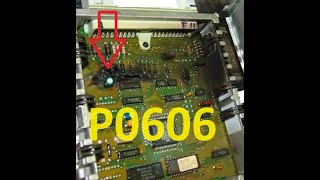
The 2010-2015 Passat (specifically the B7 generation, often with the 1.6L TDI engine more common in Europe) is known to experience failures of the Continental Simos PCR2.1 Engine Control Unit, which directly triggers the P0606 code. 🎬 Watch: A helpful overview of P0606 causes and common fixes. Furthermore, Volkswagen issued a Technical Service Bulletin (TSB V011229) for the 2013 model year acknowledging that overly sensitive diagnostic software could falsely trigger this code, with the official fix being an ECM software update. This means that unlike in many other vehicles where P0606 almost always means a failed computer, on this specific Passat, it could be a fixable software issue or an external wiring fault mimicking a computer failure.
Generation note: The 2010-2015 range covers two Passat generations: the B6 (through 2010/2011 depending on market) and the B7 (starting 2010 in Europe, 2012 in North America as the NMS). The known issues with the Continental Simos PCR2.1 ECU and the related software TSB specifically apply to the B7 generation Passat, particularly those with TDI engines.
Symptoms You May Notice
- Check Engine Light is on
- Engine stalls intermittently or will not start at all
- Noticeable loss of engine power or vehicle is in 'limp mode'
- Engine may crank but fail to start
- Erratic behavior from other systems controlled by the ECM
- Engine runs rough or shudders
- Immediately replacing the Engine Control Module without first checking for software updates (TSB V011229) or verifying stable power and ground supply.
- Condemning the ECU before thoroughly inspecting the fuel injector wiring harness for damage, chafing, or shorts near the engine. A faulty injector or its wiring can mimic an ECU failure.
Most Likely Causes
- Internal Engine Control Module (ECU) Failure 🔴 High Probability → Shop Engine Control Module (ECM) Failures of the Continental Simos PCR2.1 ECU are noted as a common issue on the B7 Passat, leading to this code. Failure is often due to component degradation from long-term exposure to heat and vibration. A specific failure mode involves the circuits controlling the fuel injectors.
How to confirm: This is diagnosed by exclusion. If all other potential causes (software, power/ground, external wiring/components) are ruled out, the ECU itself is condemned. A user on a Ross-Tech forum confirmed a heat-related failure by temporarily getting the car to start after freezing the ECU.
Typical fix: The ECU must be replaced with a new or remanufactured unit and programmed specifically for the vehicle's VIN and configuration. Remanufacturing services often use higher-spec components to prevent repeat failure.
Est. part cost: $400-$1200 - Outdated or Corrupt ECM Software 🟡 Medium Probability VW issued Technical Service Bulletin V011229 / 2030455 for the 2013 Passat because overly sensitive diagnostic software could erroneously trigger P0606. This indicates a known software issue on this platform.
How to confirm: A Volkswagen dealer or a qualified independent shop with access to VW's ODIS system can check if the vehicle's ECM software is up-to-date and if TSB V011229 applies. The TSB explicitly states not to replace any parts before performing the software update.
Typical fix: Update the ECM software to the latest version. This is often called 'reflashing' the computer.
Est. part cost: $0 - ECM Power or Ground Circuit Issues 🟡 Medium Probability All modern ECUs are sensitive to voltage. Issues like a weak battery, failing alternator, corroded ground straps, or even a high-resistance fuse can provide unstable power, tricking the ECU into reporting an internal fault.
How to confirm: Test the battery and charging system output. Visually inspect and perform a voltage drop test on the main power and ground wires leading to the ECM connector. Check resistance across relevant fuses, as a visual check is not always sufficient.
Typical fix: Replace the failing battery or alternator. Clean or replace corroded battery terminals, ground straps, or damaged wiring.
Est. part cost: $20-$500
Rare But Worth Checking
- Short Circuit in an External Component or Wiring: A shorted component like a fuel injector or damage to its wiring harness can send incorrect voltage back to the ECM, causing it to set a P0606 code even though the ECM itself is not the root cause. This is a very common misdiagnosis for this platform.
Diagnosis Steps
- Read all fault codes stored in the ECM. Note if P1388 or P2201 are present, as this points towards the software TSB.
- Check for any open recalls or Technical Service Bulletins (TSBs) for your vehicle's VIN, specifically referencing TSB V011229 / 2030455 for 2013 models.
- If a software update is available, have it performed by a VW dealer or qualified shop. The TSB explicitly states this should be done before any parts are replaced.
- Perform a complete battery and charging system test. Ensure the battery is fully charged and the alternator provides a stable voltage (typically 13.5-14.5V when running). Unstable voltage can trigger false processor faults.
- Visually inspect the wiring harness and connectors at the ECM. Look for any signs of corrosion, moisture, or physical damage. Pay close attention to the wiring loom leading to the fuel injectors for chafing or wear.
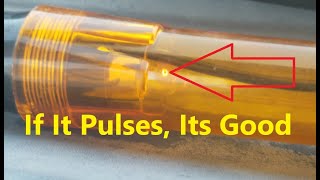
- Carefully check the main power and ground connections to the ECM. Perform a voltage drop test to ensure the circuits can carry a proper load. Check for poor contact at the injector connectors themselves. 🎬 See how to test your fuel injector circuits using a meter.
- If other codes for specific components (e.g., fuel injectors) are present, diagnose those first. A shorted external part can trigger P0606. Try unplugging the suspect component to see if the P0606 code clears.
- If all external wiring, power, grounds, and software are confirmed to be good, the fault is internal to the ECM. The ECM will need to be replaced or sent to a specialist for remanufacturing.
Parts You'll Likely Need
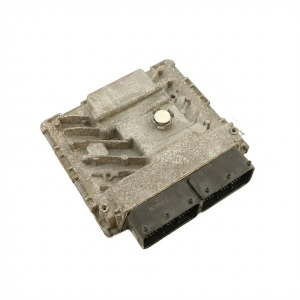
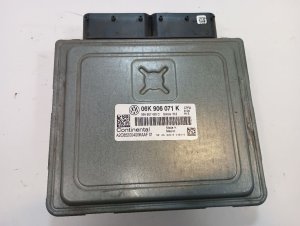
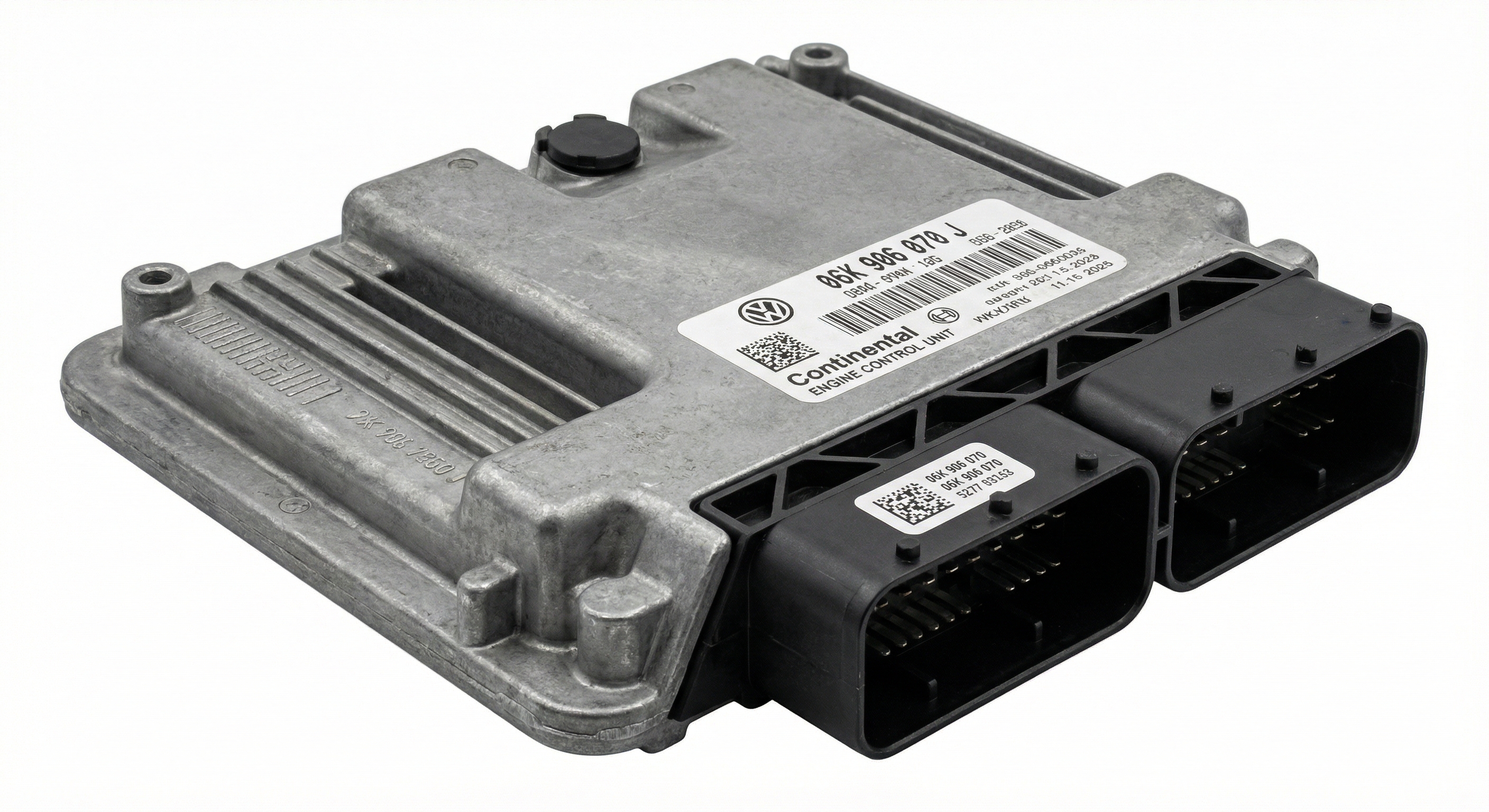
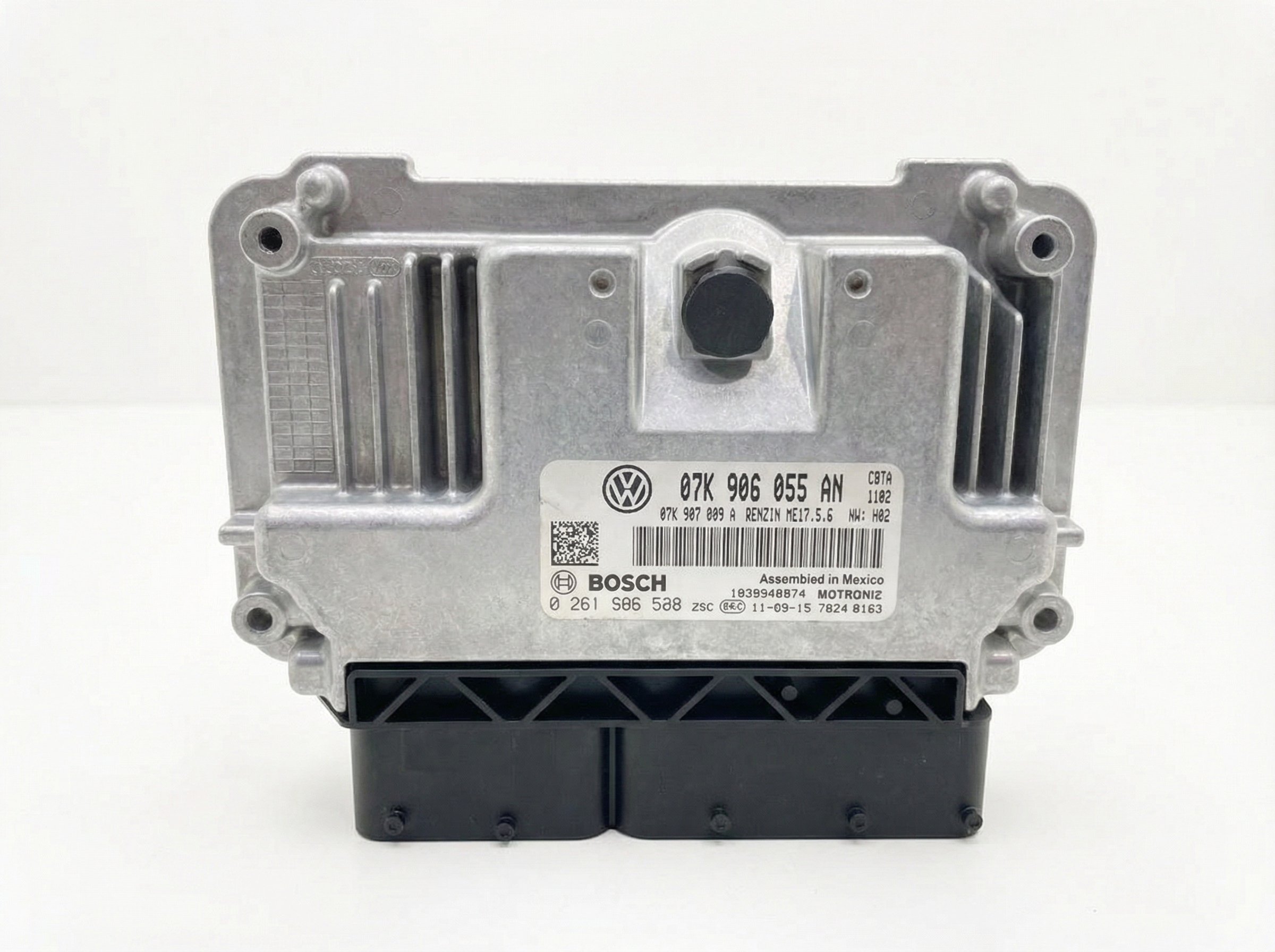
- Engine Control Module (ECM/ECU)
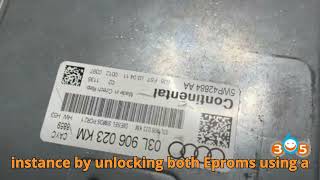
(OEM #Family: 03L 906 023 (Note: many variations exist, always verify by VIN))— This is the most common fix when all external electrical and software issues have been ruled out. The B7 Passat with the TDI engine is known for failures of its Continental Simos PCR2.1 ECU.
Trusted brands: Bosch, Continental, Genuine VW
OEM price range: $900-$1200
Aftermarket price range: $400-$800 (Remanufactured)
Related Codes That Often Appear With This One
- P1388 — This is another ECM fault code specifically mentioned alongside P0606 in VW's Technical Service Bulletin V011229 as being potentially caused by sensitive software.
- P2201 — A NOx sensor circuit fault also mentioned in TSB V011229 that can be stored along with P0606 due to the same ECM software sensitivity issue.
- P0201, P0202, P0203, P0204 — These are injector circuit malfunction codes. On the Simos PCR2.1 ECU, these codes often appear with P0606, but can be caused by a wiring fault or a bad injector, not necessarily the ECU itself.
Technical Service Bulletins (TSBs) & Recalls
- V011229 / 2030455: Addresses a MIL ON condition with DTCs P0606, P1388, and/or P2201 due to overly sensitive ECM monitoring strategy, fixed by a software update.
Platform-Specific Known Issues
- A known software sensitivity issue covered by TSB V011229 can cause a 2013 Passat to log a P0606 fault when no hardware defect exists. The fix is a software update.
- The Continental Simos PCR2.1 ECU used in many B7 Passats (especially 1.6L TDI variants) is prone to internal failure that results in a P0606 code, often related to injector control circuits.
- The wiring harness to the fuel injectors is a known weak point and can become worn or shorted, leading to codes that are often misdiagnosed as an ECU failure.
Mechanic-Grade Diagnostic Values
- Alternator output voltage at battery terminals (engine running) — expected: 13.5V - 14.5V. Failure: Voltage below 13.5V or above 14.5V indicates a charging system fault that can trigger a false P0606.
- Fuel injector internal resistance — expected: Approximately 12 Ohms. Failure: A reading of infinity (OL) indicates an open circuit within the injector.
- Simos PCR2.1 ECU High-Voltage Capacitor (Bench Test) — expected: Approximately 220V. Failure: This is an expected value during operation; it is extremely dangerous and indicates high voltage is present. Do not touch.
- Simos PCR2.1 ECU Injector Discharge Section Voltage (Bench Test) — expected: Approximately 2.5V. Failure: Absence of this voltage can indicate a fault in the injector low-side control circuit.
Hidden / Shadow Codes Worth Checking
- 16990 / 001542: This is the VAG-specific fault code number that corresponds to the generic OBD-II code P0606, meaning 'Internal Control Module: Processor Fault'. (see via VCDS (VAG-COM), ODIS, or other professional VW/Audi group diagnostic scan tools.)
- P060600: Another variation of the P0606 code seen on VW diagnostic tools, often with additional freeze-frame data. (see via VCDS (VAG-COM), ODIS, or other professional VW/Audi group diagnostic scan tools.)
Scan Tool Commands That Help
- VCDS or ODIS: Throttle Adaptation Procedure — After clearing a P0606 code that may have been caused by a low battery condition. This re-adapts the Engine Control Module to the throttle valve control module.
- VCDS: Adaptation - Channel 050 — When swapping in a used ECU on some older models. After entering the security access PINs for both the new and old ECUs, this channel is used to adapt the immobilizer from the instrument cluster to the replacement ECU.
- ODIS (Online): ECU Adaptation / 'Download data' — For newer models where simple VCDS channel adaptation is not possible. This function requires an online connection to VW servers to synchronize the immobilizer data between the vehicle and the replacement (new or used) ECU.
Wiring & Ground Locations
- Ground Point 15 — On the cylinder head.. A primary ground point for the engine. A poor connection here can cause unstable voltage and various engine management faults, including a false P0606. Torque to 15 Nm.
- Ground Point 652 — Main ground strap between the transmission/engine and the chassis.. This is the main ground path for the entire engine and transmission assembly. Corrosion or looseness can cause widespread electrical havoc.
- Ground Point 685 — On the front of the right longitudinal member (frame rail) in the engine bay.. An important chassis ground point in the engine compartment. A bad connection can affect various systems, including the ECU.
- Injector Wiring Harness — Runs to each fuel injector, often routed under the intake manifold or inside the rocker cover on Pumpe Duese engines.. This harness is a known weak point. Heat and vibration can cause wires to become brittle, chafe, and short out, which can send fault signals to the ECU and be misdiagnosed as an internal ECU failure.
- T94 Connector — The main 94-pin electrical connector on the Engine Control Module.. This is the primary interface for all sensor inputs and actuator outputs. All power and ground connections for the ECU pass through this connector. Corrosion or loose pins here are a primary diagnostic check.
Real Owner Repair Stories
- Ross-Tech Forums user 'rhill175' (2014 VW TDI (likely Jetta or Passat)) — No-start condition with fault code P0606 / 001542.
❌ Tried (didn't work) Flashing the ECU tune back to the stock file.
✅ What actually fixed it This was a temporary fix, but highly diagnostic: The owner removed the ECU, noticed the thermal pads were hard, applied new computer thermal paste, and froze the ECU for an hour. After reinstalling the frozen ECU, the car started immediately. This confirmed a heat-sensitive internal failure (likely cracked solder joints on the processor), indicating the ECU needed replacement. - Car Mechanics UK forum user (2004 VW Passat B5 Estate (Pumpe Duese engine)) — Misfire faults, shutting down cylinder 1 injector.
❌ Tried (didn't work) Clearing fault codes would temporarily fix the issue for a few miles.
✅ What actually fixed it Replacing the injector wiring harness located inside the rocker cover. A key tip was to warm the new harness with a hairdryer to make it flexible enough to install without breaking. After replacement and clearing codes, the misfire did not return.
OEM Part Supersession History
03L 906 023 (Family)→Multiple variations exist, e.g., 03L906023TH, 03L907425C.— Revisions for hardware and software updates.
Heads up: When replacing a Simos PCR2.1 ECU, the hardware part number must be an exact match for a cloning service to be successful. Software versions can differ but hardware must be identical.
Model Year Variations Within This Range
- 2013: A specific TSB (V011229) applies, where a software update is the prescribed first step to fix a P0606 caused by overly sensitive diagnostics, before any hardware replacement.
- Approx. 2007+: The procedure for adapting a used ECU changed. Older models may allow adaptation via VCDS (Channel 50), while newer models require online adaptation with the dealer ODIS tool.
Diagnostic Flowchart
Other Known Issues on This Vehicle
Issues unrelated to this code that are worth knowing about as an owner of this generation:
- Clogged Heater Core (TDI Models) 🔴 High — Very common on 2013-2014 Passat TDI models with the CKRA engine, leading to insufficient passenger-side heat. Can occur multiple times. (Ref: VW Warranty Extension (10 years/120,000 miles) and TSB 80-16-01.)
- Clock Spring Failure 🟠 Medium — Common across many 2010-2014 VW models. Causes airbag light, loss of horn, and loss of steering wheel button functions. (Ref: VW Recall 69R6 (NHTSA 15V483000), though issues sometimes persisted post-recall.)
- DSG Mechatronic Unit Failure 🔴 High — Affects models with the Direct-Shift Gearbox (DSG). Symptoms include shuddering, delayed shifts, or total transmission failure. (Ref: A recall was issued for a software update to prevent loss of drive on some models.)
- High-Pressure Fuel Pump (HPFP) Failure (TDI) 🔴 High → Shop Fuel Pump — A known potential failure point for TDI engines of this era, which can cause catastrophic engine damage when it fails and sends metal fragments through the fuel system.
- TDI Emissions Modification Issues 🟠 Medium — On 2012-2014 TDI models that received the 'Dieselgate' fix, a problem could arise where the vehicle might not restart after sustained high-speed driving. (Ref: Owner notification and subsequent software update from VW.)
Used vs. New Parts: Buying Guide for This Vehicle
When a used part is the smart pick: A used ECU is a very common and cost-effective repair strategy, but ONLY if you have a viable plan for programming. It saves significant money over a new unit from the dealer.
Donor-vehicle mileage cap: roughly under 150000 miles for the part to have meaningful remaining life.
What to inspect on the donor part:
- Part number MUST be an exact match to the original ECU.
- Inspect the connector pins for any signs of corrosion, moisture, or physical damage.
- Ask the seller if the donor vehicle had any flood or fire damage.
- Ensure the casing is not cracked or showing signs of being pried open improperly.
OEM-only on this vehicle (don't cheap out):
- While the part can be a used OEM unit, the programming/adaptation service is the critical factor. There are no reliable 'pre-programmed' aftermarket ECUs for this application; they must be adapted to your specific car.
Aftermarket brands forum-validated for this vehicle:
- For ECU cloning/remanufacturing services (not parts): ECU Testing, ACTRONICS, ECU Team Corp, and other mail-in services are reported to be effective.
- For diagnostic tools: Ross-Tech VCDS is the standard for DIY and independent shops; ODIS is the dealer-level tool.
Brands owners have reported issues with on this vehicle:
- Avoid generic, non-OEM 94-pin connectors. Forum reports indicate they may fit physically but cause signal loss on the CAN bus, leading to recurring communication errors.
Real Owner Stories
Aggregated from forums and TSBs cited above. Mileages and costs reflect what owners reported in those sources.
2010-2015 Volkswagen Passat (2.0TDI)
Symptoms: The vehicle experienced a P0606 code along with entering limp mode.
What fixed it: The fault was linked to the Continental Simos PCR2.1 ECU which is prone to internal failure.
Source hint: MHH AUTO (MHH AUTO - Page 1)
2010-2015 Volkswagen Passat
Symptoms: The car suffered from a no-start condition and a P0606 Processor Fault. The owner found that the car would start immediately if the ECU was removed and frozen for an hour.
What fixed it: The temporary fix involved applying new thermal paste and freezing the ECU, confirming a heat-sensitive internal component failure that requires ECU replacement or remanufacturing.
Source hint: Ross-Tech Forums - 'VW ECU/PCM 001542 Internal Control Module P0606 Processor Fault'
2013 Volkswagen Passat
Symptoms: Check Engine Light (MIL) ON with DTC P0606.
What fixed it: ECM software update to the latest version as per TSB V011229 / 2030455.
Source hint: TSB V011229 / 2030455
Related OBD-II Codes
Frequently Asked Questions
My 2013 Passat has a P0606 code; do I need to replace the ECU immediately?
Is the Continental Simos PCR2.1 ECU in my B7 Passat known for specific failures?
Can a bad battery cause a P0606 internal control module error on a Volkswagen?
I have a P0606 and my Passat is in 'limp mode.' What does this mean?
Should I check my fuel injector wiring if I have a P0606 code?
Are there other VW models that share this ECU issue?
Helpful Videos
We Have This Part in Stock

The information in this article is provided for general reference and educational purposes only. Vehicle specifications, procedures, and part compatibility can vary by production date, trim level, and region. Always consult your vehicle's factory service manual and verify part numbers before purchasing or performing repairs. Safety-critical components such as airbags, seat belts, and braking systems should be installed by a qualified professional.
- Volkswagen Passat:
- 🧭 Diagnostic Flowchart
- 🎬 Helpful Videos
- 🛍️ Shop This Part
- What's Unique About the 2010-2015 Volkswagen Passat
- Symptoms You May Notice
- Most Likely Causes
- Rare But Worth Checking
- Diagnosis Steps
- Parts You'll Likely Need
- Related Codes That Often Appear With This One
- Technical Service Bulletins (TSBs) & Recalls
- Platform-Specific Known Issues
- Mechanic-Grade Diagnostic Values
- Hidden / Shadow Codes Worth Checking
- Scan Tool Commands That Help
- Wiring & Ground Locations
- Real Owner Repair Stories
- OEM Part Supersession History
- Model Year Variations Within This Range
- Other Known Issues on This Vehicle
- Used vs. New Parts: Buying Guide for This Vehicle
- Real Owner Stories
- 2010-2015 Volkswagen Passat (2.0TDI)
- 2010-2015 Volkswagen Passat
- 2013 Volkswagen Passat
- Related OBD-II Codes
- Frequently Asked Questions
- 🎟️ Get 5% Off