

P0607 on 2021-2022 Cadillac Escalade ESV: BCM Performance Fault Causes and Fixes
On a 2021-2022 Escalade ESV, P0607 is almost always a software glitch in the Body Control Module (BCM), not a major engine computer failure. The fix is typically a specific fuse-pull reset or a software update from a dealer, as outlined in GM Technical Service Bulletin #22-NA-044. Do not replace the BCM.
- P0607 on a 2021-2022 Escalade ESV is a Body Control Module (BCM) issue, not an Engine Control Module (ECM) problem.
- The most likely cause is a known software glitch documented in GM Service Bulletin #22-NA-044.
- Do NOT replace the BCM or any other expensive parts. The first step is a specific fuse-pull reset procedure.
- If the reset doesn't work, the BCM needs a software update from a GM dealer, which may be covered under the 8-year/80,000-mile emissions warranty.
- This is not a typical DIY repair beyond the fuse pull, as it may require dealer-specific programming tools.
What's Unique About the 2021-2022 Cadillac ESCALADE ESV
The 2021-2022 Escalade ESV is built on GM's new Vehicle Intelligence Platform (VIP), also known as 'Global B' architecture. On this specific platform, GM has acknowledged through TSB #22-NA-044 that a software anomaly within the BCM is the root cause for P0607. This makes the diagnostic approach completely different from older vehicles or other brands, where P0607 often means an expensive and critical PCM failure. For the Escalade, it's a known, documented software issue with a specific, non-hardware fix. The BCM on these vehicles is also the main cabin fuse box, located on the passenger side of the dashboard, making it a complex, integrated component.
Diagnostic Flowchart
Tap your situation to follow the diagnostic path that matches what you're seeing on this vehicle.
Symptoms You May Notice
- Check Engine Light is illuminated on the Driver Information Center (DIC).
- Remote start may be disabled.
- No other drivability symptoms are typically present.
- Replacing the Engine Control Module (ECM) or Powertrain Control Module (PCM). This is the most common misdiagnosis because on most other vehicles, P0607 points to the ECM/PCM. On this platform, the code is set by the BCM.
Most Likely Causes
- BCM Internal Software Anomaly 🔴 High Probability This is a known issue documented by General Motors in Technical Service Bulletin #22-NA-044, affecting a wide range of vehicles on the Global B platform.
How to confirm: A technician will use a scan tool to verify that DTC P0607 is stored in the Body Control Module (BCM) and reference the applicable TSB.
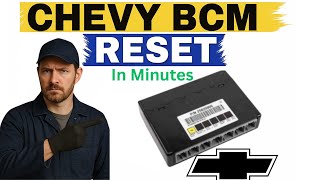
Typical fix: Per the updated TSB #22-NA-044, the first step is to reset the BCM by removing the vbatt 1 (F49DR BCM1) and vbatt 2 (F4DR BCM 2) fuses for five minutes, then reinstalling and clearing all codes. 🎬 Watch: This guide shows how to reset a Chevy BCM without tools. These fuses are located in the passenger compartment fuse block. 🎬 See this quick video for a BCM reset walkthrough. If that fails, a dealer must reprogram the BCM with updated software, a repair that may be covered under the 8-year/80,000-mile emissions warranty.
Est. part cost: $0 - Low Battery Voltage or Poor Connections ⚪ Low Probability → Shop Vehicle Battery Complex modern electrical systems like the Global B platform are sensitive to voltage fluctuations. A weak battery or poor ground can cause unpredictable module behavior.
How to confirm: Perform a battery load test and visually inspect the battery terminals and main ground connections for tightness and corrosion. The vehicle should maintain a stable voltage above 12.4V at rest and 13.7-14.7V when running.
Typical fix: Recharge or replace the battery; clean and tighten all battery and ground connections.
Est. part cost: $0 - $350
Rare But Worth Checking
- Faulty Body Control Module (BCM): → Shop Body Control Module This should only be considered a last resort after all software-based solutions (reset and reprogram) have been attempted and failed. TSB #22-NA-044 explicitly advises against replacing the BCM as a first step. Replacement requires special programming by a dealer.
- BCM Power or Ground Circuit Issue: A damaged wire or corroded connection in the harness leading to the BCM could cause a performance fault, but this is much less likely than the known software glitch. TSB 21-NA-149 (not for P0607 but related to BCMs) points to potential engine wiring harness chafing issues on these platforms.
Diagnosis Steps
- Connect a professional OBD-II scanner capable of reading codes from all vehicle modules, such as the GM GDS2 tool.
- Verify that DTC P0607 is stored in the Body Control Module (BCM), not the Engine Control Module (ECM).
- Check for applicable Technical Service Bulletins. Specifically, reference GM TSB #22-NA-044.
- Test the vehicle's battery and charging system to rule out any voltage-related issues. Ensure resting voltage is above 12.4V and charging voltage is between 13.7-14.7V.
- Perform the BCM reset procedure as outlined in TSB #22-NA-044: locate the passenger compartment fuse block on the side of the passenger dashboard. Remove fuses F49 (BCM 1) and F4 (BCM 2) for at least five minutes.
- Reinstall the fuses and use a scan tool to clear all DTCs.
- Start the vehicle and check if the Check Engine Light and P0607 code return.
- If the code returns, the vehicle must be taken to a GM dealership for BCM reprogramming with the latest available software using the SPS (Service Programming System). This may be covered by the emissions warranty.
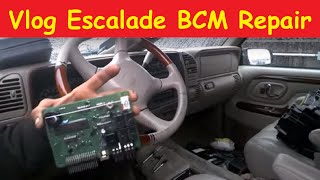
- Only if all software and reset procedures fail should BCM hardware replacement be considered. This requires dealer programming. 🎬 Watch a repair vlog on Escalade and Tahoe BCM issues.
Parts You'll Likely Need
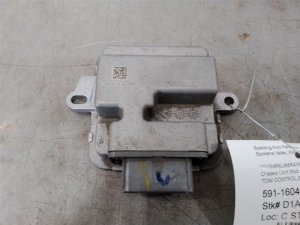
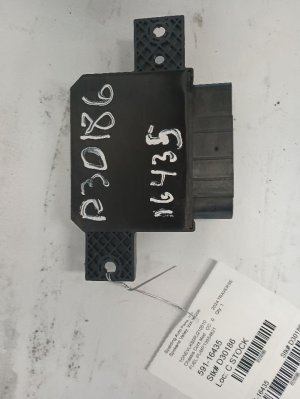
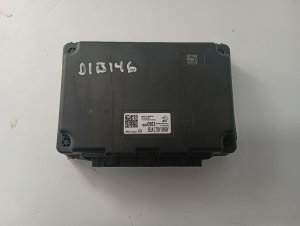
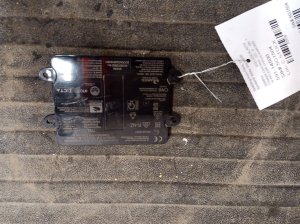
- Body Control Module (BCM)
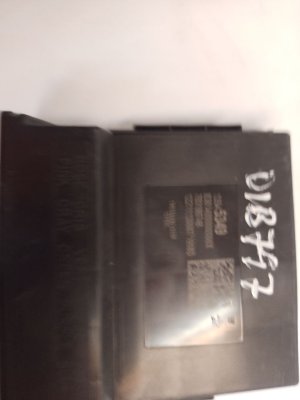
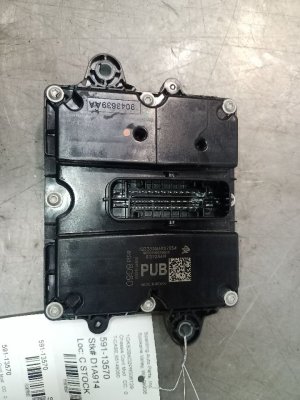
(OEM #13546975)— This part is only needed in the rare event that a software update does not fix the issue and the module has a confirmed hardware failure. TSBs advise against replacement as a first step. The part number for the 2021-2022 Escalade BCM is listed as 13546975, though part numbers can be superseded.
Trusted brands: ACDelco (GM Genuine)
OEM price range: $250-$400
Aftermarket price range: $170-$320
Technical Service Bulletins (TSBs) & Recalls
- 22-NA-044: 'Check Engine MIL Illuminated in DIC Set by Body Control Module with DTC P0607' - Confirms the issue is a BCM software anomaly and provides the specific fuse-pull reset procedure. Advises against BCM replacement and notes the repair may be covered under emissions warranty.
- PIE0672B: An earlier engineering bulletin requesting data from the field on this exact issue to determine the root cause, showing GM's investigation into the BCM fault. This preceded the final fix outlined in 22-NA-044.
Platform-Specific Known Issues
- A known software anomaly in the Body Control Module (BCM) is the primary cause for P0607 on this platform, as documented in GM TSB #22-NA-044.
- This issue is not unique to the Escalade and affects a wide range of GM vehicles built on the Global B platform, including the Cadillac CT4/CT5, Chevrolet Corvette/Tahoe/Suburban, and GMC Yukon.
Mechanic-Grade Diagnostic Values
- BCM Ground Circuit Resistance — expected: Below 0.1 Ω. Failure: A reading higher than 0.1 Ω indicates excessive resistance in the ground path, which can cause module malfunction.
- System Voltage (Key On, Engine Off) — expected: 12.4V or higher. Failure: Voltage below 12.4V indicates a discharged or weak battery that can cause erratic module behavior.
- Charging System Voltage (Engine at Idle) — expected: 13.7V - 14.7V. Failure: Voltage outside this range indicates a fault with the alternator or charging system, which can lead to module errors.
Hidden / Shadow Codes Worth Checking
- Symptom Byte: While no specific symptom byte is documented for this TSB, GM often appends a two-digit symptom code (e.g., P0607 00) to DTCs. This code, visible on a dealer scan tool like GDS2, provides extra detail about the nature of the fault (e.g., 'Internal Electronic Failure'). A technician should always record this byte for more precise diagnosis. (see via GM GDS2 (Global Diagnostic System 2) or equivalent professional scan tool.)
Scan Tool Commands That Help
- GM GDS2: Vehicle DTC Information — This is the first step to confirm that DTC P0607 is stored in the Body Control Module (K9) and not the ECM, which is the critical diagnostic differentiator for this specific vehicle.
- GM GDS2: Clear All DTCs — Used after performing the fuse-pull reset procedure outlined in TSB 22-NA-044 to clear the fault and see if it returns.
- GM SPS (via Techline Connect): BCM Setup / Programming — This function is mandatory if the fuse-pull reset does not resolve the code. It downloads the latest software calibration from GM's servers and flashes it to the BCM. It is also required if the BCM is replaced.
- GM GDS2: BCM Output Controls — If a hardware failure of the BCM is suspected (after a reflash fails), a technician can use these bidirectional commands to individually test BCM-controlled functions (e.g., command headlights on/off, lock/unlock doors) to see if the module is capable of executing commands.
Wiring & Ground Locations
- BCM (K9) — Inside the cabin, under the driver's side of the dashboard, near the steering column.. This is the location of the module setting the code. Physical access is required for fuse checks, connector inspection, and potential replacement.
- G218 — Under the driver's side of the dashboard, near the base of the A-pillar and the under-dash speaker.. This is a primary BCM ground point on related GM full-size SUVs (K2XX platform). While not definitively confirmed for the 2021+ T1 platform, a poor ground in this common location is a highly probable cause for any BCM-related electrical issue if the software fix fails. Technicians should inspect this area for loose connections or trapped insulation.
- BCM Connector X4, Pins 19 & 20 — On the Body Control Module itself, under the driver's side dash.. These specific pins are the AUTOSAR data lines connecting the BCM to the Serial Data Gateway Module on the Global B platform. For advanced diagnosis of a non-communicating BCM, checking for signal activity on these pins with an oscilloscope would be a critical step.
OEM Part Supersession History
13546975→13547768, 13547771, or others— Part numbers are frequently updated or superseded by GM for different model years, option packages, and hardware/software revisions.
Heads up: The BCM part number MUST be verified against the vehicle's VIN. Using the wrong part number, even if it physically fits, will likely result in a programming failure or malfunctioning vehicle features. Part number 13547768 has been reported for 2022-2024 Escalade models.
Model Year Variations Within This Range
- 2021-2022: There are no significant mechanical or electrical differences between the 2021 and 2022 Escalade ESV that affect the cause or diagnosis of DTC P0607. Both are part of the same generation on the Global B platform, and TSB 22-NA-044 applies to both. Minor changes were limited to standard features and trim options.
Helpful Videos

We Have This Part in Stock

The information in this article is provided for general reference and educational purposes only. Vehicle specifications, procedures, and part compatibility can vary by production date, trim level, and region. Always consult your vehicle's factory service manual and verify part numbers before purchasing or performing repairs. Safety-critical components such as airbags, seat belts, and braking systems should be installed by a qualified professional.
- Cadillac ESCALADE ESV:
- 🧭 Diagnostic Flowchart
- 🎬 Helpful Videos
- 🛍️ Shop This Part
- What's Unique About the 2021-2022 Cadillac ESCALADE ESV
- Symptoms You May Notice
- Most Likely Causes
- Rare But Worth Checking
- Diagnosis Steps
- Parts You'll Likely Need
- Technical Service Bulletins (TSBs) & Recalls
- Platform-Specific Known Issues
- Mechanic-Grade Diagnostic Values
- Hidden / Shadow Codes Worth Checking
- Scan Tool Commands That Help
- Wiring & Ground Locations
- OEM Part Supersession History
- Model Year Variations Within This Range
- 🎟️ Get 5% Off