

P0607 on 2010-2024 Toyota 4Runner: Control Module Performance Causes and Fixes
On a 2010-2024 4Runner, P0607 often points to a failing battery or charging system. Before condemning the expensive Engine Control Module (ECM), fully test the battery and alternator. If other codes are present, especially for an oxygen sensor, fix those first as they are a known cause for triggering P0607 on Toyotas.
- P0607 on a 4Runner is serious and can cause stalling, but it's often NOT a failed ECM.
- Always start diagnosis with the simplest and most common issues: test the battery and alternator thoroughly.
- If any other codes are present, especially for an oxygen sensor, they are the most likely cause. Fix them first.
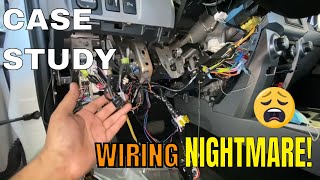
- Inspect all power and ground connections to the ECM before considering a replacement.
- ECM replacement is the last resort and requires professional programming.
What's Unique About the 2010-2024 Toyota 4Runner
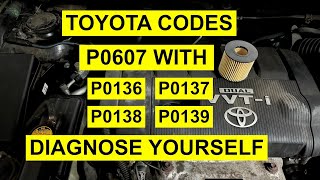
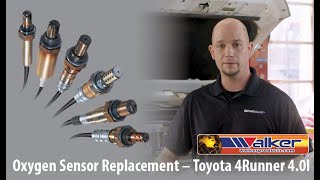
On many Toyota vehicles, including the 4Runner, the P0607 code doesn't always mean the ECM has failed. The computer is sensitive to bad data from its network of sensors. A faulty or shorted sensor, most notably an oxygen (O2) sensor, can send irrational signals to the ECM, causing it to fail its internal self-check and incorrectly set a P0607 code. Technicians often find that resolving an accompanying O2 sensor code (like P0138) will also clear the P0607. 🎬 Watch: How to diagnose Toyota codes P0607 and P0138 yourself This happens because the O2 sensor circuits are wired directly to the ECM, and a fault can be misinterpreted by the computer as an internal processor error. For instance, NHTSA ODI #11033142 notes a case where P0607 appeared alongside P0138, highlighting the link between the O2 sensor and the processor performance code.
Symptoms You May Notice
- Check Engine Light is on
- Vehicle may stall unexpectedly at idle or while driving.
- Engine may crank but fail to start.
- Noticeable loss of power and sluggish acceleration.
- Reduced fuel economy
- In some cases, warning lights for traction control or 4WD may also illuminate.
- Rough or erratic idling and misfires.
- Transmission may exhibit harsh shifting or other shifting problems.
- Replacing the ECM without first testing the battery, alternator, and checking for clean, tight ground connections.
- Replacing the ECM when a faulty oxygen sensor was the root cause of the code.
Most Likely Causes
- Weak or Failing Battery / Charging System 🔴 High Probability → Shop Vehicle Battery The ECM requires a stable voltage to operate. The 4Runner's electrical demands can expose a weak battery or alternator, causing voltage drops that trigger a P0607 before other symptoms appear. This is often the first and most common item to check.
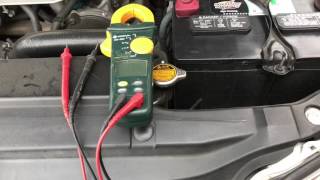
How to confirm: Use a multimeter to test the battery voltage with the engine off (should be ~12.6V). A reading below 12.4V suggests a weak battery. Test the alternator output with the engine running (should be ~13.5-14.5V). Perform a load test on the battery at an auto parts store to confirm its health. 🎬 Watch: How to diagnose a bad battery or alternator
Typical fix: Replace the battery and/or alternator. Ensure battery terminals are clean and tight.
Est. part cost: $150-$400 - Faulty Oxygen (O2) Sensor 🟡 Medium Probability → Shop Oxygen Sensor As a known Toyota-specific issue, a short circuit or failure in an O2 sensor's heater circuit or signal wire can send corrupt data to the ECM, which misinterprets it as an internal processor fault. This is especially common when P0607 appears with codes like P0138.
How to confirm: Scan for other trouble codes. If a code like P0136, P0137, P0138, or P0139 is present alongside P0607, the O2 sensor is the prime suspect. Diagnose the specific O2 sensor circuit indicated by the secondary code. One user on a Tundra forum found that wires to an O2 sensor were damaged, which likely shorted the ECM.
Typical fix: Replace the faulty oxygen sensor. Always address other codes before condemning the ECM.
Est. part cost: $80-$250 - Poor ECM Power or Ground Connections 🟡 Medium Probability
How to confirm: Visually inspect the main engine wiring harness for corrosion, damage, or looseness at the ECM connectors. Locate the main ECM ground points on the engine block and chassis and ensure they are clean, tight, and free of corrosion. Water intrusion into the ECM or its connectors is another possibility.
Typical fix: Clean ground connection points with a wire brush and ensure they are secure. Repair any damaged wires or connectors in the ECM harness. Ensure the ECM and its connectors are dry and free of corrosion.
Est. part cost: $5-$100 - Failed Engine Control Module (ECM) ⚪ Low Probability → Shop Engine Control Module (ECM)
How to confirm: This is the last step after all other possibilities (battery, alternator, wiring, grounds, other DTCs) have been definitively ruled out. Diagnosis requires professional scan tools to check for communication and internal processor faults. NHTSA ODI #10325896 describes a situation where a technician retrieved codes P0606 and P0607 and replaced the ECM to address the fault.
Typical fix: Replace the Engine Control Module. The new module will require programming to the vehicle's specific VIN and options.
Est. part cost: $800-$2000
Rare But Worth Checking
- Aftermarket Engine Tuner/Programmer: If you have an aftermarket performance tuner installed, it may have caused a software conflict or improper programming, leading to the P0607 code. Try uninstalling the tune and returning the ECM to its stock configuration.
- ECM Software Needs Update: In some rare cases, the factory ECM software may have a glitch that is resolved by a software update from a Toyota dealership. This is less common but a valid diagnostic step before replacement.
Diagnosis Steps
- Read all stored fault codes with an OBD-II scanner. Note any codes that accompany P0607. NHTSA ODI #11715035 notes a case where P0607 was retrieved alongside P1603 and P1604.
- Clear the codes and restart the engine. See which codes return immediately.
- If P0607 returns with other codes (especially O2 sensor codes), diagnose and fix those other codes first.
- Thoroughly test the battery's state of charge and health using a multimeter and a load tester. A resting voltage below 12.4V indicates a weak battery.
- With the engine running, test the alternator's output. It should be between 13.5V and 14.5V. If it's too low or too high, the alternator is likely faulty.
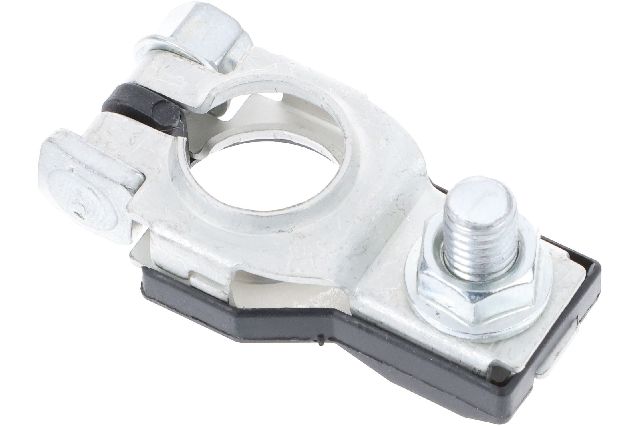
- Inspect the battery terminals and cables for corrosion or looseness. Clean and tighten as necessary.
- Visually inspect the ECM's wiring harness and connectors for any signs of damage, corrosion, or moisture. The ECM is typically located in the engine bay near the firewall or under the dashboard.
- Locate and inspect the main engine and ECM ground straps. Ensure they are clean, tight, and making good contact with the chassis and engine block.
- If an aftermarket tuner is installed, remove it and return the ECM to the stock program.
- If all of the above steps check out, the issue may be an internal ECM fault. This step should be performed by a professional to confirm the diagnosis before replacement, which may also include checking for available software updates.
Parts You'll Likely Need
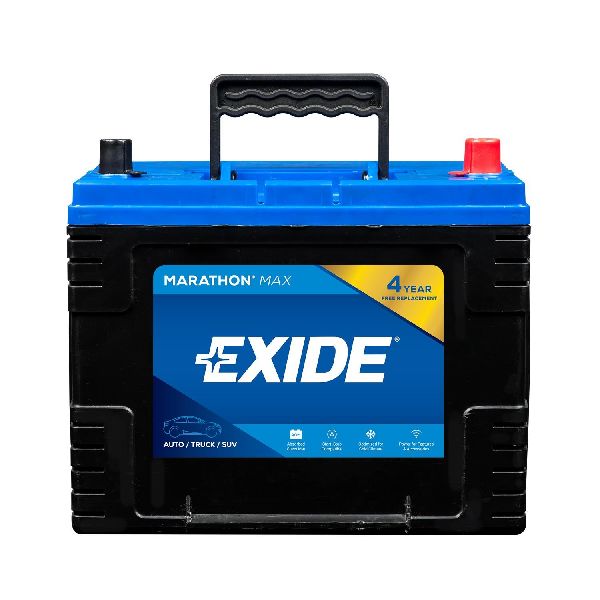
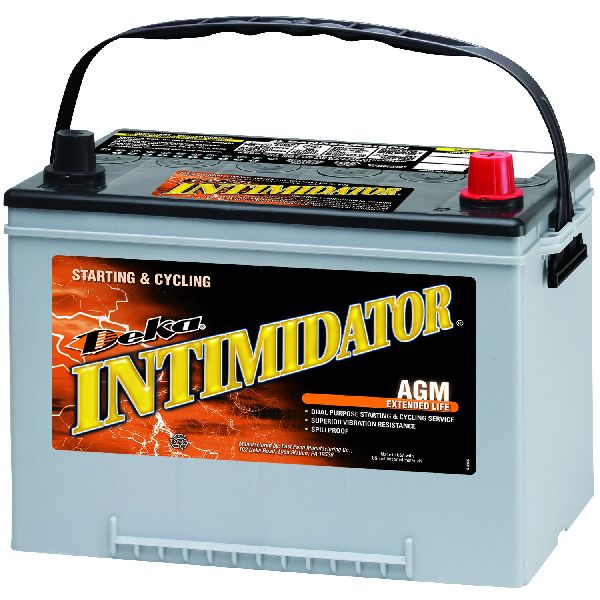
- Battery — A weak or failing battery is a primary cause of voltage irregularities that can trigger a P0607 code.
Trusted brands: Toyota TrueStart, Interstate, DieHard
OEM price range: $150-$250
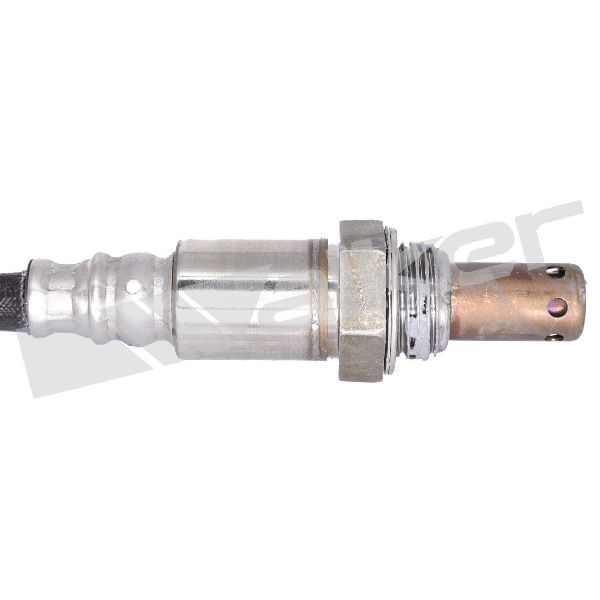
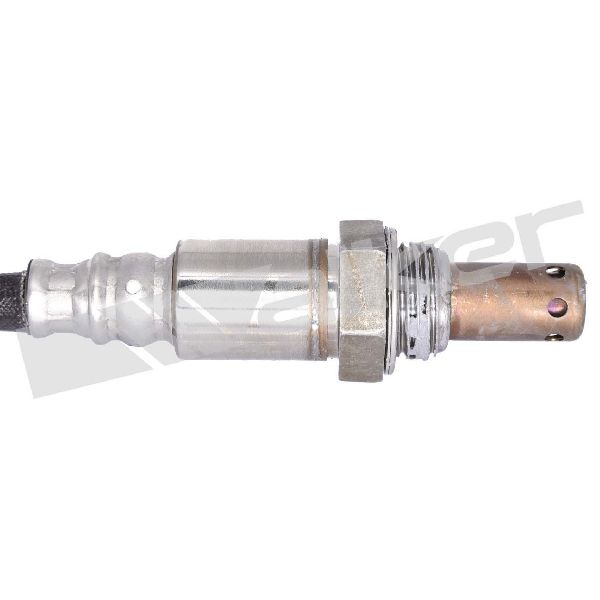
Aftermarket price range: $150-$220 - Oxygen Sensor (Downstream)
(OEM #89465-35680)— A common cause of P0607 on Toyotas when another O2 sensor code is present. This part number is for Bank 1 Sensor 2, a frequently cited culprit. Note: Denso 234-4261 is a widely cross-referenced aftermarket part but appears to fit up to 2009 4Runners, so confirm fitment for 2010+ models.
Trusted brands: Denso, Bosch
OEM price range: $150-$220
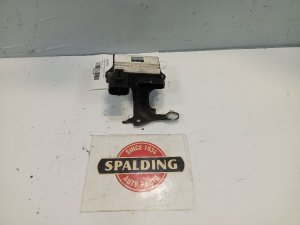
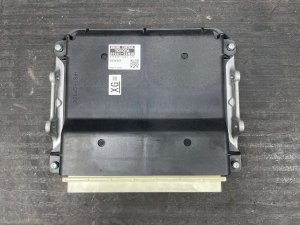
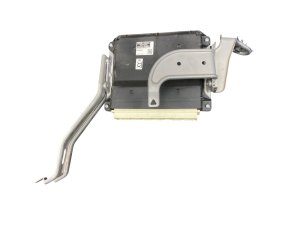
Aftermarket price range: $80-$150 - Engine Control Module (ECM)
(OEM #89661-35L50 (Varies significantly by year and model options))— This is the part to replace only when all other potential causes have been ruled out. It is the control unit that has logged the internal fault.
Trusted brands: Toyota (OEM)
OEM price range: $1000-$2000
Aftermarket price range: $500-$1200 (Remanufactured)
Related Codes That Often Appear With This One
- P0138 — This code for 'O2 Sensor Circuit High Voltage (Bank 1, Sensor 2)' is a common companion to P0607 on Toyotas. A fault in the O2 sensor circuit can cause the ECM to incorrectly report an internal error.
- P0606 — This code for 'ECM/PCM Processor Fault' is a very similar code and often points to the same set of causes, starting with power and ground issues before suspecting the module itself.
- P0136, P0137, P0139 — Like P0138, these are other O2 sensor circuit fault codes. Their presence with P0607 strongly suggests the O2 sensor is the root cause, not the ECM itself.
Platform-Specific Known Issues
- A recall for failing fuel pumps was issued for 2014-2015 and 2018-2019 4Runner models. While this does not directly cause P0607, the symptoms of stalling and rough running can be similar, so it's worth checking if your vehicle is part of this recall.
Mechanic-Grade Diagnostic Values
- Battery Voltage (Engine Off) — expected: ~12.6V. Failure: Below 12.4V suggests a weak battery that can cause spurious module codes.
- Alternator Output (Engine Running) — expected: 13.5V - 14.5V. Failure: Voltage outside this range indicates a charging system fault that must be fixed before diagnosing the ECM.
- O2 Sensor Voltage (when P0138 is present) — expected: Fluctuating voltage. Failure: Stuck high (around 1V or more) or stuck low (close to 0V). This incorrect signal can be misinterpreted by the ECM as an internal fault.
Scan Tool Commands That Help
- Toyota Techstream: Health Check & DTC Read — To read all current, pending, and history codes from all vehicle modules, not just the generic OBD-II engine codes. This can reveal related faults in other systems.
- Toyota Techstream: All Readiness — After clearing codes, use this utility to monitor the status of the P0607 self-test. The diagnostic procedure involves a specific drive pattern to get the monitor to run and confirm if the fault is still present.
- Toyota Techstream: VIN Write — This function is required when replacing the ECM to input the vehicle's VIN into the new or used module.
- Paperclip / Jumper Wire: Immobilizer Reset (Key Pairing) — When installing a used ECM, this DIY procedure pairs the existing keys to the donor ECM. It involves jumping pins 4 and 13 on the OBD-II port with the key on for 30 minutes.
Wiring & Ground Locations
- EB, EC — These are primary engine bay ground points. Based on diagrams for similar Toyota models, they are typically located on the left and right front fenders and on the intake manifold.. The ECM relies on clean, tight ground connections for stable operation. A corroded or loose ground at these points can cause voltage fluctuations that trigger a P0607 code.
- Engine Block to Chassis Ground — A primary ground strap connecting the 1GR-FE engine block directly to the vehicle's chassis/frame.. This is a critical ground path. Its integrity is essential for the entire engine management system. A faulty connection here can cause a wide range of electrical issues, including module performance codes.
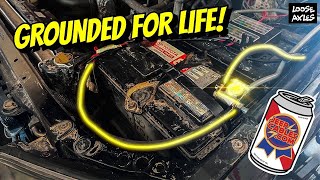
- Battery Negative to Chassis Ground — The main ground cable from the battery's negative terminal to the vehicle body, typically on the fender near the battery.. This is the primary return path for all electrical current. Corrosion or damage to this short cable is a common failure point that can lead to undervoltage situations for the ECM.
Real Owner Repair Stories
- Tundras.com forum user (Toyota Tundra (similar platform/issue)) — P0607 code appeared. After reset, it would return after idling for one minute.
❌ Tried (didn't work) Replacing both passenger side O2 sensors.
✅ What actually fixed it Replacing the Engine Control Module (ECM). The user suspects that damaged O2 sensor wires (from an attempted catalytic converter theft) shorted out and destroyed the ECM, as there is no fuse between the O2 sensor wiring and the ECM. - NHTSA ODI #10322207 — An owner reported that after their check engine light turned off, a dealership diagnostic still showed code P0607, indicating a defective ECM. The module was replaced at a cost of over $800 plus towing fees.
- NHTSA ODI #11229921 — One owner noted that the check engine, TRAC OFF, and 4x4 lights had been illuminating intermittently. Despite retrieving code P0607, the vehicle showed no symptoms and was driving fine.
Model Year Variations Within This Range
- 2010-2013: These are pre-facelift models. While the 1GR-FE engine and A750F transmission are the same, the exterior and some interior components differ from later years.
- 2014-2024: These are post-facelift models with revised exterior styling, particularly the front fascia and headlights.
- 2020-2024: These models received a significant technology update, including the Toyota Safety Sense-P (TSS-P) suite as standard (pre-collision system, lane departure alert, adaptive cruise control) and an infotainment system with Apple CarPlay and Android Auto. The underlying powertrain remains the same.
Diagnostic Flowchart
Other Known Issues on This Vehicle
Issues unrelated to this code that are worth knowing about as an owner of this generation:
- Front Differential Needle Bearing Vibration 🟠 Medium — Common, especially after installing a suspension lift. Causes a cyclical groaning or vibration between 30-50 mph in 2WD that disappears in 4WD. (Ref: T-SB-0026-15 covers this issue for 2004-2017 4Runners, replacing the needle bearing under powertrain warranty.)
- Secondary Air Injection System (SAIS) Failure 🟠 Medium — A well-documented problem where moisture enters the air pump, causing it to fail and triggering Check Engine Lights with codes like P2440/P2442. Can force the vehicle into 'limp mode'. (Ref: Toyota issued Special Service Campaign 20TC01 for some models to inspect and replace the air injection pump and valves. A similar warranty extension (CSP) was issued for Tundras/Sequoias.)
- Frame Rust 🔴 High — While Toyota's frame rust recalls and warranty extensions primarily covered Tacomas, Tundras, and Sequoias, 4Runners (particularly 4th and 5th gens) are also known to suffer from premature and excessive frame corrosion, especially in the salt belt. A common rust spot is near the A/C drain. (Ref: No specific recall for 5th Gen 4Runner frames, but class-action lawsuits have been filed for previous generations, indicating a known issue with Toyota frames of the era.)
- Head Gasket Failure (Early 1GR-FE) 🟡 Low — Primarily affected early 1GR-FE engines (pre-2006) around cylinder #6. While rare on the 2010+ 4Runner, it's a known potential failure point on high-mileage or poorly maintained 1GR-FE engines.
- Peeling White Paint 🟡 Low — Affects 2010-2015 models with Blizzard Pearl or Super White paint colors. The paint can delaminate and peel off in large sheets. (Ref: Toyota initiated a Customer Support Program to repaint affected vehicles, extending the warranty for this specific issue.)
Used vs. New Parts: Buying Guide for This Vehicle
When a used part is the smart pick: A used ECM from a reputable auto recycler is a viable option to save significant money, but only if you are prepared for the required VIN programming and immobilizer reset. For other parts like alternators or starters, a quality remanufactured unit is often a good balance of cost and reliability.
Donor-vehicle mileage cap: roughly under 150000 miles for the part to have meaningful remaining life.
What to inspect on the donor part:
- For an ECM, ensure there is no physical damage, corrosion, or signs of water intrusion on the case or connectors.
- Verify the part number on the donor ECM exactly matches the original, or is a known compatible replacement.
- Ask for the VIN of the donor vehicle to help with compatibility checks.
- Choose a seller that offers a warranty and a return policy.
OEM-only on this vehicle (don't cheap out):
- Engine Control Module (ECM): While a used OEM unit is feasible, avoid unbranded, new aftermarket ECMs. If not using a used OEM part, the only other reliable option is a new OEM part from Toyota or a professionally remanufactured unit from a highly reputable rebuilder.
Aftermarket brands forum-validated for this vehicle:
- Oxygen Sensors: Denso and NTK (a division of NGK) are the original equipment manufacturers for Toyota and are highly recommended. Using these brands ensures proper performance and avoids compatibility issues.
- Battery: Interstate, DieHard, and other major brands with correct group size and CCA ratings are reliable alternatives to the OEM Toyota TrueStart battery.
Brands owners have reported issues with on this vehicle:
- Avoid off-brand, generic 'universal' oxygen sensors that require splicing wires. These often have incorrect heater resistance or response times that can cause persistent codes.
- Be cautious of cheap, no-name electronics from online marketplaces, especially for critical components like the ECM.
Real Owner Stories
Aggregated from forums and TSBs cited above. Mileages and costs reflect what owners reported in those sources.
2020 Toyota 4Runner 4.0L V6
Symptoms: The vehicle was throwing a P0607 code. The owner checked the battery and alternator, which were testing fine at 14V under load.
What fixed it: The owner cleaned the battery terminals, though in this specific instance, the code remained, necessitating further diagnostic steps.
Source hint: r/4Runner - Throwing P0607 Code
2005-2021 Toyota Tundra 4.0L 1GR-FE V6
Symptoms: Owner experienced a P0607 code and discovered damaged wiring to an oxygen sensor.
What fixed it: Repairing the damaged O2 sensor wires, which were likely shorting the ECM.
Source hint: Toyota Tundra Forum - P0607 code - What exactly is 'control module performance'??
Related OBD-II Codes
Frequently Asked Questions
Is there a recall for the 2014-2019 Toyota 4Runner that might explain my P0607 symptoms?
My 4Runner has P0607 and P0138; which should I fix first?
Can an aftermarket tuner cause a P0607 code on my 4Runner?
Does Toyota have a TSB for the vibration I feel in my 4Runner's front end?
Is the Secondary Air Injection System failure covered by a campaign for the 4Runner?
What voltage should I see on my 4Runner's battery to rule out a P0607?
Helpful Videos
Used OEM Parts in Stock
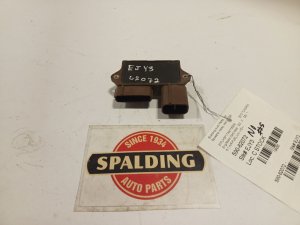
New Aftermarket Parts Available


The information in this article is provided for general reference and educational purposes only. Vehicle specifications, procedures, and part compatibility can vary by production date, trim level, and region. Always consult your vehicle's factory service manual and verify part numbers before purchasing or performing repairs. Safety-critical components such as airbags, seat belts, and braking systems should be installed by a qualified professional.
- Toyota 4Runner:
- 🧭 Diagnostic Flowchart
- 🎬 Helpful Videos
- 🛍️ Shop This Part
- What's Unique About the 2010-2024 Toyota 4Runner
- Symptoms You May Notice
- Most Likely Causes
- Rare But Worth Checking
- Diagnosis Steps
- Parts You'll Likely Need
- Related Codes That Often Appear With This One
- Platform-Specific Known Issues
- Mechanic-Grade Diagnostic Values
- Scan Tool Commands That Help
- Wiring & Ground Locations
- Real Owner Repair Stories
- Model Year Variations Within This Range
- Other Known Issues on This Vehicle
- Used vs. New Parts: Buying Guide for This Vehicle
- Real Owner Stories
- 2020 Toyota 4Runner 4.0L V6
- 2005-2021 Toyota Tundra 4.0L 1GR-FE V6
- Related OBD-II Codes
- Frequently Asked Questions
- 🎟️ Get 5% Off