

P0700 on 2005-2010 Chevrolet Cobalt: Transmission Fault Causes and Fixes
On a 2005-2010 Cobalt, P0700 means the transmission has a problem. The most common causes are failing shift solenoids or a damaged wiring harness near the oil filter housing. A scan tool that reads transmission codes is required to find the specific fault.
- P0700 is a general alert; you MUST use a capable scan tool to read the specific codes from the Transmission Control Module (TCM).
- Before suspecting expensive internal parts, thoroughly inspect the wiring harness near the oil filter housing and the main ground wire on the transmission case for damage or corrosion.
- Failing shift solenoids are a very common problem on the 2005-2010 Cobalt and are a likely cause if you have codes like P0751 or P0756.
- If you replace the TCM, it must be programmed to your car's VIN to work correctly.
What's Unique About the 2005-2010 Chevrolet Cobalt
The 2005-2010 Cobalt, equipped with the 4T45-E automatic transmission, is particularly prone to a few specific issues that trigger a P0700 code. Failing shift solenoids are a very common wear item, leading to harsh shifting and limp mode. Additionally, the wiring harness is susceptible to damage in two key areas: chafing against the oil filter housing and corrosion at a primary ground stud on the transmission, both of which can cause a variety of difficult-to-diagnose transmission faults.
Symptoms You May Notice
- Check Engine Light is on
- Harsh, abrupt, or delayed gear shifts
- Transmission is stuck in one gear (usually 2nd or 3rd), also known as 'limp mode'
- Inability to shift into some gears
- Vehicle won't accelerate properly and RPMs rise without an increase in speed
- Transmission-related warning messages on the instrument cluster
- Engine may stall or run poorly
- Replacing the entire transmission when only a shift solenoid or wiring repair was needed.
- Replacing the Transmission Control Module (TCM) before thoroughly checking for wiring harness damage or corroded grounds.
- Clearing the P0700 code without reading the specific codes from the TCM, which leads to the problem returning immediately.
Most Likely Causes
- Failing Transmission Shift Solenoids 🔴 High Probability → Shop Transmission Valve Body The 1-2 and 2-3 shift solenoids in the 4T45-E transmission are a very common failure point on this platform due to wear and tear. They are electromechanical valves that control fluid flow for gear changes, and they cycle thousands of times during normal operation.
How to confirm: Scan the TCM for specific solenoid codes like P0751, P0752, P0756, or P0974. A mechanic can perform electrical tests on the solenoid circuits by checking resistance at the transmission connector pins. 🎬 Watch: How to test the solenoid resistance and circuits. The expected resistance for the 1-2 and 2-3 shift solenoids is 20-30 Ohms.
Typical fix: Replace the faulty shift solenoid(s). It is highly recommended to replace the 1-2 and 2-3 shift solenoids as a set, as the labor to access them is significant. This requires removing the driver's side wheel, axle, and the transmission side cover.
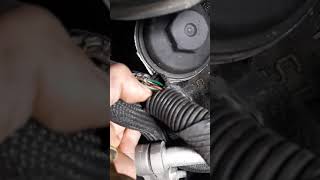
Est. part cost: $40-$100 for a pair of aftermarket solenoids. - Chafed or Shorted Wiring Harness 🟡 Medium Probability The transmission wiring harness is routed close to the engine's oil filter housing. Engine vibration and heat can cause the sharp edge of the housing to rub through the wire loom and insulation, leading to short circuits between wires.
How to confirm: Visually inspect the wiring harness loom where it passes by the oil filter housing. The damage can be hidden inside the plastic conduit, so you may need to carefully slice it open. Look for melted, brittle, or exposed copper wires.
Typical fix: Carefully cut open the loom, identify the damaged wires, and repair them using solder and heat-shrink tubing for a permanent, insulated repair. Reroute or shield the harness with a high-temperature sleeve to prevent future contact.
Est. part cost: $5-$20 for wiring repair supplies. - Corroded Transmission Ground Wire 🟡 Medium Probability → Shop Transmission Assembly The main ground connection for the transmission electronics is on a stud on the transmission case, often near the radiator hose. This location is exposed to the elements, making it highly susceptible to corrosion, especially in regions that use road salt.
How to confirm: Locate the ground stud on the transmission case (often labeled G105). Inspect the ring terminal where multiple black wires are crimped. Look for green or white powder (corrosion) on the terminal, nut, and inside the wire strands.
Typical fix: Disconnect the battery. Remove the nut, cut off the old, corroded terminal, and clean the stud surface to bare metal. Strip the wires back to bright copper, and crimp on a new, high-quality ring terminal. Apply dielectric grease to the connection to prevent future corrosion.
Est. part cost: $5-$10 for a new terminal and supplies. - Failed Transmission Control Module (TCM) ⚪ Low Probability → Shop Transmission Assembly The T42 model TCM used in these vehicles is a known failure item, though less common than solenoid or wiring issues. Heat and vibration can lead to internal solder joint fractures or component failure.
How to confirm: This is often a diagnosis of exclusion. If all solenoids, sensors, and wiring test good, and communication with the TCM is intermittent or impossible with a professional scan tool, the module itself is likely faulty.
Typical fix: Replace the TCM. The replacement module MUST be programmed with your car's Vehicle Identification Number (VIN) and the latest GM software to function. Many vendors sell pre-programmed units for DIY installation.
Est. part cost: $80-$200 for a remanufactured, pre-programmed TCM.
Rare But Worth Checking
- Low or Dirty Transmission Fluid: → Shop Transmission Assembly While a basic issue, it's often overlooked. Low fluid can cause overheating and erratic shifting, while fluid contaminated with metal flakes indicates a more severe internal mechanical failure is imminent.
- Failed Transmission Range Sensor (Neutral Safety Switch): → Shop Transmission Assembly This sensor tells the TCM which gear is selected (P, R, N, D). A failure can cause no-start conditions or incorrect gear commands, sometimes triggering a P0700. It can be affected by the same ground corrosion issues.
Diagnosis Steps
- Scan for Codes in the TCM: Use an OBD-II scanner that can access the Transmission Control Module. The P0700 in the ECM is just a pointer; the real codes are in the TCM.
- Analyze the TCM Codes: The specific codes (e.g., P0756, P0974) will tell you which component or circuit is failing, such as a specific shift solenoid.
- Inspect Wiring Harness at Oil Filter Housing: Carefully examine the wiring loom that runs near the oil filter housing for any signs of chafing, melting, or rubbing. This is a very common failure point.
- Inspect Transmission Ground Stud: 🎬 See how to diagnose these common electrical and ground problems. Locate the ground point on the transmission case behind the radiator (G105). Unbolt it and check thoroughly for corrosion on the terminal and wires. Clean or replace as needed.
- Check Transmission Fluid: Check the fluid level and condition. The fluid should be bright red and not smell burnt. Dark or metallic fluid suggests a serious internal problem.
- Test Components: Based on the TCM codes, test the specific component. This may involve checking the resistance of a solenoid (20-30 Ohms for shift solenoids) or testing the voltage at a sensor connector.
- Diagnose the TCM: If all wiring and components test good, the final step is to suspect a faulty Transmission Control Module.
Parts You'll Likely Need
- Transmission Shift Solenoid Kit (1-2 and 2-3)
(OEM #24229822 (Kit), 24207236 (Individual))— These are the most common internal components to fail in the 4T45-E transmission, causing the majority of shifting problems on the Cobalt.
Trusted brands: ACDelco, Rostra, Power Torque, ATP
OEM price range: $80-$150
Aftermarket price range: $40-$100 - Transmission Control Module (TCM)
(OEM #24243442 (Superseded by various numbers including 24234503, 24243901))— The TCM can fail, causing a wide range of erratic shifting behaviors and communication codes. It is a common, though less frequent, cause for P0700.
Trusted brands: ACDelco (Remanufactured), Dorman, Cardone
OEM price range: $150-$300 (Remanufactured)
Aftermarket price range: $80-$200 (Remanufactured)
Related Codes That Often Appear With This One
- P0751, P0752, P0756, P0757 — These codes point directly to a performance issue or fault with the 1-2 or 2-3 shift solenoids.
- P0974 — This indicates a high voltage (open circuit) condition in the Shift Solenoid 'A' control circuit, often caused by a failed solenoid or a break in the wiring.
- P0705 — This code relates to a fault in the Transmission Range Sensor circuit, which can be caused by the same corroded ground wire that affects other transmission functions.
- P0601 — While this code indicates an internal memory error in a control module (usually the ECM on a Cobalt), related electrical issues can sometimes cause both codes to appear.
Technical Service Bulletins (TSBs) & Recalls
- NHTSA Campaign ID: 10V073000 - Recall for sudden loss of electric power steering assist.
- NHTSA Campaign ID: 14V171000 - Recall for ignition switch issue where key can be removed when not in 'Off'.
- NHTSA Campaign ID: 09V419000 / GM Bulletin 12191B - Recall and special coverage for cracking fuel pump modules leading to fuel leaks, especially in warm climates.
- NHTSA Campaign ID: 09V073000 - Recall for improperly engaged transmission shift cable adjustment clip, which could lead to rollaway risk.
Platform-Specific Known Issues
- Wiring Harness Chafing: A YouTube video by 'Mechanic Benz' from May 2020 vividly shows a 2010 Cobalt with P0700 and multiple transmission codes caused by the wiring harness shorting out against the oil filter housing. The fix involved repairing the burnt wires and shielding the harness, which completely resolved the harsh shifting and check engine light.
- Shift Solenoid Replacement DIY: → Shop Transmission Valve Body Multiple YouTube videos, including one from '1020 auto rebuild', provide a visual guide to replacing the shift solenoids. They highlight the necessity of removing the driver-side wheel, axle, fuse box, and transmission mount to access the side cover, confirming the labor-intensive nature of the job.
Mechanic-Grade Diagnostic Values
- 1-2 Shift Solenoid (A) & 2-3 Shift Solenoid (B) Resistance — expected: 20 - 30 Ohms. Failure: A reading significantly outside this range (open circuit/infinite resistance or shorted/very low resistance) indicates a failed solenoid.
- Pressure Control (PC) Solenoid Resistance — expected: 3.5 - 6.0 Ohms. Failure: A reading outside this range points to a faulty PC solenoid, which can cause harsh shifts and incorrect line pressure.
- Transmission Main Connector Pin Test — expected: With the connector unplugged, testing resistance between Pin A and Pin E (for the 1-2 solenoid) and Pin B and Pin E (for the 2-3 solenoid) should yield 20-30 Ohms.. Failure: Incorrect readings suggest a problem with either the solenoid or the internal wiring harness.
Scan Tool Commands That Help
- GM Tech2 / GDS2 or equivalent professional scanner: Transmission Output Controls > Solenoid Test — This bidirectional function allows a technician to command each shift solenoid on and off individually while the vehicle is stationary (Key On, Engine Off). It's used to verify if the solenoid 'clicks' and if the TCM is capable of controlling the circuit. This can isolate a faulty solenoid from a wiring or TCM issue without removing the transmission pan.
- GM Tech2 / GDS2 or equivalent professional scanner: Solenoid Cleaning Procedure — This function, available on some older software versions, rapidly cycles the solenoids to try and dislodge small debris. It was removed from later software updates (around 2009) but can be a last-ditch effort to fix a sticky solenoid before replacement.
Wiring & Ground Locations
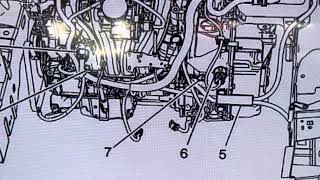
- G105 — On a stud on the lower left front of the transmission case, near the radiator side of the bellhousing.. This is the primary ground for the Transmission Control Module (TCM). Corrosion or a loose connection here creates high resistance, causing erratic behavior, false sensor readings, and multiple transmission codes, including P0700.
- Main Transmission Harness Connector (C1) — A large, round, gray connector located on the top front of the transmission, near the dipstick tube.. This is the main interface between the vehicle's wiring and the transmission's internal components. All solenoid and sensor tests can be performed here with a multimeter, allowing diagnosis without removing any transmission parts. For example, pins A and B are for the shift solenoids.
- Splice #107 (Pink Wire) — Inside the plastic conduit for the transmission harness, approximately 13 inches from where the harness breaks out toward the transmission.. This splice provides power to multiple transmission components. The conduit can trap water, causing this splice to corrode and fail, leading to multiple codes and failsafe mode.
Real Owner Repair Stories
- CobaltSS.net forum user (Chevrolet Cobalt with 4T45-E) — P0700 and P0974 (Shift Solenoid 'A' Circuit High), transmission stuck in gear, harsh shifting.
❌ Tried (didn't work) Replaced the 1-2 and 2-3 shift solenoids.
✅ What actually fixed it Found several wires in the transmission harness that had chafed through and shorted together near the oil filter housing. Repairing the damaged wires and protecting the harness resolved all codes and symptoms. - Reddit r/MechanicAdvice user (2009 Chevrolet Cobalt, 78k miles) — P0700, P0717 (Input Speed Sensor No Signal), P0976 (Shift Solenoid 'B' Circuit Low). Sputtering on takeoff, would not shift out of 1st or 2nd gear.
❌ Tried (didn't work) Initial diagnosis pointed towards replacing the TCM or shift solenoid.
✅ What actually fixed it The user located and thoroughly cleaned the main transmission ground stud (G105) on the transmission bellhousing. This simple cleaning resolved all the codes and shifting issues. - 2CarPros forum user (2006 Chevrolet Cobalt) — P0700 and U0101 (Lost Communication with TCM). Speedometer not working, getting stuck in gear, all dash gauges stopped working after trying a new TCM.
❌ Tried (didn't work) Replacing the TCM with a new, unprogrammed unit., Taking the new TCM to a dealer who was unable to program it.
✅ What actually fixed it The owner acquired a used TCM that was confirmed to be functional. Plugging in the correct, compatible used TCM immediately fixed the problem without needing further programming in this specific case. - NHTSA ODI #11093283 — An owner reported that their vehicle presented diagnostic codes including P0700 and U0100, along with dimming dash lights, despite the alternator and battery being in optimal working condition.
- NHTSA ODI #10283939 — A report describes a vehicle where the dealer unsuccessfully diagnosed a failure on four occasions, with computer codes P0700, U2105, U2100, and U0075 listed.
OEM Part Supersession History
24243442→24234503, 24243901, 24253444 and others— Internal hardware revisions and software updates by GM over the production life.
Heads up: The physical T42 module is the same, but it MUST be programmed with the correct software for the vehicle's VIN. Installing a module from another vehicle without reprogramming will cause shifting problems or a no-start condition.
Model Year Variations Within This Range
- 2007+: The 2.2L and 2.4L Ecotec engines received a mild increase in power ratings.
- 2008+: Head curtain side air bags and XM satellite radio became standard. The high-performance SS model switched from a supercharged engine to a more powerful turbocharged engine.
- 2009+: The base 2.2L engine's power was boosted from 145 hp to 155 hp. Bluetooth became available.
Diagnostic Flowchart
Other Known Issues on This Vehicle
Issues unrelated to this code that are worth knowing about as an owner of this generation:
- Electric Power Steering (EPS) Motor Failure 🔴 High — Extremely common across all model years, leading to a major recall. Can occur at any mileage. (Ref: NHTSA Recall 10V073000; GM Recall N100023)
- Ignition Switch Failure 🔴 High — Widespread problem, especially in 2005-2007 models, leading to a massive safety recall. The switch can move out of the 'Run' position, shutting off the engine and disabling airbags. (Ref: NHTSA Recall 14V047000)
- Fuel Pump Module / Fuel Line Leaks 🔴 High — Common, especially in warmer climates or areas with road salt. Plastic ports on the fuel pump module can crack, or metal lines can corrode, causing fuel leaks and a strong gas smell. (Ref: NHTSA Recall 09V419000; GM Special Coverage 12191B)
- Front Lower Control Arm Bushing Failure 🟠 Medium — Very common. The rear bushings on the front lower control arms wear out prematurely, causing a loud clunking or popping noise from the front suspension over bumps. Typically occurs after 30,000 miles.
- Timing Chain Tensioner Failure 🟠 Medium — The timing chain tensioner can fail, leading to a rattling noise from the engine, especially on startup. If ignored, it can lead to the timing chain skipping or breaking, causing significant engine damage.
- Ignition Coil Failure 🟡 Low — Fairly common failure around 100,000 miles, leading to engine misfires (flashing check engine light) and a rough running engine.
Used vs. New Parts: Buying Guide for This Vehicle
When a used part is the smart pick: A used Transmission Control Module (TCM) from a reputable salvage yard or online vendor that offers VIN programming is a very common and cost-effective repair. A used wiring harness pigtail is also an excellent choice for repairing localized damage.
Donor-vehicle mileage cap: roughly under 150000 miles for the part to have meaningful remaining life.
What to inspect on the donor part:
- For a TCM: Ensure the seller guarantees it is tested and provides VIN-programming service. A short warranty (30-90 days) is a good sign.
- For a wiring harness: Inspect for any signs of brittleness, melting, previous tape/repairs, or corrosion on the connector pins.
Aftermarket brands forum-validated for this vehicle:
- Solenoids: ACDelco (OEM), Rostra
- TCM: ACDelco (Remanufactured), Dorman, Cardone (Ensure it comes pre-programmed or budget for dealer programming)
Brands owners have reported issues with on this vehicle:
- Unbranded, no-name shift solenoid kits from online marketplaces. The labor to replace them is too high to risk using a part with questionable quality control.
Real Owner Stories
Aggregated from forums and TSBs cited above. Mileages and costs reflect what owners reported in those sources.
2010 Chevrolet Cobalt
Symptoms: Harsh shifting and check engine light on with multiple transmission codes.
What fixed it: Repaired burnt wires in the wiring harness that were shorting out against the oil filter housing and shielded the harness with a sleeve.
Source hint: YouTube video by 'Mechanic Benz' from May 2020
2007 Chevrolet Cobalt
Symptoms: P0700 code present; owner noted the platform is also prone to premature failure of front lower control arm bushings.
What fixed it: Diagnosis of TCM and solenoid failures as discussed in community threads.
Source hint: bobistheoilguy.com thread from 2009
2006 Chevrolet Cobalt
Symptoms: P0700 and U0100 codes present, along with dimming dashboard lights.
What fixed it: While the owner confirmed the battery and alternator were functional, the vehicle had to be pulled off the road due to the persistent electrical and transmission faults.
Source hint: NHTSA ODI #11093283
Related OBD-II Codes
Frequently Asked Questions
My 2010 Cobalt is shifting harshly and showing P0700; could this be related to the wiring near the oil filter?
Is there a recall for the transmission shifting issues on my Cobalt?
I'm getting P0700 on my 2007 Cobalt; how do I check the transmission ground?
Can I replace the shift solenoids myself to fix the P0700 code?
What is the expected resistance for the shift solenoids in the 4T45-E transmission?
Does my 2005 Saturn Ion share the same P0700 transmission issues as the Cobalt?
Helpful Videos
We Have This Part in Stock

The information in this article is provided for general reference and educational purposes only. Vehicle specifications, procedures, and part compatibility can vary by production date, trim level, and region. Always consult your vehicle's factory service manual and verify part numbers before purchasing or performing repairs. Safety-critical components such as airbags, seat belts, and braking systems should be installed by a qualified professional.
- Chevrolet Cobalt:
- 🧭 Diagnostic Flowchart
- 🎬 Helpful Videos
- 🛍️ Shop This Part
- What's Unique About the 2005-2010 Chevrolet Cobalt
- Symptoms You May Notice
- Most Likely Causes
- Rare But Worth Checking
- Diagnosis Steps
- Parts You'll Likely Need
- Related Codes That Often Appear With This One
- Technical Service Bulletins (TSBs) & Recalls
- Platform-Specific Known Issues
- Mechanic-Grade Diagnostic Values
- Scan Tool Commands That Help
- Wiring & Ground Locations
- Real Owner Repair Stories
- OEM Part Supersession History
- Model Year Variations Within This Range
- Other Known Issues on This Vehicle
- Used vs. New Parts: Buying Guide for This Vehicle
- Real Owner Stories
- 2010 Chevrolet Cobalt
- 2007 Chevrolet Cobalt
- 2006 Chevrolet Cobalt
- Related OBD-II Codes
- Frequently Asked Questions
- 🎟️ Get 5% Off