

P0700 on 2009-2020 Dodge Journey: Transmission Control System Fault Causes and Fixes
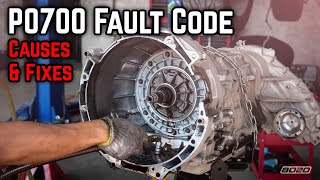
P0700 on a Dodge Journey means the transmission computer (TCM) has detected a fault. It's a general code, so you must scan the TCM for specific codes. The most common culprits are a faulty transmission solenoid pack or speed sensors, often costing $150-$350 in parts.
- P0700 is a general warning light request from the transmission computer; it is not the root cause of the problem.
- You MUST use a scan tool that can read transmission-specific codes to find the actual fault.
- For the 2009-2020 Dodge Journey, the most likely cause is a faulty transmission solenoid pack, followed by a bad speed sensor.
- Always check the transmission fluid level and condition first, as low or dirty fluid can cause numerous shifting problems.
- Continuing to drive with a P0700 code, especially in limp mode, can cause severe, expensive damage to the transmission.
What's Unique About the 2009-2020 Dodge Journey
The Dodge Journey, particularly models equipped with the 6-speed 62TE automatic transmission, is known for specific vulnerabilities that can trigger a P0700 code. The 62TE transmission's design has known weak points in the solenoid pack (also called the solenoid block) and the valve body. These components are responsible for controlling hydraulic pressure for gear shifts, and their failure is a frequent cause of shifting problems, limp mode, and the P0700 code on this platform.
Symptoms You May Notice
- Check Engine Light is on
- Vehicle is stuck in one gear (limp mode, usually 2nd or 3rd gear)
- Harsh, erratic, or delayed shifting
- Slipping between gears
- Vehicle stalls when put into Drive
- Reduced fuel economy
- Shuddering or vibration during acceleration
- Replacing only the TCM without checking for other codes. The P0700 is a general alert, and the true fault usually lies with a sensor or solenoid. 🎬 Watch: What your scanner isn't telling you about P0700 codes
- Clearing the code and assuming the problem is fixed. If an underlying mechanical or electrical issue exists, the code will return.
Most Likely Causes
- Faulty Transmission Solenoid Pack 🔴 High Probability → Shop Transmission Assembly The solenoid pack on the 62TE transmission is a well-documented weak point, prone to electrical and mechanical failure over time.
How to confirm: Scan the TCM for specific solenoid circuit codes (e.g., P0750, P0755). A technician can also perform electronic tests on the solenoid pack.
Typical fix: Replace the entire solenoid pack. This part is located behind the front transmission cover and is often replaced along with the transmission fluid and filter.
Est. part cost: $150-$350 - Failed Input or Output Speed Sensor 🟡 Medium Probability These sensors provide critical speed data to the TCM. Failure is common on many vehicles, and on the Journey, it can cause erratic shifting and limp mode. NHTSA ODI #11085068 describes a scenario where P0700 appeared alongside P0717 (Input Speed Sensor 1 Circuit No Signal) and U1146 (Communication Error).
How to confirm: Scan the TCM for specific speed sensor codes (e.g., P0717 for input, P0721 for output). The sensor's signal can be monitored with a capable scan tool.
Typical fix: Replace the faulty sensor. The input and output sensors are located on the outside of the transmission housing and are relatively accessible after removing the air intake box.
Est. part cost: $25-$80 per sensor - Low or Dirty Transmission Fluid 🟡 Medium Probability → Shop Transmission Assembly Low fluid levels can cause pressure drops, overheating, and poor shifting performance, while old, degraded fluid can cause solenoids to stick.
How to confirm: Check the transmission fluid level and condition using the dipstick (if equipped) or the service procedure. The fluid should be bright red and not smell burnt.
Typical fix: Perform a transmission fluid and filter change using the correct Mopar ATF+4 fluid. If the level is just low, top it off and check for leaks.
Est. part cost: $80-$150 for fluid and filter - Faulty Transmission Control Module (TCM) ⚪ Low Probability → Shop Transmission Assembly While less common than sensor or solenoid failure, the TCM itself can fail due to internal circuit problems or corrosion.
How to confirm: This is typically a diagnosis of exclusion. If all sensors, solenoids, and wiring test good, the TCM is the likely culprit. A technician will check for communication errors with the TCM.
Typical fix: Replace the TCM. This often requires programming the new module to the vehicle's VIN.
Est. part cost: $200-$600
Rare But Worth Checking
- Damaged Wiring Harness: The wiring harness to the transmission can become damaged from heat, chafing, or corrosion, leading to intermittent electrical faults that are difficult to diagnose.
- Internal Transmission Failure: → Shop Transmission Assembly In severe cases, worn clutches or other mechanical damage inside the transmission can cause shifting problems and trigger a P0700. This is often accompanied by metal shavings in the transmission fluid. NHTSA ODI #10846349 notes a case where P0700 and P0760 were present, eventually requiring a full transmission overhaul including fluid and filters.
Technical Service Bulletins (TSBs) & Recalls
Manufacturer service bulletin #S2321000006 notes that a "Service Transmission" message and DTC P0700-E4 (Transmission Control System MIL Request) may set on related Dodge platforms, requiring specific diagnostic protocols.
Diagnosis Steps
- Check and verify the transmission fluid level and condition. Ensure it is full, clean, and does not smell burnt.
- Use an OBD-II scanner capable of reading transmission codes to retrieve all DTCs from the TCM. The P0700 code will be accompanied by more specific codes.
- Based on the specific codes found, inspect the corresponding components. This may involve testing sensors, solenoids, and their wiring.
- Inspect the transmission wiring harness and connectors for any signs of damage, corrosion, or loose connections.
- If a speed sensor code is present, test the sensor and its circuit.
- If a solenoid code is present, the solenoid pack is the most likely cause.
- If no other codes are present or if all components test good, the TCM itself may be faulty, though this is rare.
Parts You'll Likely Need
- Transmission Solenoid Pack
(OEM #5078709AB)— This is the most common failure point on the 62TE transmission that leads to a P0700 code and shifting issues.
Trusted brands: Mopar, Dorman
OEM price range: $250-$400
Aftermarket price range: $150-$300 - Transmission Input/Output Speed Sensor — A failed speed sensor will provide incorrect data to the TCM, causing limp mode and erratic shifting.
Trusted brands: Mopar, NGK/NTK, Standard Motor Products (SMP)
OEM price range: $50-$100
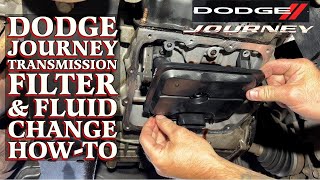
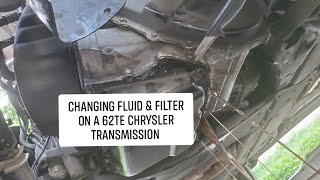
Aftermarket price range: $25-$80 - Transmission Fluid and Filter Kit — Low or dirty fluid is a common cause of transmission problems and should be addressed as part of any transmission repair. Mopar ATF+4 is required. 🎬 See this walkthrough for servicing the 62TE automatic transmission
Trusted brands: Mopar
OEM price range: $100-$180
Aftermarket price range: $70-$120
Related Codes That Often Appear With This One
- P0750 - P0770 — These codes point to specific faults in the shift solenoid circuits, which are a common failure point on the Dodge Journey.
- P0715, P0717, P0720, P0721 — These codes indicate problems with the input or output speed sensor circuits, another frequent cause of P0700.
- P084B — This code can be related to issues within the valve body or solenoid pack on the 62TE transmission.
- U0100 — As reported in NHTSA ODI #11655418, this communication code can appear with P0700; in some cases, a dealer may attempt to flash the computer to resolve the persistence of these codes.
Mechanic-Grade Diagnostic Values
- 62TE Solenoid Pack Resistance (Shift Solenoids) — expected: 1.6 - 1.8 Ohms at approx. 70°F. The key is consistency; all similar solenoids should have very close readings.. Failure: A reading that is significantly higher (e.g., 7.2 Ohms), lower, or shows an open circuit (OL) indicates a failed solenoid coil.
- 62TE Solenoid Pack Pinout Test — expected: Using a multimeter, place one lead on the common terminal (Pin 10) and the other lead on the specific solenoid pin you are testing (e.g., Pin 2 for Low/Reverse, Pin 7 for Underdrive).. Failure: Any pin that does not meet the expected resistance specification points to an internal failure in the solenoid pack.
- Valve Body & Solenoid Pack Bolt Torque — expected: 50-53 in-lbs (approx. 6 N.m).. Failure: Incorrect torque can lead to leaks or improper seating of the components.
Hidden / Shadow Codes Worth Checking
- P0731-P0736 (Gear Ratio Error Codes): While not 'shadow codes' in the traditional sense, these specific TCM codes are 'hidden' from basic OBD-II scanners. They often appear alongside P0700 and are critical for diagnosis. A common cause for a sudden appearance of multiple gear ratio codes after service is the cross-connection of the identical-looking speed sensor connectors. (see via An OBD-II scan tool with the ability to read manufacturer-specific transmission codes (e.g., Autel, Snap-on, or the dealer wiTECH tool).)
Scan Tool Commands That Help
- wiTECH or equivalent advanced scanner: Reset Transmission Pressure Readings / Adaptive Learn Reset — This is critical after replacing the solenoid pack or performing a full transmission fluid exchange. The 62TE transmission uses adaptive learning; failing to reset these values can cause harsh shifting, slipping, and new trouble codes (like P0731/P0846) even with a new part installed.
- wiTECH: Transmission Quick Learn — This procedure should be performed anytime the transmission adaptation memory cells are cleared or to address poor shift quality. It helps the TCM re-establish baseline parameters for clutch operation.
Wiring & Ground Locations
- Speed Sensor Connectors (ISS, TSS, OSS) — The Input (ISS), Transfer (TSS), and Output (OSS) speed sensors are located on the transmission case. The ISS is on top, while the TSS and OSS are on the rear of the case.. The electrical connectors for all three sensors are physically identical. It is a common and critical error to cross-connect them during reassembly. This will cause the TCM to receive illogical data, setting multiple gear ratio error codes (P0731-P0736) and putting the vehicle in limp mode.
- Connector C101 — Located on top of the transmission, near the PCM.. This connector can develop intermittent connection issues, causing a loss of power to the transmission controls. Wiggling this connector may reproduce the fault. This can lead to limp mode and may set a P0562 (System Voltage Low) code in addition to the P0700, misleading diagnosis towards a battery or alternator issue.
Real Owner Repair Stories
- Dodge Journey Forum user 'TheHammer85' (2012 Dodge Journey) — Initially would not shift out of 1st gear, with code P0750.
❌ Tried (didn't work) The owner replaced the transmission solenoid pack, which fixed the P0750 and allowed the car to shift. However, after a transmission fluid flush four days later, the car developed new symptoms: slipping, jerking into 2nd, and slamming into 1st when stopping. New codes P0731 (Gear 1 Incorrect Ratio) and P0846 (Trans Fluid Pressure Sensor) appeared.
✅ What actually fixed it A responding forum member identified the likely root cause: the 62TE transmission's 'adaptive learn' programming was not reset. After a solenoid pack or major fluid change, the transmission pressure readings must be reset to their base settings using a capable scan tool. Without this step, the TCM operates on old, incorrect data, causing poor shift quality.
OEM Part Supersession History
N/A→Updated Compounder Assembly— Early 62TE models (approx. pre-2012) used compounder ceiling rings that could spin and wear the housing, causing pressure leaks. Updated designs feature locked rings to prevent this rotation.
Heads up: When rebuilding a 62TE, using the updated compounder assembly or a rebuild kit containing it is crucial for long-term reliability.62TE Solenoid Pack→545RFE Solenoid Rebuild Kit— For technicians rebuilding a solenoid pack instead of replacing it, a kit for the 545RFE transmission can be used.
Heads up: The base screen, O-rings, and pressure switches are the same. However, the O-rings for the line pressure solenoid are not included in the 545RFE kit.
Model Year Variations Within This Range
- 2009-2012 (approx.): Models in this range are more susceptible to internal wear in the transmission's compounder section due to a design where ceiling rings could spin freely. Later models incorporated an updated design with locking rings to mitigate this wear and subsequent pressure loss.
Diagnostic Flowchart
Used vs. New Parts: Buying Guide for This Vehicle
When a used part is the smart pick: A complete, low-mileage used transmission assembly from a reputable salvage yard can be a cost-effective alternative to a full rebuild, especially if the casing or hard parts are damaged. However, for the most common failure components, new parts are strongly recommended.
Donor-vehicle mileage cap: roughly under 70000 miles for the part to have meaningful remaining life.
What to inspect on the donor part:
- Verify the donor vehicle's mileage; anything under 70,000 miles is preferable, as failures become common between 75k-120k miles.
- Check the fluid color and smell from the donor transmission if possible. Dark, burnt-smelling fluid is a major red flag.
- Get a warranty from the salvage yard that covers at least 30-90 days.
- Ensure the donor vehicle matches the engine and drivetrain (FWD/AWD) of your Journey.
OEM-only on this vehicle (don't cheap out):
- Transmission Solenoid Pack: Forum and rebuilder consensus strongly favors using Mopar OEM solenoid packs. Aftermarket units, especially cheaper ones, have a high rate of premature failure, leading to repeat repairs.
- Transmission Fluid: Strictly use Mopar ATF+4 or a fully licensed equivalent. Using a generic multi-vehicle fluid is a common cause of shifting problems and long-term damage.
Aftermarket brands forum-validated for this vehicle:
- While OEM is preferred for the solenoid pack, brands like Dorman offer an alternative that is widely available, though professional opinions on longevity are mixed.
Brands owners have reported issues with on this vehicle:
- Unbranded, low-cost solenoid packs sold on marketplaces like eBay or Amazon are a significant gamble and frequently lead to failure within a short period, as noted by transmission specialists.
Documented NHTSA Reports
- An owner reported in NHTSA ODI #11492165 that a mechanic retrieved DTC P0700 and suggested a transfer case motor and possibly a snap ring failure.
- NHTSA ODI #11655418 describes a vehicle that failed to restart and was towed to a dealer where DTCs U0100 and P0700 were retrieved; despite flashing the computer, the failure persisted.
Real Owner Stories
Aggregated from forums and TSBs cited above. Mileages and costs reflect what owners reported in those sources.
2009 Dodge Journey 2.4L
Symptoms: The vehicle would not shift gears, even when revving the engine. The scanner showed codes P0755 and P0700. Additionally, if shifted into Drive too quickly after starting, the engine would stall.
What fixed it: A user with the same issue reported that the fix was repairing an internal circuit in the computer (TCM) that sends the signal to the solenoid pack.
Source hint: Opinautos
Related OBD-II Codes
Frequently Asked Questions
My 2012 Dodge Journey is stuck in one gear. Is it more likely the solenoid pack or a speed sensor?
What kind of transmission fluid should I use for my Dodge Journey?
I need to replace the solenoid pack on my Journey. Is an aftermarket part okay?
Where are the input and output speed sensors located on the Dodge Journey?
Is it common for the Transmission Control Module (TCM) to fail on these Journeys?
My Journey is shuddering during acceleration and the check engine light is on. Could this be related to the P0700 code?
Helpful Videos
We Have This Part in Stock


The information in this article is provided for general reference and educational purposes only. Vehicle specifications, procedures, and part compatibility can vary by production date, trim level, and region. Always consult your vehicle's factory service manual and verify part numbers before purchasing or performing repairs. Safety-critical components such as airbags, seat belts, and braking systems should be installed by a qualified professional.
- Dodge Journey:
- 🧭 Diagnostic Flowchart
- 🎬 Helpful Videos
- 🛍️ Shop This Part
- What's Unique About the 2009-2020 Dodge Journey
- Symptoms You May Notice
- Most Likely Causes
- Rare But Worth Checking
- Technical Service Bulletins (TSBs) & Recalls
- Diagnosis Steps
- Parts You'll Likely Need
- Related Codes That Often Appear With This One
- Mechanic-Grade Diagnostic Values
- Hidden / Shadow Codes Worth Checking
- Scan Tool Commands That Help
- Wiring & Ground Locations
- Real Owner Repair Stories
- OEM Part Supersession History
- Model Year Variations Within This Range
- Used vs. New Parts: Buying Guide for This Vehicle
- Documented NHTSA Reports
- Real Owner Stories
- 2009 Dodge Journey 2.4L
- Related OBD-II Codes
- Frequently Asked Questions
- 🎟️ Get 5% Off