

P0700 on 2005-2008 Dodge Magnum: Causes, Fixes, and Limp Mode Explained
P0700 on a 2005-2008 Dodge Magnum means the transmission has a problem, usually putting the car in 'limp mode.' The most common fix is replacing the transmission conductor plate and the electrical connector sleeve, which can often be done for under $200 in parts. This is a very common issue on the Mercedes-designed NAG1 transmission used in this vehicle.
- P0700 means the transmission has a fault; you MUST scan the Transmission Control Module (TCM) for the real codes.
- The most likely cause on a 2005-2008 Magnum is a failed transmission conductor plate.
- Always replace the transmission filter, pan gasket, and electrical connector sleeve when replacing the conductor plate.
- Check for fluid leaks at the 13-pin electrical connector, as this is a common and critical issue.
- Driving in 'limp mode' is not safe for extended periods; address the issue promptly to avoid further damage.
What's Unique About the 2005-2008 Dodge Magnum
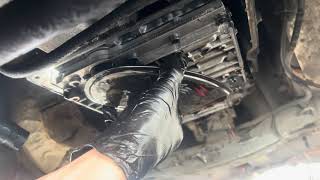
The Dodge Magnum of this era uses a Mercedes-Benz designed NAG1 (also known as W5A580 or 722.6) 5-speed automatic transmission. A very common and well-documented issue with this transmission is the failure of the conductor plate, which houses the transmission's integrated speed sensors. Another frequent problem is the transmission's main 13-pin electrical connector O-ring failing, allowing fluid to leak and wick up the wiring harness, potentially damaging the TCM. These two issues are the primary culprits for P0700 🎬 Watch: Understanding the P0700 code and how to fix it. on the Magnum and its platform mates.
Symptoms You May Notice
- Check Engine Light is on
- Transmission is stuck in 'limp mode' (will not shift out of 2nd gear)
- Harsh or erratic shifting
- Delayed engagement when shifting into Drive or Reverse
- Inability to shift gears at all
- Sluggish acceleration due to being locked in a higher gear
- Reduced fuel economy
- Replacing the entire transmission when only the conductor plate or electrical connector is faulty.
- Replacing the TCM without first fixing the fluid leak at the electrical connector, leading to repeat failure of the new module.
- Mistaking the electrical connector leak for a transmission pan gasket leak.
Most Likely Causes
- Faulty Transmission Conductor Plate 🔴 High Probability → Shop Transmission Assembly The NAG1 transmission is notorious for conductor plate failures. The internal speed sensors fail electronically due to broken internal connections, not just contamination. Cleaning the plate is only a temporary fix at best; replacement is the only reliable solution.
How to confirm: Scan the TCM for codes related to input/output speed sensors (e.g., P0717, P0718, P2767). These almost always point to a bad conductor plate.
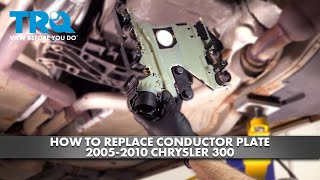
Typical fix: Replace the conductor plate, transmission filter, pan gasket, and electrical connector sleeve. This requires dropping the transmission pan and valve body. 🎬 Watch: Step-by-step walkthrough for replacing the NAG1 conductor plate. The conductor plate itself is not programmed to the vehicle, so it's a direct swap after which codes must be cleared.
Est. part cost: $140-$330 - Leaking Transmission Electrical Connector 🟡 Medium Probability → Shop Transmission Assembly The O-rings on the 13-pin electrical connector sleeve are a common failure point, allowing transmission fluid to leak. This is often misdiagnosed as a pan gasket leak. The fluid can wick up the wiring harness into the TCM, causing catastrophic failure.
How to confirm: Visually inspect the connector where it enters the transmission (passenger side, just above the pan). If it's wet with red or brown fluid, it's leaking. This is a very common and well-documented issue.
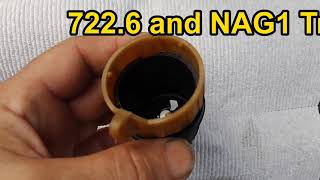
Typical fix: Replace the electrical connector sleeve. 🎬 See this guide on replacing the leaking 13-pin adapter plug. This is a low-cost part and should always be replaced when servicing the conductor plate or changing the fluid. An updated seal design is available.
Est. part cost: $10-$25 - Low or Dirty Transmission Fluid 🟡 Medium Probability → Shop Transmission Assembly
How to confirm: Check the transmission fluid level and condition. Note that these vehicles do not have a dipstick from the factory; a special service tool (dipstick) is required. Fluid should be bright red and not smell burnt. The correct fluid is specified for the NAG1, often Shell ATF 134 or equivalent, not ATF+4.
Typical fix: Top off with the correct fluid. If the fluid is dirty or has metal shavings, a fluid and filter change is required. If a leak is present, fix it first (likely the connector sleeve).
Est. part cost: $50-$150 - Faulty Transmission Control Module (TCM) ⚪ Low Probability → Shop Transmission Assembly Often damaged by transmission fluid wicking up the wiring harness from a leaking electrical connector. It can also fail from heat or internal electronic faults, but this is less common than the other causes.
How to confirm: After ruling out all other causes, inspect the TCM and its connector for signs of fluid contamination. The TCM may also fail to communicate with a scan tool. If P0700 returns immediately after clearing with no other codes, the TCM itself may be the culprit.
Typical fix: Replace the TCM. This may require programming to the vehicle.
Est. part cost: $150-$400
Rare But Worth Checking
- Faulty Valve Body or Shift Solenoids: → Shop Transmission Valve Body While less common than the conductor plate, a solenoid can fail electronically or mechanically, causing shifting issues and triggering a P0700. This is usually identified by a specific solenoid-related code in the TCM (e.g., P0750 range).
- Weak Battery or Poor Electrical Grounds: → Shop Vehicle Battery The TCM is sensitive to voltage. A weak or failing battery can cause voltage drops that lead to erratic behavior and trigger a P0700 code, sometimes with no actual transmission fault.
Diagnosis Steps
- Use a scan tool capable of reading transmission codes to retrieve the specific DTCs from the TCM. Do not proceed based on P0700 alone.
- Inspect the transmission electrical connector on the passenger side for any signs of fluid leakage. This is a critical and very common failure point.
- Check the transmission fluid level and condition using the appropriate service dipstick. Ensure correct fluid (e.g., Shell ATF 134, not ATF+4) is used.
- Based on the codes found in the TCM, diagnose the specific component. Codes pointing to speed sensors (P0717, P2767) almost always mean the conductor plate is bad.
- If replacing the conductor plate, it is critical to also replace the electrical connector sleeve, pan gasket, and filter at the same time.
- Inspect the TCM connector (often located under the dash or in the engine bay) for any signs of transmission fluid that may have wicked up the harness. If fluid is present, the connector and module must be cleaned or replaced.
- Check battery health and charging system voltage. Low voltage can cause TCM errors.
- After repairs, clear all codes from both the TCM and ECM and perform a road test to ensure the issue is resolved.
Parts You'll Likely Need
- Automatic Transmission Conductor Plate
(OEM #52108308AC)— This is the most common failure point on the NAG1 transmission that causes P0700 and limp mode. It houses the speed sensors.
Trusted brands: Mopar, SKP, Dorman (917-678), Standard Motor Products
OEM price range: $230-$990 (Price varies wildly by dealer vs online)
Aftermarket price range: $140-$330 - Automatic Transmission Electrical Connector Sleeve
(OEM #68021352AA)— The O-rings on this part fail, causing leaks that can lead to fluid loss and damage to electronics. It is essential to replace it during a conductor plate service.
Trusted brands: Mopar, URO Parts, Vaico
OEM price range: $15-$25
Aftermarket price range: $10-$20 - Automatic Transmission Filter Kit (Filter, Gasket)
(OEM #52108325AA)— Must be replaced whenever the transmission pan is removed for service.
Trusted brands: Mopar, ATP, Wix
OEM price range: $40-$60
Aftermarket price range: $20-$40
Related Codes That Often Appear With This One
- P0717 — Indicates an issue with the Input Speed Sensor circuit, which is part of the conductor plate.
- P0730 — Incorrect Gear Ratio detected, often a symptom of the transmission slipping or being unable to shift due to a conductor plate or solenoid issue.
- P2767 — Input/Turbine Speed Sensor 'B' Circuit No Signal. This is another code that points directly to a failure of the conductor plate.
- U0404 — Invalid Data Received From Transmission Control Module. Often seen when the TCM itself is failing or has communication issues.
Technical Service Bulletins (TSBs) & Recalls
- Chrysler TSB 21-014-07: This bulletin supersedes TSB 21-010-06 and specifies the use of ATF+4 (Type MS9602) fluid for Chrysler automatic transmissions, but explicitly notes it does NOT apply to the NAG1 transmission in certain vehicles, reinforcing that the correct fluid type is critical. Owners should verify the specific fluid for the NAG1, which is often Shell ATF 134 or equivalent, not ATF+4.
- Chrysler TSB 21-010-06: Superseded by the above, this TSB also dealt with automatic transmission fluid types.
- Manufacturer Bulletin #S2321000006: This bulletin addresses the "Service Transmission" message illumination and notes that DTC P0700-E4 (Transmission Control System MIL Request) may be set.
Platform-Specific Known Issues
- The NAG1 transmission is notorious for conductor plate failure, leading to limp mode. The failure is an electronic break in the speed sensor leads inside the plate.
- Fluid wicking from the 13-pin electrical connector up into the wiring harness is a well-documented problem that can destroy the TCM. This should be the first visual inspection performed.
- The factory did not include a transmission dipstick, requiring a special service tool for fluid level checks, which complicates basic maintenance for owners.
- NHTSA ODI #11492165 notes that on similar platform vehicles, P0700 has been associated with transfer case motor and snap ring failures.
Mechanic-Grade Diagnostic Values
- Shift Solenoid Resistance — expected: Between 5.0 and 6.2 Ohms, depending on the specific solenoid.. Failure: A reading outside of this range indicates a faulty solenoid.
- TCM Supply Voltage — expected: 12.0 - 14.5 V with ignition on.. Failure: Voltage dropping below 9.0 V can trigger faults and limp mode. A reading below 8.5V will set a specific low-voltage DTC.
- TCM Ground Circuit Resistance — expected: Less than 0.1 Ω.. Failure: High resistance indicates a poor ground connection, which can cause erratic TCM behavior.
- CAN Bus Circuit Resistance — expected: Below 5.0 ohms between the TCM connector and the main CAN bus connector (TIPM).. Failure: Resistance above 5.0 ohms indicates an open or high-resistance fault in the communication wiring.
Scan Tool Commands That Help
- Chrysler wiTECH or equivalent advanced scan tool (e.g., JScan, BlueDriver): Reset Learned Adaptives (NAG1) — This function should be performed after replacing the conductor plate, valve body, TCM, or entire transmission. It erases the old shift calibration data and allows the TCM to re-learn shift points and clutch fill times with the new components.
- Chrysler wiTECH or equivalent: Store Learned Adaptives — After performing the adaptation drive cycle, this command can be used to manually save the new adaptive values immediately. Otherwise, the TCM will automatically store them after about 10 minutes of continuous operation.
- Chrysler wiTECH or equivalent: ECU View / Module Status — Used to verify if the TCM is actively communicating on the CAN bus. If the TCM shows as inactive (often with a red 'X'), it points to a power, ground, or communication circuit failure, or a dead TCM.
Wiring & Ground Locations
- Transmission Control Module (TCM) — Located under the steering column, behind the lower dash panel.. This is the module that sets the P0700 code. It can be damaged by fluid wicking up the harness from the 13-pin connector leak. Its location makes it susceptible to water intrusion if there are any cowl or windshield leaks.
- G300 / G301 — G300 is located below the left 'B' pillar. G301 is behind the left side of the dash.. These are major ground points for various interior modules. A corroded or loose ground at these locations can cause intermittent and difficult-to-diagnose electrical issues, including TCM faults.
- TCM Ground Circuits (Z910, Z912) — These are specific ground circuits that terminate at the TCM's main electrical connectors.. A diagnostic test for a non-communicating TCM involves checking the integrity of these specific ground circuits directly at the TCM connector. An open in one of these wires will prevent the TCM from functioning.
- Transmission Relay — Located in the Power Distribution Center (underhood fuse box).. This relay supplies power to the TCM. A faulty relay can cause a loss of power to the TCM, leading to a P0700 code and no communication with the scan tool.
Real Owner Repair Stories
- lxforums.com user (Dodge Magnum (year/engine not specified, but on LX platform)) — Car went into limp mode, stuck in one gear. P0700 code present.
❌ Tried (didn't work) Initial diagnosis pointed towards a transmission issue.
✅ What actually fixed it The user replaced the conductor plate and the 13-pin connector plug. This resolved the limp mode and cleared the P0700 code. - NHTSA ODI #10846349 — An owner reported the check engine light came on with codes P0700 and P0760 at approximately 64,000 miles. The transmission required an overhaul including fluid and filter changes.
- NHTSA ODI #11085068 — A driver experienced multiple codes including P0700, P0717 (Input Speed Sensor 1 Circuit No Signal), P0712 (Trans Fluid Temp Sensor Low Input), and U1146 communication errors.
- NHTSA ODI #11655418 — An owner reported the vehicle failed to restart on several occasions and was towed; dealer diagnosis retrieved DTCs U0100 and P0700. Flashing the computer did not resolve the failure.
OEM Part Supersession History
Not specified→52108308AC (Conductor Plate)— Revisions to improve reliability of the integrated speed sensors.
Heads up: Aftermarket parts like the Dorman 917-678 are designed to be direct replacements for the OEM part number 52108308AC. Ensure the replacement kit includes the conductor plate itself and not just the electrical connector.Not specified→68021352AA (Electrical Connector Sleeve)— Updated O-ring design to prevent fluid leaks.
Model Year Variations Within This Range
- 2005-2008: The base SE model with the 2.7L V6 used a 4-speed automatic transmission (42RLE). The SXT (3.5L V6) and R/T (5.7L Hemi V8) models used the 5-speed Mercedes-Benz NAG1 (W5A580) transmission, which is the unit prone to the common P0700 conductor plate failure. This article specifically addresses the NAG1-equipped vehicles.
- 2008: The 2008 model year featured a minor interior and exterior styling refresh, including a slightly updated dashboard. However, the powertrain options, including the NAG1 transmission and its associated common faults, remained the same as previous years.
Diagnostic Flowchart
Used vs. New Parts: Buying Guide for This Vehicle
When a used part is the smart pick: A used TCM can be a cost-effective option if the original is confirmed faulty (e.g., from fluid intrusion). However, it may require programming to the vehicle's VIN. Complete used transmissions from low-mileage donor cars can also be viable, as they include the valve body, conductor plate, and solenoids.
Donor-vehicle mileage cap: roughly under 80000 miles for the part to have meaningful remaining life.
What to inspect on the donor part:
- For a used TCM, inspect the connector pins for any signs of corrosion or transmission fluid.
- For a complete transmission, check the fluid color and smell from the donor car if possible. Bright red fluid is a good sign; dark, burnt-smelling fluid is a major red flag.
- Verify the donor vehicle's mileage and accident history. Avoid parts from vehicles with major flood or collision damage.
OEM-only on this vehicle (don't cheap out):
- While aftermarket conductor plates exist, using a genuine Mopar or Mercedes-Benz part is often recommended by forum veterans for highest reliability, despite the higher cost.
Aftermarket brands forum-validated for this vehicle:
- Dorman (917-678) is a widely available aftermarket conductor plate that many DIYers have used successfully.
- URO Parts is a common aftermarket brand for the 13-pin electrical connector sleeve.
Brands owners have reported issues with on this vehicle:
- Be cautious of unbranded, exceptionally cheap conductor plates from online marketplaces, as their long-term reliability can be questionable.
Real Owner Stories
Aggregated from forums and TSBs cited above. Mileages and costs reflect what owners reported in those sources.
2006 Dodge Magnum
Symptoms: The car suddenly went into limp mode and was stuck in 2nd gear. The Check Engine Light was on.
What fixed it: The issue was a failed conductor plate. The problem was resolved by replacing the conductor plate, transmission filter, pan gasket, and the 13-pin electrical connector sleeve.
Source hint: DodgeForum
2005 Dodge Magnum
Symptoms: The transmission was shifting very harshly and sometimes would delay engaging when put into Drive.
What fixed it: The 13-pin electrical connector was found to be leaking fluid up the wiring harness and into the Transmission Control Module (TCM). The TCM was damaged by the fluid and had to be replaced along with the leaking connector sleeve.
Source hint: DodgeForum
2007 Dodge Magnum
Symptoms: Check Engine Light came on and the transmission was stuck in 'limp mode', causing sluggish acceleration.
What fixed it: Diagnosis revealed the conductor plate had an internal electronic break in the speed sensor leads. Replacing the conductor plate fixed the limp mode issue.
Source hint: vehicle_specific_issues
Related OBD-II Codes
Frequently Asked Questions
I have a 2007 Dodge Magnum with the NAG1 transmission. Can I use ATF+4 fluid?
If I replace the conductor plate on my Magnum, does the new part need to be programmed to the car?
How do I check the transmission fluid level on my 2006 Dodge Magnum? I can't find a dipstick.
My Magnum is leaking transmission fluid and showing a P0700 code. Is it just the pan gasket?
My scanner shows P0700 and a code for an input/output speed sensor like P0717 or P2767. Do I just replace that one sensor?
I'm about to replace the conductor plate. What other parts should I replace at the same time?
Helpful Videos

We Have This Part in Stock


The information in this article is provided for general reference and educational purposes only. Vehicle specifications, procedures, and part compatibility can vary by production date, trim level, and region. Always consult your vehicle's factory service manual and verify part numbers before purchasing or performing repairs. Safety-critical components such as airbags, seat belts, and braking systems should be installed by a qualified professional.
- Dodge Magnum:
- 🧭 Diagnostic Flowchart
- 🎬 Helpful Videos
- 🛍️ Shop This Part
- What's Unique About the 2005-2008 Dodge Magnum
- Symptoms You May Notice
- Most Likely Causes
- Rare But Worth Checking
- Diagnosis Steps
- Parts You'll Likely Need
- Related Codes That Often Appear With This One
- Technical Service Bulletins (TSBs) & Recalls
- Platform-Specific Known Issues
- Mechanic-Grade Diagnostic Values
- Scan Tool Commands That Help
- Wiring & Ground Locations
- Real Owner Repair Stories
- OEM Part Supersession History
- Model Year Variations Within This Range
- Used vs. New Parts: Buying Guide for This Vehicle
- Real Owner Stories
- 2006 Dodge Magnum
- 2005 Dodge Magnum
- 2007 Dodge Magnum
- Related OBD-II Codes
- Frequently Asked Questions
- 🎟️ Get 5% Off