

P0700 on 2002-2008 Dodge Ram 1500 3.7L: Transmission Control System Malfunction Causes and Fixes
P0700 on a 2002-2008 Dodge Ram 1500 with the 3.7L V6 indicates a fault has been registered by the Transmission Control Module (TCM). It requires a scan of the TCM for more specific codes. The most common cause is a failing transmission solenoid pack on the 42RLE transmission, which can cost $150-$350 for the part. Always check fluid level and condition first.
- P0700 is not the root problem; it is a general alert that the transmission computer has stored a specific fault code.
- You MUST use a scanner that can read transmission codes to find the true cause of the issue.
- On the 3.7L V6 Ram, the most likely culprit is a failing transmission solenoid pack, which is a known issue with the 42RLE transmission.
- Always check the transmission fluid level and condition first, as low or burnt fluid can cause numerous problems.
- Due to the complexity and risk of further damage, professional service is highly recommended for internal transmission repairs.
What's Unique About the 2002-2008 Dodge Ram 1500
The 2002-2008 Ram 1500 with the 3.7L V6 engine typically uses the Chrysler 42RLE 4-speed automatic transmission. This specific transmission is known for having issues with its solenoid pack, valve body, and input/output speed sensors, which are common triggers for a P0700 code. It's crucial to understand that P0700 is just a gateway code on this truck, and blindly replacing parts without retrieving the specific TCM codes can lead to unnecessary expense and repeat failures. The P1776 code is particularly common on this platform, pointing to a 'Solenoid Switch Valve Latched in LR Position', which is often a mechanical failure within the valve body itself, not just the solenoid pack.
Symptoms You May Notice
- Check Engine Light is on
- Transmission is stuck in one gear (limp mode, often 2nd or 3rd gear)
- Harsh, erratic, or delayed shifting
- Vehicle won't move without applying throttle
- Transmission slipping between gears
- Reduced fuel economy
- Transmission drops out of overdrive at highway speeds
- Replacing the entire transmission when only an external sensor or internal solenoid pack is at fault.
- Replacing parts based only on the P0700 code without first scanning the TCM for the specific, underlying fault codes.
- Replacing the solenoid pack when the actual fault is a worn valve body bore, especially when code P1776 is present.
Most Likely Causes
- Failing Transmission Solenoid Pack 🔴 High Probability → Shop Transmission Assembly The solenoid pack on the 42RLE transmission is a well-documented, common failure point that controls gear shifting. Some early production solenoid packs had a high failure rate due to internal circuit board trace issues, as noted in TSB 21-008-04 for related transmissions.
How to confirm: Scan the TCM for specific solenoid circuit codes (e.g., P0750, P0752, P1776). The solenoid pack is located inside the transmission oil pan, mounted to the valve body. A visual inspection of the part's date code may be useful; packs made between late 2001 and early 2003 are suspect.
Typical fix: Replace the transmission solenoid pack. This also requires draining the fluid, dropping the pan, and replacing the transmission filter and pan gasket.
Est. part cost: $150-$350 - Low or Dirty Transmission Fluid 🟡 Medium Probability → Shop Transmission Assembly The 42RLE transmission is sensitive to fluid level and type. Using anything other than licensed ATF+4 fluid can cause shudder, shifting problems, and codes.
How to confirm: Check the transmission fluid dipstick. The fluid should be at the 'Full' mark, appear bright red, and not smell burnt. If it's low, dark, or contains metal shavings, there is a problem.
Typical fix: Top off with Mopar ATF+4 fluid. If the fluid is dirty, perform a transmission fluid and filter change. Note that if the transmission has very high mileage and the fluid has never been changed, a flush can sometimes cause new problems.
Est. part cost: $50-$150 for fluid and filter kit - Faulty Input/Output Speed Sensors 🟡 Medium Probability
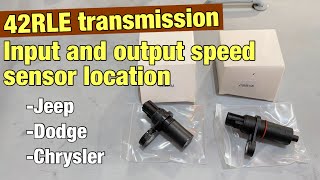
How to confirm: Scan the TCM for specific speed sensor codes (e.g., P0717, P0721). The sensors can be tested with a multimeter for proper resistance. They are located on the outside of the transmission case.
Typical fix: Replace the faulty speed sensor(s).
Est. part cost: $30-$80 per sensor - Damaged Wiring or Connectors ⚪ Low Probability The wiring harness to the transmission can become corroded or damaged from heat and road debris, leading to intermittent electrical faults.
How to confirm: Visually inspect the wiring harness leading to the transmission for any signs of corrosion, chafing, or damage, paying close attention to the main connector. A detailed check may involve unwrapping the harness to inspect individual wires for breaks or shorts.
Typical fix: Repair or replace the damaged section of the wiring harness.
Est. part cost: $20-$200 depending on the extent of damage
Rare But Worth Checking
- Faulty Transmission Control Module (TCM/PCM): → Shop Transmission Assembly The TCM is integrated into the Powertrain Control Module (PCM) on these trucks. While uncommon, the module itself can fail. This should only be suspected after all other possibilities like solenoids, sensors, and wiring have been thoroughly ruled out. Codes like P0882 (TCM Power Input Low) can point to a PCM or relay issue.
- Internal Valve Body Failure: → Shop Transmission Valve Body Sometimes the valve body itself, which the solenoid pack mounts to, can have worn channels or a sticky solenoid switch valve. This is a known cause for the P1776 code. In some cases, replacing only the solenoid pack on a worn valve body will not fix the issue long-term, and a remanufactured valve body is required.
Diagnosis Steps
- Check the transmission fluid level and condition. Ensure it is full, red, and does not smell burnt. Use only Mopar ATF+4 or an equivalent certified fluid.
- Use an advanced OBD-II scanner capable of communicating with the TCM to read the specific transmission fault codes. The P0700 is just a general alert; the other codes (P07xx, P17xx) will point to the root cause.
- Inspect the main transmission wiring harness and connectors for any visible damage, corrosion, or fluid contamination.
- Based on the specific codes found, diagnose the corresponding components.
- If solenoid circuit codes (e.g., P0750) are present, the solenoid pack is the primary suspect.
- If code P1776 is present, the issue is likely a sticky solenoid switch valve within the valve body or a faulty solenoid pack.
- If speed sensor codes (e.g., P0721) are present, test the sensor and its wiring.
- If power-related codes (e.g., P0882) are present, inspect the transmission control relay and associated wiring before condemning the PCM.
- If no other codes are present besides P0700, investigate potential wiring issues or, as a last resort, a possible TCM/PCM failure.
Parts You'll Likely Need
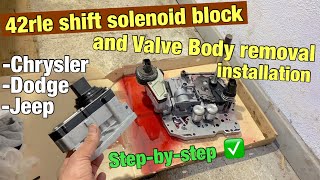
- Transmission Solenoid Block/Pack
(OEM #5170877AA (superseded by 68353383AC), 04800171AA)— This is the most common failure point on the 42RLE transmission that triggers a P0700 code.
Trusted brands: Mopar, Rostra, SunCoast
OEM price range: $250-$400
Aftermarket price range: $150-$250 - Transmission Filter Kit (Filter and Pan Gasket) — Must be replaced whenever the transmission pan is removed to service the solenoid pack or valve body.
Trusted brands: Mopar, ATP, Wix
OEM price range: $40-$60
Aftermarket price range: $20-$40 - Mopar ATF+4 Automatic Transmission Fluid
(OEM #MS-9602)— This is the required fluid type for this transmission. Using the wrong fluid can cause shifting problems and damage.
Trusted brands: Mopar, Valvoline, Castrol
OEM price range: $10-$15 per quart
Aftermarket price range: $8-$12 per quart
Related Codes That Often Appear With This One
- P0750, P0752, P0755, etc. — These are specific codes for shift solenoid circuit faults, often pointing directly to a bad solenoid pack.
- P0717, P0721 — These codes indicate faults with the input or output speed sensor circuits.
- P1776 — This is a Chrysler-specific code for 'Solenoid Switch Valve Latched in LR Position', which strongly indicates a failure within the solenoid pack or, more commonly, the valve body itself.
- P0841 — This code relates to the transmission fluid pressure sensor, which is often integrated into the solenoid block assembly on this transmission.
- P0882, P0888 — These codes indicate a power supply issue to the TCM (e.g., TCM Power Input Low or Relay Always Off), which could be a wiring fault, a bad relay, or a failing PCM.
Technical Service Bulletins (TSBs) & Recalls
- TSB 21-001-13 (Supersedes 21-008-04): Addresses DTC P1776. It clarifies that if the scanner's event data shows a 'TRS Code' of 'OD', the cause is a sticky solenoid switch valve in the valve body, not the solenoid pack. If it shows 'TR2', the cause is a misadjusted shifter cable. This is a critical diagnostic step.
- TSB 21-008-04: While superseded, this TSB is widely referenced online for identifying a batch of faulty solenoid packs in 45RFE/545RFE transmissions with specific date codes. Although for a different transmission, the issue of faulty solenoid batches from this era is relevant context for Chrysler products.
Platform-Specific Known Issues
- source — A 2006 Dodge Dakota owner on DodgeForum.com reported getting P0700 and P0750 codes intermittently. After replacing the solenoid pack, the truck would drive fine for a short period and then re-enter limp mode, particularly on a subsequent day or in rainy weather. This highlights how a new part might not immediately solve the issue if there's an underlying wiring problem or if a 'quick learn' procedure is needed.
Mechanic-Grade Diagnostic Values
- 42RLE Shift Solenoid Resistance (OD, UD, 2/4, L/R) — expected: 1.7 Ohms (readings can vary with temperature). Failure: A reading significantly higher (open) or lower (short) than the specification.
- 42RLE Pressure Switch Resistance — expected: 299 Ohms (readings can vary with temperature, range 270-330 Ohms). Failure: A reading outside the specified range.
- Input/Output Speed Sensor Circuit Resistance — expected: Below 5.0 Ohms. Failure: Resistance above 5.0 Ohms indicates an open circuit.
- Input/Output Speed Sensor AC Voltage Generation — expected: A small AC voltage deflection on a multimeter when a piece of metal is passed quickly across the sensor tip.. Failure: No voltage deflection indicates a dead sensor.
- Scan Tool Live Data: LR Clutch Volume Index (CVI) — expected: Above 20. Failure: A learned CVI value that falls below 16 will set a P2700 fault code, indicating an internal leak or wear problem.
Hidden / Shadow Codes Worth Checking
- TRS Code (within P1776 Event Data): A data point in the freeze frame/event data for code P1776 that helps isolate the cause. A 'TR2' code points to an external issue, like a misadjusted shifter cable. An 'OD' code points to an internal problem, most likely a stuck Solenoid Switch Valve in the valve body. (see via A professional-level scan tool (like Chrysler's DRB III or wiTECH) capable of reading 'Event Data' or 'Freeze Frame' data from the TCM.)
- Clutch Volume Index (CVI): A set of learned values in the TCM that represent the volume of fluid required to apply each clutch pack. Monitoring these values can reveal internal hydraulic leaks or clutch wear before they become catastrophic. For example, a low 'LR CL VOL INDEX' can trigger a P2700 code. (see via A professional-level scan tool with access to Chrysler-specific live data PIDs for the transmission.)
Scan Tool Commands That Help
- Autel, Launch, Snap-on, or dealer tool (DRB III/wiTECH): Quick Learn — This function must be performed after replacing the valve body, solenoid pack, or entire transmission. It resets the clutch volume indexes (CVIs) and adaptive memory, allowing the TCM to relearn the new components for proper shift quality.
- Professional Scan Tool: Read Event Data / Freeze Frame — When a P1776 code is present, reading the event data is critical to check the 'TRS Code' which helps determine if the fault is in the valve body or the external shift linkage.
Wiring & Ground Locations
- Transmission Solenoid Connector (10-pin) — On the left (driver's) side of the 42RLE transmission case.. This is the main electrical interface for the solenoid pack. Testing can be done here. Pin 3 (Red wire) is the 12V power feed. Other pins lead to individual solenoids (Pin 1: OD, Pin 2: UD, Pin 4: 2/4, Pin 7: L/R) for resistance checks without dropping the pan.
- PCM/TCM Grounds — Key grounds for the powertrain are typically located on the engine block and from the battery negative terminal to the chassis/body in the engine bay.. A poor ground can cause low voltage issues, erratic sensor readings, and trigger codes like P0882 (TCM Power Input Low), which often accompanies P0700. Ensuring clean, tight ground connections is a crucial step in diagnosing electrical faults.
Real Owner Repair Stories
- YouTube channel 'Sam's Garage' (2006 Dodge Ram 1500) — Check Engine Light on, transmission in limp mode, codes P0700 and P0882 (TCM Power Input Low).
❌ Tried (didn't work) The owner had already replaced the battery, assuming the 'low voltage' code meant a bad battery.
✅ What actually fixed it The mechanic advised checking the main transmission connector first. The plastic housing of the connector on the transmission side had developed a leak, allowing transmission fluid to seep into the electrical pins. This fluid contamination was shorting the connection and causing the low voltage code. The fix required replacing the internal transmission wiring harness/connector assembly.
When the Usual Fixes Don't Work
- In cases where the P1776 code is present with P0700, replacing the solenoid pack often does not fix the issue. The root cause is frequently a worn Solenoid Switch Valve (SSV) bore inside the aluminum valve body, which is a mechanical failure, not an electrical one. The correct, long-term repair in this scenario is to replace the entire valve body with a remanufactured unit that has an oversized, sleeved SSV bore, or to have the original valve body repaired by a specialist.
OEM Part Supersession History
5170877AA→68353383AC— Multiple revisions to improve reliability and address failure points.
Heads up: The full supersession chain is 5170877AA → 5170877AB → 5170877AC → 5170877AD → 5170877AF → 52119435AA → 52119435AF → 68353383AB → 68353383AC. While older versions may fit, using the latest available Mopar part number is highly recommended to get the most recent engineering updates.04800171AA→04800171AA (still active)— This appears to be a separate part number lineage for the 42RLE solenoid pack, often specified for 2003+ models.
Heads up: It is critical to verify the correct part number by VIN. While both this and the 5170877AA family service the 42RLE, there may be subtle differences based on year or specific application.
Model Year Variations Within This Range
- 2002-2008: While the 3.7L V6 was most commonly paired with the 42RLE 4-speed automatic, some trucks may have been equipped with the 45RFE or 545RFE 5-speed automatic, which were more common with the 4.7L V8. It is crucial to verify the transmission model, as the solenoid packs, valve bodies, and diagnostics are completely different.
- 2006-2008: The Ram 1500 received a mid-cycle refresh in 2006 with updated headlights and interior. However, the 3.7L V6 engine and 42RLE transmission powertrain combination and its common faults remained consistent through the end of the generation.
Diagnostic Flowchart
Other Known Issues on This Vehicle
Issues unrelated to this code that are worth knowing about as an owner of this generation:
- Cracked Dashboard 🟠 Medium — Extremely common, especially on 2002-2005 models. The plastic becomes brittle from sun/heat exposure and develops large cracks across the top of the dash and passenger airbag area.
- HVAC Blend Door Failure 🟠 Medium — Common failure where the plastic blend doors or the actuator motors inside the HVAC box break, resulting in loss of temperature control or airflow direction. Repair often requires removing the entire dashboard.
- Totally Integrated Power Module (TIPM) Failure 🔴 High → Shop Fuse Box — While more prevalent on 2006+ models, the Integrated Power Module (IPM) on 2002-2005 trucks can also cause bizarre electrical issues. On later models, TIPM failure can cause problems with fuel pump operation, lights, wipers, and door locks.
- Premature Front Wheel Bearing Failure 🟠 Medium — Notorious for wearing out front wheel bearings, sometimes as early as 75,000 miles. Owners report needing to replace them multiple times.
- Dropped Valve Seats (3.7L PowerTech) 🔴 High — The 3.7L engine can be prone to dropping valve seats, especially after an overheating event. This is a catastrophic engine failure requiring cylinder head replacement or a new engine.
Used vs. New Parts: Buying Guide for This Vehicle
When a used part is the smart pick: A complete, low-mileage used transmission from a reputable salvage yard can be a cost-effective alternative to a full rebuild if multiple internal hard parts have failed. For individual components like the solenoid pack or valve body, buying used is a significant gamble.
Donor-vehicle mileage cap: roughly under 80000 miles for the part to have meaningful remaining life.
What to inspect on the donor part:
- Verify the donor vehicle's mileage and check its history report if possible.
- When buying a complete transmission, inspect the fluid on the dipstick (if possible). It should be reddish and not smell burnt.
- Check all electrical connectors for physical damage, corrosion, or bent pins.
- Look for evidence of recent repair (e.g., fresh RTV on the pan), which could indicate it was already failing.
OEM-only on this vehicle (don't cheap out):
- Transmission Solenoid Pack: Due to high failure rates and poor quality control on many cheap aftermarket units, using a genuine Mopar part is strongly recommended for reliability.
- Transmission Fluid: Only use licensed Mopar ATF+4 or a certified equivalent from a major brand. The 42RLE is highly sensitive to fluid chemistry.
Aftermarket brands forum-validated for this vehicle:
- Sonnax: Not a complete part supplier, but they are the industry leader for high-quality valve body repair components (like oversized valves and sleeves) used by professional rebuilders.
- Rostra: A well-regarded aftermarket manufacturer of transmission solenoids and sensors.
Brands owners have reported issues with on this vehicle:
- Be cautious of unbranded, generic solenoid packs from online marketplaces. Many user reviews report premature failure or out-of-the-box issues.
Real Owner Stories
Aggregated from forums and TSBs cited above. Mileages and costs reflect what owners reported in those sources.
2006 Dodge Dakota 3.7L V6
Symptoms: The truck experienced intermittent limp mode and threw codes P0700 and P0750. Even after replacing the solenoid pack, the issue returned shortly after, especially during rainy weather.
What fixed it: The source suggests that while the solenoid pack was replaced, the persistence of the issue indicated a need for a 'quick learn' procedure or investigation into an underlying wiring problem.
Source hint: DodgeForum.com - 2006 Dakota P0700/P0750 Issue
2002 Dodge Dakota 4.7L
Symptoms: The transmission would drop out of overdrive at highway speeds and trigger the P0700 code. The owner found that restarting the vehicle would temporarily fix the problem.
What fixed it: The owner identified the classic symptom of dropping out of overdrive at highway speeds, which is a known behavior of the 42RLE/45RFE family triggering P0700.
Source hint: DodgeDakota.net thread titled 'Code P0700 Transmission'
2002-2008 Dodge Ram 1500 3.7L V6
Symptoms: The vehicle experienced a P0700 along with a specific P0752 solenoid code, resulting in the transmission entering limp-mode.
What fixed it: Diagnosis confirmed the P0700 was a generic alert for the specific solenoid fault (P0752) stored in the TCM.
Source hint: RamForum.com
Related OBD-II Codes
Frequently Asked Questions
My 2002-2008 Dodge Ram 1500 is showing P0700 and P1776. Does TSB 21-001-13 apply to me?
What specific transmission fluid should I use for my 3.7L V6 Dodge Ram to avoid P0700 codes?
I have a P0700 code and my Ram is stuck in 2nd or 3rd gear. What is happening?
Can I just replace the speed sensors to fix a P0700 on my 2002-2008 Ram 1500?
Is there a specific batch of solenoid packs I should avoid for my Dodge transmission?
What should I check if I see P0882 along with P0700 on my Ram?
Helpful Videos
We Have This Part in Stock

The information in this article is provided for general reference and educational purposes only. Vehicle specifications, procedures, and part compatibility can vary by production date, trim level, and region. Always consult your vehicle's factory service manual and verify part numbers before purchasing or performing repairs. Safety-critical components such as airbags, seat belts, and braking systems should be installed by a qualified professional.
- Dodge Ram 1500:
- 🧭 Diagnostic Flowchart
- 🎬 Helpful Videos
- 🛍️ Shop This Part
- What's Unique About the 2002-2008 Dodge Ram 1500
- Symptoms You May Notice
- Most Likely Causes
- Rare But Worth Checking
- Diagnosis Steps
- Parts You'll Likely Need
- Related Codes That Often Appear With This One
- Technical Service Bulletins (TSBs) & Recalls
- Platform-Specific Known Issues
- Mechanic-Grade Diagnostic Values
- Hidden / Shadow Codes Worth Checking
- Scan Tool Commands That Help
- Wiring & Ground Locations
- Real Owner Repair Stories
- When the Usual Fixes Don't Work
- OEM Part Supersession History
- Model Year Variations Within This Range
- Other Known Issues on This Vehicle
- Used vs. New Parts: Buying Guide for This Vehicle
- Real Owner Stories
- 2006 Dodge Dakota 3.7L V6
- 2002 Dodge Dakota 4.7L
- 2002-2008 Dodge Ram 1500 3.7L V6
- Related OBD-II Codes
- Frequently Asked Questions
- 🎟️ Get 5% Off