

P0700 on 2011-2018 Ford Explorer: Transmission Fault Causes and Fixes
P0700 on a 2011-2018 Explorer is a general transmission fault alert. The actual cause is often a failing torque converter or a faulty transmission lead frame (containing speed sensors). You must scan for additional transmission codes to find the specific problem.
- P0700 is just a flag; the real problem is identified by other codes stored in the transmission module.
- A scan tool that can read transmission codes is essential for diagnosis.
- The most likely culprits on a 2011-2018 Explorer are a faulty torque converter or a failed molded leadframe/speed sensor assembly.
- Check for any open Customer Satisfaction Programs or recalls related to the transmission for your specific VIN.
- Do not drive the vehicle extensively with this code, as you risk severe transmission damage and getting stranded.
What's Unique About the 2011-2018 Ford Explorer
The 2011-2018 Ford Explorer (fifth generation) uses the 6F35 or 6F50/55 six-speed automatic transmissions, which are known for specific issues that can trigger a P0700. Ford has issued customer satisfaction programs for related models concerning faulty molded leadframes (which house the transmission speed sensors) and problematic torque converters that can overheat and fail. Therefore, unlike a generic vehicle, a P0700 on this Explorer has a higher-than-normal probability of being linked to one of these known component failures.
Symptoms You May Notice
- Check Engine Light is on
- Illuminated wrench light on the dashboard
- Harsh, erratic, or delayed shifting
- Transmission getting stuck in one gear ('limp mode')
- Sudden, unintended downshift, sometimes to 1st gear at speed
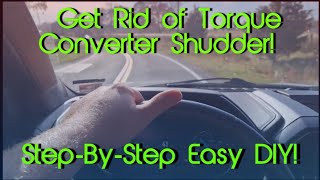
- Shuddering or vibration, especially during light acceleration or when cruising 🎬 Watch: Diagnosing Explorer shudder issues that aren't engine misfires.
- Sluggish performance or lack of power from a stop
- Reduced fuel economy
- Flashing O/D (Overdrive) light, if applicable
- Replacing only the Transmission Control Module (TCM) without diagnosing the underlying sensor or mechanical fault.
- Clearing the P0700 code without reading the specific TCM codes and assuming the problem is fixed because the light went out temporarily.
- Replacing the torque converter for a shudder issue when the root cause is a worn valve body or failing solenoid.
Most Likely Causes
- Faulty Molded Leadframe / Speed Sensor 🔴 High Probability The leadframe, which contains the input (TSS) and output (OSS) speed sensors, is a notorious failure point on Ford's 6-speed automatic transmissions (6F35/6F50/6R80). Ford issued Customer Satisfaction Program 19N01 for the similar 6R80 transmission, extending the warranty to 10 years/150,000 miles due to OSS sensor failure. A sensor failure provides incorrect data to the TCM, causing erratic shifting, limp mode, or sudden downshifts.
How to confirm: Scan the TCM for codes like P0720 (Output Speed Sensor Circuit), P0722 (Output Speed Sensor Circuit No Signal), or P0731 (Gear 1 Incorrect Ratio). The presence of these codes alongside P0700 strongly indicates a leadframe failure.
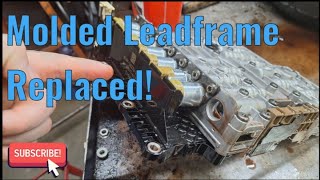
Typical fix: Replacement of the molded leadframe assembly inside the transmission. This is a complex job that requires removing the valve body. 🎬 See this walkthrough on replacing a faulty molded leadframe.
Est. part cost: $150-$300 - Failing Torque Converter 🔴 High Probability → Shop Automatic Transmission Torque Converter Ford issued Customer Satisfaction Program 20N07 for 2016-2019 Explorers with the 2.3L engine and 6F35 transmission, extending the warranty on the torque converter. The program was initiated to address complaints of shudder, vibration, and poor performance. The failure is often due to the torque converter clutch (TCC) failing to lock up properly or deteriorating.
How to confirm: A mechanic can monitor torque converter slip speed and lock-up behavior with a diagnostic scan tool. A common secondary code is P0741 (Torque Converter Clutch Circuit Performance or Stuck Off). Symptoms often include a noticeable shudder during light acceleration.
Typical fix: Replacement of the torque converter. This is a major repair that requires removing the transmission. Per CSP 20N07, the dealer should also inspect internal transmission components for damage from the failure.
Est. part cost: $400-$800 - Failing Shift Solenoid or Valve Body 🟡 Medium Probability → Shop Transmission Valve Body The valve body is the hydraulic brain of the transmission. Wear in the solenoid bores or failure of the solenoids themselves can cause pressure losses, leading to poor shift quality. It's a known wear item on the 6F35/6F50 transmissions.
How to confirm: Specific transmission codes (e.g., P0750-P0774 for solenoids) will be stored along with P0700. A mechanic can test solenoid resistance and valve body operation. Sometimes the entire valve body assembly must be replaced.
Typical fix: Replace the faulty solenoid or the entire valve body assembly.
Est. part cost: $200-$900 - Low or Degraded Transmission Fluid 🟡 Medium Probability → Shop Transmission Assembly
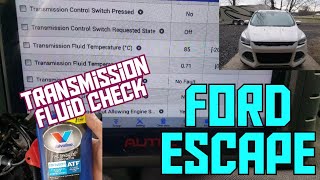
How to confirm: Check the transmission fluid level and condition via the check plug. The 6F series transmissions are 'sealed' and do not have a traditional dipstick, requiring a specific procedure at a certain temperature to check the level. 🎬 Watch: How to check and fill fluid on 6F35 transmissions. The fluid should be bright red and not smell burnt.
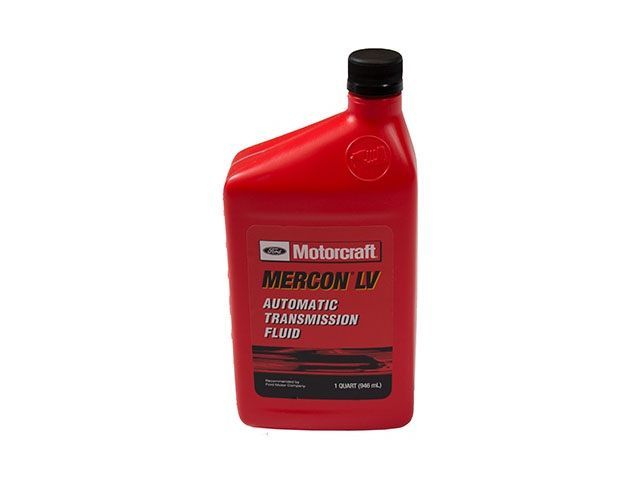
Typical fix: Perform a transmission fluid drain-and-fill or a full fluid exchange. Use only the specified fluid, which is Motorcraft MERCON LV.
Est. part cost: $80-$200
Rare But Worth Checking
- Faulty Transmission Control Module (TCM): → Shop Transmission Assembly While possible, control module failure is less common than mechanical or sensor failures. The TCM is often integrated with the valve body on these models. This should only be considered after all other possibilities, such as wiring, sensors, and mechanical components, have been thoroughly ruled out.
- Wiring Harness Damage: Damage to the wiring harness leading to or inside the transmission can cause short circuits or open circuits, leading to various transmission codes. This can be caused by heat, chafing, or corrosion. A visual inspection is the first step in diagnosis.
Diagnosis Steps
- Connect an OBD-II scanner capable of reading transmission codes to the vehicle's diagnostic port.
- Record the P0700 code and, more importantly, all other specific codes stored in the Transmission Control Module (TCM).
- Analyze the secondary codes. If P0720, P0722, or P0731 are present, the molded leadframe is the primary suspect. If P0741 is present, the torque converter or its controls are the primary suspect.
- Check the transmission fluid level and condition. This requires the vehicle to be level and the transmission at a specific operating temperature (consult the service manual). Ensure the fluid is bright red and does not have a burnt smell or contain metallic particles.
- Inspect the transmission wiring harness and connectors for any visible damage, corrosion, or loose connections.
- If necessary, perform advanced diagnostics, such as monitoring live data streams (e.g., sensor speeds, solenoid commands, TCC slip RPM) with a high-level scan tool to confirm the failure point.
- Address the root cause identified by the specific TCM codes before clearing any codes.
Parts You'll Likely Need
- Transmission Molded Leadframe Connector (Lead Frame)
(OEM #AL3Z-7G276-D (Verify with VIN, as multiple revisions exist))— This part contains the speed sensors that frequently fail, causing erratic shifting and setting codes like P0720 and P0722. It is a well-known weak point.
Trusted brands: Motorcraft, Dorman
OEM price range: $200-$320
Aftermarket price range: $100-$200 - Torque Converter — A known weak point, especially on 2016-2019 models, causing shudder and performance issues. Failure can contaminate the entire transmission.
Trusted brands: Motorcraft, Transtar, Luk
OEM price range: $500-$800
Aftermarket price range: $300-$600 - Valve Body Assembly
(OEM #BL3Z-7A100-B (Verify with VIN, part number may be superseded))— May be required if shift solenoids fail or if the valve body itself is worn, causing pressure leaks and shift quality issues. Often replaced as a complete unit with solenoids.
Trusted brands: Motorcraft
OEM price range: $700-$1000
Aftermarket price range: N/A - Automatic Transmission Fluid
(OEM #XT-10-QLVC (MERCON LV))— Required for any internal transmission repair and for correcting issues caused by low or degraded fluid.
Related Codes That Often Appear With This One
- P0741 — Indicates 'Torque Converter Clutch Circuit Performance or Stuck Off', pointing directly to a problem with the torque converter or its control solenoid.
- P0720 — Indicates a fault with the Output Speed Sensor (OSS) circuit, which is part of the molded leadframe assembly. This is a key diagnostic code for leadframe failure.
- P0722 — Indicates no signal from the Output Speed Sensor, also pointing to a likely leadframe failure.
- P0731 — Indicates 'Gear 1 Incorrect Ratio', which can be caused by a failing speed sensor providing bad data or internal mechanical slip. This code was also listed as a qualifier for the 19N01 leadframe warranty extension.
Technical Service Bulletins (TSBs) & Recalls
- CSP 20N07: Torque Converter Extended Warranty Coverage
- CSP 19N01: Molded Leadframe Extended Warranty Coverage (for other models, but relevant)
- TSB 16-0166: Exhaust Odor In Vehicle
Platform-Specific Known Issues
- Customer Satisfaction Program 20N07 was issued for 2016-2019 Explorers (and 2015-2019 Lincoln MKC) with the 2.3L engine to address failing torque converters by extending the warranty for 12 months after a mandatory PCM reflash (Program 20B27) was performed.
- Customer Satisfaction Program 19N01 was issued for other Ford models (like F-150, Expedition) with the similar 6R80 transmission to extend the warranty on the molded leadframe to 10 years/150,000 miles, indicating a known design flaw in the part family. This is highly relevant context for Explorer owners experiencing the same symptoms.
- Owner forums are filled with discussions about sudden downshifts and limp mode caused by the lead frame failure, with many owners expressing frustration that the Explorer was not included in the 19N01 program.
Mechanic-Grade Diagnostic Values
- Resistance of Shift Solenoids A, B, C, D, TCC, and LPC (VFS solenoids) — expected: 4.00 - 5.89 Ohms at 68-86°F (20-30°C). The resistance changes with temperature.. Failure: A reading outside the specified range for the measured temperature indicates a faulty solenoid coil.
- Resistance of Shift Solenoid E (On/Off solenoid) — expected: 19.05 - 27.95 Ohms at 68-86°F (20-30°C). This solenoid has a different specification than the VFS solenoids.. Failure: A reading outside the specified range for the measured temperature points to a failure of the SSE solenoid.
- Continuity check of wiring between transmission connector and PCM connector — expected: < 5.0 Ohms. Failure: Resistance greater than 5.0 Ohms indicates excessive resistance or an open circuit in the harness that needs repair.
- Wiring short-to-ground check — expected: > 10,000 Ohms between the sensor/solenoid pin at the transmission connector and a chassis ground.. Failure: A low resistance reading indicates a short to ground in the wiring harness.
Scan Tool Commands That Help
- FORScan / Ford IDS: Clear Transmission Adaptive Tables — This must be performed after replacing the valve body, lead frame, or the entire transmission to reset the TCM's learned shift pressure and timing values. Failure to do so will result in harsh or erratic shifting with the new parts.
- FORScan / Ford IDS: Transmission Characterization Update — This function is required when replacing the valve body or solenoid body. It programs the unique 13-digit solenoid strategy ID from the new part into the PCM/TCM, ensuring the computer uses the correct calibration for the new solenoids.
- Ford IDS: Reset KAM (Keep Alive Memory) for TCM — This is a more thorough reset than just clearing adaptive tables and is critical for the relearn procedure to be fully effective. Unlike disconnecting the battery, this function specifically targets and clears the non-volatile memory in the TCM.
- Ford IDS: Output State Control (OSC) — Allows a technician to manually command individual solenoids ON or OFF in the service bay to test their electrical circuit and mechanical function without driving the vehicle. This helps isolate a specific faulty solenoid or wiring issue.
Wiring & Ground Locations
- C175T — The main electrical connector at the Powertrain Control Module (PCM).. This is the termination point for all transmission sensor and solenoid wiring. Technicians test for continuity and shorts between this connector and the transmission connector to diagnose harness issues without removing the transmission.
- C168 — The main bulk electrical connector on the transmission case itself.. This is the primary connection point for the internal transmission harness, including the lead frame and solenoids. Checking for corrosion, pushed-out pins, or damage here is a key diagnostic step.
Real Owner Repair Stories
- YouTube Commenter on 'Big Ben's Cars & Cycles' (2013 Ford Explorer) — A persistent transmission shudder that had been present for approximately 3 years.
❌ Tried (didn't work) Taking it to multiple repair shops., Paying for various diagnostic attempts and fixes that did not resolve the shudder.
✅ What actually fixed it The owner added 'Instant Shudder Fixx' additive along with a transmission fluid top-off. The total cost was around $60, and the shudder was completely gone.
Model Year Variations Within This Range
- 2011-2018: The specific 6-speed transmission varies by engine. The 2.0L and 2.3L EcoBoost engines typically use the lighter-duty 6F35 transmission. The naturally aspirated 3.5L V6 without a tow package often uses the 6F50. Explorers with the 3.5L EcoBoost V6 or a tow package are equipped with the heavier-duty 6F55 transmission. While internally different in strength, they share the same basic architecture, control systems, and common failure points like the lead frame and valve body.
- 2011+: Starting around 2011, Ford implemented a solenoid body strategy ID system. This means when a valve body or solenoid pack is replaced, the new part's specific calibration code (found on a sticker) must be programmed into the vehicle's computer using a tool like FORScan or IDS. Earlier transmissions did not require this programming step.
Diagnostic Flowchart
Other Known Issues on This Vehicle
Issues unrelated to this code that are worth knowing about as an owner of this generation:
- Internal Water Pump Failure 🔴 High — Common on the 3.5L and 3.7L Duratec engines. The pump is located inside the engine and driven by the timing chain. Failure can cause coolant to mix with engine oil, leading to catastrophic engine damage if not caught immediately.
- Exhaust Fumes / Carbon Monoxide in Cabin 🔴 High — A widespread and well-documented issue affecting 2011-2017 models, leading to thousands of complaints and an NHTSA investigation. The cause was often attributed to unsealed seams in the rear of the vehicle or cracked exhaust manifolds. (Ref: TSB 16-0166)
- Electronic Power Steering (EPAS) Failure 🔴 High — Common on early 5th-gen models (2011-2013), causing a sudden loss of power steering assist and making the vehicle extremely difficult to steer. Ford issued a recall (14S06) to address the problem. (Ref: Ford Recall 14S06)
- Electronic Throttle Body Malfunction 🟠 Medium — Can cause the vehicle to suddenly lose power and enter 'limp mode', often displaying a wrench light and codes P2111 or P2112. Ford extended the warranty on this component for some models. (Ref: Warranty Extension)
- Rear Suspension Toe Link Fracture 🔴 High — Affects 2011-2017 models and could lead to a loss of steering control. This prompted a recall. (Ref: Ford Recall)
- MyFord Touch / SYNC System Glitches 🟡 Low — Very common across the generation; symptoms include a frozen or black screen, unresponsiveness, and Bluetooth connectivity problems. Often requires a software update or APIM module reset/replacement.
Used vs. New Parts: Buying Guide for This Vehicle
When a used part is the smart pick: A complete used transmission assembly from a reputable salvage yard can be a cost-effective option if the original transmission has suffered catastrophic internal mechanical failure (e.g., broken hard parts, severe contamination from torque converter failure). It is generally not wise to buy individual used electronic components.
Donor-vehicle mileage cap: roughly under 80000 miles for the part to have meaningful remaining life.
What to inspect on the donor part:
- Check the color and smell of the fluid from the donor unit; it should be bright red and not smell burnt.
- Ask for a vehicle history report on the donor car to check for accidents or reported maintenance issues.
- Ensure the salvage yard offers at least a 90-day warranty on the part.
- Visually inspect the transmission case for cracks or damage and the electrical connectors for corrosion or broken pins.
OEM-only on this vehicle (don't cheap out):
- Molded Lead Frame: While aftermarket options exist (like Dorman), the OEM Motorcraft part is highly recommended due to the high labor cost of the repair. A premature failure of a cheaper part will be very expensive in the long run.
- Valve Body / Solenoid Body: Given the requirement to program the solenoid strategy ID, using a new OEM Motorcraft assembly is the safest bet to ensure compatibility and proper function.
Aftermarket brands forum-validated for this vehicle:
- Luk (for Torque Converters)
- Transtar (for Torque Converters and rebuild kits)
Brands owners have reported issues with on this vehicle:
- Unbranded, no-name electronic parts like lead frames or solenoids from online marketplaces are a significant gamble and should be avoided.
Real Owner Stories
Aggregated from forums and TSBs cited above. Mileages and costs reflect what owners reported in those sources.
2017 Ford Explorer — 55000 miles
Symptoms: Transmission failure symptoms leading to diagnostic codes.
What fixed it: Replacement of the transmission components as discussed in owner forums regarding early failure.
Source hint: explorerforum.com thread titled '2017-explorer-transmission-failure-at-55k-miles'
2016-2019 Ford Explorer 2.3L — ~100000 miles
Symptoms: Shudder, vibration, and poor performance during light acceleration or when cruising.
What fixed it: Replacement of the torque converter and inspection of internal transmission components for damage.
Source hint: CSP 20N07: Torque Converter Extended Warranty Coverage
2011-2018 Ford Explorer — ~150000 miles
Symptoms: Sudden downshifts and limp mode caused by lead frame failure; owner frustration over lack of recall coverage compared to F-150.
What fixed it: Replacement of the molded leadframe assembly inside the transmission (requires valve body removal).
Source hint: Reddit r/f150 discussion on 19N01 and Explorer owner forum discussions
Related OBD-II Codes
Frequently Asked Questions
Is my 2016 Ford Explorer 2.3L covered for torque converter issues related to P0700?
Does the leadframe warranty extension (19N01) apply to the Ford Explorer?
What transmission fluid should I use for my 2011-2018 Explorer to avoid shifting issues?
Can a bad speed sensor cause my Explorer to suddenly downshift to 1st gear?
My Explorer has a P0700 and a shudder during light acceleration; what is the likely cause?
Helpful Videos
![Change Transmission Fluid on Ford Escape, Fusion, and Edge [OEM process to check level]](https://img.youtube.com/vi/uqeqjceKtU0/mqdefault.jpg)
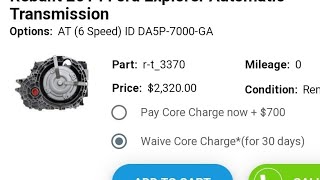
We Have This Part in Stock




The information in this article is provided for general reference and educational purposes only. Vehicle specifications, procedures, and part compatibility can vary by production date, trim level, and region. Always consult your vehicle's factory service manual and verify part numbers before purchasing or performing repairs. Safety-critical components such as airbags, seat belts, and braking systems should be installed by a qualified professional.
- Ford Explorer:
- 🧭 Diagnostic Flowchart
- 🎬 Helpful Videos
- 🛍️ Shop This Part
- What's Unique About the 2011-2018 Ford Explorer
- Symptoms You May Notice
- Most Likely Causes
- Rare But Worth Checking
- Diagnosis Steps
- Parts You'll Likely Need
- Related Codes That Often Appear With This One
- Technical Service Bulletins (TSBs) & Recalls
- Platform-Specific Known Issues
- Mechanic-Grade Diagnostic Values
- Scan Tool Commands That Help
- Wiring & Ground Locations
- Real Owner Repair Stories
- Model Year Variations Within This Range
- Other Known Issues on This Vehicle
- Used vs. New Parts: Buying Guide for This Vehicle
- Real Owner Stories
- 2017 Ford Explorer — 55000 miles
- 2016-2019 Ford Explorer 2.3L — ~100000 miles
- 2011-2018 Ford Explorer — ~150000 miles
- Related OBD-II Codes
- Frequently Asked Questions
- 🎟️ Get 5% Off