

P0700 on 2011-2014 Hyundai Sonata: Transmission Fault Causes and Fixes
P0700 is a general transmission fault code. On the 2011-2014 Sonata, it's most often triggered by a failed internal Transmission Fluid Temperature Sensor. This sensor is integrated into the transmission's internal wiring harness, which must be replaced as a unit. The repair costs approximately $600-$1200 and is a known pattern failure for this vehicle and its platform mates.
- P0700 is a general alert; the specific code is stored in the Transmission Control Module (TCM) and requires an advanced scanner to read.
- The most likely cause on a 2011-2014 Sonata is a failed internal transmission wiring harness, which contains the temperature sensor (Part No. 46307-3B650).
- This repair is complex (DIY Difficulty 5/5) and requires removing the transmission valve body.
- Do not drive the vehicle extensively with these symptoms, as the resulting harsh shifting can cause permanent transmission damage.
- Always check for the more specific transmission codes (like P0711, P0712, P0713) before buying any parts.
What's Unique About the 2011-2014 Hyundai Sonata
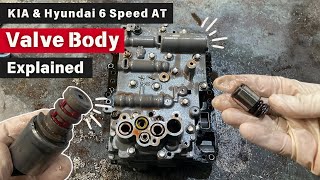
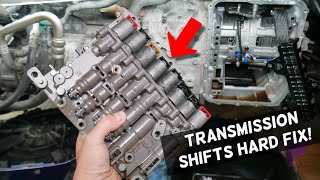
The 2011-2014 Sonata (YF generation) with the A6MF1 6-speed automatic transmission is highly susceptible to a specific failure that triggers P0700. The Transmission Fluid Temperature (TFT) sensor is integrated into the main internal wiring harness. This harness is a well-documented weak point that frequently fails, causing erratic temperature readings, harsh shifting, and triggering specific TCM codes like P0711, P0712, or P0713. 🎬 Watch this step-by-step guide on fixing the P0711 sensor code. The ECM then logs the general P0700 code in response. Hyundai acknowledged this by integrating the sensor into the harness from March 2013 onward to prevent connection issues.
Symptoms You May Notice
- Check Engine Light is on
- Harsh, slamming, or delayed shifts
- Vehicle enters 'limp mode' (often stuck in 3rd gear)
- Sluggish acceleration, especially from a stop
- Inability to shift out of Park
- Incorrect or blank gear indicator (PRNDL) on the dashboard
- Transmission may feel like it's slipping
- Replacing the entire transmission without first diagnosing the specific internal or external electronic fault.
- Replacing the Transmission Control Module (TCM) when the issue is a much cheaper sensor or wiring harness. TCM failure is very uncommon compared to the harness failure.
- Replacing individual shift solenoids when the root cause is the internal wiring harness providing faulty signals.
Most Likely Causes
- Failed Internal Transmission Wiring Harness / Temperature Sensor 🔴 High Probability → Shop Transmission Assembly This is a well-documented pattern failure on the YF Sonata's A6MF1 6-speed automatic transmission. Hyundai issued Technical Service Bulletin (TSB) 14-AT-010, which explicitly details the diagnostic and replacement procedure for this exact issue across multiple models.
How to confirm: Scan the Transmission Control Module (TCM) for codes P0711, P0712, or P0713. Using a scan tool's live data, monitor the transmission fluid temperature (TFT). With the engine cold, the TFT reading should be very close to the Engine Coolant Temperature (ECT) and ambient air temp. If the TFT reading is stuck at a default high or low value (like -40°F or 280°F) or does not change as the car warms up, the sensor/harness has failed.
Typical fix: Replace the internal transmission wiring harness (OEM P/N 46307-3B650). This requires draining the fluid, dropping the transmission oil pan, and removing the valve body to access and replace the harness. The fluid should be refilled with ~5-6 quarts of Hyundai/Kia SP-IV or a compatible equivalent.
Est. part cost: $150-$250 - Failed Transmission Range Sensor (Inhibitor Switch) 🟡 Medium Probability → Shop Transmission Assembly This external switch is exposed to the elements and can fail, causing communication errors between the shifter and the TCM. It's a common failure point across many Hyundai models. A manufacturer report for a related model, NHTSA ODI #10143151, notes that a failed transmission range switch can trigger a P0700 code due to a short in the switch.
How to confirm: Symptoms include the car not starting, the gear indicator (PRNDL) on the dash being blank or incorrect, or the ability to start the car in a gear other than Park or Neutral. Wiggling the shifter while trying to start the car may temporarily make a connection. Specific TCM codes like P0705, P0706, P0707, or P0708 will likely be present.
Typical fix: Replace the transmission range sensor. The typical part number is 42700-26000, which may be superseded by 42700-26700. 🎬 See how to test and replace the inhibitor switch yourself. It is mounted on the outside of the transmission case where the shift linkage attaches.
Est. part cost: $50-$100 - Low or Dirty Transmission Fluid ⚪ Low Probability → Shop Transmission Assembly
How to confirm: These transmissions do not have a dipstick. The fluid level must be checked via a fill plug on the side of the transmission case while the vehicle is level and the fluid is at a specific operating temperature (typically 122-140°F / 50-60°C). Fluid should be bright red and not smell burnt. Low or degraded fluid can cause a variety of shifting problems and trigger a P0700.
Typical fix: Perform a transmission fluid drain and fill using the correct fluid (Hyundai/Kia SP-IV or a compatible equivalent). A full flush is not typically recommended by the manufacturer.
Est. part cost: $80-$150
Rare But Worth Checking
- Damaged External Wiring or Connectors: Rodents can chew wires, or connectors can become corroded or damaged, leading to communication faults between the TCM and various sensors. Always perform a visual inspection of the harness leading to the transmission before condemning internal parts.
- Failing Shift Solenoids: → Shop Transmission Valve Body While less common than the harness failure, an individual shift solenoid can fail electrically or become stuck due to contaminated fluid. This will typically set a specific solenoid code (e.g., P0750-P0770) along with P0700.
- Failing Transmission Control Module (TCM): → Shop Transmission Assembly TCM failure is rare. It should only be considered after all other possibilities (sensors, wiring, solenoids, fluid) have been exhaustively ruled out. A P0700 code appearing with no other transmission-specific codes could, in rare cases, point to a faulty TCM.
Diagnosis Steps
- Connect a scan tool capable of reading codes from the Transmission Control Module (TCM), not just the ECM.
- Record all codes stored in both the ECM (which will show P0700) and the TCM (e.g., P0711, P0713, P0705).
- If TFT sensor codes (P0711, P0712, P0713) are present, use the scan tool's live data to monitor the transmission fluid temperature (TFT). Compare it to the Engine Coolant Temperature (ECT) when the car is cold. They should be nearly identical. A fixed, irrational value (like -40°F) confirms a failed sensor/harness.
- If range sensor codes (P0705-P0708) are present, use live data to monitor the PRNDL input as you move the shifter. If the display doesn't match the shifter position, the sensor is faulty.
- If other codes are present, follow the specific diagnostic procedure for that code (e.g., range sensor, shift solenoid).
- Inspect the transmission's main external wiring harness and connectors for any visible damage, corrosion, or loose connections.
- Check the transmission fluid level and condition. This must be done with the vehicle level, at a specific operating temperature (122-140°F), via the fill plug, as there is no dipstick.
- If the internal harness/sensor is confirmed as the fault, proceed with its replacement as detailed in TSB 14-AT-010.
Parts You'll Likely Need
- Internal Transmission Wiring Harness
(OEM #46307-3B650)— This is the most common failure point. It contains the integrated transmission fluid temperature sensor that fails. This part number supersedes older versions like 46307-3B620 and 46307-3B610.
Trusted brands: Hyundai (Genuine OEM)
OEM price range: $140-$250
Aftermarket price range: $100-$180 - Transmission Range Sensor / Inhibitor Switch
(OEM #42700-26000 (may be superseded by 42700-26700))— A common secondary cause for shifting, starting, and gear indication issues related to the transmission.
Trusted brands: Hyundai (Genuine OEM), Standard Motor Products, Dorman
OEM price range: $70-$120
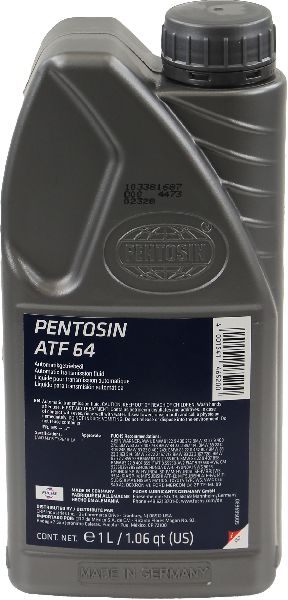
Aftermarket price range: $40-$80 - Automatic Transmission Fluid (SP-IV or SP4-M) — Required when replacing the internal harness or servicing the transmission. Approximately 5-6 quarts are needed for a pan drop and harness replacement.
Trusted brands: Hyundai/Kia (Genuine), Idemitsu TLS-LV, Valvoline MaxLife LV
OEM price range: $18-$25/quart
Aftermarket price range: $10-$15/quart
Related Codes That Often Appear With This One
- P0711 — This code for 'Transmission Fluid Temperature Sensor Rationality' directly points to the most common cause: the failing sensor within the internal harness.
- P0712 — This code for 'Transmission Fluid Temperature Sensor Circuit Low' indicates a short in the sensor circuit, caused by the same faulty internal harness.
- P0713 — This code for 'Transmission Fluid Temperature Sensor Circuit High' indicates an open circuit, also caused by the failing internal harness.
- P0705 - P0708 — These codes point to a failure of the Transmission Range Sensor (Inhibitor Switch) circuit, the second most likely cause of P0700 on this vehicle.
Technical Service Bulletins (TSBs) & Recalls
- 14-AT-010: Addresses the procedure to replace the internal transmission wiring harness (which includes the integrated temperature sensor) for DTCs P0711, P0712, and P0713. Confirms the sensor is not available as a separate part for later models.
- 17-AT-005: Provides diagnostic procedures for DTCs related to the inhibitor switch (P0705-P0708), a secondary cause for P0700.
Platform-Specific Known Issues
- Real-World Repair Story: P0700 & P0713: A user on a Hyundai forum with a 2011 Sonata experienced harsh shifting and codes P0700 and P0713. A local transmis
Mechanic-Grade Diagnostic Values
- Transmission Fluid Temperature (TFT) Sensor Resistance — expected: ~2.51 kΩ at 68°F (20°C). Failure: An open circuit (infinite resistance) or short circuit (near-zero resistance), or a value that doesn't change as fluid temperature changes. A high reading corresponds to a P0713, a low reading to a P0712.
- Variable Force Solenoid (VFS) Resistance — expected: 5.1 Ω. Failure: A reading significantly higher or lower than the specification indicates a failed solenoid coil.
- On/Off Shift Solenoid Resistance (SSA, SSB) — expected: 10-11 Ω. Failure: A reading outside this range suggests the solenoid's internal coil is compromised.
Scan Tool Commands That Help
- Hyundai GDS (Global Diagnostic System): Current Data > Oil Temperature Sensor — Used to monitor the live data stream from the TFT sensor to check for rationality. A reading that is fixed (e.g., -40°F) or does not increase as the vehicle warms up confirms a sensor/circuit fault.
- Hyundai GDS (Global Diagnostic System): Software Management > Resetting Auto Transmission Adaptive Values — This function should be performed after replacing the transmission, valve body, internal harness, or solenoids to clear the old learned shift parameters and force the TCM to relearn shift points with the new components.
- Hyundai GDS (Global Diagnostic System): Flight Record — For intermittent faults, this function allows the technician to record vehicle data during a test drive. When the fault occurs, the technician can press a trigger to save the data from the preceding minutes, capturing the sensor readings at the exact moment of the failure.
Wiring & Ground Locations
- Main Chassis Ground Strap — On the driver's side frame rail in the engine compartment.. On early 2011 Sonatas, there was a known issue where the main ground strap was bolted to a painted surface, causing poor grounding for the entire electrical system. This can lead to numerous intermittent and difficult-to-diagnose electronic faults, including TCM communication issues. The factory-suggested repair was to drill out the 6mm bolt hole, tap it for a larger 8mm bolt, and use a star washer to ensure metal-to-metal contact.
- Inhibitor Switch Connector — On top of the transmission case, located underneath the battery and battery tray.. This is the primary connection point for the transmission range sensor. It is exposed to the elements and road debris, making it a common point for corrosion or wiring damage that can trigger P0705-P0708 codes, which in turn set a P0700.
- Rear Combination Lamp Ground — In the rear of the vehicle, associated with the tail light assembly wiring.. Hyundai TSB 17-AT-005, which addresses range sensor codes, specifically instructs technicians to check this ground for tightness. A poor ground here can introduce electrical noise into the vehicle's wiring that can interfere with TCM operation and cause erroneous faults.
Real Owner Repair Stories
- Reddit user in r/MechanicAdvice (2012 Hyundai Sonata, 70k miles) — Check Engine Light came on with code P0713 immediately after driving the car for the first time using the 'sport' manual shift mode.
✅ What actually fixed it The Check Engine Light went off by itself later the same day. This suggests that the unusual shifting patterns and potentially higher fluid temperatures generated during manual mode operation triggered a temporary 'rationality' fault (P0711 or P0713) that the system cleared after returning to normal operation. While not a permanent failure, it indicates the system is sensitive.
OEM Part Supersession History
46307-3B610, 46307-3B620→46307-3B650— Updated design to improve durability and resolve the common temperature sensor failure.42700-3B000→42700-3B010— Revision for the Transmission Range Sensor (Inhibitor Switch) for the YF generation Sonata.
Heads up: This part is specific to the 2011-2014 (YF) Sonata. Do not use part number 42700-26700, as that is for the 2015+ (LF) generation, even though it may look similar.
Model Year Variations Within This Range
- 2011 - Early 2013: Vehicles built before March 2013 may have had a separate TFT sensor and internal harness. However, the replacement part specified in TSB 14-AT-010 is the integrated harness (46307-3B650) for all repairs.
- 2014: The 2014 model year received a minor cosmetic facelift (revised grille, taillights) and some feature shuffling, like available blind-spot monitoring. However, the core powertrain (2.4L GDI / 2.0T engines and A6MF1 transmission) and its associated common faults, including the P0700/P071x harness failure, remained the same as the 2011-2013 models.
Diagnostic Flowchart
Other Known Issues on This Vehicle
Issues unrelated to this code that are worth knowing about as an owner of this generation:
- Catastrophic Theta II GDI Engine Failure 🔴 High — Extremely widespread across 2.0L and 2.4L GDI engines. Manufacturing debris can block oil passages, leading to connecting rod bearing failure, engine seizure, and potential fires. Onset can be as early as 60,000 miles. (Ref: Multiple recalls (e.g., NHTSA #15V568, #17V226) and a major class-action lawsuit settlement (In re: Hyundai and Kia Engine Litigation) resulted in extended lifetime warranties for the engine short block for affected vehicles that received a Knock Sensor Detection System (KSDS) software update.)
- Worn Steering Coupler Causing Clicking/Clunking Noise 🟠 Medium — Very common. The small, star-shaped rubber coupler (p/n 56315-2K000-FFF) in the electronic power steering motor disintegrates over time, causing a noticeable clicking or clunking sound when turning the wheel at low speeds. (Ref: While not a safety recall for this specific part, it's a well-known service issue. The repair involves lowering the steering column to replace the inexpensive coupler, but labor can be significant.)
- Transmission Shift Cable Detachment 🔴 High → Shop Transmission Assembly — Common enough to trigger a safety recall. The cable can detach from the shift lever pin, causing the displayed gear to not match the actual gear selected. This can lead to a rollaway risk if the vehicle is not actually in Park. (Ref: NHTSA Recall #14V351000.)
- Front Seat Belt Linkage Detachment 🔴 High — Affected a large number of vehicles, leading to a recall. The linkage for the front seat belts could detach from the anchor pretensioners, increasing the risk of injury in a crash. (Ref: NHTSA Recall #17V152000.)
Used vs. New Parts: Buying Guide for This Vehicle
When a used part is the smart pick: For this repair, a used Transmission Range Sensor (Inhibitor Switch) from a reputable salvage yard is a reasonable cost-saving measure. A complete, low-mileage used transmission assembly can also be a cost-effective alternative to a full rebuild if the price is significantly lower than the repair cost.
Donor-vehicle mileage cap: roughly under 100000 miles for the part to have meaningful remaining life.
What to inspect on the donor part:
- For a complete transmission, ask to see the fluid. It should be reddish and not smell burnt.
- Inspect the donor vehicle's VIN to ensure it's from a 2011-2014 Sonata with the same engine (2.4L or 2.0T).
- Check all external connectors on the part for cracks, bent pins, or corrosion before purchasing.
OEM-only on this vehicle (don't cheap out):
- Internal Transmission Wiring Harness (P/N 46307-3B650): The labor to access this part is extensive. The risk of an aftermarket part failing prematurely far outweighs the small cost savings. Always use a Genuine Hyundai part for the harness.
Aftermarket brands forum-validated for this vehicle:
- Transmission Fluid: Valvoline MaxLife LV, Idemitsu TLS-LV (Ensure it explicitly lists Hyundai/Kia SP-IV or SP4-M compatibility).
- Transmission Range Sensor: Standard Motor Products (SMP), Dorman.
Brands owners have reported issues with on this vehicle:
- Avoid unbranded or 'white-box' internal wiring harnesses from online marketplaces. The quality control is unknown, and failure can lead to repeating a very expensive repair.
Real Owner Stories
Aggregated from forums and TSBs cited above. Mileages and costs reflect what owners reported in those sources.
2011 Hyundai Sonata
Symptoms: Harsh shifting and codes P0700 and P0713.
What fixed it: Replacement of the internal transmission wiring harness.
Source hint: Real-World Repair Story: P0700 & P0713
2011-2014 Hyundai Sonata
Symptoms: P0711/P0713 and P0700 codes; harsh shifting.
What fixed it: Internal wiring harness replacement (P/N 46307-3B650).
Cost: $600-$1,100
Source hint: hyundai-forums.com
Hyundai Sonata
Symptoms: Classic limp mode symptoms where the vehicle feels stuck in gear.
What fixed it: Checking for specific TCM codes first to identify the root cause behind the general P0700 alert.
Source hint: Reddit (r/autorepair)
Hyundai Owner Report
Symptoms: A scan for codes revealed P0700 and P0722, with a noted failure of the transmission range switch and pulse generators.
What fixed it: The dealer invoice noted a short in the transmission range switch as a primary cause.
Source hint: NHTSA ODI #10143151
Related OBD-II Codes
Frequently Asked Questions
My 2011 Sonata is stuck in 3rd gear and won't shift. Is there a specific TSB for this?
The gear indicator on my dashboard is blank and I can't shift out of Park. What is the likely cause?
I have a P0700 code but no dipstick to check my fluid. How do I check the level?
Can I just replace the transmission temperature sensor by itself?
My Sonata has a P0700 and P0713. Is this related to the Theta II engine recalls?
What kind of transmission fluid should I use for my 2011-2014 Sonata?
Helpful Videos

We Have This Part in Stock



The information in this article is provided for general reference and educational purposes only. Vehicle specifications, procedures, and part compatibility can vary by production date, trim level, and region. Always consult your vehicle's factory service manual and verify part numbers before purchasing or performing repairs. Safety-critical components such as airbags, seat belts, and braking systems should be installed by a qualified professional.
- Hyundai Sonata:
- 🧭 Diagnostic Flowchart
- 🎬 Helpful Videos
- 🛍️ Shop This Part
- What's Unique About the 2011-2014 Hyundai Sonata
- Symptoms You May Notice
- Most Likely Causes
- Rare But Worth Checking
- Diagnosis Steps
- Parts You'll Likely Need
- Related Codes That Often Appear With This One
- Technical Service Bulletins (TSBs) & Recalls
- Platform-Specific Known Issues
- Mechanic-Grade Diagnostic Values
- Scan Tool Commands That Help
- Wiring & Ground Locations
- Real Owner Repair Stories
- OEM Part Supersession History
- Model Year Variations Within This Range
- Other Known Issues on This Vehicle
- Used vs. New Parts: Buying Guide for This Vehicle
- Real Owner Stories
- 2011 Hyundai Sonata
- 2011-2014 Hyundai Sonata
- Hyundai Sonata
- Hyundai Owner Report
- Related OBD-II Codes
- Frequently Asked Questions
- 🎟️ Get 5% Off