

P0700 on 2006-2011 Kia Rio: Transmission Control System Malfunction Causes and Fixes
P0700 on a 2006-2011 Kia Rio means the transmission control module (TCM) has detected a fault. This code is a general alert and will be accompanied by other, more specific transmission codes. The most common underlying issues are faulty input/output speed sensors or a bad transmission range sensor, which are relatively inexpensive parts to replace. An erratic speedometer is a strong indicator of a failing output speed sensor.
- P0700 is a general code; you must scan the Transmission Control Module (TCM) for the specific, underlying fault code.
- Do not drive the vehicle, as you risk causing severe transmission damage and could be left stranded.
- The most likely causes on a 2006-2011 Rio are faulty input/output speed sensors or a bad transmission range sensor.
- An erratic speedometer is a very strong clue that the output speed sensor has failed.
What's Unique About the 2006-2011 Kia Rio
For the second-generation (JB) Kia Rio, the four-speed automatic transmission (model A4CF1/A4CF2) is a relatively straightforward hydraulic/electronic system. Unlike more modern complex transmissions, the common failure points leading to a P0700 code are often external sensors that are accessible and affordable to replace. Owners frequently report issues with the input/output speed sensors and the transmission range sensor (inhibitor switch) as the primary culprits for transmission-related codes on this platform. These sensors are known weak points and often the first components to check.
Symptoms You May Notice
- Check Engine Light is on
- Harsh or erratic shifting
- Vehicle stuck in one gear (limp mode)
- Delayed engagement when shifting into Drive or Reverse
- Hesitation or stalling during acceleration
- Decreased fuel economy
- Erratic speedometer behavior (specifically points to output speed sensor)
- Transmission slipping between gears
- Replacing the Transmission Control Module (TCM) first. The TCM is rarely the root cause of the problem; it is usually just reporting a fault from a sensor or other component.
- Assuming an engine misfire. Poor shifting can sometimes feel like an engine problem. Always scan for transmission-specific codes when P0700 is present.
- Replacing the transmission without proper diagnosis. Many shops may recommend a full transmission replacement when a simple, inexpensive external sensor is the actual culprit.
Most Likely Causes
- Faulty Input or Output Speed Sensor 🔴 High Probability These sensors are a very common failure point on this Kia/Hyundai platform. They are exposed to heat and vibration, leading to eventual failure of their internal electronics.
How to confirm: Scan the TCM for codes like P0717 (Input Speed Sensor Circuit No Signal) or P0722 (Output Speed Sensor Circuit No Signal). An erratic or dead speedometer almost always points specifically to a faulty output speed sensor. The sensor can be tested for resistance.
Typical fix: Replace the faulty sensor. They are mounted externally on the transmission case. The input and output sensors are often identical parts and can be replaced with basic hand tools. They are held in by a single 10mm bolt.
Est. part cost: $20-$60 - Faulty Transmission Range Sensor (Inhibitor Switch) 🟡 Medium Probability → Shop Transmission Assembly This switch communicates the gear selector's position (P, R, N, D) to the TCM. It is exposed to the elements on top of the transmission and can fail electrically or from moisture intrusion, causing confusion for the transmission computer.
How to confirm: Scan the TCM for codes like P0705 or P0706. Symptoms may include the gear indicator on the dash not matching the actual gear, or the vehicle not starting because it doesn't recognize it's in Park or Neutral. You can test the sensor with a multimeter for correct resistance across the pins for each gear position.
Typical fix: Replace the transmission range sensor. It is located on the top of the transmission where the shift linkage connects. It may require removing the battery and battery tray for access.
Est. part cost: $30-$80 - Low or Dirty Transmission Fluid 🟡 Medium Probability → Shop Transmission Assembly
How to confirm: Check the transmission fluid dipstick for level and condition with the engine warm and running in Park. The fluid should be bright red and not smell burnt. Low fluid can cause pressure issues, while dirty/burnt fluid with metal flakes indicates internal wear and can clog solenoids and passages.
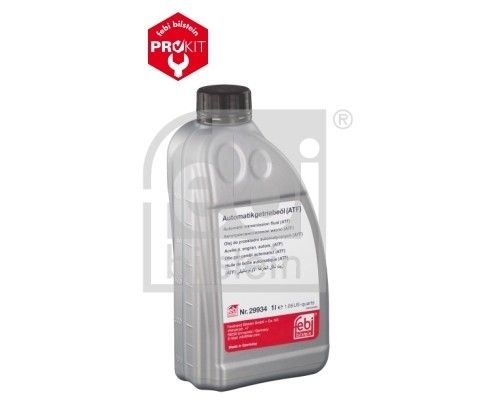
Typical fix: If low, top off with the correct type of fluid (Hyundai/Kia SP-III). If dirty, perform a transmission fluid and filter change. Be cautious with high-mileage vehicles that have never had a fluid change, as a full flush can sometimes dislodge debris and cause new problems.
Est. part cost: $50-$150 for fluid and filter - Faulty Shift Solenoid ⚪ Low Probability → Shop Transmission Valve Body
How to confirm: Scan the TCM for specific solenoid codes (e.g., P0750-P0774). This usually requires dropping the transmission oil pan to access and test the solenoids' resistance with a multimeter.
Typical fix: Replace the specific solenoid or the entire solenoid pack. This is often done as part of a transmission service that includes a new filter and fluid.
Est. part cost: $40-$100 for a single solenoid
Rare But Worth Checking
- Damaged Wiring Harness: Check the wiring and connectors going to the transmission sensors and the TCM for any signs of corrosion, chafing, or breaks. Rodent damage is also a possibility. A poor ground connection for the TCM can also cause erratic behavior. This can cause intermittent issues that are hard to track.
- Faulty Transmission Control Module (TCM): → Shop Transmission Assembly TCM failure is rare but possible. This should only be considered after all other possibilities, including sensors, solenoids, and wiring, have been thoroughly ruled out. Sometimes disconnecting the battery for 15 minutes can reset a glitching module, but if the code returns immediately with no other codes present, the TCM may be at fault.
Diagnosis Steps
- Check the transmission fluid level and condition. Ensure it is full and the fluid is clean and red.
- Use an OBD-II scanner capable of reading transmission codes to retrieve the specific fault codes from the TCM. The P0700 code is just a general alert.
- Write down all codes found in the TCM. These codes will point to the specific circuit or component that has failed (e.g., output speed sensor, range sensor).
- If an output speed sensor code (P0720, P0722) is present, pay close attention to the speedometer. If it is behaving erratically or is dead, the output speed sensor is the most likely cause.
- Based on the specific codes, inspect the wiring and connectors for the implicated sensor or solenoid. Look for damage, corrosion, or loose connections.
- Test the component identified by the code. For example, a speed sensor can be tested for resistance with a multimeter.
- If a range sensor code (P0705) is present, check for alignment and test the switch's output in each gear position.
- If no specific component codes are found, or if wiring is suspect, perform a thorough inspection of the main transmission harness for damage or bad grounds.
- After any repair, clear the codes from both the ECM and TCM and perform a test drive to ensure the problem is resolved.
Parts You'll Likely Need
- Output Speed Sensor
(OEM #46517-23001)— A very common failure that causes P0700, often accompanied by P0722 and an erratic speedometer. Note: The input and output sensors are often the same part number.
Trusted brands: Standard Motor Products, Delphi, Beck/Arnley, Kia Genuine
OEM price range: $50-$90
Aftermarket price range: $20-$50 - Input Speed Sensor
(OEM #46517-23001)— Another common sensor failure that will trigger a TCM fault, often with code P0717. Note: The input and output sensors are often the same part number.
Trusted brands: Standard Motor Products, Delphi, Mando, Kia Genuine
OEM price range: $50-$90
Aftermarket price range: $20-$50 - Transmission Range Sensor (Inhibitor Switch)
(OEM #42700-26500 or 42700-26700)— This switch tells the TCM which gear is selected. Failure leads to shifting problems, no-start issues, and code P0705.
Trusted brands: Standard Motor Products, Kia Genuine
OEM price range: $70-$120
Aftermarket price range: $30-$80
Related Codes That Often Appear With This One
- P0705 — Indicates a fault in the Transmission Range Sensor circuit.
- P0717 — Indicates a fault with the Input/Turbine Speed Sensor circuit (No Signal).
- P0722 — Indicates a fault with the Output Speed Sensor circuit (No Signal).
- P0734 — Indicates an incorrect gear ratio for 4th gear, which can be triggered by slipping clutches or faulty speed sensor readings.
- P0750 - P0774 — These codes point to specific issues with the various shift solenoids in the transmission.
Technical Service Bulletins (TSBs) & Recalls
- No specific TSBs directly addressing P0700 on this model were found. However, general transmission and sensor-related TSBs for similar Kia models exist, indicating a known area of concern for the manufacturer.
Platform-Specific Known Issues
- On the Kia Rio JB, the input and output speed sensors are located on the top/front of the transmission housing, making them relatively easy to access after removing the air intake box. They are each held in by a single 10mm bolt.
- Accessing the Transmission Range Sensor (Inhibitor Switch) requires removing the battery and battery tray to get to its location on top of the transmission where the shift linkage connects.
Mechanic-Grade Diagnostic Values
- Input and Output Speed Sensor Resistance — expected: 215 - 275 Ohms (at 20°C / 68°F). Failure: A reading outside this range indicates a faulty sensor.
- Shift Control Solenoid ('A', 'B', 'C') Resistance — expected: 22.3 ± 1.5 Ohms (at 20°C / 68°F). Failure: Resistance outside this specification suggests a failed solenoid coil.
- Pressure Control Solenoid (PCSV) Resistance — expected: 2.7 - 3.4 Ohms (at 20°C / 68°F). Failure: An out-of-spec reading points to a faulty pressure control solenoid.
- Torque Converter Clutch Lock-Up Solenoid Resistance — expected: 2.7 - 3.4 Ohms (at 20°C / 68°F). Failure: Resistance outside this range indicates a problem with the lock-up solenoid.
Scan Tool Commands That Help
- Advanced Scan Tool (e.g., GDS): Transmission Live Data > Shift Lever Switch — When diagnosing a potential P0705 code, this function allows you to see in real-time what gear position the TCM is reading as you move the shifter. If the display doesn't match the shifter's actual position (e.g., it shows 'Neutral' when in 'Drive'), it confirms a fault with the range sensor or its adjustment.
Wiring & Ground Locations
- Transmission Wiring Harness — Connects to all external sensors (speed sensors, range sensor) and runs to the TCM. A significant portion is on top of and around the transmission case.. Wiring for solenoids in transmissions built before 2007 was a known issue, sometimes being the cause of failure rather than the solenoids themselves. The harness is also susceptible to heat and vibration, which can cause insulation to break down or connectors to become loose, leading to intermittent sensor signals and triggering P0700.
- TCM Ground — Typically located in the engine bay, with a ground wire connecting the TCM body or its harness to the chassis or engine block.. A poor or corroded ground connection for the TCM can cause a host of unpredictable electronic issues, including false sensor readings and communication errors that can log a P0700 code. Ensuring the TCM has a clean, stable ground is a critical step if sensor tests are inconclusive.
Real Owner Repair Stories
- Reddit user in r/MechanicAdvice (2005 Kia Rio (overlaps with 2006 model year)) — P0700 code kept returning. Speedometer would jump rapidly within a 5-10 MPH range while driving. Transmission otherwise shifted flawlessly.
❌ Tried (didn't work) Initial diagnosis was confusing because the transmission ran and shifted perfectly through all gears.
✅ What actually fixed it Replacing the vehicle speed sensor (output speed sensor) on the transmission resolved both the erratic speedometer behavior and the P0700 code. - NHTSA ODI #11080071 (Kia Spectra, cross-manufacturer reference) — An owner reported the check engine light coming on and off with fault codes P0700 and P0748. The report noted some type of fault with the transaxle or a failed transaxle control module.
OEM Part Supersession History
42700-26500→42700-26700— Updated design for improved reliability or manufacturing changes.
Heads up: The new part number (42700-26700) replaces the original and several other previous part numbers, indicating it is the correct and backward-compatible service part.
Model Year Variations Within This Range
- 2005-2007: The A4CF1 transmission, used in the early years of this generation, was known to have more issues with solenoid wiring compared to the updated A4CF2 version introduced later. Technicians noted that for pre-2007 models, wiring defects were a common cause of solenoid-related fault codes.
- 2006-2011: The input and output speed sensors are Hall IC types, which produce a digital square wave signal. This is important for diagnosis, as testing with an oscilloscope is more definitive than a simple resistance check, although resistance values are still provided as a basic test.
Diagnostic Flowchart
Other Known Issues on This Vehicle
Issues unrelated to this code that are worth knowing about as an owner of this generation:
- Timing Belt Failure 🔴 High — The 1.6L Alpha II is an interference engine. The timing belt has a recommended replacement interval of 60,000 miles. Failure to replace it can lead to the belt snapping, causing catastrophic engine damage (bent valves, damaged pistons).
- Crankshaft Position Sensor Failure 🟠 Medium → Shop Engine Crankshaft Position Sensor — The crankshaft position sensor can fail, leading to intermittent stalling, rough idling, and a no-start condition. Often, it will fail without setting a trouble code initially.
- Ignition Coil Failure 🟡 Low — Ignition coils can fail after 50,000-70,000 miles, leading to engine misfires, rough running, and an illuminated check engine light.
- Rapid Spark Plug Wear 🟡 Low → Shop Spark Plug — Owners report that the engine is sensitive to spark plug condition, and worn plugs can cause rough idling and misfires. They may require more frequent changes than in other vehicles.
Used vs. New Parts: Buying Guide for This Vehicle
When a used part is the smart pick: For this vehicle, buying used parts is generally not recommended for the common electronic fixes associated with P0700. The primary culprits—input/output speed sensors and the transmission range sensor—are relatively inexpensive to buy new from aftermarket suppliers. Given that these are known failure points, a used sensor from a junkyard carries a high risk of having limited remaining life or being faulty already.
Donor-vehicle mileage cap: roughly under 80000 miles for the part to have meaningful remaining life.
What to inspect on the donor part:
- If considering a used part, check for obvious signs of physical damage, such as cracked plastic housings or bent pins.
- Inspect connectors for corrosion or signs of water intrusion.
- Ask for the donor vehicle's mileage; lower is always better for electronic components.
OEM-only on this vehicle (don't cheap out):
- Transmission Control Module (TCM) - If the TCM is diagnosed as faulty (a rare event), sourcing a used one is risky due to potential software incompatibilities. A new or professionally remanufactured unit programmed to your vehicle's VIN is the safest choice.
Aftermarket brands forum-validated for this vehicle:
- Standard Motor Products (SMP)
- Delphi
- Beck/Arnley
- Mando (often an OEM supplier to Hyundai/Kia)
Brands owners have reported issues with on this vehicle:
- No-name, unbranded sensors from online marketplaces should be avoided. While extremely cheap, they have a high failure rate and may not meet the required specifications, causing the code to return.
Real Owner Stories
Aggregated from forums and TSBs cited above. Mileages and costs reflect what owners reported in those sources.
2005 Kia Rio 1.6L Alpha II
Symptoms: Check engine light with P0700 code and an erratic speedometer jumping 5-10 MPH while driving.
What fixed it: Replacement of the vehicle speed sensor (output speed sensor).
Source hint: reddit.com/r/MechanicAdvice/comments/c7j1r9/05_kia_rio_16_tcmmilp0700_code_help/
2010 Kia Rio 1.6L Alpha II
Symptoms: Vehicle experiencing stalling issues and drivability problems that could be confused with transmission failure.
What fixed it: Replacement of the crankshaft position sensor.
Source hint: youtube.com/watch?v=bOSd7INmPEE
NHTSA ODI #11080071
Symptoms: The check engine light came on and off repeatedly. Fault codes P0700 and P0748 were identified during a scan.
What fixed it: The report indicated a fault with the transaxle or a failed transaxle control module.
Related OBD-II Codes
Frequently Asked Questions
My 2006-2011 Kia Rio speedometer is jumping erratically and the Check Engine Light is on. Is this related to P0700?
Where are the transmission speed sensors located on my Kia Rio JB, and are they hard to change?
My dash gear indicator doesn't match the actual gear I'm in. Could this cause a P0700?
What type of transmission fluid should I use for my 2006-2011 Kia Rio 1.6L?
I have to remove the battery to get to a transmission part; which one is it?
Are there any specific TSBs for P0700 on the 2006-2011 Rio?
Helpful Videos

We Have This Part in Stock

The information in this article is provided for general reference and educational purposes only. Vehicle specifications, procedures, and part compatibility can vary by production date, trim level, and region. Always consult your vehicle's factory service manual and verify part numbers before purchasing or performing repairs. Safety-critical components such as airbags, seat belts, and braking systems should be installed by a qualified professional.
- Kia Rio:
- 🧭 Diagnostic Flowchart
- 🎬 Helpful Videos
- 🛍️ Shop This Part
- What's Unique About the 2006-2011 Kia Rio
- Symptoms You May Notice
- Most Likely Causes
- Rare But Worth Checking
- Diagnosis Steps
- Parts You'll Likely Need
- Related Codes That Often Appear With This One
- Technical Service Bulletins (TSBs) & Recalls
- Platform-Specific Known Issues
- Mechanic-Grade Diagnostic Values
- Scan Tool Commands That Help
- Wiring & Ground Locations
- Real Owner Repair Stories
- OEM Part Supersession History
- Model Year Variations Within This Range
- Other Known Issues on This Vehicle
- Used vs. New Parts: Buying Guide for This Vehicle
- Real Owner Stories
- 2005 Kia Rio 1.6L Alpha II
- 2010 Kia Rio 1.6L Alpha II
- NHTSA ODI #11080071
- Related OBD-II Codes
- Frequently Asked Questions
- 🎟️ Get 5% Off