

P0700 on 2003-2010 Porsche Cayenne: Transmission Control System Malfunction Guide
P0700 on a Porsche Cayenne is a general fault code indicating the Transmission Control Module (TCM) has detected a problem. It's a request to turn on the check engine light. The actual issue is stored as a separate, more specific code in the TCM, often related to a failing valve body, fluid wicking up the wiring harness, or low/contaminated fluid.
- P0700 is a general alert from your Cayenne's transmission; it is not the root cause.
- You MUST use a scanner that can read Porsche-specific transmission codes to find the actual problem.
- The most likely culprit on a 2003-2010 Cayenne is a failing transmission valve body.
- Always check the transmission fluid level and condition first, as low or old fluid can cause many problems.
- Do not continue to drive the vehicle, as you risk severe transmission damage and unsafe driving conditions.
What's Unique About the 2003-2010 Porsche Cayenne
The first-generation Porsche Cayenne (E1) uses a robust Aisin TR-60SN (also known as VW/Audi 09D) automatic transmission, which is generally reliable but has well-documented issues, particularly with its valve body. As these vehicles age, the hydraulic valve body, which controls gear shifts, is a very common failure point that directly leads to a P0700 code being stored alongside more specific valve body or solenoid codes. Another known issue is the transmission wiring harness connector leaking fluid, which then wicks up the harness and can short out the pins at the TCM connectors, causing erratic behavior and multiple fault codes.
Generation note: This range covers the entire first generation (E1) of the Porsche Cayenne, which includes the pre-facelift 955 (2003-2006) and the facelifted 957 (2008-2010). While mechanically similar, some parts like the valve body may have updated versions for the 957 models. However, the fundamental causes of a P0700 code, especially valve body and wiring issues, are consistent across the generation. The 957 models featured engines with direct fuel injection, compared to the port injection on the 955 models.
Symptoms You May Notice
- Check Engine Light is on
- Transmission stuck in one gear (limp mode)
- Harsh, jerky, or delayed shifting between gears, especially when warm
- A noticeable 'clunk' or 'bump' when downshifting, particularly when slowing to a stop
- Vehicle may not move or have delayed engagement from Park
- Shifter indicator on the dash may show all gears highlighted or stay on 'D' even when the shifter is moved
- Reduced acceleration and poor fuel economy
- Replacing the entire transmission when only the valve body or wiring is faulty.
- Clearing the P0700 code without reading the underlying TCM codes and assuming the problem is fixed.
- Replacing the TCM when the actual fault is oil contamination in the wiring harness connectors.
Most Likely Causes
- Failing Transmission Valve Body 🔴 High Probability → Shop Transmission Valve Body The solenoids within the Aisin TR-60SN transmission's valve body are a known weak point on high-mileage Cayennes. They wear out or stick, causing erratic fluid pressure, leading to harsh shifts, flares, and triggering shift errors. This is a widely discussed failure in owner forums.
How to confirm: Scan the TCM for solenoid-specific codes (e.g., P07xx codes or Porsche-specific codes for shift solenoids). A technician can also perform a pressure test. Many owners report that replacement is the only definitive fix after experiencing persistent shifting issues.
Typical fix: Replace the entire valve body assembly. Remanufactured units from specialists like Revmax or Sonnax-upgraded units are popular choices. A Rennlist forum member confirmed that after a bad experience with a rebuilt unit, a second replacement from RevMax solved the issue.
Est. part cost: $700-$1200 - Transmission Wiring Harness Failure 🟡 Medium Probability → Shop Transmission Assembly The seal at the main electrical connector on the transmission case can fail, allowing ATF to enter the connector. Through capillary action, this fluid can wick all the way up the wiring harness to the connectors for the TCM, which is located under the passenger side floor/scuff plate area. This causes short circuits and a variety of seemingly unrelated transmission codes.
How to confirm: Inspect the main transmission wiring harness connector at the transmission for signs of fluid leakage. Disconnect the wiring at the TCM and inspect for oil contamination. A YouTube video by 'How2Helen' documents this exact issue, showing oil-soaked connectors at the TCM and demonstrating that cleaning the connectors resolved multiple transmission codes, including P0700.
Typical fix: In many cases, thoroughly cleaning the oil from the harness pins and connectors at both the transmission and TCM ends with an electronic contact cleaner can resolve the issue. If the harness insulation is degraded, replacement of the internal and/or external harness is required. This requires removing the transmission oil pan.
Est. part cost: $100-$250 - Low or Contaminated Transmission Fluid 🟡 Medium Probability → Shop Transmission Assembly Seals and gaskets can degrade over time, leading to slow leaks. The 'lifetime' fluid can also break down with high mileage and heat, losing its lubricating and hydraulic properties, leading to overheating and wear. This is often the first step in diagnosis recommended by forum members.
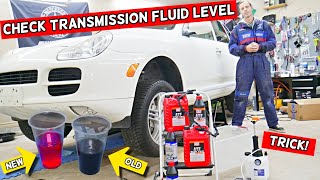
How to confirm: Check the transmission fluid level and condition. This must be done at a specific temperature (typically 35-45°C or 104°F) with the engine running and the vehicle level, often requiring a professional. 🎬 Watch: How to check your transmission fluid level and condition. The fluid should be reddish and clear, not brown, black, or smelling burnt.
Typical fix: Perform a transmission fluid and filter service. If the fluid is very low, the source of the leak (e.g., pan gasket, connector seal) must be identified and repaired.
Est. part cost: $150-$300
Rare But Worth Checking
- Faulty Transmission Control Module (TCM): → Shop Transmission Assembly While rare, the TCM itself can fail, sometimes due to water ingress in the passenger footwell from clogged sunroof drains. This should only be considered after all other possibilities, including wiring, sensors, and mechanical components, have been thoroughly ruled out.
- Failed Input/Output Speed Sensors: A failure of the transmission's speed sensors can cause the TCM to become confused about gear ratios and shift points, triggering a fault. This will almost always be accompanied by a specific speed sensor code, such as Porsche codes 17104 or 17099.
Diagnosis Steps
- Connect a Porsche-compatible diagnostic scanner (e.g., PIWIS, Durametric) to the OBD-II port.
- Read codes from BOTH the Engine Control Module (ECM) and the Transmission Control Module (TCM). Note all codes present.
- Prioritize diagnosis based on the specific codes found in the TCM, not the P0700 itself.
- Check the transmission fluid level and condition according to the manufacturer's procedure. This is a critical first step.
- Inspect the main transmission wiring harness connector (a large, round connector on the side of the transmission) for any signs of fluid leakage.
- Access the TCM under the front passenger floor/carpet area and inspect its electrical connectors for any signs of oil contamination wicked up from the transmission.
- If solenoid or sensor codes are present, test the specific components and their wiring for continuity and proper resistance.
- If valve body issues are suspected (common with harsh shifting and clunks), replacement is the most common and reliable repair.
- After any repair, clear all codes from the TCM and ECM, and perform a test drive to allow the transmission to adapt. A transmission adaptation reset may be required with the diagnostic tool.
Parts You'll Likely Need
- Transmission Valve Body
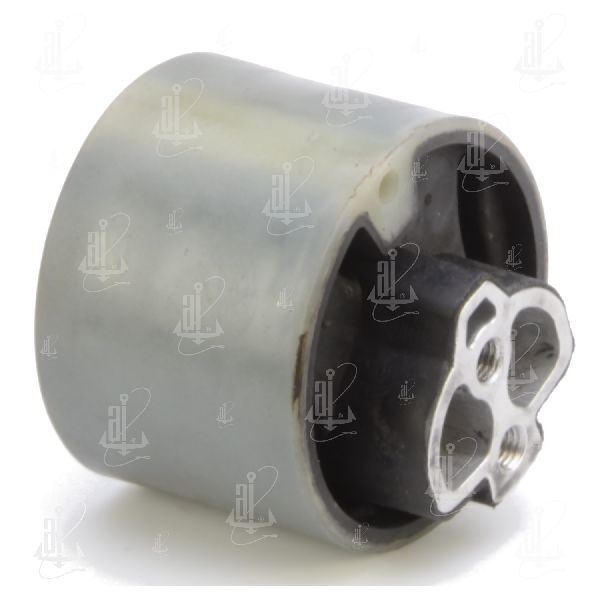
(OEM #955-325-039-00 (for 955 models), 09D325039, 955-325-039-52 (for later 957 models))— This is the most common major failure point on the Aisin TR-60SN transmission in the Cayenne that leads to P0700 and associated shifting problems. There are different versions (e.g., 2-port vs 3-port), so confirming fitment is critical.
Trusted brands: Aisin (OEM), Revmax (Remanufactured), Sonnax (for rebuild kits), TransGo (Shift Kit)
OEM price range: $900-$1500
Aftermarket price range: $700-$1200 - Transmission Filter and Gasket Kit — Required for any service that involves dropping the transmission pan, such as replacing the valve body, wiring harness, or performing a fluid change.
Trusted brands: Vaico, Febi, Rein, Meyle
OEM price range: $50-$100
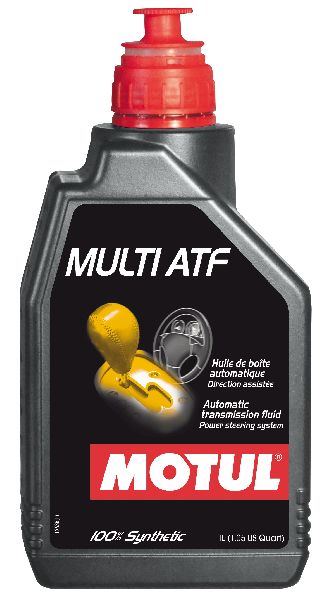
Aftermarket price range: $30-$70 - Automatic Transmission Fluid — The correct fluid (spec JWS 3309 / Type T-IV) is critical for the Aisin transmission's performance. Low or degraded fluid is a primary cause of issues.
Trusted brands: Porsche OEM ATF 3309, Mobil ATF 3309, Aisin T-IV
OEM price range: $20-$30 per liter
Aftermarket price range: $8-$15 per liter
Related Codes That Often Appear With This One
- P07xx (e.g., P0730, P0740, P0746) — P0700 is a general code; the P07xx series codes are the specific faults (like Incorrect Gear Ratio, TCC Solenoid Circuit, or Pressure Control Solenoid) detected by the TCM that caused the P0700 request.
- Porsche-specific codes (e.g., 17104, 17099, 300) — These are manufacturer-specific codes that a Porsche-capable scanner will pull from the TCM. Codes 17104 and 17099 point to the input/turbine speed sensor, and 300 points to the ATF temperature sensor. These are often triggered together by the wiring harness fluid contamination issue.
Technical Service Bulletins (TSBs) & Recalls
- While a specific TSB number for P0700 is not widely published, there are Porsche TSBs for early MY03/04 Cayennes addressing harsh shifting (especially 1-2 shifts) that involved replacing the Tiptronic controller or valve body assembly.
Platform-Specific Known Issues
- A well-documented issue involves transmission fluid leaking through the main electrical connector on the transmission case. The fluid then wicks up the wiring harness and contaminates the TCM connectors under the passenger carpet, causing shorts and erratic behavior.
- Early 955 models were subject to harsh shifting issues that could sometimes be improved with a TCM software update from a Porsche dealer.
- The valve bodies for the Aisin TR-60SN come in different physical configurations (e.g., 2-port vs. 3-port) that are not always interchangeable, causing confusion during replacement. A Rennlist thread discusses how to identify them.
Mechanic-Grade Diagnostic Values
- Resistance of On/Off Shift Solenoids (e.g., N88, N89) — expected: Should be within 0.5 Ohms of one another when tested.. Failure: A significant deviation in resistance between similar solenoids indicates a failing coil.
- Resistance of PWM Solenoids (e.g., N90, N92, N93) — expected: Should be within 0.5 Ohms of one another when tested.. Failure: A significant deviation in resistance between similar PWM solenoids points to a fault.
- Resistance of Input/Output Speed Sensors — expected: Typically between 200 and 1,000 ohms, but refer to the specific vehicle service manual.. Failure: A reading that is too high (open circuit) or too low (short circuit) indicates a faulty sensor.
- ATF Temperature Sensor (TFT) Resistance — expected: The TFT is a negative temperature coefficient sensor, meaning resistance decreases as temperature increases.. Failure: If the sensor fails, the TCM uses a substitute value and may prevent torque converter lockup. A specific resistance-to-temperature chart is needed for precise diagnosis.
Scan Tool Commands That Help
- Porsche PIWIS Tester: Transmission Adaptation / Relearn — This is critical after replacing the valve body or the entire transmission. The procedure allows the TCM to learn the new hydraulic and mechanical characteristics of the components for smooth shifting. Failure to perform this can result in persistent harsh shifting even with new parts.
- Porsche PIWIS Tester: Kickdown Threshold Adaptation — This function, found under the 'Maintenance/repairs' menu, should be performed after resetting adaptation values to ensure proper kickdown response.
- Porsche PIWIS Tester: Vehicle Handover — Before deep diving into complex electrical diagnostics, performing a 'Vehicle Handover' can resolve various electronic glitches by re-initializing control modules. This should be considered if the P0700 code is accompanied by other strange electrical symptoms.
Wiring & Ground Locations
- Transmission Control Module (TCM) — Located under the front passenger seat, beneath the carpet and a protective cover.. This is the brain of the transmission. It is the destination for the oil that wicks up the wiring harness, causing short circuits at its connectors. It can also be damaged by water ingress from clogged sunroof drains in this location.
- Main Chassis Ground — A major ground point is located in front of the driver's seat, accessible via a small carpet door in the floor.. Poor grounds can cause a host of electrical issues, including communication errors between control modules like the TCM and ECM, potentially triggering a P0700.
- Engine Bay Ground Points — Multiple ground points (brown wires) exist in the engine bay, including on the bell housing, near the battery compartment, and on the firewall.. A corroded or loose ground connection for the engine or transmission sensors can lead to incorrect readings and fault codes.
- Transmission Pass-Through Connector — A large, round electrical connector on the side of the transmission case. There are typically two harness assemblies: an 8-way and a 14-way connector.. This is the primary failure point for the seal that allows ATF to leak and wick up the main wiring harness to the TCM.
Real Owner Repair Stories
- YouTube user 'How2Helen' (2005 Porsche Cayenne) — Check engine light on, transmission indicator on dash stuck on 'D', multiple transmission codes including P0700, 17104 (Input Shaft Speed Sensor), 17099 (Turbine Speed Sensor), and 300 (ATF Temp Sensor).
❌ Tried (didn't work) Initial diagnosis pointed towards multiple failed sensors or a bad TCM.
✅ What actually fixed it The owner inspected the TCM connectors under the passenger seat and found them saturated with transmission fluid that had wicked up the wiring harness. Thoroughly cleaning the oil from the harness pins and connectors at the TCM with electronic contact cleaner resolved all fault codes and restored normal operation. - Rennlist user 'georgef' (2004 Cayenne Turbo) — P0700 and a specific shift solenoid code. Thump/clunk in transmission.
❌ Tried (didn't work) Initial dealer visit could not replicate the concern after the car cooled down.
✅ What actually fixed it The final repair was replacing the transmission valve body and the corresponding Transmission Control Unit (TCU). The user reported no issues for over a year after the replacement. - RennTech.org user 'mtnrat' (2003 Cayenne Turbo) — Very harsh shifts from 1-2-3, hesitant shifts, and flaring.
❌ Tried (didn't work) Living with the poor shifting.
✅ What actually fixed it The user performed a DIY replacement of the valve body with a remanufactured unit from Revmax. The result was that 'every shift is smooth and perfect'.
OEM Part Supersession History
Various older part numbers→95532503900 (for 955 Turbo)— Updates and revisions to address solenoid and wear issues.
Heads up: There is significant confusion regarding valve body versions. A key difference is between '2-port' and '3-port' designs, which generally correspond to S vs. Turbo models. A forum member confirmed that for a 955 Turbo, part number 95532503900 is the correct supersession and works without a TCU change. Installing the wrong version can lead to continued or new shifting problems.
Model Year Variations Within This Range
- 2003-2006 (955): These models use port-injected V8 engines. Early 955 models were known to have software issues causing hard shifts, which were often resolved by a dealer software update.
- 2008-2010 (957): These facelifted models use direct-injected V8 engines and may have updated valve body designs (e.g., different separator plates like 'H-1' vs 'G-1'). While the core TR-60SN transmission is the same, using a valve body from a 955 in a 957 (or vice-versa) without confirming compatibility can cause issues.
Diagnostic Flowchart
Used vs. New Parts: Buying Guide for This Vehicle
When a used part is the smart pick: A used Transmission Control Module (TCM) can be a cost-effective option if the original has confirmed failure (e.g., water damage), as they are generally reliable. A complete used transmission from a low-mileage donor can also be viable if a major internal failure is diagnosed, but this is less common than valve body or wiring issues.
Donor-vehicle mileage cap: roughly under 80000 miles for the part to have meaningful remaining life.
What to inspect on the donor part:
- For a complete transmission, verify the donor vehicle's mileage and service history if possible.
- Check the color and smell of the fluid from the donor transmission; dark, burnt-smelling fluid is a major red flag.
- When buying a used TCM, inspect the connectors for any signs of corrosion or oil contamination.
- Ensure the part number on the used component exactly matches the one being replaced, especially for the TCM and valve body.
Aftermarket brands forum-validated for this vehicle:
- Revmax (Remanufactured Valve Bodies)
- Sonnax (Valve Body Rebuild Kits and Upgrades)
- Aisin (OEM for fluid and valve body)
Brands owners have reported issues with on this vehicle:
- Unbranded, cheap valve bodies from online marketplaces have a high risk of being incorrect versions or poorly rebuilt, leading to repeat failures.
Real Owner Stories
Aggregated from forums and TSBs cited above. Mileages and costs reflect what owners reported in those sources.
2003 Cayenne S
Symptoms: Harsh downshifting issues.
What fixed it: Replacing the valve guide assembly (valve body).
Source hint: RennTech.org thread titled '2003 Cayenne S harsh downshift help'
2003-2010 Cayenne
Symptoms: The owner had a P0700 code along with a specific solenoid fault code.
What fixed it: The dealer replaced the valve body and the TCU.
Source hint: Rennlist.com thread titled 'Tiptronic missed a shift...calling Porsche Roadside Assistance'
2003-2010 Cayenne
Symptoms: After an initial valve body replacement with a rebuilt unit, shifting problems persisted.
What fixed it: A second replacement using a valve body from RevMax solved the issue.
Source hint: Rennlist forum member experience cited in common causes
Porsche Cayenne
Symptoms: The transmission display stayed on 'D' or all indicators were highlighted, accompanied by multiple transmission codes including P0700.
What fixed it: Thoroughly cleaning oil from the harness pins and connectors at both the transmission and TCM ends with an electronic contact cleaner.
Source hint: YouTube video by 'How2Helen' cited in common causes
Related OBD-II Codes
Frequently Asked Questions
My Cayenne has a harsh 'clunk' when downshifting to a stop. Is this related to the P0700 code?
I heard about transmission fluid leaking into the wiring. Where exactly should I check?
Are there any software updates from Porsche that could fix my shifting problems?
My mechanic is replacing the valve body. Are all Cayenne valve bodies the same?
What are the recommended replacement valve body brands mentioned by other owners?
Besides reading the codes, what is the first physical check I should perform for a P0700?
Do the VW Touareg and Audi Q7 have these same transmission problems?
Helpful Videos
We Have This Part in Stock


The information in this article is provided for general reference and educational purposes only. Vehicle specifications, procedures, and part compatibility can vary by production date, trim level, and region. Always consult your vehicle's factory service manual and verify part numbers before purchasing or performing repairs. Safety-critical components such as airbags, seat belts, and braking systems should be installed by a qualified professional.
- Porsche Cayenne:
- 🧭 Diagnostic Flowchart
- 🎬 Helpful Videos
- 🛍️ Shop This Part
- What's Unique About the 2003-2010 Porsche Cayenne
- Symptoms You May Notice
- Most Likely Causes
- Rare But Worth Checking
- Diagnosis Steps
- Parts You'll Likely Need
- Related Codes That Often Appear With This One
- Technical Service Bulletins (TSBs) & Recalls
- Platform-Specific Known Issues
- Mechanic-Grade Diagnostic Values
- Scan Tool Commands That Help
- Wiring & Ground Locations
- Real Owner Repair Stories
- OEM Part Supersession History
- Model Year Variations Within This Range
- Used vs. New Parts: Buying Guide for This Vehicle
- Real Owner Stories
- 2003 Cayenne S
- 2003-2010 Cayenne
- 2003-2010 Cayenne
- Porsche Cayenne
- Related OBD-II Codes
- Frequently Asked Questions
- 🎟️ Get 5% Off