

P0700 on 2003-2012 Saab 9-3: Transmission Control System Malfunction Causes and Fixes
P0700 on a Saab 9-3 means the transmission computer (TCM) has detected a fault. It's a general code, so the real problem is stored as another code in the TCM. The most common cause is a failing valve body in the Aisin AW55-50 (5-speed) or TF-80SC (6-speed) automatic transmission, leading to harsh shifting, especially when warm. A fluid change may help temporarily, but valve body replacement is often the required fix.
- P0700 is a generic code on a Saab 9-3; the real, specific fault codes are stored in the Transmission Control Module (TCM) and require a capable scanner to read.
- The most frequent cause of P0700 on this platform is a failing transmission valve body in the Aisin automatic, leading to harsh shifting that gets worse as the car warms up.
- A fluid change with the correct type (JWS 3309 for 5-speed, AW-1 for 6-speed) is a good first step, but often a remanufactured valve body is the ultimate solution.
- Other potential causes include a faulty TCM, degraded fluid, or a damaged wiring harness, but these should be investigated after considering the highly probable valve body issue.
What's Unique About the 2003-2012 Saab 9-3
The 2003-2012 Saab 9-3 used Aisin automatic transmissions, primarily the 5-speed AW55-50/51 and the 6-speed TF-80SC/AF40. Both are notoriously prone to valve body issues. The root cause is often wear in the solenoid bores within the valve body, causing solenoids to stick as the transmission fluid heats up and loses its lubricating effectiveness. This results in incorrect fluid pressure, leading to harsh shifting, flares between gears, and delayed engagement. While P0700 is a generic code, on this specific platform, it very frequently points towards these well-documented valve body and solenoid failures.
Generation note: The 2003-2012 Saab 9-3 is all the second generation (YS3F). However, it used two primary automatic transmissions: the 5-speed Aisin AW55-50/51 (approx. 2003-2009) and the 6-speed Aisin TF-80SC/AF40 (approx. 2006-2012). Both are known for valve body issues, but specific parts, fluid types (JWS 3309 for 5-speed, AW-1/JWS 3324 for 6-speed), and procedures will differ.
Symptoms You May Notice
- Check Engine Light is on
- Harsh or jerky shifting, especially 2-3 and 3-2 shifts.
- Banging or thumping when downshifting as you come to a stop.
- Delayed engagement when shifting from Park to Drive or Reverse.
- Shift flares (engine RPMs jump up between shifts).
- Slipping gears under acceleration.
- Transmission may enter "limp mode," getting stuck in a single gear (e.g., 3rd or 5th).
- Symptoms are often non-existent when the car is cold and appear or worsen significantly after 10-15 minutes of driving as the transmission fluid warms up.
- Replacing the entire transmission when only the valve body is at fault. The valve body is a serviceable component that can often be replaced without removing the entire transmission, saving significant labor costs.
- Performing a single drain-and-fill and expecting it to solve the problem. A single drain only replaces about 1/3 of the total fluid volume, which is often not enough to counteract the effects of severely degraded fluid.
Most Likely Causes
- Failing Transmission Valve Body 🔴 High Probability → Shop Transmission Valve Body The Aisin transmissions used in these Saabs are well-known for premature wear of the solenoid bores within the valve body. This causes solenoids to stick, leading to hydraulic pressure control problems that manifest as harsh shifts when the fluid is hot.
How to confirm: Confirm with a professional scan tool to check for specific solenoid performance codes (e.g., P0746, P0776, P0796). Symptoms that are highly dependent on transmission temperature strongly point to the valve body.
Typical fix: Replace the valve body with a remanufactured unit that has been updated with oversized valves or sleeves (e.g., from Sonnax or TransGo) to correct the original design flaw. In some cases, individual linear solenoids can be replaced, but a complete, updated valve body is often the most reliable long-term repair.
Est. part cost: $400-$900 - Low or Degraded Transmission Fluid 🟡 Medium Probability → Shop Transmission Assembly Many of these vehicles are now high-mileage, and the 'lifetime' fluid is often burnt and has lost its required frictional and lubricating properties. Low fluid levels can also cause pressure issues.
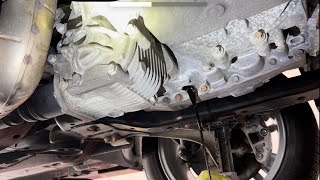
How to confirm: Check the transmission fluid level and condition. On these models, this is done via a check/fill plug, as there is no dipstick. The fluid should be bright red and not smell burnt; black or dark brown fluid is a bad sign. Use the correct 🎬 See how to perform a 5-speed transmission fluid change fluid: JWS 3309 (or equivalent like Mobil 3309) for the 5-speed AW55, and AW-1/JWS 3324 for the 6-speed TF-80SC.
Typical fix: Perform multiple transmission fluid drain-and-fills (not a high-pressure flush) to replace a majority of the old fluid. This is a good first step but may not solve an underlying mechanical valve body issue.
Est. part cost: $80-$200 - Faulty Transmission Control Module (TCM) ⚪ Low Probability → Shop Transmission Assembly While less common than valve body failure, the TCM can fail due to electrical issues, heat, or vibration over time. It is located in the engine bay on these models.
How to confirm: After ruling out all other possibilities (fluid, wiring, valve body), if a scan tool cannot communicate with the TCM or if specific internal TCM fault codes are present, the module is likely faulty. A key indicator is if P0700 is the ONLY code present, with no other specific transmission codes stored.
Typical fix: Replace the Transmission Control Module. This often requires programming the new module to the vehicle with a specialized tool like a Saab Tech 2. A used, matching part number module may also work if programmed.
Est. part cost: $200-$700 - Damaged Wiring or Connectors ⚪ Low Probability Engine bay heat can make the wiring harness insulation brittle and cracked over time. The main connector to the transmission or the wiring to the TCM can corrode or have pins back out, leading to intermittent communication and faults.
How to confirm: Visually inspect the wiring harness and connectors going to the transmission and the TCM for any signs of damage, corrosion, crumbling plastic sheathing, or loose pins.
Typical fix: Repair the damaged section of the wiring harness or clean/replace the faulty connector. This can be a meticulous process.
Est. part cost: $20-$150
Rare But Worth Checking
- Faulty Transmission Range Sensor (Neutral Safety Switch): → Shop Transmission Assembly
Diagnosis Steps
- Connect a professional OBD-II scanner capable of reading Saab-specific transmission codes to the vehicle's diagnostic port.
- Scan for codes in the Transmission Control Module (TCM). Do not rely solely on the P0700 code from the ECM.
- Record all codes found in the TCM. These codes (e.g., P0746, P0734) will point to the specific area of the fault.
- Drive the vehicle for 15-20 minutes to get the transmission to full operating temperature and observe if symptoms appear or worsen, which is characteristic of valve body failure.
- Check the transmission fluid level and condition. Ensure the correct fluid type is being used (JWS 3309 for 5-speed, AW-1 for 6-speed). Black, burnt-smelling fluid indicates a severe problem.
- If solenoid or pressure control codes are present, and symptoms are temperature-dependent, the valve body is the primary suspect.
- Inspect the wiring harness and connectors for the transmission and TCM for any visible damage, crumbling sheathing, or corrosion.
- If no other cause can be found and communication with the TCM is intermittent or impossible, suspect a faulty TCM.
Parts You'll Likely Need
- Transmission Valve Body
(OEM #AW55-50SN for 5-speed, TF-80SC for 6-speed. Specific Saab part numbers include 5448584, 93185091 (5-speed).)— This is the most common failure point on the Aisin automatic transmissions in the 2003-2012 Saab 9-3 that leads to P0700 accompanied by temperature-dependent shifting problems.
Trusted brands: Aisin (OEM), Rostra (Solenoids), Sonnax (Repair/Zip Kits), TransGo (Shift Kits)
OEM price range: $700-$1000
Aftermarket price range: $400-$800 - Automatic Transmission Fluid
(OEM #JWS 3309 for 5-speed AW55-50. AW-1 (JWS 3324) for 6-speed TF-80SC.)— Low or degraded fluid is a common cause of transmission problems and should be checked and replaced as a first step.
Trusted brands: Saab/GM OEM, Mobil ATF 3309, AMSOIL Signature Series Fuel-Efficient ATF, Idemitsu TLS (for JWS 3309)
OEM price range: $15-$25 per quart
Aftermarket price range: $8-$18 per quart
Related Codes That Often Appear With This One
- P07xx, P08xx, Uxxxx — P0700 is a general request code. The actual problem will be stored as a more specific P, U, or manufacturer-specific code in the Transmission Control Module (TCM). Common companion codes point to specific solenoids (e.g., P0746, P0776) or gear ratio errors (e.g., P0734).
Technical Service Bulletins (TSBs) & Recalls
- While no specific TSB number was found in the search, the valve body issue is so well-documented that aftermarket companies like Sonnax and TransGo have developed specific kits (e.g., Sonnax Zip Kit AW55-50SN, TransGo SK TF80SC) to address the known failure points in the valve bodies.
Platform-Specific Known Issues
- The Aisin AW55-50 (5-speed) and TF-80SC (6-speed) transmissions are known for valve body failures that cause harsh shifting, flares, and gear engagement issues, particularly once the vehicle is warmed up.
- Wiring harness sheathing in the engine bay becomes brittle and disintegrates over time due to heat, exposing wires to potential damage and short circuits.
Mechanic-Grade Diagnostic Values
- AW55-50 On/Off Shift Solenoids (S1-S5) Resistance — expected: 11 - 16 Ohms at 20°C (68°F). Failure: A reading outside this range indicates a faulty solenoid coil.
- AW55-50 Linear Solenoids (SLT, SLU, SLS) Resistance — expected: 5.0 - 5.6 Ohms at 20°C (68°F). Failure: A reading outside this range suggests a fault in the linear solenoid.
- TCM Power Supply Voltage (at TCM connector) — expected: ~12V (Battery Voltage). Failure: Low or no voltage indicates a problem with the power supply circuit, fuse, or wiring, not necessarily the TCM itself.
- TCM Ground Connection — expected: Near 0 Ohms resistance between the TCM ground pin and chassis ground.. Failure: High resistance indicates a poor ground connection, which can cause various erratic issues.
- Transmission Range Sensor (TRS) Input Voltage at TCM — expected: 12V when a specific gear (e.g., Reverse or Drive) is selected, 0V in other positions.. Failure: Incorrect voltage for the selected gear points to a faulty TRS or wiring.
Hidden / Shadow Codes Worth Checking
- P0705, P0715, P0743, P0748, P0785, etc.: P0700 is a generic request from the TCM to the ECM to turn on the check engine light. The actual specific fault is stored in the TCM as a separate code. These codes point to the root cause, such as a faulty range sensor (P0705), solenoid (P0748), or speed sensor (P0715). (see via A professional scan tool like a Saab/GM Tech 2 or equivalent that can communicate directly with the Transmission Control Module (TCM), not just the Engine Control Module (ECM).)
Scan Tool Commands That Help
- Saab Tech 2: Reset Adaptation / Zero Adaptation — This command, found under 'Automatic Transmission -> Adjustments -> Reset' or 'Activate', must be used after replacing the transmission, valve body, or TCM. It clears the learned shift pressure values.
- Saab Tech 2: Adaptation Drive Procedure — After resetting adaptations, a specific drive cycle is required for the TCM to relearn proper shift points and pressures. This involves a sequence of gentle accelerations, braking, and shifting between N-D and N-R at operating temperature (65-110°C). Failure to perform this can result in continued poor shift quality even with new parts.
- Saab Tech 2: Read Values - TCM — Used to monitor live data from the transmission, such as fluid temperature, input/output speed sensor readings, and solenoid command status. This is critical for diagnosing intermittent faults and confirming sensor operation.
Wiring & Ground Locations
- TCM (Transmission Control Module) — Located in the engine bay, under the battery cover/tray area. You must typically remove the battery and its cooling pipe to access the module and its connectors.. This is the brain of the transmission. All sensor inputs, solenoid outputs, and communication with the rest of the car flow through this module and its connectors. Corrosion on the connector pins or damage to the nearby harness is a potential cause of P0700.
- Transmission Main Connector — A large, multi-pin connector on the top or side of the transmission housing itself. It connects the internal transmission components (solenoids, sensors) to the main vehicle harness that runs to the TCM.. This connector is a common point of failure due to heat, vibration, and fluid contamination. A loose pin or corrosion here can interrupt signals for any number of components, leading to a P0700 and other specific codes.
- Transmission Harness Chafe Point — On some vehicles, the wiring harness from the transmission runs up the firewall near the ignition coil and spark plug wires.. A real-world case showed that electromagnetic interference (EMI) from a spark plug wire resting against the transmission harness caused intermittent P0700 codes without any mechanical fault. Ensuring proper harness routing and separation is a critical, often-overlooked diagnostic step.
Real Owner Repair Stories
- NAXJA Forums User (1997 Jeep Cherokee (with AW4, a similar Aisin transmission)) — P0700 and a manufacturer-specific code (P1898) would appear after 20-30 minutes of highway driving. No actual shifting problems were felt.
❌ Tried (didn't work) Changing transmission fluid, Cleaning transmission ground, Replacing ignition coil, Replacing neutral safety switch, Replacing brake switch
✅ What actually fixed it The wiring harness from the transmission was resting against the #6 spark plug wire, causing electrical interference (EMI). Moving the harness 2.5 inches away from the spark plug wire permanently solved the issue. - 2CarPros Forum User (2007 Chevrolet Cobalt (with similar GM TCM logic)) — P0700 and P0705 (Transmission Range Sensor). Shifter locked in park, no value shown for TRS on scan tool.
❌ Tried (didn't work) Replacing the Transmission Range Sensor (TRS) itself did not fix the problem.
✅ What actually fixed it The ground wire (black/white) for the TRS circuit was faulty. The user spliced into the wire and ran a new, separate ground to the chassis (strut tower). This restored the correct signal and fixed the codes.
OEM Part Supersession History
5255682, 5448584→93185091— Part revision and consolidation for the AW55-50SN 5-speed transmission valve body.
Heads up: While later part numbers often supersede earlier ones, it's critical to match the valve body generation. Early valve bodies had upward-facing SLT/SLS solenoid connectors, while later ones faced down, requiring a different internal harness. A GM/Saab valve body will also use a normally open S2 solenoid, whereas a Volvo/Nissan AW55-50SN uses a normally closed S2 solenoid; they are not interchangeable despite looking similar.
Model Year Variations Within This Range
- 2003-2009 (5-speed AW55-50): Uses the Aisin AW55-50 5-speed automatic. These are most known for the linear solenoid bore wear. The required fluid is JWS 3309.
- 2006-2012 (6-speed TF-80SC): Uses the Aisin TF-80SC (also called AF40) 6-speed automatic. While also prone to valve body issues, the design, solenoids, and part numbers are completely different from the 5-speed. The required fluid is AW-1 / JWS 3324.
- 2002-2003: Early TCMs for the 9-5 (and likely 9-3) with the AW55 transmission were known to have higher failure rates. The Saab EPC indicates that TCMs from 2003 models are the approved service replacement for 2002 units, suggesting a design revision.
Diagnostic Flowchart
Used vs. New Parts: Buying Guide for This Vehicle
When a used part is the smart pick: A used Transmission Control Module (TCM) can be a cost-effective option, but ONLY if it comes from an identical vehicle (year, engine, transmission) and you have access to a Saab Tech 2 for potential reprogramming or 'marrying' to the car. Some specialist services can clone your original TCM data to a used unit.
Donor-vehicle mileage cap: roughly under 120000 miles for the part to have meaningful remaining life.
What to inspect on the donor part:
- For a TCM: Ensure the part number on the module matches your original EXACTLY. Inspect connectors for any bent pins, corrosion, or signs of water intrusion.
- For a Valve Body: AVOID used valve bodies from junkyards. The primary failure is internal wear, which is impossible to see. You are highly likely to buy a part with the same problem as yours.
- For a complete transmission: Check the fluid color and smell from the donor car if possible. Bright red and no burnt smell is a good sign. Get any available history on the donor vehicle.
OEM-only on this vehicle (don't cheap out):
- Transmission Fluid: Do not compromise here. Use a fluid that explicitly meets the Saab specification (JWS 3309 for 5-speed, AW-1/JWS 3324 for 6-speed). Using generic 'multi-vehicle' ATF is a leading cause of shift problems.
Aftermarket brands forum-validated for this vehicle:
- Valve Body Kits: Sonnax (offers 'Zip Kits' and oversized valve repair kits to fix bore wear), TransGo (offers shift kits that can improve durability).
- Valve Body Assemblies: Reputable rebuilders who explicitly state they use updated Sonnax-style components to correct the original design flaws.
- Fluid: Mobil ATF 3309, AMSOIL Signature Series ATF, Idemitsu TLS are well-regarded equivalents for JWS 3309.
Brands owners have reported issues with on this vehicle:
- Unbranded, low-cost valve bodies from online marketplaces. These are often just cleaned-up used units with the same internal wear issues and are very likely to fail quickly.
Real Owner Stories
Aggregated from forums and TSBs cited above. Mileages and costs reflect what owners reported in those sources.
2006 9-3 Aero
Symptoms: Harsh shifting that appears when the car is warm, accompanied by a P0700 code. Owner also noted the common issue of brittle, heat-damaged wiring harnesses in the engine bay.
What fixed it: The forum discussion indicates the root cause of the harsh shifting is typically a failing valve body, while the brittle wiring is a separate, common issue that must also be inspected and repaired.
Source hint: saabcentral.com: Numerous threads corroborate that P0700 is almost always accompanied by harsh shifting that is traced back to a failing valve body. A thread regarding a 2006 9-3 Aero mentions the common issue of brittle wiring harnesses in the engine bay due to heat.
2009 9-3 Aero XWD
Symptoms: Owner reported a P0700 code.
What fixed it: The owner shared a cautionary tale where a mechanic worsened the problem by breaking a connector and gluing it back together, highlighting the fragility of the vehicle's aged plastic components and the need for careful repair.
Source hint: reddit.com/r/saab: A user with a 2009 9-3 Aero XWD reported a P0700 code and described a mechanic making the issue worse by breaking a connector and gluing it, highlighting the fragility of components.
Saab 9-3 with AW55-50 5-speed transmission
Symptoms: Harsh shifts caused by electro-magnetic shift solenoids sticking when the transmission fluid gets hot.
What fixed it: The underlying cause is metallic debris and wear in the solenoid bores within the valve body. The most reliable fix is replacing the entire valve body with an updated, remanufactured unit.
Source hint: volvoforums.com: In a thread titled 'Transmission Shift Solution - AW 55-50', users discuss how metallic debris accumulates in the electro-magnetic shift solenoids, causing them to stick when hot, leading to harsh shifts. This is the same transmission used in many Saabs.
Saab 9-3 with AW55-50 5-speed transmission
Symptoms: Shift flares (engine RPMs jumping up between shifts).
What fixed it: The discussion identified that the root cause is mechanical wear in the valve body's solenoid bores, and confirmed that simply changing the fluid will not fix a mechanically worn part. The valve body requires repair or replacement.
Source hint: bobistheoilguy.com: A thread titled 'Neglected AW55-50 - Plan Of Attack?' discusses how valve body wear, specifically in the solenoid bores, is the root cause of shift flares and that fresh fluid alone often won't fix a mechanically worn part.
Related OBD-II Codes
Frequently Asked Questions
My Saab 9-3 shifts perfectly when cold, but after 15 minutes of driving it starts banging into gear. Is this a known issue?
What kind of transmission fluid should I use in my Saab 9-3?
Will a simple transmission fluid change fix my harsh shifting problem?
Are there any upgraded parts to permanently fix the transmission valve body issue?
The only code my scanner found is P0700, with no other specific transmission codes. What could that mean?
The plastic sheathing on the wiring in my engine bay is crumbling. Could this be related to my P0700 code?
Helpful Videos
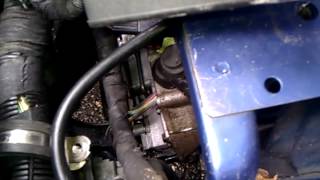
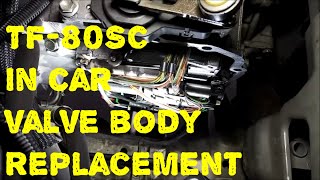
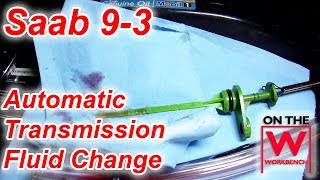

The information in this article is provided for general reference and educational purposes only. Vehicle specifications, procedures, and part compatibility can vary by production date, trim level, and region. Always consult your vehicle's factory service manual and verify part numbers before purchasing or performing repairs. Safety-critical components such as airbags, seat belts, and braking systems should be installed by a qualified professional.
- Saab 9-3:
- 🧭 Diagnostic Flowchart
- 🎬 Helpful Videos
- What's Unique About the 2003-2012 Saab 9-3
- Symptoms You May Notice
- Most Likely Causes
- Rare But Worth Checking
- Diagnosis Steps
- Parts You'll Likely Need
- Related Codes That Often Appear With This One
- Technical Service Bulletins (TSBs) & Recalls
- Platform-Specific Known Issues
- Mechanic-Grade Diagnostic Values
- Hidden / Shadow Codes Worth Checking
- Scan Tool Commands That Help
- Wiring & Ground Locations
- Real Owner Repair Stories
- OEM Part Supersession History
- Model Year Variations Within This Range
- Used vs. New Parts: Buying Guide for This Vehicle
- Real Owner Stories
- 2006 9-3 Aero
- 2009 9-3 Aero XWD
- Saab 9-3 with AW55-50 5-speed transmission
- Saab 9-3 with AW55-50 5-speed transmission
- Related OBD-II Codes
- Frequently Asked Questions
- 🎟️ Get 5% Off