

P0700 on 2013-2019 Subaru Legacy: Transmission Control System Fault Guide
P0700 means your Legacy's transmission has a problem. Most often, it's a failed torque converter lock-up solenoid inside the CVT, requiring a valve body replacement. Check if your vehicle is covered by Subaru's 10-year/100,000-mile CVT warranty extension before paying for repairs, as this is a very common and well-documented issue.
- P0700 means 'check the transmission computer for codes'. It is not a specific diagnosis.
- The most likely cause on a 2013-2019 Legacy is a failed torque converter lock-up solenoid, which requires replacing the entire valve body.
- Before paying for any repairs, check with a Subaru dealer if your vehicle's VIN is covered by the 10-year/100,000-mile CVT warranty extension.
- This is not a DIY-friendly repair. It is complex and requires special tools and a computer relearn procedure.
- Using a new, genuine Subaru valve body is the most reliable long-term fix; aftermarket solenoids have a high rate of premature failure.
What's Unique About the 2013-2019 Subaru Legacy
For the 2013-2019 Legacy, which primarily uses a TR580 or TR690 Continuously Variable Transmission (CVT), the P0700 code is very frequently a precursor to a more specific code like P2764, pointing to a faulty torque converter lock-up solenoid. Due to the high failure rate of this component, Subaru extended the CVT warranty to 10 years/100,000 miles for many of these vehicles (up to the 2018 model year), making a dealership visit for diagnosis a crucial first step. The official Subaru repair involves replacing the entire valve body, not just the single failed solenoid, as the solenoids are not sold separately by Subaru.
Generation note: This range covers the end of the fifth generation (2013-2014) and the sixth generation (2015-2019). Both generations predominantly use a TR580 or TR690 CVT, and the most common cause—a faulty torque converter lock-up solenoid/valve body—affects both. Subaru's CVT warranty extension covers models in both generations under TSBs 16-107-17R and 16-117-18.
Symptoms You May Notice
- Check Engine Light is on
- Flashing 'AT OIL TEMP' light on the dashboard
- Cruise control light blinking and system is disabled
- Traction control and ABS lights may illuminate (a 'Christmas Tree' effect on the dash)
- Harsh or erratic shifting
- Vehicle may enter 'limp mode' with limited power
- Hesitation or shuddering during acceleration or when coming to a stop
- Engine stalling when coming to a stop
- Clearing the P0700 code without reading the underlying TCM codes. The P0700 is just an indicator; the real problem is the code stored in the transmission module.
- Replacing the entire transmission when only the valve body is needed. A full transmission replacement is rarely the first step unless there is evidence of widespread mechanical failure (e.g., significant metal debris in the fluid).
- Replacing transmission fluid to fix a solenoid code. While correct fluid level is critical, a fluid change will not fix an electrically failed solenoid.
Most Likely Causes
- Faulty Torque Converter Lock-Up Solenoid / Valve Body Assembly 🔴 High Probability → Shop Transmission Valve Body The lock-up solenoid within the CVT valve body is a well-documented, high-failure item on this platform. This often triggers codes like P2762, P2763, or P2764. The solenoid fails internally, typically showing a short to ground or an open circuit.
How to confirm: A technician must use a professional scan tool to pull the specific codes from the Transmission Control Module (TCM). If codes like P2762, P2763, or P2764 are present, the solenoid is the confirmed cause. A definitive test involves measuring the resistance of the solenoid's circuit at the transmission connector; a reading of 0-1 ohm indicates a failed, shorted solenoid, whereas a healthy solenoid should read around 10-13.5 ohms.
Typical fix: The official Subaru repair is to replace the entire CVT valve body assembly. Aftermarket individual solenoids are available, and some owners have had success replacing only the failed solenoid, but this is not a Subaru-endorsed repair and long-term reliability is debated. The repair requires draining the CVT fluid, removing components to access the top-mounted valve body cover, replacing the valve body, and performing a computer relearn procedure.
Est. part cost: $700-$1000 for an OEM valve body assembly. - Low or Degraded CVT Fluid 🟡 Medium Probability Incorrect fluid level or fluid that has broken down over time can cause shifting problems and overheating, leading the TCM to set a fault code. While this can cause general transmission issues, it is less likely to be the root cause if a specific solenoid code (like P2764) is also present. In some cases, as noted in NHTSA ODI #11723189 for other Subaru models, a pressure sensor leaking oil can also contribute to multiple transmission-related codes including P0700.
How to confirm: Check the CVT fluid level and condition according to the manufacturer's procedure. Note that these Subarus do not have a traditional transmission dipstick, requiring a specific service procedure to check the level from a fill plug.
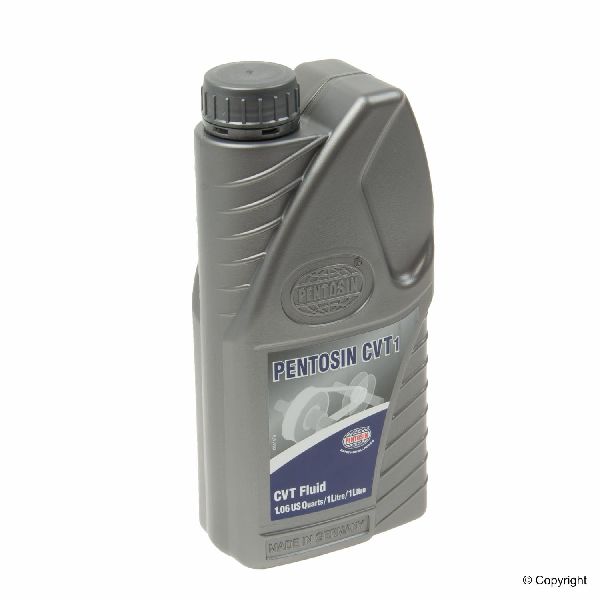
Typical fix: Perform a CVT fluid drain and fill using the correct Subaru High Torque (HT) CVT fluid. If the fluid is very dirty or contains metal particles, it may indicate a more severe internal transmission failure beyond the valve body.
Est. part cost: $100-$200 for OEM fluid.
Rare But Worth Checking
- Wiring Harness Damage: Damage to the wiring between the ECM, TCM, and the transmission can cause communication errors or incorrect sensor readings, leading to a P0700 code. This should be inspected, especially the connectors on top of the transmission, for corrosion or damage before replacing expensive parts.
- Failed Transmission Control Module (TCM): → Shop Transmission Assembly While rare, the TCM itself can fail. This is typically diagnosed only after all other possibilities, such as solenoids, wiring, and fluid, have been ruled out. A P0700 code appearing with no other secondary codes can sometimes point to a faulty TCM.
Diagnosis Steps
- Connect a professional OBD-II scanner capable of reading transmission-specific codes.
- Scan the Transmission Control Module (TCM) for any stored fault codes. Do not rely on the P0700 code alone.
- If codes like P2762, P2763, or P2764 are present, the primary suspect is the torque converter lock-up solenoid/valve body.
- Check Subaru's service database or contact a dealer with your VIN to see if your vehicle is covered under the CVT warranty extension (TSB 16-107-17R or 16-117-18). If covered, this diagnosis and repair may be free. You must report the symptoms, not self-diagnose, to the dealer.
- If not covered by warranty, consider a definitive electrical test. Disconnect the transmission harness connector and measure the resistance of the lock-up solenoid circuit. A reading near 0-2.5 ohms confirms a shorted solenoid requiring replacement, while a good solenoid should be 10-13.5 ohms.
- Inspect the transmission wiring harness and connectors for any visible damage, corrosion, or loose connections.
- Check the CVT fluid level and condition. If low or dirty, a fluid service may be attempted, but it is unlikely to fix a solenoid-specific code.
- If a solenoid fault is confirmed, the recommended repair is to replace the entire valve body assembly with a new OEM part.
- After replacement, perform the transmission relearn procedure 🎬 See how to perform the critical A/T relearn procedure. using a compatible scan tool. Some owners have reported this is a necessary step for proper operation.
Parts You'll Likely Need
- CVT Valve Body Assembly
(OEM #31706AA034)— This is the official Subaru repair for the common torque converter lock-up solenoid failure that triggers P0700. The solenoid is integrated into this assembly and not sold separately by Subaru. This part number has been superseded by several others, including 31706AA031, 31706AA032, 31706AA033, and most recently 31706AA331. Always confirm the correct part number with a VIN.
Trusted brands: Subaru (Genuine)
OEM price range: $700-$1000
Aftermarket price range: $250-$450 (Remanufactured, use with caution) - Subaru High Torque (HT) CVT Fluid
(OEM #SOA427V1660)— This specific fluid is required when replacing the valve body or servicing the TR580/TR690 transmission. Using non-genuine fluid is not recommended.
Trusted brands: Subaru (Genuine)
OEM price range: $20-$30 per quart
Aftermarket price range: N/A - Valve Body Cover Gasket
(OEM #31338AA020)— This gasket is required when removing the valve body cover to access the valve body itself. It is a one-time use part.
Trusted brands: Subaru (Genuine)
OEM price range: $20-$40
Aftermarket price range: N/A
Related Codes That Often Appear With This One
- P2764 — This code specifically indicates a 'Torque Converter Clutch Pressure Control Solenoid Control Circuit Low' fault, which is the most common underlying cause of P0700 on these models.
- P2762 — Similar to P2764, this code points to an issue with the torque converter clutch pressure control solenoid circuit, often related to performance or being 'stuck off'.
- P2763 — This code indicates a 'Torque Converter Clutch Pressure Control Solenoid Control Circuit High' fault, also pointing directly to the same solenoid assembly.
Technical Service Bulletins (TSBs) & Recalls
- 16-107-17R: 'CVT Warranty Extension'. Covers 2010-2015 Legacy/Outback and other models, exten
- Bulletin #06-93-25: This manufacturer bulletin notes updates for the Engine Control Module (ECM) developed to address Diagnostic Trouble Codes including P0700 (Transmission Control System MIL Request).
Platform-Specific Known Issues
- Subaru extended the CVT warranty to 10 years or 100,000 miles for many vehicles in this year range due to known issues, including valve body/solenoid failures. This is documented in Technical Service Bulletins 16-107-17R and 16-117-18. Owners should always check for warranty coverage with a Subaru dealer using their VIN before authorizing repairs.
Mechanic-Grade Diagnostic Values
- Torque Converter Lock-Up (TCC) Solenoid Resistance — expected: 10 to 13.5 Ohms at 68°F (20°C).. Failure: A reading of 0-2.5 Ohms indicates a shorted solenoid. An open circuit (infinite resistance) or very high resistance (e.g., 41k Ohms) also indicates failure. The resistance may test normal when cold but fail (go open) when hot, so testing after warming up the transmission is recommended.
- Other Valve Body Solenoid Resistances (TR580) — expected: AWD Solenoid: ~3.4-3.7 Ohms. Primary Up/Down Solenoids: ~12.2-13.2 Ohms.. Failure: Readings significantly outside of these ranges indicate a failure of that specific solenoid.
- Valve Body to Case Bolt Torque — expected: 6.5 ft-lbs (80 in-lbs).. Failure: N/A - This is an installation specification.
- Valve Body Cover Bolt Torque — expected: 6 ft-lbs (72 in-lbs).. Failure: N/A - This is an installation specification.
Scan Tool Commands That Help
- Subaru Select Monitor (SSM) or compatible aftermarket (e.g., Autel, iCarsoft): Clear AT Learning Value — This function must be performed after replacing the valve body or transmission. It erases the stored adaptive shift data from the old component.
- Subaru Select Monitor (SSM) or compatible aftermarket (e.g., Autel, iCarsoft): AT Learning Mode — This is the mandatory relearn procedure initiated after clearing the old values. The tool guides the technician through a specific sequence of warming the fluid to 40-65°C, and shifting between ranges while the vehicle is lifted to allow the TCM to calibrate the new valve body solenoids. The 'AT OIL TEMP' light will flash during this process to indicate learning is in progress.
- Subaru Select Monitor (SSM): Read Current Data — Used to monitor live data from the transmission, such as 'ATF Temp Sensor Voltage' and 'Secondary Pressure Sensor Voltage', which can help diagnose sensor issues before part replacement.
Wiring & Ground Locations
- Main Transmission Harness Connector — On top of the transmission, towards the front of the vehicle. It is a large, multi-pin connector (often gray or brown) that connects the main vehicle harness to the valve body harness.. This is the primary access point for testing the resistance of all valve body solenoids without removing any transmission components. Technicians probe specific pins in this connector to measure resistance to ground (the transmission case) to confirm if a solenoid has failed electrically.
- Lock-Up Duty Solenoid Pin — Within the main transmission harness connector. On some TR580 diagrams, this corresponds to the green wire, which is the second pin from the left on the bottom row. However, pinouts can vary, and consulting the specific service manual for the vehicle's model year is critical.. This specific pin must be identified to perform a definitive resistance test for the torque converter lock-up solenoid, which is the most common cause of P0700/P2764. A low resistance reading (around 2.5 ohms or less) from this pin to the transmission case confirms a shorted solenoid.
- Solenoid Internal Ground — The solenoids inside the valve body are internally grounded to the transmission case.. When testing resistance, the multimeter's negative lead should be connected to a clean, unpainted spot on the transmission case or engine block. A good connection here is essential for an accurate reading. If all solenoids show high or open resistance, it could point to a bad common ground within the transmission, though this is less common than a single solenoid failure.
Real Owner Repair Stories
- NHTSA ODI #11723218 — An owner reported the vehicle could barely climb a small ramp and was locked in limp mode, making it unsafe to operate in traffic. Diagnostic codes P0841, P0700, and C1431 were stored. An authorized Subaru dealer technician stated the valve body likely failed.
- NHTSA ODI #11265402 — An owner reported CVT codes P0700 and P2764 came on. The dealership stated that the vehicle needs a whole new transmission as fixing just the torque converter would not be sufficient.
- NHTSA ODI #11505856 — A Forester owner at 150k miles reported CVT failure with Check Engine Lights, AT Oil Temp Warning, and Diagnostic Trouble Codes P0700 and P2764.
- Reddit user on r/subaruimpreza (2013 Subaru Impreza Sport Premium CVT) — Jerky 'shifting', followed by a dashboard 'Christmas tree' with ABS, traction control, and a flashing AT OIL TEMP light.
❌ Tried (didn't work) A shop initially diagnosed overfilled CVT fluid and corrected the level, which provided a temporary fix., Replacing a corroded battery, which was thought to be the cause of the electrical issues.
✅ What actually fixed it Another user commented that their identical symptoms on a 2018 model were caused by a failed AWD solenoid in the valve body, and replacing the entire valve body resolved the issue. This strongly implies the original poster's issue was also a valve body failure, not the fluid level or battery. - LegacyGT.com forum user (2013 Legacy 2.5i) — Not specified, but codes pointed directly to a solenoid voltage issue.
❌ Tried (didn't work) The user took the car to a dealer for a valve body replacement.
✅ What actually fixed it The dealer technician made a mistake during reassembly (possibly a pinched o-ring), which caused the entire CVT to fail. The dealership then had to replace the entire CVT at their own cost. The user notes that the valve body replacement itself is a common and reliable repair when done correctly.
OEM Part Supersession History
31706AA030, 31706AA031, 31706AA032, 31706AA033, 31706AA034→31706AA331— Subaru frequently updates part numbers to reflect design improvements, manufacturing changes, or consolidation. For this valve body, the updates likely aimed to improve the reliability of the integrated solenoids that were prone to failure.
Heads up: While the part numbers supersede each other, there are physical variations in the valve bodies (e.g., number of 'worm tracks' on the casting) that are not interchangeable. It is critical to provide a VIN to the parts supplier to get the exact correct version for the specific vehicle. Using the wrong physical variant will result in improper function.
Model Year Variations Within This Range
- 2015-2019: Starting in 2015, many Subaru models, including the Outback (which shares a platform with the Legacy), began to include an additional, external transmission fluid cooler from the factory. This was likely added to combat heat, which is a contributing factor to the wear and eventual failure of electronic components like the valve body solenoids.
Diagnostic Flowchart
Used vs. New Parts: Buying Guide for This Vehicle
When a used part is the smart pick: A used OEM valve body from a low-mileage, rear-ended donor vehicle can be a viable option, as the failure is electronic/wear-related, not typically caused by impact. However, the risk of receiving a part that is already failing or near failure is significant. It is generally not recommended unless the cost savings are substantial and the buyer is willing to accept the risk.
Donor-vehicle mileage cap: roughly under 80000 miles for the part to have meaningful remaining life.
What to inspect on the donor part:
- Verify the VIN of the donor car to ensure it had the exact same part number.
- Ask for the mileage of the donor vehicle; anything over 80,000 miles carries a high risk of the same solenoid failure occurring soon.
- Inspect the electrical connector for any bent pins or corrosion.
- If possible, perform a resistance check on the lock-up solenoid pin before purchase.
OEM-only on this vehicle (don't cheap out):
- CVT Valve Body Assembly
Aftermarket brands forum-validated for this vehicle:
- Dorman (for individual solenoid only)
Brands owners have reported issues with on this vehicle:
- Generic/unbranded remanufactured valve body assemblies from eBay or Amazon. Multiple mechanics and forum users report these units failing within weeks or months, if they work at all. The internal solenoids used are often of poor quality. While some DIYers have had success replacing only the single lock-up solenoid with a Dorman unit as a budget repair, professional shops strongly advise against it for long-term reliability.
Real Owner Stories
Aggregated from forums and TSBs cited above. Mileages and costs reflect what owners reported in those sources.
2011 Subaru Legacy — 140000 miles
Symptoms: Dashboard had the 'Christmas tree lights scenario' with codes P0700 and P2763 present.
What fixed it: The Subaru dealership quoted a valve body replacement to fix the issue caused by a bad solenoid.
Cost: $3000-$3000
Source hint: Reddit r/subaru
2013 Subaru Crosstrek — 198000 miles
Symptoms: Owner 'got the dreaded P0700/P2764 codes'.
What fixed it: Owner performed a DIY replacement of the OEM valve body and used an Autel scanner for the relearn procedure.
Cost: $750-$750
Source hint: Reddit (r/Crosstrek) - Owner Repair Story
2014 Subaru Outback — 200000 miles
Symptoms: Vehicle presented with P0700 and P2764 codes.
What fixed it: Owner was considering using a less expensive aftermarket valve body or attempting to replace only the individual solenoid.
Cost: $250-$350
Source hint: Reddit (r/subaru) - Aftermarket Parts Discussion
Related OBD-II Codes
Frequently Asked Questions
Is the P0700 code and its repair covered by any warranty on my 2013-2019 Legacy?
My mechanic found code P2764 along with P0700. What does this mean?
Can I just replace the failed torque converter lock-up solenoid instead of the whole valve body?
My dashboard has the 'AT OIL TEMP' and cruise control lights flashing. Is this related to the P0700 code?
What kind of transmission fluid should I use for a fluid change on my Legacy's CVT?
After replacing the valve body, is there any special procedure required?
Helpful Videos
We Have This Part in Stock

The information in this article is provided for general reference and educational purposes only. Vehicle specifications, procedures, and part compatibility can vary by production date, trim level, and region. Always consult your vehicle's factory service manual and verify part numbers before purchasing or performing repairs. Safety-critical components such as airbags, seat belts, and braking systems should be installed by a qualified professional.
- Subaru Legacy:
- 🧭 Diagnostic Flowchart
- 🎬 Helpful Videos
- 🛍️ Shop This Part
- What's Unique About the 2013-2019 Subaru Legacy
- Symptoms You May Notice
- Most Likely Causes
- Rare But Worth Checking
- Diagnosis Steps
- Parts You'll Likely Need
- Related Codes That Often Appear With This One
- Technical Service Bulletins (TSBs) & Recalls
- Platform-Specific Known Issues
- Mechanic-Grade Diagnostic Values
- Scan Tool Commands That Help
- Wiring & Ground Locations
- Real Owner Repair Stories
- OEM Part Supersession History
- Model Year Variations Within This Range
- Used vs. New Parts: Buying Guide for This Vehicle
- Real Owner Stories
- 2011 Subaru Legacy — 140000 miles
- 2013 Subaru Crosstrek — 198000 miles
- 2014 Subaru Outback — 200000 miles
- Related OBD-II Codes
- Frequently Asked Questions
- 🎟️ Get 5% Off