

P0705 on 2001-2005 Honda Civic: Transmission Range Sensor Causes and Fixes
For a 2001-2005 Honda Civic, code P0705 is almost always caused by a faulty Transmission Range Sensor (also called a Neutral Safety Switch). Symptoms include the car not starting, a blinking 'D' light, and incorrect gear indicators. Replacing the sensor is a common DIY fix, with the part costing between $40 and $150.
- P0705 on a 2001-2005 Civic almost always points to the Transmission Range Sensor on the side of the transmission.
- Key symptoms are a no-start condition (or starting only in Neutral) and a blinking 'D' light.
- Before replacing the sensor, try a simple adjustment, as it may have just shifted out of alignment.
- This is a very DIY-friendly repair; the sensor is external and accessible behind the driver's side wheel.
- The correct OEM part number is 28900-PLX-023.
What's Unique About the 2001-2005 Honda Civic
On this generation of Honda Civic (the seventh generation), the Transmission Range Sensor is located externally on the side of the transmission case, making it highly accessible. This is a significant advantage for DIY repair, as it is reachable after removing the driver's side front wheel and sometimes a small cover held by 10mm bolts, unlike vehicles where the sensor is located internally and requires transmission removal to service. The most common failure is the switch itself, often due to age, corrosion, or internal wear.
Symptoms You May Notice
- Check Engine Light is on
- Blinking 'D' (Drive) indicator light on the instrument cluster.
- Engine will not crank or start.
- Engine only starts in Neutral, but not in Park (or vice-versa).
- Having to wiggle the gear shifter to get the engine to start.
- Reverse lights do not turn on when the vehicle is in Reverse.
- Incorrect gear position is shown on the dashboard display, sometimes showing nothing or a slash.
- Harsh or erratic shifting.
- Vehicle may feel sluggish or like it's not engaging gears properly, sometimes revving high before catching a gear.
- In some cases, both the 'P' and 'N' lights may be illuminated at the same time.
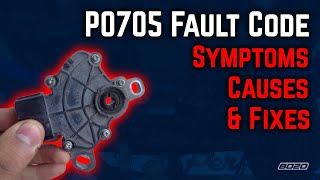
- The 'D' light may start flashing specifically when shifting into Reverse. 🎬 Watch: A breakdown of P0705 symptoms, causes, and the fix.
- Replacing the starter motor when the car won't crank. The 'starts in Neutral but not Park' symptom is a key indicator that the issue is with the range sensor, not the starter itself.
- Replacing the battery when the car won't start. If the dashboard lights and headlights are bright, the battery is likely not the cause.
- Assuming internal transmission failure. The blinking 'D' light can be a sign of serious internal transmission issues on this generation, but when accompanied by P0705 and starting issues, it almost always points to the much cheaper and simpler external range sensor fix. 🎬 See why you shouldn't replace parts before watching this diagnostic tip.
Most Likely Causes
- Faulty Transmission Range Sensor (Neutral Safety Switch) 🔴 High Probability → Shop Transmission Assembly The sensor is exposed to road debris, moisture, and heat on the outside of the transmission, leading to corrosion and internal failure over time. The plastic housing can also crack, and the internal splines that read the shaft position can wear out, causing a loss of communication.
How to confirm: Test the sensor's continuity with a multimeter while shifting through gears; if the signal is inconsistent or absent, the sensor is bad. A common practical test is to hold the key in the 'start' position and slowly move the shifter from Park to Neutral; if the engine suddenly cranks, the switch is faulty or misadjusted.
Typical fix: Replace the Transmission Range Sensor. This involves removing the driver's side wheel for access, unplugging the old sensor, removing two 10mm bolts, and installing the new one with careful alignment.
Est. part cost: $40-$150 - Misadjusted Transmission Range Sensor 🟡 Medium Probability → Shop Transmission Assembly The sensor is held on by two bolts in slotted holes, allowing for adjustment. Vibrations or previous incorrect installation, especially after a transmission replacement with a JDM unit, can cause it to move out of alignment.
How to confirm: Visually inspect the alignment marks on the sensor and transmission body. If the car starts in 'N' but not 'P', a slight adjustment can often fix the issue. A common symptom is the gear indicator on the dash not lighting up for a specific gear until the sensor is rotated slightly.
Typical fix: Loosen the two 10mm mounting bolts and rotate the sensor slightly until it is properly aligned. The factory service procedure specifies using a 2.0mm (0.08 inch) feeler gauge to lock the sensor in the Neutral position for perfect alignment before tightening the bolts.
Est. part cost: $0 - Damaged Wiring or Corroded Connector ⚪ Low Probability The wiring harness and connector are located behind the wheel well, where they are exposed to water, salt, and road debris, which can cause corrosion on the pins or damage to the wires. Wires can also be damaged by heat from the exhaust.
How to confirm: Unplug the sensor and visually inspect the connector pins for green or white corrosion. Check the wiring harness for any signs of fraying, breaks, or heat damage. A forum user on Honda-Tech recommended back-probing specific PCM connector pins (A23 and A24 to C10) to test for voltage, confirming the circuit's integrity.
Typical fix: Clean the connector terminals with electrical contact cleaner. If wires are broken, they will need to be repaired or the connector pigtail replaced.
Est. part cost: $5-$30
Rare But Worth Checking
- Faulty Powertrain Control Module (PCM): This is extremely rare. Before suspecting the PCM, all other possibilities (sensor, wiring, adjustment) must be exhaustively ruled out. A forum user on Honda-Tech noted the service manual points to this as a final step if all else fails, suggesting to reseat the PCM connectors or substitute a known-good PCM for testing.
- Misaligned or Damaged Shift Linkage: Less common than a sensor failure, but a bent or damaged shift linkage cable can prevent the transmission's manual shaft from rotating into the correct position, causing the sensor to send the incorrect data.
Diagnosis Steps
- Read the code with an OBD-II scanner to confirm P0705 is present.
- Check for classic symptoms: Does the car start in Neutral but not Park? Do the reverse lights work? Is the 'D' light blinking?
- With the car safely supported on jack stands, remove the front driver's side wheel.
- Locate the Transmission Range Sensor on the side of the transmission. It will have a wiring harness connected to it and is held on by two 10mm bolts. A small cover may need to be removed first.
- Inspect the wiring connector for corrosion or damage. Clean as necessary.
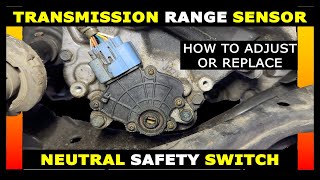
- If the connector is clean, attempt to adjust the sensor. Loosen the bolts and slightly rotate it. Have a helper try to start the car in Park. If it starts, tighten the bolts and re-verify function. For a precise adjustment, set the gear to Neutral and use a 2.0mm feeler gauge to align the holes on the switch body before tightening. 🎬 Watch: Step-by-step guide to adjusting or replacing your Civic's range sensor.
- If adjustment does not work, test the sensor itself. A YouTube guide for a similar model shows checking for continuity across pins while shifting; continuity should only be present for the selected gear, not at all times. If the test fails, the sensor is bad.
- After replacement, confirm the vehicle starts ONLY in Park and Neutral and that the reverse lights function correctly. Clear the trouble code with a scanner and perform a test drive to ensure smooth shifting.
Parts You'll Likely Need
- Transmission Range Sensor / Neutral Safety Switch
(OEM #28900-PLX-023)— This is the most common point of failure for the P0705 code on this vehicle due to wear and environmental exposure. The OEM part number 28900-PLX-023 supersedes older part numbers 28900-PLX-003 and 28900-PLX-013.
Trusted brands: Honda (Genuine OEM), Standard Motor Products, Beck/Arnley, Wells, TRQ
OEM price range: $100-$180
Aftermarket price range: $40-$90
Related Codes That Often Appear With This One
- P0706 — P0706 indicates a 'Transmission Range Sensor Circuit Range/Performance' issue. It is very closely related to P0705 and points to the same set of faulty components, just a different type of signal error.
Platform-Specific Known Issues
- The 2001-2005 Civic generation is known for automatic transmission failures, but this P0705 code is related to an external sensor and is NOT an indicator of internal transmission failure. It is a much simpler and cheaper fix.
- A user on a Honda Civic Forum with a blinking 'D' light noted their issue began after rebuilding the transmission and noticing a small crack in the range sensor housing, highlighting the part's fragility.
Mechanic-Grade Diagnostic Values
- Transmission Range Sensor Continuity Test — expected: With the sensor connector unplugged, there should be continuity ONLY between the specified terminals for each gear position. P: Terminals 2-3. R: Terminals 2-4. N: Terminals 2-5. D: Terminals 2-9. D3: Terminals 2-8. 2: Terminals 2-7.. Failure: No continuity on the correct pins for a selected gear, or continuity between pins when it should be open. A common failure is having continuity on a pin in all gear positions.
- Voltage at PCM Connector (Key ON, Engine OFF) — expected: With the PCM connectors exposed (behind glove box), back-probe the specified pins. There should be battery voltage (approx. 12V) at pins A23 and A24 when referenced to ground (like pin C10).. Failure: Voltage below 10V or no voltage indicates a wiring issue between the PCM and the transmission range sensor.
Scan Tool Commands That Help
- Honda Diagnostic System (HDS): Live Data List / A/T Data List — To verify the PCM's interpretation of the gear position. The HDS can display the ON/OFF status of each individual gear input (P, R, N, D, etc.) simultaneously. A technician can shift through the gears and watch the live data to see if the PCM is receiving multiple inputs at once or an incorrect input, which confirms a sensor, wiring, or adjustment fault.
- Honda Diagnostic System (HDS): Clear A/T DTCs — After the repair is complete, the HDS is used to clear the specific transmission-related fault codes. This is a required step before test driving to verify the fix.
Wiring & Ground Locations
- PCM Connector Pins A23, A24, C10 — The PCM is located behind the passenger side glove box. Connectors A, B, C, etc., are typically labeled from bottom to top.. These specific pins are part of the transmission range sensor circuit. Testing for voltage here is a definitive way to check the integrity of the wiring harness between the sensor and the computer without having to trace the entire length of the wires.
- G101 (ECU/Powertrain Ground) — Bolted to the thermostat housing on the engine block.. This is a primary ground for the engine and powertrain control systems. Corrosion or a loose connection here can cause a wide range of erratic electrical behavior and sensor reading faults, including P0705.
- Transmission Case Ground — A ground strap running from the chassis (often near the battery tray or on the radiator support) to a bolt on the transmission case.. Ensures the transmission case itself has a solid ground reference. Since the range sensor is mounted to the case, a poor ground here can affect the sensor's operation and lead to faulty signals.
Real Owner Repair Stories
- Honda-Tech Forum User (2004 Honda Civic EX, 140k miles) — P0705 code, blinking 'D' light, car would not engage gear properly when cold. After warming up, it would drive mostly normal but with CEL on.
❌ Tried (didn't work) Replacing the transmission range sensor with a new one.
✅ What actually fixed it After the new sensor didn't fix it, the user followed the service manual to the final step. They reseated all PCM connectors behind the glove box and thoroughly cleaned the transmission range sensor's electrical connector a second time. This resolved the cold-start issue, suggesting a marginal connection was the root cause. - YouTube Creator 'anonymous garage' (2001-2005 Honda Civic) — After installing a JDM (Japanese Domestic Market) replacement transmission, the car was popping out of gear while driving and the gear indicator lights on the dash were not working correctly.
❌ Tried (didn't work) Simply installing the sensor without adjustment.
✅ What actually fixed it The fix was to adjust the original US-spec range sensor on the JDM transmission. With the car on and the front wheels in the air, the user loosened the two 10mm sensor bolts. While a helper shifted into 'Drive', the user physically rotated the sensor until the 'D' light on the instrument cluster illuminated correctly, then tightened the bolts. This synchronized the sensor's electrical position with the transmission's mechanical position.
Documented NHTSA Reports
- An owner of a similar Honda model reported in NHTSA ODI #11174984 that within a week of driving, the check engine light illuminated with codes P0700, P0705, and P0740 present, all in relation to the automatic transmission.
- In NHTSA ODI #10544028, a report for a related Honda vehicle noted the transmission was failing due to codes P0705 and P0706, with a dealership stating it would require a full transmission replacement.
OEM Part Supersession History
28900-PLX-003, 28900-PLX-013→28900-PLX-023— Standard part revision and consolidation by the manufacturer.
Heads up: None. The newer part number 28900-PLX-023 is a direct, backward-compatible replacement for the older versions.
Model Year Variations Within This Range
- 2001-2005: While the 2004-2005 facelift models received some internal automatic transmission updates to improve reliability compared to the 2001-2003 models, the external transmission range sensor (P/N 28900-PLX-023), its location, and the diagnostic/repair procedure for code P0705 remain identical across the entire 2001-2005 generation.
Diagnostic Flowchart
Used vs. New Parts: Buying Guide for This Vehicle
When a used part is the smart pick: A used OEM sensor from a junkyard is a reasonable choice for this repair, especially if on a tight budget. Since it's an external electronic part, failure is often due to corrosion or cracking rather than internal mechanical wear, making visual inspection effective.
Donor-vehicle mileage cap: roughly under 100000 miles for the part to have meaningful remaining life.
What to inspect on the donor part:
- Inspect the connector pins for any signs of green or white corrosion.
- Check the plastic housing for any cracks, especially around the mounting holes.
- Ensure the metal lever arm moves smoothly and is not bent or damaged.
- If possible, source the part from a vehicle in a dry, salt-free climate.
OEM-only on this vehicle (don't cheap out):
- Powertrain Control Module (PCM) — Aftermarket or improperly matched used PCMs can cause a host of issues and are not recommended.
Aftermarket brands forum-validated for this vehicle:
- Beck/Arnley
- Standard Motor Products (SMP)
- Wells
Brands owners have reported issues with on this vehicle:
- Unbranded, low-cost sensors from online marketplaces (e.g., eBay, Amazon) are a significant gamble. Forum users often report these parts failing within a few months or being dead-on-arrival.
Real Owner Stories
Aggregated from forums and TSBs cited above. Mileages and costs reflect what owners reported in those sources.
2004 Honda Civic EX 4 door — 140000 miles
Symptoms: The issue would only happen on a cold start, especially in winter. The car would throw code P0705, the 'D' light would blink, and it would be difficult to accelerate because it seemed like the transmission wouldn't engage a gear. After warming up, it would drive mostly normally, but the Check Engine Light stayed on.
What fixed it: After replacing the range switch didn't work, the owner reseated all the PCM connectors and cleaned the range switch connector again. After an ECU reset, the code was gone and the transmission shifted smoothly.
Source hint: Honda-Tech.com forum post, URL hint: P0705/blinking d light
2001-2005 Honda Civic
Symptoms: After a transmission rebuild, the 'D' light started blinking and the car felt sluggish. Resetting the battery would temporarily fix it, but the problem always returned.
What fixed it: Upon inspection, the owner discovered a small crack in the housing of the Transmission Range Sensor, which was the cause of the failure.
Source hint: HondaCivicForum.com thread titled 'Blinking D light & sluggish acceleration'
Related OBD-II Codes
Frequently Asked Questions
My 2003 Civic's 'D' light is blinking. Does this mean my whole transmission is failing?
My Honda Civic only starts in Neutral, but not in Park. Is this related to the P0705 code?
Where is the Transmission Range Sensor located on a 2001-2005 Civic?
Can I just adjust the sensor to fix the P0705 code, or do I have to replace it?
I replaced the range sensor on my Civic, but the P0705 code and blinking 'D' light came back. What else should I check?
My reverse lights stopped working at the same time the Check Engine Light came on. Are these issues connected?
I have a 2004 Acura EL with these same symptoms. Does this article apply?
Helpful Videos

We Have This Part in Stock


The information in this article is provided for general reference and educational purposes only. Vehicle specifications, procedures, and part compatibility can vary by production date, trim level, and region. Always consult your vehicle's factory service manual and verify part numbers before purchasing or performing repairs. Safety-critical components such as airbags, seat belts, and braking systems should be installed by a qualified professional.
- Honda Civic:
- 🧭 Diagnostic Flowchart
- 🎬 Helpful Videos
- 🛍️ Shop This Part
- What's Unique About the 2001-2005 Honda Civic
- Symptoms You May Notice
- Most Likely Causes
- Rare But Worth Checking
- Diagnosis Steps
- Parts You'll Likely Need
- Related Codes That Often Appear With This One
- Platform-Specific Known Issues
- Mechanic-Grade Diagnostic Values
- Scan Tool Commands That Help
- Wiring & Ground Locations
- Real Owner Repair Stories
- Documented NHTSA Reports
- OEM Part Supersession History
- Model Year Variations Within This Range
- Used vs. New Parts: Buying Guide for This Vehicle
- Real Owner Stories
- 2004 Honda Civic EX 4 door — 140000 miles
- 2001-2005 Honda Civic
- Related OBD-II Codes
- Frequently Asked Questions
- 🎟️ Get 5% Off