

P0705 on 2007-2012 Mercedes-Benz GL-Class: Transmission Range Sensor Fault Guide
On a 2007-2012 Mercedes-Benz GL-Class, code P0705 almost always means the transmission conductor plate has failed. This internal component, part of the 7G-Tronic (722.9) transmission, contains the transmission range sensor. The most common fix is to repair or replace the conductor plate, which can cost between $1,500 and $2,500 at a shop. A more affordable option is removing the plate and sending it to a specialist for repair for around $500-$800, which also avoids the need for dealer programmin
- P0705 on your GL-Class points directly to a known weak spot: the transmission's internal conductor plate.
- Do not drive the vehicle. It is unsafe as it can lose power or get stuck in gear unexpectedly.
- The most economical fix is often to have a skilled mechanic remove the conductor plate and send it to a specialist for repair, which avoids costly dealer programming.
- A full dealer replacement is the most expensive option, often costing over $2,000.
- Always use a Mercedes-specific scan tool for diagnosis to avoid misinterpreting generic codes.
What's Unique About the 2007-2012 Mercedes-Benz GL-Class
Unlike many vehicles where the transmission range sensor is an inexpensive, externally mounted switch, Mercedes-Benz integrated it into the conductor plate assembly for the 722.9 transmission. This assembly also houses the Transmission Control Unit (TCU) and various speed sensors (Y3/8n1, Y3/8n2, Y3/8n3). This design choice means a simple sensor failure requires a complex and expensive repair inside the transmission, often involving the entire conductor plate unit. This is a widely documented common failure point for this transmission platform. There are three main versions of this conductor plate, known as VGS1, VGS2, and VGS3, with similar failure modes but different replacement requirements.
Symptoms You May Notice
- Transmission enters 'limp mode' (stuck in one gear, usually 2nd or 3rd).
- Harsh, erratic, or delayed shifting.
- Vehicle will not start, or will only start in Neutral.
- The gear selector indicator on the dashboard does not match the actual gear or is blank.
- Check Engine Light is illuminated.
- Sudden loss of drive, as if shifted into neutral while driving.
- Car drives fine when cold, but the code appears and limp mode engages once the transmission heats up.
- Replacing the gear shifter assembly. The shifter sends a signal, but the P0705 code indicates the fault lies with the receiving sensor circuit in the transmission, not the shifter itself.
- Blaming the entire transmission. While the fault is inside the transmission, it's typically limited to the electronic conductor plate, not the mechanical gears or clutches. A full transmission rebuild is rarely necessary for just a P0705 code.
- Replacing the battery. While a failing battery can cause numerous strange electronic issues on a Mercedes, it is not a direct cause of a P0705 code, which points specifically to the range sensor circuit.
Most Likely Causes
- Faulty Transmission Conductor Plate 🔴 High Probability → Shop Transmission Assembly The Transmission Range Sensor (TRS), designated Y3/8s1, is integrated into the conductor plate, a known high-failure item on the 722.9 transmission due to heat and vibration. The internal circuits and delicate sensor contacts degrade over time, leading to intermittent or total failure.
How to confirm: Diagnosis with a Mercedes-specific scan tool (like STAR/Xentry) is required to read the manufacturer-specific fault codes from the TCM. The P0705 code is a strong indicator, often accompanied by other speed sensor codes (e.g., P0717, P2767) that point directly to a faulty conductor plate.
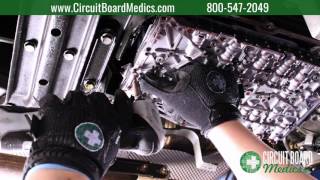
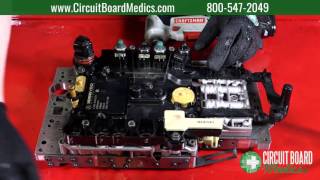
Typical fix: The conductor plate must be either repaired by a specialist service or replaced entirely. Replacement requires programming the new unit to the vehicle, while repairing the original unit does not. 🎬 Watch: How to remove and repair the conductor plate
Est. part cost: $200-$400 (for repair service), $1000-$1200 (for a new OEM part kit).
Rare But Worth Checking
- Low or Contaminated Transmission Fluid: → Shop Transmission Assembly While less common for this specific code, incorrect fluid level or fluid contaminated with coolant (from a leaking radiator) or metallic debris can cause a host of electronic and hydraulic issues in the 722.9 transmission. One forum user reported that a simple fluid and filter change resolved their conductor plate symptoms, suggesting debris was interfering with the sensors. It's a crucial baseline check.
- Wiring Harness Connector Leak: In rare cases, the main 13-pin transmission wiring connector can leak fluid. The fluid can wick up the wiring harness and contaminate the Transmission Control Module (TCM) or other control units in the vehicle, causing various electrical faults. The connector itself is an inexpensive part (Part No. A2035400253) and should be inspected.
- Faulty Intelligent Servo Module (ISM / A80): The ISM is the external module that physically shifts the transmission's gear selector rod. A fault within the ISM can prevent the transmission from knowing its own state, potentially logging a P0705 code. This is a less common cause but should be considered if the conductor plate has been replaced and issues persist. A faulty ISM can also log codes like P0706 and U0101.
- Misadjusted or Faulty Shift Linkage: A physical problem with the shift linkage, while rare on this electronically controlled system, could theoretically cause a mismatch between the driver's selected gear and what the range sensor reports.
Diagnosis Steps
- Scan the vehicle with a Mercedes-Benz specific diagnostic tool (like STAR/Xentry or a Foxwell with MB software) to confirm P0705 and check for any other transmission-related codes.
- Check the transmission fluid level and condition using the service dipstick tool (the vehicle does not have one from the factory). Ensure it is not low, burnt, or contaminated.
- Inspect the main 13-pin electrical connector at the transmission for fluid leaks or corrosion. If fluid is present, it may have wicked up the harness.
- If codes point definitively to the range sensor or other speed sensors on the conductor plate (e.g., Y3/8n1, Y3/8n2), the next step is to drop the transmission pan.
- Remove the valve body assembly to access the conductor plate.
- Visually inspect the conductor plate for any obvious damage. Note whether it is a VGS1, VGS2, or VGS3 unit.
- Either replace the conductor plate with a new, programmed unit or send the original plate to a specialist for repair, which avoids programming.
Parts You'll Likely Need
- Transmission Conductor Plate
(OEM #A0002702600 (supersedes A0002701700))— This is the primary failure point for code P0705. The range sensor is integrated into this part. Note that there are VGS1, VGS2, and VGS3 versions; replacement may depend on your vehicle's original unit.
Trusted brands: Genuine Mercedes-Benz, OE Supplier (Continental/Siemens)
OEM price range: $1000-$1300
Aftermarket price range: N/A (Repair services are the alternative) - Transmission Conductor Plate Repair Service — A cost-effective alternative to buying a new part. It repairs the faulty sensors on your original unit, avoiding the need for expensive dealer SCN coding.
Trusted brands: Circuit Board Medics, Module Repair Pro, ECU Testing
OEM price range: N/A
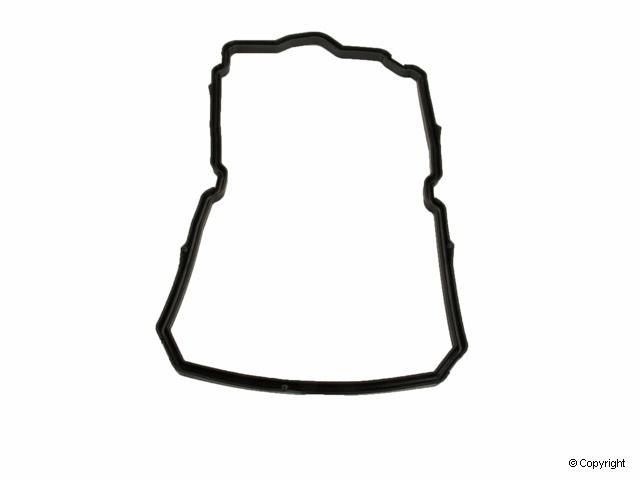
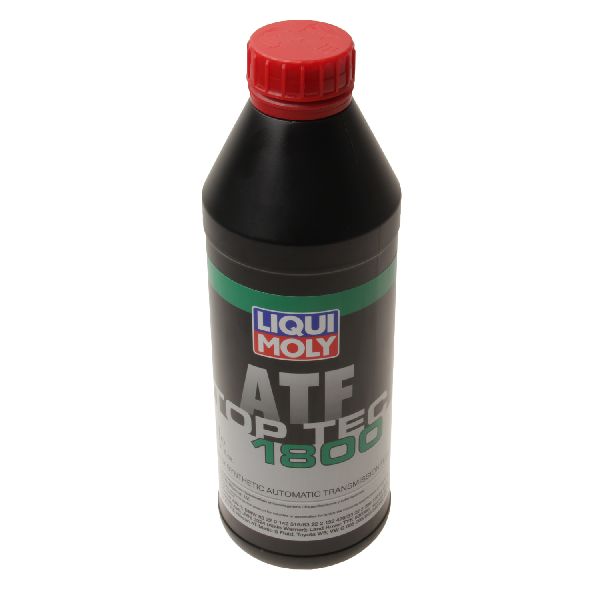
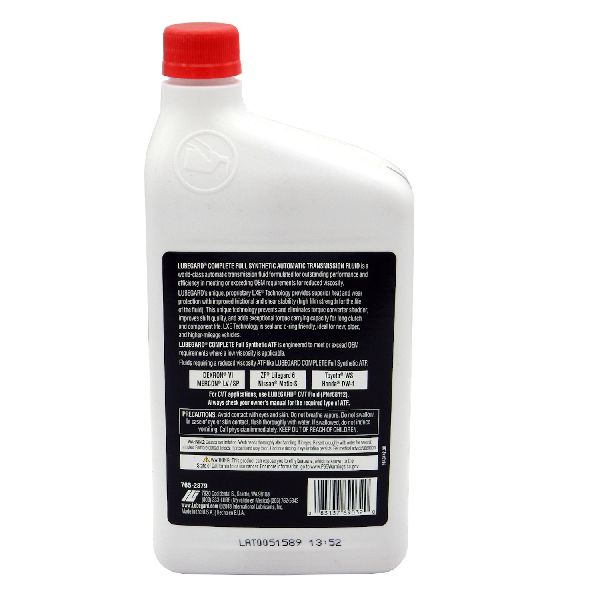
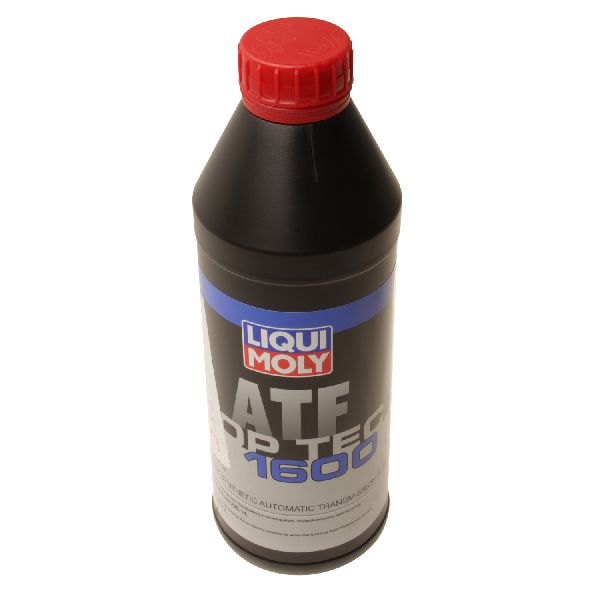
Aftermarket price range: $200-$400 - Transmission Filter, Pan Gasket, and Fluid Kit — These items must be replaced anytime the transmission pan is removed for service.
Trusted brands: Genuine Mercedes-Benz, Febi, Vaico, FCP Euro Kit
OEM price range: $150-$250
Aftermarket price range: $80-$150 - Transmission Connector Adapter Plug
(OEM #A2035400253)— This 13-pin connector is a common leak point. It's inexpensive and highly recommended to replace whenever servicing the valve body to prevent future issues.
Trusted brands: Genuine Mercedes-Benz, URO Parts
OEM price range: $15-$25
Aftermarket price range: $10-$20
Related Codes That Often Appear With This One
- P2767 — The signal from component Y3/8n2 (Internal Speed Sensor (VGS)) is not available. This sensor is also on the conductor plate and often fails along with the range sensor.
- P0722 — Output Speed Sensor (Y3/8n3) circuit no signal. This sensor is also part of the conductor plate assembly.
- P0717 — The signal from component Y3/8n1 (Turbine speed sensor (VGS)) is not available. Another common code related to a failing conductor plate.
- P0718 — Component Y3/8n1 (Turbine speed sensor (VGS)) is defective. This is another variation pointing to the same failing sensor on the conductor plate.
Technical Service Bulletins (TSBs) & Recalls
- LI27.60-P-049762: This service bulletin addresses fault codes for the speed sensors (Y3/8n1, Y3/8n2, Y3/8n3) on the 722.9 transmission, which are located on the conductor plate and are directly related to the P0705 fault.
Platform-Specific Known Issues
- The 7G-Tronic (722.9) transmission's conductor plate is a well-known, widespread failure point across many Mercedes-Benz models from this era, not just the GL-Class.
- Early models (approx. 2007) are more likely to have the VGS1 or VGS2 conductor plate. If replacing a VGS1 plate with a newer version, the entire valve body may also need to be replaced, significantly increasing cost.
Hidden / Shadow Codes Worth Checking
- 0705: Component Y3/8s1 (Selection range sensor (VGS)) is defective. This is the manufacturer-specific version of the generic P0705 code. (see via Mercedes-Benz STAR/Xentry diagnostic system.)
- 0706: Check component Y3/8s1 (Selection range sensor (VGS)). This code indicates a performance or range issue with the sensor. (see via Mercedes-Benz STAR/Xentry diagnostic system.)
- 2216: Check component Y3/8s1 (Selection range sensor (VGS)). The adaptation sequence occurred outside the valid range. This points to a failure during the sensor's learn-in process. (see via Mercedes-Benz STAR/Xentry diagnostic system.)
- P2805: The signal from components Y3/8s1 (selection range sensor) and/or A80 (intelligent servo module) for Direct Select is not plausible. This code suggests a conflict between the range sensor and the ISM. (see via Mercedes-Benz STAR/Xentry diagnostic system.)
Scan Tool Commands That Help
- Xentry/DAS or compatible (Foxwell NT510, Thinkcar): Initial startup / Teach-in process for selection range sensor — Required after replacing the conductor plate (TCU). The process involves personalizing and activating the new module and then teaching the sensor the gear positions (P, R, N, D).
- Xentry/DAS or compatible: Detach transport protection — This is the first step when installing a new, virgin conductor plate or Intelligent Servo Module (ISM). It allows the module to be personalized to the vehicle.
- Xentry/DAS or compatible: SCN (Software Calibration Number) Coding — Required to 'marry' a new, virgin conductor plate to the vehicle's VIN. This downloads vehicle-specific software to the module and is a theft-relevant procedure often requiring dealer access.
- Xentry/DAS or compatible (iSCAN): Perform calibration (for ISM) — After installing a new Intelligent Servo Module (A80), this function is used to teach the module its operational range. Failure to do this will result in no shifting.
Wiring & Ground Locations
- Engine Compartment Fuse/Relay Box — Located in the engine bay, typically on the right (passenger) side under a cover.. This box contains fuses and relays critical for engine and transmission control units. Fuse 103 (25A) is listed for the CDI control unit, which communicates with the transmission.
- W10 — Ground point located in the left side of the engine compartment.. Serves as a ground for various engine bay components. A poor ground here can cause widespread electrical issues that could potentially affect sensor readings.
- W11/1 — Ground point located in the right side of the engine compartment.. Provides a ground path for components on the right side of the engine. Ensuring this ground is clean and tight is a basic step in diagnosing any complex electrical fault.
Real Owner Repair Stories
- MBWorld.org Forums (Mercedes-Benz GL320 (X164)) — Transmission going into limp mode, initially after hard acceleration, then becoming more frequent until it happened on every drive. Check engine light was on.
❌ Tried (didn't work) The owner did not report trying other fixes first, but researched the high cost of dealer replacement ($2000+).
✅ What actually fixed it The owner removed the valve body and conductor plate, sent the conductor plate to a specialist repair service (Circuit Board Medics), and reinstalled the repaired original part. This resolved the limp mode and also fixed a separate issue of a clunky downshift into 1st gear when cold.
OEM Part Supersession History
VGS1 Conductor Plate (e.g., A0335456632)→VGS2 (e.g., A0335457332) or VGS3 (e.g., A0034460310) plates.— Improved design and reliability. The original VGS1 plates were prone to failure.
Heads up: If replacing a VGS1 conductor plate with a new part from Mercedes-Benz, you are required to purchase the entire valve body assembly along with the new conductor plate. This significantly increases the cost. VGS2 and VGS3 plates can be purchased individually.
Model Year Variations Within This Range
- 2007 (and earlier 722.9 models): Early GL-Class models are more likely to be equipped with the VGS1 or VGS2 conductor plate. VGS1 plates have a higher failure rate and a more expensive replacement path if buying new from the dealer, as it requires replacing the valve body as well.
Diagnostic Flowchart
Other Known Issues on This Vehicle
Issues unrelated to this code that are worth knowing about as an owner of this generation:
- Airmatic Suspension Failure 🔴 High — Very common, especially after 80,000-100,000 miles. Leaking air springs/struts and failing compressors are the primary culprits.
- M273 V8 Balance Shaft / Idler Gear Wear 🔴 High — Affects earlier M273 engines (approx. before engine serial # 2739xx 30 088611). Worn gear material leads to timing issues, check engine light (P0016/P0017), and potential catastrophic engine damage if ignored. (Ref: A class-action lawsuit settlement provided extended coverage, but it has since expired.)
- Power Tailgate Latch/Motor Failure 🟠 Medium — Common issue where the tailgate fails to soft-close and latch securely, often due to a failed latch motor or software issues in the control module.
- Engine Oil Cooler Seal Leaks 🟠 Medium — The seals between the oil cooler and the engine block degrade, causing significant oil leaks into the engine valley. Affects both M272 V6 and M273 V8 engines. (Ref: An updated, more durable seal (Viton material) was introduced by Mercedes to fix this.)
- Intake Manifold Swirl Flap Actuator Failure 🟠 Medium — A plastic lever on the intake manifold's swirl flap control system breaks, causing performance issues and a check engine light. The lever itself is inexpensive, but replacing it can be labor-intensive.
Used vs. New Parts: Buying Guide for This Vehicle
When a used part is the smart pick: A used/junkyard conductor plate is NEVER a smart choice. It is a high-failure electronic part that is VIN-locked ('personalized') to the donor vehicle. Installing it in another car will not work without being 'virginized' and reprogrammed by a specialist, which negates any cost savings. The only viable non-new option is to have your ORIGINAL conductor plate repaired by a specialist service. This is highly recommended as it preserves the original programming, making it plug-and-play upon reinstallation.
What to inspect on the donor part:
- When sending your original plate for repair, ensure it is removed carefully from the valve body and packed securely to prevent physical damage to the delicate sensors and plastic housing.
OEM-only on this vehicle (don't cheap out):
- Transmission Conductor Plate (TCU/VGS). While repair services are an excellent alternative, if you must replace the entire unit, only a new Genuine Mercedes-Benz part should be used. Aftermarket clones are not available or reliable, and a used part is VIN-locked.
Aftermarket brands forum-validated for this vehicle:
- For repair services: Circuit Board Medics, ECU Testing, and UpFix are frequently mentioned in forums and videos as reliable options for rebuilding the original conductor plate.
Brands owners have reported issues with on this vehicle:
- Avoid any used conductor plates from unknown online sellers (e.g., eBay, Amazon) unless they are explicitly sold as 'virginized' or pre-programmed to your VIN by a reputable service. Even then, the risk of failure is high.
Real Owner Stories
Aggregated from forums and TSBs cited above. Mileages and costs reflect what owners reported in those sources.
2011 GL350 — 185000 miles
Symptoms: While at highway speed, transmission will kick out of gear (acts like in neutral). I have to pull over and turn vehicle off, once restarted it operates normal.
What fixed it: The user did not follow up with a confirmed fix, though diagnostic codes pointed to the Transmission Range Sensor.
Source hint: MBWorld.org Forums thread titled '2011 GL350 - P0705 - MBWorld.org Forums'
2007 GL450
Symptoms: Car won't shift out of park, check engine light on. Resetting the transmission control module did not help.
What fixed it: Identified as a likely transmission conductor plate failure.
Source hint: MBWorld.org Forums thread titled 'Transmission problems, P0705 - MBWorld.org Forums'
Related OBD-II Codes
Frequently Asked Questions
My 2007 GL450 won't shift out of Park and the Check Engine Light is on. Is this related to P0705?
Does TSB LI27.60-P-049762 apply to the P0705 code on my 7G-Tronic transmission?
Can I use a used conductor plate from a junkyard to fix my GL-Class?
Why does my GL-Class drive fine when cold but enter limp mode once the engine warms up?
If I need to replace the conductor plate on my 2007 GL-Class, will I also need a new valve body?
Is there a way to fix P0705 without having to program a new part to my Mercedes?
Helpful Videos
We Have This Part in Stock
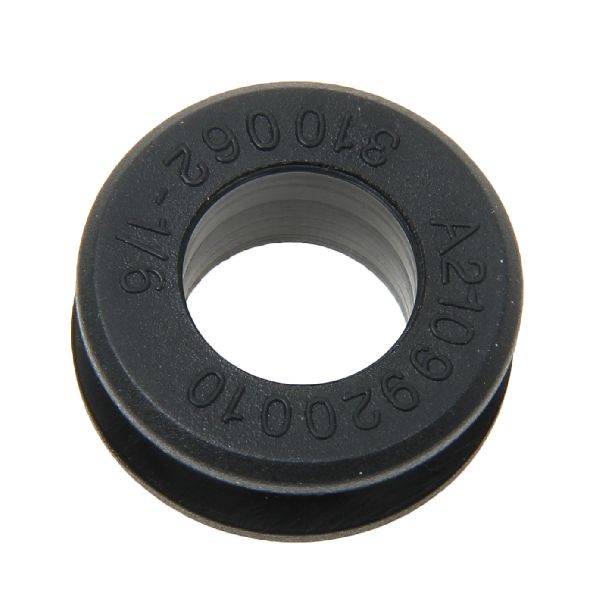

The information in this article is provided for general reference and educational purposes only. Vehicle specifications, procedures, and part compatibility can vary by production date, trim level, and region. Always consult your vehicle's factory service manual and verify part numbers before purchasing or performing repairs. Safety-critical components such as airbags, seat belts, and braking systems should be installed by a qualified professional.
- Mercedes-Benz GL-Class:
- 🧭 Diagnostic Flowchart
- 🎬 Helpful Videos
- 🛍️ Shop This Part
- What's Unique About the 2007-2012 Mercedes-Benz GL-Class
- Symptoms You May Notice
- Most Likely Causes
- Rare But Worth Checking
- Diagnosis Steps
- Parts You'll Likely Need
- Related Codes That Often Appear With This One
- Technical Service Bulletins (TSBs) & Recalls
- Platform-Specific Known Issues
- Hidden / Shadow Codes Worth Checking
- Scan Tool Commands That Help
- Wiring & Ground Locations
- Real Owner Repair Stories
- OEM Part Supersession History
- Model Year Variations Within This Range
- Other Known Issues on This Vehicle
- Used vs. New Parts: Buying Guide for This Vehicle
- Real Owner Stories
- 2011 GL350 — 185000 miles
- 2007 GL450
- Related OBD-II Codes
- Frequently Asked Questions
- 🎟️ Get 5% Off