

P0707 on 2006-2016 Chevrolet Malibu: Transmission Range Sensor Failure Causes and Fixes
On a 2006-2016 Chevrolet Malibu, code P0707 almost always points to a failed Transmission Range Sensor (also known as a Neutral Safety Switch) or its wiring. Expect to pay $50-$100 for an aftermarket sensor and around 1-2 hours of labor for the replacement.
- P0707 on your Malibu most likely means the Transmission Range Sensor (TRS) has failed or its wiring is corroded.
- Key symptoms include the car not starting, or only starting in Neutral.
- Before replacing the sensor, always inspect the electrical connector on the transmission for corrosion (green/white crust) and clean it thoroughly.
- This is a serious issue that should be fixed promptly, as it can leave you stranded or create a safety hazard.
- A DIY replacement is possible for those with moderate experience, but it requires safely accessing the side of the transmission.
What's Unique About the 2006-2016 Chevrolet Malibu
Across the Malibu generations from 2006 to 2016, which used the 4-speed 4T45-E and later the 6-speed 6T40/6T45 transmissions, the Transmission Range Sensor is a common failure point. This trait is shared with many other GM vehicles of this era using the same transmissions. The sensor is mounted externally on the transmission case, exposing it and its electrical connector to road salt, moisture, and debris. This design makes corrosion of the connector pins and wiring harness a very common cause for P0707, sometimes even more so than the sensor itself failing internally.
Generation note: This guide covers the 6th (2006-2007), 7th (2008-2012), and 8th (2013-2016) generations of the Chevrolet Malibu. While the specific transmission and part numbers may differ (e.g., 4-speed 4T45-E in early models vs. 6-speed 6T40/6T45 in later ones), the fundamental cause of P0707—a faulty external range sensor or its wiring—and the diagnostic approach are consistent across all generations.
Symptoms You May Notice
- Check Engine Light is illuminated.
- Engine will not start at all.
- Engine only starts in Neutral, but not in Park (or vice-versa).
- Harsh or delayed gear engagement.
- Transmission shifts erratically or gets stuck in one gear (limp mode).
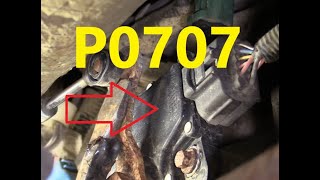
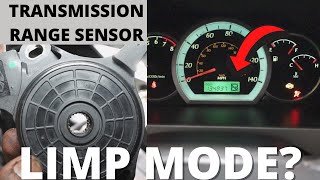
- Reverse lights do not work. 🎬 Watch this video to diagnose symptoms and clear the code.
- Gear indicator on the dashboard is dashboard is blank or incorrect.
- Replacing the starter when the vehicle doesn't crank. The root cause is often the TRS not sending the 'Park' or 'Neutral' signal to allow the starter to engage.
- Condemning the entire transmission. This is a simple sensor or wiring issue far more often than a major internal transmission failure.
- Overlooking a weak battery or poor ground connection, which can cause low circuit voltage and trigger the code.
Most Likely Causes
- Faulty Transmission Range Sensor (TRS) 🔴 High Probability → Shop Transmission Assembly The sensor is exposed to harsh environmental conditions on the outside of the transmission, leading to internal failure from moisture and temperature cycles. Water intrusion is a common failure mode.
How to confirm: After confirming the wiring is intact, test the sensor's internal resistance with a multimeter while shifting through the gears. The readings should change smoothly according to the service manual's specifications. If they are erratic or out of range, the sensor is bad.
Typical fix: Replace the Transmission Range Sensor and ensure the new one is correctly aligned. This is the most common repair for this code.
Est. part cost: $50-$150 - Corroded or Damaged Wiring/Connector 🔴 High Probability The sensor's location on the transmission case makes its wiring harness and connector highly susceptible to corrosion from road salt and water, or physical damage from road debris. The pins inside the connector can develop a green or white crust, indicating corrosion.
How to confirm: Visually inspect the connector for green or white corrosion on the pins, and check the harness for frayed, broken, or chafed wires. Perform a continuity test from the sensor connector to the TCM connector. An open circuit or high resistance points to a wiring fault.
Typical fix: Clean the connector terminals thoroughly with an electrical contact cleaner and a small brush. Apply dielectric grease before reconnecting to prevent future moisture intrusion. If corrosion is severe or the connector is damaged, a new pigtail connector may need to be spliced in.
Est. part cost: $5-$50 - Misadjusted Transmission Range Sensor 🟡 Medium Probability → Shop Transmission Assembly Vibrations or previous repair work can cause the sensor's alignment with the manual shift lever on the transmission to drift.
How to confirm: Use a scan tool to monitor the TRS data stream. The gear position displayed by the scan tool should exactly match the physical position of the gear shifter. If it doesn't, or if you can get the vehicle to start by wiggling the shifter, it indicates misalignment.
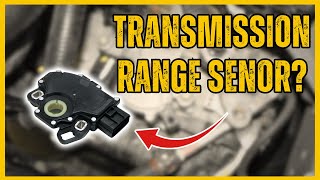
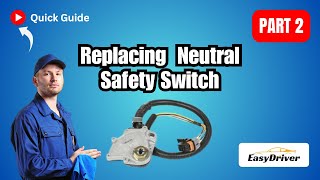
Typical fix: Loosen the sensor's mounting bolts and rotate it slightly until it is correctly aligned with the Neutral position, then retighten the bolts. Some replacement procedures require a special alignment tool, though many new parts come with a temporary alignment pin. 🎬 Watch: How to replace the sensor without using special tools.
Est. part cost: $0
Rare But Worth Checking
- Faulty Transmission Control Module (TCM) or Powertrain Control Module (PCM): → Shop Transmission Assembly This is rare and should only be considered after the sensor, wiring, and alignment have been definitively ruled out. The module's internal circuit that reads the sensor voltage can fail.
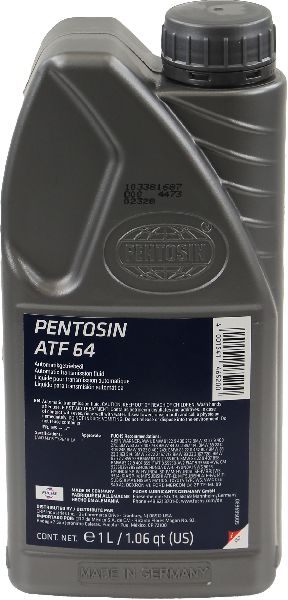
- Low or Contaminated Transmission Fluid: → Shop Transmission Assembly While it doesn't directly cause an electrical fault, extremely low or dirty fluid can cause erratic transmission behavior that may be misdiagnosed. It's a good supporting check.
- Damaged Shift Linkage: A loose or damaged shift linkage cable can prevent the manual valve on the transmission from moving correctly, which in turn prevents the TRS from reporting the correct gear. This can mimic a sensor failure.
Diagnosis Steps
- Read the trouble codes with an OBD-II scanner. Note any other transmission-related codes.
- Visually inspect the Transmission Range Sensor, its connector, and wiring harness on the side of the transmission. Look for obvious signs of corrosion (green/white powder), moisture, or physical damage.
- Disconnect the connector and check for corroded pins. Clean with electrical contact cleaner and a plastic bristle brush if necessary, then apply dielectric grease.
- Use a scan tool with live data capability to view the Transmission Range Sensor PID. As you move the gear selector through P-R-N-D-L, verify that the position displayed on the scan tool matches the shifter.
- If the signal is absent or incorrect, use a multimeter to check for proper reference voltage (usually 5V or 12V) and ground at the sensor connector per your vehicle's service manual.
- If wiring provides correct power and ground, test the sensor itself. Check for correct resistance values across the pins as you move the selector shaft. If the values are out of spec or jump erratically, the sensor has failed.
- If the sensor and wiring test good, check the alignment of the sensor. Also inspect the shift linkage for excessive play or damage.
- If all other possibilities are exhausted, the issue may be a rare failure of the TCM/PCM.
Parts You'll Likely Need
- Transmission Range Sensor
(OEM #24229422 (For 4-speed 4T45-E, may vary for 6-speed models))— This is the most common component to fail, causing the P0707 code. It is also known as the Neutral Safety Switch or Park/Neutral Position Switch.
Trusted brands: ACDelco, Dorman, Rostra
OEM price range: $90-$180
Aftermarket price range: $40-$100
Related Codes That Often Appear With This One
- P0705 — P0705 indicates a general malfunction in the TRS circuit, while P0707 specifically points to a 'low input' fault. They can appear together if the sensor signal is intermittent or completely lost.
- P0706 — P0706 indicates a 'Range/Performance' problem, meaning the signal is irrational (e.g., between gears). This can occur with P0707 if the sensor is failing or severely misadjusted.
Technical Service Bulletins (TSBs) & Recalls
- While no TSB is specific to P0707 on the Malibu, several GM TSBs address related issues. TSB 09-07-30-012F and Special Coverage 14404B deal with internal transmission problems (broken 3-5-R wave plate) on the 6T70/75 transmissions, which can cause erratic shifting and set various DTCs. It's important to rule out these more severe issues if other symptoms are present.
- A manufacturer investigation described in TSB Bulletin # IB15-K-002A noted that inhibitor switches (range sensors) replaced for DTC P0707 were frequently returned to the warranty center with "No Trouble Found" (NTF), suggesting that the root cause is often external to the sensor itself.
- Manufacturer TSB Bulletin #PIT5677E lists P0707 among several codes that may be triggered by electrical circuit issues across various GM platforms, emphasizing the importance of thorough circuit testing.
Platform-Specific Known Issues
- On models with the 4-speed automatic (like the 2006-2007 Malibu), the TRS part number is often cited as GM 24229422 or ACDelco D2263C.
- For 7th generation Malibus (2008-2012) with the 6-speed 6T40 transmission, the wiring harness connector is particularly prone to water intrusion, often requiring a new pigtail connector in addition to the sensor.
- A real-world repair story from a forum user on a 2009 Malibu involved the car failing to start and throwing code P0707. The fix was replacing the neutral safety switch (TRS) located on top of the transmission. The owner noted the most difficult part was removing the shift linkage from the switch's stud.
Mechanic-Grade Diagnostic Values
- Transmission Range Sensor 'A' Voltage PID — expected: Varies by gear, typically between 0.5V and 4.5V across the full range of motion.. Failure: A value below 0.5V when a gear is selected confirms the low-circuit condition triggering P0707.
- Wiring Harness Continuity (Sensor to TCM) — expected: Typically 0 - 2 kΩ, consult service manual for exact specification.. Failure: An open circuit (OL) or resistance significantly higher than the specified range indicates a break in the wire.
Scan Tool Commands That Help
- GM GDS2 / Tech2 or equivalent professional scanner: Range Sensor Test / Output Control — This bidirectional test allows the technician to command the sensor circuit and observe the response on the scan tool, helping to isolate a faulty sensor from a wiring or TCM issue without manual probing.
- GM GDS2 or equivalent professional scanner: Transmission Relearn / Reset Functions — After replacing the transmission range sensor, performing a relearn function helps the TCM sync with the new component's specific values, ensuring accurate gear reporting and preventing residual codes.
Wiring & Ground Locations
- G106 (on early models with 3.5L engine) — On the transmission housing, near the park/neutral position switch (TRS).. A poor ground at this location can cause a voltage drop across the entire sensor circuit, leading to a P0707 code even if the sensor and wiring are good.
- G105 — Located on the stud connecting the engine to the transmission.. This is a major ground point for powertrain components. Corrosion or a loose connection here can cause various electrical issues, including erratic sensor readings.
- G121 (on later models, e.g., 2015) — On the right front side of the engine block.. Serves as a signal ground for the TCM. A fault here can directly impact the voltage reading from the transmission range sensor.
- TCM Connector (2007 3.5L) — Located in the left rear of the engine compartment, near the strut tower.. This is the termination point for the TRS wiring. Pins labeled 'Trans sw sig a', 'Trans sw sig c', and 'Trans sw sig p' are the specific inputs from the range sensor to test for continuity.
OEM Part Supersession History
GM 24229422→ACDelco D2263C— Standard part number update and branding change from GM to ACDelco Genuine Parts.
Heads up: These parts are directly interchangeable. Other equivalent OE numbers include 12450016 and D2285A.
Model Year Variations Within This Range
- 2006-2007 (and some early 2008): These models primarily use the 4-speed 4T45-E automatic transmission. The TRS is part number 24229422 (or its supersession D2263C) and is located on the side of the transmission case, where the shift lever attaches.
- 2008-2016: These models use the 6-speed 6T40/6T45 automatic transmission. The TRS is a different part (e.g., Dorman 511-110) and is located on the top of the transmission, under the shift cable bracket, making access slightly more involved.
Diagnostic Flowchart
Other Known Issues on This Vehicle
Issues unrelated to this code that are worth knowing about as an owner of this generation:
- Sudden Loss of Electric Power Steering (EPS) 🔴 High — Very common on 2006-2012 models. Steering can suddenly become very heavy, especially at low speeds. (Ref: Recalls N140115, 14116, 14117. GM issued multiple recalls and extended warranties to replace components like the torque sensor or the entire steering column.)
- 6-Speed (6T40/6T70) Transmission 3-5-R Wave Plate Failure 🔴 High → Shop Transmission Assembly — Common in 2008-2012 models, typically between 60,000 and 120,000 miles. Results in loss of Reverse and/or gears 3 and 5. (Ref: Special Coverage 14404B / TSB 09-07-30-012F. GM extended warranty coverage for this specific failure to 10 years/120,000 miles.)
- Excessive Engine Oil Consumption (2.4L Ecotec) 🟠 Medium — Affects 2010-2013 models with the 2.4L engine. Can be caused by stuck piston rings. (Ref: TSB PI0562D. Dealers may perform a piston soak or replace the pistons and rings under certain conditions.)
- Timing Chain Wear/Failure (2.4L Ecotec) 🔴 High — Prevalent in 2010-2013 models. Worn chains, guides, and tensioners can cause rattling noises and eventual engine failure if not addressed.
- Electrical System Glitches 🟡 Low — Reported across many model years, especially early 2010s. Symptoms include flickering lights, malfunctioning radio/infotainment, and issues with power locks/windows.
Used vs. New Parts: Buying Guide for This Vehicle
When a used part is the smart pick: A used part is generally NOT recommended for the Transmission Range Sensor itself, as it is a high-failure item due to environmental exposure. However, sourcing a used wiring harness pigtail from a junkyard is a very smart choice if your original connector is corroded or damaged beyond cleaning.
Donor-vehicle mileage cap: roughly under 80000 miles for the part to have meaningful remaining life.
What to inspect on the donor part:
- For a pigtail: Inspect the connector for any signs of green or white corrosion on the pins.
- Check that the plastic locking tabs are intact and not brittle.
- Ensure the wires have at least 6-8 inches of length for splicing and are not stiff, cracked, or frayed.
OEM-only on this vehicle (don't cheap out):
- While not strictly OEM-only, using a quality ACDelco (OEM) or reputable aftermarket sensor is highly advised over a used one to avoid a repeat failure.
Aftermarket brands forum-validated for this vehicle:
- ACDelco (OEM)
- Dorman
- Rostra
Real Owner Stories
Aggregated from forums and TSBs cited above. Mileages and costs reflect what owners reported in those sources.
2009 Malibu
Symptoms: The car was failing to start and throwing code P0707.
What fixed it: Replacing the neutral safety switch (Transmission Range Sensor) located on top of the transmission. The owner noted the most difficult part was removing the shift linkage.
Source hint: A real-world repair story from a forum user cited in vehicle_specific_issues
2009 Malibu
Symptoms: No-start conditions, erratic shifting, and the inability to use remote start.
What fixed it: Replacing the neutral safety switch/range sensor resolved the issues.
Cost: $40-$50
Source hint: chevymalibuforum.com thread '2009 Malibu wont start code p0707'
Related OBD-II Codes
Frequently Asked Questions
My 2009 Malibu won't start and has code P0707. What's the most likely problem?
My Malibu starts in Neutral but not in Park. Is this related to the P0707 code?
I have a 2007 Malibu with the 4-speed automatic. Is there a specific part number for the range sensor?
My 2011 Malibu has P0707 and is shifting very harshly. Could it be the 3-5-R wave plate issue I've heard about?
Is there anything I should check on my 2010 Malibu with the 6-speed transmission before replacing the sensor?
Can I fix P0707 by just adjusting the sensor?
Helpful Videos

We Have This Part in Stock



The information in this article is provided for general reference and educational purposes only. Vehicle specifications, procedures, and part compatibility can vary by production date, trim level, and region. Always consult your vehicle's factory service manual and verify part numbers before purchasing or performing repairs. Safety-critical components such as airbags, seat belts, and braking systems should be installed by a qualified professional.
- Chevrolet Malibu:
- 🧭 Diagnostic Flowchart
- 🎬 Helpful Videos
- 🛍️ Shop This Part
- What's Unique About the 2006-2016 Chevrolet Malibu
- Symptoms You May Notice
- Most Likely Causes
- Rare But Worth Checking
- Diagnosis Steps
- Parts You'll Likely Need
- Related Codes That Often Appear With This One
- Technical Service Bulletins (TSBs) & Recalls
- Platform-Specific Known Issues
- Mechanic-Grade Diagnostic Values
- Scan Tool Commands That Help
- Wiring & Ground Locations
- OEM Part Supersession History
- Model Year Variations Within This Range
- Other Known Issues on This Vehicle
- Used vs. New Parts: Buying Guide for This Vehicle
- Real Owner Stories
- 2009 Malibu
- 2009 Malibu
- Related OBD-II Codes
- Frequently Asked Questions
- 🎟️ Get 5% Off