

P0711 on 2012-2017 Hyundai Accent: Transmission Temperature Sensor Causes and Fixes
On a 2012-2017 Hyundai Accent, code P0711 is most often caused by a faulty transmission fluid temperature sensor. This sensor is integrated into the internal transmission wiring harness, which must be replaced as a single unit. The repair involves dropping the transmission pan and valve body.
- P0711 on a 2012-2017 Accent almost always means the internal transmission wiring harness has failed.
- The temperature sensor is part of the harness and cannot be replaced separately.
- The repair is complex, requiring removal of the transmission pan and valve body, and is best left to a professional.
- Do not replace the entire transmission; the fix is a specific, known issue addressed by Hyundai TSBs.
- Always use the correct Hyundai SP-IV specification transmission fluid when refilling.
What's Unique About the 2012-2017 Hyundai Accent
For the 2012-2017 Hyundai Accent (RB generation) with the A6GF1 6-speed automatic transmission, the P0711 code is a very common issue. Hyundai has issued multiple Technical Service Bulletins (TSBs) acknowledging the problem. A key point for this vehicle is that the transmission fluid temperature sensor is not a separate, standalone part. Due to high failure rates of the original design, Hyundai updated the component so it is now permanently integrated into the main internal wiring harness inside the transmission. Therefore, fixing the sensor requires replacing the entire harness assembly, which is a more involved job than on vehicles with an external or separately replaceable sensor.
Symptoms You May Notice
- Check Engine Light is on
- Harsh, delayed, or erratic gear shifts
- Transmission may enter 'limp mode', often stuck in one gear (like 3rd gear)
- Hesitation during acceleration
- Reduced fuel economy
- Transmission may feel like it's slipping
- Transmission may slam into gear, particularly when cold or shifting from Park.
- Replacing the entire transmission when only the internal harness is needed.
- Replacing individual solenoids when the fault lies with the temperature sensor or its wiring within the harness.
- Assuming the temperature sensor is a separate part that can be purchased and installed, which is not true for the updated design required for the repair.
Most Likely Causes
- Failed Internal Transmission Wiring Harness (with integrated Temperature Sensor) 🔴 High Probability → Shop Transmission Assembly Hyundai has updated this part due to high failure rates, as noted in TSB 14-AT-010. The original design allowed for a separate sensor, but the updated, required replacement part integrates the sensor into the harness itself. This is a known weak point across many Hyundai and Kia models using the A6GF1 transmission.
How to confirm: Use a diagnostic scan tool to monitor the transmission fluid temperature data. If the reading is stuck at a specific value (e.g., -40°F), jumps around erratically, or doesn't increase as the car warms up, the sensor/harness assembly has failed.
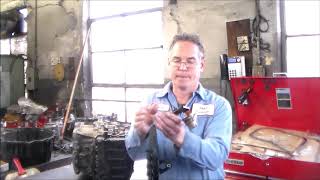
Typical fix: Replace the entire internal transmission wiring harness (Part No. 46307-2F000). 🎬 Watch: Step-by-step guide to replacing the internal wiring harness. This requires removing the transmission pan and the valve body to access and swap the harness.
Est. part cost: $150-$200 - Low or Degraded Transmission Fluid 🟡 Medium Probability → Shop Transmission Assembly These transmissions are sensitive to fluid level and quality. If the fluid is low, it can overheat, causing erratic sensor readings and setting a P0711 code. Many owners never service the 'lifetime' fluid, leading to degradation.
How to confirm: Check the transmission fluid level and condition. The 2012-2017 Accent does not have a traditional dipstick. The level must be checked via a fill plug on the side of the transmission case when the fluid is at a specific temperature (typically 122-140°F or 50-60°C). Fluid should be red and clear, not brown, black, or burnt-smelling.
Typical fix: Perform a transmission fluid drain and fill with the correct Hyundai-specific fluid (SP-IV). If the fluid was very low, inspect for leaks.
Est. part cost: $60-$120 - Damaged Wiring or Connectors (External) ⚪ Low Probability
How to confirm: Visually inspect the wiring harness leading to the main transmission connector for any signs of damage, corrosion, or loose pins. This is less common than the internal harness failing but should be checked.
Typical fix: Repair the damaged section of the wiring harness or clean/replace the affected connector.
Est. part cost: $10-$50
Rare But Worth Checking
- Faulty Powertrain Control Module (PCM): This is extremely rare. The PCM should only be considered after all other possibilities, including the wiring harness and fluid, have been thoroughly ruled out. TSBs instruct to replace the PCM only if the DTC returns after replacing the harness.
Diagnosis Steps
- Connect an OBD-II scanner and confirm the presence of P0711 and any other related codes (P0712, P0713).
- Using the scanner's live data function, monitor the 'Transmission Fluid Temperature' reading from a cold start. The reading should be close to the ambient air temperature and engine coolant temperature.
- Start the vehicle and let it warm up. The transmission temperature should rise steadily. If it stays at a fixed low value (like -40°F), a fixed high value, or jumps erratically, the sensor/harness is faulty.
- If the sensor reading appears plausible, check the transmission fluid level and condition. This must be done at the correct operating temperature (50-60°C / 122-140°F) as specified by Hyundai.
- If the fluid and sensor readings are good, inspect the external wiring harness and connector to the transmission for any visible damage, corrosion, or loose connections.
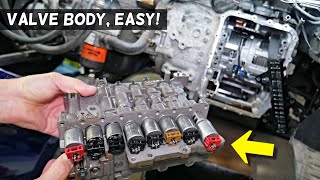
- If the sensor reading is confirmed to be faulty, the next step is to replace the internal transmission wiring harness, which contains the integrated temperature sensor. This involves removing the valve body. 🎬 See how to safely remove the transmission valve body.
Parts You'll Likely Need
- Internal Transmission Wiring Harness
(OEM #46307-2F000)— This is the primary cause of code P0711 on this vehicle. This is an updated part from Hyundai that integrates the temperature sensor, which is not sold separately for the repair.
Trusted brands: Hyundai/Kia (Genuine OEM)
OEM price range: $150-$200
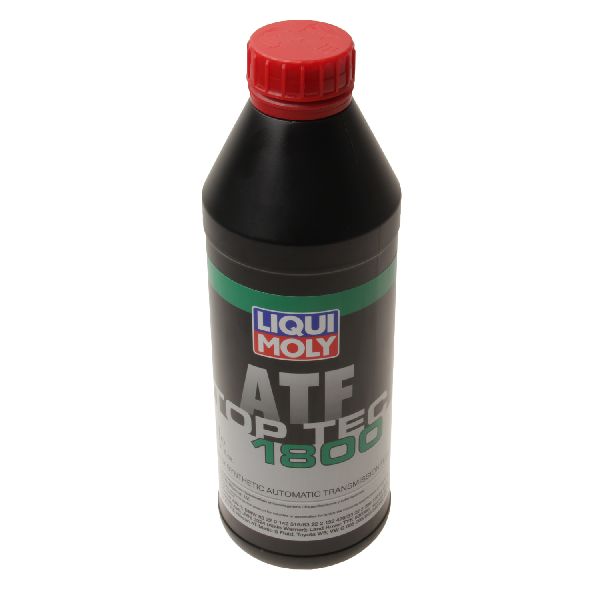
Aftermarket price range: $100-$150 - Hyundai SP-IV Automatic Transmission Fluid — The transmission fluid must be drained to perform the repair and should be replaced with the correct OEM-spec fluid. Approximately 4-5 quarts are needed.
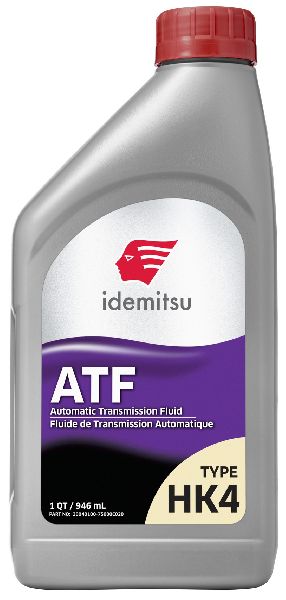
Trusted brands: Hyundai/Kia (Genuine OEM), Valvoline MaxLife ATF, Idemitsu TLS-LV, Eneos Model T-F
OEM price range: $15-$25 per quart
Aftermarket price range: $8-$15 per quart - Transmission Pan Gasket or Sealant — The transmission pan must be removed and will require a new gasket or RTV sealant upon reinstallation to prevent leaks. The A6GF1 has a side pan with a reusable gasket, but it should be inspected for damage.
Trusted brands: Hyundai (Genuine OEM), Permatex
OEM price range: $20-$40
Aftermarket price range: $10-$20
Related Codes That Often Appear With This One
- P0712 — This code indicates 'Transmission Fluid Temperature Sensor Circuit Low Input', which is another symptom of the same failing sensor/harness.
- P0713 — This code indicates 'Transmission Fluid Temperature Sensor Circuit High Input', also pointing directly to a failure of the same sensor/harness assembly.
Technical Service Bulletins (TSBs) & Recalls
- 14-AT-010: AUTOMATIC TRANSAXLE (6-SPEED) OIL TEMPERATURE SENSOR P0711, P0712 & P0713. This is the definitive TSB, instructing technicians to replace the harness.
- 13-AT-012-1: OIL TEMPERATURE SENSOR DTC P0711, P0712 & P0713. An earlier, superseded version of the same bulletin.
Platform-Specific Known Issues
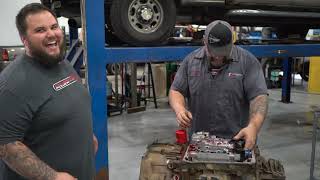
🎬 Watch: Top 5 common problems for this Hyundai Accent generation.- Hyundai has issued Technical Service Bulletin 14-AT-010 (which supersedes 13-AT-012 and 13-AT-012-1) specifically for the 6-speed automatic transmission, covering the 2012-2017 Accent (RB) among many other models like the Elantra, Sonata, and Veloster. The TSB explicitly states not to replace the entire transaxle for DTCs P0711, P0712, or P0713, but to instead replace the internal wiring harness which includes the temperature sensor.
Mechanic-Grade Diagnostic Values
- Transmission Fluid Temperature Sensor Resistance — expected: Approximately 2.5 kΩ at 20°C (68°F), with resistance decreasing as temperature increases. For example, around 1.08 kΩ at 80°C (176°F).. Failure: An open circuit (infinite resistance), a short circuit (near zero resistance), or a resistance value that does not change as the fluid warms up indicates a failed sensor.
- TFT Sensor Reference Voltage at Harness Connector — expected: Approximately 5.0 Volts DC with the ignition on, engine off.. Failure: No voltage or significantly lower voltage suggests a wiring issue or a problem with the PCM, not the sensor itself.
- Live Data Comparison (Cold Engine) — expected: The Transmission Fluid Temperature reading should be within 5-7°F of the Engine Coolant Temperature and Ambient Air Temperature readings before starting a cold engine.. Failure: A TFT reading that is wildly different (e.g., stuck at -40°F) from the other two sensors on a cold engine immediately points to a faulty sensor circuit.
Scan Tool Commands That Help
- Hyundai GDS or equivalent professional scan tool: TCM Relearn / Reset Adaptive Values — This procedure is required after replacing the internal wiring harness or valve body. It resets the transmission's learned shift parameters to factory defaults, allowing it to adapt to the new components and prevent harsh shifting.
- Hyundai GDS or equivalent professional scan tool: Driving Learning Procedure — After a static relearn, a specific driving cycle is needed. This typically involves driving at a steady 15-30% throttle to allow upshifts through all gears, followed by coasting downshifts, repeated multiple times to complete the adaptation.
Wiring & Ground Locations
- Transmission Main Connector Pins 9 & 13 — On the main 14-pin electrical connector that plugs into the side of the A6GF1 transmission case.. These are the specific pins for the Transmission Fluid Temperature sensor circuit. Resistance tests can be performed directly at these pins (with the connector unplugged) to test the integrity of the internal harness and sensor without removing the transmission pan.
- PCM (Powertrain Control Module) — In the engine bay. For this generation Accent, the TCM is integrated within the PCM; there is no separate transmission control module.. This is the computer that receives the signal from the TFT sensor. All external wiring checks will trace back to this module. Knowing it's an integrated unit prevents a fruitless search for a separate TCM.
Real Owner Repair Stories
- YouTube channel 'dial2fast' (Hyundai Elantra with A6GF1 transmission (same family as Accent)) — Check engine light with P0711/P0713, very hard shifts, slams into gear when selecting Reverse or Drive.
❌ Tried (didn't work) Initial diagnosis considered rodent-damaged wiring due to mouse droppings found on the transmission, but wiring was intact.
✅ What actually fixed it The scan tool showed a stuck temperature reading of -34°F. The technician replaced the transmission temperature sensor (on a model where it was still separate from the harness). After replacement, the scan tool immediately showed a plausible reading of 114°F and the hard shifting was resolved. - NHTSA ODI #11407975 — An owner reported that a transmission oil temperature sensor and harness malfunction led to violent and rough shifting, making the vehicle scary to drive.
- NHTSA ODI #11055621 — A driver experienced the transmission jumping and slipping after the check engine light came on with code P0711, noting that a technical bulletin had been available for the part since 2014.
OEM Part Supersession History
46386-3B000 (Sensor Only)→46307-2F000 (Integrated Harness Assembly)— High failure rate of the original separate temperature sensor design. Hyundai updated the service part to an integrated harness where the sensor is permanently attached to improve reliability and simplify the part list.
Heads up: While you may find the old separate sensor for sale, it is not the recommended or official repair part per Hyundai's TSBs. The updated harness (46307-2F000) is the correct and most reliable fix.
Diagnostic Flowchart
Other Known Issues on This Vehicle
Issues unrelated to this code that are worth knowing about as an owner of this generation:
- Steering Coupler Disintegration 🟠 Medium — Extremely common. A clicking or clunking noise from the steering column when turning is the primary symptom. Usually appears after 50,000 miles. (Ref: No specific recall for the Accent, but a widely known issue across many Hyundai/Kia models of this era. A class-action lawsuit was filed for some models regarding power steering failure.)
- Peeling Exterior Paint (Especially White) 🟡 Low — Very common on vehicles with white paint. Large flakes or sheets of paint peel from the roof, hood, and other panels, often starting after 3-5 years. (Ref: Hyundai extended the paint warranty for many models due to this issue after public pressure and lawsuits, though the Accent was not always explicitly listed in all extensions.)
- Engine Misfires due to Ignition Coil Failure 🟠 Medium — A common cause for a flashing check engine light and rough running conditions. Coils may fail intermittently before failing completely.
- Engine Wiring Harness Chafing 🔴 High — A plastic wire tie holding the engine harness to a transmission bracket can break, allowing the harness to rub against the bracket, wearing through the insulation and causing shorts. This can blow fuses and cause stalling.
- Failing Canister Purge Valve 🟡 Low — A common issue that can cause a check engine light and difficulty starting the car after refueling.
Used vs. New Parts: Buying Guide for This Vehicle
When a used part is the smart pick: For this specific repair, a used part is almost never a smart choice. The internal wiring harness is a known high-failure component, and the plastic and wiring become brittle over time from constant heat cycles inside the transmission. The significant labor cost to access the part (removing the valve body) makes installing a used part with an unknown history extremely risky.
Donor-vehicle mileage cap: roughly under 30000 miles for the part to have meaningful remaining life.
What to inspect on the donor part:
- If forced to use a donor part, source it from the lowest-mileage, most recent model year vehicle possible.
- Visually inspect the plastic for any signs of cracking, brittleness, or discoloration.
- Test the resistance of the integrated temperature sensor at the connector pins before purchase to ensure it reads within spec at ambient temperature.
OEM-only on this vehicle (don't cheap out):
- Internal Transmission Wiring Harness (46307-2F000)
Aftermarket brands forum-validated for this vehicle:
- No aftermarket brands are consistently recommended over the Genuine Hyundai/Kia OEM part for this specific component. The risk of premature failure or incompatibility with the PCM is too high.
Brands owners have reported issues with on this vehicle:
- Unnamed, no-brand harnesses from online marketplaces should be avoided due to the critical nature of the part and the high labor cost of replacement.
Documented NHTSA Reports
- NHTSA ODI #11103012 — An owner reported that their engine light came on with codes P0713 and P0711, and a repair facility verified that the sensor inside the vehicle needed to be replaced.
- NHTSA ODI #11244780 — A report questioned why there is not a recall for the transmission temperature sensor given that the P0711 problem continues to happen to many people.
Real Owner Stories
Aggregated from forums and TSBs cited above. Mileages and costs reflect what owners reported in those sources.
2013 Hyundai Sonata
Symptoms: Check Engine Light with code P0711.
What fixed it: Replacement of the sensor and harness inside the transmission.
Cost: $1100-$1100
Source hint: Reddit - r/MechanicAdvice: Is $1100 a reasonable price to replace a sensor and harness in the transmission?
Hyundai Elantra (A6GF1 Transmission)
Symptoms: Check Engine Light with code P0711.
What fixed it: Replaced the internal transmission harness with the updated one-piece part (46307-2F000), which required removing the valve body for installation.
Source hint: YouTube - Transmission D&E: A6GF1,Hyundai Elantra Code P0711
2013 Hyundai Elantra
Symptoms: Engine code P0711.
What fixed it: The repair discussed was replacing the temperature sensor, which is located inside the transmission on the valve body.
Source hint: Reddit - r/Hyundai: Engine code p0711. Can I fix it myself?
Related OBD-II Codes
Frequently Asked Questions
Is there a specific TSB for the P0711 code on my 2012-2017 Accent?
My mechanic says I need a whole new transmission for a P0711 code. Is that correct?
What is the part number for the most common fix for P0711 on this car?
My scanner shows the transmission temperature is stuck at -40°F. What does that mean?
How do I check the transmission fluid on my 2015 Accent since it has no dipstick?
Does this P0711 harness problem affect other cars besides the Accent?
Helpful Videos



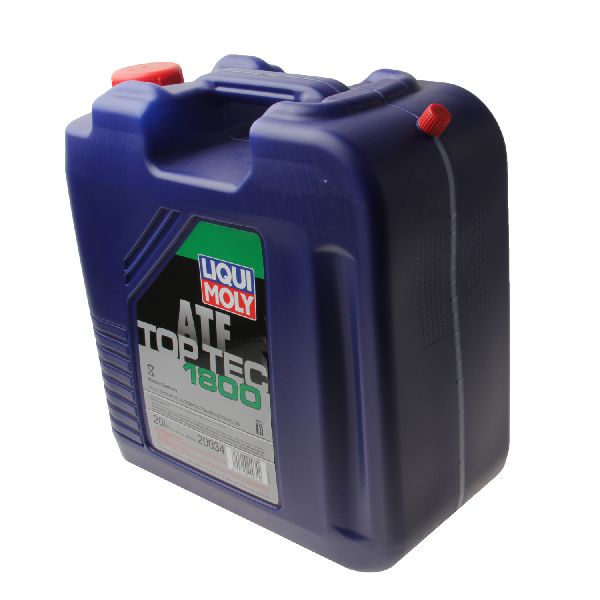
We Have This Part in Stock

The information in this article is provided for general reference and educational purposes only. Vehicle specifications, procedures, and part compatibility can vary by production date, trim level, and region. Always consult your vehicle's factory service manual and verify part numbers before purchasing or performing repairs. Safety-critical components such as airbags, seat belts, and braking systems should be installed by a qualified professional.
- Hyundai Accent:
- 🧭 Diagnostic Flowchart
- 🎬 Helpful Videos
- 🛍️ Shop This Part
- What's Unique About the 2012-2017 Hyundai Accent
- Symptoms You May Notice
- Most Likely Causes
- Rare But Worth Checking
- Diagnosis Steps
- Parts You'll Likely Need
- Related Codes That Often Appear With This One
- Technical Service Bulletins (TSBs) & Recalls
- Platform-Specific Known Issues
- Mechanic-Grade Diagnostic Values
- Scan Tool Commands That Help
- Wiring & Ground Locations
- Real Owner Repair Stories
- OEM Part Supersession History
- Other Known Issues on This Vehicle
- Used vs. New Parts: Buying Guide for This Vehicle
- Documented NHTSA Reports
- Real Owner Stories
- 2013 Hyundai Sonata
- Hyundai Elantra (A6GF1 Transmission)
- 2013 Hyundai Elantra
- Related OBD-II Codes
- Frequently Asked Questions
- 🎟️ Get 5% Off