

P0713 on 2011-2017 Hyundai Azera: Transmission Temperature Sensor Fixes
This code means the transmission temperature sensor circuit has an electrical fault, usually an open circuit. On this Azera, it's almost always a failed internal transmission wiring harness which includes the sensor. Expect to pay a shop $600-$1200 for the repair, which involves dropping the transmission pan and valve body.
- P0713 on a 2011-2017 Azera points directly to a failure of the internal transmission wiring harness, which contains the temperature sensor.
- Do not continue to drive the vehicle, as the resulting harsh shifting and high line pressure can cause expensive secondary damage to the transmission.
- This is not a DIY-friendly repair for most home mechanics due to the need to remove the transmission valve body.
- Ensure the repair shop is aware of Hyundai's TSBs and replaces only the internal harness, not the entire transmission.
What's Unique About the 2011-2017 Hyundai Azera
For the 2011-2017 Azera with the A6LF1 6-speed automatic transmission, this code is very common and well-documented. Hyundai has issued multiple Technical Service Bulletins (TSBs) for this exact issue across many models using this transmission family. The key issue is that on later models (from March 2013 onwards), the temperature sensor is integrated into the main internal transmission wiring harness and cannot be replaced separately. This makes the repair more involved and costly than just swapping a simple sensor, as the entire valve body must be removed to replace the harness.
Generation note: The 2011-2017 range covers the end of the fourth generation (TG, 2011) and the entire fifth generation (HG, 2012-2017). Both generations use a 6-speed automatic transmission (A6LF-series) and are covered by the same TSBs for this issue, making the cause and fix nearly identical. The primary difference noted in TSBs is that models built after March 2013 have the sensor integrated into the wiring harness.
Symptoms You May Notice
- Check Engine Light is on
- Harsh, delayed, or erratic shifting, sometimes described as a 'bang' or 'jolt' when shifting into Drive or Reverse.
- Vehicle enters 'limp mode', often stuck in one gear (e.g., 3rd gear)
- Transmission over-temperature warning light may illuminate, even when the fluid is not hot
- Torque converter clutch will not engage at highway speeds, leading to higher RPMs and poor fuel economy
- Reduced fuel economy
- Replacing the entire transmission. Hyundai TSBs specifically advise against this, stating to replace the internal harness instead.
- Replacing the external vehicle speed sensor. The fault is with the internal fluid temperature sensor circuit.
- Assuming the transmission fluid is actually overheating without checking the live sensor data, which typically shows an impossibly cold temperature.
Most Likely Causes
- Failed Internal Transmission Wiring Harness (with integrated TFT Sensor) 🔴 High Probability → Shop Transmission Assembly This is a well-documented, high-failure item for this Hyundai 6-speed automatic transmission, as acknowledged in TSBs 13-AT-012, 14-AT-010, and 20-AT-014H. The plastic and wiring materials inside the transmission become brittle over time due to constant heat cycles, leading to cracks and internal open circuits in the harness assembly.
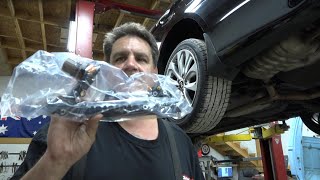
How to confirm: A scan tool will show a fixed, irrational temperature reading (e.g., -40°F) or a sensor voltage over 4.9V. A technician can perform a jumper wire test at the transmission's main external connector to isolate the fault. If the reading 🎬 See this walkthrough of the temperature sensor testing procedure. changes when the pins are jumped, the fault is confirmed to be inside the transmission.
Typical fix: Replace the entire internal valve body wiring harness. This requires removing the transmission pan and valve body.
Est. part cost: $140-$250 - Damaged External Wiring or Connectors ⚪ Low Probability
How to confirm: Visually inspect the wiring harness leading to the transmission for any signs of damage, corrosion, or loose pins at the main connector. Test for continuity and voltage between the TCM and the transmission connector pins.
Typical fix: Repair the damaged section of the wiring harness or clean/replace the connector.
Est. part cost: $10-$50
Rare But Worth Checking
- Faulty Powertrain Control Module (PCM) or Transmission Control Module (TCM): → Shop Engine Control Module (ECM) This is very rare. The PCM/TCM should only be suspected after all wiring and sensor possibilities have been exhaustively ruled out. It's more likely to be accompanied by other, unrelated codes.
Diagnosis Steps
- Connect an OBD-II scanner to the vehicle.
- Check for P0713 and any other related transmission codes (e.g., P0711, P0712).
- Monitor the live data for the Transmission Fluid Temperature Sensor. If it reads a static, extremely low temperature (like -40°F) or shows a voltage near 5V, it confirms a circuit high/open fault.
- Perform a thorough visual inspection of the external wiring and the main connector at the transmission case for any visible damage, corrosion, or loose pins.
- If external wiring is okay, the next step is to test the internal harness. This is an advanced procedure.
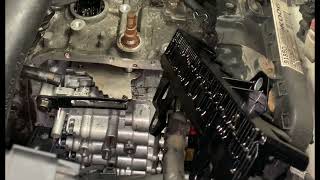
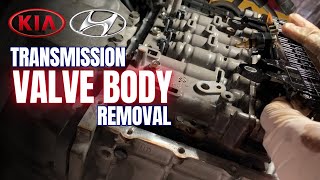
- Following the procedure in Hyundai TSB 14-AT-010, drain the transmission fluid, remove the pan, and then the valve body 🎬 Watch: Step-by-step guide to removing the valve body and harness. to access the internal wiring harness.
- Replace the internal wiring harness/sensor assembly. The OEM part number 46307-3B650 is the correct integrated harness for this application.
- Reassemble the valve body, pan (using a new gasket or specified sealant), and refill with the correct type and amount of Hyundai-specific ATF (SP-IV).
- Clear the codes and perform a test drive, including a stationary relearn procedure if recommended, to ensure the transmission shifts normally and the code does not return.
Parts You'll Likely Need
- Valve Body Wiring Harness / Temperature Sensor Assembly
(OEM #46307-3B650)— This is the most common failure point for the P0713 code on this platform, as documented in Hyundai TSBs. The temperature sensor is integrated into this harness. This part number supersedes previous versions 46307-3B610 and 46307-3B620.
Trusted brands: Hyundai (OEM)
OEM price range: $140-$250
Aftermarket price range: $75-$150 - Automatic Transmission Fluid (ATF)
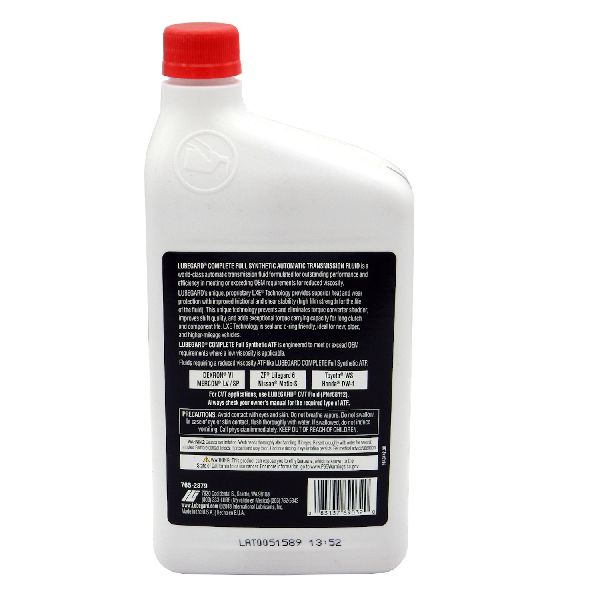
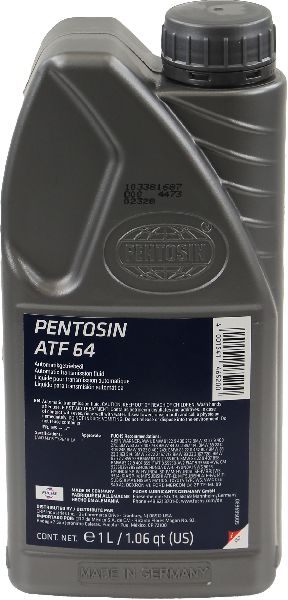
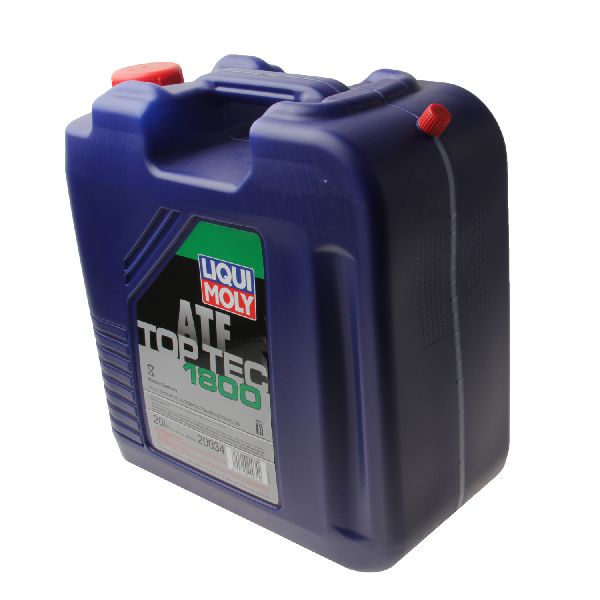
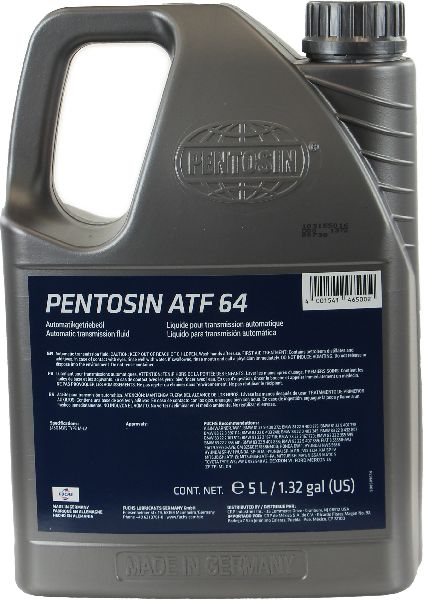
(OEM #00232-19057)— The transmission must be drained to perform the repair. It must be refilled with approximately 5-6 quarts of fluid that meets Hyundai's SP-IV or SP4-M specification.
Trusted brands: Hyundai Genuine SP4-M, Idemitsu TLS-LV, Valvoline MaxLife LV
OEM price range: $15-$25 per quart
Aftermarket price range: $8-$15 per quart - Transmission Oil Pan Gasket — A new gasket is required when removing the transmission pan to prevent leaks upon reassembly.
Trusted brands: Hyundai (OEM), Fel-Pro, Mahle
OEM price range: $20-$40
Aftermarket price range: $10-$25
Related Codes That Often Appear With This One
- P0711 — P0711 indicates an irrational or stuck temperature reading ('Rationality Check'), which can be a precursor or related failure of the same sensor. TSBs often group P0711, P0712, and P0713 together.
- P0712 — P0712 is the opposite fault (Circuit Low), indicating a short to ground. It's common to see TSBs address P0711, P0712, and P0713 together as they all relate to the same component.
- P0869 — This code for 'Transmission Line Pressure High' can be triggered as a direct result of P0713, as the TCM commands maximum pressure as a protective measure when it loses the temperature signal.
Technical Service Bulletins (TSBs) & Recalls
- TSB 14-AT-010: Supersedes previous bulletins and covers the 2011-2012 Azera (and other models) for P0711, P0712, and P0713, instructing technicians to replace the internal harness/sensor assembly instead of the whole transaxle.
- TSB 13-AT-012: An earlier version of the bulletin with similar instructions, noting the change to an integrated sensor/harness in March 2013.
- TSB 20-AT-014H: A later bulletin that continues to address these DTCs, confirming the long-standing nature of this issue and the repair procedure.
Platform-Specific Known Issues
- The internal transmission wiring harness is a known high-failure item on this 6-speed automatic transmission, leading to multiple TSBs being issued by Hyundai.
- Owners on forums frequently report that this repair, while costly, definitively solves the P0713 code and associated harsh shifting.
Mechanic-Grade Diagnostic Values
- TFT Sensor Resistance — expected: Approx. 2.51 kΩ at 20°C (68°F), 0.32 kΩ at 80°C (176°F), 0.18 kΩ at 100°C (212°F). Failure: Infinite resistance (OL) indicates an open circuit, which is the direct cause of P0713.
- TFT Sensor Voltage (at sensor) — expected: Max 3.26V at -40°C (-40°F), Min 0.29V at 150°C (302°F). Failure: A reading of ~5V indicates an open circuit between the sensor and the TCM, triggering the P0713 code.
- TCM Failsafe Temperature — expected: When P0713 is active, the TCM will default the TFT reading to a fixed value.. Failure: Scan tool shows a fixed temperature of 80°C (176°F) or -40°C/F.
Scan Tool Commands That Help
- Hyundai GDS (Global Diagnostic System): Resetting Auto T/A values — This function must be performed after replacing the valve body harness or the transaxle assembly to clear old adaptive shift data and initiate a relearn process for optimal shift quality.
- Hyundai GDS (Global Diagnostic System): Relearn Adaptive Values (Driving Procedure) — After resetting the adaptive values, a specific driving procedure is required. This involves accelerating gently to allow shifts through all gears and stopping, repeated 5 times, to allow the TCM to learn new shift parameters.
Wiring & Ground Locations
- C105 (3-Pin, Gray) — This is the main connector between the engine wiring harness and the TCM harness, located next to the EBCM (Electronic Brake Control Module).. This is a primary external test point to check for continuity and voltage for the TFT sensor circuit before assuming the fault is internal to the transmission.
- TCM Ground — The TCM grounds are typically located on the chassis near the module's mounting point or via specific ground distribution points detailed in the vehicle's wiring diagrams.. A poor ground connection for the TCM can cause a variety of erratic sensor readings, including a false P0713 code. Verifying a clean, tight ground is a crucial step in diagnosing any electrical fault.
- TFT Sensor Pins at TCM — The TFT sensor signal and ground reference wires run from the transmission to specific pins on the TCM connector.. Testing for the 5V reference and signal return at the TCM connector is the final step to confirm if the fault lies in the wiring/sensor or the TCM itself. An open circuit will show 5V on the signal wire.
Real Owner Repair Stories
- YouTube video by 'Precision Transmission' (2013 Hyundai Elantra (A6GF1 transmission, similar architecture)) — Check Engine Light with code P0711 (Rationality check, related to P0713).
❌ Tried (didn't work) The technician noted that on older models, the sensor was a simple, separate part. On this model, that was no longer the case.
✅ What actually fixed it The valve body had to be removed to replace the entire internal wiring harness, which now has the temperature sensor integrated into it. The video documents the entire process of dropping the valve body to access and replace the one-piece harness. - NHTSA ODI #11329064 (Hyundai Sonata) — An owner reported that while changing gears, the engine would shake badly. A diagnosis revealed code P0713 for a bad transmission temperature sensor.
OEM Part Supersession History
46307-3B610, 46307-3B620→46307-3B650— The original harnesses were prone to premature failure from heat-induced brittleness. The updated part number is intended to be a more durable revision.
Model Year Variations Within This Range
- Pre-March 2013: Some very early models in this generation may have had a separate, replaceable TFT sensor (Part # 46386-3B900). However, the integrated harness became the standard design and is the most common configuration found.
- Post-March 2013: Vehicles built after this date are guaranteed to have the temperature sensor integrated into the main internal wiring harness (46307-3B650), making the repair more complex as the valve body must be removed.
Diagnostic Flowchart
Other Known Issues on This Vehicle
Issues unrelated to this code that are worth knowing about as an owner of this generation:
- Steering Column Click/Noise 🟡 Low — Very common. A flexible coupling in the steering column wears out, causing a clicking noise when turning the wheel. Typically occurs after 60,000 miles. (Ref: Hyundai extended the warranty for this specific part under TSB 17-ST-002-1.)
- ABS Module Failure (Brake System Warning Lights) 🔴 High — Common. The ABS module can fail, potentially leading to a short circuit and an engine compartment fire. This can occur at any mileage. (Ref: Recall 23V651000 was issued for this issue, affecting the 2012-2015 Azera, among other models.)
- No Sound From Speakers 🟠 Medium — Frequently reported. The factory amplifier is a common failure point, leading to a complete loss of audio from the speakers. This can happen intermittently at first and then become permanent.
- Theta II GDI Engine Failure 🔴 High — While the Azera primarily used the V6, some related models with the 2.4L Theta II GDI engine had widespread issues with connecting rod bearing failure, leading to engine seizure. This prompted class-action lawsuits and massive recalls. (Ref: Multiple recalls and warranty extensions (e.g., NHTSA 17V226000) were issued, though primarily for 4-cylinder Sonata/Santa Fe models.)
Used vs. New Parts: Buying Guide for This Vehicle
When a used part is the smart pick: For this specific repair, a used part is NOT recommended. The failure is due to material degradation from heat cycles over time. A used harness from a junkyard vehicle has been subjected to the same conditions and is likely to fail soon, if it hasn't already. The significant labor cost to access the part makes installing a used one a very poor gamble.
Donor-vehicle mileage cap: roughly under 30000 miles for the part to have meaningful remaining life.
What to inspect on the donor part:
- If forced to consider used, demand a part from a very low-mileage, recent-year wreck.
- Physically inspect the harness plastic; any brittleness, cracking, or discoloration is a red flag.
- Avoid parts from vehicles in hot climates (e.g., Arizona, Texas) as they will have experienced more extreme heat cycles.
OEM-only on this vehicle (don't cheap out):
- Valve Body Wiring Harness / Temperature Sensor Assembly
Brands owners have reported issues with on this vehicle:
- Unbranded, no-name harnesses from online marketplaces. While significantly cheaper, there are no widespread reports confirming their long-term reliability. Given the labor-intensive nature of the job, using a part of unknown quality is a high risk.
Real Owner Stories
Aggregated from forums and TSBs cited above. Mileages and costs reflect what owners reported in those sources.
2011 Hyundai Santa Fe
Symptoms: Vehicle was showing a P0713 code.
What fixed it: The recommended repair was to replace the internal transmission wiring harness, as the sensor is integrated into it.
Cost: $900-$1000
Source hint: Reddit r/MechanicAdvice: '11 Hyundai Santa Fe: Should I replace Trans Temp Sensor?
2013 Hyundai Sonata
Symptoms: Check engine light was on with code P0711, which is related to P0713.
What fixed it: The required repair was the replacement of the sensor and harness inside the transmission.
Cost: $1100-$1100
Source hint: Reddit r/MechanicAdvice: Is $1100 a reasonable price to replace a sensor and harness in the transmission?
Related OBD-II Codes
Frequently Asked Questions
My mechanic says the transmission temperature sensor is inside the transmission on my 2012 Azera. Is this correct?
What is the correct part number for the internal wiring harness to fix code P0713?
Is there a recall for the P0713 code and harsh shifting on the 2011-2017 Azera?
I was quoted over $1,000 to replace the transmission harness. Is that a reasonable price?
I have a 2013 Hyundai Santa Fe with the same symptoms. Does this information apply?
What does TSB 14-AT-010 instruct a technician to do for this code?
Helpful Videos

We Have This Part in Stock


The information in this article is provided for general reference and educational purposes only. Vehicle specifications, procedures, and part compatibility can vary by production date, trim level, and region. Always consult your vehicle's factory service manual and verify part numbers before purchasing or performing repairs. Safety-critical components such as airbags, seat belts, and braking systems should be installed by a qualified professional.
- Hyundai Azera:
- 🧭 Diagnostic Flowchart
- 🎬 Helpful Videos
- 🛍️ Shop This Part
- What's Unique About the 2011-2017 Hyundai Azera
- Symptoms You May Notice
- Most Likely Causes
- Rare But Worth Checking
- Diagnosis Steps
- Parts You'll Likely Need
- Related Codes That Often Appear With This One
- Technical Service Bulletins (TSBs) & Recalls
- Platform-Specific Known Issues
- Mechanic-Grade Diagnostic Values
- Scan Tool Commands That Help
- Wiring & Ground Locations
- Real Owner Repair Stories
- OEM Part Supersession History
- Model Year Variations Within This Range
- Other Known Issues on This Vehicle
- Used vs. New Parts: Buying Guide for This Vehicle
- Real Owner Stories
- 2011 Hyundai Santa Fe
- 2013 Hyundai Sonata
- Related OBD-II Codes
- Frequently Asked Questions
- 🎟️ Get 5% Off