

P0713 on 2011-2015 Hyundai Sonata: Transmission Temperature Sensor Fixes
This code means the transmission temperature sensor circuit has an electrical fault, not that your fluid is hot. On these Sonatas, it's almost always a failed sensor inside the transmission, which is often part of the internal wiring harness. Expect a $400-$800 repair to replace the internal harness/sensor assembly.
- P0713 on your Sonata is an electrical fault, not an overheating problem.
- The cause is almost certainly a failed sensor inside the transmission, which is part of the internal wiring harness.
- This is a well-documented, common problem covered by a Hyundai Technical Service Bulletin (TSB).
- The repair is moderately expensive ($450-$850) and requires a professional to remove the transmission's valve body.
- Do not continue to drive with these symptoms, as the resulting harsh shifting can cause further transmission damage.
What's Unique About the 2011-2015 Hyundai Sonata
Hyundai has acknowledged this issue by releasing Technical Service Bulletin (TSB) 14-AT-010, which covers the 2011-2015 Sonata. The TSB explicitly states not to replace the entire transmission for this code. For vehicles built before March 2013, the temperature sensor could be replaced separately, but for those built after, the sensor is integrated into the main internal wiring harness of the transmission, requiring the entire harness assembly to be replaced. This makes the repair more involved than a simple external sensor swap and is a well-documented common failure on this platform.
Generation note: This range covers the end of the 6th generation (YF, 2011-2014) and the start of the 7th generation (LF, 2015). The issue and the corresponding TSB (14-AT-010) apply to both generations, indicating a common problem with the A6MF1 6-speed automatic transmission used in both.
Symptoms You May Notice
- Harsh, delayed, or erratic gear shifts, sometimes described as 'slamming' into gear.
- Vehicle enters 'Limp Mode', often stuck in 3rd gear.
- Check Engine Light is on.
- Torque converter clutch will not engage at highway speeds, leading to higher RPMs.
- Transmission may feel like it's slamming into gear when shifting from Park to Drive or Reverse. 🎬 Watch this walkthrough on fixing erratic shifting and changing fluid.
- The check engine light may turn on and off intermittently.
- Replacing the entire transmission. (Hyundai specifically advises against this in TSB 14-AT-010).
- Replacing the transmission fluid. (While low or dirty fluid can cause other problems, it will not cause a 'Circuit High' electrical fault code).
Most Likely Causes
- Failed Internal Transmission Wiring Harness / Temperature Sensor 🔴 High Probability → Shop Transmission Assembly As documented in Hyundai TSB 14-AT-010, this is the most common failure point. The sensor, a thermistor, fails internally creating an open circuit. On later models, it is integrated with the harness, and the entire assembly fails.
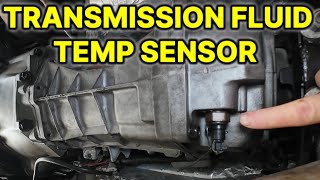
How to confirm: A technician will use a scan tool to observe the transmission fluid temperature reading. A reading of -40°F or a voltage over 4.9V points directly to an open circuit. The next step is to test the wiring at the main transmission connector to isolate the fault to inside the transmission before disassembly. 🎬 See how to test and replace the temperature sensor. Resistance across the sensor pins should match a specified chart (e.g., ~2.51 kΩ at 68°F/20°C).
Typical fix: Replace the internal transmission wiring harness assembly (which includes the new sensor). This requires draining the fluid, removing the transmission pan and valve body to access the part.
Est. part cost: $150-$250
Rare But Worth Checking
- Damaged External Wiring or Connector: While less common than internal failure, wiring between the TCM and the transmission case connector can become damaged from road debris or corrosion. A visual inspection and continuity test of the external harness should be performed before opening the transmission.
- Faulty Transmission Control Module (TCM): → Shop Transmission Assembly This is very rare. The TCM should only be considered after definitively ruling out the sensor, internal harness, and external wiring. A faulty TCM will typically cause multiple other codes and issues. Hyundai TSBs instruct to replace the PCM if the code returns after a harness replacement.
Diagnosis Steps
- Connect a professional scan tool to read the fault codes and view live data.
- Observe the Transmission Fluid Temperature (TFT) sensor data. A reading of -40°F or a voltage above 4.9V strongly suggests an open circuit.
- Inspect the main transmission harness connector for corrosion, damage, or loose pins.
- If external wiring looks good, perform a continuity test on the wires between the TCM and the transmission connector to rule out an external break.
- If external wiring is confirmed to be good, the fault is inside the transmission.
- Follow the procedure in TSB 14-AT-010: Drain the transmission fluid, remove the pan, and remove the valve body to access and replace the internal wiring harness/sensor assembly. 🎬 Watch a professional mechanic locate and replace the internal sensor.
- Reassemble the transmission with the new part, a new pan gasket, and fresh, correct-spec (SP-IV / SPH-IV) ATF.
- Using a Hyundai GDS or equivalent scan tool, perform the 'Resetting Auto T/A values' function.
- Perform the adaptive learning drive cycle to allow the TCM to relearn shift points.
- Clear the trouble codes and perform a final test drive to verify the repair.
Parts You'll Likely Need
- Transmission Wire Harness Assembly
(OEM #46307-3B650)— This is the part identified in TSBs as the primary fix. It contains the integrated transmission fluid temperature sensor that fails and causes the P0713 code. This part number supersedes older versions like 46307-3B620 and 46307-3B610.
Trusted brands: Hyundai (OEM)
OEM price range: $150-$250
Aftermarket price range: $100-$180 - Hyundai SP-IV / SPH-IV Automatic Transmission Fluid
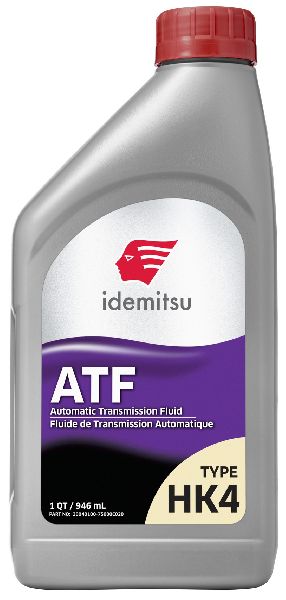
(OEM #00232-19057)— The transmission fluid must be drained to perform the repair and will need to be refilled with approximately 5-6 quarts of the correct OEM-spec fluid. Hyundai does not approve of aftermarket additives.
Trusted brands: Hyundai, Idemitsu, ENEOS
OEM price range: $15-$25 per quart
Aftermarket price range: $10-$18 per quart
Related Codes That Often Appear With This One
- P0712 — This is the opposite code, 'Circuit Low', indicating a short to ground. It's for the same sensor but a different failure mode.
- P0711 — This code means 'Sensor Rationality', indicating the sensor's readings are stuck or not changing as expected. All three codes (P0711, P0712, P0713) are addressed by the same Hyundai TSB.
Technical Service Bulletins (TSBs) & Recalls
- 14-AT-010: Addresses P0711, P0712, & P0713 on 2011-2015 Sonatas (and other models), identifying the internal temperature sensor/harness as the cause.
- 20-AT-014H: A later TSB that also lists P0711-P0713 and points to replacing the internal harness.
Platform-Specific Known Issues
- Hyundai issued TSB 14-AT-010 specifically to address codes P0711, P0712, and P0713 on their 6-speed automatic transmissions, instructing technicians to replace the internal harness/sensor rather than the entire transaxle.
- A video from a mechanic specializing in Hyundai/Kia notes this is a very common issue on the YF Sonata platform.
- For models built after March 2013, the sensor is integrated into the harness (part 46307-3B650), while earlier models may have had a separate sensor.
Mechanic-Grade Diagnostic Values
- Transmission Fluid Temperature Sensor Resistance — expected: Approx. 2.51 kΩ at 68°F (20°C), 1.11 kΩ at 104°F (40°C), and 0.32 kΩ at 176°F (80°C).. Failure: An infinite resistance or 'OL' (Open Loop) reading indicates a failed sensor.
- TFT Sensor Voltage (Live Data) — expected: Varies with temperature, e.g., approx. 3.2V at 104°F (40°C).. Failure: A fixed reading of >4.9V, often displayed as a default low temperature like -40°F, indicates an open circuit.
- TFT Sensor Circuit Pin Test (at internal harness connector) — expected: Resistance measurement across pins 9 and 13 should match the temperature/resistance chart.. Failure: No continuity (OL) between pins 9 and 13 confirms the internal harness/sensor has failed.
Scan Tool Commands That Help
- Hyundai GDS (or equivalent professional scanner): Resetting Auto T/A values (or 'Resetting Auto transmission adaptive values') — This function is mandatory after replacing the transmission, valve body, or internal wiring harness. It erases the old learned shift adaptations, preventing harsh shifting with the new components.
- Hyundai GDS (or equivalent professional scanner): Adaptive Values Relearn Procedure — Immediately after resetting the adaptive values. It involves a specific drive cycle (e.g., accelerating smoothly through all gears 5 times) to teach the TCM the correct shift pressures and timing for the new components.
Wiring & Ground Locations
- TFT Sensor Pins (Internal) — On the 16-pin connector of the internal wiring harness that plugs into the valve body solenoid block.. The Transmission Fluid Temperature sensor circuit is located on pins 9 and 13. Testing for resistance between these two pins directly at the harness connector (after removing the valve body) can definitively confirm if the harness/sensor assembly is faulty.
- Main Transmission Case Connector — On top of the transmission case, accessible from the engine bay after removing the airbox and battery tray.. This is the primary test point to differentiate between an internal transmission fault and an external wiring issue. By identifying the two pins corresponding to the TFT sensor at this connector, a technician can test the entire internal harness without dropping the pan first.
Real Owner Repair Stories
- NHTSA ODI #11329064 — An owner reported that while changing gears, the engine shakes badly. A diagnostic scan revealed code P0713 for a bad transmission temperature sensor.
- YouTube channel 'The Mech-A-Nic' (Hyundai Elantra (with same A6MF1 family transmission and issue)) — Check engine light with P0711 and P0713, very harsh gear engagement into Drive and Reverse.
❌ Tried (didn't work) The owner had been driving with the issue for a long time before seeking repair.
✅ What actually fixed it The mechanic confirmed a -34°F reading on the scan tool. After inspecting for external wire damage and finding none, he replaced the internal transmission temperature sensor (it was a pre-2013 model with a separate sensor). After replacement, the scan tool showed a normal temperature, and a test drive confirmed the harsh shifting was gone. - Reddit user in r/Hyundai (2013 Hyundai Sonata GLS) — Hard shifting.
✅ What actually fixed it The user correctly diagnosed the issue as the temperature sensor. Knowing that 2013 was the changeover year, they proactively purchased the entire internal wiring harness assembly to perform the repair, anticipating that the sensor was integrated and not sold separately. This demonstrates the correct parts-sourcing logic for this specific repair.
OEM Part Supersession History
46307-3B610, 46307-3B620→46307-3B650— Part revision and consolidation by the manufacturer.
Heads up: The newer part number is the correct and current replacement for the older versions.46386-3B900 (Sensor Only)→46307-3B650 (Harness Assembly)— Design change integrating the sensor into the harness.
Heads up: For vehicles built from March 2013 onward, the separate sensor cannot be used. The entire harness assembly is required. Pre-March 2013 vehicles can use the separate sensor, but replacing the entire harness with the updated integrated design is often recommended.
Model Year Variations Within This Range
- 2011 - early 2013: These models were equipped with a separate transmission temperature sensor (PN 46386-3B900) that could be replaced independently of the main internal wiring harness.
- Mid-2013 - 2015: Starting in March 2013, Hyundai integrated the temperature sensor directly into the internal wiring harness. For these vehicles, the entire harness assembly (PN 46307-3B650) must be replaced to fix the sensor.
Diagnostic Flowchart
Other Known Issues on This Vehicle
Issues unrelated to this code that are worth knowing about as an owner of this generation:
- Theta II Engine Failure (Rod Bearing Wear) 🔴 High — Very common on 2011-2014 models with the 2.4L GDI and 2.0T engines. Can occur from 70,000 miles onward. (Ref: Multiple recalls (e.g., NHTSA 15V568000) and a class-action lawsuit settlement led to lifetime warranty extensions for affected vehicles.)
- Degradation of Steering Column Coupler 🟠 Medium — Extremely common. The flexible rubber coupler in the electronic power steering motor wears out, causing a clicking or clunking noise when turning the wheel. Typically occurs between 55,000-100,000 miles. (Ref: Hyundai extended the warranty for this component (TSB 17-ST-002-1), but it is a frequent out-of-pocket repair. The part itself is inexpensive.)
- Excessive Oil Consumption 🔴 High — Common on the 2.4L Theta II GDI engine, particularly in the 2015 model year. Can be a precursor to engine failure. (Ref: Subject of a separate class-action lawsuit. Dealers may perform an oil consumption test.)
- Engine Seizing or Stalling 🔴 High — A direct result of the Theta II engine bearing failure, most prevalent in 2011-2013 models. Often preceded by engine knocking. (Ref: Covered by the same engine failure recalls and warranty extensions.)
- Parking Lights Stay On (Fuse Box Malfunction) 🟡 Low — A known issue on the 6th generation (2011-2014) where an internal fault in the cabin fuse box prevents the parking lights from turning off, draining the battery.
Used vs. New Parts: Buying Guide for This Vehicle
When a used part is the smart pick: For this specific repair, using a used part from a salvage yard is NOT recommended. The failure is an electronic thermistor within a plastic harness that operates in a high-heat environment. The plastic becomes brittle with age and heat cycles, and the electronic failure is not something that can be visually inspected.
What to inspect on the donor part:
- Not applicable, as a used part is not advised.
OEM-only on this vehicle (don't cheap out):
- Transmission Wire Harness Assembly (46307-3B650)
Aftermarket brands forum-validated for this vehicle:
- While some aftermarket harnesses exist, the OEM Hyundai part is the most commonly cited and trusted solution for this known issue.
Brands owners have reported issues with on this vehicle:
- Unnamed, no-brand parts from online marketplaces should be avoided due to the complexity of the labor. The risk of a premature failure of a cheap part outweighs the initial cost savings.
Real Owner Stories
Aggregated from forums and TSBs cited above. Mileages and costs reflect what owners reported in those sources.
2012 Hyundai Sonata — 70000 miles
Symptoms: The Check Engine Light with code P0713 came on after driving in 'sport' mode for a few minutes. The light later went off on its own.
What fixed it: The source does not specify the final repair.
Source hint: Reddit r/MechanicAdvice
2012 Hyundai Sonata 2.4L
Symptoms: The check engine light would turn on with codes P0711 and P0713, and then turn off by itself, indicating an intermittent fault.
What fixed it: The source does not specify the final repair.
Source hint: Car Talk Community - Transmission codes
Hyundai Sonata (2011-2015)
Symptoms: The car shifts harder when it's cold and then shifts fine after it warms up. This was accompanied by codes P0711 and P0713.
What fixed it: The source does not specify the final repair.
Source hint: Hyundai Forums - Transmission sensors
2012 Hyundai Sonata
Symptoms: Owner experienced an intermittent P0713 code where the check engine light would not stay on, which made getting a diagnosis from the dealer difficult.
What fixed it: The source does not specify the final repair.
Source hint: Reddit r/Hyundai - Intermittent P0713 trans temp sensor code
Documented NHTSA Reports
NHTSA ODI #11329064
Symptoms: An owner reported that while changing gears, the engine shakes badly. Additionally, the check engine light came on and when diagnosed showed a code P0713 for a bad transmission temperature sensor.
What fixed it: The source does not specify the final repair.
Related OBD-II Codes
Frequently Asked Questions
My 2012 Sonata has a P0713 code. Does Hyundai have a TSB for this?
Is the transmission temperature sensor part the same for all 2011-2015 Sonatas?
To fix P0713, do I have to drop the whole transmission?
What kind of transmission fluid should I use after replacing the sensor harness?
Are there any special steps required after replacing the transmission harness for a P0713 code?
My friend has a 2013 Kia Optima with the same harsh shifting. Could it be the same problem?
Helpful Videos
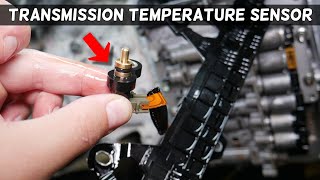
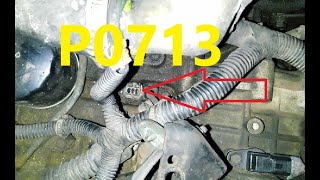
We Have This Part in Stock





The information in this article is provided for general reference and educational purposes only. Vehicle specifications, procedures, and part compatibility can vary by production date, trim level, and region. Always consult your vehicle's factory service manual and verify part numbers before purchasing or performing repairs. Safety-critical components such as airbags, seat belts, and braking systems should be installed by a qualified professional.
- Hyundai Sonata:
- 🧭 Diagnostic Flowchart
- 🎬 Helpful Videos
- 🛍️ Shop This Part
- What's Unique About the 2011-2015 Hyundai Sonata
- Symptoms You May Notice
- Most Likely Causes
- Rare But Worth Checking
- Diagnosis Steps
- Parts You'll Likely Need
- Related Codes That Often Appear With This One
- Technical Service Bulletins (TSBs) & Recalls
- Platform-Specific Known Issues
- Mechanic-Grade Diagnostic Values
- Scan Tool Commands That Help
- Wiring & Ground Locations
- Real Owner Repair Stories
- OEM Part Supersession History
- Model Year Variations Within This Range
- Other Known Issues on This Vehicle
- Used vs. New Parts: Buying Guide for This Vehicle
- Real Owner Stories
- 2012 Hyundai Sonata — 70000 miles
- 2012 Hyundai Sonata 2.4L
- Hyundai Sonata (2011-2015)
- 2012 Hyundai Sonata
- Documented NHTSA Reports
- NHTSA ODI #11329064
- Related OBD-II Codes
- Frequently Asked Questions
- 🎟️ Get 5% Off