

P0713 on 2010-2015 Hyundai Tucson: Transmission Temperature Sensor Causes and Fixes
This code almost always points to a failed Transmission Fluid Temperature (TFT) sensor, which is located inside the transmission. On this Tucson, the sensor is often part of the internal valve body wiring harness. The fix involves dropping the transmission pan and replacing the harness assembly. It is a very common failure on Hyundai/Kia 6-speed automatics of this era.
- P0713 on a 2010-2015 Tucson indicates an electrical fault with the transmission temperature sensor, not necessarily an overheating transmission.
- The most common cause by far is a failed sensor, which is located inside the transmission and usually integrated into the internal wiring harness.
- The correct fix is to drop the transmission pan and replace the internal wiring harness (P/N 46307-3B650) or, on some early models, the separate sensor (P/N 46386-3B900).
- This is a serious issue that affects drivability and can cause further damage if ignored. Professional repair is recommended.
- Always use genuine Hyundai SP-IV automatic transmission fluid when refilling.
What's Unique About the 2010-2015 Hyundai Tucson
The 2010-2015 Hyundai Tucson (LM generation) uses a 6-speed automatic transmission (model A6MF1) where the transmission fluid temperature sensor is a widely known failure point. Hyundai has issued Technical Service Bulletins (TSBs), such as 14-AT-010, for this issue across many models using this transmission. A key detail is that for vehicles produced after early March 2013, the sensor is integrated directly into the main internal wiring harness and cannot be purchased separately. For earlier models, it may be a separate part. Due to the high failure rate and the updated part design, the most common and recommended repair is to replace the entire internal harness assembly (Part No. 46307-3B650).
🎬 Watch: A complete walkthrough of the P0713 sensor and harness fix.Symptoms You May Notice
- Check Engine Light is on
- Harsh, erratic, or delayed shifting, especially when the transmission is cold.
- Vehicle enters "limp mode" (stuck in a single gear, often 3rd).
- Abrupt or harsh engagement when shifting into Drive or Reverse
- Disabled torque converter clutch lockup, causing high RPM at highway speeds
- Transmission over-temperature warning light may illuminate, even if the fluid is not actually hot.
- Replacing the entire transmission. TSB 14-AT-010 from Hyundai specifically advises against replacing the whole transaxle for this code, instead directing technicians to replace the sensor/harness.
- Replacing only the valve body. The issue is almost always with the electronic sensor or harness attached to the valve body, not the mechanical hydraulic unit itself. 🎬 Watch: How to access the internal solenoids and harness assembly.
Most Likely Causes
- Failed Transmission Fluid Temperature Sensor / Internal Harness 🔴 High Probability → Shop Transmission Assembly This is a widely documented failure item on Hyundai's A6MF1 6-speed automatic transmission. Heat cycles and fluid exposure cause the sensor or harness wiring to fail, creating an open circuit. TSB 14-AT-010 was released specifically to address this component's failure.
How to confirm: Using a scan tool, observe the live data for the transmission fluid temperature. A reading that is stuck at a very low number (like -40°F) or a fixed high number, and does not change as the vehicle warms up, points directly to a sensor or circuit failure.
Typical fix: Replace the internal transmission wiring harness which contains the integrated temperature sensor (Part No. 46307-3B650). This requires removing the transmission pan for access. For models before March 2013, replacing just the sensor (Part No. 46386-3B900) may be possible, but replacing the harness is often recommended.
Est. part cost: $80-$170 - Damaged Wiring or Connectors ⚪ Low Probability
How to confirm: Visually inspect the external wiring harness leading to the transmission case for any signs of damage, corrosion, or loose pins at the main connector. A multimeter can be used to check for an open circuit between the TCM and the transmission connector.
Typical fix: Repair the damaged section of the wire or clean/replace the affected connector.
Est. part cost: $5-$50
Rare But Worth Checking
- Faulty Powertrain Control Module (PCM) or Transmission Control Module (TCM): → Shop Engine Control Module (ECM) This is very uncommon and should only be considered after exhaustively ruling out the sensor, harness, and all external wiring. A faulty module will often present with other, unrelated trouble codes as well. TSBs from Hyundai/Kia specifically advise checking the sensor and wiring before condemning the control unit.
Diagnosis Steps
- Connect an OBD-II scanner and confirm the presence of P0713. Note any other codes, especially P0711 or P0712.
- View the live data stream for the Transmission Fluid Temperature (TFT) sensor.
- If the temperature reads a static, extremely low value (e.g., -40°F) or a fixed default value (e.g., 176°F/80°C), it strongly confirms a circuit high/open fault.
- Inspect the main external wiring harness connector at the transmission for damage, corrosion, or pushed-out pins.
- If external wiring is intact, the failure is internal. The next step is to gain access to the sensor inside the transmission.
- Drain the transmission fluid and remove the transmission pan (typically held by multiple 10mm bolts).
- Visually inspect the internal wiring harness and the sensor for any obvious damage. The sensor/harness is attached to the valve body.
- Disconnect and remove the old temperature sensor or the complete internal wiring harness assembly.
- Install the new harness/sensor, ensuring connectors are properly seated.
- Reinstall the transmission pan with a new gasket or sealant as required by the pan type.
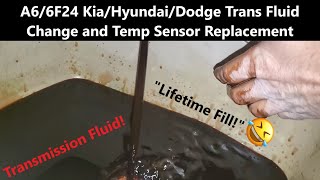
- Refill the transmission with the correct type and amount of Hyundai-specific ATF (SP-IV). A drain and fill typically requires 4-5 quarts. 🎬 See how to replace the sensor and perform a fluid change.
- With the engine running, check the fluid level through the level-check plug once the transmission reaches its specified operating temperature (typically 122-140°F / 50-60°C).
- Clear the trouble codes with the scanner and perform a test drive to ensure the transmission shifts smoothly and the code does not return.
Parts You'll Likely Need
- Transmission Internal Wire Harness Assembly
(OEM #46307-3B650)— This is the most common failure point and the official fix per Hyundai TSBs, especially for post-2013 models. It supersedes older part numbers like 46307-3B610 and 46307-3B620.
Trusted brands: Hyundai (Genuine)
OEM price range: $140-$200
Aftermarket price range: $40-$120 - Transmission Oil Temperature Sensor
(OEM #46386-3B900)— On some earlier models within this range (pre-March 2013), the sensor might be a separate component from the main harness. It's crucial to verify by VIN or visual inspection after dropping the pan.
Trusted brands: Hyundai (Genuine)
OEM price range: $35-$55
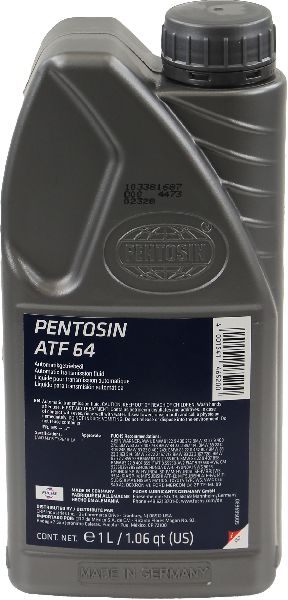
Aftermarket price range: $20-$40 - Hyundai SP-IV Automatic Transmission Fluid
(OEM #00232-19045 (example))— The transmission fluid must be drained to perform the repair and must be replaced with the correct OEM-specific fluid. A drain/fill requires approximately 4-5 quarts.
Trusted brands: Hyundai/Kia (Genuine), Idemitsu TLS-LV, Valvoline MaxLife ATF
OEM price range: $20-$40 per quart
Aftermarket price range: $8-$15 per quart - Transmission Pan Gasket
(OEM #45283-3B810 (example, verify by VIN))— A new gasket or RTV sealant is required when reinstalling the transmission pan to prevent leaks.
Trusted brands: Hyundai (Genuine), Fel-Pro
OEM price range: $20-$40
Aftermarket price range: $10-$25
Related Codes That Often Appear With This One
- P0711 — This code indicates 'TFT Sensor Rationality,' meaning the sensor's readings are illogical (e.g., not warming up as expected). It often appears alongside circuit-specific codes like P0713.
- P0712 — This code is for 'TFT Sensor Circuit Low,' the opposite of P0713. Seeing both could indicate an intermittent wiring problem that is shorting and opening.
Technical Service Bulletins (TSBs) & Recalls
- 14-AT-010 (and superseded versions like 13-AT-012, 13-AT-012-1, 13-AT-012-2): Addresses DTCs P0711, P0712, and P0713, instructing technicians to replace the oil temperature sensor and/or internal harness instead of the entire transaxle. It also notes the change to an integrated harness in March 2013.
Platform-Specific Known Issues
- A known issue covered by Hyundai TSB 14-AT-010 (which supersedes earlier versions like 13-AT-012) specifically addresses codes P0711, P0712, and P0713 on the 2010+ Tucson (LM) and other models with the 6-speed automatic, pointing to the replacement of the internal sensor/harness.
Mechanic-Grade Diagnostic Values
- Transmission Fluid Temperature Sensor Resistance — expected: Approx. 2.51 kΩ at 20°C (68°F), approx. 1.11 kΩ at 40°C (104°F), and approx. 0.32 kΩ at 80°C (176°F).. Failure: An infinite resistance (open circuit) reading, or a value that does not change as the fluid temperature changes. A P0713 code is triggered when the PCM/TCM sees a resistance value corresponding to a temperature below -40°C.
- TFT Sensor Reference Voltage — expected: Approximately 5 volts on the reference wire from the PCM/TCM with the key on, engine off.. Failure: No voltage or significantly lower voltage indicates an open or short in the wiring between the control module and the sensor.
Scan Tool Commands That Help
- Hyundai GDS (Global Diagnostic System): Resetting Auto T/A values (or Init of TCU Learning) — This function should be performed after replacing the transmission, valve body, internal harness, or TCM to clear the learned shift adaptations. Failing to reset adaptives can result in continued poor shift quality even after the hardware is fixed. The procedure is found under 'Option Treatment' or 'Vehicle S/W Management' in the GDS software.
Wiring & Ground Locations
- Transmission Connector — The main electrical connector on the outside of the A6MF1 transmission case.. This is the primary point to test the external wiring harness. A visual inspection for pushed-out pins, corrosion, or damage should be performed here before assuming an internal fault. A pinout diagram is required to test for continuity between this connector and the TCM.
- TCM/PCM — On the 2010-2015 Tucson, the Powertrain Control Module (PCM) which incorporates the TCM is typically located in the engine bay.. This is the termination point for the sensor circuit. In rare cases of a wiring fault, a technician would need to test for continuity between the pins at the PCM connector and the pins at the transmission connector.
Real Owner Repair Stories
- YouTube channel 'THE MECH A NIC' (Hyundai Elantra with A6MF1 (same transmission family and failure mode)) — Codes P0711 and P0713, very hard shifting, and harsh engagement into Reverse or Drive. Scan tool showed a static temperature reading of -34 degrees.
❌ Tried (didn't work) The owner had been driving with the issue for one to two years before seeking the repair.
✅ What actually fixed it The technician replaced the internal transmission wiring harness. After replacement, with the key on but engine off, the scan tool immediately showed a plausible ambient temperature reading instead of -34 degrees. A test drive confirmed the hard shifting was completely resolved. - NHTSA ODI #11329064 (Hyundai Sonata with similar transmission) — An owner reported that while changing gears the engine shakes badly. A diagnosis revealed code P0713 for a bad transmission temperature sensor.
OEM Part Supersession History
46307-3B610, 46307-3B620→46307-3B650— The original harnesses were prone to failure of the integrated temperature sensor due to heat and fluid exposure. The updated part is a revised design intended to improve durability and resolve the common P0711/P0712/P0713 codes.
Model Year Variations Within This Range
- 2010 - Early 2013: Vehicles produced before March 2013 may have a separate, replaceable temperature sensor (Part No. 46386-3B900) in addition to the main harness. However, due to the high failure rate of the harness itself, it is often recommended to replace the entire harness assembly (46307-3B650) even on these earlier models to prevent future issues.
- Late 2013 - 2015: Vehicles produced after March 2013 have the temperature sensor permanently integrated into the internal wiring harness (46307-3B650). The sensor cannot be purchased or replaced separately.
Diagnostic Flowchart
Other Known Issues on This Vehicle
Issues unrelated to this code that are worth knowing about as an owner of this generation:
- Theta II Engine Failure (Rod Bearing Wear) 🔴 High — Widespread across multiple model years, particularly 2014-2015 Tucsons with the 2.4L GDI engine. Can occur at various mileages, often between 60k-120k miles. (Ref: Subject of multiple recalls and a major class-action lawsuit (NHTSA Campaign Numbers are numerous, e.g., related to Hyundai Recall 162). A settlement extended warranties and provided a Knock Sensor Detection System (KSDS) software update.)
- Worn Steering Coupler 🟠 Medium — Very common issue causing a clicking or clunking noise in the steering column when turning. Typically appears after 50,000 miles. The flexible rubber coupler disintegrates over time. (Ref: No recall, but it is a well-documented repair. The replacement part is OEM #56315-2K000-FFF or similar.)
- Malfunctioning Stop Lamp Switch 🟡 Low — Common failure leading to issues like brake lights not working, inability to shift out of Park, and ESC light illumination. (Ref: Yes, covered under Hyundai Safety Recall 110 (NHTSA Campaign 13V113000). Affects 2007-2011 models, including the early part of this generation.)
- Transmission Shifting Issues (General) 🟠 Medium → Shop Transmission Assembly — Owners report various issues including rough/delayed shifting and hesitation, sometimes requiring software recalibration or other repairs beyond the P0713-specific sensor.
Used vs. New Parts: Buying Guide for This Vehicle
When a used part is the smart pick: For this specific repair, a used part is NEVER recommended. The internal wiring harness is a known high-failure item due to heat and age. A used harness from a junkyard vehicle is likely to have the same defect or fail shortly after installation.
What to inspect on the donor part:
- Do not purchase a used internal transmission wiring harness for this repair.
OEM-only on this vehicle (don't cheap out):
- Transmission Internal Wire Harness Assembly (46307-3B650). While aftermarket versions exist, the OEM part has gone through revisions to fix the original flaw. The cost difference is often minimal compared to the labor involved, making the genuine part a safer investment.
Aftermarket brands forum-validated for this vehicle:
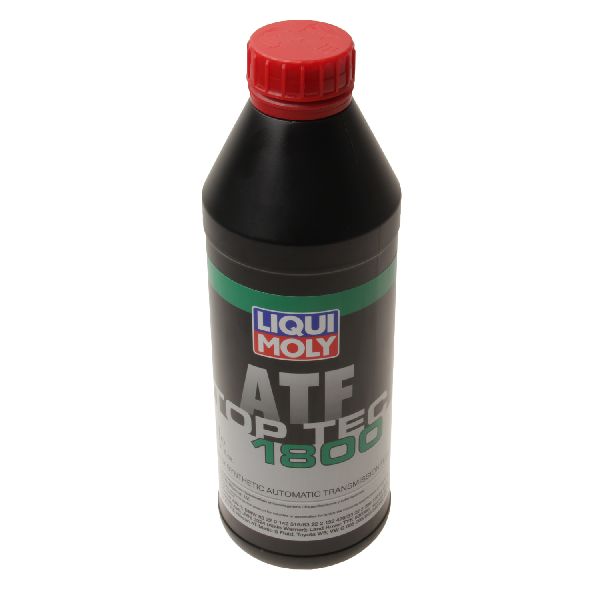
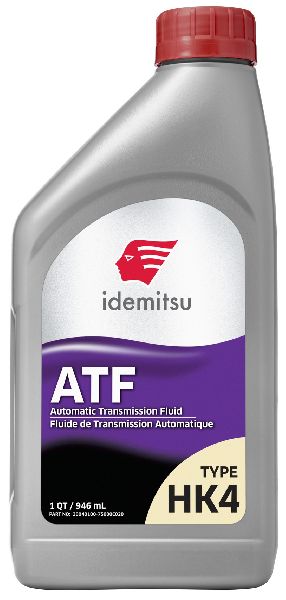
- For ATF SP-IV fluid, owners and technicians report good results with ENEOS (who may be the OEM supplier), Aisin, and Idemitsu as direct equivalents. Valvoline MaxLife ATF is widely used as a 'suitable for use' alternative, but some users have reported rougher shifting over time and reverted to an OEM-equivalent fluid.
Brands owners have reported issues with on this vehicle:
- Avoid using generic 'multi-vehicle' ATFs that do not specifically list Hyundai/Kia SP-IV compatibility. Some users report developing shift quality issues after using non-specified fluids.
Real Owner Stories
Aggregated from forums and TSBs cited above. Mileages and costs reflect what owners reported in those sources.
2013 Hyundai Tucson
Symptoms: The Check Engine Light was on, triggering a P0713 code.
What fixed it: The problem was resolved by replacing the separate transmission temperature sensor, which required draining the fluid, removing the pan, and accessing the valve body.
Source hint: YouTube - Keeping Your 2013 Hyundai Tucson Running Smoothly (P0713) Code Fixes
Related OBD-II Codes
Frequently Asked Questions
Is there a recall or TSB for the P0713 code on my 2010-2015 Tucson?
What is the correct part number to fix the P0713 code on my Tucson?
How can I confirm the temperature sensor is bad before removing the transmission pan?
My Tucson is shifting very hard, especially when it's cold. Is this a symptom of P0713?
What type of transmission fluid should I use when refilling my Tucson after this repair?
My friend has a Kia Sportage with the same shifting problems. Is it the same issue?
Helpful Videos


We Have This Part in Stock


The information in this article is provided for general reference and educational purposes only. Vehicle specifications, procedures, and part compatibility can vary by production date, trim level, and region. Always consult your vehicle's factory service manual and verify part numbers before purchasing or performing repairs. Safety-critical components such as airbags, seat belts, and braking systems should be installed by a qualified professional.
- Hyundai Tucson:
- 🧭 Diagnostic Flowchart
- 🎬 Helpful Videos
- 🛍️ Shop This Part
- What's Unique About the 2010-2015 Hyundai Tucson
- Symptoms You May Notice
- Most Likely Causes
- Rare But Worth Checking
- Diagnosis Steps
- Parts You'll Likely Need
- Related Codes That Often Appear With This One
- Technical Service Bulletins (TSBs) & Recalls
- Platform-Specific Known Issues
- Mechanic-Grade Diagnostic Values
- Scan Tool Commands That Help
- Wiring & Ground Locations
- Real Owner Repair Stories
- OEM Part Supersession History
- Model Year Variations Within This Range
- Other Known Issues on This Vehicle
- Used vs. New Parts: Buying Guide for This Vehicle
- Real Owner Stories
- 2013 Hyundai Tucson
- Related OBD-II Codes
- Frequently Asked Questions
- 🎟️ Get 5% Off