

P0717 on 2012-2017 Hyundai Accent: Input Speed Sensor Failure Causes and Fixes
P0717 on a 2012-2017 Accent almost always means the transmission's input speed sensor has failed or its wiring is damaged. The transmission will likely be stuck in 3rd gear (limp mode). The fix is often replacing the sensor and/or the internal transmission wiring harness, as outlined in a Hyundai TSB.
- P0717 on a 2012-2017 Accent will put the transmission into a protective 'limp mode', usually stuck in 3rd gear.
- The most common cause is a failed input speed sensor, but a damaged internal transmission wiring harness is also a very frequent culprit.
- Due to the high probability of harness failure, Hyundai's official recommendation (TSB 20-AT-011H) is to replace both the sensor and the harness at the same time.
- This repair is complex as it requires removing the transmission oil pan and valve body, making it a difficult DIY job (5/5 difficulty).
- Always use the specified Hyundai SP-IV (or equivalent) transmission fluid when refilling.
What's Unique About the 2012-2017 Hyundai Accent
For the 2012-2017 Hyundai Accent (RB generation) with the A6GF1 transmission, this code is extremely common. Hyundai has issued a Technical Service Bulletin (TSB 20-AT-011H) that covers this and many other models sharing the same transmission architecture. The TSB acknowledges that this code is caused by a faulty sensor but strongly points to a known issue with the internal transmission wiring harness. Unlike many vehicles where the sensor itself is the sole culprit, on this Accent, the internal harness is a very frequent point of failure and is recommended to be replaced along with the sensor assembly to ensure a lasting repair.
Symptoms You May Notice
- Check Engine Light is on
- Transmission is stuck in one gear (usually 3rd gear, known as 'limp mode' or 'fail-safe' mode)
- Harsh or jerky engagement when shifting from Park to Drive or Reverse
- Inability to manually shift using the sport mode
- Delayed, erratic, or no shifting
- Reduced fuel economy due to inefficient gear use
- Flashing gear position indicator on the dashboard
- Replacing only the speed sensor without inspecting or replacing the internal wiring harness. The TSB indicates the harness is a very common point of failure, and skipping it can lead to the code returning shortly after the repair.
Most Likely Causes
- Faulty Input/Turbine Speed Sensor 🔴 High Probability → Shop Automatic Transmission Input Shaft Speed Sensor The sensor is a known high-failure part on this platform, as acknowledged by Hyundai's TSBs which recommend its replacement.
How to confirm: Use a scan tool to monitor live data for the input speed sensor. If it reads 0 RPM while the vehicle is moving in gear, the sensor or its circuit is faulty. The sensor's resistance can also be tested with a multimeter against factory specifications, though replacement is often done regardless due to the labor involved.
Typical fix: Replace the input/output speed sensor assembly. This part is located inside the transmission, requiring removal of the valve body for access. 🎬 Watch: A quick walkthrough of the speed sensor replacement process.
Est. part cost: $40-$80 - Damaged Internal Transmission Wiring Harness 🔴 High Probability → Shop Transmission Assembly Hyundai TSB 20-AT-011H specifically calls out the internal oil pressure/solenoid harness as a primary cause for this code and recommends its replacement. The wires inside the transmission are exposed to constant heat and vibration, causing them to become brittle and break, leading to an open circuit.
How to confirm: Visually inspect the harness for broken wires, corrosion, or damage after removing the transmission oil pan and valve body. Perform continuity tests on the wires from the sensor connector to the main transmission case connector.
Typical fix: Replace the internal transmission wiring harness. This is almost always done at the same time as the speed sensor replacement as a preventative measure, per the TSB.
Est. part cost: $60-$100 - Low or Contaminated Transmission Fluid ⚪ Low Probability → Shop Transmission Assembly
How to confirm: Check the transmission fluid level and condition. The fluid should be at the correct level and bright red, not dark brown or black, and should not have a burnt smell. Note: This transmission does not have a traditional dipstick; the level must be checked via a fill/check plug on the side of the case while the transmission is at operating temperature (122-140°F / 50-60°C).
Typical fix: Perform a transmission fluid drain and fill with fluid that meets Hyundai's SP-IV specification. If the fluid is very dirty or contains debris, it may indicate more severe internal transmission problems.
Est. part cost: $50-$150
Rare But Worth Checking
- Faulty Powertrain or Transmission Control Module (PCM/TCM): → Shop Transmission Assembly This is rare and should only be considered after the sensor and wiring have been definitively ruled out. A faulty module might trigger other codes as well.
- Damaged Engine Control Module (ECM): In very rare cases, an internal failure in the Engine Control Module (ECM), such as a leaking capacitor, can cause a P0717 code and force the car into limp mode. This should be the last item to check after all transmission-related components are verified as good. 🎬 Watch: How to diagnose and repair a rare ECM failure.
Diagnosis Steps
- Connect an OBD-II scanner and confirm P0717 is present. Check for other transmission-related codes like P0722, P0733, or P0734.
- Check the transmission fluid level and condition. This requires raising the vehicle so it is level and opening the check plug while the transmission is at operating temperature (122-140°F or 50-60°C).
- Use a scan tool with live data capabilities to monitor the Input Speed Sensor RPM while driving. If it remains at 0 while the vehicle is moving, a fault in the sensor or circuit is confirmed.
- Visually inspect the external transmission wiring harness and connectors for any obvious damage, corrosion, or loose connections.
- If external wiring is okay, the next step involves accessing the internal components. This requires draining the transmission fluid and removing the oil pan and valve body.
- Once inside, visually inspect the internal wiring harness (P/N 46307-3B650) for any signs of brittle insulation, broken wires, or damage, especially near the connectors.
- Remove and test the input/output speed sensor assembly. Check its resistance with a multimeter and compare it to the manufacturer's specifications, although replacement is recommended regardless.
- Following Hyundai's TSB (20-AT-011H), it is highly recommended to replace both the speed sensor assembly and the internal wiring harness at the same time to prevent a comeback.
- Reassemble the transmission, install a new oil pan gasket, and refill with the correct type and amount of Hyundai-specified transmission fluid (SP-IV).
- Clear the trouble codes, reset any adaptive learning values if required, and perform a test drive to ensure the transmission shifts smoothly through all gears.
Parts You'll Likely Need
- Transmission Input & Output Speed Sensor Assembly
(OEM #42620-26200)— This is the sensor that fails and provides the signal the TCM needs. It's sold as a combined input/output sensor unit for this transmission.
Trusted brands: Hyundai (OEM), Standard Motor Products
OEM price range: $60-$90
Aftermarket price range: $40-$70 - Automatic Transmission Wire Harness
(OEM #46307-3B650 (replaces 46307-3B620, 46307-3B610))— Hyundai's TSB identifies this internal harness as a primary cause of the fault. It's recommended to replace it along with the sensor to prevent a repeat failure. 🎬 See how to fix common speed sensor codes on Hyundai models.
Trusted brands: Hyundai (OEM)
OEM price range: $60-$100
Aftermarket price range: $50-$80 - Transmission Oil Pan Gasket
(OEM #45285-26100)— The oil pan must be removed to access the sensor and harness. The gasket is a one-time use part and must be replaced to prevent leaks.
Trusted brands: Hyundai (OEM), Fel-Pro
OEM price range: $15-$25
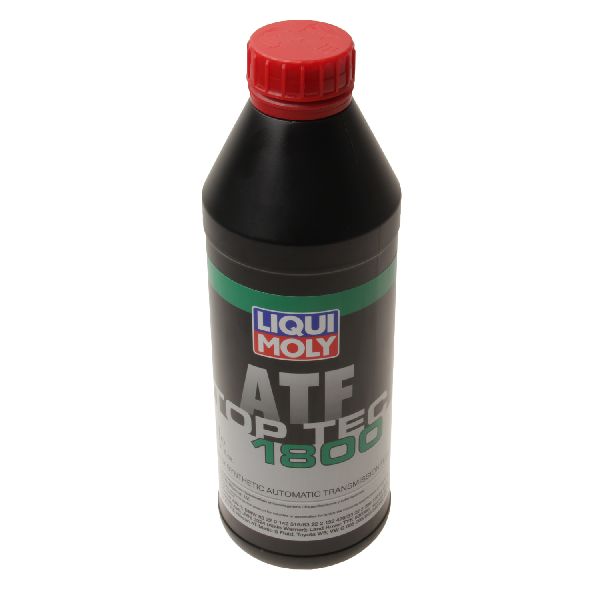
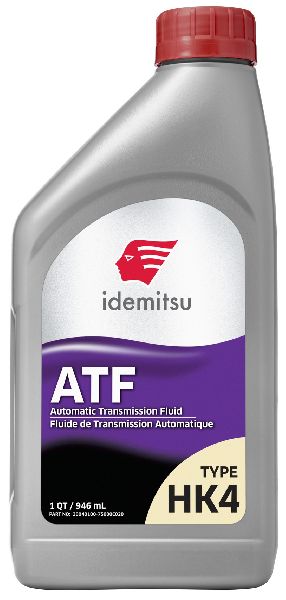
Aftermarket price range: $10-$20 - Hyundai SP-IV Automatic Transmission Fluid — The transmission must be drained to perform the repair and refilled with the correct OEM-specified fluid.
Trusted brands: Hyundai/Kia (OEM), Idemitsu TLS-LV, Valvoline MaxLife Multi-Vehicle ATF
OEM price range: $15-$25 per quart
Aftermarket price range: $8-$15 per quart
Related Codes That Often Appear With This One
- P0722 — Stands for 'Output Speed Sensor Circuit No Signal'. The input and output speed sensors are often a single part assembly and share the same wiring harness, so a failure in the harness or the assembly itself frequently causes both codes.
- P0733 — Stands for 'Gear 3 Incorrect Ratio'. The TCM sets this code when it detects a mismatch between engine RPM and output shaft speed in 3rd gear. This is a secondary code that results from the primary loss of the input speed signal, which confuses the TCM's gear ratio monitoring.
- P0734 — Stands for 'Gear 4 Incorrect Ratio'. Similar to P0733, this indicates a gear ratio error that can be a symptom of the primary speed sensor failure.
Technical Service Bulletins (TSBs) & Recalls
- TSB 20-AT-011H (supersedes 16-AT-003): Recommends replacing the input/output speed sensor and the internal oil pressure harness for DTCs P0717, P0721, and P0722. This TSB applies to a wide range of Hyundai models from 2010-2019, including the 2012-2017 Accent, that use the A6 family of 6-speed automatic transmissions with a 'Generation1' valve body.
Platform-Specific Known Issues
- Owner Experience: Sensor-Only Replacement Leads to Quick Return of Code: A user on Hyundai-Forums.com with a 2012 Accent reported getting P0717 and limp mode. They initially replaced only the speed sensor. The fix worked for a short time before the code and symptoms returned. A second repair, this time replacing the internal wiring harness as recommended by the TSB, permanently solved the problem. This highlights the importance of replacing both components.
Mechanic-Grade Diagnostic Values
- Input Speed Sensor Power Supply Voltage — expected: Approximately 9 Volts. Failure: No voltage or significantly lower voltage indicates a wiring or TCM power supply issue.
- Continuity test of wiring from sensor to TCM — expected: Close to 1 ohm or less. Failure: An 'OL' (Open Line) reading or significantly high resistance indicates a broken wire in the harness.
- A6GF1 Valve Body Solenoid Resistance (VFS type) — expected: Approximately 5.3 Ohms. Failure: A reading significantly different from 5.3 Ohms suggests a faulty solenoid. This is not directly related to P0717 but is a key value when the valve body is removed.
Scan Tool Commands That Help
- Hyundai GDS (Global Diagnostic System) or equivalent professional scanner: Resetting Auto T/A values — This function must be performed after replacing the transmission, valve body, sensor, harness, or TCM to clear the old learned shift adaptations. Failure to do so can result in poor shift quality even after the repair. The GDS path is typically: Select VIN -> A/T Menu -> Option Treatment -> Resetting Auto T/A values.
- Hyundai GDS (Global Diagnostic System) or equivalent professional scanner: Relearn Adaptive Values — After resetting the adaptive values, a specific drive cycle must be performed to allow the TCM to relearn shift points. This involves accelerating from a stop at a steady throttle (15-30% TPS) through all gears, repeating 5 times, followed by stationary shifts between P-N-D.
Wiring & Ground Locations
- Input Speed Sensor Power Supply Pin — Pin 14 on the main transmission case connector for the A6GF1.. This pin provides the power to the input speed sensor. A technician can test for approximately 9 volts here to verify the TCM is supplying power before condemning the internal harness or sensor.
- External Wiring Harness Chafe Point — The section of the harness near the air filter box and battery tray.. In some cases, the fault is not internal to the transmission. The external harness can rub against components, causing wires to break and triggering a P0717 code. This should be inspected before assuming an internal failure.
Real Owner Repair Stories
- YouTube user 'Car hospital' (Hyundai Accent, exact year not specified but within the generation.) — Transmission jerking, P0717 code stored.
✅ What actually fixed it The technician found damaged wiring in the external harness, near the air filter box. The wires had chafed and broken. Repairing the broken wires resolved the P0717 code without needing to open the transmission. - NHTSA ODI #10849786 — While reported on a different Hyundai model sharing similar technology, an owner noted that after a P0717 code appeared, replacing the input and output speed sensors did not always stop the problem from continuing, and the vehicle would jerk during power transitions.
OEM Part Supersession History
46307-3B610, 46307-3B620→46307-3B650— Part improvement to address reliability issues leading to codes like P0717.
Heads up: The newer part number 46307-3B650 is the correct and recommended replacement for all previous versions.
Diagnostic Flowchart
Other Known Issues on This Vehicle
Issues unrelated to this code that are worth knowing about as an owner of this generation:
- GDI Engine Carbon Buildup 🟠 Medium — Becomes noticeable after 30,000-60,000 miles. Causes rough idle, hesitation, and reduced power/MPG. (Ref: No recall, but regular induction cleaning services are recommended by dealers and independent shops.)
- Steering Coupler Failure 🟠 Medium — A flexible rubber coupler in the electronic power steering column wears out, causing a distinct clicking or 'thud' noise when turning the wheel. Typically occurs after 60,000 miles. (Ref: Hyundai extended the warranty for this part to 10 years/100,000 miles under TSB #17-ST-002.)
- Peeling Exterior Paint (Especially White) 🟡 Low — Widespread reports of paint, particularly on white vehicles, peeling in large flakes after 3-5 years. Not a mechanical issue but affects resale value. (Ref: No official recall for the Accent, but Hyundai has acknowledged the issue and offered warranty extensions for other models. Some owners have received goodwill repairs.)
- Canister Purge Control Valve (PCSV) Failure 🟡 Low — A failing purge valve can cause a Check Engine Light (e.g., code P0441) and issues with refueling (gas pump clicks off repeatedly).
- Faulty VVT Solenoids 🟡 Low — The variable valve timing solenoids can fail, leading to rough running, poor engine performance, and specific CEL codes.
Used vs. New Parts: Buying Guide for This Vehicle
When a used part is the smart pick: For this specific repair, using used parts is generally not recommended. The primary failure items (speed sensor and internal harness) are high-failure, wear-and-tear electronic components. A used part from a junkyard has an unknown history and is likely to fail again in a short period, wasting the significant labor cost of the repair.
Donor-vehicle mileage cap: roughly under 30000 miles for the part to have meaningful remaining life.
What to inspect on the donor part:
- If forced to use a used part, source it from the lowest-mileage, latest-model-year donor possible.
- Avoid parts from vehicles with signs of collision damage near the transmission.
- There are no reliable visual cues for the health of the internal harness or sensor.
OEM-only on this vehicle (don't cheap out):
- Internal Transmission Wiring Harness (P/N 46307-3B650)
Aftermarket brands forum-validated for this vehicle:
- Standard Motor Products (for the speed sensor)
Brands owners have reported issues with on this vehicle:
- No-name, unbranded sensors and harnesses from online marketplaces are a significant gamble given the high labor cost to install them.
Real Owner Stories
Aggregated from forums and TSBs cited above. Mileages and costs reflect what owners reported in those sources.
2012 Hyundai Accent
Symptoms: P0717 and limp mode.
What fixed it: Initially replaced only the speed sensor, but the code returned. A second repair replacing the internal wiring harness as well permanently solved the problem.
Source hint: Owner Experience: Sensor-Only Replacement Leads to Quick Return of Code
2012 Hyundai Accent
Symptoms: P0717, limp mode, and jerky engagement.
What fixed it: A technician referenced an official TSB and identified the likely cause as the internal wiring loom, recommending its replacement.
Source hint: JustAnswer.com: A technician confirms for a 2012 Accent owner...
Hyundai Owner Report
Symptoms: "Stop Safely Do Not Drive" warning and the car would not move. Code P0717 was found.
What fixed it: Despite replacing the input and output speed sensors, the owner reported the problem continued and the vehicle would jerk when changing power modes.
Source hint: NHTSA ODI #10849786
Related OBD-II Codes
Frequently Asked Questions
Does Hyundai TSB 20-AT-011H apply to my 2012-2017 Accent for code P0717?
My 2013 Accent is stuck in 3rd gear. Is this a symptom of P0717?
To fix P0717, should I just replace the input speed sensor?
How do I check the transmission fluid on my 2015 Accent? I can't find a dipstick.
What type of transmission fluid should I use for a P0717-related service on my Accent?
Does the Kia Rio or Hyundai Elantra have the same P0717 problem?
Helpful Videos
We Have This Part in Stock

The information in this article is provided for general reference and educational purposes only. Vehicle specifications, procedures, and part compatibility can vary by production date, trim level, and region. Always consult your vehicle's factory service manual and verify part numbers before purchasing or performing repairs. Safety-critical components such as airbags, seat belts, and braking systems should be installed by a qualified professional.
- Hyundai Accent:
- 🧭 Diagnostic Flowchart
- 🎬 Helpful Videos
- 🛍️ Shop This Part
- What's Unique About the 2012-2017 Hyundai Accent
- Symptoms You May Notice
- Most Likely Causes
- Rare But Worth Checking
- Diagnosis Steps
- Parts You'll Likely Need
- Related Codes That Often Appear With This One
- Technical Service Bulletins (TSBs) & Recalls
- Platform-Specific Known Issues
- Mechanic-Grade Diagnostic Values
- Scan Tool Commands That Help
- Wiring & Ground Locations
- Real Owner Repair Stories
- OEM Part Supersession History
- Other Known Issues on This Vehicle
- Used vs. New Parts: Buying Guide for This Vehicle
- Real Owner Stories
- 2012 Hyundai Accent
- 2012 Hyundai Accent
- Hyundai Owner Report
- Related OBD-II Codes
- Frequently Asked Questions
- 🎟️ Get 5% Off