

P0717 on 2011-2014 Hyundai Sonata: Input Speed Sensor Causes and Fixes
P0717 on a 2011-2014 Sonata almost always means the internal transmission wiring harness, which contains the input speed sensor, has failed. The transmission will feel stuck in 3rd gear. The fix requires removing the valve body to replace the harness, a job best left to a professional.
- P0717 on a 2011-2014 Sonata is a very specific problem, usually not the sensor itself but the entire internal wiring harness.
- The car will go into 'limp mode,' stuck in 3rd gear, making it unsafe for normal driving.
- This is not a DIY-friendly repair for beginners. The transmission valve body must be removed.
- Do not let a shop convince you to replace the entire transmission; the fix is a relatively inexpensive part as per Hyundai's own TSB.
What's Unique About the 2011-2014 Hyundai Sonata
On the 2011-2014 Sonata's 6-speed automatic transmission (part of the A6MF family), the input and output speed sensors are not simple, externally-mounted parts like on older vehicles. Instead, they are integrated into a larger wiring harness located inside the transmission, attached to the valve body. This design flaw is so common that Hyundai issued a Technical Service Bulletin (TSB 20-AT-011H) advising technicians to replace this internal harness for P0717, P0721, and P0722 codes instead of attempting other repairs or replacing the whole transmission.
Symptoms You May Notice
- Check Engine Light is on
- Transmission is stuck in 3rd gear (fail-safe or 'limp' mode)
- Harsh, erratic, or delayed gear shifts
- Inability to shift manually
- Poor acceleration from a stop
- High engine RPM at higher speeds
- Flashing transmission warning light on the dash.
- Replacing the entire transmission. Hyundai's TSB specifically advises against this, as the problem is almost always the inexpensive internal harness.
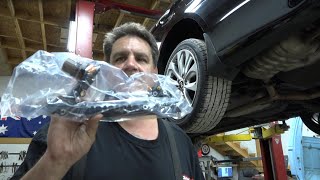
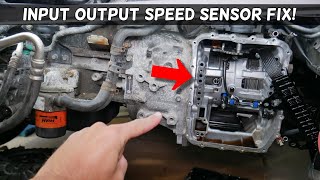
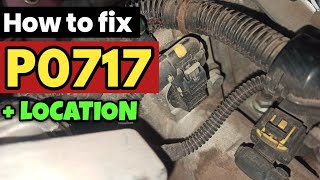
- Looking for an external input speed sensor. On this model, the sensor is internal and part of the harness, so it cannot be replaced separately from the outside. 🎬 Watch: See why these sensors are located inside the transmission.
Most Likely Causes
- Failed Internal Transmission Wire Harness 🔴 High Probability → Shop Transmission Assembly This is a well-documented failure point acknowledged by Hyundai's own Technical Service Bulletins (TSB 20-AT-011H). The harness contains the input speed sensor, output speed sensor, and temperature sensor, and the entire assembly fails, likely due to heat and fluid exposure over time.
How to confirm: A professional technician will confirm the code with a scanner. After ruling out external wiring issues between the TCM and the transmission case connector, the next logical step based on the TSB is to replace the internal harness.
Typical fix: Replace the internal valve body wire harness. This involves draining the fluid, dropping the transmission pan, and removing the valve body to access the harness.
Est. part cost: $150-$250 - Damaged External Wiring or Connector ⚪ Low Probability
How to confirm: Visually inspect the wiring harness leading to the main transmission case connector for any signs of damage, corrosion, or loose pins. A mechanic can perform a continuity test from the TCM to the transmission connector.
Typical fix: Repair the damaged section of the wiring harness or clean/replace the connector.
Est. part cost: $10-$100
Rare But Worth Checking
- Faulty Powertrain Control Module (PCM/TCM): This is very rare. The PCM/TCM should only be considered after all other possibilities, especially the internal harness and external wiring, have been eliminated. Repeated P0717 codes after replacing the harness and checking wiring may point to an internal TCM fault.
Diagnosis Steps
- Scan the vehicle's computer for trouble codes to confirm P0717 and check for any other related codes (like P0722 or P0711).
- Check the transmission fluid level and condition. While unlikely to be the direct cause of a 'No Signal' code, low or burnt fluid indicates larger problems.
- Visually inspect the main external wiring harness running to the transmission case. Look for any obvious signs of damage, melting, or corrosion at the main connector.
- If external wiring looks good, follow the procedure outlined in Hyundai TSB 20-AT-011H.
- Drain the transmission fluid and remove the transmission oil pan.
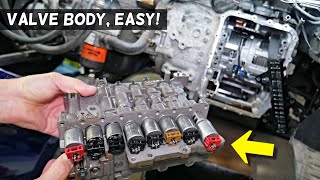
- Carefully remove the transmission valve body. 🎬 Watch: Step-by-step guide to removing the transmission valve body.
- Replace the internal wire harness (Part No. 46307-3B650). This part number supersedes 46307-3B620 and 46307-3B610.
- Reinstall the valve body, new oil pan gasket, and oil pan, torquing all bolts to factory specifications.
- Refill the transmission with the correct type of fluid (Hyundai SP4-M) to the proper level.
- Using a Hyundai GDS scan tool, perform the 'Resetting Auto T/A values' function to clear the transmission's adaptive memory.
- Clear all fault codes and perform a test drive to confirm the repair.
Parts You'll Likely Need
- Valve Body Wire Harness
(OEM #46307-3B650)— This is the primary failure point for this code on this vehicle, as documented in Hyundai TSB 20-AT-011H. It contains the input, output, and temperature sensors. This part number is a direct replacement and supersedes older versions like 46307-3B610 and 46307-3B620.
Trusted brands: Genuine Hyundai, Genuine Kia
OEM price range: $140-$250
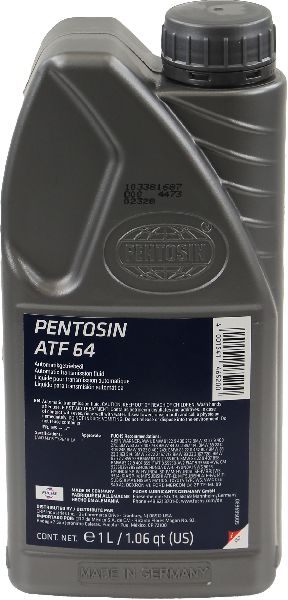
Aftermarket price range: $100-$180 - Automatic Transmission Fluid (ATF) — The transmission fluid must be drained to perform the repair and will need to be replaced with new fluid. Use only the specified type (SP4-M).
Trusted brands: Genuine Hyundai, Idemitsu, ENEOS
OEM price range: $15-$25 per quart
Aftermarket price range: $10-$18 per quart - Transmission Oil Pan Gasket
(OEM #45285-3B700 (example, verify by VIN))— The oil pan must be removed, and the gasket should always be replaced to prevent leaks.
Trusted brands: Genuine Hyundai
OEM price range: $20-$40
Aftermarket price range: $15-$30
Related Codes That Often Appear With This One
- P0722 — Output Speed Sensor Circuit No Signal. This sensor is part of the same internal harness as the input speed sensor, and they often fail together.
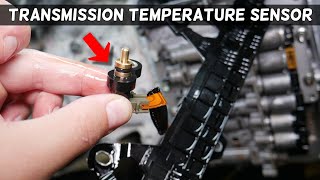
- P0711 — Transmission Fluid Temperature Sensor 'A' Circuit Range/Performance. The temperature sensor is also integrated into the same failure-prone internal harness. 🎬 Watch: How to fix related temperature sensor code P0711.
- P0721 — Output Speed Sensor Circuit Range/Performance. This is another code covered by TSB 20-AT-011H and points to the same faulty internal harness.
Technical Service Bulletins (TSBs) & Recalls
- TSB 20-AT-011H: Addresses DTCs P0717, P0721, and P0722 by recommending the replacement of the internal transmission harness for a wide range of Hyundai vehicles, including the 2011-2014 Sonata.
- TSB 16-AT-003: An earlier version of the TSB that was superseded by 20-AT-011H to include more models.
Platform-Specific Known Issues
- The 6-speed automatic transmission used in this generation of Sonata (and other Hyundai/Kia models) has a known issue with the internal wiring harness failing, leading to various speed sensor and temperature sensor codes. This is documented in TSB 20-AT-011H.
Mechanic-Grade Diagnostic Values
- Input Speed Sensor Power Supply Voltage — expected: ~9 Volts. Failure: 0 Volts indicates an open circuit in the power supply from the TCM.
- Input Speed Sensor Signal Wire Continuity — expected: < 1.0 Ohm. Failure: High resistance or an 'OL' (Open Loop) reading indicates a broken wire between the transmission connector and the PCM.
- Linear Solenoid Resistance (within harness) — expected: 5.1 Ohms. Failure: Readings significantly different from 5.1 Ohms suggest a failure within the internal harness/solenoid.
- On/Off Solenoid Resistance (within harness) — expected: 10-11 Ohms. Failure: Readings outside this range indicate a failure within the internal harness/solenoid.
Scan Tool Commands That Help
- Hyundai GDS (Global Diagnostic System): Resetting Auto T/A values — This is a required step after replacing the internal harness or the entire transmission. It clears the learned adaptive values from the TCM, preventing harsh shifting or other performance issues with the new parts.
- Hyundai GDS (Global Diagnostic System): AT Adaptation Mode — Used after resetting adaptive values to guide the TCM through a relearning process to ensure optimal shift quality.
Wiring & Ground Locations
- Transmission Connector Pin 14 — On the main round electrical connector on the transmission case.. This is the power supply pin for the input speed sensor. A technician can back-probe this pin with the key on to verify the sensor is receiving power from the TCM.
- Transmission Connector Pin 8 — On the main round electrical connector on the transmission case.. This is the signal wire from the input speed sensor. A technician can perform a continuity test from this pin to the corresponding pin at the PCM.
- PCM Connector Pin 99 — At the Powertrain Control Module (PCM), which is typically located in the engine bay.. This is the receiving pin for the input speed sensor signal. A continuity test between this pin and Pin 8 at the transmission connector will confirm if the external wiring is intact.
OEM Part Supersession History
46307-3B610, 46307-3B620→46307-3B650— The newer harness integrates the transmission fluid temperature sensor into the assembly.
Heads up: The newer harness (46307-3B650) is backward compatible and serves as a recommended upgrade for 2011-2012 models which originally had a separate temperature sensor.
Model Year Variations Within This Range
- 2011-2012: These models were originally equipped with a wiring harness that had a separate, detachable transmission fluid temperature sensor. When replacing the harness due to a P0717 code, it is recommended to upgrade to the newer style harness (46307-3B650) which has the sensor integrated.
- 2013-2014: These models came from the factory with the updated wiring harness that has the transmission fluid temperature sensor integrated into the assembly.
Diagnostic Flowchart
Other Known Issues on This Vehicle
Issues unrelated to this code that are worth knowing about as an owner of this generation:
- Theta II Engine Seizing/Failure 🔴 High — Very common across 2.0L and 2.4L engines. Manufacturing debris could restrict oil flow, leading to connecting rod bearing failure and engine seizure. This prompted multiple recalls and a class-action lawsuit. (Ref: NHTSA Recalls 15V568000, 17V226000; Hyundai Campaign 132)
- Worn Steering Coupler 🟠 Medium — Extremely common. The flexible rubber coupler in the electronic power steering (MDPS) column wears out, causing a clicking or clunking noise when turning the steering wheel. (Ref: Hyundai TSB 14-ST-002-1 and Warranty Extension TXX7 (17-ST-002).)
- Failing Timing Chain Tensioner 🟠 Medium — Common issue causing a rattling noise on startup. If ignored, it can lead to the timing chain jumping, causing significant engine damage. Hyundai released an updated tensioner to address the problem.
- No Sound from Speakers 🟡 Low — A common electrical glitch where the factory radio stops producing sound. The typical fix is to reset the system by disconnecting the negative battery terminal for about 15 minutes.
- Leaking A/C Hoses 🟡 Low — The A/C discharge hose is a common point for refrigerant leaks. A visual sign is a buildup of black dirt and grime on the hose, which is caused by leaking PAG oil attracting debris.
Used vs. New Parts: Buying Guide for This Vehicle
When a used part is the smart pick: For this specific repair, using a used part is almost never a smart choice. The internal wiring harness is a known high-failure item due to its operating environment inside the transmission.
Donor-vehicle mileage cap: roughly under 30000 miles for the part to have meaningful remaining life.
What to inspect on the donor part:
- If forced to consider a used part, source it from the lowest-mileage donor vehicle possible.
- Visually inspect the plastic for any signs of brittleness, cracking, or discoloration from excessive heat.
- Ensure all connector locking tabs are intact and not broken.
OEM-only on this vehicle (don't cheap out):
- Internal Transmission Wire Harness (P/N 46307-3B650)
Brands owners have reported issues with on this vehicle:
- Unbranded, no-name harnesses from online marketplaces. The significant labor cost to access this part makes it foolish to risk using a part of questionable quality that could fail prematurely.
Real Owner Stories
Aggregated from forums and TSBs cited above. Mileages and costs reflect what owners reported in those sources.
2011 Hyundai Sonata
Symptoms: The Check Engine Light came on with codes P0717, P0733 (Gear 3 Incorrect Ratio), and P0734 (Gear 4 Incorrect Ratio), indicating a problem with the input shaft speed sensor signal.
What fixed it: The documented fix for this combination of codes is to replace the entire internal transmission wire harness (Part No. 46307-3B650) as outlined in Hyundai TSB 20-AT-011H.
Source hint: Hyundai-Forums.com: A thread from 2015 discusses a user with a 2011 Sonata...
Hyundai Sonata Hybrid
Symptoms: An owner reported that the "Stop Safely Do Not Drive Hybrid" warning appeared and the car would not move. A diagnostic scan revealed code P0717, and the vehicle experienced jerking when transitioning from hybrid to engine power (NHTSA ODI #10849786).
What fixed it: In this instance, the technician replaced the input and output speed sensors, though the owner noted the underlying drivability issues persisted.
Related OBD-II Codes
Frequently Asked Questions
Is there a recall for the P0717 transmission problem on my 2012 Sonata?
My mechanic says the input speed sensor is bad. Is that the right part to replace?
What is the exact part number I need to fix the P0717 code?
I have a 2013 Kia Optima with the same P0717 code. Does this information apply to my car?
After the harness is replaced, is there any special computer reset needed?
Besides the check engine light, what other symptoms are common with P0717?
Helpful Videos


We Have This Part in Stock

The information in this article is provided for general reference and educational purposes only. Vehicle specifications, procedures, and part compatibility can vary by production date, trim level, and region. Always consult your vehicle's factory service manual and verify part numbers before purchasing or performing repairs. Safety-critical components such as airbags, seat belts, and braking systems should be installed by a qualified professional.
- Hyundai Sonata:
- 🧭 Diagnostic Flowchart
- 🎬 Helpful Videos
- 🛍️ Shop This Part
- What's Unique About the 2011-2014 Hyundai Sonata
- Symptoms You May Notice
- Most Likely Causes
- Rare But Worth Checking
- Diagnosis Steps
- Parts You'll Likely Need
- Related Codes That Often Appear With This One
- Technical Service Bulletins (TSBs) & Recalls
- Platform-Specific Known Issues
- Mechanic-Grade Diagnostic Values
- Scan Tool Commands That Help
- Wiring & Ground Locations
- OEM Part Supersession History
- Model Year Variations Within This Range
- Other Known Issues on This Vehicle
- Used vs. New Parts: Buying Guide for This Vehicle
- Real Owner Stories
- 2011 Hyundai Sonata
- Hyundai Sonata Hybrid
- Related OBD-II Codes
- Frequently Asked Questions
- 🎟️ Get 5% Off