

P0720 on 2006-2010 Dodge Charger: Output Speed Sensor and Conductor Plate Fixes
On a 2006-2010 Dodge Charger with the 5-speed NAG1 (W5A580) automatic transmission, P0720 is almost always caused by a failed internal conductor plate, which houses the output speed sensor. This requires dropping the transmission pan and valve body to replace. Also, check for a leaking 13-pin electrical connector, a common related failure. Expect to pay $100-$250 for the parts and 3-5 hours of labor.
- P0720 on a 2006-2010 Charger with a 5-speed automatic almost always points to an internal transmission component called the conductor plate.
- This is not a simple external sensor swap; the repair requires removing the transmission pan and valve body.
- Always replace the 13-pin electrical connector sleeve, transmission filter, and pan gasket at the same time as the conductor plate to prevent leaks and future issues.
- Symptoms are severe and include the transmission getting stuck in 'limp mode,' making the car unsafe for normal driving.
What's Unique About the 2006-2010 Dodge Charger
Many 2006-2010 Dodge Chargers, particularly those with V6 and V8 engines, use the Mercedes-Benz designed NAG1 (also called W5A580 or 722.6) 5-speed automatic transmission. On this specific transmission, the input and output speed sensors are not simple, externally-mounted parts. Instead, they are integrated into a single electronic unit called a 'conductor plate' that sits on top of the valve body, inside the transmission. This design makes replacement a more complex job than on many other vehicles, as it requires removing the transmission pan and valve body 🎬 See how to rebuild the valve body and conductor plate to access.
Symptoms You May Notice
- Transmission stuck in 'limp mode' (usually 2nd or 3rd gear)
- Harsh, erratic, or delayed shifting
- Check Engine Light is on
- Speedometer works erratically or not at all
- Vehicle hesitates or stalls when coming to a stop
- ABS and traction control lights may illuminate
- Replacing only an external speed sensor. On the NAG1 transmission, the sensor is internal and part of the conductor plate. There isn't a simple external sensor to replace for this code.
- Condemning the entire transmission. The conductor plate is a replaceable component, and fixing it is much cheaper than a full transmission rebuild or replacement.
- Using the wrong transmission fluid. The NAG1 transmission requires ATF+4 specification fluid. Using other types like Dexron/Mercon can cause damage.
Most Likely Causes
- Failed Conductor Plate 🔴 High Probability The conductor plate is a plastic component housing electronics that operates in hot transmission fluid. Over time, the plastic can become brittle and the integrated sensors can fail. This is a very common and well-documented failure point on the NAG1 transmission across all vehicle platforms it was used in.
How to confirm: Scan for other transmission codes like P0715 (Input Speed Sensor) or P2767 (Input/Turbine Speed Sensor 'B' Circuit). If multiple speed sensor codes are present, it strongly points to the conductor plate which houses them all. A visual inspection of the plate itself is only possible after removing the valve body.
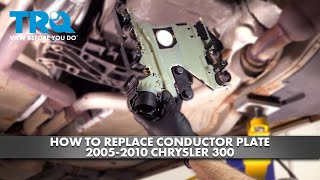
Typical fix: Replace the entire conductor plate assembly. This involves draining the transmission fluid, dropping the pan, removing the valve body, and swapping the plate. It is highly 🎬 Watch: Step-by-step conductor plate replacement guide recommended to replace the 13-pin connector sleeve at the same time.
Est. part cost: $100 - $250 - Leaking 13-Pin Electrical Connector 🟡 Medium Probability The O-rings on the 13-pin connector where the wiring harness enters the transmission are known to fail, allowing transmission fluid to leak. This fluid can wick up the wiring harness and contaminate the pins, disrupting the signal, or even travel up the harness and damage the TCM. This is another very common issue with the NAG1 transmission.
How to confirm: Visually inspect the round electrical connector on the passenger side of the transmission, near the front. Look for signs of ATF leakage. Disconnect it and check for fluid inside the plug. Any fluid present indicates the connector sleeve's O-rings have failed.
Typical fix: Replace the 13-pin connector sleeve. This is an inexpensive part that should always be replaced when the conductor plate is serviced, regardless of whether it is currently leaking.
Est. part cost: $10 - $25 - Low or Contaminated Transmission Fluid ⚪ Low Probability → Shop Transmission Assembly These vehicles do not come with a factory-installed transmission dipstick, making it difficult for owners to check the fluid level regularly. A special service tool (dipstick) is required. Low fluid levels can cause a variety of shifting issues and codes.
How to confirm: Check the transmission fluid level and condition using a NAG1/722.6 service dipstick (purchased separately). The level must be checked at a specific fluid temperature (usually 80°C) with the engine running. Low or burnt-smelling fluid indicates a problem.
Typical fix: Top off the fluid to the correct level or perform a transmission fluid and filter change if the fluid is old or contaminated. Use only fluid meeting the correct specification (ATF+4).
Est. part cost: $50 - $150 - Wiring Harness Damage ⚪ Low Probability
How to confirm: Visually inspect the wiring harness leading to the transmission's 13-pin connector for any signs of fraying, melting, or corrosion. Test for continuity and shorts in the output speed sensor circuit between the TCM and the 13-pin connector. 🎬 Watch: How to test the conductor plate and solenoids
Typical fix: Repair or replace the damaged section of the wiring harness.
Est. part cost: $20 - $100
Rare But Worth Checking
- Faulty Transmission Control Module (TCM) or Powertrain Control Module (PCM): → Shop Engine Control Module (ECM) This is uncommon. The TCM can be damaged by fluid wicking up from a leaking 13-pin connector. All other possibilities, especially the conductor plate and connector, should be ruled out before condemning the control module. Sometimes a software update can resolve shifting issues.
Diagnosis Steps
- Confirm the presence of P0720 with an OBD-II scanner. Check for other related codes like P0700, P0715, or P2767, which strongly suggest a conductor plate issue.
- Purchase a NAG1/722.6 service dipstick. With the engine running and the transmission warm (ideally 80°C/176°F), check the transmission fluid level and condition. The fluid should be red and not smell burnt.
- Lift the vehicle safely and inspect the 13-pin electrical connector on the passenger side of the transmission. Look for any signs of fluid leakage. Even a small amount of weeping is significant.
- If fluid is present at the connector, disconnect it (turn the bayonet lock counter-clockwise) and inspect the pins for fluid contamination or corrosion. A leaking connector is a strong indicator that the internal conductor plate may also be affected or failing.
- If the connector is dry and the fluid level is correct, the next logical step is to suspect the internal conductor plate, as it is the most common cause of this code on the NAG1 transmission.
- As a final, less common check, test the wiring harness for continuity and shorts between the TCM and the 13-pin connector to rule out a wiring issue.
Parts You'll Likely Need
- Automatic Transmission Conductor Plate
(OEM #52108308AC)— This is the most common failure point for P0720 on the NAG1 transmission, as it contains the integrated output speed sensor.
Trusted brands: Mopar (52108308AC, supersedes 52108308AB), Dorman (917-678), SKP, Standard Motor Products
OEM price range: $150-$250
Aftermarket price range: $100-$200 - Automatic Transmission Connector Plug / Sleeve
(OEM #68021352AA)— The O-rings on this connector frequently leak, causing signal issues and potential damage to the wiring or TCM. It should always be replaced when servicing the conductor plate.
Trusted brands: Mopar, Dorman (917-505), ATP
OEM price range: $15-$30
Aftermarket price range: $10-$25 - Automatic Transmission Filter and Pan Gasket Kit — The transmission pan must be removed for this repair, so replacing the filter and gasket is required maintenance.
Trusted brands: Mopar, WIX, ATP, Mann
OEM price range: $30-$50
Aftermarket price range: $20-$40 - ATF+4 Specification Transmission Fluid — The transmission fluid must be drained and refilled for this service. Approximately 5-7 quarts are needed for a pan drop. Chrysler specifies ATF+4 for their NAG1 applications.
Trusted brands: Mopar ATF+4, Valvoline ATF+4, Castrol Transmax ATF+4, Pennzoil Platinum ATF+4
OEM price range: $12-$20 per quart
Aftermarket price range: $8-$15 per quart
Related Codes That Often Appear With This One
- P0700 — This is a generic code indicating the TCM has stored a fault. It's a 'heads-up' code that is almost always present alongside more specific transmission codes like P0720.
- P0715 — This code indicates a fault with the Input Speed Sensor circuit. Since both the input and output speed sensors are on the same conductor plate, it's common for them to fail together, triggering both codes.
- P2767 — This code also relates to an input/turbine speed sensor circuit. Its presence along with P0720 further strengthens the diagnosis of a failed conductor plate.
Technical Service Bulletins (TSBs) & Recalls
- While no TSB directly addresses the P0720 code by replacing the conductor plate, various TSBs exist for the NAG1 transmission related to software updates for shift quality. For example, TSB 21-011-06 addresses a transfer case shudder on AWD models. It's always wise to check if any PCM/TCM software updates are available, as they can sometimes fix erratic shifting behavior.
Platform-Specific Known Issues
- Owner Experience: Limp Mode and Multiple Sensor Codes: A common story on forums like chargerforums.com involves a Charger suddenly going into limp mode. Upon scanning, the owner finds codes P0720 and P0715. The typical advice from other owners is to immediately suspect the conductor plate and to replace the 13-pin connector sleeve at the same time, as this combination almost always resolves the issue.
- DIY Repair Walkthroughs: Numerous YouTube videos demonstrate the process of replacing the conductor plate on a NAG1 transmission in vehicles like the Charger and Chrysler 300. These videos highlight the need to carefully unbolt the valve body, swap the plate and solenoids over, and ensure the 13-pin connector is seated correctly upon reinstallation.
Mechanic-Grade Diagnostic Values
- Valve Body to Transmission Case Bolt Torque — expected: 8 Nm (71 in-lbs). Failure: N/A - This is an assembly specification.
- TCM Power and Ground Circuit at TCM Connector — expected: Reference voltage: 5V +/- 0.5V; Ground resistance: < 0.1 Ω. Failure: Voltage outside of range or high resistance on the ground circuit indicates a wiring or TCM power supply issue, not a sensor fault.
Scan Tool Commands That Help
- Chrysler wiTECH or equivalent professional scan tool (e.g., JScan): Reset Learned Adaptives (NAG1) / TCM Adaptation — This procedure should be performed after replacing the conductor plate, valve body, or TCM. It allows the TCM to relearn clutch fill volumes and shift timing for smooth operation. The procedure involves a specific drive cycle within a transmission fluid temperature range of 60°C to 100°C (140°F to 212°F).
Wiring & Ground Locations
- Transmission Control Module (TCM) — Located under the driver's side of the instrument panel, to the left of the steering column, often tucked near the A-pillar. It is typically held in by two T25 Torx screws.. This is where the signals from the output speed sensor are processed. Fluid wicking from a leaking 13-pin connector can travel up the harness and damage this module. All wiring for the sensor circuit terminates here.
- G200 / G202 — G200 is on the left side of the instrument panel near the ignition switch harness. G202 is on the driver's side of the instrument panel near the instrument cluster.. These are the primary chassis ground points for components under the dashboard. A poor ground connection at these locations can cause erratic behavior from the TCM and other modules, potentially leading to false codes.
Real Owner Repair Stories
- Reddit user in r/MechanicAdvice (2006 Dodge Charger 5.7 Hemi) — Transmission went into limp mode.
❌ Tried (didn't work) N/A - Went straight to diagnosis.
✅ What actually fixed it The owner was advised by a mechanic that the conductor plate was broken. A forum veteran confirmed that after the mechanical replacement, no special dealer 'reprogramming' of the TCM is necessary for the NAG1 transmission. Simply clearing the check engine light codes with a standard scanner is sufficient to get the car out of limp mode. - NHTSA ODI #10433836 — An owner reported that while driving in the left lane, the vehicle experienced a speed control issue that could have been a fatal disaster. The check engine light returned a P0720 code, and the owner noted that the output speed sensor (OSS) malfunctioning is a very common issue with Dodge vehicles.
OEM Part Supersession History
52108308AB→52108308AC— Standard part revision and update by the manufacturer.
Heads up: The parts are interchangeable, with the 'AC' revision being the latest and preferred version.Mercedes-Benz 1402701261→N/A— This is the original Mercedes-Benz part number for the conductor plate, which is cross-compatible with the Mopar part as Chrysler used the Mercedes 722.6 (NAG1) transmission.
Heads up: This part can be used as a direct replacement for the Mopar-branded conductor plate.
Diagnostic Flowchart
Other Known Issues on This Vehicle
Issues unrelated to this code that are worth knowing about as an owner of this generation:
- Front Suspension Clatter/Clunking 🔴 High — Very common, especially after 50,000 miles. Caused by premature failure of bushings in the tension struts and control arms, as well as sway bar links.
- Shifter Stuck in Park ('Pink Thingy' Failure) 🟠 Medium — Extremely common on 2005-2007 models. A small pink plastic lever in the shifter assembly breaks, preventing the shifter from moving out of Park. (Ref: Recall K39 was issued for some vehicles, but many owners report their VIN is not covered despite having the failure.)
- HEMI Tick (Lifter/Camshaft Failure) 🔴 High — A well-known issue on 5.7L and 6.4L HEMI engines, often starting as a light ticking noise at idle. It's typically caused by the failure of the roller bearings on the MDS (Multi-Displacement System) lifters, which can destroy the camshaft.
- Premature Engine Failure (2006 model year) 🔴 High — The 2006 model year is particularly noted for a higher-than-average rate of catastrophic engine failures, sometimes with little warning.
- Alternator Failure 🟠 Medium → Shop Alternator — Failures of the alternator are a common complaint, leading to battery drain and electrical issues.
Used vs. New Parts: Buying Guide for This Vehicle
When a used part is the smart pick: A used Transmission Control Module (TCM) from a reputable salvage yard is a viable cost-saving option if the original is diagnosed as faulty. Buying a used conductor plate or complete valve body is risky due to the high failure rate of the electronic components on the plate, but can be considered if from a very low-mileage donor.
Donor-vehicle mileage cap: roughly under 80000 miles for the part to have meaningful remaining life.
What to inspect on the donor part:
- Verify the donor vehicle's mileage.
- Ask for photos of the part before purchase.
- For a valve body, check for any signs of sludge or burnt fluid residue.
- Ensure there is no physical damage to connectors or the plastic housing.
OEM-only on this vehicle (don't cheap out):
- While not strictly required, using an OEM Mopar or genuine Mercedes-Benz conductor plate is highly recommended for reliability and to avoid potential fitment issues reported with some aftermarket brands.
Aftermarket brands forum-validated for this vehicle:
- Dorman (917-678)
- Standard Motor Products (SMP)
Brands owners have reported issues with on this vehicle:
- Unbranded, low-cost conductor plates from online marketplaces are a significant gamble and may fail prematurely.
Real Owner Stories
Aggregated from forums and TSBs cited above. Mileages and costs reflect what owners reported in those sources.
2006-2010 Dodge Charger
Symptoms: The vehicle suddenly entered limp mode. Upon scanning, the owner found codes P0720 and P0715 present simultaneously.
What fixed it: Replacement of the internal conductor plate and the 13-pin connector sleeve.
Source hint: chargerforums.com owner experience cited in 'Limp Mode and Multiple Sensor Codes'
Related OBD-II Codes
Frequently Asked Questions
My 2006 Dodge Charger is stuck in 2nd gear and won't shift. Is this related to P0720?
Does TSB 21-011-06 fix the P0720 output speed sensor issue?
Can I check the transmission fluid level myself on a 2008 Charger to rule out P0720?
Is there a recall for the shifter getting stuck in Park on my 2007 Charger?
What fluid should I use if I need to top off my NAG1 transmission?
Should I replace the 13-pin connector even if it isn't leaking?
Helpful Videos
We Have This Part in Stock


The information in this article is provided for general reference and educational purposes only. Vehicle specifications, procedures, and part compatibility can vary by production date, trim level, and region. Always consult your vehicle's factory service manual and verify part numbers before purchasing or performing repairs. Safety-critical components such as airbags, seat belts, and braking systems should be installed by a qualified professional.
- Dodge Charger:
- 🧭 Diagnostic Flowchart
- 🎬 Helpful Videos
- 🛍️ Shop This Part
- What's Unique About the 2006-2010 Dodge Charger
- Symptoms You May Notice
- Most Likely Causes
- Rare But Worth Checking
- Diagnosis Steps
- Parts You'll Likely Need
- Related Codes That Often Appear With This One
- Technical Service Bulletins (TSBs) & Recalls
- Platform-Specific Known Issues
- Mechanic-Grade Diagnostic Values
- Scan Tool Commands That Help
- Wiring & Ground Locations
- Real Owner Repair Stories
- OEM Part Supersession History
- Other Known Issues on This Vehicle
- Used vs. New Parts: Buying Guide for This Vehicle
- Real Owner Stories
- 2006-2010 Dodge Charger
- Related OBD-II Codes
- Frequently Asked Questions
- 🎟️ Get 5% Off