

P0720 on 2017-2023 Honda Accord: Output Speed Sensor Failure Causes and Fixes
P0720 on a 2017-2023 Honda Accord most often indicates a failed transmission output speed sensor. This can cause erratic shifting, a faulty speedometer, and potential stalling. Replacing the sensor is the most common fix, with the part costing between $30 and $120.
- P0720 on a 2017-2023 Accord almost always points to a bad transmission output speed sensor or its wiring.
- Symptoms are severe and affect drivability, including harsh shifting, a non-functional speedometer, and potential stalling.
- It is critical to purchase the correct sensor for your specific model year and transmission type (CVT vs. 10-speed automatic).
- Diagnosis involves checking the wiring and connector before replacing the sensor. A DIY replacement is feasible for those with basic tools.
What's Unique About the 2017-2023 Honda Accord
The 2017-2023 Honda Accord spans two different generations with different primary transmissions (CVT and 10-speed automatic), which use distinct output speed sensors. The 2017 model (9th Gen with CVT) uses a different sensor than the 2018-2022 models (10th Gen with CVT or 10-speed auto). While the root cause is almost always the sensor or its wiring, it's critical to buy the correct part for your specific model year and transmission. Unlike some other transmission issues on this platform, P0720 does not appear to be linked to a widespread software issue or TSB, though some TSBs for other transmission-related codes do exist.
Generation note: The 2017 model year is the last of the 9th generation Accord. The 2018-2022 model years are the 10th generation. The 2023 model year begins the 11th generation. 🎬 Watch: Overview of P0720 for 2017-2023 Honda Accords These generations use different transmissions (CVT, 10-speed automatic, e-CVT) and therefore have different part numbers for the output speed sensor.
Symptoms You May Notice
- Check Engine Light is on
- Harsh, erratic, or delayed gear shifts
- Transmission feels stuck in a low gear (limp mode)
- Speedometer reads 0 mph or behaves erratically
- Odometer is not working
- Cruise control will not engage
- Engine may stall when coming to a stop or during acceleration
- Decreased fuel economy
- Replacing the ABS wheel speed sensor. The P0720 code refers specifically to the transmission output speed sensor, not the wheel speed sensors used for the ABS and traction control systems. They are different parts in different locations.
- Replacing the input/turbine speed sensor. The transmission has both an input and an output speed sensor. P0720 specifically points to the output (countershaft) sensor circuit. A fault with the input sensor would typically trigger a P0715 or P0717 code.
Most Likely Causes
- Faulty Output Shaft Speed Sensor 🔴 High Probability The sensor is an electronic component that can fail over time due to heat cycles and vibration. It is the most common culprit for a P0720 code.
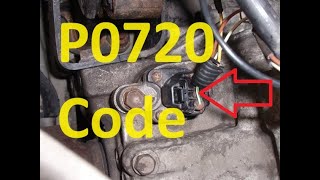
How to confirm: After confirming wiring is intact, test the sensor's resistance with a multimeter against the factory specification. 🎬 See this guide on causes and fixes for P0720 A more advanced method is to monitor the sensor's output signal on a scan tool (like the Honda HDS) while driving; an absent or erratic reading points to a bad sensor. A diagnostic step involves checking for 5.0 volts at the sensor's connector with the key on.
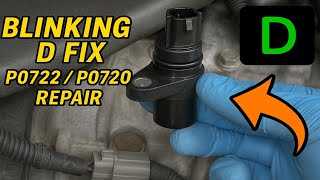
Typical fix: Replace the output shaft speed sensor. On many CVT models, the sensor is located on the outside of the transmission housing, accessible after removing the driver's side wheel and a small cover. 🎬 Watch: Step-by-step transmission output speed sensor replacement walkthrough It is crucial to lubricate the new sensor's O-ring with fresh transmission fluid before installation to prevent leaks.
Est. part cost: $30-$120 - Damaged Wiring or Corroded Connector 🟡 Medium Probability The wiring harness to the sensor is located near the front wheel and can be exposed to road debris, moisture, and heat, leading to corrosion at the connector pins or physical damage to the wires over time.
How to confirm: Visually inspect the wiring harness leading to the output speed sensor for any breaks, fraying, or signs of corrosion at the connector pins. Perform a continuity test on the wires between the sensor connector and the PCM to check for opens or shorts to ground.
Typical fix: Clean the connector pins with an electrical contact cleaner. If the wiring is damaged, repair the broken section or replace the connector pigtail. In some cases, wires can be completely severed.
Est. part cost: $10-$50 - Low or Dirty Transmission Fluid ⚪ Low Probability → Shop Transmission Assembly While not a direct cause of a circuit code, extremely low or contaminated fluid can cause erratic transmission operation and shifting problems, which in some cases can be misinterpreted by the PCM or contribute to sensor-related codes. Metallic debris in the fluid can also collect on the magnetic tip of the sensor, disrupting its reading.
How to confirm: Check the transmission fluid level and condition according to the owner's manual procedure. Note that many modern Hondas do not have a traditional dipstick, requiring a specific check-bolt procedure to verify the level.
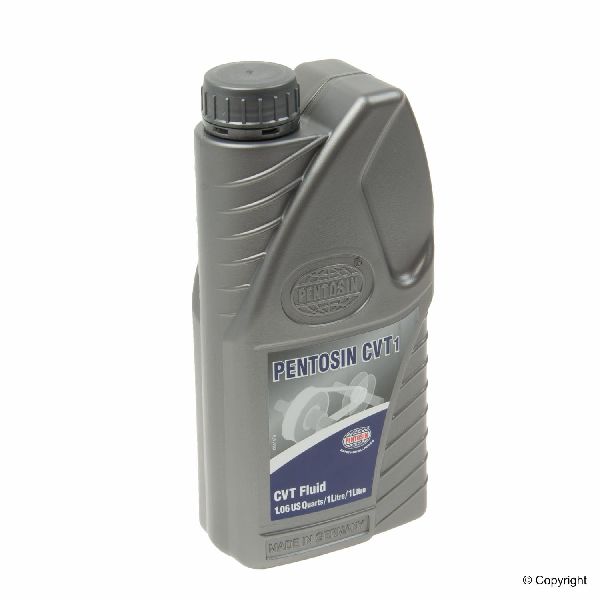
Typical fix: Perform a transmission fluid drain-and-fill using the correct Honda HCF-2 (for CVT) or ATF DW-1 (for 10-speed automatic) fluid.
Est. part cost: $50-$150
Rare But Worth Checking
- Faulty Powertrain Control Module (PCM): → Shop Engine Control Module (ECM) This is very rare. The PCM is the last item to suspect after all other possibilities (sensor, wiring, fluid) have been exhaustively ruled out.
Diagnosis Steps
- Read the code with an OBD-II scanner and document any other codes present.
- Check the transmission fluid level and condition. Ensure it is clean and at the proper level. Note: Many newer Accords lack a dipstick, requiring a specific procedure.
- Visually inspect the wiring harness and connector going to the output speed sensor. Look for any signs of damage, corrosion, or loose connections.
- Use a multimeter to check for continuity and shorts in the wiring between the sensor and the PCM.
- With the key on and sensor disconnected, check for a 5-volt reference signal at the connector.
- If available, use an advanced scan tool to monitor the vehicle speed data from the output sensor in real-time during a test drive. An absent or erratic reading points to a bad sensor or wiring.
- If the sensor is replaced, ensure it is fully seated. An improperly seated sensor can fail to read the gear and may even trigger a different code like P0793 (Intermediate Shaft Speed Sensor).
- If the sensor and wiring test good, the problem may be an intermittent connection or, in very rare cases, a faulty PCM.
Parts You'll Likely Need
- Transmission Output Speed Sensor (9th Gen, CVT)
(OEM #28810-RJ2-003)— This is the most common failure point for P0720 on the 2017 Accord with a CVT. Also called a 'Pick-Up Assembly'.
Trusted brands: Honda (OEM), Beck/Arnley, NTK, Walker Products
OEM price range: $70-$100
Aftermarket price range: $30-$60 - Transmission Output Speed Sensor (10th Gen, 10-Speed Auto & some CVTs)
(OEM #28820-5DJ-004)— This is the most common failure point for P0720 on 2018-2022 Accords with the 10-speed automatic or certain CVT applications. Also called a 'Pick-Up Assembly' or 'Countershaft Speed Sensor'.
Trusted brands: Honda (OEM), Walker Products, Standard Motor Products
OEM price range: $60-$120
Aftermarket price range: $40-$75
Related Codes That Often Appear With This One
- P0721 — This code for 'Output Speed Sensor Range/Performance' is a companion code. P0720 indicates a circuit failure (no signal), while P0721 indicates the signal is present but erratic or irrational. Both point to the same root causes.
- P0715 — This code indicates a fault with the Input/Turbine Speed Sensor. Since the PCM compares input and output speeds to control shifting, a fault in one can sometimes be flagged along with a fault in the other.
- P0500 — This code for 'Vehicle Speed Sensor (VSS) Malfunction' may appear on some platforms alongside P0720, as the transmission output speed sensor data is often used as the primary vehicle speed reading.
Technical Service Bulletins (TSBs) & Recalls
- While no TSB directly addresses P0720 on this platform, Honda has issued TSBs for other transmission and software issues. For example, TSB 23-083 addresses a P0868 code on 2023 Accord Hybrids due to fluid aeration, requiring a software update. TSB 21-049 addresses a P0236 code on 2.0T models, also fixed with a software update. This highlights that software fixes for transmission-related codes are possible, but none are currently documented for P0720.
Mechanic-Grade Diagnostic Values
- Voltage between Terminal 1 and Terminal 3 of the disconnected 3-pin sensor connector — expected: Approximately 5.0 volts with key in ON position. Failure: If 5.0V is not present, there is likely an open in the power (VCC1) or ground (SG1) wire from the PCM.
- Voltage between Terminal 3 of the disconnected sensor connector and body ground — expected: Approximately 5.0 volts with key in ON position. Failure: If voltage is not ~5.0V, it suggests an open circuit in the VCC1 power wire from the PCM.
- Voltage between Terminal 2 (signal wire) of the disconnected sensor connector and body ground — expected: Approximately 5.0 volts with key in ON position. Failure: If voltage is NOT ~5.0V, it points to a problem in the signal line. If voltage IS ~5.0V, the wiring is likely good and the sensor itself has failed.
- Continuity between Terminal 2 of the sensor connector and PCM connector E, pin 66 — expected: 1.0 ohms or less. Failure: Higher resistance indicates an open or partial break in the signal wire.
Scan Tool Commands That Help
- Honda Diagnostic System (HDS): Data List - A/T Data List - C SHAFT SPD (Countershaft Speed) — This is used during a test drive to monitor the live speed reading from the output sensor. If the vehicle is moving but the 'C SHAFT SPD' value is 0 or erratic, it confirms a fault in the sensor circuit.
- Honda Diagnostic System (HDS): DTCs MENU - Clear DTCs — After replacing the sensor or repairing the wiring, this function must be used to clear the P0720 code from the PCM's memory before a verification test drive.
Wiring & Ground Locations
- PCM Connector E (8P) — Located at the Powertrain Control Module (PCM).. Pin E66 is the specific terminal for the output shaft speed sensor signal wire. Continuity tests are performed between this pin and the sensor connector to check for wiring integrity.
- G101 (Main Engine Harness Ground) — Typically mounted on the driver's side of the intake manifold or on the transmission housing itself.. This is a primary ground point for the engine harness, which includes sensor grounds. A corroded or loose G101 ground can cause erratic behavior in multiple sensors, including the output speed sensor, leading to intermittent and hard-to-diagnose codes like P0720.
- Output Speed Sensor 3P Connector — On the transmission housing, often accessible by removing the driver's side front wheel and a plastic splash shield.. This is the connector where all voltage and continuity tests for the sensor circuit begin. It's exposed to road debris and moisture, making it a common point of failure due to corrosion or damage.
Real Owner Repair Stories
- YouTube video on a 2015 Honda Accord (2015 Honda Accord (9th Gen, similar to 2017 model)) — Check engine light, flashing 'D' light, weird shifting, new code P0793 after replacing sensor.
❌ Tried (didn't work) Replacing the output speed sensor initially.
✅ What actually fixed it The new sensor was not fully seated in the transmission housing. The retaining bolt was tightened slightly to push the sensor further in, allowing it to properly read the gear. This resolved the P0793 'no signal' code that appeared after the initial repair attempt. - 2CarPros Forum (1997 Honda Accord) — Check engine light and flashing D4 light with code P0720, but speedometer and cruise control worked fine.
❌ Tried (didn't work) Replacing the countershaft (output) speed sensor.
✅ What actually fixed it The expert advised that since the new sensor didn't fix the issue, the next steps were to meticulously check the wiring for opens/shorts, ensure the connector pins were making good contact, and verify the sensor was fully seated. The final, though rare, possibility was a failing PCM. The resolution was not posted by the user, but the expert guidance highlights the post-replacement diagnostic path.
OEM Part Supersession History
28810-RPC-003→28810-RPC-013— Part revision or manufacturer change.
Heads up: These parts are generally interchangeable for the specified applications, but it is always best to use the latest revision (28810-RPC-013) if available.
Model Year Variations Within This Range
- 2017: This is the last year of the 9th generation and primarily uses the CVT with output speed sensor P/N 28810-RJ2-003.
- 2018-2022: These are 10th generation models which use either a CVT or a 10-speed automatic transmission. The common output speed sensor for this generation is P/N 28820-5DJ-004, which fits multiple applications including the Accord, Odyssey, and HR-V.
Diagnostic Flowchart
Other Known Issues on This Vehicle
Issues unrelated to this code that are worth knowing about as an owner of this generation:
- Fuel Dilution in 1.5T Engine 🔴 High — Common in 2017-2018 models, especially in cold climates or with frequent short trips. Less prevalent in post-2019 models after software updates. (Ref: Honda issued software updates and extended warranties for affected models (e.g., TSB 19-037 for other models, with similar updates applied to Accord).)
- Sticky Steering at Highway Speeds 🔴 High — Affects 2022-2025 models. An investigation was opened by NHTSA after hundreds of complaints. (Ref: Honda issued TSB 23-037 instructing dealers to replace the EPS gearbox. A wider recall was later announced in October 2024.)
- Failing A/C Condenser 🟠 Medium — Common on 2018-2020 models. Tiny holes develop in the condenser tubes, causing refrigerant to leak out. (Ref: Honda Service Bulletin 21-018 extended the warranty on the A/C condenser to 10 years with unlimited miles for this specific failure.)
- Carbon Build-Up on Intake Valves (1.5T & 2.0T) 🟠 Medium — A known issue for all direct-injection engines, typically requiring cleaning every 50,000-70,000 miles to prevent misfires and performance loss.
- Dead 12V Battery (2023 Models) 🟡 Low — Some 2023 models experience a dead battery due to a parasitic draw from the telematics control unit. (Ref: Honda Service Bulletin A23-056 was issued to address this.)
Used vs. New Parts: Buying Guide for This Vehicle
When a used part is the smart pick: A used OEM sensor from a low-mileage donor vehicle is a reasonable choice for this repair. Since it's an external electronic part and not a major wear item, a tested, working sensor from a reputable salvage yard can be a cost-effective alternative to a new OEM part.
Donor-vehicle mileage cap: roughly under 80000 miles for the part to have meaningful remaining life.
What to inspect on the donor part:
- Check for physical damage to the sensor body or connector.
- Ensure the connector pins are clean, straight, and free of corrosion.
- Ask the seller if the part was tested or if it comes from a vehicle that was running without transmission-related trouble codes.
- Avoid sensors from vehicles that show signs of major transmission failure or have very dirty/burnt fluid.
OEM-only on this vehicle (don't cheap out):
- Powertrain Control Module (PCM) - Due to programming and security requirements, a used PCM is difficult to integrate and should be avoided unless you have access to specialized Honda programming tools.
Aftermarket brands forum-validated for this vehicle:
- NTK
- Beck/Arnley
- Walker Products
- Standard Motor Products (SMP)
Brands owners have reported issues with on this vehicle:
- No-name, unbranded sensors from online marketplaces should be avoided, as their quality control and accuracy can be poor, leading to a quick return of the code or other performance issues.
Real Owner Stories
Aggregated from forums and TSBs cited above. Mileages and costs reflect what owners reported in those sources.
1997 Honda Accord
Symptoms: The owner replaced the sensor but the P0720 code returned, suggesting the issue was not the sensor itself.
What fixed it: The expert recommendation was to check for a wiring issue, connection issue, or a faulty PCM, and to ensure the new sensor was fully seated.
Source hint: 2CarPros - Speed sensor code p0720 - 1997 honda accord
Documented NHTSA Reports
Honda Transmission Reliability
Symptoms: An owner reported that the diagnostic code P0720 is an early sign of transmission failure.
What fixed it: While the dealership replaced the sensor, the owner was informed the root cause was likely internal transmission issues (NHTSA ODI #10339099).
Related OBD-II Codes
Frequently Asked Questions
Is there a TSB for the P0720 code on my 2023 Honda Accord Hybrid?
Which transmission fluid should I use for a drain-and-fill on my 2017 Accord CVT to prevent sensor issues?
Where is the output shaft speed sensor located on the Honda Accord CVT?
Can I use the same speed sensor from a Honda Civic or CR-V on my 2017 Accord?
What voltage should I see when testing the sensor connector on my Accord?
Does my 2017-2023 Accord have a transmission dipstick to check for dirty fluid?
Helpful Videos
We Have This Part in Stock

The information in this article is provided for general reference and educational purposes only. Vehicle specifications, procedures, and part compatibility can vary by production date, trim level, and region. Always consult your vehicle's factory service manual and verify part numbers before purchasing or performing repairs. Safety-critical components such as airbags, seat belts, and braking systems should be installed by a qualified professional.
- Honda Accord:
- 🧭 Diagnostic Flowchart
- 🎬 Helpful Videos
- 🛍️ Shop This Part
- What's Unique About the 2017-2023 Honda Accord
- Symptoms You May Notice
- Most Likely Causes
- Rare But Worth Checking
- Diagnosis Steps
- Parts You'll Likely Need
- Related Codes That Often Appear With This One
- Technical Service Bulletins (TSBs) & Recalls
- Mechanic-Grade Diagnostic Values
- Scan Tool Commands That Help
- Wiring & Ground Locations
- Real Owner Repair Stories
- OEM Part Supersession History
- Model Year Variations Within This Range
- Other Known Issues on This Vehicle
- Used vs. New Parts: Buying Guide for This Vehicle
- Real Owner Stories
- 1997 Honda Accord
- Documented NHTSA Reports
- Honda Transmission Reliability
- Related OBD-II Codes
- Frequently Asked Questions
- 🎟️ Get 5% Off