

P0720 on 2011-2013 Jeep Grand Cherokee: Output Speed Sensor and Conductor Plate Guide
On a 2011-2013 Grand Cherokee with the NAG1 (W5A580) 5-speed transmission, P0720 almost always means the transmission conductor plate has failed. The output speed sensor is built into this part, which is inside the transmission. The fix involves replacing the entire conductor plate, a job best left to a professional.
- P0720 on a 2011-2013 Grand Cherokee with the 5-speed automatic points to an internal transmission problem, not a simple external sensor.
- The most likely failed part is the transmission conductor plate, which houses the output speed sensor.
- While replacing the conductor plate, it is critical to also replace the 13-pin electrical connector sleeve, transmission filter, and pan gasket.
- This is a complex repair that is not recommended for beginners; professional service is advised.
- Driving with this issue is unsafe as the transmission will be in 'limp mode' with limited functionality.
What's Unique About the 2011-2013 Jeep Grand Cherokee
Unlike many vehicles with a simple, external output speed sensor, the 2011-2013 Grand Cherokee models equipped with the Mercedes-designed NAG1 (W5A580) 5-speed automatic transmission have a different setup. On this platform, both the input and output speed sensors are integrated directly into a component called the 'conductor plate' (also known as a lead frame). This plate is a plastic board with integrated circuits mounted on the valve body inside the transmission. As a result, a P0720 code is not a simple sensor failure, but a failure of this entire internal assembly, making the repair significantly more involved.
Symptoms You May Notice
- Transmission stuck in 'limp mode' (will not shift out of a single gear, usually 2nd)
- Check Engine Light is on
- Harsh or erratic shifting, sometimes described as 'banging' into gear.
- Vehicle may stall when coming to a stop.
- Flashing gear indicator (PRNDL) on the dashboard
- Speedometer behaving erratically or not working at all.
- Cruise control may not function.
- Replacing only an external speed sensor. On the NAG1 transmission, the sensor is internal and part of the conductor plate; there is no separate external output speed sensor to replace.
- Replacing the entire transmission. While the symptoms are severe, the problem is often limited to the replaceable conductor plate and related electronics, not the mechanical parts of the transmission.
- Ignoring the leaking 13-pin connector. If the connector sleeve is leaking, replacing the conductor plate without replacing the sleeve will likely result in a repeat failure as fluid continues to contaminate the connection.
Most Likely Causes
- Failed Transmission Conductor Plate 🔴 High Probability → Shop Transmission Assembly The speed sensors are integrated into this electronic plate, which lives inside the hot transmission and is a known failure point on NAG1 transmissions. Heat and vibration cause the delicate electronics and plastic to become brittle and fail over time.
How to confirm: A professional-grade scan tool can monitor the output speed sensor data in real-time. If the data is erratic, absent, or doesn't change with vehicle speed, and the external wiring is confirmed to be good, the conductor plate is faulty. A diagnostic test with a capable scanner will show the TCM comparing the calculated gear to the actual engaged gear; if they differ, a counter is increased, eventually triggering the code.
Typical fix: Replace the transmission conductor plate, along with the filter, pan gasket, and the 13-pin electrical connector sleeve. This requires removing the transmission valve body.
Est. part cost: $150-$400 - Leaking 13-Pin Electrical Connector Sleeve 🟡 Medium Probability The O-rings on the connector sleeve that plugs into the transmission case are known to degrade, allowing transmission fluid to leak. This fluid can wick up the wiring harness via capillary action, contaminating the connector pins and causing short circuits and communication errors between the conductor plate and the TCM.
How to confirm: Visually inspect the round 13-pin connector on the passenger side of the transmission, near the front. If there is any sign of ATF (red or brown fluid) on the connector or inside the wiring harness plug, it is leaking and must be replaced.
Typical fix: Replace the electrical connector sleeve. This is a low-cost part and should always be replaced when servicing the conductor plate as a preventative measure.
Est. part cost: $10-$25 - Damaged Wiring or Connectors ⚪ Low Probability
How to confirm: Visually inspect the wiring harness leading to the 13-pin transmission connector for any signs of melting, chafing, or corrosion. Perform a continuity test on the wires between the TCM and the transmission connector.
Typical fix: Repair or replace the damaged section of the wiring harness or the connector pigtail.
Est. part cost: $20-$100
Rare But Worth Checking
- Faulty Transmission Control Module (TCM) or Powertrain Control Module (PCM): → Shop Engine Control Module (ECM) This is very rare and should only be considered after all other possibilities (conductor plate, connector, wiring) have been definitively ruled out. A module failure can sometimes be induced by a short circuit from a fluid-contaminated wiring harness.
Diagnosis Steps
- Scan for codes to confirm P0720 and note any other transmission-related codes like P0700, P0717, or P2767.
- Check the transmission fluid level and condition. Note that these vehicles do not have a dipstick and require a special service tool. Low or burnt fluid can indicate other problems.
- Safely raise the vehicle and locate the 13-pin electrical connector on the passenger side of the transmission.
- Disconnect the connector and inspect thoroughly for any signs of automatic transmission fluid contamination. If fluid is present, the connector sleeve must be replaced.
- Inspect the external wiring harness for any visible damage, melting from the exhaust, or corrosion.
- If the external wiring and connector are fine, the next step is to test the signals from the output speed sensor at the TCM connector using a multimeter or oscilloscope. This confirms if the signal is being lost internally or externally.
- If the signal is lost internally, the transmission pan must be removed to inspect and replace the conductor plate.
Parts You'll Likely Need
- Transmission Conductor Plate
(OEM #52108308AC)— This is the most common point of failure for a P0720 code on the NAG1 transmission, as it contains the integrated speed sensors. The part is sometimes referred to as an 'Electrohydraulic control unit'.
Trusted brands: Mopar, Dorman, SKP
OEM price range: $250-$400
Aftermarket price range: $150-$280 - Transmission Electrical Connector Sleeve
(OEM #68021352AA)— The O-rings on this connector frequently fail, allowing fluid to leak and disrupt the electrical connection. It is always recommended to replace this part when replacing the conductor plate.
Trusted brands: Mopar, Bosch, Dorman
OEM price range: $15-$25
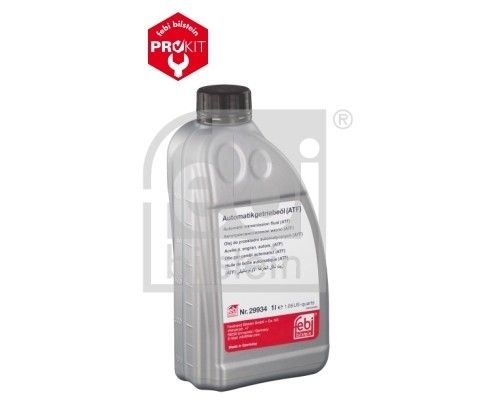
Aftermarket price range: $10-$20 - Automatic Transmission Fluid (Shell ATF 134 / Mopar ATF 134) — The transmission fluid must be drained to perform the repair. The NAG1/W5A580 transmission requires fluid meeting the MB 236.14 specification, such as Shell ATF 134 or Mopar ATF 134. Do NOT use ATF+4. A drain and fill typically requires 5-6 quarts.
Trusted brands: Mopar, Shell, Valvoline MaxLife ATF (meets spec)
OEM price range: $18-$30 per quart
Aftermarket price range: $10-$20 per quart
Related Codes That Often Appear With This One
- P0700 — This is a generic code that simply means the Transmission Control Module (TCM) has stored a fault. It acts as a 'check engine light' for the transmission and will almost always accompany a specific code like P0720.
- P0717 — This code indicates a fault with the Input Speed Sensor circuit. Since both the input and output speed sensors are housed in the same conductor plate, it is common for them to fail together, triggering both codes.
- P2767 — This code also relates to the Input/Turbine Speed Sensor 'B' Circuit. Like P0717, its appearance with P0720 strongly points to a failure of the conductor plate assembly.
Platform-Specific Known Issues
- Owner Experience on JeepGarage.org: A 2012 Grand Cherokee 5.7L owner reported experiencing limp mode and codes P0720 and P0717. The issue was resolved by replacing the conductor plate and the 13-pin connector. The owner noted the importance of using the correct Shell ATF 134 fluid, not ATF+4.
Scan Tool Commands That Help
- wiTECH or equivalent professional scan tool: Reset Transmission Adaptives — This function must be performed after replacing the conductor plate or valve body. It resets the learned shift calibrations to the factory baseline, which is critical for proper transmission operation after the repair.
- wiTECH or equivalent professional scan tool: Store Adaptives — After performing the adaptation drive cycle, this command can be used to manually save the new adaptive values without having to wait for the 10-minute automatic storage interval.
- wiTECH or equivalent professional scan tool: Transmission Adaptation Drive Cycle — Following a 'Reset Adaptives' command, a specific drive cycle is required. This involves coast-downs (5-4, 4-3) and moderate acceleration through all gears below 1800 RPM, within specific temperature ranges, to allow the TCM to re-learn shift pressures and timings.
Wiring & Ground Locations
- G108 — On the passenger side inner fender, near the rear of the power distribution block (fuse box).. This is a primary ground point for the Transmission Control Module (TCM). A loose or corroded connection at G108 can cause a wide range of erratic electronic issues, including intermittent communication with transmission sensors, potentially triggering a P0720 code even if the conductor plate is good.
- 13-Pin Transmission Connector — On the front passenger side of the NAG1 transmission case.. This is the sole electrical interface between the vehicle's wiring harness and the internal conductor plate. All signals from the input and output speed sensors pass through this connector. It is a common point of failure due to fluid leaks from its O-rings, which contaminates the pins and disrupts signals.
Real Owner Repair Stories
- Jeeps.net Forum (2002 Jeep Grand Cherokee 4.7L (WJ model, but with a similar diagnostic path for electrical faults)) — P0720 code appeared instantly on startup, even without driving. Late/hard shifting.
❌ Tried (didn't work) Replaced the output speed sensor (the old one tested good)., Ran completely new wires from the TCM to the sensor connector to bypass the factory harness, which had been physically ripped by road debris.
✅ What actually fixed it Replacing the Transmission Control Module (TCM). The original TCM was likely damaged internally when the sensor wires were shorted out by the road debris. The P0720 code was resolved immediately after the new TCM was installed.
OEM Part Supersession History
52108308AB→52108308AC— Part revision or update by the manufacturer. The AC revision is the current replacement part.
Diagnostic Flowchart
Other Known Issues on This Vehicle
Issues unrelated to this code that are worth knowing about as an owner of this generation:
- Faulty Totally Integrated Power Module (TIPM) 🔴 High — Very common on 2011-2013 models. Can cause engine stalling, no-start conditions, erratic fuel pump operation, and other electrical issues. (Ref: Recalls NHTSA #14V530000, #15V115, and #19V813000 were issued to address the fuel pump relay within the TIPM.)
- Quadra-Lift Air Suspension Failure 🟠 Medium — Common on models equipped with the air suspension. Issues include leaking air springs, failing compressors, and faulty height sensors, leading to a sagging vehicle or a 'SERVICE AIR SUSPENSION' message.
- Bubbling or Delaminating Leather Dashboard 🟡 Low — A widespread cosmetic issue on higher trim levels (e.g., Overland, Summit) where the leather dash covering separates from the underlying panel due to heat and adhesive failure.
- Alternator Failure 🔴 High → Shop Alternator — Sudden alternator failure is a known issue, particularly on 2012-2014 models with the 3.6L engine and 160-amp alternator, which can cause the vehicle to stall while driving. (Ref: Recall NHTSA #14V634000 was issued for this problem.)
Used vs. New Parts: Buying Guide for This Vehicle
When a used part is the smart pick: For this specific repair, sourcing a used conductor plate is NOT recommended. The part is a known high-failure item due to heat and age degrading the internal electronics. A used part from a donor vehicle is likely to have a similar amount of wear and a high risk of premature failure.
What to inspect on the donor part:
- Not applicable, as used conductor plates are not advised.
OEM-only on this vehicle (don't cheap out):
- While not strictly 'OEM-only', using a genuine Mopar or a reputable OEM-supplier (like Bosch for the connector) part is strongly advised for the conductor plate and electrical connector sleeve to ensure longevity and compatibility.
Aftermarket brands forum-validated for this vehicle:
- Dorman: Several owner reviews and forum posts indicate success with the Dorman 917-678 conductor plate as a viable, lower-cost alternative to Mopar.
Brands owners have reported issues with on this vehicle:
- Unbranded, no-name conductor plates sold on marketplaces should be avoided. The quality control on the internal electronics is critical, and failure can mean repeating a very labor-intensive job.
Real Owner Stories
Aggregated from forums and TSBs cited above. Mileages and costs reflect what owners reported in those sources.
2012 Jeep Grand Cherokee 5.7L
Symptoms: Vehicle entered limp mode with codes P0720 and P0717 present.
What fixed it: Replacement of the transmission conductor plate and the 13-pin connector, using Shell ATF 134 fluid.
Source hint: JeepGarage - NAG1 P0717 and P0720 codes / Limp Mode
Related OBD-II Codes
Frequently Asked Questions
My 2011-2013 Jeep Grand Cherokee is stuck in 2nd gear and won't shift. Is this related to P0720?
Can I use standard ATF+4 fluid when fixing the conductor plate on my 2012 Grand Cherokee 5.7L?
Is there a recall for the electrical issues causing my Jeep to stall?
Why is my speedometer acting erratic along with the Check Engine Light?
Do I need to replace the whole transmission if the 13-pin connector is leaking?
Can I save money by using a used conductor plate from a donor vehicle?
Helpful Videos
We Have This Part in Stock

The information in this article is provided for general reference and educational purposes only. Vehicle specifications, procedures, and part compatibility can vary by production date, trim level, and region. Always consult your vehicle's factory service manual and verify part numbers before purchasing or performing repairs. Safety-critical components such as airbags, seat belts, and braking systems should be installed by a qualified professional.
- Jeep Grand Cherokee:
- 🧭 Diagnostic Flowchart
- 🎬 Helpful Videos
- 🛍️ Shop This Part
- What's Unique About the 2011-2013 Jeep Grand Cherokee
- Symptoms You May Notice
- Most Likely Causes
- Rare But Worth Checking
- Diagnosis Steps
- Parts You'll Likely Need
- Related Codes That Often Appear With This One
- Platform-Specific Known Issues
- Scan Tool Commands That Help
- Wiring & Ground Locations
- Real Owner Repair Stories
- OEM Part Supersession History
- Other Known Issues on This Vehicle
- Used vs. New Parts: Buying Guide for This Vehicle
- Real Owner Stories
- 2012 Jeep Grand Cherokee 5.7L
- Related OBD-II Codes
- Frequently Asked Questions
- 🎟️ Get 5% Off