

P0720 on 2005-2012 Nissan Pathfinder: Output Speed Sensor and TCM Failure Guide
On a 2005-2012 Pathfinder, P0720 almost always indicates a failed Transmission Control Module (TCM), not the sensor itself. This is often caused by coolant contaminating the transmission fluid due to a radiator failure (SMOD), a notorious issue on 2005-2010 models. The fix is typically a new valve body/TCM and radiator, costing $1,500-$3,500.
- For a 2005-2012 Pathfinder, P0720 is a serious code that strongly suggests a failing Transmission Control Module (TCM), not just a bad sensor.
- If you have a 2005-2010 model, immediately check your radiator and transmission fluid for signs of pink, milky contamination (SMOD). This is the root cause of most P0720 issues.
- Do not waste money replacing only the output speed sensor. The problem is almost certainly deeper within the transmission's electronics.
- Proactively replacing the radiator on a 2005-2010 model or performing a cooler bypass is the single best way to prevent this catastrophic and expensive failure.
- Due to the complexity and high cost of potential repairs (TCM, radiator, full transmission), a professional diagnosis is essential before buying any parts.
What's Unique About the 2005-2012 Nissan Pathfinder
For the 2005-2012 (R51) Pathfinder and its platform-mates (Xterra, Frontier) using the RE5R05A transmission, P0720 is a code with a notorious reputation. While it points to the speed sensor, the actual culprit is most often the Transmission Control Module (TCM) located inside the transmission pan. This common failure is frequently a direct consequence of another infamous issue on 2005-2010 models: the 'Strawberry Milkshake of Death' (SMOD). This happens when the factory Calsonic radiator fails internally, mixing coolant with transmission fluid, which then destroys the sensitive electronics of the TCM.
Symptoms You May Notice
- Check Engine Light is on
- Transmission shifts harshly or erratically
- Transmission is stuck in one gear (limp-home mode, often 3rd gear)
- Hesitation or delay when accelerating
- Vehicle may stall when coming to a stop
- Speedometer may malfunction or read incorrectly
- Inability to shift into higher gears
- Scan tool shows impossible speed readings (e.g., 170mph when stationary)
- Replacing only the output speed sensor without checking for coolant contamination (SMOD) or diagnosing the TCM. On this platform, the TCM is the most likely failure point.
- Performing a single transmission fluid flush after SMOD has occurred and assuming the problem is fixed. The contamination is difficult to remove completely and has likely already damaged sensitive components like clutch materials and electronics. Multiple flushes are needed if caught early, but replacement is often necessary if symptoms are present.
Most Likely Causes
- Failed Transmission Control Module (TCM) 🔴 High Probability → Shop Transmission Assembly The TCM is located inside the transmission on the valve body, exposing it to heat, vibration, and fluid. More importantly, it is extremely vulnerable to damage from coolant contamination caused by radiator failure (SMOD), a very common issue on 2005-2010 models. The internal electronics fail, causing a P0720 code even when the sensor itself is functional.
How to confirm: A professional scan tool can show no signal or nonsensical data from the output speed sensor despite the vehicle moving (or being stopped). The definitive diagnosis often comes after checking for SMOD and ruling out other causes. A mechanic may test power/ground at the TCM. If the gear selection indicator (PRNDL) on the dash is gone, the TCM is likely dead.
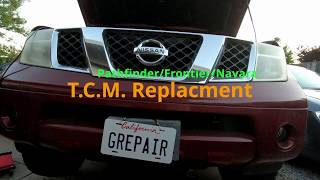
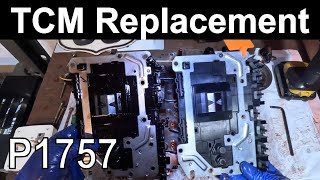
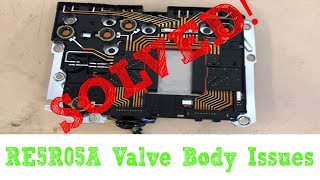
Typical fix: Replacement of the entire valve body assembly, which includes the integrated TCM. 🎬 Watch this step-by-step TCM replacement walkthrough This is a complex job that requires dropping the transmission pan. Some online services offer TCM repair for around $200.
Est. part cost: $800-$1500 - Coolant Contamination ('Strawberry Milkshake of Death' - SMOD) 🔴 High Probability A design flaw in the original Calsonic radiators on 2005-2010 models causes the internal transmission cooler to rupture, mixing engine coolant and automatic transmission fluid. This issue was the subject of a class-action lawsuit, but the extended warranty period has expired.
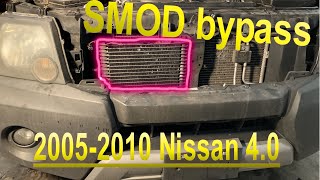
How to confirm: Check the transmission fluid dipstick and radiator overflow tank 🎬 See how to perform a SMOD bypass for a pink, milky, frothy substance resembling a strawberry milkshake. This is a definitive sign of contamination.
Typical fix: If caught early (fluid is translucent pink), immediate replacement of the radiator and multiple transmission fluid flushes may save the transmission. If symptoms like slipping or harsh shifting are present, the transmission and TCM are likely already damaged, requiring replacement of the radiator, transmission (or a full rebuild), and torque converter. A proactive radiator replacement costs around $600.
Est. part cost: $200-$500 for a radiator; $2500+ for a transmission - Failed Output Speed Sensor ⚪ Low Probability While this is the component named by the code, it is an uncommon failure point on this platform compared to the TCM. Many owners and mechanics replace the sensor first, only to find the problem persists, indicating the true fault lies with the TCM.
How to confirm: Requires testing the sensor's resistance and signal output with a multimeter, which involves accessing the internal transmission wiring. The sensor is located on the valve body inside the transmission.
Typical fix: Replacement of the sensor, which requires dropping the transmission pan and removing the valve body.
Est. part cost: $50-$150 - Damaged Wiring or Connectors ⚪ Low Probability
How to confirm: Visually inspect the transmission wiring harness for any signs of fraying, melting, corrosion, or loose pins, particularly at the main connector to the transmission. Manufacturer Bulletin #NTB14019 notes that moisture and/or corrosion present on or around the speed sensor pins can trigger P0720.
Typical fix: Repair or replace the damaged section of the wiring harness.
Est. part cost: $20-$200
Diagnosis Steps
- Check Transmission Fluid: Pull the transmission dipstick. Check if the fluid level is correct and, more importantly, check its condition. If it is pink, milky, or looks like a strawberry milkshake, you have coolant contamination (SMOD). Stop diagnosis and proceed to SMOD-related repairs.
- Scan for Codes: Use an OBD-II scanner to confirm P0720 and check for any other pending or active transmission codes (like P0715 or solenoid codes), which would further point towards a faulty TCM.
- Monitor Live Data: Use an advanced scan tool to observe the output speed sensor data from the TCM. If the readings are nonsensical (e.g., 170mph while parked) or don't change with vehicle speed, it strongly suggests a faulty TCM.
- Inspect External Wiring: Visually inspect the main transmission wiring harness and connector for any obvious damage, corrosion, or fluid contamination.
- Professional Diagnosis: Due to the high probability of an internal TCM or SMOD issue, the next steps should be performed by a qualified technician. This includes testing the TCM, dropping the transmission pan to inspect the valve body and fluid for contamination or debris, and confirming power and ground at the module.
Parts You'll Likely Need
- Transmission Valve Body with TCM
(OEM #31705-62X1D (supercedes previous numbers), TCM module number ETC91-900N)— This is the most common failure point for a P0720 code on this vehicle. The TCM is integrated into the valve body and fails due to heat, vibration, or coolant contamination. Note: New OEM valve bodies often come blank and require programming by a dealer.
Trusted brands: Hitachi, Nissan Genuine, Rostra
OEM price range: $1200-$1800
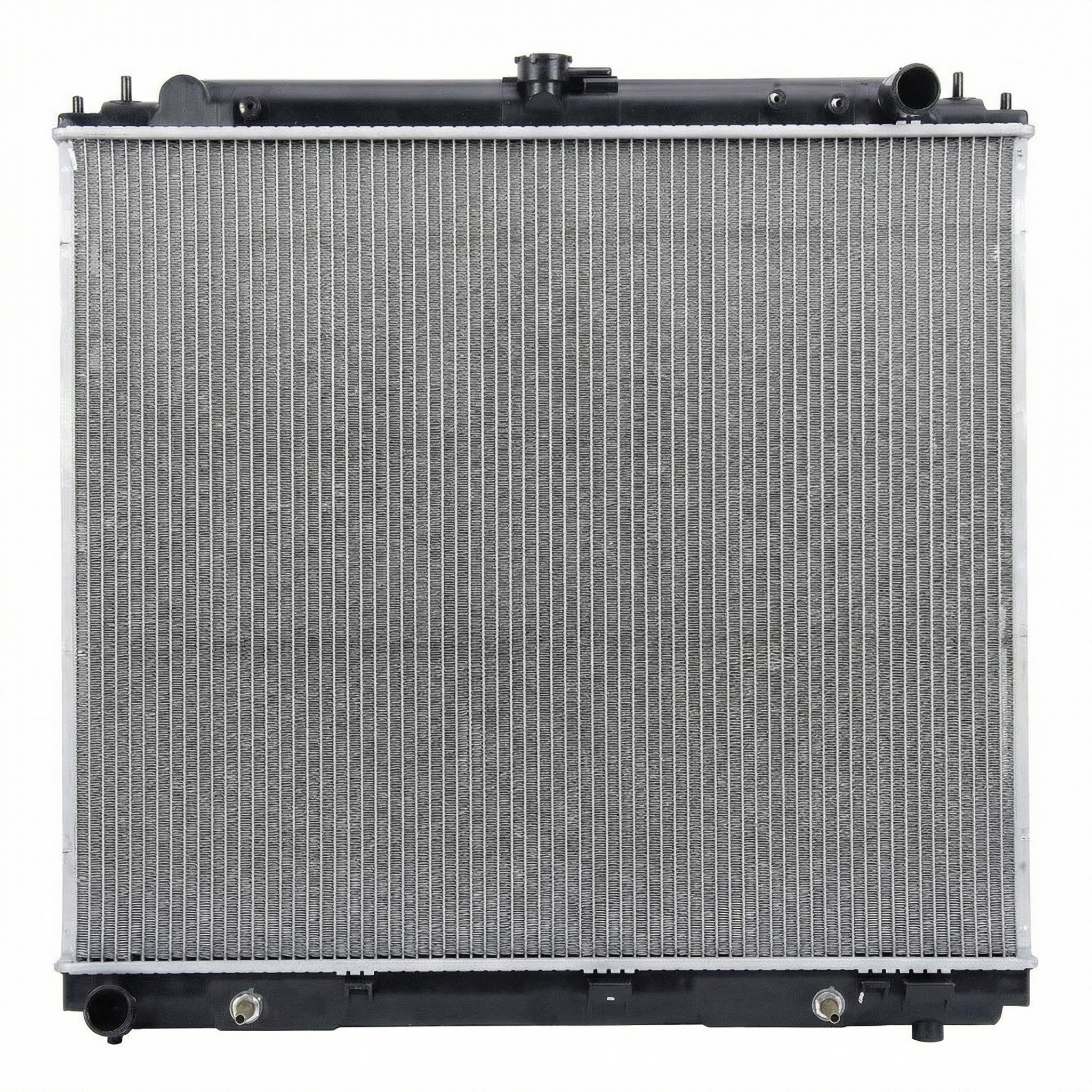
Aftermarket price range: $600-$1000 - Radiator
(OEM #21460-9CA0E (Safe, revised part number))— If the vehicle is a 2005-2010 model, the original radiator should be replaced proactively to prevent SMOD, or it must be replaced if SMOD has already occurred. Part numbers associated with SMOD include 21410-EA205 and 21460-EA215.
Trusted brands: Koyorad, CSF, Denso
OEM price range: $400-$600
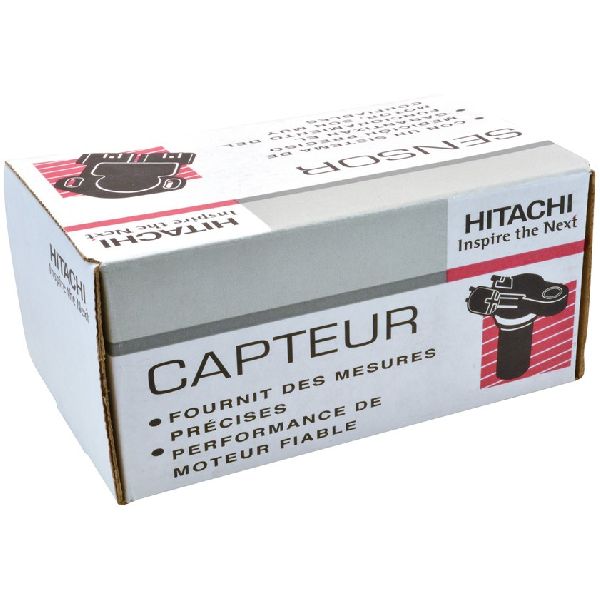
Aftermarket price range: $150-$300 - Output Speed Sensor (Revolution Sensor)
(OEM #31935-1XF0C (supercedes 31935-1XF00, 31935-8E007))— While rarely the cause, this is the part implicated by the code. It is located inside the transmission on the valve body.
Trusted brands: Hitachi, NGK/NTK, ATP
OEM price range: $100-$180
Aftermarket price range: $40-$90
Related Codes That Often Appear With This One
- P0715 — Input Speed Sensor Circuit Malfunction. When the TCM is failing, it can cause erratic signals from multiple sensors, not just the output sensor.
- P1757 — Front Brake Solenoid Circuit. This and other solenoid codes often appear in a group when the TCM is failing or when the valve body has been damaged by contaminated fluid.
- P0500 — Vehicle Speed Sensor (VSS) Malfunction. Owners often confuse the VSS with the output speed sensor. While related, a P0500 points to a different sensor, but a failing TCM can sometimes trigger multiple speed-related codes.
Technical Service Bulletins (TSBs) & Recalls
- NTB08-079 - While not found in detail, this TSB is often referenced in forums regarding P0720 and TCM issues on related platforms.
- Bulletin #NTB10150A - This manufacturer bulletin notes that for certain models, if the MIL is on with DTC P0720 (Output Speed Sensor), the recommended action is to replace the transmission control valve assembly (valve body) and reprogram.
- Bulletin #NTB14019 - This bulletin addresses P0720 and other speed sensor codes, specifically highlighting that moisture and/or corrosion on or around the Secondary Speed Sensor pins can be the root cause.
Platform-Specific Known Issues
- The 'Strawberry Milkshake of Death' (SMOD) is a well-documented failure on 2005-2010 models where the internal radiator transmission cooler fails, mixing coolant and transmission fluid. This contaminated fluid quickly destroys the transmission's electronic components, especially the TCM, leading to P0720 and catastrophic transmission failure. There was a class-action lawsuit regarding this issue, but the extended warranty period has expired.
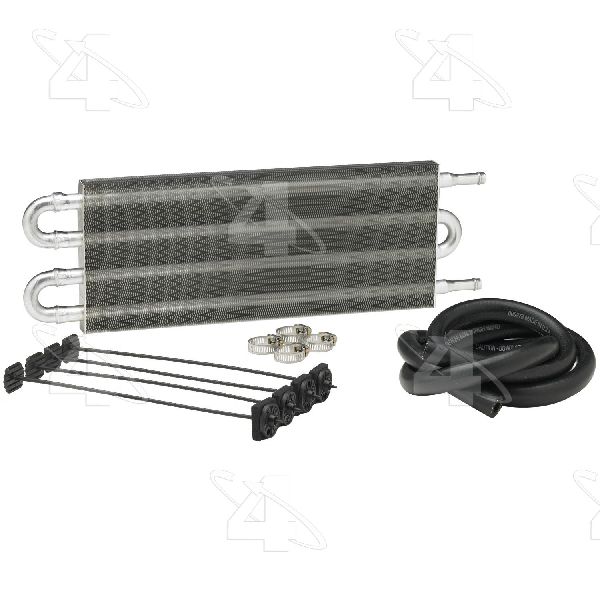
- Due to the SMOD issue, many owners proactively perform a 'radiator bypass'. This involves re-routing the transmission cooler lines to an external, air-cooled transmission cooler, completely separating it from the radiator to prevent any possibility of contamination.
Mechanic-Grade Diagnostic Values
- Output Speed Sensor (Revolution Sensor) Signal Frequency — expected: Approx. 150 Hz at 12 MPH (20 km/h). Failure: No signal, or a signal that does not change with vehicle speed.
- Bench Test of Output Speed Sensor — expected: A changing DC Hertz signal on Pin 2 when turning the output shaft by hand.. Failure: No signal is generated.
Scan Tool Commands That Help
- Nissan CONSULT-II / CONSULT-III: DATA MONITOR for A/T > VHCL/S SE·A/T — This is the primary function to view the live data from the output speed sensor as seen by the TCM. A reading that is erratic, stuck, or doesn't correspond to actual vehicle speed points to a problem in the circuit or, more likely, the TCM itself.
- Nissan CONSULT-II or compatible advanced scanner: Self-Diagnostic Results Erase — After replacing the TCM/valve body or repairing the circuit, all fault codes must be cleared from the TCM.
- Nissan CONSULT-II or compatible advanced scanner: Idle Air Volume Learning — This procedure, along with Accelerator Pedal Released Position and Throttle Valve Closed Position learning, MUST be performed if the battery, TCM, or ECM is disconnected. Failure to do so can result in improper idle and shifting behavior even after the P0720 fault is fixed.
Wiring & Ground Locations
- TCM Connector — On the valve body inside the transmission oil pan. It is a single large connector (green on early Type 2, black on later Type 2) for the integrated TCM/valve body assembly.. This is the main connection point for all sensors and solenoids integrated into the TCM, including the output speed sensor. Checking for power, ground, and signal at the external harness that plugs into the transmission case is a key diagnostic step before dropping the pan.
- E72 Ground Strap — A short, braided strap running from the passenger-side exhaust manifold heat shield to the firewall flange, visible above the right valve cover.. This is a common failure point due to fraying. While primarily for stabilizing sensor grounds like O2 sensors, a poor engine-to-chassis ground can introduce electrical noise that may affect sensitive transmission electronics.
- E105 Ground — A 10mm stud on the passenger side of the transfer case tail housing, with a short wire to the frame cross-member.. This grounds the 4WD system components. While not directly linked to the P0720 code, ensuring all major powertrain grounds are clean and secure is a best practice when diagnosing any electronic transmission fault.
Real Owner Repair Stories
- PathfinderTalk Forum Member (2006 Nissan Pathfinder) — Vehicle went into limp mode, stuck in 3rd gear, displayed P0720 code.
❌ Tried (didn't work) Initially suspected the output speed sensor itself.
✅ What actually fixed it The owner confirmed that the root cause was a failed Transmission Control Module (TCM). The problem was resolved by replacing the entire valve body assembly, which includes the integrated TCM. The owner noted this is a very common failure for this specific code on this platform. - TheNewX.org (Xterra) Forum Member (2005 Nissan Xterra (same platform/drivetrain)) — Transmission started slipping, then got stuck in a high gear. Check engine light came on with code P0720.
❌ Tried (didn't work) The owner first replaced the output speed sensor, but the code and symptoms returned immediately.
✅ What actually fixed it The fluid was found to be contaminated (SMOD). The final repair was a complete transmission replacement, along with a new radiator and an external transmission cooler to prevent a recurrence. This fixed the P0720 code and all shifting issues. - NHTSA ODI #11683803 — An owner experienced a dangerous situation in traffic where the vehicle could not accelerate normally. A scan revealed a P0720 Speed Sensor Circuit failure, and the dealer advised replacing the valve body assembly.
- NHTSA ODI #11652917 — A driver reported the vehicle entering limp mode on the highway, unable to exceed 40 mph in 70 mph zones. The diagnostic code was P0720, which the owner noted usually points to a valve body or transmission issue.
Documented NHTSA Reports
- NHTSA ODI #11115192 — An owner reported that an inspection of their vehicle revealed OBD II codes P0500 and P0720. Further investigation by the owner suggested these codes may be related to existing manufacturer recalls for that specific make and model.
OEM Part Supersession History
Various (Bosch-made)→Various (Hitachi-made, e.g., ETC91-900N)— Change in manufacturer for the TCM from Bosch to Hitachi around 2004-2005, coinciding with the move to an internal TCM design.
Heads up: The TCMs are not interchangeable. A used TCM must be sourced from the exact same vehicle model and year range, as the software is specific. You cannot rely on part numbers alone. New valve bodies from the dealer often come as a complete assembly with the TCM.RE5R05A Type 1 Valve Body (External TCM)→RE5R05A Type 2 Valve Body (Internal TCM)— Major design change integrating the TCM with the valve body.
Heads up: Type 1 (pre-2005, two blue connectors) and Type 2 (2005+, single green or black connector) systems are completely incompatible. The 2005-2012 Pathfinder uses the Type 2 system.
Model Year Variations Within This Range
- 2005-2010: These years were equipped with the faulty Calsonic radiator that causes SMOD. The P0720 code on these models has a very high probability of being the secondary result of coolant contamination destroying the TCM.
- 2011-2012: These later models have an updated radiator design that is not prone to the SMOD failure. While a P0720 code is still most likely a failed TCM, it is more likely due to normal heat/vibration-related electronic failure rather than coolant contamination.
- Mid-2007/2008+: Some later models may have eliminated one of the two transmission fluid temperature sensors. This does not directly affect the P0720 code but is a known variation within the RE5R05A's production run.
Diagnostic Flowchart
Other Known Issues on This Vehicle
Issues unrelated to this code that are worth knowing about as an owner of this generation:
- Timing Chain Wear / Tensioner Failure (VQ40DE) 🔴 High — Common after 80,000-100,000 miles. Characterized by a whining or buzzing sound on startup. The plastic tensioner guides wear out, causing slack in the secondary timing chains. (Ref: A TSB was issued and there was a class-action lawsuit regarding this issue.)
- Fuel Sending Unit Failure 🟠 Medium — Very common across all years. The fuel gauge becomes erratic, reads empty when full, or gets stuck. This is caused by a faulty sending unit in the fuel tank. Replacement can be costly due to labor. (Ref: A recall was issued for some model years to address this.)
- IPDM-ER Failure (ECM Relay) 🟠 Medium — Common on 2005-2006 models. The ECM relay within the Intelligent Power Distribution Module fails, causing intermittent stalling, no-start conditions, or rough running. (Ref: Nissan issued a recall (NHTSA ID: 10V517000) to replace the faulty relay.)
- Cracked Exhaust Manifolds (VK56DE) 🟠 Medium — Affects V8-equipped models, typically after 100,000 miles. The manifolds develop cracks from heat cycles, causing an exhaust leak tick that is noticeable when cold.
Used vs. New Parts: Buying Guide for This Vehicle
When a used part is the smart pick: A used valve body with an integrated TCM from a junkyard can be a cost-effective solution, but it is a significant gamble. It makes the most sense if the donor vehicle is a 2011-2012 model (to avoid SMOD history) and has verifiable low mileage. You MUST match the donor vehicle's model and year exactly, as the TCM programming is specific.
Donor-vehicle mileage cap: roughly under 80000 miles for the part to have meaningful remaining life.
What to inspect on the donor part:
- Verify the donor vehicle is a 2011 or 2012 model to avoid a part that has been exposed to SMOD.
- Check the transmission fluid from the donor vehicle if possible. Any sign of discoloration or a milky appearance is a major red flag.
- Inspect the electrical connector pins on the TCM for any corrosion or damage.
- Ask for a warranty from the salvage yard, even if it's only 30-90 days, to protect against a dead-on-arrival part.
OEM-only on this vehicle (don't cheap out):
- Transmission Control Module (TCM)/Valve Body: While some aftermarket companies remanufacture these, their quality can be inconsistent. A new OEM part (though expensive) or a professionally remanufactured unit from a highly reputable transmission specialist (like Street Smart Transmission, which flashes it to your VIN) is the safest bet. Avoid cheap, unverified online sellers.
Aftermarket brands forum-validated for this vehicle:
- Radiator: Koyorad, CSF, and Denso are well-regarded aftermarket brands that offer reliable replacements for the failure-prone original radiator.
Brands owners have reported issues with on this vehicle:
- Be cautious of no-name, unbranded TCMs or valve bodies from online marketplaces. These often have high failure rates and incorrect software programming.
Real Owner Stories
Aggregated from forums and TSBs cited above. Mileages and costs reflect what owners reported in those sources.
2005-2010 Nissan Pathfinder
Symptoms: Check engine light on with P0720; transmission fluid looks like a pink, milky, frothy substance resembling a strawberry milkshake.
What fixed it: Replacement of the radiator and multiple transmission fluid flushes (if caught early), or full replacement of the transmission, TCM, and torque converter if damage is severe.
Source hint: thenewx.org thread titled 'Radiators, Antifreeze, and the Strawberry Milkshake of Death (SMOD)'
2005-2012 Nissan Pathfinder
Symptoms: Scan tool shows impossible speed readings like 170mph while the vehicle is stationary; P0720 code present.
What fixed it: Replacement of the entire valve body assembly which includes the integrated TCM.
Cost: $800-$1500
Source hint: Article Context: Common Causes - Failed Transmission Control Module (TCM)
Related OBD-II Codes
Frequently Asked Questions
I see a 'strawberry milkshake' looking fluid on my dipstick; is this related to the P0720 code?
Can I just replace the Output Speed Sensor to fix P0720 on my 2006 Pathfinder?
Is there a way to prevent the SMOD issue from causing a P0720 code in the future?
My dash no longer shows the gear selection (PRNDL); does this confirm a TCM failure?
Does TSB NTB08-079 apply to my transmission issues?
Was there a lawsuit or warranty extension for the radiator failure on the 2005-2010 Pathfinder?
Helpful Videos
Used OEM Parts in Stock
New Aftermarket Parts Available


The information in this article is provided for general reference and educational purposes only. Vehicle specifications, procedures, and part compatibility can vary by production date, trim level, and region. Always consult your vehicle's factory service manual and verify part numbers before purchasing or performing repairs. Safety-critical components such as airbags, seat belts, and braking systems should be installed by a qualified professional.
- Nissan Pathfinder:
- 🧭 Diagnostic Flowchart
- 🎬 Helpful Videos
- 🛍️ Shop This Part
- What's Unique About the 2005-2012 Nissan Pathfinder
- Symptoms You May Notice
- Most Likely Causes
- Diagnosis Steps
- Parts You'll Likely Need
- Related Codes That Often Appear With This One
- Technical Service Bulletins (TSBs) & Recalls
- Platform-Specific Known Issues
- Mechanic-Grade Diagnostic Values
- Scan Tool Commands That Help
- Wiring & Ground Locations
- Real Owner Repair Stories
- Documented NHTSA Reports
- OEM Part Supersession History
- Model Year Variations Within This Range
- Other Known Issues on This Vehicle
- Used vs. New Parts: Buying Guide for This Vehicle
- Real Owner Stories
- 2005-2010 Nissan Pathfinder
- 2005-2012 Nissan Pathfinder
- Related OBD-II Codes
- Frequently Asked Questions
- 🎟️ Get 5% Off