

P0720 on 2013-2019 Nissan Sentra: Output Speed Sensor Causes and Fixes
On a 2013-2019 Nissan Sentra, code P0720 is almost always caused by a failed transmission output speed sensor. This is a common and relatively inexpensive DIY repair, with the part costing between $20 and $70. The symptoms often mimic catastrophic transmission failure, but this simple sensor replacement usually resolves the issue.
- P0720 on a 2013-2019 Sentra points to a problem with the output speed sensor circuit, which tells the car how fast it's going.
- The most likely cause is a failed sensor, which is an affordable part and a straightforward DIY replacement.
- Symptoms like a dead speedometer and harsh shifting are classic signs of this issue and do not automatically mean the expensive CVT has failed.
- Always check the sensor and its wiring before considering more complex and costly repairs like replacing the transmission or TCM.
What's Unique About the 2013-2019 Nissan Sentra
The 2013-2019 Sentra uses a Jatco JF015E (Nissan RE0F11A) Continuously Variable Transmission (CVT) that is highly dependent on accurate speed sensor data to function smoothly. The symptoms of a failing speed sensor—like shuddering, hesitation, and loss of power—can be easily mistaken for catastrophic CVT failure, a known and widespread concern for this generation of Sentra. However, the P0720 code is very often just the inexpensive external sensor itself, making it a critical first diagnostic step before assuming the worst about the transmission.
Symptoms You May Notice
- Check Engine Light is on
- Speedometer is erratic, jumps, or reads zero
- Harsh or delayed shifting sensations
- Vehicle feels like it's slipping or stuck in a single gear (limp mode)
- Shuddering or hesitation during acceleration
- Cruise control is inoperative
- Sudden loss of power
- Vehicle may stall
- The VDC control light and an additional warning light may illuminate simultaneously with the MIL, as described in NHTSA ODI #10524036.
- Complete CVT transmission failure. The symptoms of a bad speed sensor mimic a failing CVT, but the sensor is a much cheaper and easier fix to attempt first. Ignoring a P0720 code could, however, lead to increased wear on the transmission over time.
Most Likely Causes
- Faulty Output Speed Sensor 🔴 High Probability The sensor is a common failure point due to age and repeated heat cycles from the transmission. It is an external sensor, making it susceptible to environmental factors.
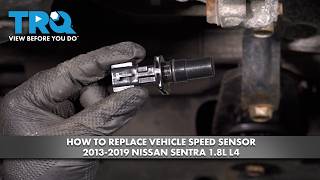
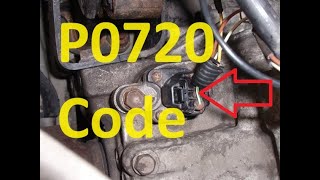
How to confirm: After confirming the code with a scanner, test the sensor's resistance and voltage output with a multimeter. 🎬 See: Diagnosing P0720 causes and fixes Often, due to the low cost of the part, replacement is the most straightforward diagnostic step. The sensor is located externally on the transmission case, typically held in by a single 10mm bolt. 🎬 Watch: How to replace the output speed sensor
Typical fix: Replace the output speed sensor. On the Sentra's CVT, there are multiple speed sensors; the output sensor is typically located on the top or side of the transmission housing.
Est. part cost: $20 - $70 - Damaged Wiring or Connector 🟡 Medium Probability The wiring harness leading to the sensor is located under the vehicle and is exposed to road debris, moisture, and heat, which can cause corrosion, chafing, or physical damage over time.
How to confirm: Visually inspect the wiring harness and connector for any signs of fraying, breaks, corrosion, or loose pins. Perform a continuity test on the wires between the sensor and the TCM. Check for a solid connection at the sensor's pigtail.
Typical fix: Repair the damaged section of wire or replace the connector pigtail.
Est. part cost: $10 - $30 - Low or Contaminated CVT Fluid ⚪ Low Probability The Jatco CVT is very sensitive to fluid condition. Fine metal particles from normal (or abnormal) wear can contaminate the fluid and interfere with sensor operation or clog passages in the valve body. While not a direct cause of a circuit malfunction, very low or dirty fluid can cause erratic transmission behavior that may trigger speed sensor-related codes.
How to confirm: Check the level and condition of the CVT fluid according to the manufacturer's procedure. The fluid should be at the correct level and not appear dark, burnt, or contain excessive metal particles.
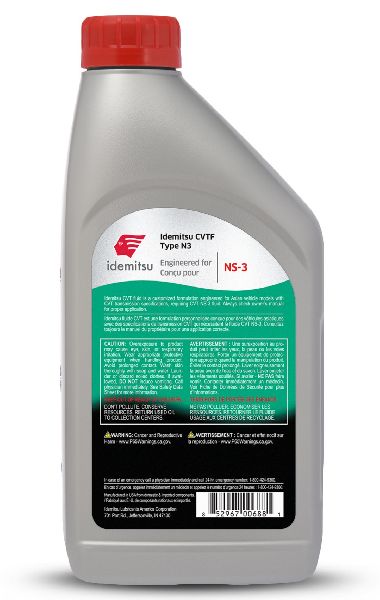
Typical fix: Perform a drain and fill or a full fluid exchange with the correct Nissan NS-3 CVT fluid.
Est. part cost: $60 - $150
Rare But Worth Checking
- Faulty Transmission Control Module (TCM): → Shop Transmission Assembly This is rare for this specific code on this platform, but not impossible. On some other Nissan models, a P0720 code can point to an internal failure of the TCM, which is integrated into the valve body. Before condemning the TCM, all other possibilities (sensor, wiring, fluid) must be exhaustively ruled out. A faulty TCM may not be able to correctly process the signal from a perfectly good sensor.
Diagnosis Steps
- Connect an OBD-II scanner to confirm the P0720 code is present and check for any other related codes.
- Inspect the transmission fluid level and condition. Ensure it is clean, at the proper level, and is the correct Nissan NS-3 type fluid.
- Locate the output speed sensor on the transmission housing. There are multiple sensors; diagrams may be needed for positive identification. Visually inspect the sensor and its electrical connector for any obvious damage, corrosion, or loose connections.
- Inspect the wiring harness leading to the sensor for any signs of fraying, melting, or physical damage.
- If the wiring appears intact, use a multimeter to test the sensor's internal resistance and compare it to the manufacturer's specifications. A typical resistance for a 2-wire sensor is between 560 and 680 Ohms, but always verify the spec for your vehicle.
- With the sensor plugged in and the ignition on, back-probe the signal wire to check for a voltage signal as the wheels are turned. A lack of signal points to a bad sensor.
- If the sensor tests good, perform a continuity check on the wiring between the sensor connector and the TCM connector to rule out an open or shorted wire.
- If the sensor and wiring are confirmed to be good, the issue may lie with the valve body or the TCM, which would require more advanced diagnostics.
Parts You'll Likely Need
- Transmission Output Speed Sensor
(OEM #31935-1XF0C)— This sensor is the most frequent cause of the P0720 code on the Nissan Sentra. It is a common wear item that fails electronically over time. This part number also supersedes 31935-1XF00, 31935-8E005, and 31935-8E007.
Trusted brands: Hitachi, NTK, Beck/Arnley, NGK, WVE
OEM price range: $100-$180
Aftermarket price range: $20-$70
Related Codes That Often Appear With This One
- P0717 — This code is for the Input Speed Sensor. It's common to see both input and output sensor codes together, as a failure in one can cause the TCM to see an implausible difference between the two sensor readings.
- P0700 — This is a generic code indicating that the Transmission Control Module (TCM) has stored a fault code. It's an informational code that points you toward the more specific code, like P0720.
- P1778 — This code for the Step Motor is frequently stored alongside P0720 in Engine and/or Transmission modules, as noted in manufacturer service records.
- P17F0, P17F1 — These codes relate to a CVT judder or shudder condition. Nissan has issued TSBs (like NTB15-084e and NTB17-034f) for these codes, which often involve inspecting the CVT belt and valve body. While not directly for P0720, they point to the underlying sensitivity and known issues of this transmission.
Technical Service Bulletins (TSBs) & Recalls
- NTB17-034f: While not directly for P0720, this TSB addresses CVT judder and codes P0746, P0965, and P17F0 for 2013-2017 Sentras. It outlines procedures for inspecting the CVT pan for debris and potentially replacing the valve body or entire CVT assembly, which is relevant context for overall transmission health.
- NTB15-083A: This TSB introduced enhanced diagnostic logic to better detect and store codes related to CVT judder (P17F0, P17F1). It involves reprogramming the TCM and is relevant for understanding how Nissan addressed the widespread CVT performance complaints.
- NTB12-051c: This TSB for some Sentra models specifically addresses the P0720 code by replacing the valve body and reprogramming the TCM, indicating that in some cases, the issue can be more complex than just an external sensor.
- Bulletin #NTB10150A: This bulletin notes that for Sentra models without ABS, the MIL may be on with DTC P0720 and/or P1778 stored. The recommended actions include replacing the transmission control valve assembly (valve body) and reprogramming the TCM.
Platform-Specific Known Issues
- The Jatco JF015E (RE0F11A) CVT 🎬 Watch: Complete RE0F11A CVT transmission teardown in this generation of Sentra is known for reliability issues, including juddering, hesitation, and premature failure. A class-action lawsuit was filed over these CVT failures. While P0720 is often just a sensor, it's important to not ignore the code, as continued erratic operation could potentially strain the transmission.
- Symptoms often appear after the vehicle has been driven for 15-20 minutes and the transmission fluid has warmed up. This can lead to a car that drives fine initially but then enters limp mode or begins shifting harshly during a trip.
Mechanic-Grade Diagnostic Values
- Output Speed Sensor internal resistance — expected: 560 - 680 Ohms. Failure: A reading significantly outside this range, or an open/infinite reading, indicates a failed sensor.
- Sensor reference voltage at the connector — expected: 5 V ± 0.5 V. Failure: No voltage or significantly low voltage points to a problem with the TCM or the wiring, not the sensor itself.
- Ground circuit resistance at the connector — expected: < 0.1 Ohms. Failure: High resistance indicates a poor ground connection, which can cause an erratic signal.
Scan Tool Commands That Help
- Nissan CONSULT-II: DATA MONITOR for A/T > TCM INPUT SIGNALS > VHCL/S SE·A/T — This function allows a technician to view the live data stream of the vehicle speed as seen by the TCM. While driving, the value should change according to the vehicle's speed. If the value is zero or erratic while the car is moving, it confirms a fault in the sensor's circuit.
Wiring & Ground Locations
- Transmission Case Ground — A ground strap or wire bolted directly from the transmission housing to the vehicle's chassis or a main grounding point.. The speed sensor circuit relies on a solid ground to provide a clean signal. A corroded or loose transmission ground is a common cause of intermittent and unexplained electrical issues, including sensor codes like P0720.
- F16 (B17 Chassis) — A primary ground point located at the left front of the engine compartment, often on the chassis rail near the battery.. This is a major grounding hub for many engine bay components. Corrosion here is a known issue on Sentras and can disrupt communication between various modules, including the TCM.
- Negative Battery Terminal to Chassis Ground — The main ground wire from the negative battery post to the vehicle body.. The integrity of the entire vehicle's electrical system depends on this connection. A weak connection here can cause low voltage conditions and trigger a variety of fault codes.
Real Owner Repair Stories
- Reddit user @MDoyler on r/NissanTitan (2017 Nissan Titan (Uses a similar TCM/Valve Body design philosophy where P0720 is a common issue)) — Check Engine Light on, transmission would not shift out of 3rd gear, vehicle went into limp mode.
❌ Tried (didn't work) A repair shop replaced the input speed sensor (for a P0715 code) for $1200, but the vehicle was returned with a P0720 code and the same shifting problem.
✅ What actually fixed it The owner self-diagnosed based on forum research, ordered the correct valve body/TCM assembly for $1516, and replaced it themselves. This resolved the P0720 code and fixed the shifting issue. - NHTSA ODI #10524036 — An owner reported that the Service Engine Soon light, VDC control light, and another warning light came on. A local dealer found codes P0720 and P1778 stored in the system.
When the Usual Fixes Don't Work
- While the vast majority of P0720 codes on the 2013-2019 Sentra are resolved by replacing the external output speed sensor, there are documented cases on similar Nissan platforms where this does not fix the issue. In these instances, the actual failure is within the Transmission Control Module (TCM), which is integrated into the valve body inside the transmission. A Reddit user with a 2017 Titan, after a shop failed to fix the issue by replacing a speed sensor, ultimately had to replace the entire valve body assembly to clear a persistent P0720 code. This indicates that if a new sensor and confirmed good wiring do not resolve the code, the next logical, albeit much more expensive, step is to suspect the TCM/valve body.
OEM Part Supersession History
31935-8E005, 31935-8E007, 31935-1XF00→31935-1XF0C— Component revisions and consolidation of part numbers over time for improved reliability or manufacturing efficiency.
Heads up: Using an older, superseded part number is not recommended as the latest version (31935-1XF0C) is the intended service replacement.
Model Year Variations Within This Range
- 2017-2019: For the 2017 model year, Nissan introduced aesthetic updates and added SR Turbo and NISMO trims with a 1.6L turbocharged engine. While the base 1.8L engine and CVT remained largely the same, it's important to ensure any replacement parts are specified for the correct engine and trim, although the P0720-related sensors are generally shared across the 1.8L models.
Diagnostic Flowchart
Other Known Issues on This Vehicle
Issues unrelated to this code that are worth knowing about as an owner of this generation:
- Premature CVT Failure / Judder 🔴 High — Very common across the generation, often appearing between 60,000 and 100,000 miles. Symptoms include shaking, hesitation, power loss, and whining noises. (Ref: Multiple TSBs exist, including NTB17-034f, and Nissan extended the warranty on these transmissions due to widespread issues.)
- Faulty Mass Airflow (MAF) Sensor 🟠 Medium — A common cause for hesitation, stalling, and poor fuel economy. Often triggered by a dirty air filter or issues with the PCV system. (Ref: A PCM update was available at dealerships to address some MAF sensor related codes.)
- Brake Master Cylinder Failure 🔴 High — Some owners, particularly of the 2013 model year, report premature failure of the brake master cylinder, leading to a soft pedal that goes to the floor before the brakes engage.
- Faulty Ignition Coils 🟡 Low — Failure of one or more ignition coils can occur, leading to a rough running engine, misfires (P0300-P0304 codes), and a flashing check engine light. This is a relatively easy DIY fix.
- Timing Chain Tensioner Wear (1.8L MRA8DE) 🟠 Medium — The timing chain tensioner can wear out around 60,000-80,000 miles, causing a rattling noise on cold startups. If ignored, it can lead to more significant engine damage.
Used vs. New Parts: Buying Guide for This Vehicle
When a used part is the smart pick: For the external output speed sensor, a used part from a low-mileage donor vehicle is a reasonable budget option. Since it's an external electronic part, its function can often be verified, and failure is not always tied directly to wear. A used wiring harness pigtail is also a good choice if only the connector is damaged.
Donor-vehicle mileage cap: roughly under 80000 miles for the part to have meaningful remaining life.
What to inspect on the donor part:
- Check for a clean, corrosion-free connector.
- Ensure the plastic housing of the sensor is not cracked or showing signs of extreme heat stress.
- Ask for the VIN of the donor car to verify it's from a compatible year and model.
- If possible, test the resistance of the used sensor with a multimeter before purchase to ensure it's within the 560-680 Ohm range.
OEM-only on this vehicle (don't cheap out):
- Transmission Control Module (TCM) / Valve Body Assembly. Due to the high failure rate of the original units and the need for potential programming, using a new or professionally remanufactured OEM unit is strongly advised over a used one from a junkyard.
Aftermarket brands forum-validated for this vehicle:
- Hitachi (Often the OEM supplier)
- NTK / NGK
- Denso
Brands owners have reported issues with on this vehicle:
- Generic, unbranded 'white-box' sensors from online marketplaces can have high failure rates and may not meet OEM specifications for signal accuracy, potentially causing persistent issues.
Real Owner Stories
Aggregated from forums and TSBs cited above. Mileages and costs reflect what owners reported in those sources.
2004 Nissan Sentra 1.8
Symptoms: The car would not shift past second gear after the engine and transmission warmed up.
What fixed it: Replacement of the output speed sensor.
Source hint: YouTube - 2004 Nissan Sentra 1.8 P0720 Output Shaft Speed Sensor
2013-2017 Nissan Sentra — ~80000 miles
Symptoms: Juddering, hesitation, and premature transmission failure; symptoms often included shaking and whining noises.
What fixed it: Procedures outlined in TSB NTB17-034f, which may include replacing the valve body or the entire CVT assembly.
Source hint: NTB17-034f and Vehicle Specific Issues section
NHTSA ODI #10524036
Symptoms: The Service Engine Soon light, VDC control light, and another warning light above the VDC light illuminated. Codes P0720 and P1778 were found by a local non-Nissan dealer.
What fixed it: This record documents the diagnostic findings of the fault codes and warning light behavior.
Related OBD-II Codes
Frequently Asked Questions
My 2015 Sentra is juddering and showing P0720; does TSB NTB17-034f apply to me?
Can I test the output speed sensor on my Sentra with a standard multimeter?
Is there a specific TSB for P0720 on the Nissan Sentra that involves more than just a sensor replacement?
Why does my Sentra drive fine for 15 minutes and then enter limp mode with a P0720 code?
What specific CVT fluid should I use to avoid triggering erratic sensor codes in my 2013-2019 Sentra?
Does the 2013-2019 Sentra share this P0720 issue with other Nissan models?
Helpful Videos
We Have This Part in Stock

The information in this article is provided for general reference and educational purposes only. Vehicle specifications, procedures, and part compatibility can vary by production date, trim level, and region. Always consult your vehicle's factory service manual and verify part numbers before purchasing or performing repairs. Safety-critical components such as airbags, seat belts, and braking systems should be installed by a qualified professional.
- Nissan Sentra:
- 🧭 Diagnostic Flowchart
- 🎬 Helpful Videos
- 🛍️ Shop This Part
- What's Unique About the 2013-2019 Nissan Sentra
- Symptoms You May Notice
- Most Likely Causes
- Rare But Worth Checking
- Diagnosis Steps
- Parts You'll Likely Need
- Related Codes That Often Appear With This One
- Technical Service Bulletins (TSBs) & Recalls
- Platform-Specific Known Issues
- Mechanic-Grade Diagnostic Values
- Scan Tool Commands That Help
- Wiring & Ground Locations
- Real Owner Repair Stories
- When the Usual Fixes Don't Work
- OEM Part Supersession History
- Model Year Variations Within This Range
- Other Known Issues on This Vehicle
- Used vs. New Parts: Buying Guide for This Vehicle
- Real Owner Stories
- 2004 Nissan Sentra 1.8
- 2013-2017 Nissan Sentra — ~80000 miles
- NHTSA ODI #10524036
- Related OBD-II Codes
- Frequently Asked Questions
- 🎟️ Get 5% Off