

P0722 on 2011-2016 Honda CR-V: Output Speed Sensor Failure Causes and Fixes
P0722 on a 2011-2016 Honda CR-V most often means the transmission's output speed sensor has failed or its wiring is damaged. This can cause harsh shifting, a flashing 'D' light, and a non-functional speedometer. The specific part and location differ between the 2011-2014 (5-speed auto) and 2015-2016 (CVT) models. Expect to pay $20-$85 for a replacement sensor, which is a common DIY fix.
- P0722 on your CR-V is almost always caused by a bad speed sensor or its wiring, not a failed transmission.
- Key symptoms include a flashing 'D' light, harsh shifting, and a speedometer that does not work.
- You MUST identify if you have the 5-speed automatic (2011-2014) or the CVT (2015-2016) to get the correct replacement sensor.
- This is a common DIY repair that can save you hundreds of dollars over a shop visit.
What's Unique About the 2011-2016 Honda CR-V
For the 2011-2016 Honda CR-V, the P0722 code is a critical issue to address due to the split in transmission types. The vehicle range spans two generations and two different automatic transmissions. The 2011 model is the last of the 3rd generation, and 2012-2014 models are the 4th generation, both using a conventional 5-speed automatic. The 2015-2016 models received a significant update, including the 'Earth Dreams' engine and a Continuously Variable Transmission (CVT). While symptoms are similar, the failing part is different: an 'Output Speed Sensor' on the 5-speed auto versus a 'Secondary Pulley Speed Sensor' on the CVT. In both cases, the failure is typically the sensor itself or its wiring, not a major internal transmission problem.
Generation note: This range covers the end of the 3rd generation (2011) and the entire 4th generation (2012-2016). A major powertrain change occurred in 2015. Models from 2011-2014 use a 5-speed automatic transmission. Models from 2015-2016 use a CVT. The P0722 code applies to both, but the specific sensor, part number, and location are different. Always verify the correct part for your exact year and transmission type before ordering.
Symptoms You May Notice
- Check Engine Light is on
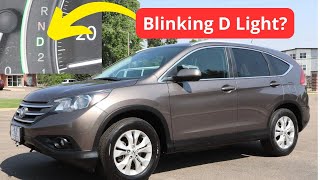
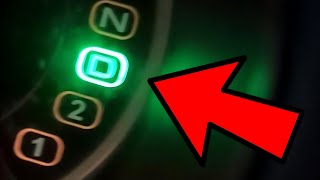
- Flashing 'D' (Drive) indicator light on the dashboard
- Harsh, erratic, or delayed gear shifts
- Transmission gets stuck in one gear (limp mode)
- Speedometer is inoperative or needle bounces erratically
- Cruise control will not function
- Reduced fuel economy
- Inability to shift into Park without turning the car off first
- Replacing the Input speed sensor instead of the Output/Secondary speed sensor. P0722 specifically refers to the output/secondary sensor.
- Replacing a wheel speed (ABS) sensor. These are located at the wheels and are part of the anti-lock brake system, not the transmission's internal controls.
- Assuming the transmission has failed internally. While P0722 presents with severe shifting symptoms, the cause is almost always a simple, external electronic component.
Most Likely Causes
- Faulty Output/Secondary Speed Sensor 🔴 High Probability Sensors are electronic components that can fail over time due to constant heat cycles and vibration within the engine bay. They are the most common point of failure for this code.
How to confirm: After confirming the wiring is intact, test the sensor's resistance with a multimeter or check its signal output with an oscilloscope. The easiest confirmation for a DIYer is often replacing it after ruling out wiring issues, as the part is relatively inexpensive.
Typical fix: Replace the speed sensor. On 5-speed automatic models, this is the output speed sensor. On CVT models, it is the secondary pulley speed sensor. The sensor is located on the exterior of the transmission housing, often requiring removal of the air filter box for access.
Est. part cost: $20-$85 - Damaged Wiring or Connector 🟡 Medium Probability The wiring harness is exposed to engine bay heat and vibration, which can lead to chafing, corrosion at the connector, or broken wires over time. This can cause an open or short in the circuit.
How to confirm: Visually inspect the wiring harness leading to the sensor for any signs of damage, melting, or corrosion. Check for a secure connection at the sensor. Use a multimeter to check for continuity and for the correct reference voltage (typically 5V) at the connector with the key on.
Typical fix: Repair the damaged section of the harness or clean/replace the connector.
Est. part cost: $5-$50 - Low or Contaminated Transmission Fluid ⚪ Low Probability → Shop Transmission Assembly While not a direct cause of a 'no signal' code, extremely dirty fluid containing metallic debris can sometimes interfere with magnetic sensors. It is more likely to cause other shifting issues but is worth checking.
How to confirm: Check the transmission fluid level and condition using the dipstick. The fluid should be reddish (for ATF-DW1) or have the correct color for HCF-2 (CVT) and be clear, not dark brown, black, or smell burnt.
Typical fix: Perform a transmission fluid drain and fill using the correct Honda-specific fluid: ATF-DW1 for 5-speed automatics or HCF-2 for CVTs.
Est. part cost: $40-$120
Rare But Worth Checking
- Faulty Powertrain Control Module (PCM): → Shop Engine Control Module (ECM) This is extremely rare. The PCM should only be considered after all other possibilities (sensor, wiring, fluid) have been exhaustively ruled out by a professional. A faulty PCM would likely present other codes as well.
Diagnosis Steps
- Read the code with an OBD-II scanner to confirm P0722 is present.
- Check the level and condition of the automatic transmission fluid. Ensure the correct fluid type is being used (ATF-DW1 for 5-AT, HCF-2 for CVT). Top off or change if necessary.
- Visually inspect the relevant speed sensor's wiring harness and connector. Look for loose connections, corrosion, or physical damage.
- If the wiring looks good, use a multimeter to check for reference voltage at the sensor's connector with the ignition on. Disconnect the sensor and measure between the power and ground pins; you should see approximately 5V.
- Test the sensor itself. You can check its internal resistance with a multimeter (consult a service manual for specs) or use an oscilloscope to look for a signal pattern while rotating the wheels (with the front of the car safely raised).
- If the wiring is good but the sensor provides no signal or has incorrect resistance, replace the sensor.
- After replacement, clear the codes and perform a test drive to ensure the issue is resolved.
- If the new sensor does not fix the issue, re-check the wiring for an intermittent open or short circuit between the sensor and the PCM.
- If all else fails, the issue may be with the PCM, which requires professional diagnosis.
Parts You'll Likely Need
- Automatic Transmission Output Shaft Speed Sensor (for 2011-2014 5-Speed AT)
(OEM #28820-RPC-013)— This is the sensor that fails on the 5-speed automatic transmission models, causing P0722. It measures the output shaft's speed. Note: 28820-R90-013 is also cited but 28820-RPC-013 appears to have wider applicability.
Trusted brands: Honda (OEM), Standard Motor Products (SC481), Duralast, Beck/Arnley
OEM price range: $50-$90
Aftermarket price range: $25-$70 - CVT Secondary Pulley Speed Sensor (for 2015-2016 CVT)
(OEM #28820-RJ2-003)— This is the sensor that fails on the CVT models. It is functionally equivalent to the output speed sensor on a traditional automatic. It may also be called a 'Pick-Up Assembly'.
Trusted brands: Honda (OEM), Beck/Arnley (090-0040), Genuine, Wells (5S16754)
OEM price range: $45-$75
Aftermarket price range: $25-$50
Related Codes That Often Appear With This One
- P0720 — P0720 indicates an issue with the Output Speed Sensor circuit in general (e.g., erratic signal), while P0722 indicates a complete loss of signal. They often point to the same root cause and may appear together.
- P0717 — This code is for the Input/Turbine Speed Sensor. If both input and output sensor codes appear, it could suggest a wiring harness issue common to both sensors or a more significant electrical problem.
Platform-Specific Known Issues
- Critical Transmission Difference by Year: → Shop Transmission Assembly It is essential to identify whether your CR-V has the 5-speed automatic (2011-2014) or the CVT (2015-2016) before ordering parts. The sensors are not interchangeable. The 5-AT uses an Output Speed Sensor (e.g., 28820-RPC-013), while the CVT uses a Secondary Pulley Speed Sensor (e.g., 28820-RJ2-003).
Mechanic-Grade Diagnostic Values
- Output Speed Sensor (5-Speed AT) Internal Resistance — expected: 400-600 Ohms. Failure: A reading outside this range indicates a faulty sensor.
- CVT Secondary Pulley Speed Sensor (CVT) Internal Resistance — expected: 350-600 Ohms (Note: This applies to earlier CVT models, 2015-2016 may be Hall-effect and not testable by resistance). Failure: A reading outside this range, or if the sensor is a Hall-effect type, this test is invalid.
- Sensor Connector Pin 3 (VCC1) to Body Ground — expected: Approximately 5V with ignition ON. Failure: No voltage indicates an open in the power supply wire from the PCM.
- Sensor Connector Pin 2 (NC Line) to Body Ground — expected: Approximately 5V with ignition ON. Failure: No voltage indicates an open in the signal wire to the PCM.
- Sensor Connector Pin 1 (SG1) to Body Ground (Continuity) — expected: Continuity (Near 0 Ohms). Failure: High resistance or an open circuit indicates a bad ground wire.
Scan Tool Commands That Help
- Honda Diagnostic System (HDS): Data List - SPD (SP2) — To view the live data from the output speed sensor while driving. If the value is always 0 km/h while the vehicle is moving, it confirms a 'No Signal' condition.
- Honda Diagnostic System (HDS): DTC Freeze Frame Data — To check the conditions (vehicle speed, engine temp, etc.) under which the P0722 code was set. This can help replicate the fault during a test drive.
- Honda Diagnostic System (HDS): ALL DTC CLEAR — Used after the repair is complete to erase the stored fault code from the PCM/TCM memory.
Wiring & Ground Locations
- G101 — On the left side of the engine.. This is a primary engine ground. A loose or corroded G101 can cause various sensor and module communication issues, including problems with transmission sensors.
- Transmission Housing Ground — A ground strap connecting the transmission case directly to the vehicle frame/chassis, often located under the air filter box.. This is the most critical ground for the transmission's electronic components. If this strap is broken, loose, or corroded, sensors mounted on the transmission, like the output speed sensor, can lose their ground reference and fail to send a proper signal.
- G301 — Behind the left side of the front bumper.. This ground point serves various components in the front of the vehicle. While less direct, poor grounding here can contribute to electrical noise that may interfere with sensitive sensor signals.
Real Owner Repair Stories
- Reddit user u/Tlr321 (2015 Honda CR-V (CVT)) — Car would not accelerate despite pressing the gas pedal, especially going up a hill.
❌ Tried (didn't work) Replaced the speed sensor (Intermediate Shaft Speed Sensor A) multiple times., Replaced the valve body., Replaced the control module., Replaced the entire transmission.
✅ What actually fixed it The user reported that after replacing the entire transmission, the speed sensor failed again. The issue of repeat sensor failure was not definitively resolved in the thread, suggesting a potential underlying wiring or PCM issue that was repeatedly misdiagnosed as a faulty sensor.
OEM Part Supersession History
28820-RPC-003→28820-RPC-013— The newer -013 part includes improved internal shielding against electromagnetic interference.
Heads up: The parts are interchangeable, but the -013 version is the preferred replacement for improved durability and signal integrity.
Model Year Variations Within This Range
- 2011-2014: Uses a 5-speed automatic transmission with an Output Speed Sensor (OSS), part number 28820-RPC-013.
- 2015-2016: Uses a Continuously Variable Transmission (CVT) with a Secondary Pulley Speed Sensor, part number 28820-RJ2-003.
Diagnostic Flowchart
Other Known Issues on This Vehicle
Issues unrelated to this code that are worth knowing about as an owner of this generation:
- VTC Actuator Rattle at Cold Start 🟠 Medium — Very common on K-series engines. A loud, brief rattle for 1-2 seconds upon starting the engine after it has sat for several hours. More of an annoyance than a critical failure, but can worsen. (Ref: Honda TSB 09-010, 16-012, 16-088)
- Vibration at Idle/Low Speed (2015-2016 CVT Models) 🟠 Medium — A widespread and well-documented issue on the first CR-Vs with the CVT. Owners report a noticeable shudder or vibration when stopped in Drive or at low speeds. (Ref: Honda TSB 15-046)
- Starter Motor Grinds or Spins (V6 Models Primarily, but noted for platform) 🟡 Low — Some owners experience a grinding noise at startup, indicating a clearance issue between the starter and ring gear. Less common on the 4-cylinder CR-V but a known issue on Honda platforms of this era. (Ref: Honda TSB 16-002)
- Harsh Shifting or Judder (2012-2014 5-AT Models) 🟡 Low — Some 5-speed automatic models could develop a judder or harsh shifting under light acceleration. Often related to fluid condition. (Ref: Honda TSB 15-086 recommends a software update and transmission fluid change.)
- Premature AC Compressor Failure 🟠 Medium — The AC compressor clutch is a known failure point, leading to the AC blowing warm air. Honda extended the warranty on this component for some vehicles. (Ref: Warranty Extension, check with dealer.)
Used vs. New Parts: Buying Guide for This Vehicle
When a used part is the smart pick: A used part is not recommended for this repair. The speed sensor is a relatively inexpensive electronic component that is prone to failure from heat and vibration. The risk of getting a used part that is near the end of its service life is high, and the cost savings are minimal compared to a new aftermarket or OEM part.
What to inspect on the donor part:
- Not applicable as used parts are not recommended.
OEM-only on this vehicle (don't cheap out):
- While not strictly 'OEM-only', using a genuine Honda sensor (28820-RPC-013 or 28820-RJ2-003) is highly recommended to avoid repeat failures. Some owners report issues with aftermarket sensors failing prematurely.
Aftermarket brands forum-validated for this vehicle:
- NTK
- Beck/Arnley
- Standard Motor Products (SMP)
- Dorman
Brands owners have reported issues with on this vehicle:
- Unbranded, 'white-box' sensors from online marketplaces should be avoided due to inconsistent quality and high failure rates.
Real Owner Stories
Aggregated from forums and TSBs cited above. Mileages and costs reflect what owners reported in those sources.
2014 Honda CR-V
Symptoms: Flashing 'D' light and erratic shifting.
What fixed it: Replacing the output speed sensor (part 28820-RPC-013).
Source hint: crvownersclub.com thread 'Gen 4 P0722'
Related OBD-II Codes
Frequently Asked Questions
I have a 2014 CR-V with a flashing 'D' light and erratic shifting. Which part number do I need for P0722?
Does the 2015-2016 CR-V use the same output speed sensor as the earlier 2011-2014 models?
My 2013 CR-V has a harsh judder under light acceleration; is this related to P0722?
Can I use a used speed sensor from a salvage yard to fix this code?
I'm seeing a P0722 on my 2015 CR-V and it vibrates at idle. Are these the same problem?
What transmission fluid should I use to address potential contamination issues on my 2016 CR-V?
Helpful Videos
We Have This Part in Stock

The information in this article is provided for general reference and educational purposes only. Vehicle specifications, procedures, and part compatibility can vary by production date, trim level, and region. Always consult your vehicle's factory service manual and verify part numbers before purchasing or performing repairs. Safety-critical components such as airbags, seat belts, and braking systems should be installed by a qualified professional.
- Honda CR-V:
- 🧭 Diagnostic Flowchart
- 🎬 Helpful Videos
- 🛍️ Shop This Part
- What's Unique About the 2011-2016 Honda CR-V
- Symptoms You May Notice
- Most Likely Causes
- Rare But Worth Checking
- Diagnosis Steps
- Parts You'll Likely Need
- Related Codes That Often Appear With This One
- Platform-Specific Known Issues
- Mechanic-Grade Diagnostic Values
- Scan Tool Commands That Help
- Wiring & Ground Locations
- Real Owner Repair Stories
- OEM Part Supersession History
- Model Year Variations Within This Range
- Other Known Issues on This Vehicle
- Used vs. New Parts: Buying Guide for This Vehicle
- Real Owner Stories
- 2014 Honda CR-V
- Related OBD-II Codes
- Frequently Asked Questions
- 🎟️ Get 5% Off