

P0730 on 2015-2016 Ford E-Series: Incorrect Gear Ratio Causes and Fixes
On a 2015-2016 Ford E-Series with the 6R140 transmission, P0730 is most often caused by a major internal mechanical failure of the coast clutch cylinder, as documented in Ford TSB 16-0057. This is a serious issue requiring transmission removal and professional repair, costing between $1,500 and $4,000+. The failure is due to a faulty weld and can lead to a sudden loss of all power.
- P0730 on a 2015-2016 E-Series is a critical code that should be addressed immediately; do not continue to drive the vehicle.
- The most likely cause is a known mechanical failure of the coast clutch cylinder, detailed in Ford TSB 16-0057, not a simple sensor or fluid issue.
- Diagnosis should begin by checking the vehicle's build date and scanning for companion codes P0751 and P2700.
- Repair is not DIY-friendly and requires complete removal and disassembly of the transmission by a professional technician.
What's Unique About the 2015-2016 Ford E-Series
For the 2015-2016 Ford E-Series (primarily E-350/E-450 cutaway chassis) equipped with the heavy-duty 6R140 TorqShift transmission, this code is not a generic fluid or sensor issue. It is strongly linked to a specific, well-documented mechanical failure. Ford issued Technical Service Bulletin (TSB) 16-0057 for vehicles built on or before December 15, 2015, which points to a faulty weld on the internal coast clutch cylinder as the primary cause. This failure can lead to a sudden and complete loss of power, making P0730 a much more severe diagnosis on this platform compared to others. The issue was considered serious enough that it prompted Safety Recall 19S20 for certain ambulance and school bus applications which use the same transmission and can suffer the same failure.
Symptoms You May Notice
- Check Engine Light and/or wrench light is illuminated
- Transmission slipping between gears, causing engine RPMs to flare up
- Harsh or delayed gear engagement 🎬 See how to fix harsh shifting issues
- Engine RPMs are higher than usual for a given speed
- Sudden loss of ability to move forward or in reverse
- A feeling of the transmission being in neutral when trying to accelerate from a stop
- Whining or grinding noises from the transmission
- Replacing the solenoid body when the actual cause is the mechanical failure of the coast clutch cylinder described in TSB 16-0057.
- Replacing input or output speed sensors when they are accurately reporting the slippage caused by a mechanical or hydraulic fault.
- Performing only a fluid and filter change without inspecting for the TSB issue, which will not fix the underlying mechanical break.
Most Likely Causes
- Failed Coast Clutch Cylinder 🔴 High Probability → Shop Automatic Transmission Coast Clutch Hub A faulty weld on the coast clutch cylinder was a known issue on 6R140 transmissions built on or before 12/15/2015, as documented in Ford TSB 16-0057. This defect was also the subject of Safety Recall 19S20 for certain emergency vehicle packages.
How to confirm: Check the vehicle's build date. If it falls within the TSB range and codes P0751 ('Shift Solenoid 'A' Performance/Stuck Off') or P2700 ('Transmission Friction Element 'A' Apply Time') are also present, this failure is almost certain. A definitive diagnosis involves a transmission line pressure test showing low pressure in the coast clutch circuit, or finding significant metallic debris in the transmission pan.
Typical fix: The transmission must be removed from the vehicle and partially disassembled to replace the failed coast clutch cylinder/hub assembly with the updated part (BC3Z-7D044-B). The coast one-way clutch is also typically replaced at the same time.
Est. part cost: $250-$400 - Low or Contaminated Transmission Fluid 🟡 Medium Probability → Shop Transmission Assembly While less likely to be the root cause than the TSB issue, heavy-duty use cycles common for E-Series vans can lead to fluid breakdown and overheating, which can cause a variety of shifting problems.
How to confirm: Check the transmission fluid level and condition using the dipstick when the transmission is at operating temperature. The fluid should be at the correct level, red in color (MERCON LV), and not smell burnt. Note that checking the fluid on a 6R140 can be tricky as fluid can hang up in the long, horizontal dipstick tube, giving a false full reading. It's best to let the vehicle sit for 10-15 minutes after running before checking for an accurate level.
Typical fix: Perform a transmission fluid and filter change using the correct Motorcraft MERCON LV fluid. This is a critical first step but is unlikely to solve the problem if the coast clutch has already failed mechanically.
Est. part cost: $100-$200 - Faulty Transmission Solenoid Body ⚪ Low Probability → Shop Transmission Assembly While solenoid failure is a possible cause for shifting issues on the 6R140, it is far less common for this specific code (P0730) on this vehicle than the mechanical coast clutch failure. It becomes a more likely suspect on vehicles built after the TSB date of 12/15/2015.
How to confirm: Requires a diagnostic scan tool to monitor solenoid commands, performance, and pressures. This is typically diagnosed by a transmission specialist after ruling out fluid issues and the TSB-related mechanical failure.
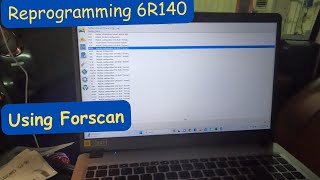
Typical fix: Drop the transmission pan and replace the entire solenoid body assembly (also known as the valve body). The new module may require programming to the vehicle's VIN. 🎬 Watch: How to reprogram a rebuilt 6R140 using FORScan
Est. part cost: $400-$700
Rare But Worth Checking
- Damaged Wiring Harness or Connector: The main transmission connector (C175T) can become corroded or damaged, disrupting signals between the TCM and the transmission's sensors and solenoids. This is worth inspecting before condemning the transmission, especially on vehicles operated in harsh climates.
- Failed Transmission Front Pump: → Shop Transmission Assembly In some cases discussed in forums, a failure of the transmission's front pump led to a complete loss of hydraulic pressure, triggering P0730 and other codes. This would be discovered by finding zero pressure at the test port and burnt fluid in the pan.
Diagnosis Steps
- Check and verify the transmission fluid level and condition. The correct fluid is MERCON LV. If the fluid is low, top it off. If it is dark, burnt, or contains significant metal debris, suspect a severe internal failure.
- Use an OBD-II scanner to check for other transmission-related codes, specifically P0751 and P2700, which strongly point to the TSB issue.
- Determine the vehicle's build date from the driver's door jamb sticker. If it was built on or before December 15, 2015, TSB 16-0057 is highly relevant.
- Inspect the main transmission wiring harness and the C175T connector for any signs of damage, corrosion, or loose pins.
- If the TSB applies, the next step for a professional is to confirm the diagnosis with a transmission line pressure test. A significant pressure drop confirms a major hydraulic leak, likely the coast clutch.
- If the TSB does not apply and the fluid is clean, further professional diagnosis of the valve body, solenoids, and internal components is required.
Parts You'll Likely Need
- Coast Clutch Cylinder Hub Assembly
(OEM #BC3Z-7D044-B)— This is the specific internal component identified in Ford TSB 16-0057 as the cause of P0730. The 'B' suffix indicates it is the updated, corrected part.
Trusted brands: Motorcraft
OEM price range: $250-$400
Aftermarket price range: $150-$300 - Transmission Fluid and Filter Kit — Required for any transmission service, whether it's a simple fluid change or a complete overhaul. The correct fluid (Motorcraft MERCON LV) is critical.
Trusted brands: Motorcraft
OEM price range: $150-$250
Aftermarket price range: $80-$150 - Transmission Solenoid Body — If the TSB does not apply and fluid is clean, a faulty solenoid body is the next most likely electrical/hydraulic cause of shifting and ratio errors.
Trusted brands: Motorcraft
OEM price range: $500-$700
Aftermarket price range: $350-$550
Related Codes That Often Appear With This One
- P0751 — Stands for 'Shift Solenoid 'A' Performance/Stuck Off'. This code is specifically mentioned in TSB 16-0057 as appearing alongside P0730 when the coast clutch cylinder fails.
- P2700 — Stands for 'Transmission Friction Element 'A' Apply Time Range/Performance'. This is another code cited in TSB 16-0057 that points to the same coast clutch failure.
Technical Service Bulletins (TSBs) & Recalls
- TSB 16-0057: For some 2009-2016 E-Series, F-Super Duty, and other chassis vehicles with a TorqShift® transmission built on or before 12/15/2015, this bulletin addresses a Malfunction Indicator Lamp with DTCs P0730, P0751, and/or P2700, caused by a failed weld on the coast clutch cylinder.
- Bulletin #TSB160057: Notes that vehicles equipped with the Torqshift transmission may exhibit a Malfunction Indicator Lamp (MIL) with diagnostic trouble codes (DTCs) P0751, P0730 and/or P2700.
- Bulletin #16-0057: Specifically mentions that Stripped Chassis vehicles equipped with a TorqShift® transmission built on or before 12/15/2015 may exhibit a MIL with DTCs P0751, P0730 and/or P2700.
Platform-Specific Known Issues
- Ford TSB 16-0057 documents a known issue with a faulty weld on the coast clutch cylinder for 6R140 transmissions built on or before 12/15/2015, directly causing code P0730 and potentially a sudden loss of motive power.
- Ford Safety Recall 19S20 was issued for certain E-Series ambulance and school bus packages for the same coast clutch weld failure, highlighting the severity of a potential sudden power loss.
Mechanic-Grade Diagnostic Values
- Transmission Line Pressure (Stock) — expected: 70-170 PSI, varying with engine load. During a normal acceleration upshift, pressure may be ~100-105 PSI between shifts and jump to ~140 PSI during the shift itself.. Failure: Significantly low pressure, especially in the coast clutch circuit, points to a major internal leak consistent with the TSB failure.
- Transmission Line Pressure (TCC Applied) — expected: ~167 PSI during normal acceleration when the torque converter clutch engages.. Failure: Failure to reach this pressure can indicate issues with the TCC solenoid, valve body, or torque converter itself.
- Solenoid Amperage PIDs — expected: A smooth, predictable trace on a scan tool datalogger during shifts.. Failure: A sporadic, erratic amperage pattern on a specific solenoid during its commanded operation can indicate a failing solenoid or wiring issue.
Scan Tool Commands That Help
- Ford IDS, FORScan: Transmission Characterization / Solenoid Identification — Use this before ordering parts to electronically read the specific 'band number' (1-5) of each solenoid from the TCM. This avoids having to drop the pan to physically inspect the solenoids, ensuring the correct flow-rated part is ordered.
- Ford IDS, FORScan: Clear Transmission Adaptive Tables / Reset All Adaptations — This must be performed after replacing the transmission, valve body, or solenoids. It erases the TCM's learned values, which are no longer valid for the new components, preventing erratic shifting.
- Ford IDS, FORScan: Solenoid Body Strategy Programming — When a new valve body or complete transmission is installed, the 13-digit Solenoid Body Strategy and 8-digit Solenoid Body ID from the new part must be programmed into the TCM. Failure to do so will result in poor shift quality.
- Generic Scan Tool, IDS, FORScan: Adaptive Drive Cycle Relearn — After clearing the adaptive tables, a specific drive cycle is required to allow the TCM to learn the baseline characteristics of the new parts. This typically involves a series of light, medium, and heavy throttle accelerations (e.g., 0-80 MPH at 25%, 50%, 100% throttle).
Wiring & Ground Locations
- Line Pressure Test Port — On the driver's side of the 6R140 transmission case, located between the bellhousing and the shift linkage. The port has M10 x 1.00mm threads.. This is the port where a technician connects a mechanical pressure gauge to get true line pressure readings, which is essential for confirming a major hydraulic leak like the one caused by the coast clutch failure.
- C175T Connector — This is the main electrical harness connector for the transmission, connecting it to the PCM/TCM.. Corrosion or damage to pins in this connector can disrupt signals from speed sensors or commands to solenoids, potentially causing a P0730 code. It's a key inspection point for electrical diagnosis.
- Primary Body/Frame Grounds — Key locations on Ford trucks include a ground from the negative battery terminal to the adjacent fender, another from the battery to the frame, and a braided strap from the engine block to the firewall.. Poor grounding can cause a wide range of erratic electronic behaviors, including faulty sensor readings and incorrect solenoid operation, which can lead to transmission codes like P0730. Ensuring all grounds are clean and tight is a crucial, often overlooked, electrical diagnostic step.
Real Owner Repair Stories
- Ford Truck Enthusiasts forum user (2018 F-350 with 6R140 (94,000 miles)) — Intermittent no-reverse, delayed/harsh shifts from Park, felt like neutral. No codes were stored.
❌ Tried (didn't work) Fluid and filter change (pan was clean with no debris).
✅ What actually fixed it The community consensus for these symptoms, when no codes are present and the TSB doesn't apply, is to first use FORScan to reset the transmission's adaptive learning tables. If that doesn't work, the next step is valve body replacement. - Ford Truck Enthusiasts forum user (2019 F-250 with 6R140 (27,000 miles)) — Flare shift between 3rd and 4th gear.
❌ Tried (didn't work) Fluid change., Installing aftermarket pressure valve and deep pan.
✅ What actually fixed it The confirmed fix for this common flare shift behavior was to reset the adaptive learning tables using a scan tool like FORScan or the dealer's IDS.
OEM Part Supersession History
Unknown, likely BC3Z-7D044-A or similar→BC3Z-7D044-B— The original Coast Clutch Cylinder Hub Assembly was prone to a weld failure. The 'B' revision is the updated part designed to correct this specific flaw as outlined in TSB 16-0057.
Model Year Variations Within This Range
- 2015: 6R140 transmissions built on or before December 15, 2015, are subject to TSB 16-0057 for the coast clutch weld failure. Vehicles built after this date should have the updated part from the factory, making this specific cause of P0730 highly unlikely.
Diagnostic Flowchart
Other Known Issues on This Vehicle
Issues unrelated to this code that are worth knowing about as an owner of this generation:
- Spark Plug Ejection (6.8L V10) 🔴 High — A well-known issue on earlier 2-valve Triton V10 engines where insufficient thread engagement in the aluminum heads can cause spark plugs to be forcibly ejected, damaging the threads.
- Trailer Brake Controller Malfunction 🟠 Medium — Subject of recalls (15V710, 16S01) for 2016 models where the trailer brakes might not activate, requiring a PCM software update. (Ref: NHTSA 16V046000)
- Rattling Front End / Worn Ball Joints 🟠 Medium — Due to the heavy-duty nature of these vehicles, upper and lower ball joints are a common wear item, leading to rattling noises over bumps and handling issues.
- Ignition Coil Failure 🟡 Low — Cracked ignition coil boots can lead to arcing, causing a rough running engine and misfires, a common tune-up related issue on high-mileage vans.
- Rusted Brake Lines 🔴 High — Brake lines routed along the frame rail are susceptible to trapping salt and moisture, leading to corrosion and potential failure. This is more common in regions that use road salt.
Used vs. New Parts: Buying Guide for This Vehicle
When a used part is the smart pick: For vehicles built *after* the 12/15/2015 TSB cutoff date, if the problem is diagnosed as a faulty valve body, a used assembly from a low-mileage donor can be a viable option. A complete used transmission is a significant gamble due to the prevalence of the coast clutch issue in the broader population.
Donor-vehicle mileage cap: roughly under 80000 miles for the part to have meaningful remaining life.
What to inspect on the donor part:
- Obtain the donor vehicle's VIN to verify its build date is after December 2015.
- If possible, inspect the transmission fluid from the donor; it should not be dark black or smell burnt.
- When buying a valve body, ensure the electrical connectors are free of corrosion and the unit is clean.
OEM-only on this vehicle (don't cheap out):
- Coast Clutch Cylinder Hub Assembly (BC3Z-7D044-B): Given this is a known failure point with a specific OEM-revised part, installing a used one is extremely risky as it is likely the failure-prone version. Always buy this part new from Motorcraft.
Aftermarket brands forum-validated for this vehicle:
- Sonnax: Well-regarded for valve body repair kits (e.g., 'Zip Kit') and other internal durability upgrades.
- BD Diesel: Known for performance and durability parts like pressure-enhancing solenoids and control modules for heavy-duty use.
Brands owners have reported issues with on this vehicle:
- No specific brands were cited as poor quality, but caution is advised with unbranded, deeply discounted solenoid bodies or complete transmissions from unknown rebuilders.
Real Owner Stories
Aggregated from forums and TSBs cited above. Mileages and costs reflect what owners reported in those sources.
2016 Ford E-Series
Symptoms: Transmission quit working; vehicle threw a P0730 code and experienced a loss of ability to move.
What fixed it: Replacement of the coast clutch cylinder due to a failed weld, as discussed regarding the 6R140 transmission failure.
Source hint: https://www.ford-trucks.com/forums/1639912-tranny-quit-working.html
Related OBD-II Codes
Frequently Asked Questions
My 2015 E-Series transmission is slipping and showing a wrench light; does TSB 16-0057 apply to my van?
Is there a recall for the P0730 code on Ford E-Series emergency vehicles?
What specific part is needed to fix the coast clutch failure mentioned in the TSB?
Can I just change the fluid to fix a P0730 code on my 2016 E-Series?
Why does my transmission dipstick show 'full' even when I think it's low?
Are other Ford trucks affected by this same coast clutch weld issue?
Helpful Videos
We Have This Part in Stock

The information in this article is provided for general reference and educational purposes only. Vehicle specifications, procedures, and part compatibility can vary by production date, trim level, and region. Always consult your vehicle's factory service manual and verify part numbers before purchasing or performing repairs. Safety-critical components such as airbags, seat belts, and braking systems should be installed by a qualified professional.
- Ford E-Series:
- 🧭 Diagnostic Flowchart
- 🎬 Helpful Videos
- 🛍️ Shop This Part
- What's Unique About the 2015-2016 Ford E-Series
- Symptoms You May Notice
- Most Likely Causes
- Rare But Worth Checking
- Diagnosis Steps
- Parts You'll Likely Need
- Related Codes That Often Appear With This One
- Technical Service Bulletins (TSBs) & Recalls
- Platform-Specific Known Issues
- Mechanic-Grade Diagnostic Values
- Scan Tool Commands That Help
- Wiring & Ground Locations
- Real Owner Repair Stories
- OEM Part Supersession History
- Model Year Variations Within This Range
- Other Known Issues on This Vehicle
- Used vs. New Parts: Buying Guide for This Vehicle
- Real Owner Stories
- 2016 Ford E-Series
- Related OBD-II Codes
- Frequently Asked Questions
- 🎟️ Get 5% Off