

P0730 on 2004-2008 Ford F-150: Incorrect Gear Ratio Causes and Fixes
On a 2004-2008 F-150 with a 4R70E or 4R75E transmission, P0730 means the transmission is slipping, often felt as engine RPMs flaring up without acceleration. Before suspecting a major failure, always check the transmission fluid level and condition first. If the fluid is low or burnt, address that immediately. Otherwise, the most common culprits are a failing internal solenoid pack or, less frequently, the speed sensors. A complete solenoid kit is a common DIY fix and costs around $100-$250.
- P0730 indicates transmission slippage and should be addressed immediately to prevent catastrophic damage.
- Always check the transmission fluid level and condition first. Low or burnt fluid is a primary cause.
- On the 2004-2008 F-150, failing internal solenoids (Shift, TCC, EPC) are a very common cause of this code.
- Do not continue to drive with these symptoms, as you risk turning a repairable solenoid issue into a full, expensive transmission rebuild.
- This is not a beginner-friendly DIY repair. If checking the fluid doesn't solve the issue, professional diagnosis is strongly recommended.
What's Unique About the 2004-2008 Ford F-150
The 2004-2008 F-150 uses the 4-speed 4R70E or 4R75E automatic transmission. Unlike later F-150 generations (2009+) that have well-documented issues with the internal molded lead frame causing speed sensor faults, the P0730 code on this platform is more frequently caused by direct hydraulic or electro-mechanical failures. The most common points of failure are the internal shift solenoids (Shift, TCC, and EPC) and, to a lesser extent, internal mechanical parts like a broken 1-2 accumulator spring or a worn overdrive band. These issues are well-known in the F-150 community but were never addressed by a specific recall for this code, though TSB 16-0032 was issued for 2008 models for planetary gear failure that could present with similar symptoms.
Symptoms You May Notice
- Check Engine Light on
- 'TRANS FAULT' message on the instrument cluster
- Flashing Overdrive (O/D) light
- Transmission slipping (engine RPMs increase without acceleration, especially during shifts)
- Harsh, erratic, or delayed gear shifts
- Vehicle feels sluggish or underpowered
- Transmission gets stuck in one gear (limp mode)
- Inability to use Overdrive (4th gear)
- Grinding or whining noise from the transmission
- Vehicle stalls after being driven at high speeds
- Replacing only the Output Speed Sensor (OSS) without checking for internal issues. A bad OSS can cause this code, but often the problem is a solenoid or mechanical fault inside the transmission.
- Assuming a PCM failure. While possible, it is far more likely that the issue is with the fluid, sensors, solenoids, or mechanical parts of the transmission itself.
- Condemning the entire transmission without testing solenoids. The solenoid pack is a very common failure item and is much cheaper and easier to replace than the entire transmission.
Most Likely Causes
- Low, Burnt, or Dirty Transmission Fluid 🔴 High Probability → Shop Transmission Assembly
How to confirm: Check the transmission fluid dipstick with the engine running and transmission warm. The fluid should be at the correct level, bright red, and not smell burnt. Dark, brown, or burnt-smelling fluid indicates excessive heat and clutch material breakdown, a sign of internal wear.
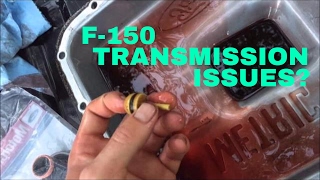
Typical fix: If low, top off with the correct fluid (Motorcraft MERCON V) and check for leaks, especially at the pan gasket and cooler lines. If dirty or burnt, perform a transmission fluid and filter change. 🎬 Watch: Step-by-step transmission service and fluid flush guide This may not fix an underlying issue but is a critical first step and sometimes resolves the issue if it was purely a fluid level problem.
Est. part cost: $50-$150 - Failing Transmission Solenoid Pack 🔴 High Probability → Shop Transmission Assembly The shift solenoids, Torque Converter Clutch (TCC) solenoid, and Electronic Pressure Control (EPC) solenoid in the 4R75E/W are known failure points. Over time, their internal coils can weaken or short, causing incorrect fluid pressure, which leads to slipping and harsh shifts.
How to confirm: A professional scan tool (like FORScan) can command individual solenoids and monitor transmission pressures. A failed solenoid will not respond correctly or will show incorrect pressure readings. Resistance can also be checked with a multimeter once the solenoid is accessed by dropping the pan; each solenoid should measure between 20-30 ohms.
Typical fix: Drop the transmission pan and valve body to replace the entire solenoid pack. It is highly recommended to replace all solenoids (Shift, TCC, EPC) at the same time as a preventative measure. Many owners perform this repair in their driveway.
Est. part cost: $100-$250 - Faulty Input/Output Speed Sensors 🟡 Medium Probability → Shop Automatic Transmission Speed Sensor
How to confirm: Monitor the Input Speed Sensor (TSS) and Output Speed Sensor (OSS) data with a live-data scan tool while driving. The readings should be smooth and consistent. Erratic signals, dropouts, or a mismatch between the two indicate a sensor failure. Often, specific codes like P0720 (OSS Circuit Malfunction) or P0722 (OSS No Signal) will accompany P0730.
Typical fix: The Output Speed Sensor (OSS) is located on the outside of the transmission case (driver's side, near the tail shaft) and is relatively easy to replace. The Turbine Speed Sensor (TSS) is located inside the transmission and requires removing the pan and valve body for replacement.
Est. part cost: $20-$60 for OSS, $40-$80 for TSS - Internal Mechanical Failure (e.g., Worn Overdrive Band/Clutches, Broken Accumulator Spring) ⚪ Low Probability
How to confirm: This is diagnosed after all other possibilities are exhausted. A transmission pressure test may show low pressure in specific clutch circuits. A complete loss of a specific gear (like 2nd or Overdrive) often points to a mechanical failure like a broken OD band or a broken 1-2 accumulator spring, a very common issue in these transmissions. Finding significant metal shavings in the transmission pan is a definitive sign of mechanical failure.
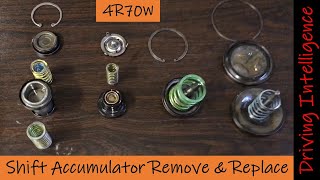
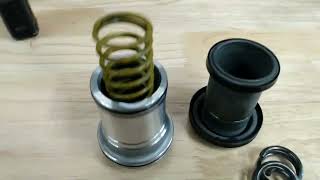
Typical fix: This requires a complete transmission rebuild or replacement with a remanufactured unit. TSB 16-0032 details a repair kit for planetary gear failure on 2008 models. An updated 'purple' 1-2 accumulator spring is available that is designed not to break. 🎬 Watch: How to replace the shift accumulator
Est. part cost: $1800-$4000
Rare But Worth Checking
- Faulty Valve Body: → Shop Transmission Valve Body A cracked valve body, worn bores, or leaking separator plate gaskets can cause pressure loss that mimics solenoid failure. If solenoids are replaced and the problem persists, the valve body itself may be the issue. Aftermarket kits from companies like Sonnax are available to repair worn valve body bores.
- Clogged Transmission Filter or Cooler Lines: → Shop Transmission Assembly If internal components have started to fail, clutch material and metal debris can clog the filter or cooler lines, restricting fluid flow and causing overheating and pressure problems. This is usually a symptom of a larger failure, and simply changing the filter will not be a permanent fix.
Diagnosis Steps
- Check the transmission fluid level and condition. Top off or replace as needed with Motorcraft MERCON V.
- Scan for all codes in the PCM and TCM using a capable scanner like FORScan. Note any gear-specific (P073x) or sensor-specific (P072x) codes.
- Using a scan tool with live data, monitor the Input (TSS) and Output (OSS) speed sensors while driving to check for erratic signals or dropouts.
- Inspect the transmission wiring harness and the main circular connector for damage, corrosion, or fluid intrusion.
- If fluid and sensors are good, perform a transmission pressure test to check for low hydraulic pressure, which could indicate a bad EPC solenoid, a clogged filter, or a failing pump.
- If pressures are low or erratic, drop the transmission pan. Inspect for excessive metal debris or large metal chunks in the pan magnet, which indicates severe mechanical wear.
- With the pan off, test the resistance of the shift, TCC, and EPC solenoids using a multimeter. They should read between 20-30 ohms. Compare readings to manufacturer specifications.
- If solenoids test bad, are out of spec, or are inconclusive, replace the entire solenoid pack.
- While the pan is off, inspect the 1-2 accumulator springs for breakage, as this is a common and inexpensive part to replace.
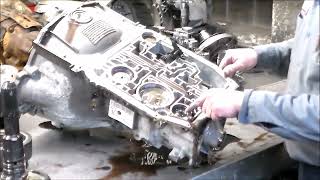
- If all electronic components and pressures test good, the issue is likely an internal mechanical failure (clutch packs, OD band, planetary gear set) requiring a transmission rebuild. 🎬 See this teardown of a failed 4R75E transmission
Parts You'll Likely Need
- Transmission Solenoid Kit (Shift, TCC, EPC)
(OEM #F8AZ-7G484-AA)— This is the most common point of failure for electronic/hydraulic issues on the 4R75E transmission that cause slipping and incorrect gear ratio codes. Replacing the entire pack is the recommended repair.
Trusted brands: Motorcraft, Rostra, ATP
OEM price range: $200-$300
Related Codes That Often Appear With This One
- P0731-P0735 — These codes correspond to incorrect gear ratios for specific gears (1st, 2nd, etc.). They help pinpoint which gear's hydraulic circuit or clutch pack is having a problem. For example, P0732 is common and points to a 2nd gear issue, often caused by a broken 1-2 accumulator spring.
- P0720 / P0722 — These codes directly indicate a fault with the Output Speed Sensor (OSS) circuit, which is a common cause for the PCM being unable to verify the gear ratio.
- P1783 — Indicates a transmission over-temperature condition. This often accompanies slipping, as the friction generates excessive heat.
Technical Service Bulletins (TSBs) & Recalls
- TSB 16-0032: Addresses grinding, whining, vibration, and gear slippage on 2008 F-150s (and other models) with the 4R75E, resulting from planetary gear assembly failure. Provides a service kit for repair.
- TSB 08-7-6: The infamous technical service bulletin for the 5.4L 3V engine detailing the special procedure required to remove spark plugs to prevent them from breaking off in the cylinder head.
- Bulletin #16-0057: While issued for stripped chassis vehicles, this manufacturer bulletin notes that vehicles equipped with a TorqShift transmission may exhibit a MIL with DTCs P0751, P0730, and/or P2700.
- Bulletin #TSB160057: A similar manufacturer bulletin for E-Series platforms notes that the Torqshift transmission may trigger a malfunction indicator lamp (MIL) with diagnostic trouble codes P0730, P0751, and/or P2700.
Mechanic-Grade Diagnostic Values
- Shift Solenoid (A/B) Resistance — expected: 16 - 45 Ohms when tested at PCM connector C175T (Pins 42/43 to Fuse F-37 cavity). A more precise range of 20 - 30 Ohms is expected when testing directly at the solenoid.. Failure: An open circuit (OL) or a reading outside the specified range indicates a failed solenoid coil.
- Electronic Pressure Control (EPC) Solenoid Resistance — expected: 3.3 - 7.5 Ohms when tested at PCM connector C175T (Pin 11 to Fuse F-37 cavity). A tighter spec of 3-5 Ohms may apply.. Failure: A reading outside this range suggests a faulty EPC solenoid, which directly impacts line pressure and can cause slipping.
- Torque Converter Clutch (TCC) Solenoid Resistance — expected: 9 - 16 Ohms when tested at PCM connector C175T (Pin 46 to Fuse F-37 cavity).. Failure: An out-of-spec reading indicates a problem with the lock-up solenoid.
- Turbine Speed Sensor (TSS) & Output Speed Sensor (OSS) Resistance — expected: 325 - 485 Ohms at 70°F when tested at PCM connector C175T (TSS: Pin 15 to Pin 41; OSS: Pin 3 to Pin 41).. Failure: A reading outside this range or an open/short circuit points to a failed speed sensor.
Scan Tool Commands That Help
- FORScan, Ford IDS, or equivalent: Output State Control / Solenoid Actuator Test — This function allows a technician to command individual shift solenoids (SSA, SSB), the TCC solenoid, and the EPC solenoid on or off while the vehicle is stationary (Key On, Engine Off). Listening for an audible 'click' from the transmission pan as each solenoid is commanded can confirm electrical activation. This helps isolate a single electrically failed solenoid without dropping the pan.
- FORScan, Ford IDS, or equivalent: Live Data PID Monitoring (TSS_SRC, OSS_SRC, GEAR) — During a test drive, monitoring the PIDs for Turbine Speed, Output Speed, and Commanded Gear is essential. A failing sensor will show erratic readings or drop to zero. Comparing the TSS and OSS readings allows you to manually verify the gear ratio and confirm if slipping is occurring (i.e., TSS RPM flares up while OSS RPM does not increase proportionally).
Wiring & Ground Locations
- PCM Connector C175T — The middle of the three large harness connectors on the Powertrain Control Module (PCM), located on the driver's side firewall.. This is the primary location to perform electrical resistance checks for all transmission solenoids and sensors without having to access the transmission itself. A fault found here can isolate the problem to the component or the wiring harness.
- Transmission Bulkhead Connector Sleeve — The main circular pass-through electrical connector on the rear, passenger side of the transmission case.. The O-rings on this sleeve are a very common point for transmission fluid leaks. A leak leads to a low fluid level, causing slipping and P0730. Furthermore, fluid can wick into the connector pins, disrupting the signals between the internal transmission harness and the PCM, causing erratic behavior and false codes.
Real Owner Repair Stories
- YouTube channel 'fordtechmakuloco' (Ford 4R75W/E transmission, applicable to 2004-2008 F-150) — Slipping in 3rd and 4th gear.
❌ Tried (didn't work) The video focuses on the direct cause rather than failed attempts.
✅ What actually fixed it The 2-3 accumulator piston was found to be broken. The plastic body of the piston had fractured, causing a major hydraulic leak in the 2-3 shift circuit. - F150forum.com user (2000 F-150 with AODE/4R70W family transmission) — Overdrive servo problem, leading to transmission service.
✅ What actually fixed it While the valve body was removed, the user discovered the 2-3 accumulator spring was broken in multiple pieces. Replacing the broken spring was the necessary fix for that part of the hydraulic circuit. - YouTube channel 'Driving Intelligence' (Ford E-Series Van with 4R70W/4R75E family transmission) — Vehicle stuck in 'limp mode' (2nd gear only). After clearing codes with FORScan, had 1st, 2nd, and 3rd gear, but 4th (Overdrive) would freewheel/slip with no engagement, triggering an 'engine overspeed' DTC.
❌ Tried (didn't work) Clearing codes with FORScan only temporarily restored lower gears.
✅ What actually fixed it The diagnosis concluded the transmission was internally 'toast' and required a full rebuild or replacement. The freewheeling in OD indicated a catastrophic mechanical failure (likely a failed OD band or drum) that solenoids or sensors could not fix.
"I Checked Everything" — The Actual Cause
- A common scenario for P0730 is when all electronic components (solenoids, sensors) test perfectly with a multimeter, and the wiring harness is intact. Yet, the transmission still slips. The root cause in these cases is often a purely mechanical or hydraulic failure that doesn't have a dedicated sensor. The most frequent culprits are a broken 1-2 or 2-3 accumulator spring, or a cracked 2-3 accumulator piston. These parts are relatively cheap, but they fail by breaking, which creates a massive internal hydraulic leak that the PCM interprets as a gear ratio error because the clutch for that gear cannot apply correctly.
OEM Part Supersession History
F8AZ-7G484-AA→6L3Z-7G484-A— Part revision/update by Ford.
Heads up: These parts are generally interchangeable for the specified model years ('98-'08).F7AZ-7F284-AA (1-2 Accumulator Spring)→F3LY-7F284-A (often identified as the 'Purple' spring)— The original springs were prone to breaking. The updated part is a more durable design intended to prevent breakage.Sonnax SC-AODE-1 (Valve Body Kit)→Sonnax AODE-4R75E-ZIP— Product was discontinued and replaced by the more comprehensive 'Zip Kit'.
Model Year Variations Within This Range
- 2004-2008: Trucks in this range used either the 4R70E (door jamb code 'A') or the 4R75E (door jamb code 'B' or 'Q'). The 4R75E is an updated version with a stronger 24-lug ring gear and improved internals, typically paired with the 5.4L V8.
- 2004-2008: When swapping transmissions, using a later model year (e.g., a 2008) in an earlier truck (e.g., a 2004) can cause issues. A forum expert noted that the tooth count on the mechanical diode/ring gear that the Turbine Speed Sensor (TSS) reads may be different between years, which will cause the PCM to calculate the ratio incorrectly and prevent proper function, even if the transmission bolts in perfectly.
Diagnostic Flowchart
Other Known Issues on This Vehicle
Issues unrelated to this code that are worth knowing about as an owner of this generation:
- Ford 5.4L 3-Valve Cam Phaser "Ticking" 🔴 High — Extremely common, especially on trucks over 100,000 miles. Caused by low oil pressure at idle due to worn timing chain tensioner seals, leading to noisy, uncontrolled movement of the cam phasers. (Ref: TSB 14-0114)
- Ford 5.4L 3-Valve Spark Plug Breakage 🔴 High — A near-certainty when changing original-spec spark plugs for the first time on high-mileage engines. A two-piece plug design allows carbon to build up and seize the lower portion in the head. (Ref: TSB 08-7-6)
- Fuel Pump Driver Module (FPDM) Failure 🔴 High — Very common. The module is mounted directly to the steel frame above the spare tire, and galvanic corrosion eats through the aluminum housing, allowing moisture to destroy the electronics. Causes a no-start or stalling condition.
- Cracked Exhaust Manifold / Broken Studs 🟠 Medium — Common, especially on the passenger side. Results in an audible ticking noise, particularly when the engine is cold, that goes away as the metal expands with heat.
- IWE (Integrated Wheel End) Solenoid Failure 🟠 Medium — Common on 4x4 models. The IWE solenoid, located on the firewall, fails and allows vacuum to leak, partially engaging the front hubs while driving in 2WD. This causes a grinding or rattling noise from the front wheels.
Used vs. New Parts: Buying Guide for This Vehicle
When a used part is the smart pick: For budget-conscious repairs, a used valve body or complete solenoid pack from a low-mileage wrecked vehicle can be a viable option. A complete used transmission from a 'U-Pull' yard is the cheapest route for a major failure but carries significant risk regarding its condition.
Donor-vehicle mileage cap: roughly under 100000 miles for the part to have meaningful remaining life.
What to inspect on the donor part:
- If possible, check the transmission fluid from the donor vehicle. It should be bright red and not smell burnt.
- Look for a vehicle with no signs of heavy towing (e.g., aftermarket hitches, brake controllers) or commercial use.
- Inspect the transmission case for any cracks or damage, especially around mounting points and the electrical connector.
- Ask the salvage yard for any available history on the donor vehicle, such as reason for salvage (e.g., collision damage is better than 'engine/trans failure').
OEM-only on this vehicle (don't cheap out):
- While not strictly required, using a Motorcraft (OEM) solenoid pack is highly recommended for reliability and to avoid compatibility issues.
Aftermarket brands forum-validated for this vehicle:
- Sonnax: Widely regarded as the top choice for valve body repair kits ('Zip Kit'), upgraded accumulator pistons, and other internal problem-solving components.
- Rostra: A well-known and reputable manufacturer of aftermarket transmission solenoids.
- Superior Transmission Parts: Offers upgraded accumulator springs designed not to break.
Real Owner Stories
Aggregated from forums and TSBs cited above. Mileages and costs reflect what owners reported in those sources.
2005 Ford F-150
Symptoms: Trans fault message, OD light flashing, and the truck will not shift into 2nd gear.
What fixed it: Found a broken 1-2 accumulator spring, which is a common failure point for this symptom.
Source hint: https://www.f150forum.com/f4/trans-fault-od-flashing-will-not-shift-2nd-314275/
2008 Ford F-150 5.4L — ~100000 miles
Symptoms: Grinding, whining noise, vibration, and gear slippage.
What fixed it: Installation of a service kit for the planetary gear assembly as per TSB 16-0032.
Source hint: TSB 16-0032
Related OBD-II Codes
Frequently Asked Questions
My 2008 F-150 is grinding and slipping gears; is there a specific bulletin for this?
What specific transmission fluid should I use for my 2004-2008 F-150 to avoid shift issues?
I'm dropping the pan to check my solenoids; what resistance should I look for?
Is there a common mechanical part that breaks inside the 4R75E transmission causing gear ratio codes?
Can I replace the speed sensors myself on my F-150?
Does the spark plug breakage issue mentioned in TSB 08-7-6 affect my transmission diagnosis?
Helpful Videos
We Have This Part in Stock

The information in this article is provided for general reference and educational purposes only. Vehicle specifications, procedures, and part compatibility can vary by production date, trim level, and region. Always consult your vehicle's factory service manual and verify part numbers before purchasing or performing repairs. Safety-critical components such as airbags, seat belts, and braking systems should be installed by a qualified professional.
- Ford F-150:
- 🧭 Diagnostic Flowchart
- 🎬 Helpful Videos
- 🛍️ Shop This Part
- What's Unique About the 2004-2008 Ford F-150
- Symptoms You May Notice
- Most Likely Causes
- Rare But Worth Checking
- Diagnosis Steps
- Parts You'll Likely Need
- Related Codes That Often Appear With This One
- Technical Service Bulletins (TSBs) & Recalls
- Mechanic-Grade Diagnostic Values
- Scan Tool Commands That Help
- Wiring & Ground Locations
- Real Owner Repair Stories
- "I Checked Everything" — The Actual Cause
- OEM Part Supersession History
- Model Year Variations Within This Range
- Other Known Issues on This Vehicle
- Used vs. New Parts: Buying Guide for This Vehicle
- Real Owner Stories
- 2005 Ford F-150
- 2008 Ford F-150 5.4L — ~100000 miles
- Related OBD-II Codes
- Frequently Asked Questions
- 🎟️ Get 5% Off