

P0730 on 2018-2020 Mitsubishi Eclipse Cross: CVT Incorrect Gear Ratio Fixes
P0730 on a 2018-2020 Eclipse Cross almost always points to an internal issue with the Jatco CVT-8 transmission, often related to a known shudder/surge problem. The root cause is frequently a failing hydraulic circuit leading to belt slip and contamination. The fix typically requires professional diagnosis and may involve replacing the valve body or the entire CVT assembly, as outlined in Mitsubishi TSB-20-23-001REV4.
- P0730 on a 2018-2020 Eclipse Cross is a serious code that should be addressed immediately to prevent further damage.
- The cause is very likely related to a known issue with the CVT-8 transmission, as detailed in a manufacturer TSB.
- The first diagnostic step is to check the CVT fluid level and condition, but a simple fluid change is unlikely to be a permanent fix.
- Due to the complexity of the CVT and the specific nature of the problem, diagnosis and repair should be left to a professional, preferably a Mitsubishi specialist familiar with the TSB.
- The most common repair is a replacement of the valve body or the entire CVT assembly.
What's Unique About the 2018-2020 Mitsubishi Eclipse Cross
This vehicle uses a Jatco CVT-8 (also known as F1CJC/W1CJC) transmission, which is the subject of a detailed Technical Service Bulletin (TSB-20-23-001REV4) for a shudder or surge condition that directly lists P0730 as a potential resulting code. The bulletin explains that issues within the hydraulic circuit can cause the CVT's steel belt to slip. This slippage generates abrasive metallic powder that contaminates the fluid and clogs hydraulic passages, leading to further pressure problems and component failure. This known issue means P0730 on an Eclipse Cross is less likely to be a simple sensor problem and more likely tied to this specific internal transmission fault, which may require significant repairs. The problem is widespread enough to be included in a class-action lawsuit against Mitsubishi for defective CVTs.
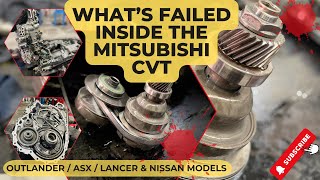
🎬 Watch: Common Mitsubishi CVT problems and how to fix themSymptoms You May Notice
- Check Engine Light is on
- Transmission warning light may be illuminated
- Vehicle may enter 'limp mode' (stuck in one gear or reduced power)
- Shuddering, surging, or violent jerking during acceleration
- Sensation of the transmission slipping (engine RPMs rise without an increase in speed)
- Delayed or harsh engagement when shifting into gear.
- Poor acceleration, engine flare, or a feeling of lag
- Decreased fuel economy
- Grinding or whining noises from the transmission area 🎬 See: 9 warning signs your CVT transmission is failing
- Replacing only the input or output speed sensors without investigating the overall health of the CVT, especially when a known shudder issue exists.
- Performing a simple fluid change and expecting it to fix the problem when the fluid is already heavily contaminated with metal particles, indicating advanced mechanical wear.
Most Likely Causes
- Internal CVT Failure (Hydraulic Circuit/Belt Slip) 🔴 High Probability As documented in TSB-20-23-001REV4, the Jatco CVT-8 transmission in this vehicle is susceptible to issues in the hydraulic pressure circuit, leading to belt slippage and contamination from abrasive powder. This is the most likely root cause and is the subject of a pending class-action lawsuit.
How to confirm: A technician will follow the diagnostic procedure in the TSB, which involves checking for specific DTCs, analyzing live transmission data (primary/secondary pulley speeds, pressures) with a scan tool, and potentially inspecting for internal contamination with a borescope. This is not a DIY confirmation.
Typical fix: Depending on the diagnostic outcome and Techline approval, the fix can be a replacement of the valve body assembly or a complete replacement of the CVT assembly.
Est. part cost: $800-$6000+ - Low or Degraded CVT Fluid 🟡 Medium Probability While not unique to this platform, the sensitivity of the Jatco CVT makes it highly intolerant to low or degraded fluid. The internal wear process described in the TSB rapidly degrades the fluid with metallic particles, exacerbating the problem.
How to confirm: Check the CVT fluid level and condition. The fluid should be at the correct level and not smell burnt. Dark, dirty, or glittery fluid indicates a significant internal problem. This often requires a specific service procedure as there is no traditional dipstick. 🎬 Watch: How to locate and check Eclipse Cross transmission fluid
Typical fix: Perform a CVT fluid drain and fill using only Mitsubishi DiaQueen CVTF-J4 fluid. If the fluid is heavily degraded, it's a strong indicator of a deeper internal problem that a fluid change alone will not fix.
Est. part cost: $100-$250 - Faulty Valve Body or Line Pressure Solenoid 🟡 Medium Probability → Shop Transmission Valve Body The valve body is a core component of the hydraulic circuit identified as a weak point in TSB-20-23-001REV4. Contamination from belt slip can cause solenoids to stick or fail.
How to confirm: The factory service manual diagnostic procedure points to checking the line pressure solenoid's waveform with an oscilloscope if related solenoid codes are not present. This is an advanced diagnostic step performed by a professional.
Typical fix: Replace the valve body assembly. The OEM part number is 2800A187, which supersedes previous versions. Solenoids are not typically serviced separately.
Est. part cost: $800-$1500
Rare But Worth Checking
- Faulty Transmission Control Module (TCM): → Shop Transmission Assembly While possible, electronic module failure is less common than mechanical or hydraulic issues. The TCM should only be suspected after all other possibilities have been thoroughly ruled out. One owner of a hybrid model reported a faulty TCU causing similar symptoms.
- Faulty Input or Output Speed Sensors: While these sensors are critical for ratio calculation, the known TSB for this vehicle makes direct mechanical failure a more probable cause than an isolated sensor failure. The P0730 code is a result of the data from these sensors, not necessarily a failure of the sensors themselves.
Diagnosis Steps
- Check and record any and all Diagnostic Trouble Codes (DTCs) stored in the TCM.
- Specifically check for codes P0962 and P0963, as per the manufacturer's diagnostic flow. If present, diagnose those first.
- Inspect the level and condition of the CVT fluid. Look for signs of burning or contamination with metal particles ('glitter'). This requires a specific service port procedure.
- Review TSB-20-23-001REV4 to see if the vehicle's symptoms (shudder, surge) and VIN match the description.
- Using an advanced scan tool (like MUT-III), monitor live data for primary and secondary pulley speeds, target vs. actual pressures, and real change gear ratio.
- If symptoms and codes align with the TSB, the technician must create a Techline case and attach saved DTC lists and drive recording data before proceeding.
- Based on instructions from Techline, further diagnosis may include a borescope inspection of the CVT belt and pulleys.
- Based on the complete diagnosis, the final recommendation will likely be a faulty valve body or a failing CVT assembly, which requires approval before ordering.
Parts You'll Likely Need
- CVT Assembly
(OEM #2700A451 (FWD), 2700A453 (AWD))— This is the most common final resolution according to the manufacturer's diagnostic procedure and TSB for a persistent P0730 code, especially if widespread contamination is found.
Trusted brands: Mitsubishi Genuine
OEM price range: $4000-$6000+
Aftermarket price range: $3000-$5000 (Remanufactured) - CVT Valve Body Assembly
(OEM #2800A187 (supersedes 2800a149, 2800a163, 2800a184))— If the failure is isolated to the hydraulic controls and there is no widespread contamination, replacing the valve body may resolve the issue as per TSB-20-23-001REV4.
Trusted brands: Mitsubishi Genuine
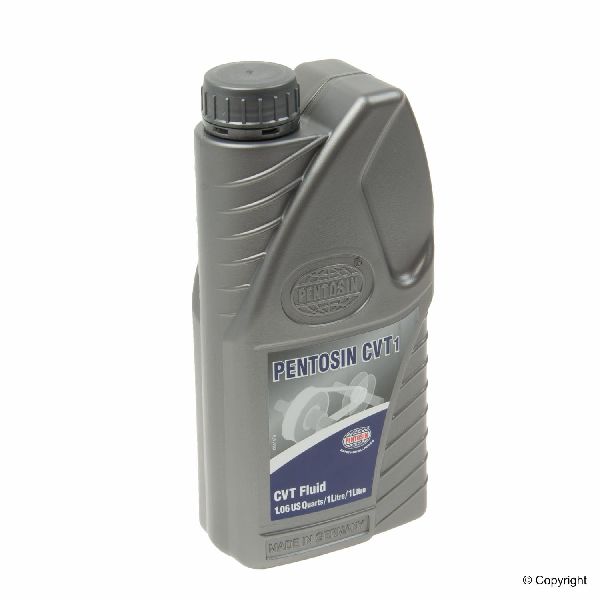
OEM price range: $800-$1500 - Mitsubishi DiaQueen CVTF-J4 Fluid — This specific fluid is required for any service, from a simple fluid change to a full CVT replacement. Using any other fluid can cause damage.
Trusted brands: Mitsubishi Genuine
OEM price range: $25-$35 per quart
Related Codes That Often Appear With This One
- P0776 — Pressure Control Solenoid 'B' Performance/Stuck Off. Both codes are listed in TSB-20-23-001REV4 as resulting from the same root cause of hydraulic circuit issues and belt slip.
- P0741 — Torque Converter Clutch Circuit Performance/Stuck Off. Also listed in the same TSB, indicating a related hydraulic control problem.
- P0962 / P0963 — Pressure Control Solenoid 'A' Control Circuit Low/High. The official Mitsubishi diagnostic procedure for P0730 instructs to check for these codes first, as a solenoid fault can directly cause the incorrect ratio condition.
- P084A, P0969, P2719 — These are other transmission-related codes also listed in TSB-20-23-001REV4, pointing to the same underlying hydraulic circuit and belt slip issue.
Technical Service Bulletins (TSBs) & Recalls
- TSB-20-23-001REV4: POTENTIAL TRANSMISSION SHUDDER/SURGE WITH POSSIBLE DTC (CVT-8) - REVISED. This TSB is central to understanding and diagnosing P0730 on this vehicle. It details the cause (hydraulic circuit issue, belt slip, contamination) and the required dealer diagnostic procedure.
Platform-Specific Known Issues
- This model is covered by Technical Service Bulletin TSB-20-23-001REV4, which addresses a known shudder/surge condition in the CVT-8
Mechanic-Grade Diagnostic Values
- Line Pressure Solenoid Resistance — expected: 3 - 9 Ohms. Failure: A reading outside this range indicates a faulty solenoid coil.
- Secondary Pressure Control Solenoid Resistance — expected: 3 - 9 Ohms. Failure: A reading outside this range indicates a faulty solenoid coil.
- CVT Line Pressure (Stall Test) — expected: Approaching 900 PSI (approx. 6.0 MPa). Failure: Significantly lower pressure during a stall test indicates a major hydraulic issue, potentially with the pump or flow control valve.
- CVT Line Pressure (Idle) — expected: 72 - 218 PSI (0.5 - 1.5 MPa). Failure: Pressure below this range at idle can indicate fluid level issues or pump weakness.
- DTC P0730 Set Condition (Pulley Ratio) — expected: Pulley ratio (primary speed / secondary speed) must not exceed 3.781 for 0.1 second.. Failure: The TCM will set code P0730 if this threshold is breached, indicating severe belt slippage.
Scan Tool Commands That Help
- Mitsubishi MUT-IIISE: Reset (item No.1: Control learning value) / Calibration value reset — This function is required after replacing the CVT assembly or valve body to initialize learned values. It must be performed with the ignition on, engine off, selector in Reverse, and both brake and accelerator pedals depressed.
- Mitsubishi MUT-IIISE: Clear CVT oil degradation level — This must be executed after the initial learned value reset when replacing a major component or changing the fluid, to reset the fluid life monitor in the TCM.
- Mitsubishi MUT-IIISE: CVT ECU Coding Procedures (per TSB-15-23-001) — Required after replacing the CVT transaxle or valve body to ensure the TCM is correctly coded to the new hardware.
Wiring & Ground Locations
- TCM Connector C105 — Located next to the EBCM (Electronic Brake Control Module), connecting the engine harness to the TCM.. This is a key connector for power and communication between the main vehicle systems and the transmission controller. Corrosion or damage here can interrupt signals and cause various transmission faults.
- TCM Power/Ground Pins — Within the main TCM connectors. Specific pin assignments for power supply and ground are detailed in wiring diagrams.. A poor ground or unstable power supply to the TCM can cause erratic behavior, including incorrect calculations and false trouble codes. Checking for stable voltage and clean grounds at the module is a fundamental electrical diagnostic step.
OEM Part Supersession History
2800A149, 2800A163, 2800A184→2800A187— Revisions to the valve body assembly to address hydraulic circuit performance issues outlined in TSBs.
Heads up: The latest part number, 2800A187, is the recommended replacement for all 2018-2020 models to ensure the most recent factory updates are included.
Diagnostic Flowchart
Other Known Issues on This Vehicle
Issues unrelated to this code that are worth knowing about as an owner of this generation:
- Forward Collision Mitigation (FCM) System Malfunction 🔴 High — Common enough to warrant multiple recalls and widespread owner complaints of phantom braking or delayed response. (Ref: Recall SR-18-007 / NHTSA ID 18V621000)
- General Electrical System Faults 🟠 Medium — The most frequently reported problem area in NHTSA complaints for the 2018-2019 models, covering infotainment glitches, sensor issues, and system crashes.
- Premature Onset of CVT Shudder/Jerking 🔴 High — Symptoms can reportedly begin as early as 30,000-60,000 km (approx. 18,000-37,000 miles), leading to eventual failure. (Ref: TSB-20-23-001REV4)
- Malfunctioning Air Conditioning System 🟡 Low — Complaints of insufficient cooling or strange noises, sometimes appearing as early as 25,000 km, often traced to faulty compressors or refrigerant leaks.
- Hydraulic Unit ECU Software Error 🔴 High — A software error could prevent safety systems like ABS, ESC, or Automatic Emergency Braking from intervening when required. (Ref: Recall SR-18-008)
Used vs. New Parts: Buying Guide for This Vehicle
When a used part is the smart pick: For this specific vehicle and its known CVT issues, purchasing a used transmission assembly is extremely high-risk and generally not recommended. The failure rate is high, and it's difficult to verify the internal condition or history of a used unit. A used part should only be considered if it comes from a very low-mileage donor vehicle with verifiable service history, including on-time fluid changes with the correct OEM fluid.
Donor-vehicle mileage cap: roughly under 30000 miles for the part to have meaningful remaining life.
What to inspect on the donor part:
- Verify the donor vehicle's VIN to check for open recalls or TSB history.
- Demand proof of maintenance, specifically CVT fluid changes using Mitsubishi DiaQueen CVTF-J4 fluid.
- If possible, have the seller drain a small sample of the fluid. It should be bright and clear, not dark, burnt-smelling, or containing metallic 'glitter'.
- Inspect the transmission case for any signs of leaks, cracks, or previous repair attempts.
- Ask for a warranty from the seller (e.g., 90 days) to protect against immediate failure.
OEM-only on this vehicle (don't cheap out):
- CVT Assembly: Due to the high failure rate of Jatco CVTs from this era, a new or OEM-remanufactured unit is the safest option.
- CVT Fluid (DiaQueen CVTF-J4): The use of any aftermarket fluid is a major cause of failure. OEM fluid is mandatory.
- Valve Body Assembly: Aftermarket valve bodies are not commonly available, and OEM is required to ensure compatibility with TCM software and TSB procedures.
Aftermarket brands forum-validated for this vehicle:
- For this specific failure, there are no widely validated aftermarket brands for the complete CVT assembly or valve body that are considered as reliable as the updated OEM parts.
Brands owners have reported issues with on this vehicle:
- Generic or unbranded remanufactured CVT units from unknown suppliers should be avoided. The internal components, especially the flow control valve and bearings, require specific updates that only quality remanufacturers or the OEM will perform.
Real Owner Stories
Aggregated from forums and TSBs cited above. Mileages and costs reflect what owners reported in those sources.
2018 Mitsubishi Eclipse Cross
Symptoms: The vehicle is sitting at the dealership with a blown transmission; the owner noted there is an open lawsuit for this exact problem.
What fixed it: The source indicates the vehicle required a transmission replacement at the dealership.
Source hint: Reddit r/mitsubishi thread titled 'How reliable is the eclipse cross just got mine!'
2020 Mitsubishi Eclipse Cross — 93000 miles
Symptoms: Owner inquiring about when CVT issues typically start, noting awareness of the Jatco transmission reputation.
What fixed it: Discussion suggests preventative maintenance (fluid changes every 30-40k miles) rather than a flush to avoid failure.
Source hint: Reddit r/mitsubishi thread titled 'cvt class action lawsuit'
2018 Mitsubishi Eclipse Cross — ~111225 miles
Symptoms: Sudden, severe shuddering and juddering when accelerating, making the car undriveable.
What fixed it: While the owner initially questioned injectors, the symptoms align with the CVT failure described in TSB-20-23-001REV4.
Source hint: Carly Community blog titled 'Mitsubishi Eclipse Cross transmission troubles'
Documented NHTSA Reports
Mitsubishi CVT Ratio and Slippage Issues
Symptoms: An owner reported that the CVT belt slips repeatedly, allowing metallic powder to enter the system. This condition resulted in a cluster of diagnostic codes including P0730, P0776, P0741, P0969, and P2719, which prevented the vehicle from accelerating to higher speeds.
What fixed it: Diagnosis by an automotive service center confirmed internal CVT belt slippage and contamination.
Source hint: NHTSA ODI #11301147
Related OBD-II Codes
Frequently Asked Questions
Does TSB-20-23-001REV4 apply to my 2018-2020 Mitsubishi Eclipse Cross?
What specific transmission fluid should I use for my Eclipse Cross to avoid P0730?
Is there a specific part number for the valve body if that is the cause of my P0730 code?
Can a technician confirm a CVT failure on my Eclipse Cross without taking the transmission apart?
Is there a lawsuit regarding the transmission issues in the 2018-2020 Eclipse Cross?
What other Mitsubishi models share this CVT issue with the Eclipse Cross?
Helpful Videos


We Have This Part in Stock

The information in this article is provided for general reference and educational purposes only. Vehicle specifications, procedures, and part compatibility can vary by production date, trim level, and region. Always consult your vehicle's factory service manual and verify part numbers before purchasing or performing repairs. Safety-critical components such as airbags, seat belts, and braking systems should be installed by a qualified professional.
- Mitsubishi Eclipse Cross:
- 🧭 Diagnostic Flowchart
- 🎬 Helpful Videos
- 🛍️ Shop This Part
- What's Unique About the 2018-2020 Mitsubishi Eclipse Cross
- Symptoms You May Notice
- Most Likely Causes
- Rare But Worth Checking
- Diagnosis Steps
- Parts You'll Likely Need
- Related Codes That Often Appear With This One
- Technical Service Bulletins (TSBs) & Recalls
- Platform-Specific Known Issues
- Mechanic-Grade Diagnostic Values
- Scan Tool Commands That Help
- Wiring & Ground Locations
- OEM Part Supersession History
- Other Known Issues on This Vehicle
- Used vs. New Parts: Buying Guide for This Vehicle
- Real Owner Stories
- 2018 Mitsubishi Eclipse Cross
- 2020 Mitsubishi Eclipse Cross — 93000 miles
- 2018 Mitsubishi Eclipse Cross — ~111225 miles
- Documented NHTSA Reports
- Mitsubishi CVT Ratio and Slippage Issues
- Related OBD-II Codes
- Frequently Asked Questions
- 🎟️ Get 5% Off