

P0731 on 2011-2016 Hyundai Elantra: Gear 1 Incorrect Ratio Causes and Fixes
On a 2011-2016 Elantra, P0731 almost always indicates an internal transmission problem, not just a simple sensor. The most common causes are a faulty internal wire harness (which includes speed sensors) or a failing clutch pack. Expect a professional repair, as even the sensors are inside the transmission pan and valve body. Hyundai's own TSBs often recommend full transmission replacement for this code.
- P0731 on a 2011-2016 Elantra is a serious code indicating an internal transmission problem.
- The first step is to have a professional check the transmission fluid level and condition.
- Unlike many cars, the speed sensors are inside the transmission, making replacement a complex job.
- Due to known issues documented in Hyundai TSBs, this code frequently leads to a recommendation of transmission replacement.
- This is not a DIY-friendly repair; seek professional diagnosis from a transmission specialist.
What's Unique About the 2011-2016 Hyundai Elantra
The 2011-2016 Hyundai Elantra (generation MD/UD) uses a 6-speed automatic transmission (A6GF1). Unlike many other vehicles where speed sensors are external and easy to replace, on this specific transmission, both the input and output speed sensors are located inside the transmission. They are integrated into an internal wire harness that also includes the fluid temperature sensor and oil pressure switches. This design means that replacing a potentially faulty speed sensor is a complex job that requires removing the transmission pan and valve body, making it significantly more labor-intensive than on other cars. This internal harness is a documented common failure point.
Symptoms You May Notice
- Check Engine Light is illuminated
- Transmission slipping, especially from a stop
- Harsh, delayed, or jerky shifting into first gear
- Vehicle feels sluggish or has poor acceleration from a standstill
- Transmission gets stuck in a higher gear (e.g., 3rd or 4th gear) as a fail-safe measure
- Decreased fuel economy
- Whining noise from the transmission
- Replacing only the external transmission range sensor. While this sensor can cause shifting issues, it does not typically cause a P0731 gear ratio code.
- Assuming the speed sensors are external. On the 2011-2016 Elantra, they are internal, and buying external sensors will be a waste of money.
- Performing a simple fluid and filter change and expecting it to solve the problem. While low/dirty fluid can be a cause, it is often just a symptom of the internal wear that is the true root of the P0731 code.
Most Likely Causes
- Low or Dirty Transmission Fluid 🟡 Medium Probability → Shop Transmission Assembly These transmissions are 'sealed' and don't have a dipstick, discouraging fluid level checks. Fluid can become contaminated with clutch material or break down over time, affecting hydraulic pressure and causing codes like P0731.
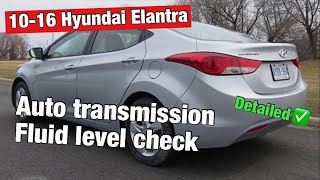
How to confirm: The fluid level and condition must be checked by a technician via the fill and overflow plugs on the transmission case. 🎬 Watch: How to check the transmission fluid level. The vehicle must be level and at a specific temperature. The fluid should be bright red and clear, not brown, black, or burnt-smelling.
Typical fix: Perform a transmission fluid drain and fill using the correct Hyundai-specific fluid (SP-IV). If the fluid is very dirty, this is often a symptom of a larger internal problem, and a fluid change alone is unlikely to be a permanent fix.
Est. part cost: $50-$100 for fluid - Faulty Internal Speed Sensors / Wire Harness 🔴 High Probability The internal wire harness assembly, which contains the input and output speed sensors, is a known failure point on the A6GF1 transmission. Heat and constant fluid exposure can degrade the sensors and wiring, leading to incorrect ratio codes.
How to confirm: A professional scan tool can monitor the live data from the Input Speed Sensor (ISS) and Output Speed Sensor (OSS). 🎬 See how to test the input and output speed sensors. If one sensor shows an erratic or non-existent reading while the vehicle is moving, it's likely faulty. Resistance checks of the sensors can also be performed with the valve body removed.
Typical fix: Replace the internal transmission wire harness assembly (OEM Part #46307-2F000). 🎬 Watch this step-by-step internal wire harness replacement guide. This requires draining the fluid, removing the transmission pan, and then removing the valve body to access the harness.
Est. part cost: $150-$250 for the harness assembly - Failing Internal Clutch Packs or Mechanical Components 🔴 High Probability Hyundai has issued multiple Technical Service Bulletins (TSBs), including 24-AT-002H, 20-AT-001H, and 19-AT-012H, that point towards internal mechanical failure (specifically worn clutches or seals) as the primary cause for incorrect ratio codes. This suggests a weakness in the clutch materials or other internal parts.
How to confirm: This is often a diagnosis of exclusion. If the fluid is good and the sensors/solenoids test okay, the slip is almost certainly due to worn clutches or other internal mechanical parts. A transmission pressure test can help confirm, but the presence of the code alongside good sensor data is a strong indicator.
Typical fix: The transmission must be removed from the vehicle and either rebuilt with new clutch packs and seals or replaced with a new or remanufactured unit. Per Hyundai's TSBs, replacement is the often-recommended procedure.
Est. part cost: $2000-$4500 for a replacement transmission - Faulty Valve Body or Shift Solenoids ⚪ Low Probability → Shop Transmission Valve Body Debris from normal wear or deteriorating fluid can clog the small passages in the valve body or cause solenoids to stick, preventing proper hydraulic pressure from being routed to engage 1st gear.
How to confirm: A technician can use a high-end scan tool to command individual solenoids on and off to check for response. Pressure testing specific ports on the transmission can also help isolate a valve body issue. TSB 24-AT-002H advises checking for solenoid DTCs first.
Typical fix: Replace the specific failing solenoid or the entire valve body assembly. This is done after removing the transmission pan.
Est. part cost: $400-$900 for a valve body, $50-$150 per solenoid
Diagnosis Steps
- Verify the code with a professional OBD-II scanner that can read transmission-specific codes and live data.
- Check the transmission fluid level and condition. This must be done by a qualified technician as there is no dipstick. The vehicle must be level and at the correct temperature (per TSB 5NP-E2D7G-09).
- If the fluid is low, top it off, clear the code, and test drive. If the fluid is dark or burnt, perform a drain-and-fill with Hyundai SP-IV fluid, but be aware this is likely a symptom, not the root cause.
- Using a scan tool, monitor the live data for the Input Speed Sensor (ISS) and Output Speed Sensor (OSS). Compare the readings to see if one is dropping out or erratic.
- Check for other DTCs. If solenoid-specific codes are present, diagnose those first as per TSB 24-AT-002H.
- If a sensor is suspect, the transmission pan and valve body must be removed to access and test the internal wire harness/sensor assembly.
- If sensors and fluid are good, and no other codes are present, the issue is almost certainly internal mechanical wear (clutches, brakes, etc.), requiring a transmission rebuild or replacement as per Hyundai TSB 24-AT-002H.
Parts You'll Likely Need
- Transmission Internal Wire Harness
(OEM #46307-2F000)— This assembly contains the input, output, and temperature sensors, and is a very common failure point for this transmission, causing various ratio and sensor codes.
Trusted brands: Hyundai (OEM)
OEM price range: $150-$250
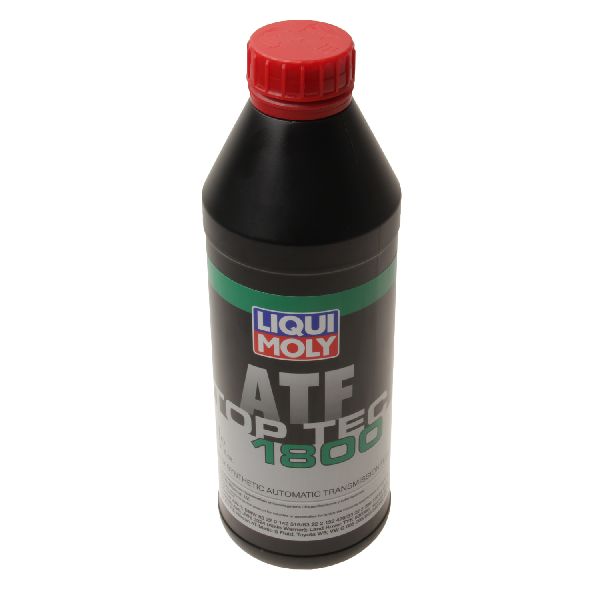
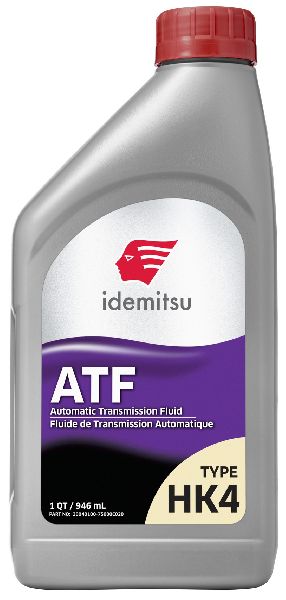
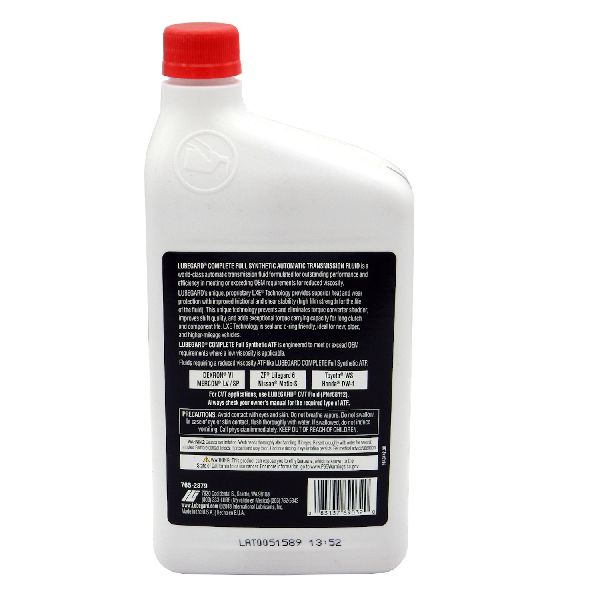
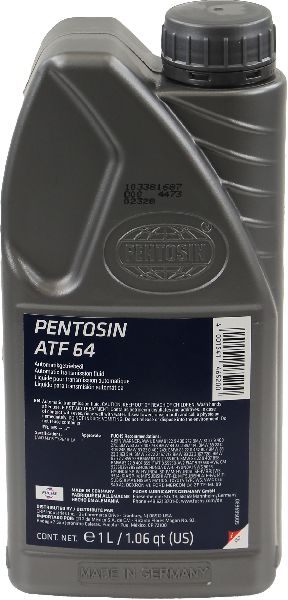
Aftermarket price range: $65-$180 - Automatic Transmission Fluid (SP-IV) — The correct fluid is required for any service. Low or degraded fluid is a primary cause of transmission problems.
Trusted brands: Hyundai (OEM), Idemitsu, ENEOS
OEM price range: $18-$25 per quart
Aftermarket price range: $12-$20 per quart - Remanufactured Automatic Transmission — If internal mechanical failure is diagnosed, replacement is often more cost-effective and reliable than a rebuild, as recommended by Hyundai TSBs.
Trusted brands: Hyundai (OEM Reman), Maval
OEM price range: $3500-$4500
Aftermarket price range: $2500-$3800
Related Codes That Often Appear With This One
- P0732, P0733, P0734, P0735 — These are incorrect ratio codes for other gears. Seeing multiple ratio codes together strongly suggests a widespread internal problem like low fluid pressure, a failing valve body, or major mechanical failure, reinforcing the likelihood of a needed replacement.
- P0722 — This code is for 'Output Speed Sensor Circuit No Signal.' If it appears with P0731, it points very strongly to a failed output speed sensor or the internal harness it's part of.
Technical Service Bulletins (TSBs) & Recalls
- 24-AT-002H — Supersedes previous TSBs. Provides diagnostic procedure for multiple incorrect ratio DTCs (including P0731) across many Hyundai models with 6 and 8-speed transmissions. It instructs technicians to check for solenoid codes first; if none are present, the likely cause is internal, often leading to transmission replacement.
- 20-AT-001H — An earlier version of the TSB for incorrect ratio DTCs, superseded by 24-AT-002H. It also pointed to internal failure as the primary cause.
- 17-ST-001 — Describes the procedure for replacing the flexible rubber steering coupler in the MDPS (Motor Driven Power Steering) assembly to fix a clicking or thudding noise.
Platform-Specific Known Issues
- Owner Experience: P0731 at 118k Miles: A 2015 Elantra owner reported the car running perfectly for the first month of ownership before suddenly developing slipping in 1st gear and jerking, which triggered the P0731 code. This highlights how the failure can occur suddenly without prior warning signs.
Mechanic-Grade Diagnostic Values
- Variable Force Solenoid (VFS) Resistance — expected: Approximately 5.1 - 5.3 Ohms. Failure: A reading significantly higher or lower than the expected range, or an open circuit (infinite resistance).
- On/Off Shift Solenoid Resistance — expected: 10 - 11 Ohms. Failure: A reading outside this range indicates a faulty solenoid coil.
- P0731 Fault-Setting Threshold — expected: The TCM expects the input RPM to equal the output RPM multiplied by the 1st gear ratio.. Failure: The code sets when the TCM detects a slip greater than 200 RPM for more than 1 second.
Scan Tool Commands That Help
- Hyundai GDS (Global Diagnostic System): Resetting Auto T/A Values (Reset Adaptive Values) — This function is mandatory after replacing the transmission, valve body, TCM, or major internal components. It erases the old learned shift pressures and timing. Failure to perform this reset can lead to harsh shifting, slipping, and premature wear on the new parts as the TCM attempts to use incorrect, previously learned values.
- Hyundai GDS (Global Diagnostic System): Actuation Test — Allows a technician to command individual shift solenoids on and off while monitoring system pressure or listening for a click. This helps isolate a specific solenoid that is mechanically stuck or has an electrical fault, which could be a less common cause of P0731.
Wiring & Ground Locations
- Transmission Ground Strap — The main transmission ground strap typically connects from the transmission case to the chassis near the driver's side frame rail, often located underneath the battery tray.. A poor ground connection can cause erratic behavior from the transmission's electronic components, including the internal sensors and solenoids. While not a primary cause for a specific ratio code like P0731, checking the integrity of this ground (Part # 91865-F2030 for a similar generation) is a crucial step in diagnosing any electronic transmission issue to rule out simple electrical problems.
- Main Battery Ground — The main negative battery cable grounds directly to the chassis on the inner fender, near the battery itself.. All vehicle electronics, including the TCM, rely on a solid main ground. A corroded or loose main ground can cause widespread, unpredictable electrical issues that could potentially mimic more severe component failures.
Real Owner Repair Stories
- Reddit user post on r/mechanicadvice (2015 Hyundai Elantra, 118k miles) — Car ran perfectly for one month after purchase, then suddenly started slipping in 1st gear and jerking during acceleration, triggering code P0731.
❌ Tried (didn't work) The user did not report trying any fixes; they went directly to seeking advice after getting the code, fearing a major failure.
✅ What actually fixed it While the original poster did not confirm their specific fix, the overwhelming consensus from professional technicians in the thread was that these symptoms on this specific vehicle at this mileage almost invariably point to internal clutch failure, requiring a transmission replacement or rebuild. The advice strongly leaned towards replacement as the most reliable long-term solution.
OEM Part Supersession History
46307-2F000→46307-2F000 remains the current part number for the internal wire harness.— N/A
Heads up: Be cautious of aftermarket harnesses. While cheaper, the labor to replace this part is significant. A premature failure of a low-quality aftermarket part will negate any initial savings. Sticking with the OEM part is highly recommended by specialists for this specific component.
Model Year Variations Within This Range
- 2011-2016: During the life of the A6GF1 transmission, the inhibitor switch (transmission range sensor) was updated several times as an improvement. While this part is not a direct cause of P0731, a failing inhibitor switch can cause other shifting problems and no-start conditions, and it's a known service item for this transmission family.
Diagnostic Flowchart
Other Known Issues on This Vehicle
Issues unrelated to this code that are worth knowing about as an owner of this generation:
- Engine Ticking / Piston Slap (1.8L Nu Engine) 🔴 High — Very common. Can start as a light tick when cold and progress to loud knocking and eventual engine failure. A class-action lawsuit was settled over this issue. (Ref: Class-action lawsuit settlement extended warranties (e.g., 10yr/120k miles).)
- Worn Steering Coupler 🟠 Medium — Extremely common. Causes a distinct clicking or clunking noise in the steering column when turning the wheel. The part is cheap but labor can be moderate. (Ref: TSB #17-ST-001, TSB #5NP-G5Z6W-03. A warranty extension was also issued for this part.)
- Premature Alternator Failure 🟠 Medium — A frequently reported issue leading to the battery light illuminating and eventual no-start conditions.
- Brake Pedal Stopper Pad Failure 🟡 Low — Common. The small plastic pad disintegrates, which can cause the brake lights to stay on or prevent the car from being shifted out of Park. (Ref: Recall #146 / NHTSA 16V574.)
- Front Coil Spring Corrosion 🔴 High — Common in regions that use road salt. The spring can rust, fracture, and potentially puncture the tire. (Ref: Recall for 2011 models.)
Used vs. New Parts: Buying Guide for This Vehicle
When a used part is the smart pick: A used transmission assembly from a reputable salvage yard can be a cost-effective solution, especially if it comes from a low-mileage donor vehicle and includes a parts warranty. Given that the alternative is a very expensive new or remanufactured unit, this is a common and practical repair path.
Donor-vehicle mileage cap: roughly under 80000 miles for the part to have meaningful remaining life.
What to inspect on the donor part:
- Verify the donor vehicle's mileage. Look for units under 80,000 miles.
- Ask for a vehicle history report (VIN) of the donor car to check for accidents or flood damage.
- Inspect the fluid if possible. If it's dark, burnt, or contains metal, reject the unit.
- Check for any visible damage to the transmission case, connectors, and mounting points.
OEM-only on this vehicle (don't cheap out):
- Transmission Internal Wire Harness (Part #46307-2F000): The labor to access this part is high. Using a cheaper aftermarket part that might fail prematurely is a significant risk. OEM is the safest choice.
- Transmission Fluid (SP-IV): This transmission is sensitive to fluid type. Using the specified Hyundai SP-IV fluid is critical for proper performance and longevity. While some aftermarket fluids claim compatibility, OEM is the guaranteed correct choice.
Aftermarket brands forum-validated for this vehicle:
- For remanufactured transmissions, brands like Maval or Jasper are generally well-regarded, but always check the warranty terms.
- For compatible SP-IV fluid, brands like Idemitsu, ENEOS, and Castrol Transmax Full Synthetic Multi-Vehicle are often cited by mechanics as reliable alternatives to OEM fluid.
Brands owners have reported issues with on this vehicle:
- Avoid unbranded, no-name internal wire harnesses from online marketplaces. The quality control is often poor, and failure rates can be high.
Real Owner Stories
Aggregated from forums and TSBs cited above. Mileages and costs reflect what owners reported in those sources.
2015 Hyundai Elantra — 118000 miles
Symptoms: The car was running perfectly for the first month of ownership before suddenly developing slipping in 1st gear and jerking, which triggered the P0731 code.
What fixed it: The source indicates that for this specific code and symptoms (slipping/jerking), if sensors and fluid are good, the recommended fix per Hyundai TSBs is transmission replacement due to internal mechanical wear.
Source hint: Vehicle_specific_issues: Owner Experience: P0731 at 118k Miles
2016 Hyundai Elantra (US-Spec)
Symptoms: Encountered P0731 code while stationed in Belgium; the vehicle experienced incorrect gear ratios.
What fixed it: Proper diagnosis starting with fluid and sensors; the discussion reinforced that a simple 'repair kit' is insufficient and internal components must be evaluated.
Source hint: Reddit: Need help finding US transmission repair kit for 2016 Hyundai Elantra (P0731)
Related OBD-II Codes
Frequently Asked Questions
Which TSB should my mechanic look at for a P0731 code on my 2015 Elantra?
Can I check the transmission fluid level myself on a 2011-2016 Elantra?
Is there a specific part number for the internal wiring issue common on the A6GF1 transmission?
What type of transmission fluid does my 2011-2016 Elantra require?
If my Elantra is jerking in 1st gear but has no solenoid codes, what does TSB 24-AT-002H suggest?
Could my P0731 code be related to the clicking noise in my steering wheel?
Helpful Videos
We Have This Part in Stock


The information in this article is provided for general reference and educational purposes only. Vehicle specifications, procedures, and part compatibility can vary by production date, trim level, and region. Always consult your vehicle's factory service manual and verify part numbers before purchasing or performing repairs. Safety-critical components such as airbags, seat belts, and braking systems should be installed by a qualified professional.
- Hyundai Elantra:
- 🧭 Diagnostic Flowchart
- 🎬 Helpful Videos
- 🛍️ Shop This Part
- What's Unique About the 2011-2016 Hyundai Elantra
- Symptoms You May Notice
- Most Likely Causes
- Diagnosis Steps
- Parts You'll Likely Need
- Related Codes That Often Appear With This One
- Technical Service Bulletins (TSBs) & Recalls
- Platform-Specific Known Issues
- Mechanic-Grade Diagnostic Values
- Scan Tool Commands That Help
- Wiring & Ground Locations
- Real Owner Repair Stories
- OEM Part Supersession History
- Model Year Variations Within This Range
- Other Known Issues on This Vehicle
- Used vs. New Parts: Buying Guide for This Vehicle
- Real Owner Stories
- 2015 Hyundai Elantra — 118000 miles
- 2016 Hyundai Elantra (US-Spec)
- Related OBD-II Codes
- Frequently Asked Questions
- 🎟️ Get 5% Off