

P0732 on 2018-2023 Lincoln Navigator: Gear 2 Incorrect Ratio Causes and Fixes
On a 2018-2023 Lincoln Navigator, P0732 almost always indicates a serious internal failure in the 10R80 transmission, most commonly a faulty CDF clutch drum. This is a well-documented design flaw where a bushing 'walks' out of position, causing a major hydraulic leak. This requires professional repair, often a partial rebuild, costing $4,000-$7,000+.
- P0732 on a 2018-2023 Navigator is a severe code that almost always points to a major internal transmission failure, not a simple sensor or fluid problem.
- The most likely culprit is a well-documented design flaw in the 10R80 transmission's CDF clutch drum, which requires a transmission rebuild with an updated part.
- Do not continue to drive the vehicle. You risk complete transmission failure and being stranded, and the vehicle's behavior can be dangerously unpredictable.
- This is not a DIY repair. It requires a professional transmission shop familiar with Ford 10R80 issues.
- Ensure the repair shop is aware of Ford's TSBs (e.g., 24-2046, 25-2132) and uses the updated CDF drum to prevent a repeat failure.
What's Unique About the 2018-2023 Lincoln Navigator
The 2018-2023 Lincoln Navigator uses the Ford-GM co-developed 10R80 10-speed automatic transmission. While P0732 is a generic code, on this specific platform it is strongly linked to a well-documented design flaw in the transmission's 'CDF' clutch drum assembly. A bushing inside this drum can move or 'walk' out of place, uncovering hydraulic passages and causing a severe pressure leak that prevents the clutches for 2nd gear from engaging properly. This issue is so prevalent that it has been the subject of multiple Technical Service Bulletins (TSBs) and class-action lawsuits.
Symptoms You May Notice
- Check Engine Light or wrench light is on
- Harsh, jerky, or delayed shifting, especially into 2nd, 4th, and 6th gears
- Slamming into gear when shifting from Park to Drive or Reverse
- Vehicle hesitates, bogs down, or slips during acceleration, especially from a stop
- Sudden loss of power
- Transmission gets stuck in one gear (limp mode), often a higher gear like 7th, making acceleration from a stop extremely difficult
- Loud clunk or thud during shifting, sometimes described as feeling like being rear-ended
- Replacing only the transmission speed sensors. The sensors are correctly reporting the speed mismatch; they are not the cause of the slippage.
- Performing only a software update or adaptive learn reset. While sometimes recommended for general shift quality complaints, software cannot fix a major internal hydraulic leak. The problem will return quickly.
- Performing only a transmission fluid flush. While new fluid is necessary during a rebuild, it cannot fix the mechanical failure of the CDF drum bushing.
Most Likely Causes
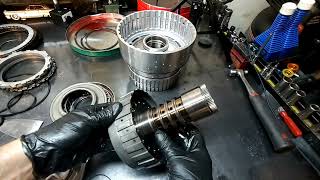
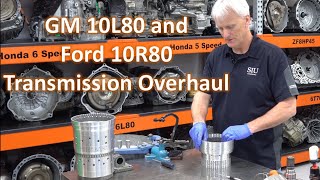
- Internal Failure of the CDF Clutch Drum Assembly 🔴 High Probability → Shop Transmission Assembly The 10R80 transmission has a widely documented design flaw where a bushing in the CDF clutch drum can 'walk' or move out of its intended position. This uncovers hydraulic passages, causing a severe pressure loss to the C, D, and F clutch packs. This is a known mechanical failure acknowledged by Ford in multiple TSBs. The updated part has a machined lip 🎬 Watch: See exactly how the CDF drum bushing fails. to prevent the bushing from moving.
How to confirm: A technician must perform a series of hydraulic pressure tests on the transmission's internal circuits, as outlined in Ford TSBs like TSB 24-2046. A more direct field test involves removing the valve body and applying compressed air to the C-clutch port with a rubber-tipped blow gun; if the circuit does not hold pressure or make a thud, the clutch has failed, likely due to the drum. Definitive diagnosis is visual confirmation during a transmission teardown.
Typical fix: The transmission must be removed and disassembled to replace the faulty CDF drum with an updated part (such as part number JL3Z-7H351-B). This is effectively a partial or full transmission rebuild. Some owners report that even after this repair, other issues like harsh shifting can persist, sometimes requiring a valve body replacement as well.
Est. part cost: $400-$800 - Faulty Main Control Valve Body (Mechatronic Unit) 🟡 Medium Probability → Shop Transmission Valve Body The valve body contains solenoids and valves that direct hydraulic fluid. These valves can become sticky or wear out, leading to pressure loss and erratic shifting. Debris from a failing CDF drum can also contaminate and damage the valve body, making it a common secondary failure. TSBs often instruct technicians to inspect or overhaul the valve body as part of the diagnostic process.
How to confirm: A technician can use a high-level scan tool (like Ford's FDRS) to command individual solenoids and run routines like the 'Transmission Accelerated Main Control Break In' to diagnose valve body issues. Physical inspection for sticking valves is required if electronic tests are inconclusive.
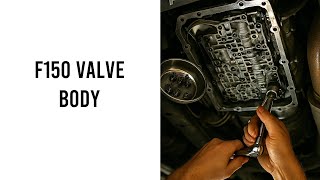
Typical fix: Replacement of the entire main control valve body assembly, followed by a fluid fill and a software-driven adaptive learning procedure. 🎬 Watch: Step-by-step guide to replacing the 10R80 valve body. In some cases, the valve body is replaced in conjunction with the CDF drum.
Est. part cost: $800-$1500 - Low or Contaminated Transmission Fluid ⚪ Low Probability → Shop Transmission Assembly While unlikely to be the root cause for P0732 on the 10R80, low or dirty fluid can cause a wide range of shifting problems. The 10R80 is very sensitive to fluid level and requires the specific Motorcraft MERCON ULV fluid. A fluid change will not fix the mechanical CDF drum failure.
How to confirm: A physical check of the transmission fluid level and condition is required. This is a complex procedure on the 10R80 as there is no dipstick; it must be checked on a lift at a specific operating temperature (206-215°F).
Typical fix: Perform a transmission fluid drain-and-fill or flush using only the correct Motorcraft MERCON ULV fluid (Part # XT-12-QULV). The filter should also be replaced. This is typically done as part of a larger mechanical repair.
Est. part cost: $150-$400
Rare But Worth Checking
- TCM Software Glitch: Outdated software can contribute to harsh shifting, but it is highly unlikely to be the sole cause of a P0732 code. A software update is often performed alongside a mechanical repair but will not fix the underlying hydraulic leak from a failed CDF drum.
Diagnosis Steps
- Verify the transmission fluid level and condition. This must be done by a professional, as the vehicle needs to be level and the fluid at a specific high temperature (206-215°F) to get an accurate reading.
- Use a professional-grade scanner (like Ford's FDRS) to check for any other transmission-related DTCs. Note if other gear ratio codes are present.
- Check for any applicable Technical Service Bulletins (TSBs) for the vehicle's VIN. TSBs like 24-2046 and 23-2250 directly address this code and provide a diagnostic path for technicians.
- Perform a complete TCM software check and update if required by a TSB. Follow TSB procedures to run the 'PCM - Transmission Accelerated Main Control Break In' routine to test the valve body.
- If symptoms persist, follow TSB procedures to perform hydraulic pressure tests on the transmission circuits to isolate the leak. Some newer TSBs (like 25-2018) describe using a VCMM with pressure transducers to calculate a specific leakage percentage for the CDF drum.
- Based on test results and TSB guidance, prepare for either valve body replacement or a full transmission removal and overhaul to replace the CDF clutch drum assembly with the updated part.
Parts You'll Likely Need
- CDF Clutch Drum Assembly (Updated)
(OEM #JL3Z-7H351-B)— This is the most common point of failure for P0732 on the 10R80 transmission. The original design is flawed, and this updated part with a revised lip is required to permanently fix the issue.
Trusted brands: Motorcraft
OEM price range: $400-$800
Aftermarket price range: $300-$600 - Main Control Valve Body Assembly
(OEM #JL3Z-7A100-J)— The second most likely cause, a faulty valve body can cause pressure loss and erratic shifting. It is often replaced if diagnostics do not definitively point to the CDF drum, or if it has been contaminated by debris.
Trusted brands: Motorcraft
OEM price range: $1000-$1500
Aftermarket price range: $800-$1200 - Automatic Transmission Fluid - Motorcraft MERCON ULV
(OEM #XT-12-QULV)— This specific fluid is required for any service on the 10R80 transmission. Using any other fluid can cause damage. A full rebuild requires approximately 13 quarts.
Trusted brands: Motorcraft
OEM price range: $15-$25 per quart
Related Codes That Often Appear With This One
- P0733 — This code indicates 'Gear 3 Incorrect Ratio'. It is common to see multiple gear ratio codes together, as the underlying cause (like the CDF drum or valve body) often affects hydraulic pressure to more than one clutch pack.
- P0729, P0731, P0734, P0735, etc. — These are all gear ratio error codes for other gears. Their presence alongside P0732 points strongly to a systemic transmission issue like the valve body or CDF drum failure, which affects multiple clutch circuits.
Technical Service Bulletins (TSBs) & Recalls
- TSB 24-2046: Supersedes previous TSBs and addresses harsh/delayed shifts and multiple DTCs including P0732. It identifies potential causes as the solenoid ID strategy, sticking valves in the main control valve body, and/or axial movement of the CDF clutch cylinder sleeve.
- TSB 23-2250: A comprehensive TSB listing P0732 among many other codes related to shift issues. It provides a detailed service procedure to diagnose between software, valve body, or CDF clutch cylinder sleeve causes.
- TSB 25-2132
Platform-Specific Known Issues
- The 10R80 transmission used in this vehicle is the subject of multiple class-action lawsuits due to widespread issues with harsh shifting, hesitation, and premature component failure, including the CDF drum.
Mechanic-Grade Diagnostic Values
- Shift Solenoid (A-F) Coil Resistance — expected: 5.0 - 5.4 Ohms at 68°F (20°C). Failure: A reading outside this range, or an open (infinite) reading, indicates a faulty solenoid coil.
- Line Pressure Control (LPC) Solenoid Current — expected: Low current (approx. 50 mA) results in high line pressure.. Failure: The LPC solenoid operates inversely; high current (approx. 850 mA) commands low pressure. An idle current is always present for circuit monitoring.
- Torque Converter Clutch (TCC) Solenoid Current — expected: High current (approx. 850 mA) results in high TCC apply pressure.. Failure: The TCC solenoid is directly proportional; low or no current results in low pressure.
Hidden / Shadow Codes Worth Checking
- Solenoid Body Identification: This is not a fault code, but a 12-digit characterization number unique to each valve body (main control). When a valve body is replaced, this new number must be programmed into the TCM using a dealer-level scan tool. Failure to do so will result in poor shift quality as the TCM is using the wrong calibration data for the new solenoids. (see via Visible in Ford's FDRS/IDS scan tool under a function like 'Transmission Characterization' or 'Solenoid IDN'.)
Scan Tool Commands That Help
- Ford FDRS/IDS: PCM - Transmission Accelerated Main Control Break In — This routine is specified in TSBs to diagnose and potentially correct issues with sticking valves in the main control (valve body). It cycles the solenoids to exercise the valves.
- Ford FDRS/IDS: Clear Transmission Adaptive Tables — This must be performed after any major transmission repair, such as replacing the valve body or rebuilding the transmission, to force the TCM to start a new learning process with the new components.
- Ford FDRS/IDS: Solenoid Body IDN / Transmission Strategy Download — This is mandatory after replacing the main control valve body. The unique 12-digit ID from the new valve body must be programmed into the TCM to ensure correct shift pressures and timing.
Real Owner Repair Stories
- Reddit user /u/Particular_Mine8311 (2018 F-150 XLT 5.0L with 148,000 miles) — Wrench light came on, throwing code P0732 (Gear 2 Incorrect Ratio). Truck would not engage 2nd gear when pulling out onto a main road, just rolled until it finally 'clunked' into gear.
❌ Tried (didn't work) Initial diagnosis was feared to be the entire transmission.
✅ What actually fixed it The final diagnosis was a faulty solenoid within the valve body. The confirmed fix was the replacement of the main control valve body. - Reddit user /u/Commercial_Method_28 (Ford Transmission Tech) (2017 F-150 with 10R80) — Codes P0732, P0734, P076F (Incorrect ratios for gears 2, 4, 7). Slipping and loss of engagement.
❌ Tried (didn't work) A user in the same thread with a Mustang reported replacing the valve body did not fix their slipping issue.
✅ What actually fixed it The technician identified the cause as the common CDF clutch cylinder bushing misalignment. The fix was an internal rebuild to address the failed C-clutch circuit caused by the separated bushing.
OEM Part Supersession History
HL3Z-7H351-A, JL3Z-7H351-A→JL3Z-7H351-B— The original CDF clutch drum designs allowed an internal bushing to 'walk' out of position. The updated JL3Z-7H351-B part incorporates a machined lip or is staked to physically prevent the bushing from moving, permanently fixing the design flaw.
Model Year Variations Within This Range
- 2018 - Mid-2022: Vehicles built on or before August 15, 2022, are equipped with the original CDF clutch drum design that is prone to the bushing walking out. Vehicles built after this date are believed to have the updated component from the factory, making them less susceptible to this specific failure mode.
- 2020-2021: A forum member noted that the A-Clutch housing was changed in 2020 on F-150s to a one-piece welded unit for cost savings, while Mustang applications retained a two-piece design for better high-speed capability. While not directly related to P0732, it shows internal design changes occurred during this period.
Diagnostic Flowchart
Other Known Issues on This Vehicle
Issues unrelated to this code that are worth knowing about as an owner of this generation:
- Cam Phaser Rattle on Cold Start 🟠 Medium — Very common on 3.5L EcoBoost engines. The noise is a loud rattle for a few seconds after a cold start. (Ref: Multiple TSBs have been issued, with the fix evolving from a software update to full replacement of the cam phasers.)
- Leaking Turbocharger Coolant Lines 🟠 Medium — Common on the 3.5L EcoBoost. The OEM slip-fit O-ring fittings at the turbocharger degrade over time, causing coolant leaks. (Ref: No specific recall, but it is a widely recognized repair. Aftermarket kits with improved AN fittings are a popular permanent solution.)
- APIM (SYNC 3) Infotainment Failure 🟡 Low — Fairly common. Symptoms include a black screen (while audio still works), constant rebooting, or an unresponsive touchscreen. (Ref: No recall, but it is a known failure of the Accessory Protocol Interface Module (APIM). The fix is replacing the module, which requires programming to the vehicle's VIN.)
- Air Suspension Faults 🟠 Medium — Reported by some owners. Can lead to a sagging suspension on one side or a harsh, bumpy ride. Can be expensive to repair.
Used vs. New Parts: Buying Guide for This Vehicle
When a used part is the smart pick: For this specific P0732 failure on the 10R80, sourcing a complete used transmission is extremely risky and generally not recommended. The high probability of the donor unit having the same inherent CDF drum flaw makes it a poor investment. A used valve body from a very low-mileage, verified post-2022 wreck could be considered, but it's still a gamble.
Donor-vehicle mileage cap: roughly under 30000 miles for the part to have meaningful remaining life.
What to inspect on the donor part:
- For a complete transmission, verify the donor vehicle's build date is after August 2022 to increase the chance of getting the updated CDF drum.
- Ask for the VIN of the donor vehicle to check its service history for any transmission-related complaints or repairs.
- If buying a valve body, ensure the electrical connector and all solenoids are physically intact with no signs of damage.
- Avoid any parts from vehicles that show signs of being in a major flood or fire.
OEM-only on this vehicle (don't cheap out):
- CDF Clutch Drum: Only the updated OEM part (JL3Z-7H351-B) or a high-performance aftermarket equivalent with a positive bushing retainer should be used. Do not use an old-stock or used original-design drum.
- Transmission Fluid: Only Motorcraft MERCON ULV is approved. Using any other fluid type can cause shifting problems and damage.
Aftermarket brands forum-validated for this vehicle:
- Suncoast Performance: Offers complete rebuild kits and individual components, including versions of the CDF drum and clutch packs designed to exceed OEM specs.
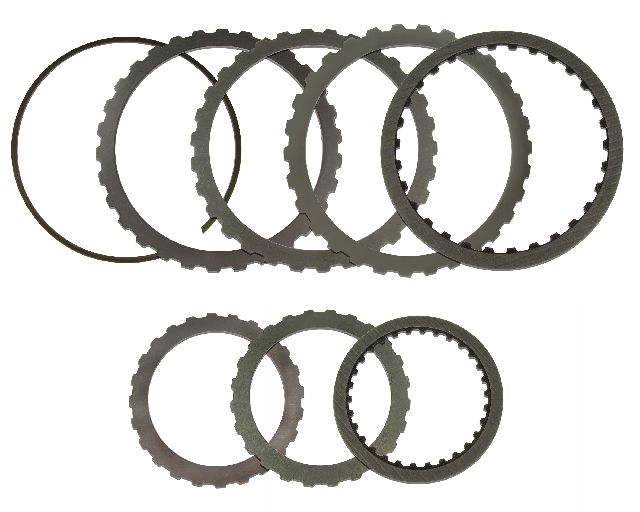
- Raybestos Powertrain: A well-regarded supplier of performance friction plates (GPZ material) and steel plates for 10R80 rebuilds, often included in high-quality kits.
Brands owners have reported issues with on this vehicle:
- Unbranded, no-name CDF drums or valve bodies from online marketplaces. These often lack the updated designs and quality control, leading to repeat failures.
Real Owner Stories
Aggregated from forums and TSBs cited above. Mileages and costs reflect what owners reported in those sources.
2018 Ford F-150 — 48000 miles
Symptoms: The truck threw code P0732 and the owner was told the transmission was 'done'.
What fixed it: The owner received a quote for a transmission rebuild that included replacing the CDF drum with the updated part.
Cost: $4000-$4000
Source hint: Reddit r/f150 thread titled '10r80 issues / Code p0732'
2019 Ford Mustang
Symptoms: Owner experienced issues that led to a dealer performing the repair outlined in TSB 24-2046.
What fixed it: The CDF drum was replaced with the updated part as per the TSB. The technician showed the owner the new part design that prevents future failure.
Source hint: mustang6g.com thread titled 'TSB 24-2046'
2020 Ford F-150
Symptoms: After having the CDF drum replaced under warranty, the owner experienced new problems 900km later, specifically a hard shift into 3rd gear.
What fixed it: The initial problem was fixed with a CDF drum replacement. The subsequent hard shifting issue required a valve body replacement.
Source hint: Reddit r/f150 thread titled '10r80 CDF drum?'
Related OBD-II Codes
Frequently Asked Questions
My 2019 Lincoln Navigator has a P0732 code and is shifting harshly. Which TSB should I mention to my mechanic?
Is the CDF clutch drum failure that causes P0732 a known issue on the 2018-2023 Navigator?
If the CDF drum is replaced on my Navigator, is there an improved part to prevent this from happening again?
Can I just get a transmission fluid change to fix the P0732 code and jerky shifting?
My dealer replaced the CDF drum, but now I have other shifting problems. What could be the cause?
What other vehicles share this same P0732 transmission problem with the Lincoln Navigator?
Helpful Videos

We Have This Part in Stock


The information in this article is provided for general reference and educational purposes only. Vehicle specifications, procedures, and part compatibility can vary by production date, trim level, and region. Always consult your vehicle's factory service manual and verify part numbers before purchasing or performing repairs. Safety-critical components such as airbags, seat belts, and braking systems should be installed by a qualified professional.
- Lincoln Navigator:
- 🧭 Diagnostic Flowchart
- 🎬 Helpful Videos
- 🛍️ Shop This Part
- What's Unique About the 2018-2023 Lincoln Navigator
- Symptoms You May Notice
- Most Likely Causes
- Rare But Worth Checking
- Diagnosis Steps
- Parts You'll Likely Need
- Related Codes That Often Appear With This One
- Technical Service Bulletins (TSBs) & Recalls
- Platform-Specific Known Issues
- Mechanic-Grade Diagnostic Values
- Hidden / Shadow Codes Worth Checking
- Scan Tool Commands That Help
- Real Owner Repair Stories
- OEM Part Supersession History
- Model Year Variations Within This Range
- Other Known Issues on This Vehicle
- Used vs. New Parts: Buying Guide for This Vehicle
- Real Owner Stories
- 2018 Ford F-150 — 48000 miles
- 2019 Ford Mustang
- 2020 Ford F-150
- Related OBD-II Codes
- Frequently Asked Questions
- 🎟️ Get 5% Off