

P0732 on 2005-2010 Volkswagen Jetta: Gear 2 Incorrect Ratio Causes and Fixes
On a 2005-2010 VW Jetta, P0732 most often points to a failing valve body in the conventional Aisin 09G automatic transmission or a faulty mechatronic unit in the DQ250 DSG transmission. Always check the transmission fluid level and condition first, as low or dirty fluid is a common and simple initial step. Ignoring this code can lead to severe internal transmission damage.
- P0732 on a 2005-2010 Jetta indicates the transmission is slipping in second gear.
- The very first step is to check the transmission fluid level and condition. This is a simple check that can potentially save a very expensive repair.
- The most likely major failure depends on your transmission type: a faulty valve body for the 6-speed automatic (09G) or a faulty mechatronic unit for the 6-speed DSG (DQ250).
- This is not a DIY-friendly repair for the average person. Professional diagnosis and service are strongly recommended to avoid causing more damage.
What's Unique About the 2005-2010 Volkswagen Jetta
The 2005-2010 (Mk5) Jetta was offered with two main automatic transmissions: the Aisin 09G (also known as TF-60SN) 6-speed conventional automatic and the DQ250 (02E) 6-speed Direct Shift Gearbox (DSG). While both can log a P0732 code, the root cause is often different and specific to the transmission type. The 09G automatic is notoriously prone to valve body failures, where solenoid bores wear out causing hydraulic pressure loss. The DQ250 DSG, a more complex dual-clutch automated manual, is known for failures of its mechatronic unit, which integrates the TCM, sensors, and solenoids. Correctly diagnosing this code is impossible without first identifying which transmission is in the vehicle.
Symptoms You May Notice
- Check Engine Light is on
- Flashing gear indicator (PRNDS) on the dashboard
- Harsh, delayed, or jerky shifting, particularly into and out of second gear
- Transmission slipping, where engine RPMs flare up without a corresponding increase in vehicle speed
- Vehicle enters 'limp mode' (safe mode), often getting stuck in a single gear (like 3rd) to prevent further damage.
- Noticeable loss of acceleration or a feeling of being underpowered
- Shuddering or shaking during shifts
- Reduced fuel economy
- Replacing only the transmission fluid when the valve body or mechatronic unit is already mechanically worn or electronically faulty. A fluid change will not fix a worn-out solenoid bore or a cracked circuit board.
- Replacing the entire transmission when only the external, serviceable valve body (on 09G) or mechatronic unit (on DQ250) is at fault. This leads to a much higher repair cost than necessary.
- Condemning the transmission for a P0732 code when the root cause is a faulty engine sensor (like a crankshaft position sensor) providing incorrect engine speed data to the TCM.
Most Likely Causes
- Low or Dirty Transmission Fluid 🔴 High Probability → Shop Transmission Assembly Many of these transmissions were marketed with 'lifetime' fluid, which led to owner neglect. Over time and with heat, the fluid degrades, loses its viscosity and hydraulic properties, and becomes contaminated with clutch material.
How to confirm: Check the transmission fluid level and condition. This is a specific procedure that must be done with the transmission at a specific temperature (usually 35-45°C), read via a scan tool, with the engine running and the vehicle level. The fluid should be reddish/brown and not smell burnt. Dark, black, or burnt-smelling fluid indicates severe degradation or internal wear.
Typical fix: Perform a transmission fluid and filter change. If the fluid is extremely dirty, a professional might recommend a flush, but this is sometimes debated as it can dislodge debris and cause more issues. A simple drain-and-fill is often safer.
Est. part cost: $75-$150 - Faulty Valve Body (09G Automatic) 🔴 High Probability → Shop Transmission Valve Body The Aisin 09G transmission's valve body is a well-documented weak point. The aluminum bores for the linear solenoids wear over time, causing internal hydraulic pressure leaks. This loss of pressure to the clutch packs results in slippage and shifting issues.
How to confirm: After confirming correct fluid level and condition, a technician will use a scan tool to monitor solenoid commands and hydraulic pressure data (if available). Persistent slip in a specific gear despite correct fluid strongly points to the valve body. Wear is often so common that it's the presumed cause after fluid is ruled out.
Typical fix: Replace the valve body with an updated, remanufactured unit. Companies like Sonnax sell kits to rebuild the valve body with oversized sleeves and new solenoids to correct the design flaw.
Est. part cost: $500-$1200 - Faulty Mechatronic Unit (DQ250 DSG) 🔴 High Probability → Shop Transmission Valve Body The DQ250's mechatronic unit is a complex electro-hydraulic component that is susceptible to failure from thermal stress and age. Internal solenoids can fail, the circuit board can develop cracks, or the integrated TCM can malfunction, leading to various gear ratio and pressure codes, including P0732.
How to confirm: A VW-specific scan tool (like VCDS) is required to read fault codes directly from the transmission module (address 02). Codes for specific pressure control solenoids or speed sensor faults appearing alongside P0732 are strong indicators of mechatronic failure.
Typical fix: Repair or replace the mechatronic unit. Some specialists can repair the circuit board or replace solenoids, but a full unit replacement is more common. The new unit must be programmed to the vehicle's VIN.
Est. part cost: $1000-$2500 - Failed Shift Solenoid 🟡 Medium Probability → Shop Transmission Valve Body Solenoids are electro-hydraulic valves that direct fluid flow to engage gears. They can fail electrically (open or short circuit) or mechanically (sticking) due to contamination from old fluid.
How to confirm: A scan tool can monitor the TCM's command to the solenoid versus its actual state. Resistance checks across the solenoid's pins can identify electrical failures. This is often diagnosed as part of a larger valve body or mechatronic issue, as the solenoids are housed within them.
Typical fix: Replace the specific solenoid. On the 09G, solenoids are located on the valve body and can be replaced individually, though it's often wise to replace them as a set. On the DQ250, they are integral to the mechatronic unit.
Est. part cost: $50-$150 per solenoid - Faulty Transmission Speed Sensors ⚪ Low Probability → Shop Transmission Assembly
How to confirm: Use a scan tool to monitor the live data from the input (G182) and output (G195) speed sensors while driving. If one sensor shows an erratic signal, a reading that doesn't correlate with vehicle speed, or drops to zero, it is likely faulty.
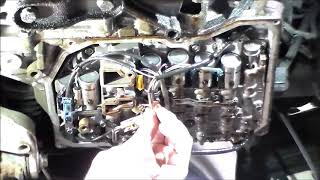
Typical fix: Replace the faulty speed sensor. On the 09G, this may require removing the valve body for access. 🎬 Watch: How to remove the 09G valve body
Est. part cost: $80-$200
Rare But Worth Checking
- Internal Mechanical Failure: This is the worst-case scenario, involving worn-out K2 clutch packs (for 2nd gear) or other damaged hard parts inside the transmission. This is usually accompanied by significant metal shavings or clutch material in the transmission fluid pan and is often the result of driving too long with a slipping condition.
- Wiring Harness Damage: Damage to the wiring between the TCM and the transmission can cause erratic signals or loss of communication. Check for corrosion on the main transmission connector or any signs of chafed or broken wires, especially where the harness may rub against the chassis or engine components.
Diagnosis Steps
- Scan the vehicle for all stored fault codes in the Engine (ECU) and Transmission (TCM) modules using a VW-compatible scanner.
- Check the transmission fluid level and condition. This MUST be done at the correct operating temperature (35-45°C for the 09G) with the vehicle level and engine running. Note the color, clarity, and smell of the fluid.
- If the fluid is low, top it off, clear the codes, and test drive to see if the code returns. If the fluid is dark, burnt, or full of debris, a fluid and filter change is the first step, but be aware it may not solve an underlying mechanical or electronic issue.
- Use a capable scan tool to monitor live data. While driving, graph the Input Speed Sensor (G182) and Output Speed Sensor (G195). Compare the 'Commanded Gear' to the 'Actual Gear' and watch the 'Torque Converter Slip RPM'.
- Replicate the fault condition. Observe the slip RPMs when the transmission attempts to shift into second gear. A high slip value confirms the P0732 condition.
- Inspect the main electrical connector at the transmission for corrosion, moisture, pushed-out pins, or physical damage.
- If fluid level, fluid condition, and sensor data appear normal, the diagnosis points toward a component failure. For 09G models, the valve body is the primary suspect. For DQ250 DSG models, the mechatronic unit is the primary suspect.
- A technician may perform pressure tests on the transmission's hydraulic circuits to confirm a loss of pressure related to the 2nd gear clutch pack (K2 clutch).
Parts You'll Likely Need
- Transmission Valve Body (09G)
(OEM #09G325039A (or latest revision))— This is the most common point of failure on the conventional 09G 6-speed automatic transmission that causes P0732 due to solenoid bore wear.
Trusted brands: Aisin (OEM), Sonnax (for rebuild kits/upgraded components), Revmax, Street Smart Transmission
OEM price range: $800-$1200
Aftermarket price range: $400-$800 (Remanufactured) - Mechatronic Unit (DQ250)
(OEM #02E927770AT / 02E325025AT (part numbers vary widely by vehicle and revision))— This is the central control unit for the DSG transmission and a common failure point leading to shifting and pressure control faults like P0732.
Trusted brands: Genuine VW/Audi, Temic (Original Manufacturer)
OEM price range: $1500-$2500
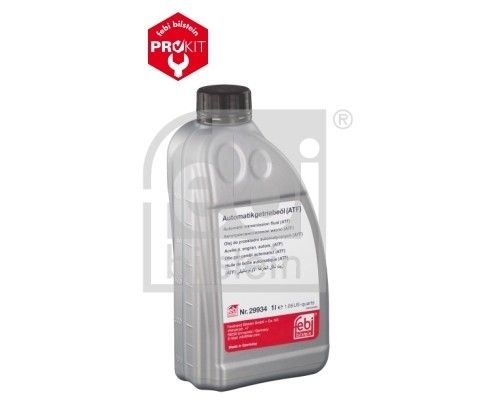
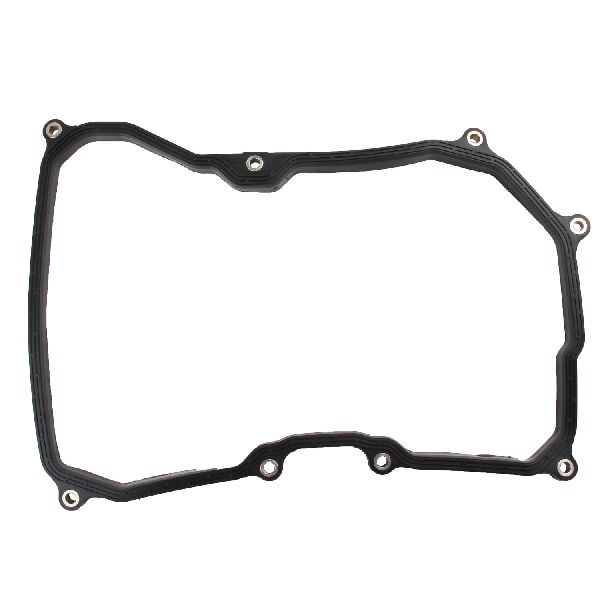
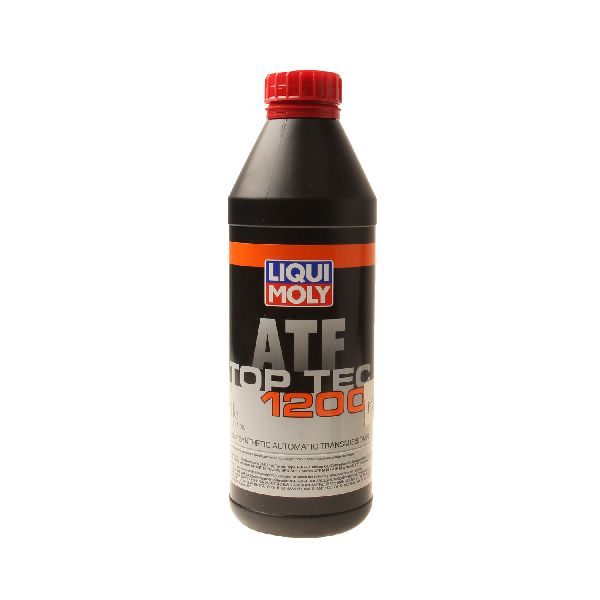
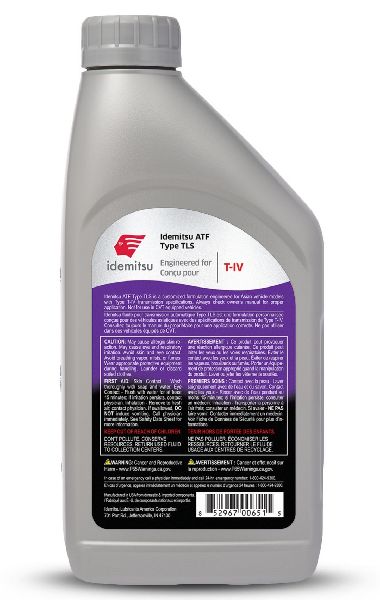
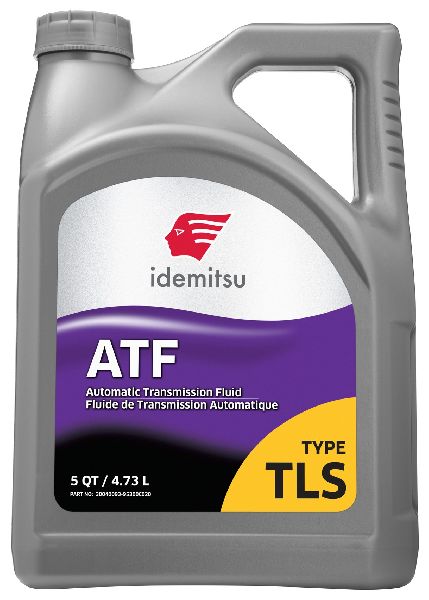
Aftermarket price range: $800-$1500 (Remanufactured/Repaired) - Transmission Fluid & Filter Kit — Required for any repair involving opening the transmission, and the first step in diagnosis.
Trusted brands: Genuine VW, Liqui Moly, Pentosin, Vaico
OEM price range: $120-$200
Aftermarket price range: $75-$150
Related Codes That Often Appear With This One
- P0731 — Incorrect Ratio in 1st Gear. These codes often appear together as they can stem from the same root cause, like a failing valve body or mechatronic unit.
- P0733 — Incorrect Ratio in 3rd Gear. Similar to P0731, this points to a more widespread hydraulic or control issue within the transmission.
- P0716 — Input/Turbine Speed Sensor 'A' Circuit Range/Performance. This sensor code directly relates to how the TCM calculates gear ratios, and a fault here can trigger P0732.
- P0722 — Output Speed Sensor No Signal. If the TCM can't see the output speed, it cannot verify the gear ratio, leading to code P0732.
Technical Service Bulletins (TSBs) & Recalls
- While no specific TSB directly for 'P0732' was prominently found, VW has issued numerous technical communications and software updates related to the 09G and DQ250 transmissions. For example, TSB 37-08-04 addresses harsh shifting on the 09G, often recommending a software update as a first step. Similarly, service campaigns have existed for the DQ250 mechatronic unit, extending warranties or offering replacements for known issues. A dealer can check the vehicle's VIN against these service actions.
Mechanic-Grade Diagnostic Values
- DQ250 Mechatronic Pressure Control Solenoid (N215, N216) Resistance — expected: 5 to 6 Ohms. Failure: A reading outside this range (open circuit or short) indicates a failed solenoid coil.
- 09G Transmission Line Pressure at Idle (in Drive) — expected: Approximately 80-90 PSI after shifting into 2nd gear.. Failure: Significantly lower or wildly fluctuating pressure can indicate a worn valve body or failing pump.
- 09G K1 Clutch Pressure during 1-2 Shift — expected: Pressure rises to 140-150 PSI during the shift, then settles to 80-90 PSI in 2nd gear.. Failure: Failure to reach peak pressure during the shift points to a hydraulic leak, likely in the valve body or clutch pack seals.
Scan Tool Commands That Help
- VCDS (VAG-COM): Basic Settings - Group 060 / 061 (DQ250) — After replacing a mechatronic unit or solenoids on a DQ250 DSG, this function is used to reset all adaptation values and perform a clutch valve and gear engagement calibration. This is critical for the new components to learn and function correctly.
- VCDS (VAG-COM): Clear Shift Adapts (09G) — After replacing a valve body or rebuilding an 09G transmission, the adaptive learn values must be cleared. The vehicle must then be driven under specific conditions (fluid at operating temp, no codes) for the TCM to relearn shift pressures and timing.
- VCDS (VAG-COM): Advanced ID - 1A (DQ250) — When replacing a mechatronic unit, this function is used to get the detailed hardware and software version information from the old module. This is necessary to ensure the replacement unit has the correct compatible software flashed for the vehicle.
Wiring & Ground Locations
- Main Transmission Ground — On the transmission housing, near the engine block. A large cable runs from the battery's negative terminal directly to this point.. A poor main ground can cause erratic behavior in all transmission electronics, including the TCM, sensors, and solenoids, leading to incorrect calculations and fault codes.
- G1 / G12 Ground Connection — In the engine compartment on the left side, below or near the battery tray.. This is a major chassis ground point for various harnesses in the engine bay, including those for the fan control module and headlights. While not directly for the transmission, poor grounding here can introduce electrical noise that affects sensor readings.
- 09G Main Harness Connector — This is the main electrical plug on the transmission case. For the 09G, it is often an 8-pin or 14-pin connector.. This is the single point of connection for all solenoids and sensors inside the transmission to the external wiring harness. Corrosion or pushed-out pins here will directly cause solenoid and sensor faults, leading to codes like P0732.
- DSG Mechatronic Connector — Connects directly to the mechatronic unit on the front of the DQ250 transmission.. This connector carries all signals for speed sensors, temperature sensors, and solenoid commands. A fault here means the TCM loses control and monitoring capability, directly causing ratio faults.
Real Owner Repair Stories
- GOLFMKV.com forum user (2008 VW R32 (DQ250 DSG)) — Classic bad mechatronic symptoms that only occurred when the transmission was hot.
❌ Tried (didn't work) Initial diagnosis pointed to complete mechatronic unit replacement.
✅ What actually fixed it A VW engineer intervened and found the root cause was not the entire unit, but a specific internal component: a teflon-coated 'float' valve that was binding when hot due to an improperly applied coating. Replacing only this small internal part resolved all symptoms without needing a full mechatronic replacement.
OEM Part Supersession History
09G325039A (and others)→Remanufactured units with Sonnax updates (e.g., Part #15741-18K for solenoid modulator valve kit, or complete valve bodies from various rebuilders).— The original valve body design had soft aluminum bores that would wear, causing hydraulic leaks. Sonnax kits use highly wear-resistant sleeves and improved valves to provide a permanent fix rather than just replacing with another failure-prone OEM unit.
Heads up: There are multiple valve body variations for the 09G based on the vehicle's engine and torque load. A plate code on the valve body must be matched to ensure the correct replacement is used to avoid catastrophic transmission failure from lack of lubrication.02E... (various for DQ250 Mechatronic)→Updated hardware and software revisions from VW, or repaired/remanufactured units from specialists.— Early mechatronic units were prone to various failures including solenoid faults, circuit board cracks, and accumulator issues. Later revisions aimed to improve reliability.
Heads up: A replacement mechatronic unit MUST be coded and adapted to the vehicle using a tool like VCDS or ODIS. It is not a plug-and-play part. The software on the replacement unit must be compatible with the vehicle's original software version.
Diagnostic Flowchart
Other Known Issues on This Vehicle
Issues unrelated to this code that are worth knowing about as an owner of this generation:
- HPFP Cam Follower Wear (2.0T FSI BPY Engine) 🔴 High — Very common. Recommended inspection every 10,000-20,000 miles. Failure can occur at any mileage and will destroy the fuel pump and camshaft if ignored. (Ref: VW extended the warranty on this component for some vehicles, but the extension period has likely expired for most.)
- Leaking Vacuum Pump (2.5L Engine) 🟠 Medium — Extremely common. The pump's seal fails, causing an oil leak often misdiagnosed as a rear main seal leak. Typically occurs after 60,000 miles.
- Camshaft Lobe Wear (1.9L TDI BRM Engine) 🔴 High — A notorious issue for this engine, often due to incorrect oil usage or extended oil change intervals. Failure typically occurs between 100,000 and 200,000 miles, causing noise and low power.
- Timing Chain/Tensioner Failure (2.0T FSI/TSI Engines) 🔴 High — Common on higher-mileage vehicles (80,000+ miles). The tensioner can fail without warning, leading to catastrophic engine damage. (Ref: Class-action lawsuits have addressed this issue on later TSI engines, but the Mk5 FSI is also affected.)
- Door Wiring Harness Failure 🟡 Low — Very common. Wires in the driver's door jamb break from repeated opening/closing, causing intermittent failure of windows, locks, and speakers. (Ref: A class-action lawsuit settlement provided an extended warranty or reimbursement for 2005-2006 models.)
- Intake Manifold Flap Motor Failure (2.0T FSI BPY Engine) 🟠 Medium — Common failure after 60,000-100,000 miles, causing a check engine light (often code P2015) and slight performance issues. The plastic components in the intake manifold linkage wear out. (Ref: An extended warranty was offered for this component on many affected vehicles.)
Used vs. New Parts: Buying Guide for This Vehicle
When a used part is the smart pick: A used valve body (09G) or mechatronic unit (DQ250) is a high-risk purchase and generally not recommended. The failure rate of these components is very high, so a used part from a junkyard is likely to have the same wear or defect as the part being replaced. The only exception might be for a complete used transmission from a very low-mileage, verified running and driving donor car as a last resort.
Donor-vehicle mileage cap: roughly under 50000 miles for the part to have meaningful remaining life.
What to inspect on the donor part:
- For a complete transmission, verify the donor vehicle was running and driving with no transmission codes.
- Ask for a video of the donor car's instrument cluster showing it starting and shifting into gear without flashing PRNDS lights.
- Inspect the fluid from the donor transmission. If it is black, burnt, or full of metal, reject the part immediately.
- Check the main electrical connector for any signs of corrosion, damage, or fluid intrusion.
OEM-only on this vehicle (don't cheap out):
- Transmission Control Module (TCM) - must be OEM or a specialist-repaired original unit due to vehicle-specific programming.
Aftermarket brands forum-validated for this vehicle:
- Sonnax (for 09G valve body rebuild kits and components).
- Rostra (for 09G replacement solenoids).
- Reputable transmission rebuilders like Vertex or JKGJ Transmission Parts for remanufactured valve bodies.
Brands owners have reported issues with on this vehicle:
- Unbranded, generic solenoid kits from online marketplaces. These often fail quickly or cause new performance issues due to poor calibration and materials.
Real Owner Stories
Aggregated from forums and TSBs cited above. Mileages and costs reflect what owners reported in those sources.
2006 Jetta 2.5L
Symptoms: Classic symptoms of harsh shifting into limp mode.
What fixed it: Valve body replacement using remanufactured parts from specialists like Revmax or Sonnax.
Source hint: JettaJunkie - '06 Jetta 2.5 P0732 limp mode'
MK5 Jetta 2.5L
Symptoms: Multiple gear ratio codes including P0732, P0734, and P0722.
What fixed it: Valve body replacement, as fluid changes were considered a 'hail-mary' for these specific 09G symptoms.
Source hint: Reddit (r/Volkswagen) - 'MK5 Jetta 2.5 with P0732, P0734, P0722... am I screwed?'
2005-2010 Jetta TDI (DSG)
Symptoms: P0732 on a DQ250 transmission; owner used VCDS diagnostics to check sensor readings and solenoid function.
What fixed it: Mechatronic unit fault repair.
Source hint: TDIClub Forums - 'P0732 on DSG, Mechatronics?'
2005-2010 Jetta (09G Automatic)
Symptoms: Limp mode and flashing PRNDS on the dashboard.
What fixed it: Valve body replacement after fluid levels were confirmed as correct.
Source hint: VWVortex - '09G Transmission problem P0732 Gear 2 incorrect ratio'
Related OBD-II Codes
Frequently Asked Questions
My 2006 Jetta 2.5 is stuck in limp mode with a flashing PRNDS. Is there a TSB for this?
I have a Jetta with the DQ250 DSG transmission. Can I just replace the speed sensors to fix P0732?
Is it true that the transmission fluid in my 2005-2010 Jetta never needs to be changed?
Can I replace just the solenoids on my 09G automatic transmission to save money?
How do I check the transmission fluid level on my Jetta to rule out a simple fix?
Helpful Videos
We Have This Part in Stock


The information in this article is provided for general reference and educational purposes only. Vehicle specifications, procedures, and part compatibility can vary by production date, trim level, and region. Always consult your vehicle's factory service manual and verify part numbers before purchasing or performing repairs. Safety-critical components such as airbags, seat belts, and braking systems should be installed by a qualified professional.
- Volkswagen Jetta:
- 🧭 Diagnostic Flowchart
- 🎬 Helpful Videos
- 🛍️ Shop This Part
- What's Unique About the 2005-2010 Volkswagen Jetta
- Symptoms You May Notice
- Most Likely Causes
- Rare But Worth Checking
- Diagnosis Steps
- Parts You'll Likely Need
- Related Codes That Often Appear With This One
- Technical Service Bulletins (TSBs) & Recalls
- Mechanic-Grade Diagnostic Values
- Scan Tool Commands That Help
- Wiring & Ground Locations
- Real Owner Repair Stories
- OEM Part Supersession History
- Other Known Issues on This Vehicle
- Used vs. New Parts: Buying Guide for This Vehicle
- Real Owner Stories
- 2006 Jetta 2.5L
- MK5 Jetta 2.5L
- 2005-2010 Jetta TDI (DSG)
- 2005-2010 Jetta (09G Automatic)
- Related OBD-II Codes
- Frequently Asked Questions
- 🎟️ Get 5% Off