

P0733 on 2002-2005 Ford Explorer 4.6L V8: Gear 3 Incorrect Ratio Causes and Fixes
On a 2002-2005 Explorer with the 4.6L V8, P0733 almost always points to a serious internal transmission problem, not a simple sensor issue. The most common causes are worn servo bores in the transmission case or a broken intermediate band, which are well-documented failures in the 5R55W/S transmission. This is not a DIY-friendly fix and typically requires a transmission rebuild or replacement costing between $2,000 and $4,500.
- P0733 on a 2002-2005 Explorer is a severe code indicating a 3rd gear slip, almost always caused by a major internal mechanical failure.
- The most likely culprit is a design flaw in the 5R55W/S transmission: worn servo bores in the aluminum case, which leads to pressure loss and broken bands.
- Do not waste money on simple fixes like changing sensors or flushing the fluid; these will not solve the underlying mechanical problem.
- Diagnosis often involves dropping the transmission pan to look for metal debris from broken parts.
- The correct fix is a transmission rebuild that includes addressing the servo bores (by sleeving them) and replacing the bands, seals, and clutches.
What's Unique About the 2002-2005 Ford Explorer
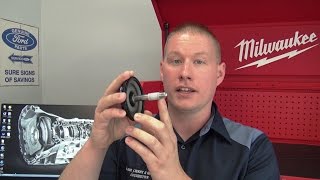
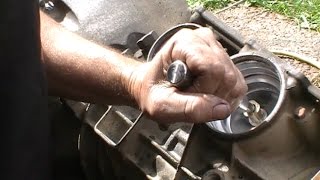
The 2002-2005 Explorer with the 4.6L V8 uses the Ford 5R55W or 5R55S automatic transmission, which is notoriously prone to a specific design flaw. The aluminum bores in the transmission case that house the steel servo pins wear out over time. This wear allows hydraulic pressure to leak, preventing the transmission bands from applying firmly, which causes slipping in gears like 3rd and 5th. This servo bore issue is the most common underlying cause for P0733 on this specific vehicle, far more so than typical solenoid or sensor failures seen on other cars. A video from a transmission specialist shows a torn intermediate servo and explains that a worn case is the root cause.
Symptoms You May Notice
- Engine RPMs rev high when shifting into 3rd gear (slipping).
- Flashing Transmission Control Indicator Lamp (TCIL) or Overdrive (O/D) light.
- Harsh or delayed shifting, particularly between 2nd and 3rd gear.
- Vehicle may enter "limp mode," getting stuck in a single gear.
- Violent bucking or jerking at highway speeds.
- Complete loss of 3rd gear.
- Delayed or no reverse engagement (another symptom of servo bore wear).
- Replacing the input or output speed sensors. These sensors are correctly detecting the slip; they are not the cause of the slip itself.
- Replacing only the solenoid block. If the servo bores are worn, a new solenoid pack cannot overcome the hydraulic pressure loss, and the code will return.
- Performing a transmission fluid flush. A flush will not fix a broken band or a worn-out case. It can sometimes dislodge debris and worsen the problem.
Most Likely Causes
- Worn Intermediate/Overdrive Servo Bores 🔴 High Probability The 5R55W/S transmission case is aluminum, while the servo pins that apply the bands are hardened steel. Over time, the steel pin wears an oval-shaped hole in the softer aluminum bore, causing a hydraulic pressure leak that prevents the band from applying correctly.
How to confirm: A pressure test at the servo ports can reveal a leak. However, the definitive diagnosis is often visual inspection of the bores after removing the servos. A transmission technician on YouTube notes that the case often wears unevenly. This can sometimes be done without removing the transmission, but it is a very tight space.
Typical fix: The traditional fix is to remove the transmission and have a machine shop ream the bores and install brass or bronze sleeves. There are also popular aftermarket kits (e.g., from Sonnax or AJ1E Superior Solutions) that allow for the installation of modified servos with O-rings to seal the worn bore. The Sonnax Servo Bore Kit (Part No. 76948-01K) is a common solution. This repair can sometimes be done without removing the transmission.
Est. part cost: $150-$300 for a servo bore repair kit. - Broken Intermediate Band 🔴 High Probability The intermediate band is responsible for engaging 3rd gear. It can break due to age, stress, or as a direct result of the servo bore issue causing improper application pressure. Ford issued a Technical Service Bulletin (TSB 04-24-17) for this specific failure on 2002 models, noting it may be accompanied by code P0745.
How to confirm: Dropping the transmission pan and finding broken metal pieces is a clear sign. A band adjustment screw test can also be performed; if the screw can be turned all the way down by hand without resistance, the band is likely broken. TSB 03-25-4 details a procedure where if 10 lb-ft of torque cannot be achieved on the adjustment screw, the band has failed.
Typical fix: Requires transmission removal and disassembly to replace the intermediate band. TSB 04-24-17 recommends replacing both the intermediate and overdrive bands if a broken band is found. It is highly recommended to also address the servo bores at the same time.
Est. part cost: $50-$100 for the bands themselves, but labor is extensive. - Failed Solenoid Block/Pack 🟡 Medium Probability → Shop Transmission Valve Body The solenoid block controls the flow of fluid to actuate shifts. Over time, solenoids can fail electrically or stick mechanically. While a possible cause, it's often secondary to or misdiagnosed for the servo bore issue. It's crucial to use an updated OEM part as earlier designs had high failure rates.
How to confirm: A technician can use a scan tool to command the solenoids and monitor their response. Resistance can also be checked with a multimeter across the solenoid pins at the PCM connector or the transmission connector.
Typical fix: Replace the entire solenoid block, which is located inside the transmission oil pan and attached to the valve body. Using a Motorcraft OEM part is strongly recommended. The updated part number is 9L2Z-7G391-A, which supersedes older versions.
Est. part cost: $250-$450 - Low or Burnt Transmission Fluid ⚪ Low Probability → Shop Transmission Assembly While low fluid can cause slipping on any automatic transmission, for this specific code on this platform, it is rarely the root cause and more often a symptom of a larger leak or a sign of severe internal wear (burnt fluid).
How to confirm: Check the transmission fluid dipstick for level and condition. The fluid should be reddish and clear, not dark brown, black, or smell burnt. The correct fluid is MERCON V.
Typical fix: Top off with MERCON V fluid or perform a fluid and filter change. However, if the fluid is very burnt, a simple change will not fix the underlying mechanical damage.
Est. part cost: $50-$150
Rare But Worth Checking
- Cracked Valve Body Separator Plate Gaskets: → Shop Transmission Valve Body The gaskets on the plate between the valve body and transmission case can tear, causing internal pressure leaks. A transmission repair video shows a torn valve body gasket as a common problem that can cause a P0733 code. Updated plates use bonded gaskets for better durability. This is often found during a rebuild.
Diagnosis Steps
- Check the transmission fluid level and condition. Look for fluid that is dark, burnt, or contains metal particles. Ensure MERCON V fluid is used.
- Scan the PCM for all stored trouble codes. Note any other gear ratio or solenoid codes that are present, as codes like P0735 or P0745 are highly relevant.
- If possible, drop the transmission oil pan. Inspect the fluid in the pan and the magnets for excessive metal shavings or broken parts. Finding a broken servo clip or band anchor is a definitive diagnosis.
- If no obvious parts are broken, the next step is to suspect a hydraulic leak. Test line pressure at the transmission test ports. Compare readings at idle and WOT against specifications.
- Inspect the servo bores for wear. This may require removing the servos, which can be a difficult job but is sometimes possible with the transmission in the vehicle.
- Perform a band adjustment test per TSB 03-25-4. If the intermediate band adjustment screw cannot be tightened to 10 lb-ft, the band has failed.
- If servo bores are intact and solenoids test correctly, suspect internal damage such as worn clutch packs or a faulty valve body, requiring transmission removal.
Parts You'll Likely Need
- Transmission Rebuild Kit — Because P0733 usually indicates significant internal wear, a complete rebuild with new bands, clutches, seals, and gaskets is often the most reliable long-term solution.
Trusted brands: TransTec, Precision International
Aftermarket price range: $200-$400 - Servo Bore Sleeve Kit — To permanently fix the common servo bore wear issue, which is a primary cause of P0733. This prevents future hydraulic leaks.
Trusted brands: Sonnax (Part No. 76948-01K), AJ1E Superior Solutions
Aftermarket price range: $150-$300 - Solenoid Block
(OEM #9L2Z-7G391-A)— If diagnosis confirms an electrical fault or sticking solenoid, the entire block should be replaced with an updated OEM unit. It is often replaced preventatively during a rebuild.
Trusted brands: Motorcraft
OEM price range: $350-$450
Aftermarket price range: $150-$300
Related Codes That Often Appear With This One
- P0732 — Incorrect Gear 2 Ratio. The underlying causes, like worn servo bores or solenoid issues, often affect multiple gears. A transmission expert notes that P0775 (PC Solenoid B) is often accompanied by P0732 and P0735.
- P0735 — Incorrect Gear 5 Ratio. The overdrive servo, which is also prone to bore wear, is used for 5th gear. It's very common to see 3rd and 5th gear issues together.
- P0745 — Pressure Control Solenoid 'A' Malfunction. This code often appears with P0733, as noted in Ford's TSB 04-24-17, when a broken band is the cause. A transmission expert explains the computer flags this code when it can't maintain pressure in the circuit, which happens with a broken band or worn case.
- P0775 — Pressure Control Solenoid 'B' Malfunction. This is another common code associated with the servo bore wear issue, as the system struggles to regulate pressure.
Technical Service Bulletins (TSBs) & Recalls
- TSB 04-24-17: Addresses 'No 3rd gear or slipping 2-3 shift' with DTCs P0733 and P0745 on 2002 Explorer/Mountaineer models built before 3/4/2002. It points to a broken intermediate band as the likely cause and advises replacing both the intermediate and overdrive bands.
Platform-Specific Known Issues
- TSB 04-24-17 was issued for 2002 Explorer/Mountaineer models for a no-3rd-gear condition caused by a broken intermediate band, often accompanied by codes P0733 and P0745.
- TSB 05-15-3 was issued for some 2004-2005 models (though primarily Ranger/Sport Trac) for a no-3rd-gear condition with P0733, pointing to a faulty EPC solenoid.
- The 5R55W/S transmission case is widely known in the transmission repair community for premature servo bore wear, leading to a host of shifting complaints including P0733.
Mechanic-Grade Diagnostic Values
- Shift Solenoids (A, B, C, D) Resistance — expected: 16 - 45 Ohms. Failure: Reading outside this range indicates a failed solenoid coil.
- Pressure Control (PC) Solenoids (A, B, C) Resistance — expected: 3.1 - 7.5 Ohms. Failure: Reading outside this range indicates a failed solenoid coil.
- Torque Converter Clutch (TCC) Solenoid Resistance — expected: 9 - 16 Ohms. Failure: Reading outside this range indicates a failed solenoid coil.
- Line Pressure (4.6L Engine) in Drive at Idle — expected: 80 - 110 PSI. Failure: Pressure below this range indicates a hydraulic leak, worn pump, or pressure control system fault.
- Line Pressure (4.6L Engine) in Drive at Stall (WOT) — expected: 228 - 263 PSI. Failure: Low pressure under load confirms a major hydraulic issue, preventing proper band/clutch application.
- Intermediate/Turbine/Output Speed Sensor Resistance — expected: 325 - 485 Ohms @ 70°F. Failure: An open or shorted reading indicates a failed sensor. However, sensor failure is not a common cause of P0733.
Scan Tool Commands That Help
- Ford IDS (or equivalent professional scanner): Solenoid Output State Control (Trans-Bench Mode) — This bidirectional command allows a technician to manually turn each shift and pressure control solenoid ON and OFF to verify electrical circuit integrity and listen for an audible click from the solenoid, helping to isolate a failed solenoid from a wiring issue.
- Ford IDS (or equivalent professional scanner): EPC Pressure Monitoring PID — Per TSB 05-15-3, this is used to diagnose an intermittent, erratic EPC solenoid. The technician drives the vehicle while monitoring the EPC pressure PID during 3rd gear shifts. If the pressure becomes erratic when the slip occurs, the EPC solenoid is the likely culprit.
Wiring & Ground Locations
- C175B — The middle of three large connectors for the Powertrain Control Module (PCM), located on the passenger side of the firewall in the engine compartment.. This is the main PCM connector for 2002-2003 models where all transmission solenoid and sensor resistance values can be tested without accessing the transmission itself, making it a critical diagnostic point.
- Transmission Bulkhead Connector (C167) — On the passenger side of the transmission case, where the main vehicle harness connects to the internal transmission harness.. This connector is exposed to road debris and moisture and is a common point for corrosion, which can cause erratic solenoid operation or sensor readings. Inspecting these pins for green or white corrosion is a key diagnostic step.
- G101 / G104 — These are primary engine compartment grounds. G101 is typically located on the passenger side inner fender, while G104 is near the battery on the driver's side fender.. A poor ground connection to the PCM can cause a host of erratic electronic issues, including incorrect transmission control module behavior. While not a primary cause, verifying clean, tight grounds is a fundamental step in any electrical diagnosis.
Real Owner Repair Stories
- Tales From the Bench on YouTube (Ford Explorer with 5R55S transmission) — P0733 (Gear 3 Incorrect Ratio)
❌ Tried (didn't work) The video is a teardown analysis, not a story of failed attempts. The technician immediately identified it as a major internal failure.
✅ What actually fixed it A complete transmission overhaul was required. The root cause was a worn servo bore in the case, which led to a sticking servo, a broken servo tip, and a broken intermediate band. The forward clutch frictions were also burnt as a result. The fix involved reaming the case and installing sleeves to repair the servo bores. - Gary Ferraro on YouTube (Lincoln LS with 5R55S transmission (mechanically identical to Explorer for this issue)) — No 2nd or 5th gear, which is caused by the same servo bore wear that causes P0733.
❌ Tried (didn't work) The owner drove the vehicle to the specialist's shop for a definitive repair, bypassing smaller, likely ineffective fixes.
✅ What actually fixed it Teardown confirmed a severely worn case bore for the overdrive/intermediate servo. The final repair was a full transmission rebuild, which included installing brass sleeves in the case to create a new, durable surface for the servo pin. - Forum user on TransmissionProblems.com (2005 Ford Explorer with 5R55 transmission) — RPMs revved to 4000, check transmission light, flashing O/D light, violent bucking at 45 mph. Code P0733 was stored.
❌ Tried (didn't work) Continued driving. While symptoms sometimes subsided, the underlying problem remained.
✅ What actually fixed it The user was advised by a transmission shop and forum experts that the code indicated the transmission was failing and would require a rebuild or replacement. The story highlights that intermittent symptoms do not mean the problem has gone away.
"I Checked Everything" — The Actual Cause
- A static line pressure test at idle might show acceptable pressure, leading a technician to look elsewhere. However, the actual cause could be an erratic Electronic Pressure Control (EPC) solenoid that only malfunctions under specific load and temperature conditions. TSB 05-15-3 outlines a procedure to catch this by monitoring EPC pressure with a scan tool during a test drive, specifically looking for erratic pressure readings during the 2-3 shift, which would not be apparent during a static test in the bay.
OEM Part Supersession History
Various (e.g., 1L2Z-7Z490-AB)→Bonded Separator Plate (e.g., A16320F)— The original design used two separate paper/composition gaskets for the valve body separator plate. These gaskets were prone to tearing, causing cross-leaks between hydraulic circuits.
Heads up: The updated design integrates the gaskets by bonding them directly to a new separator plate. This is a direct, improved replacement for the earlier two-gasket setup on 2002-2003 models and is highly recommended during any rebuild.Multiple older revisions→9L2Z-7G391-A (Motorcraft)— Early versions of the 5R55W/S solenoid block were known for high failure rates, particularly with the EPC and TCC solenoids sticking or failing electrically.
Heads up: While aftermarket solenoid blocks are available, they are a frequent source of continued problems due to incorrect resistance or flow characteristics. Using the latest revision Motorcraft OEM part is strongly advised for reliability.
Model Year Variations Within This Range
- 2002 vs. 2003-2005: The 2002 Explorer 4.6L V8 used the 5R55W ('W' for Wide ratio) transmission, identifiable by a 'R' code on the door jamb sticker. Starting in 2003, Ford transitioned to the 5R55S ('S' for Synchronous) transmission, identifiable by a 'V' code. While they share the same case and many failure points (like servo bores), they have different internal gear sets, coast clutch components, and electronic strategies. They are not directly interchangeable.
- 2002 (built before 3/4/2002): Ford TSB 04-24-17 specifically targets early-build 2002 models for a broken intermediate band failure that causes P0733 and P0745. This suggests a potential manufacturing issue with the band in the initial production run.
- 2004-2005 (built before 9/23/2004): Ford TSB 05-15-3 addresses a no-3rd-gear condition with P0733 caused by an improper pressure control (EPC) solenoid. This TSB is specific to later models in the range, indicating a different common failure point than the broken bands on early 2002 models.
Diagnostic Flowchart
Other Known Issues on This Vehicle
Issues unrelated to this code that are worth knowing about as an owner of this generation:
- Cracked Plastic Intake Manifold 🔴 High — Very common. The plastic cracks near the front coolant crossover passage, causing a significant coolant leak and potential for engine overheating.
- Cracked Rear Liftgate Panel 🟡 Low — Extremely common cosmetic issue. The plastic trim panel below the rear window cracks, usually near the Ford emblem, due to thermal stress. A class-action lawsuit was filed regarding this issue. (Ref: A class-action lawsuit was filed, but no recall was issued.)
- Timing Chain Cassette Failure (4.0L SOHC V6) 🔴 High — This applies to the V6 engine, but is a notorious platform issue. Plastic tensioners and guides wear, causing a 'death rattle' at startup. If not addressed, the chain can break or jump time, causing catastrophic engine damage.
- Wheel Bearing Failure 🟠 Medium — Frequently reported by owners. Front and rear wheel bearings can wear out prematurely, causing a humming or grinding noise that changes with speed and when turning.
Used vs. New Parts: Buying Guide for This Vehicle
When a used part is the smart pick: For this specific code (P0733), purchasing a complete used transmission is an extremely high-risk strategy and generally not recommended. The most common cause is wear on the transmission case itself, a problem likely to be present in any used unit with moderate to high mileage. A used valve body or external sensors might be considered if they have been definitively diagnosed as the sole point of failure, but this is rare.
Donor-vehicle mileage cap: roughly under 50000 miles for the part to have meaningful remaining life.
What to inspect on the donor part:
- Verify the transmission code on the donor vehicle's door jamb sticker ('V' or 'R') matches the recipient vehicle.
- Ask for the VIN to get a vehicle history report; avoid donors with previous transmission repairs or towing history.
- If possible, drop the pan before purchase to inspect for metal debris or a burnt fluid smell. Bright red, clear fluid is a good sign.
- Prioritize donors from rear-end or side-impact collisions where the drivetrain was unaffected.
OEM-only on this vehicle (don't cheap out):
- Solenoid Block/Pack: Aftermarket solenoids for the 5R55S/W are notoriously unreliable. Stick with the latest revision Motorcraft part (9L2Z-7G391-A) to avoid persistent electrical and shifting issues.
Aftermarket brands forum-validated for this vehicle:
- Sonnax: Considered the industry standard for servo bore repair kits (sleeves and oversized pins) and other valve body upgrades.
- TransGo: Offers well-regarded shift kits that can improve shift firmness and correct some hydraulic circuit issues during a rebuild.
Brands owners have reported issues with on this vehicle:
- Unbranded or 'white box' solenoid packs sold on auction sites. Forum and professional consensus is that these parts have a very high failure rate and often do not meet the required electrical resistance or flow specifications, causing more problems than they solve.
Real Owner Stories
Aggregated from forums and TSBs cited above. Mileages and costs reflect what owners reported in those sources.
2002 Ford Explorer 4.6L V8
Symptoms: Owner diagnosed P0733 and P0735 codes; found the transmission was slipping and eventually discovered a broken band.
What fixed it: Replacement of the broken overdrive band and addressing the servo bore issue.
Source hint: https://www.explorerforum.com/forums/threads/p0733-and-p0735-codes-on-02-explorer.187095/
2005 Ford Explorer 4.6L V8
Symptoms: Vehicle triggered a P0733 code; owner was advised that the transmission was failing and a simple fluid flush would not resolve the internal damage.
What fixed it: The source indicates the transmission is 'on borrowed time,' implying a rebuild or replacement is necessary rather than a maintenance-based fix.
Source hint: https://www.cartalk.com/discussion/2296168/p0733-code-in-05-ford-explorer
2002-2005 Ford Explorer / Mercury Mountaineer
Symptoms: Multiple owners reported issues with the 5R55 transmission including hydraulic pressure leaks caused by the steel servo pin wearing an oval hole into the soft aluminum case bore.
What fixed it: Installing a Sonnax Servo Bore Kit (Part No. 76948-01K) or having a machine shop ream the bores and install brass/bronze sleeves.
Cost: $150-$300
Source hint: https://www.ford-trucks.com/forums/1110594-welcome-to-the-5r55-worn-servo-bore-club.html
Related OBD-II Codes
Frequently Asked Questions
Does TSB 04-24-17 apply to my 2002 Ford Explorer with the 4.6L V8?
Can I fix the P0733 servo bore issue without removing the transmission from my Explorer?
My 2005 Explorer has a P0733 code; will a transmission fluid flush fix it?
What is the updated part number for the solenoid block on the 5R55W/S transmission?
How can I tell if my intermediate band is actually broken without taking the transmission apart?
Is the P0733 code related to the flashing O/D light on my dashboard?
Helpful Videos

We Have This Part in Stock


The information in this article is provided for general reference and educational purposes only. Vehicle specifications, procedures, and part compatibility can vary by production date, trim level, and region. Always consult your vehicle's factory service manual and verify part numbers before purchasing or performing repairs. Safety-critical components such as airbags, seat belts, and braking systems should be installed by a qualified professional.
- Ford Explorer:
- 🧭 Diagnostic Flowchart
- 🎬 Helpful Videos
- 🛍️ Shop This Part
- What's Unique About the 2002-2005 Ford Explorer
- Symptoms You May Notice
- Most Likely Causes
- Rare But Worth Checking
- Diagnosis Steps
- Parts You'll Likely Need
- Related Codes That Often Appear With This One
- Technical Service Bulletins (TSBs) & Recalls
- Platform-Specific Known Issues
- Mechanic-Grade Diagnostic Values
- Scan Tool Commands That Help
- Wiring & Ground Locations
- Real Owner Repair Stories
- "I Checked Everything" — The Actual Cause
- OEM Part Supersession History
- Model Year Variations Within This Range
- Other Known Issues on This Vehicle
- Used vs. New Parts: Buying Guide for This Vehicle
- Real Owner Stories
- 2002 Ford Explorer 4.6L V8
- 2005 Ford Explorer 4.6L V8
- 2002-2005 Ford Explorer / Mercury Mountaineer
- Related OBD-II Codes
- Frequently Asked Questions
- 🎟️ Get 5% Off