

P0733 on 2008-2019 Ford Taurus 3.5L: Gear 3 Incorrect Ratio Causes and Fixes
On a 2008-2019 Ford Taurus, code P0733 means the transmission is slipping in third gear. The most common starting point is low or burnt transmission fluid. If a fluid and filter service doesn't fix it, the problem is likely a failing shift solenoid or internal clutch damage, requiring professional diagnosis and repair.
- P0733 on your Taurus means the transmission is slipping in 3rd gear, which is a serious issue that should not be ignored.
- Always start diagnosis by checking the transmission fluid level and condition. A simple fluid and filter change may solve the problem if caught early.
- If fluid service does not fix the issue, the problem is likely a failed shift solenoid or internal mechanical damage.
- This is not a DIY-friendly repair beyond a fluid change. Internal transmission work requires professional expertise and tools.
- Do not continue to drive the vehicle extensively, as this can cause catastrophic transmission failure and significantly increase repair costs.
What's Unique About the 2008-2019 Ford Taurus
The 2008-2019 Ford Taurus with the 3.5L V6 uses the 6F50 or 6F55 six-speed automatic transmission, a design shared with GM (as the 6T70/75). Unlike some transmissions with a single, notorious failure point for this code, the 6F50/6F55 in the Taurus can set P0733 for several reasons. While there isn't one overarching TSB for P0733, SSM 50861 does point to a specific internal failure of the 3-5-R clutch assembly in some 2015-2016 models that causes loss of 3rd gear. More broadly, the code is a result of general transmission health, starting with fluid condition and potentially escalating to common wear-and-tear items like solenoids or internal clutch packs. The transmission filter is internal and not serviceable without removing and disassembling the transmission.
Generation note: This range covers the fifth generation (2008-2009) and sixth generation (2010-2019) of the Ford Taurus. Both generations used the 3.5L Cyclone V6 and the 6F50/6F55 transmission family. The common causes and diagnostic procedures for P0733 are consistent across both generations due to the similarity of the powertrain. Manufacturer service bulletin TSB 26-2046 notes that P0733 is often stored in the PCM or TCM alongside various shift solenoid performance codes.
Symptoms You May Notice
- Check Engine Light is on
- Transmission slipping when shifting into or driving in 3rd gear
- Engine RPMs flare up without an increase in vehicle speed
- Harsh, delayed, or erratic shifting
- Vehicle may enter 'limp mode,' getting stuck in a single gear (often 2nd or 3rd)
- Reduced fuel economy
- Inability to shift past 3rd gear
- Replacing the input or output speed sensors. For this code, the sensors are usually doing their job correctly by detecting the slip. The problem is almost always mechanical or hydraulic, not the sensor itself.
- Assuming the transmission is immediately condemned. While P0733 is serious, it can sometimes be resolved with a simple fluid and filter service if the problem is caught early.
Most Likely Causes
- Low or Dirty Transmission Fluid 🔴 High Probability → Shop Transmission Assembly The 6F50 transmission can be sensitive to fluid level and quality. The internal filter is not serviceable during a simple fluid change, so degraded fluid and suspended debris can clog passages and solenoids over time.
How to confirm: Check the transmission fluid level and condition using the dipstick (if equipped) or check plug, with the engine running and at operating temperature. The fluid should be at the correct level, red in color, and not smell burnt or contain metallic particles. Note that some later models hide the dipstick and it can be difficult to access.
Typical fix: Perform a transmission fluid drain-and-fill. 🎬 Watch: Step-by-step 6F50 transmission fluid drain and fill A full flush is not always recommended on high-mileage units where it has not been done regularly. Use only the specified Motorcraft MERCON LV fluid.
Est. part cost: $80-$170 for fluid - Faulty Shift Solenoid / Solenoid Body 🟡 Medium Probability → Shop Transmission Valve Body Solenoids are electro-mechanical valves that control fluid flow to engage gears. Over time, they can fail electrically or become clogged with debris from aging fluid, leading to pressure loss and shift problems.
How to confirm: A diagnostic scan tool can often detect specific solenoid circuit codes. A technician can also perform resistance checks on the solenoid or command it with a scan tool to verify operation. This requires removing the transmission side cover.
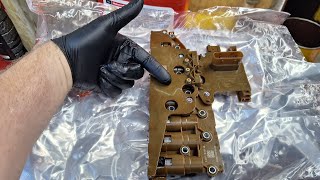
Typical fix: Replace the entire solenoid body assembly 🎬 See how to replace the 6F50 solenoid body (which contains all shift solenoids). The new part often requires programming by a Ford dealer or a shop with specialized tools to function correctly.
Est. part cost: $200-$450 - Internal Transmission Mechanical Failure ⚪ Low Probability → Shop Transmission Assembly High mileage or prolonged driving with low/burnt fluid can lead to wear and tear on internal components. A known failure in some 2015-2016 models involves the direct clutch (3-5-R) assembly, which can cause a loss of 3rd gear. NHTSA ODI #11709703 describes a scenario where a whining pump was followed by a loss of acceleration and a P0733 code, requiring a torque converter replacement and overhaul.
How to confirm: This is diagnosed after all other possibilities (fluid, solenoids, wiring) have been ruled out. Finding significant metal debris in the transmission pan is a strong indicator of internal damage. A transmission pressure test may also point to an internal hydraulic leak in the 3rd gear clutch circuit.
Typical fix: This is the most expensive repair, requiring a partial or complete transmission rebuild to replace the worn 3rd gear clutch pack, seals, or other damaged hard parts like the direct clutch cylinder.
Est. part cost: $500-$2000+ - Failed Valve Body ⚪ Low Probability → Shop Transmission Valve Body The valve body is the hydraulic brain of the transmission. Debris can cause valves to stick, or bores can wear out, leading to pressure loss. Aftermarket kits exist to repair worn valve bores.
How to confirm: Diagnosis is difficult and often done by exclusion. A technician may inspect the valve body for scoring or damage during a solenoid replacement. A Sonnax Zip Kit (6F50-ZIP) is available to address wear in multiple valve body circuits, a common source of issues.
Typical fix: Replace or rebuild the transmission valve body. Sometimes, installing a valve body repair kit can solve the issue without replacing the entire unit.
Est. part cost: $400-$900
Rare But Worth Checking
- Faulty Powertrain Control Module (PCM) or Transmission Control Module (TCM): → Shop Transmission Assembly This is rare. The module should only be considered after all mechanical, hydraulic, and wiring issues have been definitively ruled out by a professional. NHTSA ODI #11151751 notes that the code is set when the PCM sees a greater difference between the rotational speed of the input RPM sensor and the output RPM sensor than expected.
- Damaged Wiring or Connectors: A damaged wire or loose connector leading to a speed sensor or the main transmission harness can cause intermittent signals, but this will often be accompanied by other, more specific electrical codes.
- Corrupted Adaptive Learning Data: In some cases, especially where no DTC is set but slipping occurs, the transmission's learned shift parameters can become corrupted. An ALLDATA case study on a 2011 Taurus reported fixing a 3-4 shift flare by simply performing a 'Transmission Adaptive Tables Reset' with a scan tool.
Diagnosis Steps
- Scan the PCM/TCM for all stored trouble codes and review freeze-frame data to see the conditions when the P0733 code was set.
- Check the transmission fluid level and condition. The fluid should be at the correct mark, bright red, and free of burnt smells or metallic debris. Use only Motorcraft MERCON LV.
- If the fluid is low, top it off, clear the codes, and test drive. If the fluid is dark, burnt, or overdue for service, perform a fluid drain and fill (not a pressurized flush).
- If the problem persists, use an advanced scan tool to monitor the Turbine Shaft Speed (TSS) and Output Shaft Speed (OSS) PIDs in real-time to visually confirm the slip in 3rd gear.
- Monitor commanded vs. actual gear state and line pressure with the scan tool.
- Inspect the transmission wiring harness and connectors for any visible damage, corrosion, or loose connections.
- If a specific solenoid is suspected, remove the transmission side cover to access and test the solenoid body assembly. Check resistance of individual solenoids if possible, though replacement as a unit is standard.
- If solenoids and wiring are confirmed to be good, the issue is likely internal. At this point, a transmission pressure test can help confirm an internal hydraulic leak. The next step is transmission removal for inspection of the valve body and clutch packs, particularly the 3-5-R clutch assembly.
Parts You'll Likely Need
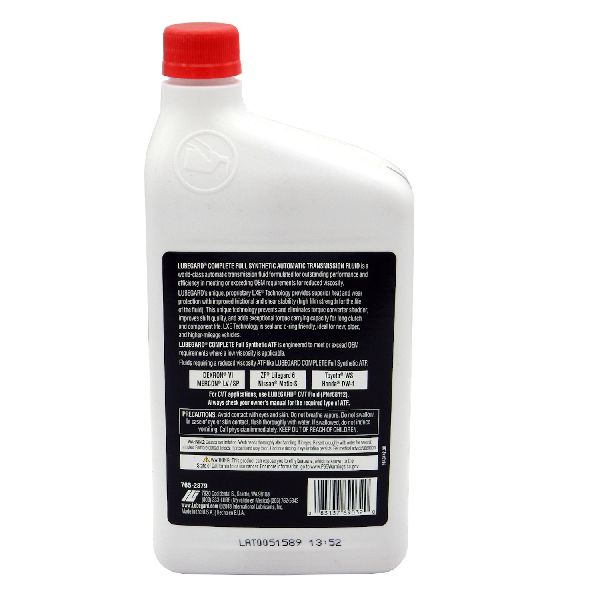
- Transmission Fluid
(OEM #XT-10-QLVC (Motorcraft MERCON LV))— The most common cause is old, degraded, or low fluid. This is the first and most important service step. This transmission requires MERCON LV.
Trusted brands: Motorcraft
OEM price range: $12-$18 per quart - Transmission Solenoid Body Assembly
(OEM #AA5Z-7Z369-B (verify by VIN))— A failed solenoid is a common cause for shifting issues and gear ratio codes after fluid has been ruled out. It is replaced as a complete assembly and requires programming.
Trusted brands: Motorcraft, Dorman
OEM price range: $300-$450
Aftermarket price range: $150-$300
Related Codes That Often Appear With This One
- P0732 — Incorrect Gear Ratio in 2nd Gear. Seeing multiple gear ratio codes together strongly suggests a widespread issue like low fluid, a failing torque converter, or a major hydraulic problem affecting multiple clutch packs.
- P0734 — Incorrect Gear Ratio in 4th Gear. Similar to P0732, this points to a systemic issue rather than a problem isolated to a single gear's clutch circuit.
- P0751 — Shift Solenoid 'A' Performance/Stuck Off. TSB 10-9-9 links this code to an internal hydraulic leak that could also cause incorrect ratio codes.
Technical Service Bulletins (TSBs) & Recalls
- SSM 50861: Specifically mentions some 2015-2016 vehicles with the 6F50/6F55 transmission may exhibit no 3rd, 5th, or reverse gear. This is caused by a direct clutch cylinder/tone wheel issue forcing a snap ring out of position. While it lists other DTCs, the mechanical failure described is a direct cause for a P0733 condition.
- TSB 10-9-9: Addresses DTC P0751 (Shift Solenoid 'A' Performance) on 2010 models, which can be caused by a broken orifice restrictor cup plug in the forward clutch circuit. This type of internal hydraulic leak can lead to slippage and incorrect ratio codes like P0733.
- TSB 11-12-10: Details a fix for sluggish acceleration and harsh bumps on take-off for transmissions built before 4/15/2011 by modifying the valve body separator plate and reprogramming the PCM. While not directly for P0733, it shows a history of hydraulic and calibration issues in the 6F50.
- TSB 13-3-18: Pertains to sluggish acceleration from a rolling stop on 2011-2012 models, fixed by a PCM reprogram. This highlights that shift strategy and software play a role in the 6F50's performance and can sometimes be addressed without mechanical repair.
- TSB 26-2046: A manufacturer service bulletin noting that P0733 may be stored in the PCM or TCM alongside various other gear ratio and shift solenoid performance codes.
Mechanic-Grade Diagnostic Values
- Shift Solenoid (A, B, C, D) Resistance — expected: 16-45 Ohms. Failure: A reading outside this range indicates a faulty solenoid coil.
- Pressure Control (PC) Solenoid (A, B, C) Resistance — expected: 3.3-7.5 Ohms. Failure: A reading outside this range points to a faulty pressure control solenoid.
- Turbine Speed Sensor (TSS) and Output Speed Sensor (OSS) Resistance — expected: 325-485 Ohms at 70°F. Failure: Resistance outside this range suggests a failed speed sensor.
- Torque Converter Clutch (TCC) Solenoid Resistance — expected: 9-16 Ohms. Failure: An out-of-spec reading indicates a problem with the TCC solenoid.
Scan Tool Commands That Help
- Ford IDS / FORScan (with extended license): Transmission Characterization / Solenoid Body Strategy Programming — This is mandatory after replacing the solenoid body or the entire transmission. The PCM must be programmed with the 13-digit Solenoid Strategy Number and 7-digit Solenoid Body ID from the new part to ensure correct shift pressures and timing. Failure to program will result in poor shift quality and potential damage.
- Ford IDS / FORScan (with extended license): Reset All Transmission Adaptive Tables — After performing a fluid service, replacing components, or if shift quality is poor without other codes. This function erases the learned values the TCM uses to compensate for wear, forcing it to relearn the shift strategy from a baseline. This can resolve shifting issues that have developed over time.
Wiring & Ground Locations
- C175T — The middle connector on the PCM, which is located on the driver's side firewall.. This is the main connector for the transmission harness. Technicians can perform resistance checks for all transmission solenoids and sensors directly from this connector's pins without having to access the transmission itself, making it a critical diagnostic point.
- Main Transmission Ground — A ground strap located on the transmission case, below the brake booster.. A poor ground connection here can cause a wide range of erratic electronic behaviors, including faulty sensor readings and incorrect solenoid operation, potentially leading to incorrect ratio codes like P0733. Ensuring this connection is clean and tight is a fundamental electrical check.
OEM Part Supersession History
DB5Z-7Z369-C→DB5Z-7Z369-E— Part revision and update by the manufacturer.
Heads up: While physically interchangeable, replacing the solenoid body requires reprogramming the PCM with the new solenoid strategy ID. The strategy for a -C revision will not work correctly with a -E revision part.
Model Year Variations Within This Range
- 2007-onward: Ford introduced solenoid strategy programming with the 6F50 family of transmissions. This means that unlike older transmissions, simply swapping a solenoid body is not enough. The PCM must be electronically updated with the unique calibration data of the new solenoid body using a dealer-level scan tool (IDS) or equivalent J2534 device. This procedure is consistent across the entire model range.
Diagnostic Flowchart
Other Known Issues on This Vehicle
Issues unrelated to this code that are worth knowing about as an owner of this generation:
- Internal Water Pump Failure 🔴 High — Common after 80,000-150,000 miles. Failure can occur without external warning, leaking coolant into the engine oil via a weep hole inside the timing cover.
- Power Transfer Unit (PTU) Failure (AWD Models) 🔴 High — The PTU fluid is specified as 'lifetime' but is prone to thermal breakdown due to proximity to the exhaust. This leads to fluid degradation, seal failure, and eventual gear/bearing destruction.
- Throttle Body Failure 🟠 Medium — Can cause sudden limp mode, stalling, and erratic acceleration. While not as frequent as water pump or PTU issues, it's a known electronic failure point on this platform. (Ref: Covered under Customer Satisfaction Program 13N03 for some vehicles.)
Used vs. New Parts: Buying Guide for This Vehicle
When a used part is the smart pick: A complete, low-mileage used transmission assembly can be a cost-effective alternative to a full rebuild, especially if the current transmission has significant internal damage (metal in pan). It is generally not advisable to buy individual used electronic components like the solenoid body.
Donor-vehicle mileage cap: roughly under 75000 miles for the part to have meaningful remaining life.
What to inspect on the donor part:
- Verify the donor vehicle's mileage and check its history for accidents or flood damage.
- Inspect the transmission fluid from the donor unit. It should be reddish and not smell burnt.
- If possible, obtain the Solenoid Strategy ID tag from the donor transmission case. You will need this for programming.
- Look for external damage to the case, connectors, and sensors.
OEM-only on this vehicle (don't cheap out):
- Transmission Solenoid Body Assembly: Due to the critical need for correct solenoid strategy programming, using a new OEM (Motorcraft) part is highly recommended to avoid compatibility and performance issues.
- Internal Seals and Gaskets: For any internal repair, always use a new, high-quality seal and gasket kit. Used seals are a guaranteed failure point.
Aftermarket brands forum-validated for this vehicle:
- Sonnax: For valve body repair kits (e.g., 6F50-ZIP) that address common wear issues that new OEM parts do not fix.
Brands owners have reported issues with on this vehicle:
- Unbranded or no-name solenoid bodies from online marketplaces. These often fail to program correctly or have a very short service life.
Documented NHTSA Reports
NHTSA ODI #11482898
An owner reported that the transmission was commanding gears and causing a slip, resulting in codes P0731, P0733, P0734, and P0735. The dealership claimed the transmission required replacement as the vehicle would stop moving completely.
NHTSA ODI #11593017
A report describes a vehicle experiencing multiple incorrect gear ratio codes, including P0732 and P0733, alongside engine coolant over-temperature (P0217) and engine over-speed (P0219) conditions, requiring a transmission rebuild.
Real Owner Stories
Aggregated from forums and TSBs cited above. Mileages and costs reflect what owners reported in those sources.
2008 Ford Taurus 3.5L V6 — 93000 miles
Symptoms: The vehicle failed to shift past 3rd gear, with the transmission feeling like it was in neutral when it attempted to shift.
What fixed it: The owner attempted a fluid flush and considered replacing the solenoid pack with a junkyard unit.
Source hint: Reddit r/Ford - 'Issues with 2008 Taurus transmission'
2008 Ford Taurus AWD 3.5L V6 — 170000 miles
Symptoms: Infrequent but severe slipping where the engine races (RPMs flare) but the vehicle barely moves.
What fixed it: The owner performed regular drain-and-fills, but the symptoms pointed to a significant hydraulic or mechanical issue.
Source hint: BobIsTheOilGuy.com - 'Taurus Trans Slip'
Related OBD-II Codes
Frequently Asked Questions
My 2015 Ford Taurus is missing 3rd and 5th gear; is there a specific bulletin for this?
I have a 2010 Taurus with a P0751 code alongside P0733. What is the likely cause?
Can a software update fix the shifting issues on my 2011-2012 Taurus?
What specific transmission fluid should I use for my 2008-2019 Taurus 3.5L?
My 2011 Taurus has a harsh bump when taking off. Is this related to the P0733 code?
Is the transmission filter easy to replace during a fluid change on the 6F50?
Helpful Videos
We Have This Part in Stock


The information in this article is provided for general reference and educational purposes only. Vehicle specifications, procedures, and part compatibility can vary by production date, trim level, and region. Always consult your vehicle's factory service manual and verify part numbers before purchasing or performing repairs. Safety-critical components such as airbags, seat belts, and braking systems should be installed by a qualified professional.
- Ford Taurus:
- 🧭 Diagnostic Flowchart
- 🎬 Helpful Videos
- 🛍️ Shop This Part
- What's Unique About the 2008-2019 Ford Taurus
- Symptoms You May Notice
- Most Likely Causes
- Rare But Worth Checking
- Diagnosis Steps
- Parts You'll Likely Need
- Related Codes That Often Appear With This One
- Technical Service Bulletins (TSBs) & Recalls
- Mechanic-Grade Diagnostic Values
- Scan Tool Commands That Help
- Wiring & Ground Locations
- OEM Part Supersession History
- Model Year Variations Within This Range
- Other Known Issues on This Vehicle
- Used vs. New Parts: Buying Guide for This Vehicle
- Documented NHTSA Reports
- NHTSA ODI #11482898
- NHTSA ODI #11593017
- Real Owner Stories
- 2008 Ford Taurus 3.5L V6 — 93000 miles
- 2008 Ford Taurus AWD 3.5L V6 — 170000 miles
- Related OBD-II Codes
- Frequently Asked Questions
- 🎟️ Get 5% Off