

P0733 on 2006-2010 GMC Sierra: Gear 3 Incorrect Ratio Causes and Fixes
On a 2006-2010 GMC Sierra, P0733 means the transmission is slipping in 3rd gear. For 4L60-E models, this is almost always a failed 3-4 clutch pack requiring a rebuild. For 6L80 models, it's often a failed torque converter that sheds debris, or a cracked clutch drum. This is a major repair costing $2,000-$5,000+.
- P0733 on a 2006-2010 Sierra indicates a serious internal transmission slip in 3rd gear and should be addressed immediately.
- The most likely cause depends entirely on the transmission: for the 4L60-E, it's a burnt 3-4 clutch pack; for the 6L80, it's often a failed torque converter or cracked clutch drum.
- Diagnosis must begin with checking the transmission fluid level and condition. Dark, burnt, or debris-filled fluid confirms a major internal failure.
- This is not a DIY-friendly repair. It typically requires professional diagnosis and a transmission rebuild or replacement, which is a costly procedure.
- Do not continue to drive the vehicle, as this can cause further damage and significantly increase repair costs.
What's Unique About the 2006-2010 GMC Sierra
The 2006-2010 GMC Sierra spans two generations and two key transmissions. The 4-speed 4L60-E is notorious for its 3-4 clutch pack being a weak point that burns out, making it the primary cause of P0733. In contrast, the 6-speed 6L80 transmission, introduced in this period, has different failure points for the same code, such as a failing torque converter that contaminates the system with debris, a cracked 1-2-3-4 / 3-5-R clutch drum, or a broken 3-5-R wave plate. Correct diagnosis depends heavily on identifying which transmission is in the truck.
Generation note: The 2006-2010 range covers the end of the GMT800 'Classic' platform (2006-early 2007) and the GMT900 platform (late 2007-2013). GMT800s and early GMT900s often have the 4-speed 4L60-E (RPO code M30), while later GMT900s, especially with larger engines, use the 6-speed 6L80 (RPO code MYC). The cause of P0733 is highly dependent on which transmission is installed.
Symptoms You May Notice
- Check Engine Light is on
- Transmission slipping, especially during the 2-3 shift
- Engine RPMs flare up without an increase in speed
- Harsh or delayed shifting into 3rd gear
- Vehicle enters "limp mode" (may get stuck in one gear)
- Loss of 3rd gear entirely, may shift from 2nd directly to 4th
- Reduced fuel economy
- Shuddering or vibration during light acceleration, often between 35-55 mph, indicating torque converter clutch failure (6L80).
- Replacing input or output speed sensors. These sensors are usually accurately reporting a real mechanical slip, not causing the problem themselves.
- Performing only a fluid change when the fluid is full of clutch material or metallic debris. This is a temporary fix at best; the underlying mechanical failure that created the debris still exists and will cause the problem to return quickly.
- Replacing only the shift solenoids (or TEHCM on 6L80) without replacing the torque converter. If the converter is the source of the debris, the new solenoids will soon become clogged and fail.
Most Likely Causes
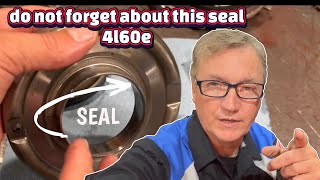
- Worn or Burnt 3-4 Clutch Pack (4L60-E) 🔴 High Probability The 3-4 clutch pack in the 4L60-E is a well-documented, notorious weak point that cannot handle heat and load over time, causing the friction material to burn off. 🎬 Watch: Diagnosing and fixing 4L60-E 3rd and 4th clutch slip This is the most common cause of P0733 in these models.
How to confirm: Dropping the transmission pan and finding a significant amount of dark, muddy clutch material is a definitive sign. A transmission pressure test may also show a pressure drop when 3rd gear is commanded.
Typical fix: A complete transmission rebuild is required. This includes an updated and more robust 3-4 clutch pack (e.g., from Sonnax, Raybestos, or Alto) and replacing all seals and other worn components. Simply replacing the clutches without addressing underlying wear in the valve body or input drum can lead to repeat failure.
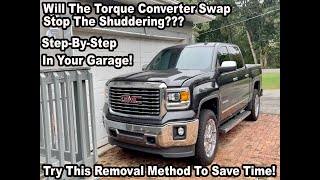
Est. part cost: $150-$600 for a rebuild kit; $1800-$3500 for a remanufactured transmission. - Failing Torque Converter (6L80) 🔴 High Probability → Shop Automatic Transmission Torque Converter The lock-up clutch (TCC) within the original 6L80 torque converter is a major weak point that wears out, shedding metallic debris that contaminates the entire transmission fluid system. This debris is the root cause of many other 6L80 failures, including P0733.
How to confirm: Inspecting the transmission fluid and pan for a large amount of metallic, glittery debris ('coffee grounds') is a key indicator. This is often seen with code P0741 (TCC Stuck Off). 🎬 Watch: Step-by-step 6L80 torque converter replacement walkthrough GM TSBs directly link P0733 to this debris clogging valve body passages.
Typical fix: Replacement of the torque converter (e.g., an upgraded billet unit) and a complete transmission rebuild to clear all debris. A simple flush is insufficient to remove all contamination, which can destroy the new converter and other components.
Est. part cost: $200-$600 for a torque converter; $2000-$4000 for a remanufactured transmission. - Cracked 3-5-R Clutch Drum or Broken Wave Plate (6L80) 🟡 Medium Probability Early 6L80 models (pre-2010) are known for poor welds on the 3-5-R clutch drum that can crack, causing a loss of hydraulic pressure for 3rd, 5th, and Reverse gears. The 3-5-R wave plate is also known to fracture, sending metal fragments through the transmission.
How to confirm: This requires transmission disassembly to inspect the drum and wave plate. It is often diagnosed when P0733 is accompanied by P0735 (Gear 5 Incorrect Ratio) or issues with reverse. GM released an updated drum design to address the cracking issue.
Typical fix: Transmission must be removed and disassembled to replace the drum with an updated part and remove any resulting debris.
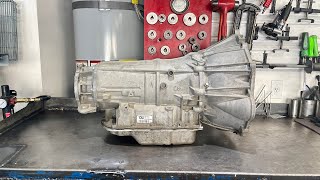
Est. part cost: $150-$400 for an updated drum assembly, plus rebuild components. 🎬 Watch: Full 6L80 transmission teardown and inspection
- Low or Dirty Transmission Fluid 🟡 Medium Probability → Shop Transmission Assembly Low fluid prevents proper hydraulic pressure needed to engage clutches. Dirty/burnt fluid indicates either severe wear or internal component failure and loses its ability to lubricate and cool.
How to confirm: Check the transmission fluid dipstick (if equipped) for level and condition. The fluid should be bright red and clear, not dark brown, black, or smelling burnt. On many 6L80 models, there is no dipstick, and the level must be checked via a plug on the transmission pan with the vehicle running and at a specific temperature.
Typical fix: If fluid is just low, top it off and check for leaks. If it's dirty or burnt, a fluid and filter change is a first step, but it often points to a larger internal issue that has already occurred.
Est. part cost: $50-$150 for fluid and a filter kit. - Failed Shift Solenoid / TEHCM (6L80) ⚪ Low Probability → Shop Transmission Valve Body On the 6L80, the solenoids are integrated into the Transmission Electro-Hydraulic Control Module (TEHCM) inside the pan. While less common for a ratio code than mechanical failure, a solenoid can become clogged with debris from a failing torque converter or fail electronically.
How to confirm: A professional scan tool can command solenoids and monitor their response. However, debris is often the root cause, making solenoid replacement alone a temporary fix.
Typical fix: Replace the entire TEHCM assembly and program it to the vehicle. This should only be done after confirming the torque converter is not shedding debris.
Est. part cost: $400-$800 for a TEHCM, plus programming costs.
Rare But Worth Checking
- Valve Body Issues: → Shop Transmission Valve Body Worn bores or stuck valves in the valve body can cause hydraulic leaks leading to pressure loss and slippage. This is more common on high-mileage vehicles and often caused by debris contamination in the 6L80. Sonnax offers 'Zip Kits' to address these wear points.
- Faulty Transmission Control Module (TCM): → Shop Transmission Assembly In rare cases, the TCM itself can fail, causing incorrect commands or misinterpretation of sensor data. On 6L80s, this is part of the TEHCM. This should only be considered after all mechanical and hydraulic issues have been ruled out.
Diagnosis Steps
- Check the transmission fluid level and condition. If it is low, top it off and check for leaks. If it is dark, burnt, or contains metallic/clutch debris, this indicates a severe internal problem.
- Use a professional scan tool to check for other transmission-related codes, such as P0700, P0741, or other gear ratio codes.
- Review freeze-frame data to see the vehicle conditions (speed, RPM, etc.) when the code was set.
- If the fluid check is inconclusive, perform a transmission fluid pressure test to check for hydraulic pressure loss in the 3rd gear circuit.
- Drop the transmission oil pan to inspect for metal shavings or clutch material. A small amount of fine material is normal, but large pieces or a thick sludge are signs of major failure.
- If a 6L80 transmission is suspected, heavy metallic 'glitter' in the pan points to torque converter failure.
- If a 4L60-E is suspected, a pan full of dark, muddy sludge points to a burnt 3-4 clutch pack.
Parts You'll Likely Need
- Transmission Rebuild Kit (4L60-E)
- Remanufactured Transmission
- Torque Converter (6L80)
- 3-5-R Clutch Drum Assembly (6L80)
Related Codes That Often Appear With This One
- P0700 — This is a generic code indicating the TCM has stored a fault. It almost always appears with specific transmission codes like P0733.
- P0741 — On 6L80 models, this code (Torque Converter Clutch System - Stuck Off) is a strong indicator that a failing torque converter is the root cause, shedding debris that then causes the P0733 slip.
- P0735 — On 6L80 models, this code (Gear 5 Incorrect Ratio) often appears with P0733 because the same component, the 3-5-R clutch drum, is responsible for both gears. A crack in this drum will cause both gears to slip.
- P0894 — This code for 'Transmission Component Slipping' is a general slip code that frequently accompanies a more specific gear ratio error like P0733.
Technical Service Bulletins (TSBs) & Recalls
- PIP5100A: Links P0733 in 6L80 transmissions to torque converter debris blocking the valve body separator plate.
- 09-07-30-004J: Discusses slip in 3rd gear caused by a cracked 3-5-R clutch housing in early 6L80 models.
- 00-02-35-003N: While not for P0733, this TSB addresses a common steering clunk on these trucks, relevant for general platform knowledge.
- Bulletin #PIP4379K: Notes that technicians may find P0733 along with other gear ratio codes (P0731, P0732, P0734) or range inhibits, often involving delayed engagement into drive or no engagement into reverse.
Platform-Specific Known Issues
- 4L60-E 3-4 Clutch Pack Burn-up: The most common cause of P0733 on GMT800 and early GMT900 trucks. The factory clutch pack is a known weak point that cannot handle heat and load over time, leading to the friction material burning off. Symptoms are classic: good 1-2 shift, then engine revs flare as if in neutral when attempting to shift to 3rd.
- 6L80 Broken 3-5-R Wave Plate: A frequent failure in early 6L80 transmissions. A thin, spring-like steel plate in the 3-5-R clutch drum (GM part 24274020) fractures into pieces. These pieces can clog the valve body and fluid filter, causing pressure loss and subsequent clutch pack failure.
- 6L80 Torque Converter Failure: → Shop Automatic Transmission Torque Converter The lock-up clutch in the stock 6L80 torque converter is a well-documented weak point. It sheds metallic debris that contaminates the fluid, clogs the filter and valve body passages, leading to pressure loss and triggering P0733 and often P0741. This is considered the #1 cause of 6L80 failure.
Mechanic-Grade Diagnostic Values
- 4L60-E Shift Solenoid (A or B) Resistance — expected: 20-40 Ohms. Failure: A reading outside this range, or an open/short circuit, indicates a failed solenoid. Good solenoids typically measure 20-25 Ohms.
- 6L80 Shift Solenoid (On/Off Type) Resistance — expected: 20-40 Ohms (typically 20-24 Ohms). Failure: A reading outside this range indicates a failed solenoid.
- 6L80 Pressure Control Solenoid (PWM Type) Resistance — expected: 3-8 Ohms (typically 5-6 Ohms). Failure: A reading outside this range indicates a failed solenoid within the TEHCM.
- 4L60-E Line Pressure at Idle (In Drive) — expected: 55-65 PSI. Failure: Significantly lower pressure can indicate a weak pump, clogged filter, or major internal hydraulic leaks.
- 4L60-E Line Pressure at Stall Speed (In Drive) — expected: 150-175 PSI. Failure: Failure to reach this pressure under full load confirms a major hydraulic leak or a worn-out pump, unable to supply the pressure needed to hold clutches.
- 6L80 TEHCM Solenoid/Sensor Supply Voltage — expected: 8.3 - 9.3 Volts. Failure: Incorrect voltage from the TEHCM indicates an internal module failure.
Scan Tool Commands That Help
- GM Tech2 / GDS2: Transmission Output Controls / Solenoid Valve State — Used to command individual shift solenoids on and off with the engine running and pan removed. This helps isolate a failed solenoid by listening for a 'click' and observing fluid flow, separating a bad solenoid from a wiring or mechanical issue.
- GM Tech2 / GDS2: Transmission Service Fast Learn (SPS) — This procedure is MANDATORY after replacing the TEHCM, valve body, or rebuilding the transmission. It performs a series of automated shifts to allow the TCM to relearn clutch apply pressures and fill times. Skipping this will result in harsh shifts and premature clutch wear.
- GM Tech2 / GDS2: Reset Transmission Adapts — After replacing internal components like clutch packs or solenoids, this function clears the old learned shift timing values. This allows the TCM to adapt to the new components more quickly.
Real Owner Repair Stories
- YouTube channel 'SuperDuty Service' (Vehicle with 4L60E transmission) — Transmission would not shift out of second gear, related to P0733.
❌ Tried (didn't work) Tested the 2-3 shift solenoid, which passed with a resistance of 21.7 ohms (within the 20-30 ohm spec).
✅ What actually fixed it The root cause was found to be a leaking check ball in the accumulator assembly. This small leak caused a constant pressure loss to the 3-4 clutch pack, causing it to fail prematurely. The final fix was a complete transmission rebuild that included replacing the burnt clutches and specifically addressing the leaking check ball seat in the valve body.
OEM Part Supersession History
N/A (design)→GM Part #24274020 (and aftermarket equivalents)— The original 3-5-R wave plate in early 6L80s (approx. pre-2010) was prone to fracturing, sending debris through the transmission.
Heads up: The updated wave plate is a direct replacement and should be used in all rebuilds of early 6L80 units to prevent repeat failure.Varies by year→Varies by year (e.g., Tag ID 24256524, 24252423)— GM frequently updated the 6L80 TEHCM hardware and software to address issues with pressure switch failures, solenoid performance, and thermal tolerance.
Heads up: TEHCMs are NOT universally interchangeable. Installing a TEHCM with the wrong year or Tag ID can result in a no-start, no-communication, or immediate limp mode. The module must match the vehicle's year and calibration.
Model Year Variations Within This Range
- 2006 - early 2007 ('Classic' GMT800): These trucks almost exclusively use the 4L60-E or 4L65-E. Diagnosis for P0733 should be heavily focused on the 3-4 clutch pack and its related hydraulic circuits.
- Late 2007 - 2010 (GMT900): This range saw the introduction and phasing-in of the 6L80 (RPO MYC). For these years, it is critical to identify the transmission first. If it is a 6L80, diagnosis must focus on torque converter debris, the 3-5-R drum, and TEHCM issues, which are not relevant to the 4L60-E.
- Pre-2010 6L80 models: These early 6L80 units are more susceptible to the cracked 3-5-R clutch drum and fractured 3-5-R wave plate. Later designs improved these components.
Diagnostic Flowchart
Other Known Issues on This Vehicle
Issues unrelated to this code that are worth knowing about as an owner of this generation:
- Active Fuel Management (AFM) Lifter Failure 🔴 High — Common on 5.3L and 6.0L V8 engines, especially after 80,000 miles. Can occur earlier if oil maintenance is neglected. (Ref: Multiple TSBs exist addressing oil consumption and misfire codes related to AFM.)
- Cracked Dashboard (GMT900) 🟠 Medium — Very common on 2007-2013 models. Cracks typically develop on the driver's side near the instrument cluster or over the passenger airbag, regardless of mileage or sun exposure. (Ref: No recall, but a class-action lawsuit was filed for some model years. GM and dealers have been inconsistent with offering assistance.)
- Intermediate Steering Shaft Clunk 🟡 Low — Extremely common on GMT800 and GMT900 trucks. A clunking or popping noise is felt in the steering wheel during low-speed turns. (Ref: GM TSB #00-02-35-003N advises replacing the original shaft with an improved design.)
- Excessive Oil Consumption (AFM Engines) 🟠 Medium — Common on 5.3L V8 engines, where owners report consuming 1-2 quarts of oil between changes. Related to the AFM system and piston ring design. (Ref: GM issued TSBs and extended warranty coverage for many affected vehicles to address this.)
Used vs. New Parts: Buying Guide for This Vehicle
When a used part is the smart pick: For this code, which indicates a major internal failure, a complete used transmission from a junkyard is a high-risk gamble. It is only a sensible choice if the donor vehicle is known to have low mileage (<80,000 miles) and has no signs of a front-end collision that could damage the cooler and contaminate the system. A used TEHCM can be a viable option if the failure is confirmed to be purely electronic and not caused by debris from a mechanical failure.
Donor-vehicle mileage cap: roughly under 80000 miles for the part to have meaningful remaining life.
What to inspect on the donor part:
- Pull the dipstick or check plug; if the fluid is dark, burnt, or has any glitter, walk away.
- Inspect the electrical connector pins for corrosion or damage.
- Check the case for cracks or signs of previous, sloppy repairs (e.g., excessive RTV sealant).
- Ask for a history of the donor vehicle if possible; a rear-end collision is preferable to a front-end impact.
- Spin the input and output shafts by hand to feel for any grinding or binding.
OEM-only on this vehicle (don't cheap out):
- TEHCM (Transmission Electro-Hydraulic Control Module) - While remanufactured units are available, using a new ACDelco OEM part is often recommended for best programming compatibility and longevity.
Aftermarket brands forum-validated for this vehicle:
- Rebuild Kits: Sonnax, Raybestos, Alto, and TransGo are highly regarded for their comprehensive kits and upgraded components that address factory weak points.
- Upgraded 3-4 Clutch Pack (4L60-E): Raybestos Z-Pak, BorgWarner High-Energy clutches.
- Torque Converter (6L80): Upgraded billet-front converters are strongly recommended over OEM to prevent repeat failure.
Brands owners have reported issues with on this vehicle:
- Unbranded or generic 'white box' rebuild kits and solenoids from online marketplaces. These often use inferior materials that lead to premature failure.
Real Owner Stories
Aggregated from forums and TSBs cited above. Mileages and costs reflect what owners reported in those sources.
2009 GMC Sierra 1500 6L80
Symptoms: Immediate failure after a fresh rebuild; issues with the 1234/35R drum and sealing rings.
What fixed it: Discussion pointed toward addressing the 1234/35R drum and sealing rings to resolve the internal pressure loss.
Source hint: GM-Trucks.com thread titled '6l80e-fresh-rebuild-and-already-failed/'
2007 GMC Sierra 1500 4L60-E
Symptoms: Classic failure with a burnt 3-4 clutch pack; engine revs flare as if in neutral when attempting to shift to 3rd.
What fixed it: A complete transmission rebuild including an updated and more robust 3-4 clutch pack.
Source hint: LS1Tech.com forum description of classic 4L60-E failure
Related OBD-II Codes
Frequently Asked Questions
My 6L80 transmission is slipping in 3rd gear; does GM TSB PIP5100A apply to my GMC Sierra?
I have a 2008 Sierra with the 4L60-E and I've lost 3rd gear. Is this a common issue?
Can a cracked 3-5-R clutch housing cause P0733 on an early 6L80 GMC Sierra?
What is the 'coffee grounds' material I found in my 6L80 transmission pan?
Is there an updated part for the 6L80 wave plate that keeps breaking?
Can I just replace the TEHCM to fix P0733 on my 6L80 Sierra?
Helpful Videos
We Have This Part in Stock


The information in this article is provided for general reference and educational purposes only. Vehicle specifications, procedures, and part compatibility can vary by production date, trim level, and region. Always consult your vehicle's factory service manual and verify part numbers before purchasing or performing repairs. Safety-critical components such as airbags, seat belts, and braking systems should be installed by a qualified professional.
- GMC Sierra:
- 🧭 Diagnostic Flowchart
- 🎬 Helpful Videos
- 🛍️ Shop This Part
- What's Unique About the 2006-2010 GMC Sierra
- Symptoms You May Notice
- Most Likely Causes
- Rare But Worth Checking
- Diagnosis Steps
- Parts You'll Likely Need
- Related Codes That Often Appear With This One
- Technical Service Bulletins (TSBs) & Recalls
- Platform-Specific Known Issues
- Mechanic-Grade Diagnostic Values
- Scan Tool Commands That Help
- Real Owner Repair Stories
- OEM Part Supersession History
- Model Year Variations Within This Range
- Other Known Issues on This Vehicle
- Used vs. New Parts: Buying Guide for This Vehicle
- Real Owner Stories
- 2009 GMC Sierra 1500 6L80
- 2007 GMC Sierra 1500 4L60-E
- Related OBD-II Codes
- Frequently Asked Questions
- 🎟️ Get 5% Off