

P0733 on 2001-2006 Hyundai Santa Fe: Gear 3 Incorrect Ratio Causes and Fixes
P0733 on a first-generation Hyundai Santa Fe means the transmission is slipping in third gear. The most common causes are low/dirty transmission fluid or failing shift solenoids. If fluid is fine, this often points to internal transmission failure, specifically the underdrive clutch pack, potentially requiring a rebuild or replacement.
- P0733 means your Santa Fe's transmission is slipping in 3rd gear.
- The very first step is to check the transmission fluid level and condition. This is the easiest and most common fix.
- If the fluid is fine, the problem is likely a bad shift solenoid or, more seriously, internal wear of the transmission's clutches.
- Driving with this code can lead to severe transmission damage and leave you stranded. It should be addressed promptly.
- Due to the complexity of transmission diagnostics, professional service is strongly recommended if a fluid check doesn't solve the problem.
What's Unique About the 2001-2006 Hyundai Santa Fe
The first-generation Hyundai Santa Fe (model code 'SM') uses a 4-speed automatic transmission, often the F4A42 or F4A51 model, which is a Mitsubishi design known for developing issues with age. While P0733 can be caused by simple fluid problems, it is very commonly a sign of internal mechanical failure on this platform. Many owners on forums report that P0733, especially when paired with other gear ratio codes like P0734, points directly to a failure of the underdrive clutch assembly. Hyundai's own diagnostic logic for later models often instructs technicians to replace the transmission if no sensor or solenoid codes are present, a pattern that has proven true for these earlier models as well.
Symptoms You May Notice
- Check Engine Light is on
- Transmission slipping or failing to engage third gear
- Harsh or delayed shifting, particularly into third gear
- Engine RPMs flare up without an increase in speed when shifting to 3rd
- Vehicle feels sluggish or has a lack of power
- Transmission may enter 'limp mode', getting stuck in one gear
- Decreased fuel economy
- Erratic or unpredictable shifting behavior
- Replacing the speed sensors when no speed sensor codes are present. If only P0733 is stored, the sensors are likely reporting the slip correctly.
- Assuming the entire transmission is bad before checking the fluid level and condition, which is the simplest and most common fix.
- Replacing just one shift solenoid when the issue is a cracked clutch drum or widespread contamination in the valve body.
Most Likely Causes
- Low or Dirty Transmission Fluid 🔴 High Probability → Shop Transmission Assembly Transmission fluid degrades over time and can leak from aging seals. Insufficient or contaminated fluid is the leading cause of transmission shifting problems like slipping and overheating.
How to confirm: Check the transmission fluid level and condition using the dipstick when the engine is warm and running. The fluid should be at the 'FULL' mark and should be reddish/pink and clear, not brown, black, or smelling burnt.
Typical fix: If low, top off with Hyundai-specific fluid (SP-III) and check for leaks. If dirty, perform a transmission fluid and filter change. A full fluid flush may be more effective than a simple drain-and-fill.
Est. part cost: $50-$150 - Failing Shift Solenoid 🟡 Medium Probability → Shop Transmission Valve Body Solenoids are electro-mechanical valves that direct fluid flow to engage gears. They can fail electrically or become clogged with debris from old fluid, preventing the proper engagement of 3rd gear.
How to confirm: A professional can test the resistance of the specific solenoid for third gear and command it with a scan tool. This requires dropping the transmission pan and often the valve body to access the solenoid pack.
Typical fix: Replace the faulty shift solenoid. The solenoids are often sold as a pack or set. The OEM part number for a single shift control solenoid is 46313-39051.
Est. part cost: $100-$350 - Internal Transmission Failure 🟡 Medium Probability → Shop Transmission Assembly The F4A51 transmission in these vehicles is known for failure of the underdrive clutch drum, which is required for 3rd gear. The drum can crack, causing a loss of hydraulic pressure and clutch slip. This is a very common failure pattern discussed in owner forums.
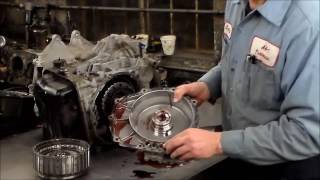
How to confirm: This is a diagnosis of exclusion. If fluid, solenoids, and sensors are confirmed to be good, the problem is internal. A mechanic may perform a line pressure test which will show a pressure drop when 3rd gear is commanded. Visual inspection requires transmission disassembly. 🎬 Watch: This teardown shows common internal failure points.
Typical fix: The transmission must be removed and either rebuilt (with an updated/stronger underdrive clutch drum) or replaced with a new or remanufactured unit.
Est. part cost: $2000-$4500 - Faulty Input or Output Speed Sensor ⚪ Low Probability These sensors can fail with age, but they typically trigger their own specific trouble codes (e.g., P0717, P0722) in addition to P0733. A failure is less common than internal mechanical issues.
How to confirm: Check for other P07xx codes. A scan tool can monitor the live data from these sensors to see if they are reading erratically or dropping out.
Typical fix: Replace the faulty speed sensor. They are usually located on the outside of the transmission case. The Input/Output speed sensor may be part number 42620-39051 and 42621-39052 respectively.
Est. part cost: $40-$120
Rare But Worth Checking
- Faulty Valve Body: → Shop Transmission Valve Body The valve body is the hydraulic control center of the transmission. It can develop cracks, have sticking valves, or clogged passages that cause pressure issues, but this is less common than a single solenoid failure.
- Clogged Transmission Filter: → Shop Transmission Assembly A severely clogged filter can starve the transmission of fluid pressure, causing slipping. This is usually a symptom of larger internal wear (clutch material) and will be discovered during a fluid service.
- Faulty Neutral Safety Switch (Inhibitor Switch): This switch tells the TCM which gear is selected. While it usually causes no-start or incorrect gear display issues, a faulty switch can send erroneous data to the TCM, contributing to shifting problems. The OEM part number is 42700-39055.
Diagnosis Steps
- Check the transmission fluid level and condition. If low, top it off with the correct fluid type (Hyundai SP-III, OEM Part # 00232-19012) and check for leaks. If dirty or burnt, a fluid and filter change is the next step.
- Use a quality OBD-II scanner to check for any other pending or stored trouble codes. Pay close attention to codes for speed sensors (P0715-P0723) or other shift solenoids (P0750-P0770).
- If other codes are present, diagnose them first as they may be the root cause of the P0733.
- If no other codes are present and the fluid is full and clean, the issue is likely a failing shift solenoid or internal mechanical wear.
- A mechanic can perform a line pressure test. A significant pressure drop when 3rd gear is commanded points towards an internal hydraulic leak, such as a cracked clutch drum.
- Access the transmission's valve body to test the resistance and operation of the shift solenoids. The solenoid for 3rd gear can be individually tested or replaced.
- Based on Hyundai's service procedures and extensive owner reports, if only incorrect ratio codes are present and fluid/solenoids are ruled out, the final diagnosis is almost always internal failure requiring transmission rebuild or replacement.
Parts You'll Likely Need
- Automatic Transmission Fluid
(OEM #00232-19012)— The most common cause is low or degraded fluid. Always use a fluid that meets Hyundai's SP-III specification.
Trusted brands: Hyundai OEM, Idemitsu SP-III, ENEOS SP, Aisin SP-III
OEM price range: $15-$25 per quart
Aftermarket price range: $10-$20 per quart - Shift Solenoid
(OEM #46313-39051)— A failing solenoid is a frequent cause of gear-specific shifting issues. This part number corresponds to a single shift control solenoid.
Trusted brands: Hyundai OEM, Mando, Rostra
OEM price range: $150-$250
Aftermarket price range: $80-$150 - Remanufactured Automatic Transmission — If the code is caused by internal clutch pack failure, a full replacement is often the most reliable and cost-effective long-term repair.
Trusted brands: Moveras, Transtar, Powertrain Products Inc.
OEM price range: $3500+
Aftermarket price range: $2000-$3000 - Neutral Safety / Inhibitor Switch
(OEM #42700-39055)— Though a less common cause, a faulty inhibitor switch can send incorrect gear position data to the TCM, contributing to shifting problems. It can also become misaligned, requiring adjustment.
Related Codes That Often Appear With This One
- P0731, P0732, P0734 — These are incorrect ratio codes for other gears (1st, 2nd, 4th). Multiple codes strongly suggest a widespread problem like low fluid, a failing torque converter, a clogged filter, or a major internal issue affecting multiple clutch packs.
- P0700 — This is a generic code indicating that the Transmission Control Module (TCM) has detected a fault and has requested the Check Engine Light be turned on. It will always be present with specific transmission codes like P0733.
Technical Service Bulletins (TSBs) & Recalls
- 20-AT-001H: Provides diagnostic procedures for incorrect ratio DTCs on various Hyundai models, including the Santa Fe (CM, the generation after this one). It advises that if no solenoid or sensor codes are present, the transmission should be replaced. This logic is widely applied by technicians to the first-generation SM model as well.
- 19-AT-012H: An earlier version of the same TSB with similar diagnostic logic.
- 05-40-009: A TSB from 2005 related to F4A51 transmissions that discusses shift quality issues and potential reprogramming or component updates, showing a history of known issues with this transmission family.
Platform-Specific Known Issues
- Common Underdrive Clutch Failure: A well-documented failure point in the F4A42/F4A51 transmission is the underdrive clutch drum. It is prone to cracking near the snap ring groove, causing a loss of hydraulic pressure needed to engage the 3rd gear clutch pack. This results in a slip that the TCM detects, triggering P0733. Many transmission rebuilders specifically use an updated, stronger drum to prevent repeat failures.
Mechanic-Grade Diagnostic Values
- Shift Solenoid Resistance (Underdrive, 2nd, Overdrive, Low-Reverse) — expected: 2.6 - 3.2 Ω. Failure: Resistance is outside of the specified range, or shows an open/short circuit.
- Variable Force Solenoid (VFS) Resistance — expected: 3.2 - 4.1 Ω. Failure: Resistance is outside of this range.
- Line Pressure Test - Underdrive (UD) Clutch — expected: At 2,500 RPM Stall Speed in 'D' (1st gear): 1,151-1,364 kPa (167-198 psi). Failure: Pressure is significantly below specification, indicating a leak in the UD clutch circuit, potentially from a cracked drum.
- TCM Ground Circuit Resistance — expected: Below 1 Ω. Failure: Resistance is higher than 1 Ω, indicating a poor ground connection which can cause erratic TCM behavior.
- Input/Output Speed Sensor Voltage (Variable Reluctance Type) — expected: Generates an AC voltage signal that increases in frequency and amplitude with speed.. Failure: No signal, or an erratic/inconsistent signal when the shaft is known to be rotating.
Scan Tool Commands That Help
- Hyundai GDS (Global Diagnostic System): Solenoid Actuation Test — To individually command each shift solenoid on and off to verify its mechanical operation (listening for a 'click') and its effect on line pressure, helping to isolate a single faulty solenoid without removal.
- Hyundai GDS (Global Diagnostic System): Flight Record / Data Analysis — To capture real-time data from the input speed sensor, output speed sensor, and commanded gear state during a test drive. This allows a technician to pinpoint the exact moment the slip (ratio error) occurs.
- Hyundai GDS (Global Diagnostic System): Vehicle S/W Management — To check for and apply any available software updates for the Transmission Control Module (TCM). An outdated calibration file can sometimes cause incorrect ratio calculations.
Wiring & Ground Locations
- TCM (Transmission Control Module) — Located in the driver's side footwell, to the right of the accelerator pedal, often mounted with the Engine Control Module (ECM).. The TCM is the brain of the transmission. Poor connections, water intrusion, or a bad ground at this location can cause a wide range of shifting problems, including incorrect ratio codes.
- TCM Ground Bolt — A bolt securing a ground line to the chassis near the TCM's location in the driver's footwell area.. A specific diagnostic step is to test the resistance between the TCM connector and this chassis ground point. A poor ground (over 1Ω) can cause the TCM to malfunction and set false codes.
- Main Transmission Harness Connector — A large, multi-pin round or rectangular connector on the top or front of the transmission case, where the vehicle harness connects to the internal transmission components like solenoids and sensors.. This is the primary point for testing solenoid resistance and sensor signals without opening the transmission. Corrosion or bent pins in this connector can interrupt signals and cause P0733.
Real Owner Repair Stories
- YouTube Channel - 'Hiram Gutierrez' (2006 Mitsubishi Endeavor with F4A51 transmission (shared with Santa Fe)) — Vehicle had 1st and 2nd gear, but would neutralize (slip) in other gears. Codes P0733 (Gear 3 Incorrect Ratio) and P0734 (Gear 4 Incorrect Ratio) were present.
❌ Tried (didn't work) The video is a teardown, implying external checks like fluid and sensors did not reveal the issue.
✅ What actually fixed it Internal transmission teardown revealed the planetary gear set splines were completely stripped. The mechanic states this is a common issue on heavier vehicles with this transmission, including the Hyundai Santa Fe. The fix required a transmission rebuild with a new planetary gear set. - NHTSA ODI #10576819 — An owner reported the vehicle would only operate in third gear, describing it as a huge distraction that could easily cause an accident. Diagnostic codes P0121 and P0733 were present, indicating a third gear ratio mismatch.
OEM Part Supersession History
46313-39050→46313-39051— Standard part revision, likely for improved reliability or manufacturing process.
Model Year Variations Within This Range
- 2001-Early Production: Early versions of the F4A/F5A transmission family used a 'wavy' or 'coil type' low/reverse clutch cushion spring that was prone to breaking. The broken pieces could travel through the transmission and damage the oil pump. Later models were updated with a more durable solid steel cushion spring.
- 2005-2006: General owner consensus and reliability data suggest that the final two model years of the first generation had many of the earlier transmission and sensor issues resolved, making them more reliable choices.
Diagnostic Flowchart
Used vs. New Parts: Buying Guide for This Vehicle
When a used part is the smart pick: For external components like speed sensors or an inhibitor switch, a used part from a low-mileage donor vehicle is a reasonable, cost-effective option. However, due to the high rate of specific internal mechanical failures (cracked underdrive drum, stripped planetary gears), purchasing a complete used transmission is extremely high-risk and not recommended.
Donor-vehicle mileage cap: roughly under 80000 miles for the part to have meaningful remaining life.
What to inspect on the donor part:
- For a complete transmission: Check the donor vehicle's VIN for any service history.
- Inspect the fluid from the donor transmission. If it's dark, burnt, or contains metal particles, reject the part immediately.
- Ask for a warranty (even 30-90 days) from the salvage yard, which is standard for major components.
- For external sensors/solenoids: Inspect connectors for corrosion, and the part body for cracks or physical damage.
OEM-only on this vehicle (don't cheap out):
- Complete Transmission: A remanufactured unit from a reputable supplier is strongly recommended over a used one. These often include updates to known failure points, such as an improved underdrive clutch drum.
Aftermarket brands forum-validated for this vehicle:
- Shift Solenoids: Mando (often the OEM supplier), Rostra
- Transmission Rebuild Kits: Raybestos Powertrain, Sonnax (for specific valve body/pressure regulator updates)
Brands owners have reported issues with on this vehicle:
- Unbranded, 'white box' solenoid packs or complete transmissions from online marketplaces are a significant gamble and often have high failure rates.
Real Owner Stories
Aggregated from forums and TSBs cited above. Mileages and costs reflect what owners reported in those sources.
2003 Hyundai Santa Fe
Symptoms: Vehicle won't shift into 3rd gear and has check engine light on with codes P1529, P0733, and P0734.
What fixed it: The owner was advised to check the input/output speed sensors as a potential cause.
Source hint: 2CarPros
2005 Santa Fe
Symptoms: Owner experienced both P0733 (Gear 3 Incorrect Ratio) and P0734 (Gear 4 Incorrect Ratio) codes.
What fixed it: Replacing the speed sensors did not fix the issue. A transmission specialist ultimately diagnosed an internal failure that required a rebuild.
Source hint: Hyundai-Forums.com: '2005 Santa Fe P0733 and P0734'
Related OBD-II Codes
Frequently Asked Questions
What is the most common reason for a P0733 code on my 2001-2006 Santa Fe?
What type of transmission fluid should I use in my Santa Fe to address this issue?
Are the input or output speed sensors a likely cause for just a P0733 code?
If I need to replace a shift solenoid for 3rd gear, is there a specific part number I should look for?
My mechanic ruled out fluid and solenoids. What is the next most likely diagnosis?
I saw TSB 20-AT-001H mentioned. Does it apply to my first-generation (2001-2006) Santa Fe?
Helpful Videos
We Have This Part in Stock

The information in this article is provided for general reference and educational purposes only. Vehicle specifications, procedures, and part compatibility can vary by production date, trim level, and region. Always consult your vehicle's factory service manual and verify part numbers before purchasing or performing repairs. Safety-critical components such as airbags, seat belts, and braking systems should be installed by a qualified professional.
- Hyundai Santa Fe:
- 🧭 Diagnostic Flowchart
- 🎬 Helpful Videos
- 🛍️ Shop This Part
- What's Unique About the 2001-2006 Hyundai Santa Fe
- Symptoms You May Notice
- Most Likely Causes
- Rare But Worth Checking
- Diagnosis Steps
- Parts You'll Likely Need
- Related Codes That Often Appear With This One
- Technical Service Bulletins (TSBs) & Recalls
- Platform-Specific Known Issues
- Mechanic-Grade Diagnostic Values
- Scan Tool Commands That Help
- Wiring & Ground Locations
- Real Owner Repair Stories
- OEM Part Supersession History
- Model Year Variations Within This Range
- Used vs. New Parts: Buying Guide for This Vehicle
- Real Owner Stories
- 2003 Hyundai Santa Fe
- 2005 Santa Fe
- Related OBD-II Codes
- Frequently Asked Questions
- 🎟️ Get 5% Off